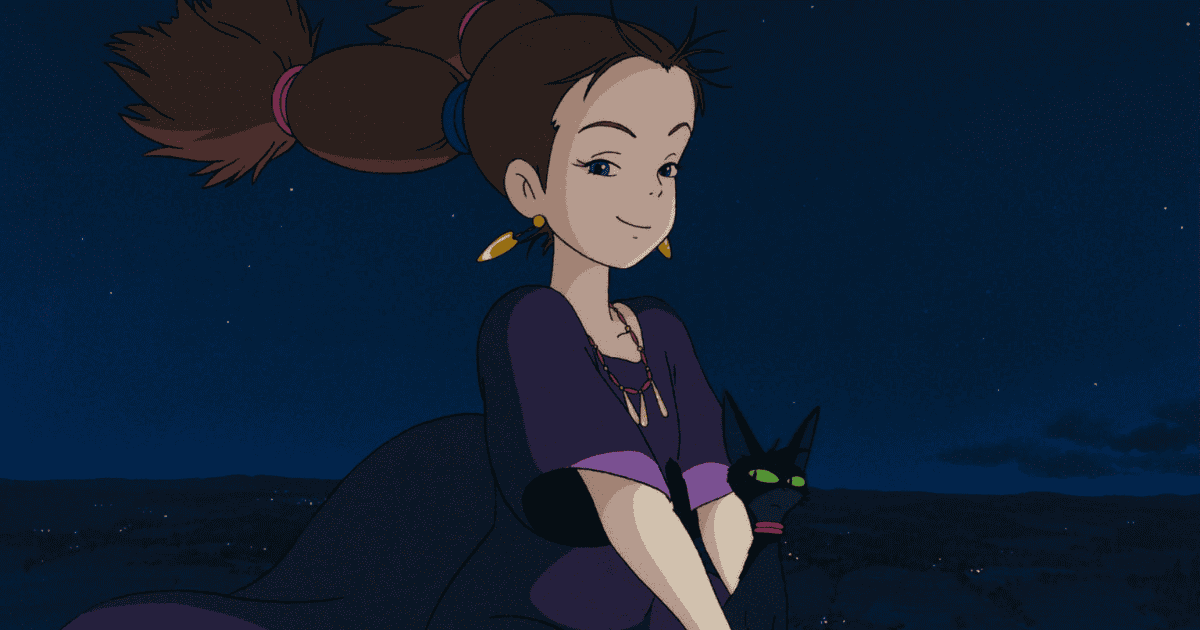
We all remember the sudden, uncomfortable sting of meeting the senior witch at the very beginning of Hayao Miyazaki’s 1989 masterpiece, Kiki’s Delivery Service(Studio Ghibli Official). Despite her incredibly brief screen time, this snooty, condescending girl manages to deeply unsettle both Kiki and the audience.
Her cold, dismissive attitude feels almost out of place in such a heartwarming film. From a pure storytelling perspective, the movie would function perfectly fine without her ever showing up. So, why did Miyazaki deliberately include this unpleasant encounter? Today, we are going to unpack the hidden psychological trauma and the brilliant narrative purpose behind the senior witch.
*This is a translated version. The original (Japanese) is available here.
- The Harsh Reality for Most Witches
Unlike Kiki, most young witches never miraculously stumble upon a maternal savior like Osono. Historically, these thirteen-year-old girls had to survive brutal, lonely conditions entirely on their own. - A Cold Reflection of Trauma
The senior witch’s arrogant, icy demeanor isn’t just petty bullying; it is a hardened shell built from surviving her own grueling independence. She represents a frank, unromanticized presentation of reality. - A Meta-Narrative Apology
To counterbalance the incredible, almost unbelievable luck Kiki experiences later in the film, the senior witch acts as a meta-justification. She absorbs the “real world” hardship so the plot can safely pivot to a warmer narrative.
On this pageContents
Kiki’s Delivery Service (1989) Analysis: The Uncomfortable Encounter
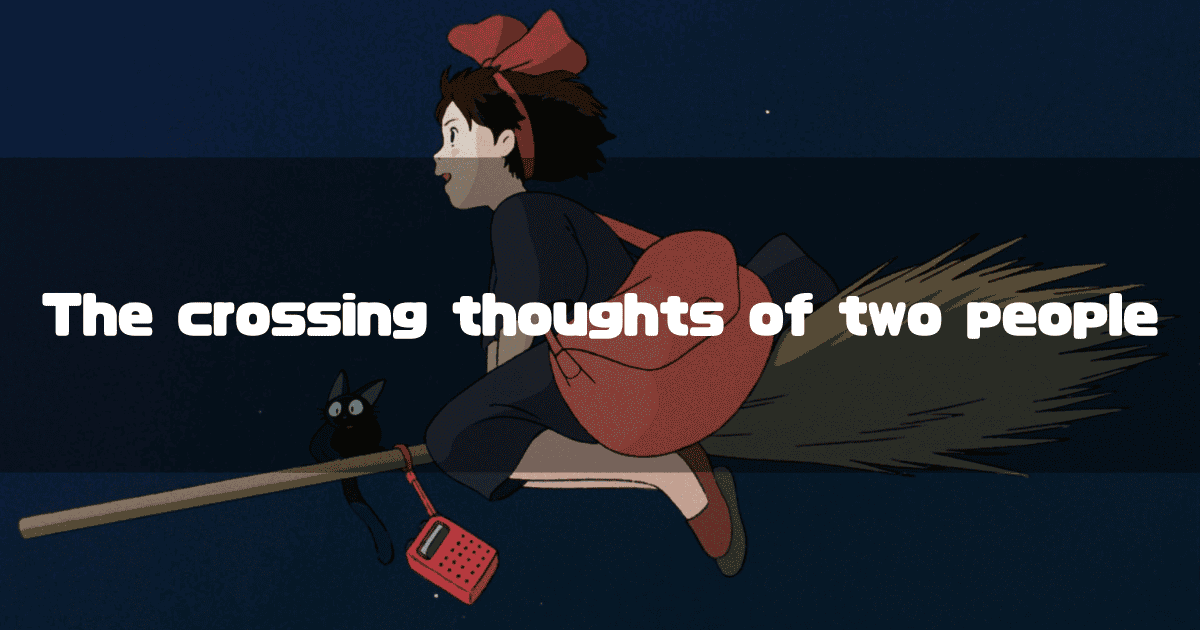
Shortly after leaving her hometown, Kiki excitedly blasts the radio (playing the iconic “Rouge no Dengon”) to celebrate her newfound freedom. Suddenly, she spots another witch flying gracefully through the night sky and cheerfully glides over to introduce herself.
Initially, the senior witch appears elegant and approachable. However, the exact second she realizes Kiki is a mere “novice” fresh out of her parents’ house, her demeanor turns to ice. Her first real interaction is a cold demand: “Could you please turn off that radio?”
Stunned by this sudden hostility, Kiki obediently kills the music. The senior witch smugly remarks that she prefers to “fly quietly.” Despite the awkward tension, a desperate Kiki tries to ask for advice about the hardships of settling into a new city.
The senior witch’s response is astoundingly condescending. Looking down her nose, she sighs, “Well, there were many things, but I had a special skill in fortune-telling, so I managed. Do you have any special skills?” She makes it painfully clear that she is at the very end of her rigorous training, standing vastly superior to the rookie beside her.
Eventually, the dazzling lights of the senior witch’s city emerge below. Tossing out a dismissive, “It’s a small town, but not bad. You do your best,” she deliberately executes a flashy dive right over Kiki’s head, showing off her superior flying skills before vanishing into the night.
Left completely alone in the dark, Kiki’s bubbly optimism evaporates. For the first time, she feels a creeping, terrifying anxiety about her future, painfully aware that her only real skill is simply knowing how to fly.
Jiji is the only character who openly voices their reaction to the encounter, dismissing the other familiar as “What a stuck-up cat.” Compare the original Japanese, romanization, English subtitle, literal translation, and the dub’s use of “snob” in our analysis of Jiji’s memorable line.
We have all encountered a senior colleague or classmate with this exact brand of toxic superiority, and most of us vow never to become like them. But why did Miyazaki force Kiki to endure this specific psychological blow? I believe the answer is directly connected to the most important savior in the film: Osono.
Kiki’s Delivery Service (1989) Lore: The Miracle of Osono vs. The Harsh Reality of Witches
The Brutal History of Young Witches
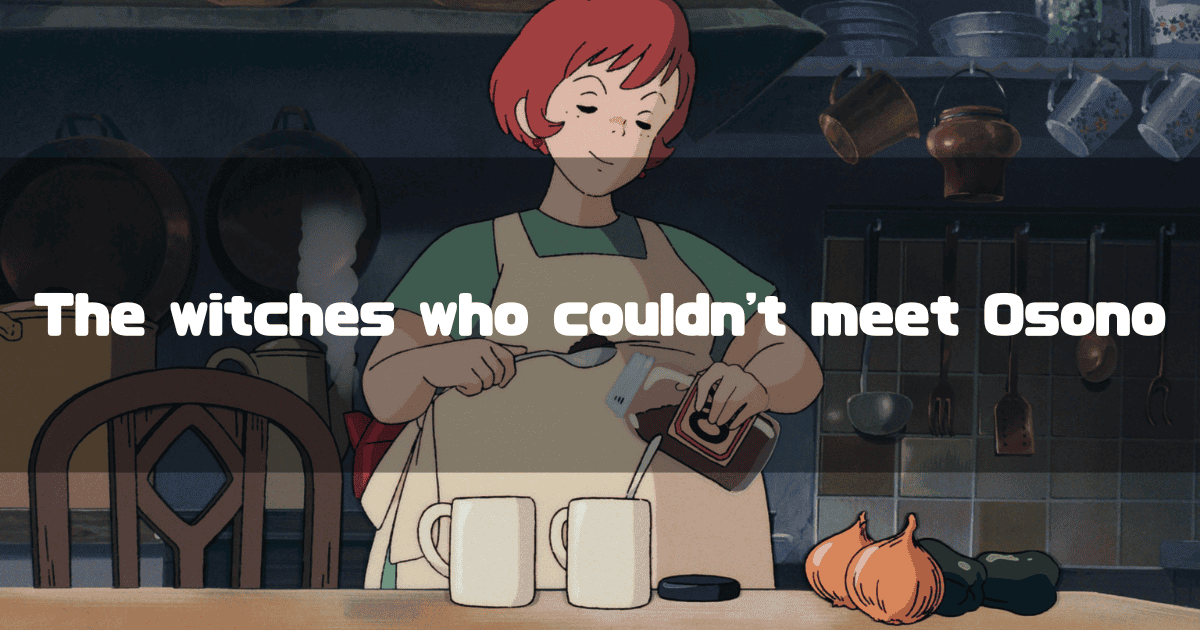
If we view Kiki’s Delivery Service objectively, we must acknowledge a massive plot convenience that audiences happily choose to ignore: the miraculous existence of Osono. (Well, that and the inherited safety net of “the broom my mother gave me,” which we analyzed in a previous deep dive).
Osono’s maternal intervention fundamentally saves Kiki’s life. When Kiki first arrives in Koriko—the picturesque “town with a sea view”—she is immediately hit by the freezing, apathetic stares of the city dwellers. While Kiki’s expectations of a grand parade were undeniably naive, as viewers, we naturally ache for the townspeople to show just a shred of basic kindness.
However, the entire traditional purpose of a witch’s solitary journey is to violently collide with this exact type of societal indifference. They leave home to gain the brutal grit required to survive in a world that doesn’t care about them.
This forces us to imagine the harrowing realities faced by the generations of witches who came before Kiki.
Kiki practically won the lottery by stumbling into Osono’s bakery. Realistically, there is no way every 13-year-old girl gets that lucky. In fact, almost all young witches in history likely never met an Osono.
The terrifying isolation Kiki feels right before Osono calls out to her is the standard, baseline reality for traveling witches. They arrive in strange cities, face total rejection, and wander the streets completely lost. So, how did those historical girls actually survive the coming months?
Stripped of adult protection, they likely had to resort to desperate, grueling strategies just to feed themselves. The “magic” in Miyazaki’s universe isn’t some omnipotent, world-bending power; there is actually very little a witch can do to generate income. Therefore, almost all witches were plunged into sheer poverty and dangerous situations, forcing them to fight tooth and nail to carve out a living.
When viewed through this dark historical lens, the senior witch’s arrogant and frosty attitude suddenly becomes entirely understandable.
She didn’t act coldly just to bully a younger girl. She acted that way because she had survived the crucible. When she casually brushed off her struggles with “Well, there were many things,” she was masking a year of profound isolation, hunger, and terrifying vulnerability.
Just a year prior, that snooty girl was likely just as wide-eyed, bubbly, and naive as Kiki. But the city chewed her up and spit her out. She didn’t just passively “find” a safe haven; she violently established her own territory through the sheer hustle of her “fortune-telling” skills. She built her armor from scratch.
Imagine if this battle-hardened survivor had looked at the bubbly, radio-blasting Kiki and cooed, “Oh, how nostalgic! Wonderful things are waiting for you, do your best!” It would have been a horrific, patronizing lie. Looking at a defenseless rookie about to walk into the meat grinder of the real world, the senior witch likely didn’t know how to process her own trauma. Ultimately, adopting a superior, hardened facade was the only psychological defense mechanism she had left to offer.
The Meta-Narrative: Apologizing for Plot Convenience
Realizing the grim reality of the witch’s journey exposes just how staggeringly miraculous Kiki’s life in Koriko actually turns out to be. For an unaccompanied 13-year-old to thrive in a metropolis, she requires an impossible amount of adult charity. While we love the film for showcasing this inherent human warmth, from a strict screenwriting perspective, it is pure plot convenience.
To balance the scales, the senior witch serves as a meta-narrative apology. By brutally crushing Kiki’s spirits right out of the gate, she absorbs and represents all the historical trauma faced by young witches, allowing the rest of the film to pivot toward a gentler tone.
To put it bluntly, Miyazaki uses her to subtly tell the audience: “Yes, Kiki is going to face emotional hardships, but please turn a blind eye to how conveniently safe her physical living situation is. We know she got incredibly lucky.”
The senior witch is a brilliant, hybrid storytelling device. She enriches the in-universe lore by proving how tough witches must be, while simultaneously acting as a meta-level shield against cynical film critics.
On a psychological level, her icy greeting flawlessly prepares both Kiki and the audience for the jarring, apathetic reality of big-city life they are about to crash into.
No matter how you analyze it, creating a character we love to hate was a stroke of absolute narrative genius.
The images used in this article are from Studio Ghibli Still Images.
Can you name the movie before the scene comes into focus?
Put your visual memory to the test with a blurred Studio Ghibli scene.

Reader Comments