In the cinematic universe of Director Hayao Miyazaki, “memory” is never treated merely as a digital hard drive accumulating data. Instead, it is beautifully depicted as “nourishment” that slowly settles into the unconscious, forming the rich soil from which one’s personality grows.
I believe this philosophical approach to memory is most prominently showcased in two of his greatest masterpieces: My Neighbor Totoro (Official Website), released in 1988, and Spirited Away (Official Website), released in 2001.
At first glance, these two films seem to exist in vastly different worldviews. Yet, they mirror each other perfectly through a shared, bittersweet theme: “the mysterious, magical experiences of childhood are destined to be forgotten as one grows up.” In this article, I will dive deep into the mechanism of “forgetting and growth” crafted by Hayao Miyazaki, centering the analysis on two iconic lines from both works: “It was a dream, but it wasn’t a dream” and “Everything that happens stays inside you, even if you can’t remember it.”
*This is a translated version. The original (Japanese) is available here.
- Forgetting is Not “Loss,” but an “Imprint on the Soul”
While Chihiro’s surface-level memories of the spirit world are wiped clean when she exits the tunnel, Zeniba’s profound wisdom reveals the truth: those terrifying and beautiful experiences have settled into her subconscious. They become the vital psychological nutrients that will forever sustain her “will to live.” - “It was a dream, but it wasn’t a dream” is a Resistance to Logic
As Satsuki and Mei grow into adults, their logical minds will inevitably reclassify Totoro as a whimsical “childhood dream.” However, this iconic shout is their desperate, joyful declaration resisting that very logic, forever engraving the absolute reality of their magical encounter onto their souls. - Spirited Away as the Ultimate Answer Song to Totoro
My Neighbor Totoro leaves viewers with a lingering, melancholic anxiety that “someday, the magic will be forgotten.” Thirteen years later, Spirited Away responds with a comforting thesis: “It continues to exist inside you, even if you can’t remember it.” Miyazaki successfully sublimates the tragedy of oblivion into a necessary, positive device for human growth.
On this pageContents
The “Confirmed Oblivion” in Spirited Away
First, let’s definitively establish how memory is treated at the conclusion of Spirited Away.
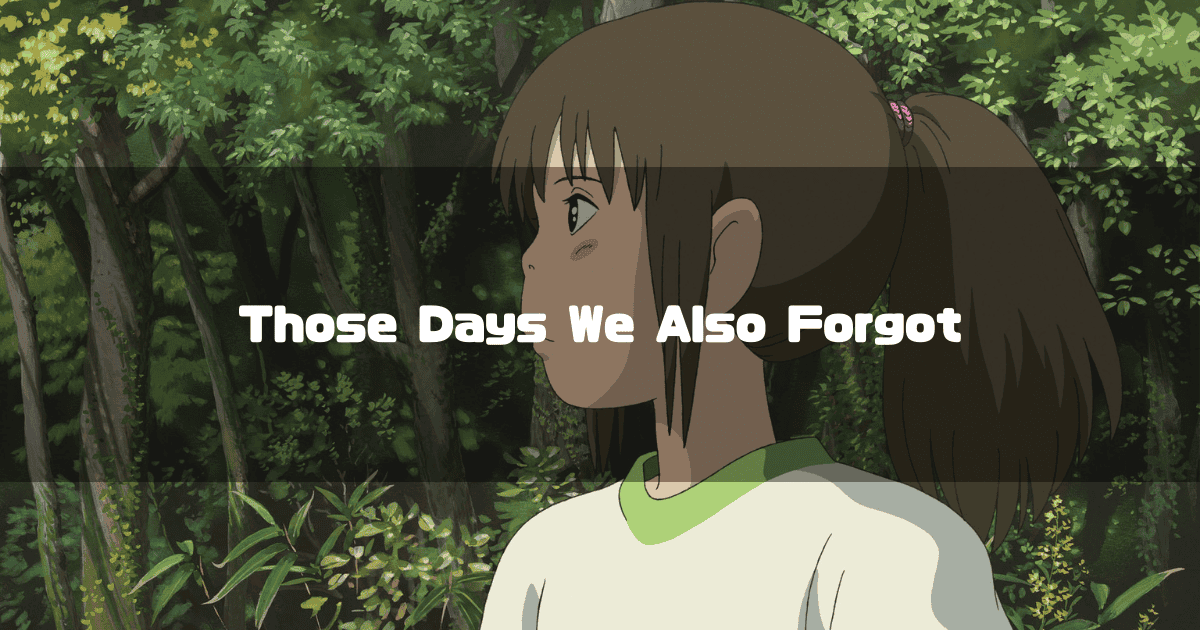
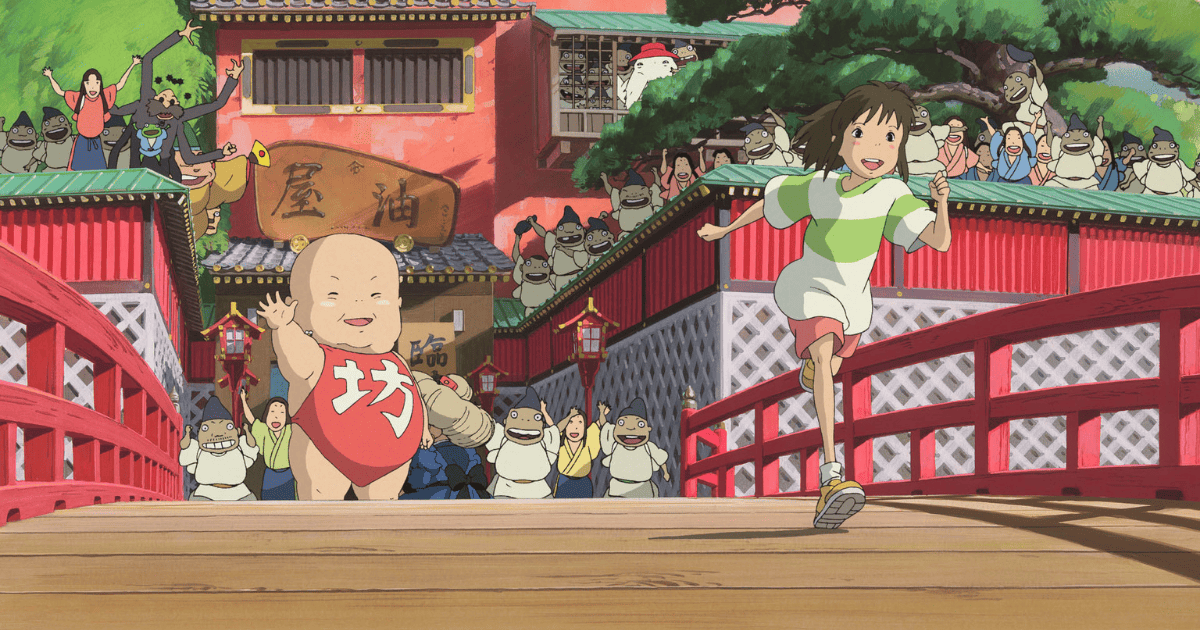
During the climax, Chihiro honors her final promise to Haku and refuses to look back until she has safely exited the red tunnel. When she emerges back into the human world, the magical hair tie given to her by Zeniba briefly glitters—a silent testament that “something” remains. However, Chihiro herself shows absolutely zero signs of consciously remembering anything that occurred in the bathhouse.
This is not merely fan speculation; it is a hard fact explicitly written into the original storyboards by Director Hayao Miyazaki himself.
The stage direction in the storyboard for that final scene explicitly states: “She doesn’t remember anything…”


In other words, the grueling physical labor, her profound emotional connection with Haku, and her terrifying confrontation with No-Face have been completely wiped from her surface consciousness.
The “Imprint on the Soul” Dictated by Zeniba
If her memory is erased, does that mean her entire journey was pointless? Absolutely not. The key to unlocking the film’s philosophy lies in the parting wisdom Zeniba imparts to Chihiro:
“Everything that happens stays inside you, even if you can’t remember it.”
(Original Text in Japanese)
「一度あったことは忘れないものさ、想い出せないだけで。」
This dialogue is not just a comforting platitude meant to soothe a child. It is Hayao Miyazaki’s definitive thesis on the nature of human memory.
For the original Japanese, romanization, English subtitle, and a closer translation analysis of this line, see our guide to memorable Spirited Away quotes.
Chihiro has indeed crossed a threshold where she “cannot remember.” But, as Zeniba brilliantly articulates, an inability to recall is not synonymous with “having lost” the experience entirely. The trauma, the love, and the triumphs have sunk to the very bottom of the vessel that is Chihiro, fundamentally altering her subconscious architecture.
In the opening scene, Chihiro is a lethargic, whining modern child slumping in the back seat of an Audi. But look closely at her expression in the final frame after exiting the tunnel. Her eyes are sharp, grounded, and resilient. Even though the specific memories are gone, the “will to survive” and the “self-esteem” she forged in the spirit world are permanently imprinted into her DNA. That is the triumphant, invisible victory of Spirited Away.
The “Inevitable Oblivion” in My Neighbor Totoro
Now, let’s pivot our analytical lens to My Neighbor Totoro.
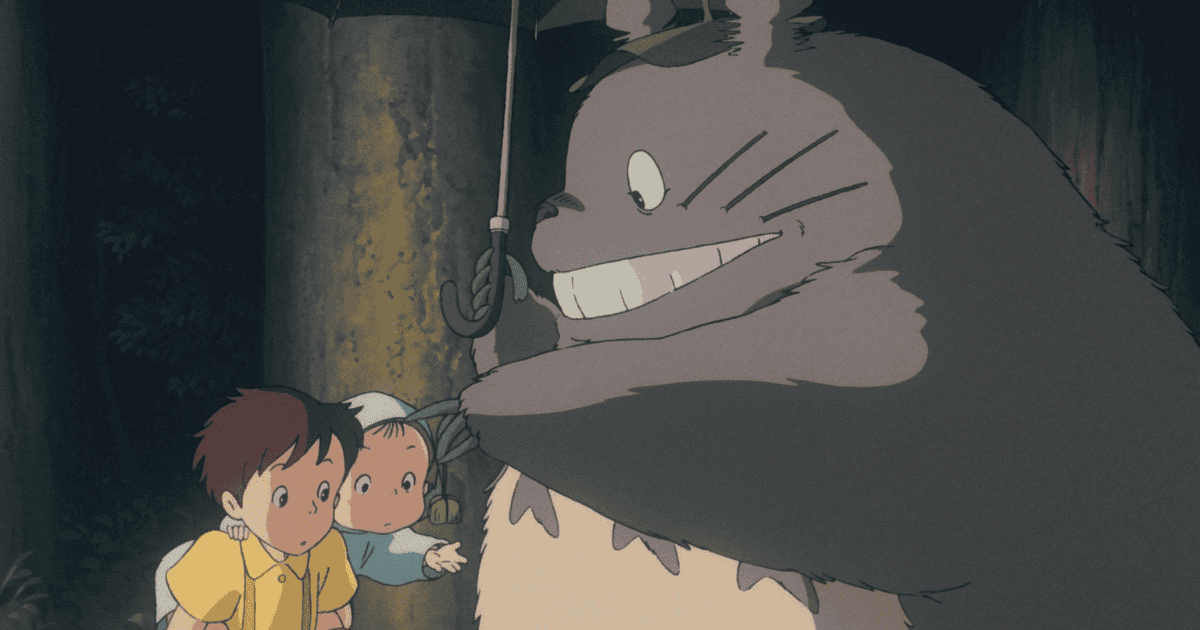
The magical entities Satsuki and Mei encounter—Totoro and the Catbus—are not framed as psychological delusions. Within the context of the film, they are physical, undeniable realities. Yet, the film is haunted by a quiet, almost cruel “expiration date.”
The Day Totoro Becomes Invisible
The film never explicitly shows the tragic moment Satsuki and Mei forget about Totoro. Even in the beautiful watercolor illustrations during the end credits, the girls appear to still be living in the warm afterglow of their magical summer.
However, when we view the film through the inescapable lens of “growing up,” it becomes painfully obvious that they are fated to eventually forget the forest spirit.
- The village elders, such as Kanta’s grandmother, never speak of Totoro as a present reality. At best, he is relegated to nostalgic folklore: “I used to see them when I was a child.”
- The Soot Sprites (Makkuro Kurosuke) are immediately dismissed by the adults as mere “yokai” (spirits) or playful childhood imagination.
Given this societal framework, there is an overwhelmingly high probability that as Satsuki and Mei transition into adulthood, their rational minds will forcefully re-categorize the events of that summer as “just a vivid childhood dream.” Or worse, they may bury the memories entirely in the abyss of oblivion.
Want to explore why Totoro appeared in the first place? Read our psychological breakdown:
Why Totoro Only Appears When Parents Look Away
The Defiant Truth of “It was a dream, but it wasn’t a dream!”
This looming threat of oblivion is exactly why the scene where Satsuki and Mei shout in unison, “It was a dream, but it wasn’t a dream!“, is so emotionally devastating.
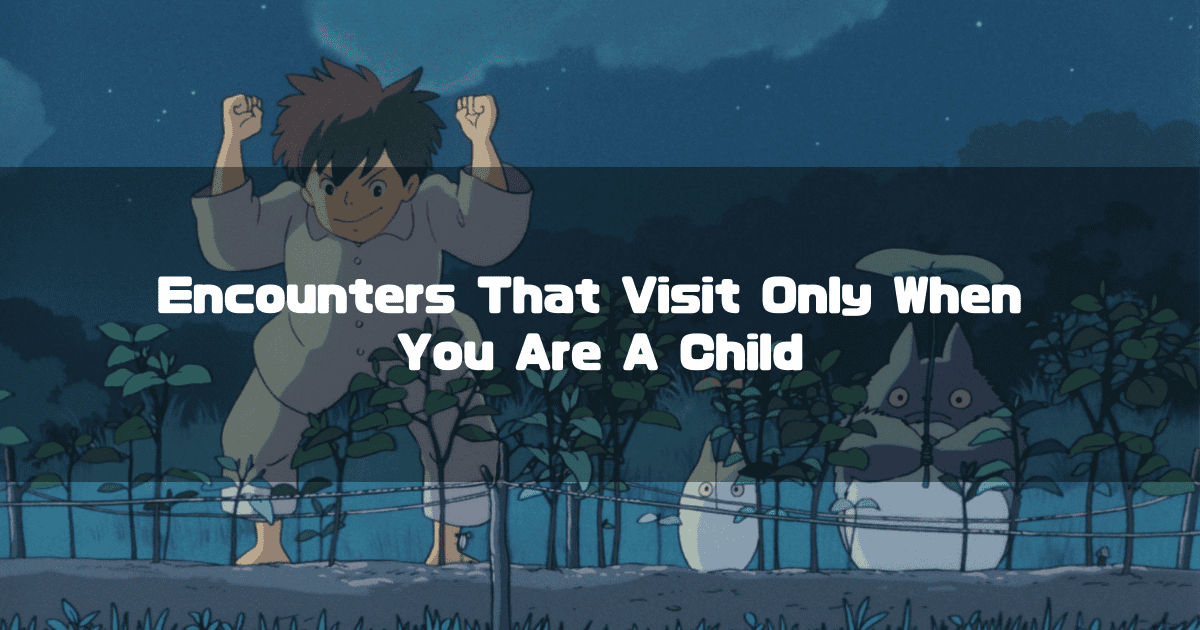
The girls scream this phrase while dancing in the garden, joyously confirming that the magical nuts gifted to them by Totoro have physically sprouted into a massive tree. It is their raw, unfiltered confirmation that the magic was real.
However, when we reinterpret this line through the specific context of “forgetting,” it takes on a deeply profound, secondary meaning.
Eventually, society and the relentless march of time will convince them that the midnight tree-growing ceremony “was a dream.” The cold logic of adulthood will demand they classify it as a fantasy. Yet, deep within their marrow, the emotional reality of that night will forever act as the foundation of their empathy—a feeling that “wasn’t a dream.”
The awe of nature, the wind rushing past them on the Catbus, the fluffy warmth that cured their agonizing loneliness while their mother was dying… Even when those specific details fade into “fleeting dreams,” they will continue to dictate the kindness of their adult lives as “certain experiences that were not dreams.” In this light, that famous line is simultaneously a tragic prophecy of their impending adulthood, and a fierce, defiant declaration of resistance against it.
For the original Japanese, romanization, English subtitle, and a closer translation analysis of this defining line, see “It was a dream. But it wasn’t a dream.” in our guide to memorable My Neighbor Totoro quotes.
Spirited Away: The Ultimate Answer Song to Totoro
Let’s connect the philosophical threads of these two masterpieces.
When the credits roll on My Neighbor Totoro, the audience is left with a quiet, lingering anxiety. Totoro is explicitly a privilege reserved only for the innocent. Therefore, a profound melancholy hangs over the film, suggesting that the very act of “growing up” is synonymous with “losing the magic.”
However, thirteen years later, Miyazaki crafted Spirited Away to deliver a resounding, definitive cure to that exact anxiety.
“Even if you forget, the magic never disappears.”
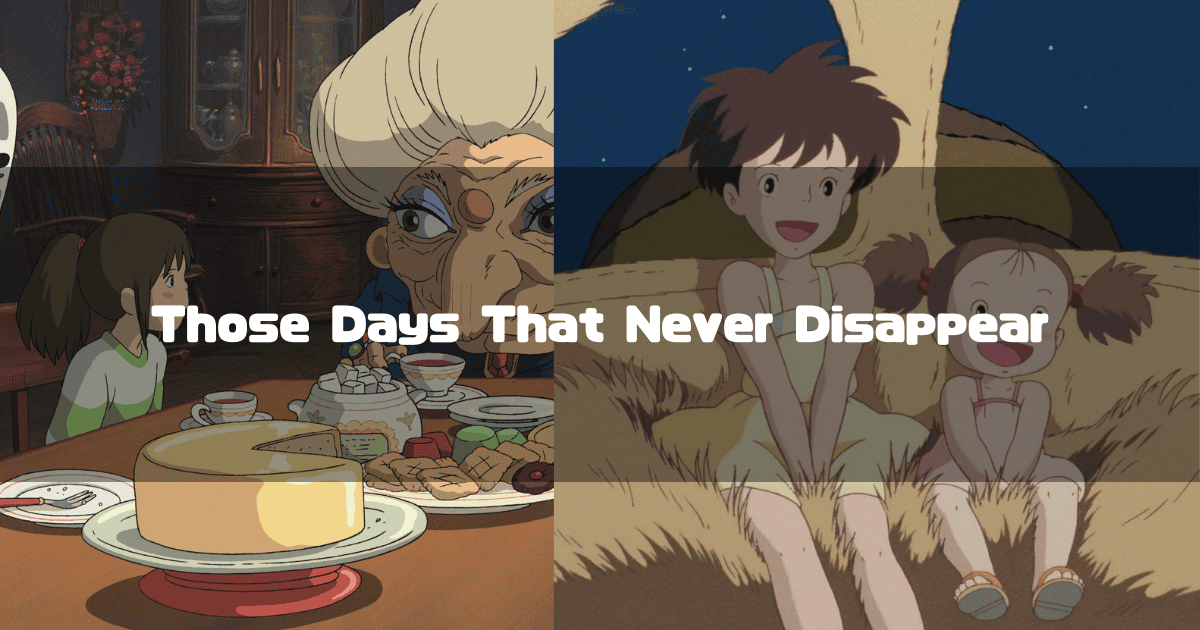
Chihiro lost her conscious memories of the bathhouse. Satsuki and Mei will inevitably lose their conscious memories of the forest guardian. Yet, Zeniba’s dialogue and Chihiro’s radically matured posture at the end of the film serve as absolute proof that “forgetting” is never a true “loss.”
In many ways, the entire narrative architecture of Spirited Away functions as a massive, comforting “answer song” to My Neighbor Totoro. Miyazaki took the desperate, sensory plea of “It was a dream, but it wasn’t a dream” from 1988 and structurally validated it in 2001, proving definitively that “the memories remain forever, even when the mind fails to recall them.”
“Satsuki and Mei” Fused into a Single Girl
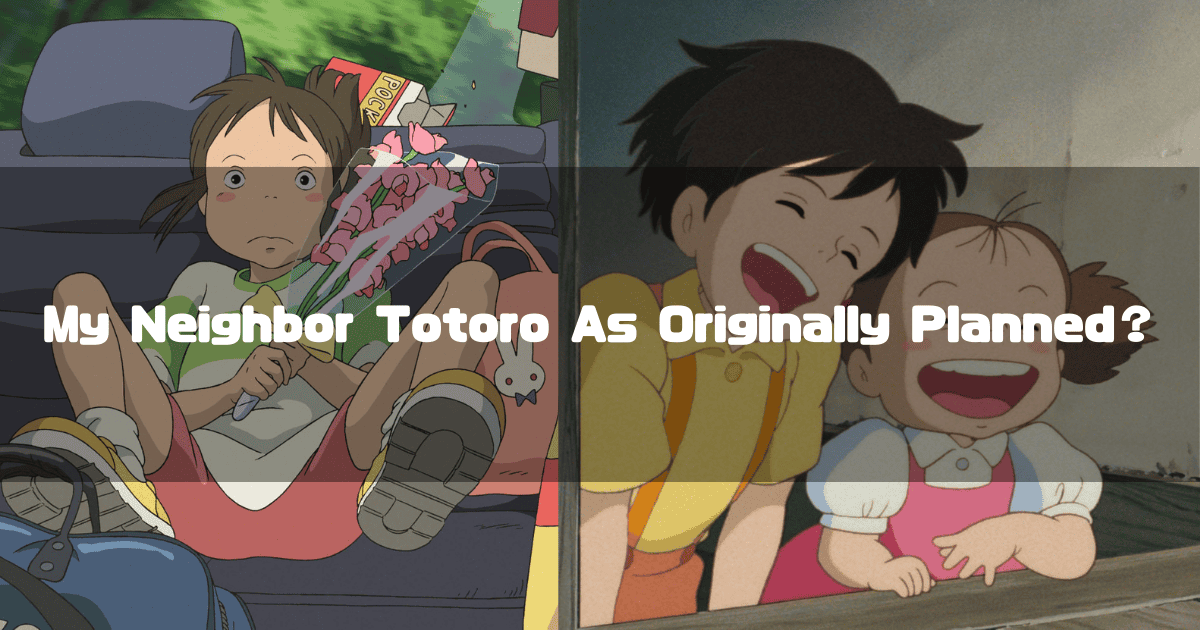
Finally, there is an incredible piece of meta-textual character design that inextricably links these two films.
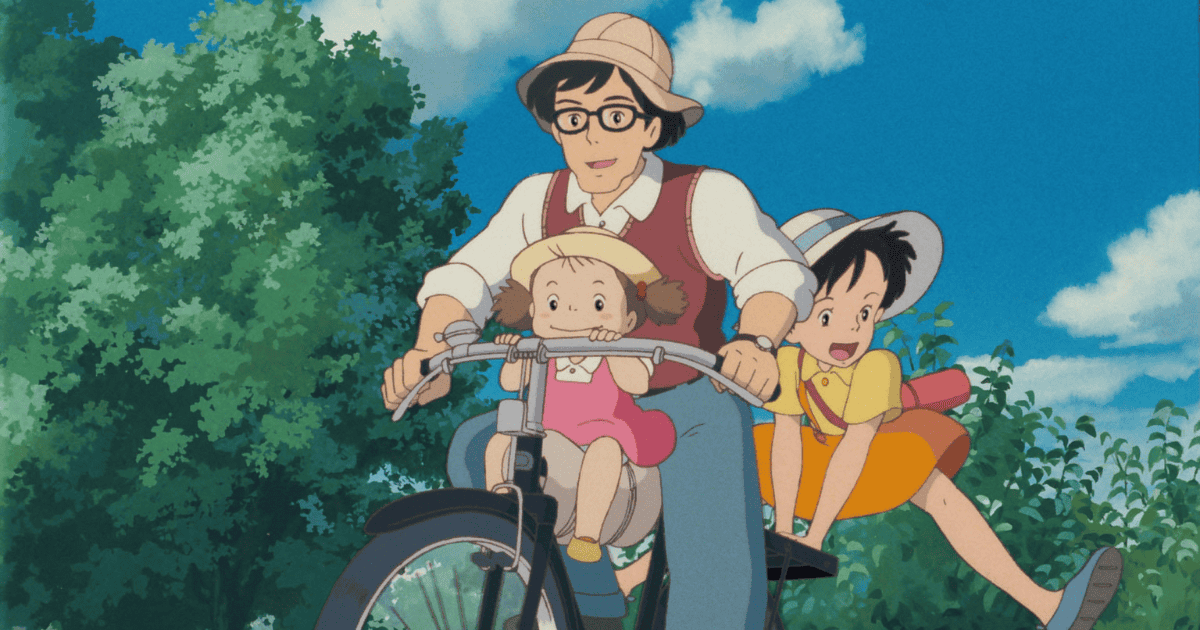
It is a famous piece of Ghibli trivia that during the initial concept phase of My Neighbor Totoro, there were no sisters. The protagonist was originally just a single girl. If you look closely at the iconic theatrical poster of the girl standing next to Totoro in the rain, you will notice she isn’t Satsuki, and she isn’t Mei. She is a fascinating composite character, possessing traits of both sisters.
If Miyazaki had stubbornly stuck to that original pitch and written a film about that “single girl” navigating a magical world to save her family… what would that movie look like?
Actually, wouldn’t that movie look exactly like Chihiro in Spirited Away?
Chihiro’s personality is a flawless amalgamation of the sisters. She carries the crushing sense of responsibility and the trauma of being violently swayed by her parents’ mistakes (Satsuki), perfectly blended with the uninhibited, reckless, emotionally raw innocence of a toddler (Mei).
When exploring the theme of “childhood resilience” in 1988, Miyazaki split the psychological burden between two sisters. Thirteen years later, he confidently fused those burdens back into a single, complex protagonist. Viewed through this evolutionary lens, Spirited Away is not just a spiritual successor; it is Hayao Miyazaki’s ultimate, updated reprise of My Neighbor Totoro.
Conclusion: Oblivion as the Ultimate Proof of Growth
“It was a dream, but it wasn’t a dream.”
“Everything that happens stays inside you, even if you can’t remember it.”
These two iconic phrases act as the twin pillars of Hayao Miyazaki’s grand hymn to childhood. The terrifying, mystical events we experience as children, and the overwhelming sense of unity we feel with the natural world, are inevitably eroded and forgotten as the concrete reality of adulthood sets in.
However, Miyazaki demands that we do not view this as a tragedy. It is precisely because the human mind can forget that we are able to adapt, survive, and advance to the next stage of our lives. And even when the conscious memory is wiped clean, the visceral warmth of sleeping on Totoro’s chest, or the exhilarating terror of flying through the sky with a dragon, never truly evaporates. It simply sinks into the bedrock of our souls, quietly dictating who we become.
Every single one of us has grown into adulthood by leaving countless precious memories behind. Yet, those inexplicable, sudden waves of nostalgia we feel on a summer afternoon, or those fleeting, groundless bursts of childhood omnipotence, are not random. They are the quiet, eternal gifts left behind by the “Totoros” and “River Gods” we met long ago, and bravely forgot.
Can you name the movie before the scene comes into focus?
Put your visual memory to the test with a blurred Studio Ghibli scene.

Reader Comments