
Summer Wars (Official Website) is a spectacularly vibrant, feature-length animated film directed by Mamoru Hosoda, released in 2009.
I vividly remember watching this movie with a friend during my student days. It instantly became my absolute favorite Hosoda film, and to this day, it remains one of my top cinematic experiences across all directors and genres.
However, there was one specific scene that deeply bothered me from my very first viewing. Today, I consider it to be a brilliantly written, “incredibly good scene,” but it took me roughly three re-watches before I could finally grasp its emotional weight (which also proves just how much I loved the film, seeing it that many times during its theatrical run).
The scene that triggered my unease was: “The scene where Grandma Sakae makes all the phone calls.“
*This is a translated version. The original (Japanese) is available here.
- The Phone Scene is a Symbol of “Unrealized Potential”
Logically, the crisis in OZ might have been resolved even without her phone calls. However, that scene was narratively crucial. It physically demonstrates the massive accumulation of Grandma’s life influence, and more importantly, it represents the “alternate future” she could have lived if she hadn’t been bound by her family duties. - Supporting Wabisuke was an Act of “Liberation,” Not “Exile”
While it’s easy to assume she sent Wabisuke away out of dark resentment, the psychological truth is far more poignant. Unlike herself, who was forever chained to the “Family” (Ie), her secret financial support was a desperate wish for Wabisuke to “go somewhere that is not here” and achieve true freedom. - The Growth of Kenji: “Please Take Care of Us”
The iconic phrase “Please take care of us” (Yoroshiku onegaishimasu) that Kenji screams at the climax is the exact reply he was too terrified to give Grandma Sakae during their first meeting. It serves as the ultimate proof of his growth. While he fits the “math nerd” stereotype perfectly, he feels incredibly authentic to anyone who has studied in STEM fields. - Women Control the Hearth, Men Fight the “Wars”
In the matriarchal Jinnouchi family, women possess absolute authority over the domestic sphere (especially the food). This structure forces the men to seek validation and prove their worth through external, physical “battles.” Yet, even the final, digital victory is secured by a woman playing Hanafuda—a game taught to her by Grandma. It is a brilliant story where “men are essentially rendered obsolete.”
On this pageContents
The Problem: Did Grandma Sakae Even Need to Make Those Calls?

In Summer Wars, immediately after the rogue AI “Love Machine” throws the digital world of OZ and global infrastructure into chaos, Grandma Sakae takes out her rotary phone and begins dialing. She calls a massive network of relatives and highly influential figures—including the Superintendent General of the Metropolitan Police. As a result of her rapid-fire pep talks, panic subsides, and total disaster is temporarily averted. The film heavily implies that this stabilization was “thanks to Grandma.” But is that actually true?
The profound unease I felt during my first viewing stems exactly from this point. Logic dictates that “even if Grandma hadn’t made a single phone call, the situation would have eventually resolved itself.“
At that exact moment, civil servants, police officers, and technicians across Japan and the globe were already scrambling to contain the chaos. They were doing their jobs. Even without Grandma’s scolding, the gears of society were turning toward a solution. When she yelled through the receiver, “I was just about to do it!”, the people on the other end were likely telling the truth—official orders were probably already being drafted.
Despite this logistical reality, the film frames her phone calls as a massively heroic, triumphant sequence. This disconnect is the true nature of the discomfort I felt. However, as I mentioned earlier, I now view this sequence as an absolute masterpiece of character writing. It is not merely a scene designed to show off Grandma’s competence; it is a profound sequence that unearths the hidden history of the crushing burdens she has carried her entire life.
So, why was that specific scene necessary from a storytelling perspective?
To unravel that, we must confront the greatest psychological mystery of Summer Wars: “Why did Grandma Sakae secretly fund Wabisuke?” To answer this, let’s first examine the agonizing history of Grandma Sakae.
The Prequel to Summer Wars: Grandma Sakae’s History of Anguish
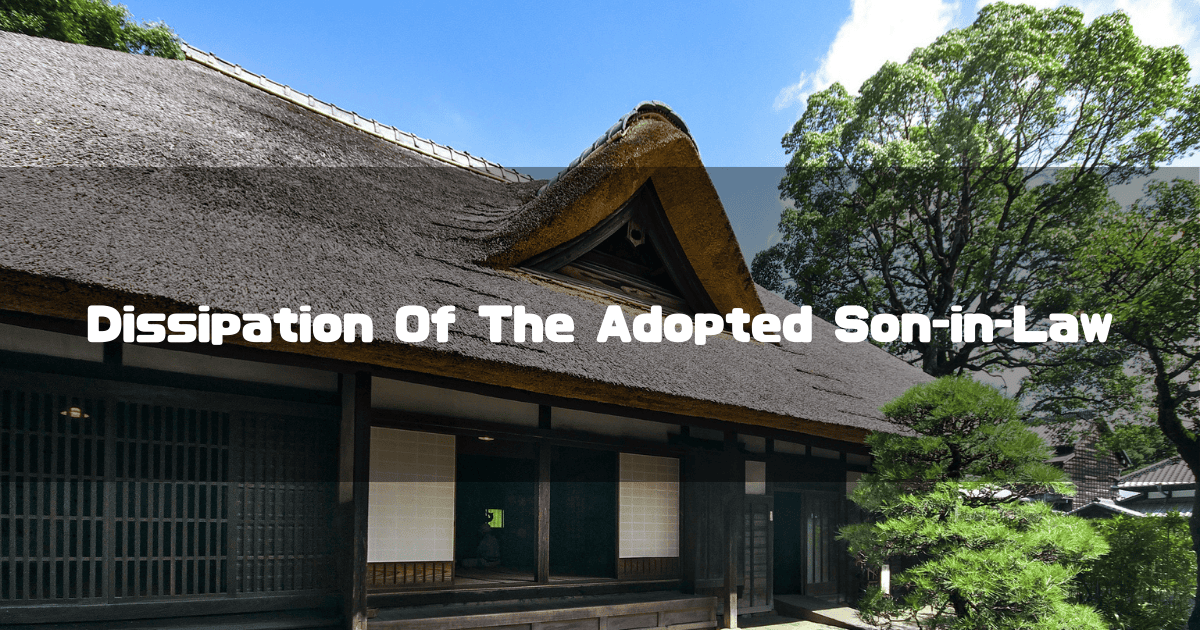
Throughout Summer Wars, Grandma Sakae commands the screen as an absolute, untouchable monarch.
However, if you piece together the fragmented dialogue regarding the family’s past, a startling truth emerges: Grandma only ascended to the throne of absolute monarch relatively recently, and her current status was forged entirely through her own blood, sweat, and tears.
Grandma Sakae is the direct, bloodline descendant of the prestigious Jinnouchi family. Her spouse, therefore, was an “adopted son-in-law” (Mukodono). However, her husband seemingly lived a life of reckless freedom. He squandered the family fortune, took a mistress, and even fathered an illegitimate child (Wabisuke). Of course, his reckless behavior might have stemmed from the intense psychological stress of living as an “adopted son-in-law” in a powerful family, but there is no denying he acted the part of a complete “fool.”
But doesn’t this strike you as strange? If the Jinnouchi family was inherently a matriarchal dynasty where women held absolute power, her husband would never have been allowed to act this way. Given Sakae’s staggering intellect and capability, the Jinnouchi family should have flourished and expanded far beyond what we see in the film (even accounting for the economic devastation of the post-WWII era).
Yet, the stark reality is that the Jinnouchi family’s assets were drastically depleted due to the sheer dissipation and financial recklessness of Grandma Sakae’s husband. Something doesn’t add up.
Allow me to digress briefly and share a personal anecdote to illustrate this dynamic.
My mother’s family ran a traditional farm, and for two consecutive generations, they took in adopted sons-in-law. Those men were my grandfather and my uncle.
On the night of my grandfather’s wake, my heavily intoxicated uncle muttered a deeply revealing sentence: “In the end, I never had a beer poured for me in this house, not even once.”
Even though both men were adopted sons-in-law, a strict, unspoken hierarchy existed, and it was undoubtedly my grandfather (who serves as the equivalent to Grandma Sakae’s father figure in this analogy) who truly controlled the household.
My grandmother and my aunt were the direct bloodline descendants, but that did not automatically grant them real, functional power over the men.
While it is admittedly flawed to compare the wealthy, aristocratic Jinnouchi clan with a rural farming family, I strongly believe that even the brilliant Grandma Sakae was forced to submit to the suffocating traditions of the Japanese “Family” system (Ie), which inherently placed “men” at the top of the hierarchy.
Only when the “nuisance above him” (Sakae’s father) passed away did Grandma Sakae’s husband finally spread his wings and indulge in his destructive, selfish lifestyle.
It was likely only after her foolish husband’s death that Grandma Sakae seized total control, utilizing her sheer brilliance to salvage the ruined estate and forge the “Grandma Sakae Empire” we witness in the film. The crucial takeaway is this: “the matriarchal system with Grandma at the absolute apex” was not the traditional default of the Jinnouchi family. It was a kingdom she built with her own two hands out of necessity.
Her current power is the crystallization of a lifetime of silent suffering.
Knowing this agonizing history, we must ask the pivotal question: Why did a woman who fought so hard to save her family’s estate secretly sell a valuable mountain to fund the escape of Wabisuke?
She not only took in the illegitimate child her husband created with a mistress—a child who was the living embodiment of the damage inflicted upon the Jinnouchi family—and raised him with genuine love, but she supported Wabisuke financially to the point of creating a massive, unforgivable secret she couldn’t share with her own flesh and blood.
The Deepest Mystery: Why Did Grandma Sakae Support Wabisuke?

Let’s dissect the psychological motives behind Grandma Sakae’s seemingly inexplicable decision to fund Wabisuke’s American ambitions. First, I will present the most cynical, negative interpretation.
Reason 1: The Dark Interpretation (Exile)
One of the most emotionally charged flashback scenes in Summer Wars shows a young, stoic Sakae walking hand-in-hand with a very small Wabisuke as she brings him into the family estate.
In that scene, Sakae claims she is happy to welcome him into the family. But logically, that cannot be entirely true. Any normal human being would be seething with internal rage and humiliation.
However, a woman of Sakae’s profound character and aristocratic grace is not cruel enough to hurl her righteous anger at an innocent, terrified child entering a hostile new environment. She was accomplished enough to bury her ugly, natural emotions and offer him words of comfort.
Yet, as Wabisuke grew older—constantly isolated and treated as a pariah by the rest of the extended family—it would not be strange if a darker, more resentful emotion began to sprout within Grandma Sakae.
Fortunately or unfortunately, Wabisuke possessed a staggering, once-in-a-generation intellect, and he desperately wanted to escape the suffocating confines of the Jinnouchi estate. If Sakae secretly sold a mountain behind her family’s back, shoved a massive sum of cash into his hands, and told him “You can do it,” it effectively means Grandma Sakae “spectacularly, permanently exiled Wabisuke from her sight.“
If we view her actions through this dark lens, the climactic scene where Grandma Sakae nearly breaks down in tears when Wabisuke says “I worked hard,” takes on a devastating new meaning. It becomes an “emotion born purely from the crushing weight of guilt.” Her tears are saying, “I truly just wanted to banish you from my life to ease my own pain, but you went to America and worked yourself to the bone without ever realizing I was pushing you away.“
Grandma Sakae projects an aura of absolute perfection, but it is entirely plausible that a dark, human desire to keep the living proof of her husband’s infidelity as far away as possible existed deep within her soul.
However, while I believe a microscopic fraction of this resentment may have lingered in the darkest corners of her heart, I firmly believe her primary, essential motive for supporting Wabisuke was something entirely different.
Reason 2: The True Interpretation (Liberation)
So, what was Grandma Sakae actually thinking? I believe her deepest, unspoken prayer was this: “Wabisuke, you—and you alone—must escape this place and go somewhere far away.“
Sakae was a woman of terrifying, unparalleled capability.
Had she been born a man in that era, she undoubtedly would have conquered the world. She would have lived a vastly different, exponentially larger life.
However, because she was born a woman, and the direct descendant of the Jinnouchi bloodline, she was shackled to the estate. She was forced to take a husband and dedicate her massive intellect purely to the survival of the “Family.” While she may not have hated her life, it is impossible to believe that a woman of her genius didn’t spend sleepless nights thinking, “I was meant for a different life. I could have been so much more.“
What did Sakae see when she looked at Wabisuke?
Did she not perfectly overlay the phantom of her own unfulfilled potential onto this brilliant boy? Here was a child treated like garbage by his own blood, yet desperately pouring his soul into his studies to prove his worth and escape.
By handing him the money, she was offering him the ultimate encouragement. She was saying, “I was trapped. I could not escape my duty. But you are different. You must not be bound by the chains of the ‘Family.’ You must go somewhere that is not here and achieve the greatness I was denied.“
However, this is an impossible sentiment to explain to a traditional, aristocratic family. First, embezzling family assets to fund an “illegitimate child” is a massive scandal. But more dangerously, if she confessed her true reasoning—that she wanted him to escape the family—it would be a total, philosophical rejection of the “Family” system itself. It would fundamentally collapse the very kingdom she had sacrificed her life to build and protect.
Her own fierce intelligence trapped her.
In the end, to balance the preservation of the Jinnouchi empire with her profound, liberating love for Wabisuke, she had no choice but to keep the sale a secret and let Wabisuke take the fall as the “thief.” This necessary deception aligns perfectly with the “dark guilt” mentioned in the first theory.
The “Grandma Sakae’s Wabisuke Support Incident” was an incredibly complex, agonizing act of maternal sacrifice.
And with this profound psychological context established, we can finally return to our original question.
Why was “the scene where Grandma Sakae calls everyone” narratively necessary?
The Future That Could Have Been

The vast network of people Grandma Sakae contacts during the OZ crisis consists of individuals wielding massive political, economic, and social “power.”
She possessed these connections partially “because she was the head of the Jinnouchi family,” but primarily, these powerful men stopped and listened only because it was Sakae calling. But on a symbolic, thematic level, the people on the other end of the line represent something much more profound:
“They represent the alternate futures Sakae could have achieved if she had been allowed to leave the estate.“
The reason I felt a nagging discomfort when I first watched the film was my logical brain screaming, “The crisis would have been resolved by these professionals without her phone calls!” But as I rewatched the film and understood the tragedy of her life, the scene transformed.
It ceased to be a simple scene of a cool grandma barking orders. It became a monumental visual representation of the “History of a brilliant woman’s silent war against her own Family.” It succinctly expresses that “her massive network is the hard-earned result of a woman named Sakae living desperately against the odds, while simultaneously serving as a tragic reminder that despite her world-class ability, she was never allowed to stand in the rooms where those decisions are made.”
Today, it exists in my mind as one of the most emotionally devastating and beautiful scenes in modern anime.
Writing an analysis like this might make me sound like someone obsessed with progressive gender theory, but I actually don’t view the concept of the “Family” as an absolute villain in this film. But then again, that might just be because I view it through the lens of a “man.”
Appendix: Men, Women, and the Math Nerd

The Authenticity of Kenji Koiso
While the core of this article focuses on the tragic beauty of Grandma Sakae and Wabisuke, we cannot forget our protagonist, the timid math genius, Kenji Koiso.
As someone who graduated from a university mathematics department, I can confidently say that guys exactly like Kenji absolutely exist.
His staggering mathematical talent, his slight, unassuming physique, and his painfully awkward personality are flawlessly rendered.
I have a very specific, vivid memory of a classmate who matched his exact profile (unfortunately, I am not that math genius).
While Kenji might feel like a tired “math nerd stereotype” to general audiences, anyone who has spent time in STEM fields knows he is grounded in absolute reality. I have zero complaints about his characterization.
When I first watched Summer Wars, I didn’t fully comprehend the emotional weight of Kenji’s final, desperate, nose-bleeding scream: “Please take care of us!” (Yoroshiku onegaishimasu!).
However, upon realizing that this was the exact, formal greeting he was too paralyzed by fear to give Grandma Sakae when she commanded him to “Please take care of Natsuki” during the initial Wabisuke incident, the climax became incredibly satisfying.
The trope of the “quiet, awkward guy who becomes a fearless titan when the people he loves are threatened” is the ultimate “Math Guy” or “Science Guy” fantasy. Because truly talented people don’t stay silent when it matters most.
The Men’s Useless War
Throughout the film, the Jinnouchi family operates as a strict “matriarchal dynasty.” The women hold the true, foundational power. The most visceral proof of this? The women entirely control the food.
Watching the women frantically cook massive feasts for the reunion, a cynical viewer might think, “In the end, this movie is just forcing the women back into traditional domestic labor.” But the power dynamic is far more complex.
It is a long-standing domestic trope that when a wife asks, “What do you want to eat today?”, the absolute worst answer a husband can give is, “Anything is fine.”
Why? Because by answering “Anything,” the man is actively dodging the mental labor of deciding, passing the mental load entirely back to the woman. It is deeply irritating.
However, this domestic friction never occurs in the Jinnouchi family.
The women wield absolute authority over the menu, the cooking methods, and the seasoning. It is their domain.
Therefore, the men are reduced to silently accepting whatever is placed in front of them. If a Jinnouchi man was ever foolish enough to be asked what he wanted to eat, he would have to carefully cross-reference the entire week’s menu and timidly suggest, “Perhaps… X would be nice?” To which the women would effortlessly shoot him down: “No, considering the ingredients we have, Y is better.”
Under no circumstances would a Jinnouchi man ever dare to utter the cowardly phrase, “Anything is fine.”
In the end, the women in Summer Wars are not “being forced to cook”; they are “cooking exactly what they desire to eat.”
The men are simply permitted to partake in the leftovers of their wives’ absolute authority. Even in its slightly diminished modern state, the Jinnouchi family still possesses immense wealth and pride, and the men are completely subjugated within the domestic sphere.
Because they are stripped of power inside the house, these men are forced to vent their pent-up energy and seek validation through aggressive “external wars.”
I believe this psychological emasculation is the exact reason why only the men actively engage in physical, digital combat against “Love Machine” in the middle act of Summer Wars. They desperately need to prove their worth.
Yet, in a brilliant thematic subversion, their aggressive, masculine war tactics completely fail. In the end, it is Natsuki—a woman—who saves the world by playing a game of Hanafuda. And crucially, it was a game of strategy taught to her by the ultimate matriarch, Grandma Sakae.
When you strip away the digital avatars, Summer Wars is an incredible story where “the men are fundamentally obsolete.” And honestly, I think that’s perfectly fine.
[pochipp id=”11799″]



Reader Comments