
My name is Sifr. I am an independent film writer based in Japan, the creator of SifrInsight, and I also work in education.
SifrInsight focuses primarily on in-depth writing about movies and animation. I am especially interested in character motivations, themes, symbolism, memorable scenes, production details, and the small choices that can change the way a film is understood.
My aim is not simply to summarize what happens in a movie, but to examine why characters behave as they do, how individual scenes connect to the larger story, and what the filmmakers may have been trying to express.
I started this blog on September 1, 2020, shortly after having a lower wisdom tooth extracted.
The site was originally called “Number5.” The name came from the jersey number I wore while playing baseball in junior high school. However, after discovering that “Number5” was already widely used elsewhere, I decided to give the site a more distinctive identity. On May 20, 2023, the blog became “SifrInsight.”
Although film and animation are now the main focus, I may occasionally write about home appliances, services, or other things I personally use. Blog posts written by other people have helped me many times, so when I have information that may genuinely be useful to someone else, I would like to share it here as well.
On this pageContents
How I Approach Film Analysis
The starting point for every article is the film itself.
I believe the most important part of writing about a movie is first asking what I thought and noticed simply by watching the work. I do not want outside commentary to replace my own reading of a film.
At the same time, some films have an unusually rich body of production materials, interviews, storyboards, documentaries, books, and other primary or near-primary sources. Studio Ghibli is the clearest example.
When such materials are available, I use them to verify, challenge, or deepen my interpretation. In other words, I begin with the film, form my own reading, and then consult relevant materials when they can help explain how the work was actually conceived and produced.
Materials Related to Studio Ghibli Works
SifrInsight contains many articles about Studio Ghibli, partly because I personally love the studio’s films and partly because an extraordinary amount of material exists about their production.
When I began building my collection, Studio Ghibli films were generally not available through domestic streaming services in Japan. Watching them repeatedly therefore often meant relying on television broadcasts or commercially released discs. Over the years, I gradually began collecting the Blu-rays myself.
At present, I own the following:
- Nausicaä of the Valley of the Wind
- Castle in the Sky
- My Neighbor Totoro
- Grave of the Fireflies
- Kiki’s Delivery Service
- Porco Rosso
- Ocean Waves
- Pom Poko
- Whisper of the Heart
- Princess Mononoke
- Spirited Away
- Howl’s Moving Castle
- Tales from Earthsea
- From Up on Poppy Hill
- Ponyo on the Cliff by the Sea
- Arrietty
- The Tale of the Princess Kaguya
- The Boy and the Heron (UHD Blu-ray)
- Ghibli ga Ippai Special Short Short
I hope to complete the collection someday. For now, however, I mainly use the discs I already own when revisiting films and preparing articles.
I also own the manga version of Nausicaä of the Valley of the Wind and the UHD Blu-ray of Lupin III: The Castle of Cagliostro.
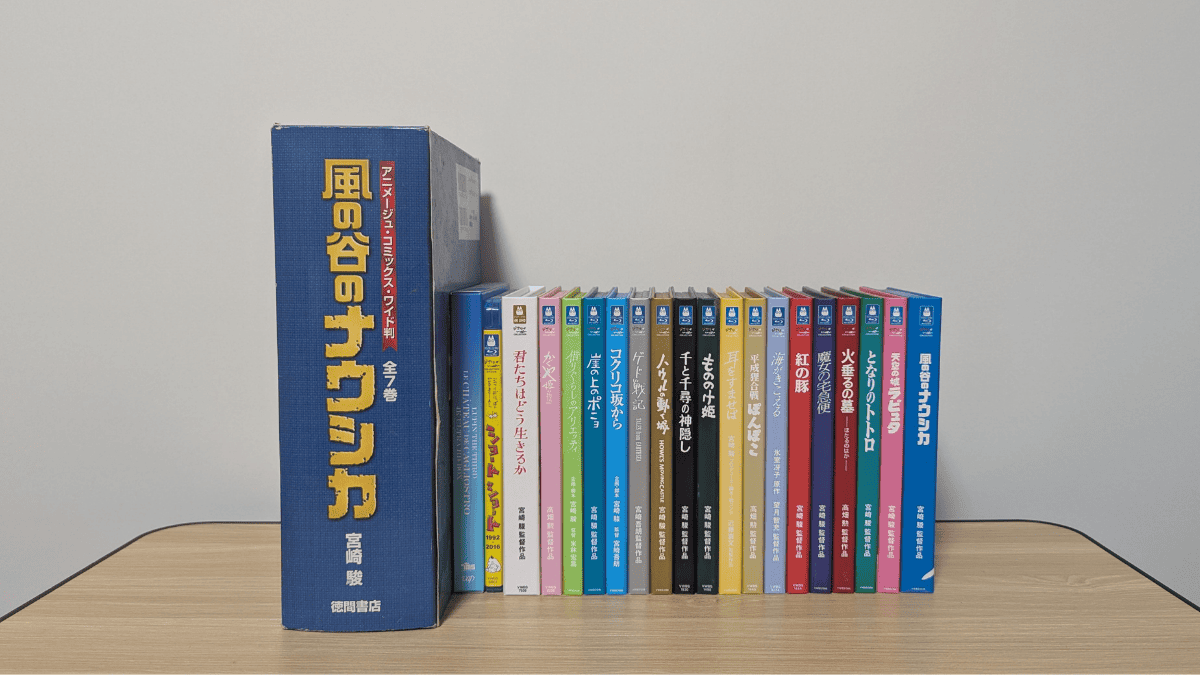
For Studio Ghibli works in particular, these physical materials are useful because repeated viewing often reveals details that are easy to miss the first time. They also provide a foundation for comparing what appears on screen with information found in storyboards, production records, and interviews.
Production Documentaries
Studio Ghibli’s films are fascinating, but I am equally interested in the documentaries that show how those films were actually made.
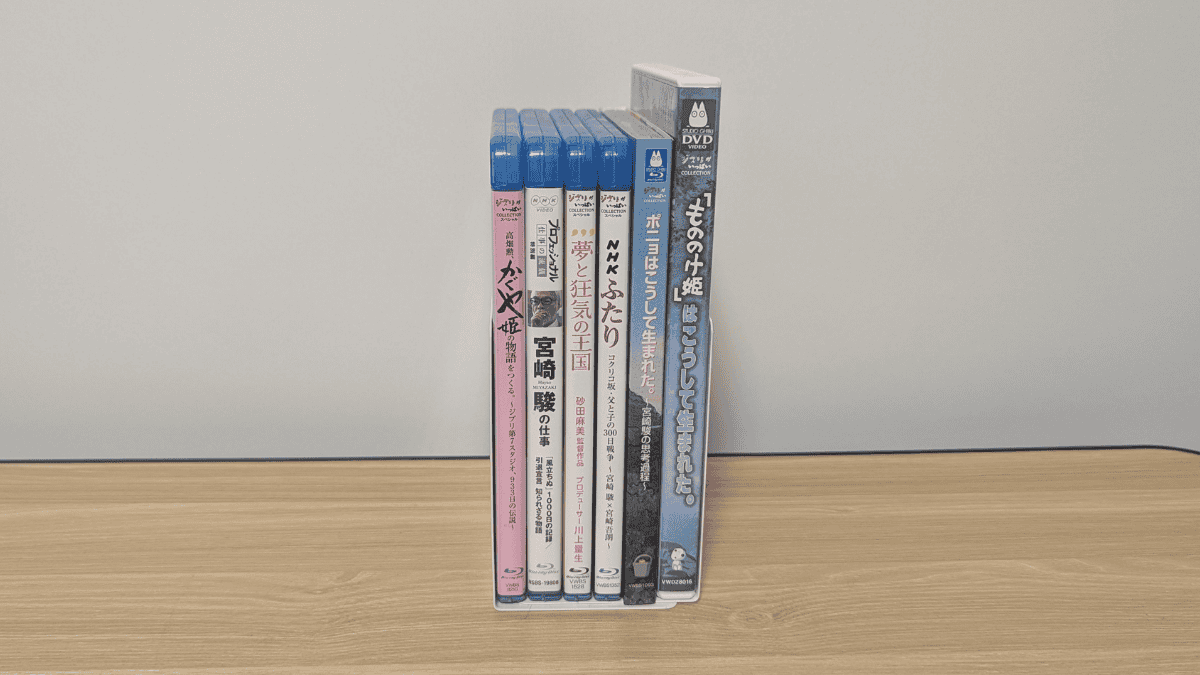
I currently own the following production documentaries on disc:
- How Mononoke Hime Was Born (DVD)
- How Ponyo Was Born: Hayao Miyazaki’s Thought Process
- Two People: From Up on Poppy Hill – 300 Days of War Between Father and Son
- The Kingdom of Dreams and Madness
- Hayao Miyazaki’s Work: The Wind Rises – 1000 Days of Recording / Retirement Announcement: The Untold Story
- Isao Takahata and His Tale of the Princess Kaguya: The Legend of Ghibli Studio 7, 933 Days
These documentaries can be extraordinarily valuable when trying to understand why a particular scene, character, or visual choice took the form it did. For anyone deeply interested in Studio Ghibli, I strongly recommend exploring the production documentaries as well as the films themselves.
Ghibli Textbooks and Other Books
There is also a large body of written material about Studio Ghibli.
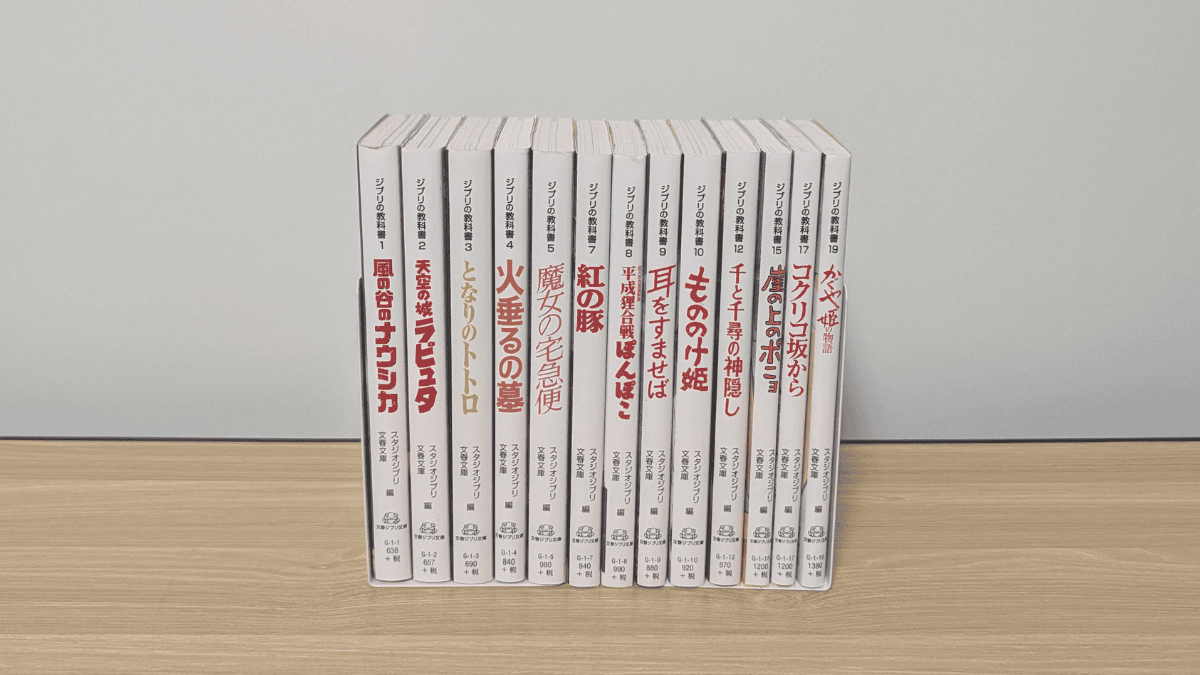
One particularly useful series is the Ghibli Textbooks. These books contain essays by directors and Toshio Suzuki, interviews with animation directors and art directors, production-related material, and other information that can be extremely helpful when researching a film.
I currently own the following volumes:
- Ghibli Textbook 1: Nausicaä of the Valley of the Wind
- Ghibli Textbook 2: Castle in the Sky
- Ghibli Textbook 3: My Neighbor Totoro
- Ghibli Textbook 4: Grave of the Fireflies
- Ghibli Textbook 5: Kiki’s Delivery Service
- Ghibli Textbook 7: Porco Rosso
- Ghibli Textbook 8: Pom Poko
- Ghibli Textbook 9: Whisper of the Heart
- Ghibli Textbook 10: Princess Mononoke
- Ghibli Textbook 12: Spirited Away
- Ghibli Textbook 15: Ponyo on the Cliff by the Sea
- Ghibli Textbook 17: From Up on Poppy Hill
- Ghibli Textbook 19: The Tale of the Princess Kaguya
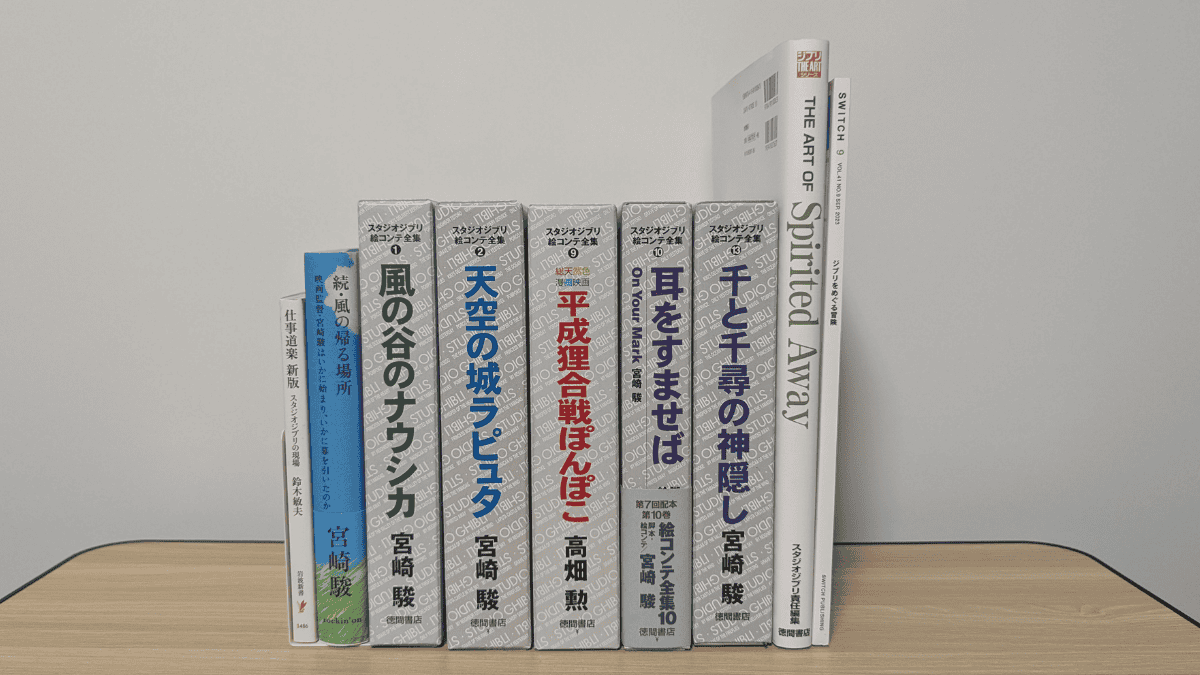
In addition to the Ghibli Textbooks, I own several storyboards, books of interviews with Hayao Miyazaki, and other works related to Studio Ghibli and Japanese animation.
- Shigoto Douraku New Edition: The Ghibli Studio Site (Author: Toshio Suzuki)
- The Place Where the Wind Returns: The Trajectory from Nausicaä to Chihiro (Author: Hayao Miyazaki, Kindle)
- The Place Where the Wind Returns Continued: How Film Director Hayao Miyazaki Began and Ended (Author: Hayao Miyazaki)
- Sakuga Asemamire Revised Latest Edition (Author: Yasuo Otsuka, Kindle)
- Another ‘Balse’ (Author: Hirokatsu Kihara, Kindle)
- The Two Totoros (Author: Hirokatsu Kihara, Kindle)
- Studio Ghibli Storyboard Complete Works 1: Nausicaä of the Valley of the Wind
- Studio Ghibli Storyboard Complete Works 2: Castle in the Sky
- Studio Ghibli Storyboard Complete Works 9: Pom Poko
- Studio Ghibli Storyboard Complete Works 10: Whisper of the Heart
- Studio Ghibli Storyboard Complete Works 13: Spirited Away
- THE ART OF Spirited Away
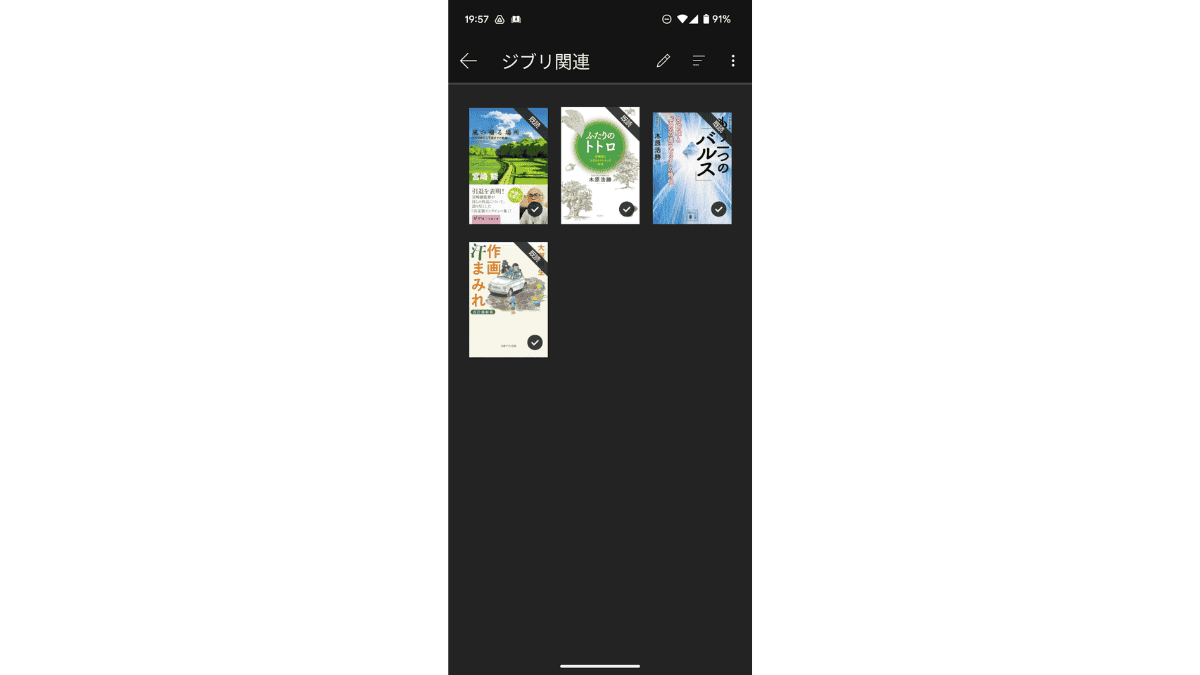
The internet is full of analyses of Studio Ghibli films, including this site. One reason so many interpretations are possible is that Studio Ghibli has left behind an unusually rich body of documentation about its films and their production.
I try to distinguish between what can actually be supported by films, storyboards, interviews, production materials, and other sources, and what is simply my own interpretation. When an article depends on a particular source, I try to make that clear.
If comparable materials existed for every film, people like me would be delighted. Unfortunately, that is rarely the case. Producing and preserving such materials costs money, and many valuable books, discs, and publications eventually go out of print.
Materials Related to Makoto Shinkai’s Works
I am also deeply interested in the works of Makoto Shinkai.
Around the time I bought a 4K television, the UHD Blu-ray release of Your Name. was announced. I remember thinking, “This is fate,” and buying it almost immediately. That was probably my first real step into collecting UHD Blu-rays.
Unlike Studio Ghibli’s films, Makoto Shinkai’s works have generally been much easier for me to access through streaming services, so my physical collection is considerably smaller.
I currently own:
- Your Name. UHD Blu-ray
- Weathering with You UHD Blu-ray
- 5 Centimeters Per Second Blu-ray
- Makoto Shinkai Storyboard Collection 2: Your Name.
- Makoto Shinkai Storyboard Collection 3: The Place Promised in Our Early Days
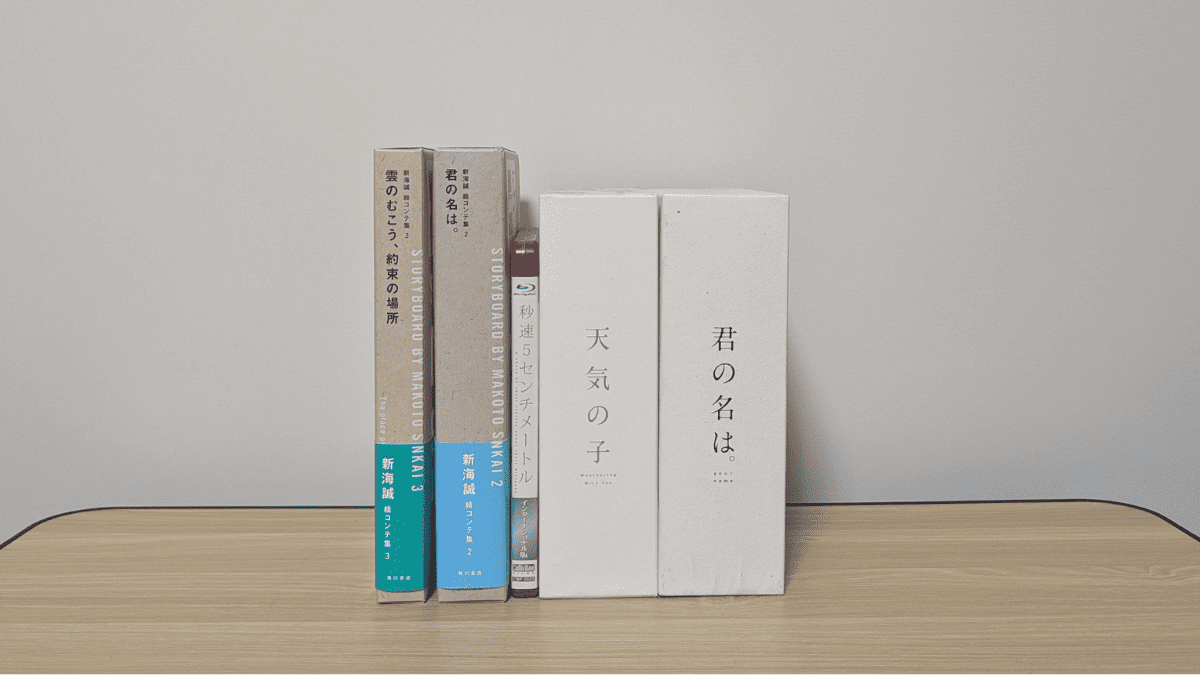
My favorite Makoto Shinkai work is The Place Promised in Our Early Days. I do not currently own the film on disc because it has been readily available to me through streaming, although I would be very tempted by a UHD Blu-ray release.
I originally bought 5 Centimeters Per Second specifically because I wanted to write about it for SifrInsight. I have also bought storyboard collections when I encountered questions while writing that I could not answer satisfactorily from the finished film alone.
That is fairly representative of how this site has developed: sometimes an article begins with material I already own, and sometimes a question raised while writing an article leads me to seek out a new book, storyboard, documentary, or disc.
About the Sources Used on SifrInsight
Not every article requires extensive external research. Some are primarily my own interpretation of a film, while others rely heavily on production materials, interviews, storyboards, books, or official publications.
When factual claims depend on external information, I try to identify the relevant source wherever practical. Interpretive conclusions, however, remain my own unless I explicitly attribute them to someone else.
I also try to avoid presenting fan theories, rumors, or widely repeated internet claims as established facts simply because they have been repeated many times.
The goal of SifrInsight is not to provide the only possible interpretation of a film. It is to offer a carefully reasoned interpretation that gives readers enough context and evidence to decide what they think for themselves.