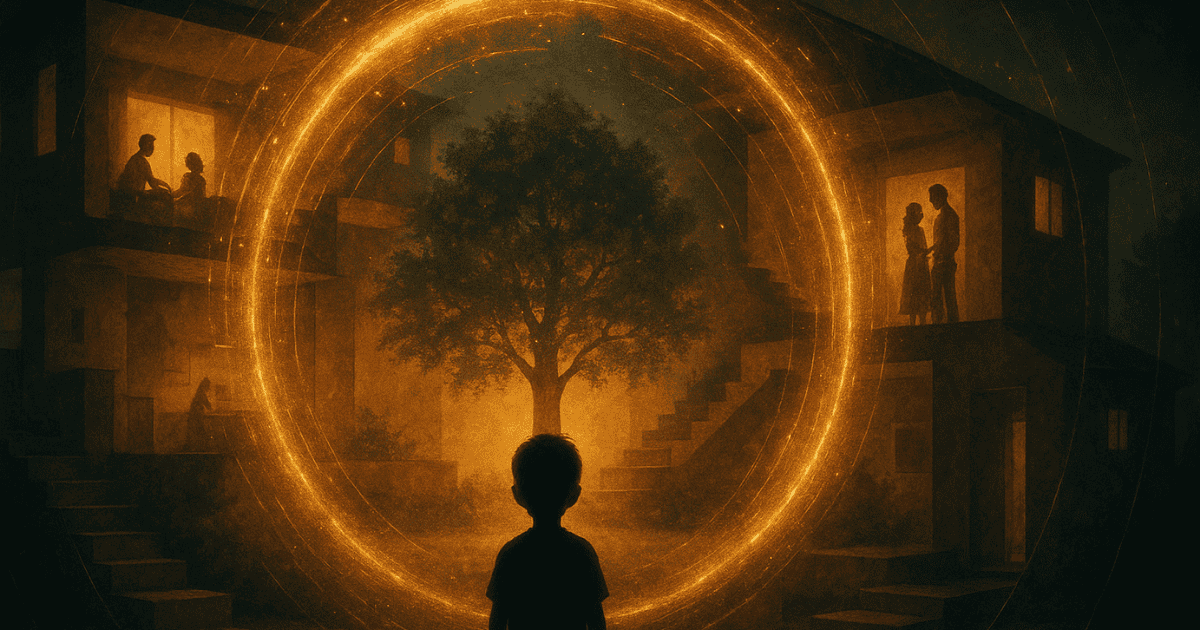
Mirai (Official Website) is a visually stunning, deeply intimate animated feature film directed by Mamoru Hosoda, released on July 20, 2018. This magical realist fantasy explores the chaotic beauty of family life, the cycle of generations, and the turbulent emotional growth of Kun, a spoiled four-year-old boy, guided by the mysterious time-traveling teenage version of his newborn sister, Mirai.
In this article, we will provide a comprehensive, chronological synopsis of the story. Furthermore, we will dive deep into a critical analysis of the film’s hidden mechanics, unpacking the “mysterious architectural design of the house,” the polarizing “fairytale structure,” and the vital role of its comedy. First, let’s review the essential production details.
*This is a translated version. The original (Japanese) is available here.
On this pageContents
Mirai (2018): Basic Information

Film Overview
| Release Date | July 20, 2018 |
|---|---|
| Director / Screenplay / Original Story | Mamoru Hosoda |
| Music | Masakatsu Takagi |
| Theme Song | Tatsuro Yamashita “Mirai no Theme,” “Uta no Kisha” |
| Production | Studio Chizu |
| Running Time | 98 minutes |
Main Characters and English Voice Cast
| Character | Voice Actor (English Dub) | Character Overview |
|---|---|---|
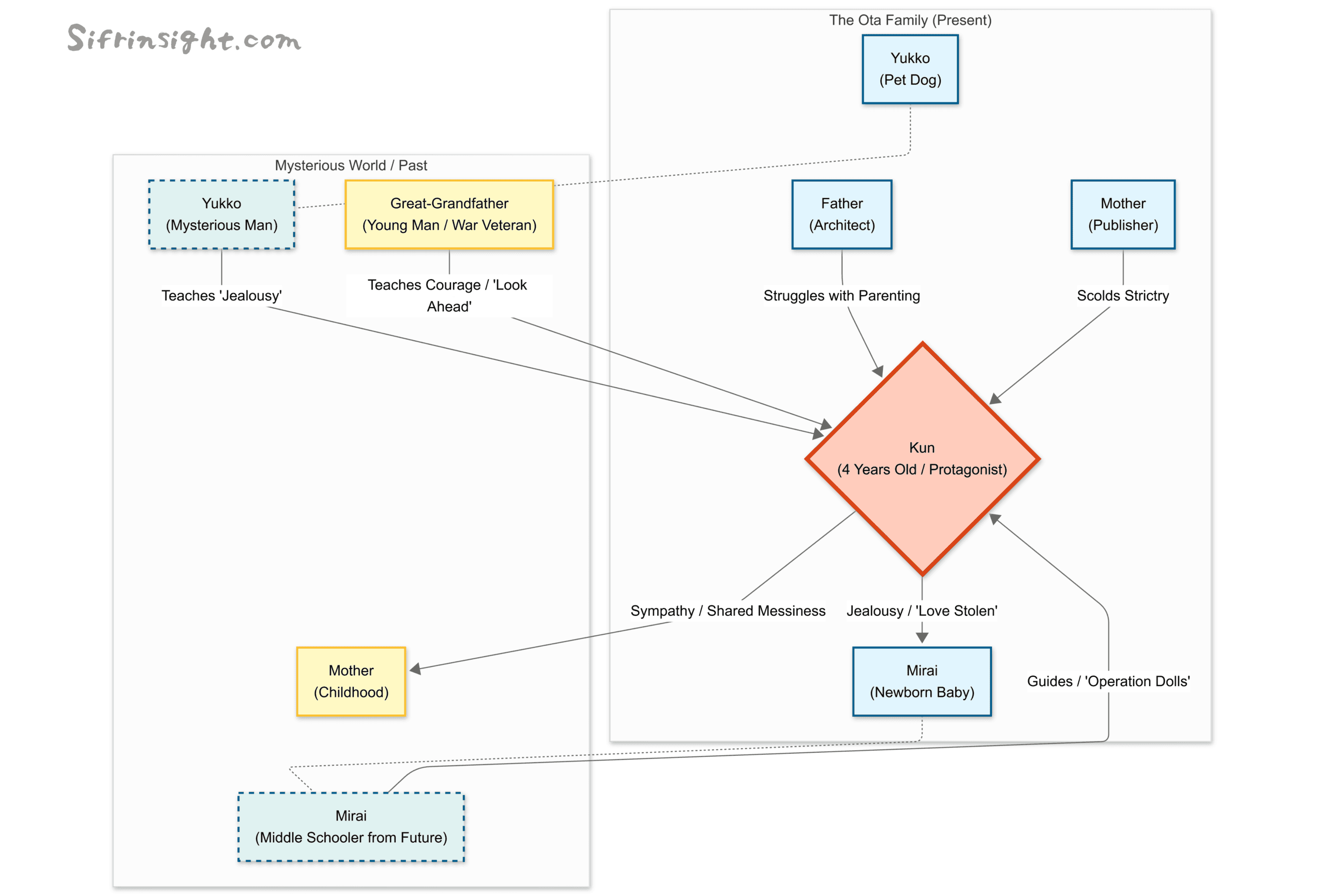
| Kun | Jaden Waldman | The protagonist. A four-year-old boy whose world is shattered when his parents’ attention shifts entirely to his newborn baby sister. |
| Mirai | Victoria Grace | Kun’s younger sister, who magically appears from the future as an assertive, mature middle school student to guide him. |
| Father | John Cho | A freelance architect who works from home. He desperately struggles to balance his career with his newfound, overwhelming childcare duties. |
| Mother | Rebecca Hall | A highly capable career woman working in publishing. She loves her children fiercely but frequently loses her temper due to sheer exhaustion. |
| Yukko (The Mysterious Man) | Crispin Freeman | The family’s pet Dachshund. In the magical courtyard, he manifests as a dramatic, human nobleman who resents Kun for stealing the parents’ affection. |
| Grandpa | Victor Brandt | Kun’s maternal grandfather, who offers warm, uncritical support to the struggling parents. |
| Grandma | Eileen T’Kaye | Kun’s maternal grandmother, who helps out with the new baby. |
| Young Man (Great-Grandfather) | Daniel Dae Kim | Kun’s great-grandfather, encountered in a flashback to the post-WWII era. A rugged mechanic who teaches Kun the essence of bravery. |
Character Map
Mirai (2018): Quick Synopsis (Spoiler-Free)
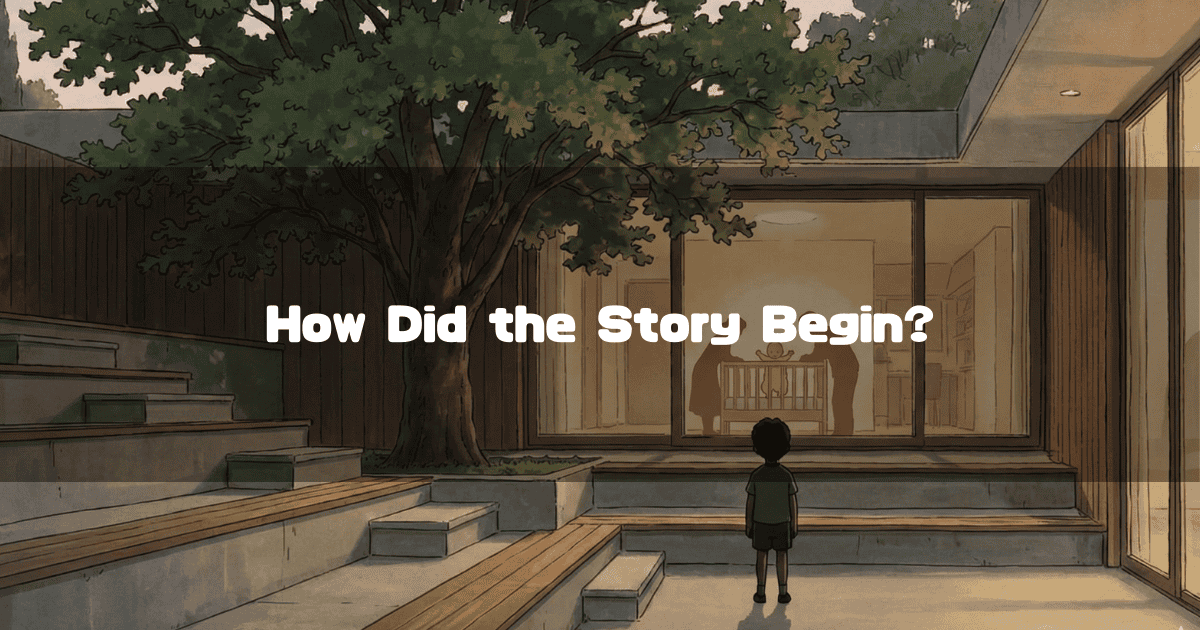
Four-year-old Kun lives in a highly unique, architecturally complex house in Yokohama, Japan, with his parents and their pet dog, Yukko. His idyllic, spoiled existence is upended one snowy day when his mother returns from the hospital holding a tiny bundle: a newborn baby sister.
Initially curious, Kun happily agrees to “protect” his new sibling. However, the harsh reality of a newborn quickly sets in. His parents’ attention and affection are entirely consumed by the baby. Feeling abandoned and furiously jealous, Kun resorts to throwing massive tantrums and playing mean pranks on the infant, earning him severe scoldings from his exhausted mother.
Screaming “I hate her!” Kun storms out into the family’s enclosed courtyard. Suddenly, the ordinary garden morphs into the ruins of an ancient European castle. Out of the shadows steps a mysterious, theatrical man in noble attire who bitterly complains that he was the “prince of this house” before Kun was born and ruined his life.
This bizarre encounter is just the first of many magical, time-bending journeys Kun will take through his own courtyard, learning the hidden history of his family.
Mirai (2018): Full Synopsis & Ending (Spoilers Ahead)
(※Warning: Major plot spoilers and the ending of the film are detailed below. Proceed with caution.)
Introduction: The Monster of Jealousy and the Former Prince
The story opens with four-year-old Kun eagerly awaiting his mother’s return from the hospital. She arrives carrying his new baby sister. While Kun initially promises to be a good big brother, the grueling realities of infant care completely consume his parents. Kun is abruptly stripped of his status as the center of the universe.
Consumed by jealousy, Kun begins acting out. While his parents’ backs are turned, he aggressively pokes and terrorizes the sleeping baby with toy trains. His mother catches him and delivers a harsh, unilateral scolding. Throwing a massive tantrum, Kun runs out into the small, enclosed courtyard at the center of their home.
As he cries, the garden miraculously transforms into an opulent, ruined castle. A strange man in Victorian clothing approaches, bitterly ranting about how he was once showered with the parents’ absolute love until a “new baby” (Kun) arrived and forced him into the background. Kun quickly realizes this dramatic “former prince” is actually a human manifestation of Yukko, the family dog. This strange, empathetic encounter calms Kun down. That night, the parents officially name the baby “Mirai” (which translates to “Future”).
Development: Operation Hina Matsuri
Three months pass. It is Girls’ Day (Hina Matsuri), and the family has set up a traditional, elaborate doll display. The mother leaves on a business trip, leaving the freelance architect father to solo-parent. Overwhelmed by chores and impending work deadlines, the father ignores Kun.
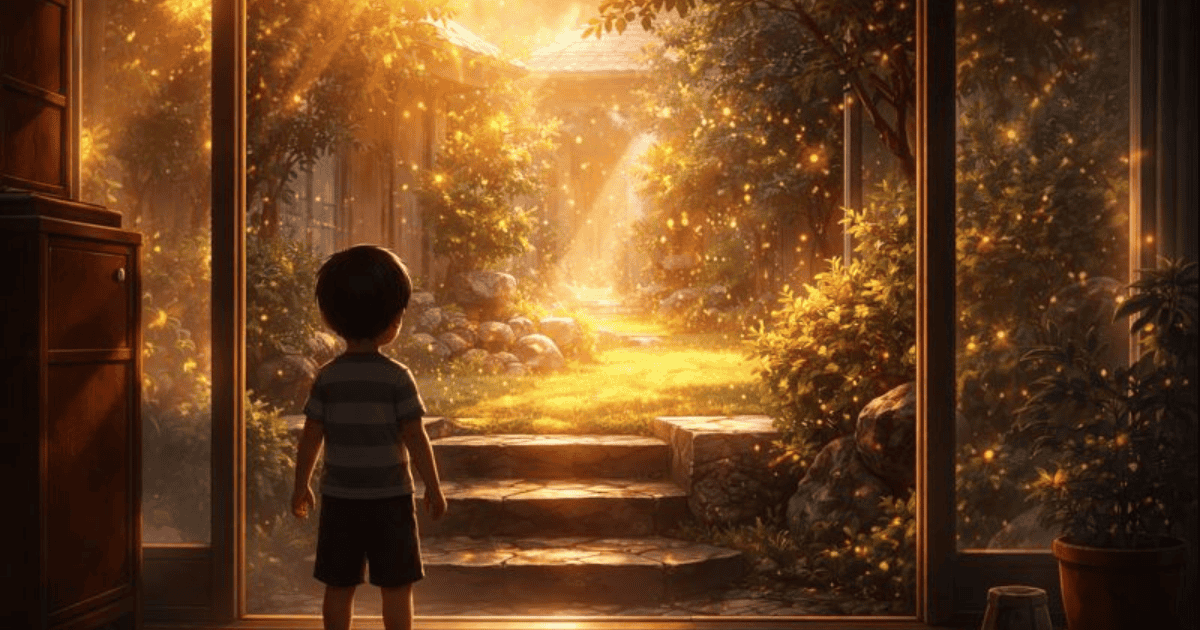
Seeking an escape, Kun retreats to the courtyard. The space transforms into an indoor greenhouse, where he is shocked to find a teenage girl in a school uniform. It is Mirai, visiting from the future. She is in a state of absolute panic because the father forgot to put away the Hina dolls. According to Japanese superstition, for every day the dolls are left out past March 3rd, the daughter’s future marriage will be delayed by a year.
Teenage Mirai attempts to pack the dolls away herself but risks causing a temporal paradox by being seen by the father. Teaming up with Kun and the humanized dog Yukko, the trio orchestrates a hilarious, slapstick heist. They successfully dismantle and hide the dolls right under the exhausted father’s nose. Despite this successful teamwork, Kun still struggles to accept his infant sister in the present timeline.
Twist: The Mother’s Tears and the Great-Grandfather’s Engine
On a rare day off, the mother attempts to clean the house but trips over Kun’s sprawling mess of toys. She explodes in a terrifying fit of rage, terrifying Kun. He flees to the courtyard, complaining to teenage Mirai that nobody loves him. Mirai tries to reason with him, but he runs deeper into the magical garden.
Kun is transported decades into the past, arriving in a rainy, mid-century Japanese town. There, he encounters a chaotic, hyper-energetic little girl—his own mother as a child. Finding a kindred spirit, Kun joins her in gleefully trashing her bedroom, scattering toys and making a massive mess. When her stern mother (Kun’s grandmother) comes home, little-mom helps Kun escape out the back door before taking the full brunt of a terrifying scolding. Listening to his mother sob apologies through the wall, Kun realizes she wasn’t always a perfect, authoritative adult; she was once a messy, emotional child just like him. He wakes up safely in his own bed.
Later that summer, the father takes the kids to the park to teach Kun how to ride a bicycle without training wheels. The lesson goes poorly; Kun falls repeatedly and throws a massive fit, while infant Mirai cries in the background. Furious that he can’t ride like the older kids, Kun storms into the courtyard.
He is transported to a post-WWII workshop, where he meets a rugged, handsome young man with a permanent limp. This is his great-grandfather. The young man is a mechanic and a total badass. He takes Kun on a terrifying but exhilarating ride on a galloping horse, and then on a roaring motorcycle. He imparts a crucial piece of wisdom: “Don’t look down at your feet. No matter how scared you are, look far ahead to where you want to go.”
Returning to the present, Kun demands to go back to the park. Armed with his great-grandfather’s advice, he stares straight ahead, finds his balance, and triumphantly pedals across the park entirely on his own.
Conclusion: The Phantom Tokyo Station and the Meaning of Family
On the day of a highly anticipated family camping trip, Kun throws an epic meltdown because his mother packed his blue pants instead of his favorite yellow ones. He hides in a closet, intending to strike. When he emerges, the house is dead silent. Assuming his family left without him, he packs his backpack and marches into the courtyard to run away.
He finds himself at a lonely train platform. He is confronted by a sullen teenage boy who scolds him for throwing a fit over a pair of pants when the family just wanted to make happy memories. Kun realizes this boy is his own future self. Ignoring his older self’s warnings, Kun boards an arriving train.
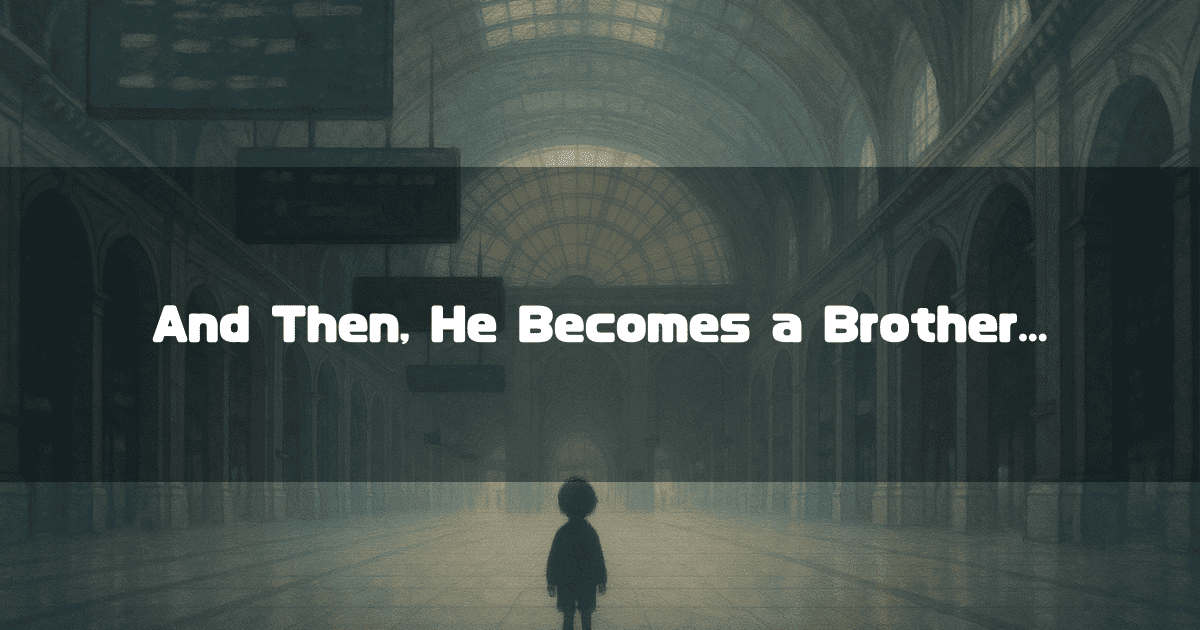
He is dropped off at a nightmarish, surreal version of “Tokyo Station.” The architecture is dizzying, and the massive crowds consist of faceless shadows. Lost and terrified, Kun approaches a bizarre, robotic Lost and Found attendant. The attendant asks for the names of Kun’s parents to page them, but Kun realizes he only knows them as “Mommy” and “Daddy.” He doesn’t know their actual names.
The attendant coldly informs him that unidentifiable lost children are loaded onto a horrific, gothic Shinkansen train bound for the “Land of Loneliness.” As the terrifying black train pulls into the station and prepares to swallow him, Kun is given one last chance to prove his identity. Desperate, he screams, “I am Mirai’s big brother!”
By finally claiming his identity in relation to his sister, he breaks the spell. Teenage Mirai swoops in, pulling him away from the black train. Together, they fly upward through the massive branches of the magical “family tree” in the courtyard. As they soar through time, Kun is granted a montage of his ancestors’ lives: he sees his father’s childhood struggles, his mother’s teenage tears, and the pivotal, romantic footrace that brought his great-grandparents together. He realizes that every single joy, tragedy, and choice spanning generations was required to create his life.
Kun wakes up in his own hallway. The tantrum is gone. He happily puts on the blue pants, takes his little sister’s hand, and walks out the door to go camping with his family, finally accepting his role as a big brother.
Mirai (2018): In-Depth Analysis & Interpretation

- The Stepped Architecture: A House as an Entire World
The highly unusual, multi-leveled design of Kun’s house isn’t just an aesthetic choice. It is a brilliant cinematic device designed to visually represent the massive, overwhelming scale of a four-year-old’s world. The steep steps substitute for the sweeping “slopes” Hosoda uses in his other films. - The Deliberate Choice of Affluence
By setting the narrative inside a clearly wealthy, upper-middle-class household, Hosoda intentionally removes the “noise” of socioeconomic struggle. This forces the audience to focus purely on the psychological horrors of childcare and the emotional evolution of the family unit. - A Fairytale, Not Hard Sci-Fi
The film deliberately ignores establishing any logical, sci-fi rules for the time travel. It operates entirely on the emotional logic of a children’s picture book, where a child’s desperate internal wishes physically manifest in reality. - The Crucial Role of Comedy
The physical comedy serves as a vital pressure release valve for the heavy, suffocating anxiety of modern parenting. Your ultimate enjoyment of the film likely hinges on whether you find Kun’s chaotic toddler antics charmingly authentic, or simply stressful to watch.
The Mystery of the Strange House: Cinematic Architecture
If you felt a sense of spatial disorientation while watching the film, it was entirely intentional. Kun’s house was explicitly designed by a real-world architect, Makoto Tanjiri. Director Hosoda recognized that for a toddler, the walls of the house represent the borders of the known universe.
To capture this cinematic scale indoors, Tanjiri utilized the cascading, multi-tiered layout. The interior steps separating the rooms are roughly 100cm high—almost exactly the height of a four-year-old boy. Therefore, when Kun is standing on one level, he literally cannot see over the ledge into the next room. Every time he climbs those stairs, he is embarking on an expedition into the unknown.
“I feel that four-year-olds are uniquely fascinating because they are at the absolute final age where their entire ‘world’ is contained within the ‘house.'”
— Mamoru Hosoda, JDN Interview
Furthermore, Tanjiri specifically designed these interior steps to replace the sweeping outdoor slopes that are a trademark of Hosoda’s previous films (like the massive hill in The Girl Who Leapt Through Time or the long approach to the estate in Summer Wars). Because this story is trapped indoors, the cascading floors provide the necessary visual speed and kinetic dynamism.
Crucially, this architecture physically visualizes the massive communication gap between adults and children. To the exhausted parents, the house is just a series of slightly annoying steps to walk down. To Kun, it is a towering labyrinth of cliffs and valleys. The physical space perfectly mirrors the emotional disconnect driving the film’s conflict.
The Deliberate Choice of an “Affluent” Setting
A common, cynical critique of Mirai is that the family is unrelatable because they are glaringly affluent. They live in a massive, custom-built architectural home in an expensive metropolitan ward in Yokohama, practically overflowing with expensive imported toys and wooden train sets.
This was a highly calculated narrative decision. If Hosoda had depicted a family struggling to pay the mortgage or scrambling to afford groceries, the audience’s empathy would be drawn entirely toward their financial plight. Viewers would think, “Of course they are stressed and fighting, they are broke.”
By placing the family in an environment of absolute financial security, Hosoda completely strips away socioeconomic excuses. The film violently asserts that the sheer, psychological terror of raising a newborn and managing a jealous toddler is universally devastating, regardless of how much money is in your bank account. By removing financial noise, the film forces us to focus purely on the messy, emotional reality of human relationships.
The “Fairytale Structure” and the Divisive Reaction
Operating on Dream Logic
Unlike standard sci-fi, Mirai never bothers to explain the mechanics of the magical courtyard. There are no glowing time machines or spatial rifts. The boundary between objective reality and Kun’s subjective, fever-dream hallucinations remains intentionally blurred until the credits roll.
This structural choice places Mirai firmly in the lineage of classic children’s literature and “picture books” (Otogi-banashi) rather than hard science fiction. The time leaps are not driven by physics; they are driven entirely by Kun’s psychological distress. When he feels unloved, the garden conjures exactly what his soul needs to process his emotions.
Why the Film is Polarizing
This exact “picture book” structure is precisely why Mirai is Hosoda’s most polarizing film. If we remove the magical courtyard sequences, absolutely nothing extraordinary happens in this movie. It is simply a hyper-realistic, agonizingly accurate depiction of a modern couple failing to balance remote work with a screaming toddler and a crying infant.
Therefore, if you do not buy into the surreal, metaphorical magic of the courtyard sequences, you are essentially just trapped in a house for 90 minutes watching a stressed mother yell at an incredibly annoying toddler. For many viewers without children, or viewers expecting the high-stakes action of Summer Wars, this domestic realism felt claustrophobic and grading.
The Vital Role of Comedy in Depicting Childhood
To prevent the film from drowning in domestic anxiety, Hosoda injects a massive dose of physical comedy. The slapstick elements serve as a crucial cooling agent for the narrative.
Moments like the absurd stealth mission to pack away the Hina dolls, or Kun’s face being hilariously distorted by the wind of his great-grandfather’s motorcycle, provide necessary, rhythmic breaks from the heavy themes of parenting stress.
More importantly, these comedic beats are built on incredibly accurate, hyper-observational animation of how toddlers actually move. Director Hosoda was heavily focused on the “bizarre, uniquely strange postures and gestures” that only a four-year-old makes—the way they run with their arms flailing, or the dramatic, boneless way they throw themselves on the floor during a tantrum.
If you can appreciate the terrifying accuracy and charm of these childish animations, the film is a joyous, touching experience. If the toddler antics simply annoy you, the film will likely test your patience.
This concludes my deep-dive synopsis and analysis of Mirai. At its core, the film is an astonishingly grounded “growth story of a four-year-old gaining self-awareness,” elevated by breathtaking, magical realism.
While its hyper-focus on the stressful minutiae of domestic life isn’t for everyone, I found its deeply personal, comedic approach to family trauma to be a total triumph.
What did you think of Mirai? Did you find Kun’s journey relatable, or did the toddler tantrums drive you crazy? Let us know!





Reader Comments