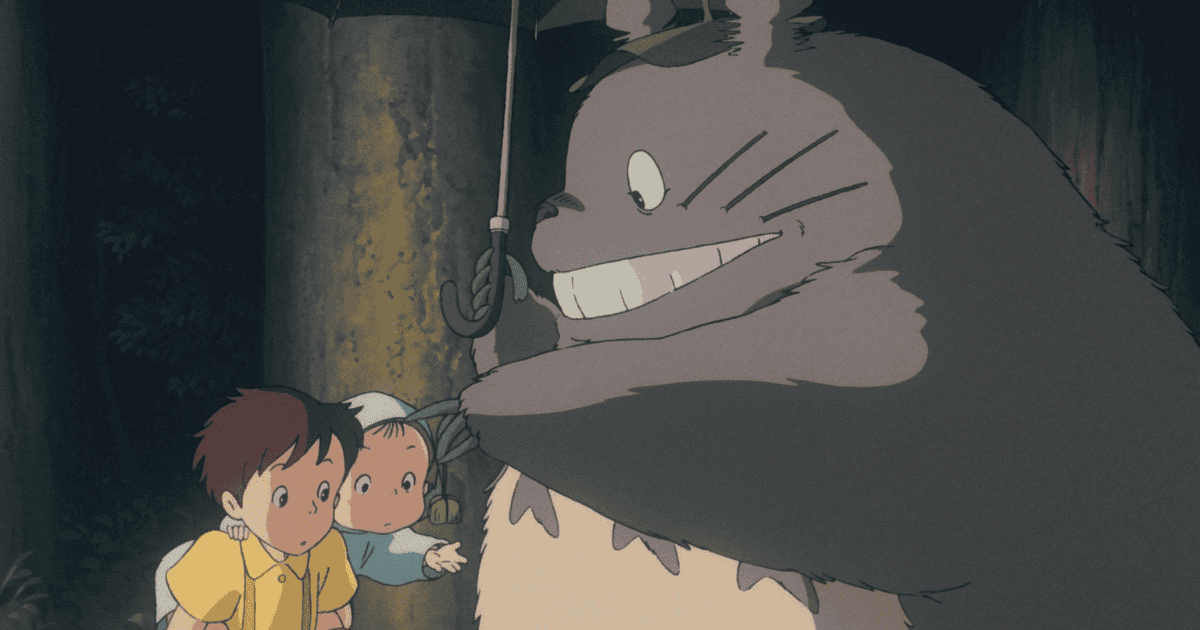
Released on April 16, 1988, Hayao Miyazaki’s My Neighbor Totoro(Studio Ghibli Official) is a cinematic triumph that fundamentally defined Studio Ghibli. It is a film so deeply ingrained in global pop culture that millions of people consider it the definitive movie of their childhood.
Today, we are taking a comprehensive journey through the lush, sun-drenched forests of rural Japan to break down the entire plot, analyze the psychological depth of its characters, and explore the lingering mysteries that continue to captivate audiences. Please be warned: this deep-dive synopsis contains massive spoilers from beginning to end. If you are one of the rare few who haven’t experienced the magic of Totoro, I highly recommend watching the film first before exploring our analytical “key points” section.
*This is a translated version. The original (Japanese) is available here.
- Detailed Synopsis & Ending Explained
The narrative follows Satsuki, an ever-responsible sixth-grader, and her fiercely curious four-year-old sister, Mei. To be closer to their hospitalized mother, the family moves to a crumbling countryside house. There, the girls discover Totoro, a massive, benevolent forest spirit. Through magical encounters, a terrifying disappearance, and the miraculous intervention of the Catbus, the family navigates the heavy anxieties of illness and separation to forge an unbreakable bond. This article provides a scene-by-scene breakdown and a complete character relationship map. - Deep Plot Analysis & Unsolved Mysteries
Beyond the surface-level magic, we will dissect the film’s hidden emotional layers. We will explore “The Heartbreaking Lie Satsuki’s Mother Tells,” “The True Psychological Weight of Satsuki’s Tears,” “The Symbolic Meaning of the Passing Farm Truck,” and “The Dark Origins of the Totoro Urban Legend.” (Each section links directly to our exclusive, deep-dive articles).
On this pageContents
My Neighbor Totoro (1988) Full Synopsis: The Magic of the Forest
Quick Summary: The 10 Core Plot Points
To grasp the emotional arc of My Neighbor Totoro, here are the vital narrative milestones:
-
A Rustic New Beginning
The Kusakabe family relocates to a lush, rural farming village. Their primary goal is to live closer to Shichikokuyama Hospital, where the mother is recovering from a long-term illness. -
Embracing the Unknown
Rather than being frightened by their dilapidated, creepy new house, Satsuki and Mei are thrilled by the endless possibilities of living surrounded by nature. -
The Soot Sprites
While exploring the dark corners of their new home, the girls encounter “Susuwatari” (Soot Sprites), tiny, magical dust creatures that flee from the light. -
The Discovery of Totoro
Following a trail of acorns deep into the camphor tree forest, Mei tumbles into a hollowed-out root system and discovers the massive, sleeping forest spirit she names “Totoro.” -
The Burden of Responsibility
With her father constantly working and her mother hospitalized, young Satsuki bears the heavy emotional and physical burden of managing the household and acting as a surrogate mother to Mei. -
Magic in the Rain
While waiting for their father at a dark, rainy bus stop, Satsuki finally meets Totoro. She lends him an umbrella, and in return, he gives her a small bundle of magical acorns. -
The Arrival of the Catbus
During the rainy encounter, the girls witness the arrival of the Catbus—a massive, multi-legged, living vehicle that bounds effortlessly across the countryside. -
A Terrifying Crisis
Devastated by the news that her mother’s return home is delayed, Mei attempts to walk to the hospital alone and goes missing, plunging the family and the village into a frantic, terrifying search. -
The Ultimate Rescue
Pushed to her absolute breaking point, Satsuki begs Totoro for help. He summons the Catbus, which hurtles across the landscape to successfully locate the lost, crying toddler. -
A Hopeful Reunion
The Catbus secretly transports the girls to the hospital, where they leave a fresh ear of corn on the windowsill for their mother. Reassured by her smiling face, the girls return home, their family bond stronger than ever.
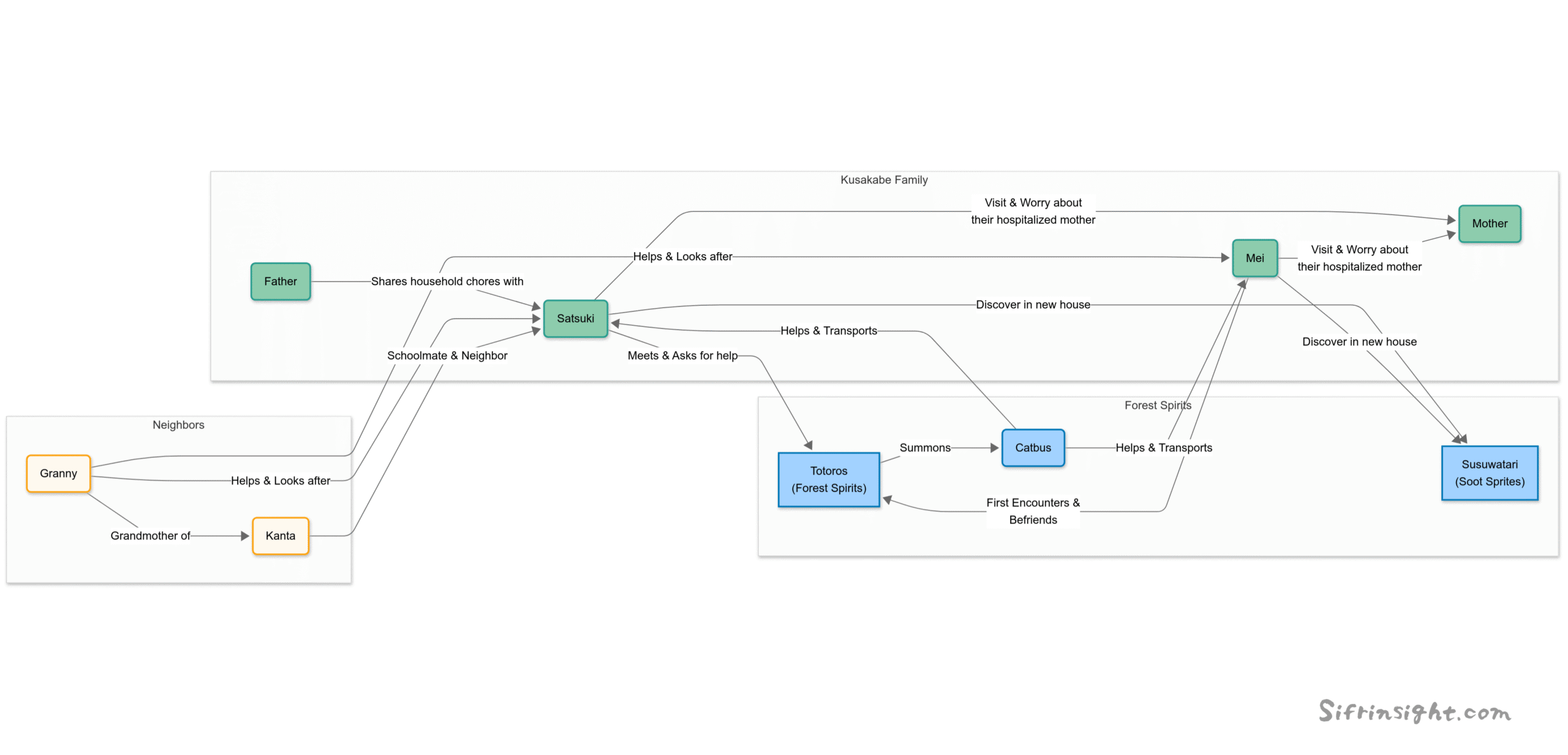
Complete Character Map
The Deeper Meaning of the Narrative
At its core, My Neighbor Totoro is a profound exploration of childhood anxiety, resilience, and the healing power of imagination. While it is famous for the whimsical encounters between the girls and the forest spirits, the film’s enduring legacy stems from its ability to perfectly capture the visceral reality of viewing the world through a child’s eyes.
Every person who has watched this film has undoubtedly thought, “I desperately want to ride the Catbus!” Even as adults, we find ourselves looking for the silhouette of Totoro whenever a strong gust of wind rushes through the trees. The true genius of Miyazaki’s animation is its ability to tap directly into our deepest, most nostalgic sensory memories.
Furthermore, the film doesn’t shy away from the terrifying realities of childhood. Mei wandering off is a harrowing sequence. Toddlers inherently lack a sense of self-preservation; they are driven purely by raw emotion and impulsive curiosity. The film masterfully portrays this terrifying precariousness of innocence, balancing the magic of the forest with the very real dangers of the world.
With that context established, let’s dive into the detailed, scene-by-scene breakdown.
Detailed Synopsis: A Scene-by-Scene Story Breakdown
Part 1: The Haunted House and the Soot Sprites
The story opens with a bustling sense of adventure. Satsuki, a responsible sixth-grader, and her fiercely independent four-year-old sister, Mei, are riding in the back of a loaded moving truck with their father, Tatsuo Kusakabe. They are relocating to a rural farming village to be closer to the hospital where their mother, Yasuko, is recovering from a long-term illness. However, upon arriving at their destination, they find a house so old and dilapidated that it practically leans over.
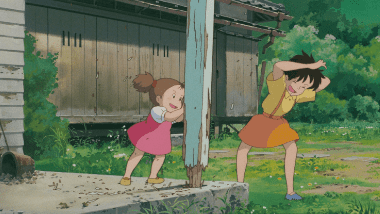
Rather than being disappointed, the girls are ecstatic. Their father encourages them to explore and find the stairs to the second floor. While searching the dark, dusty hallways, a single acorn drops mysteriously from the ceiling. Thrilled by the prospect of finding ghosts, the girls boldly shout into the shadows, “Soot sprites, come on out! Or we’ll poke your eyes out!”
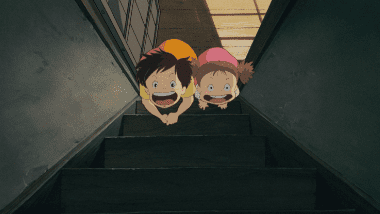
They slowly creep up the creaky stairs into the dim attic. Sensing movement in the gloom, Satsuki quickly throws open the window shutters to let the sunlight in. Mei, trailing slightly behind, spots a scurrying, fuzzy black clump of soot darting into a crack in the wall. When Satsuki runs downstairs to help their father with the luggage, Mei stays behind, fascinated. She gently pokes her tiny finger into the crack, causing a massive swarm of the black fuzzballs to burst out into the open.
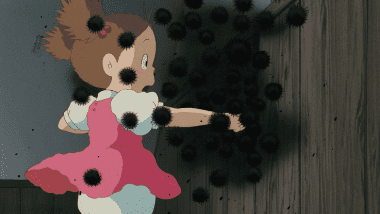
Mei manages to smash her hands together, capturing one of the creatures. But when she runs to show her sister, she opens her hands to find nothing but black ash. Granny, the kind elderly neighbor helping them clean, explains that the creatures are “Susuwatari” (Soot Sprites)—harmless spirits that inhabit abandoned spaces. She chuckles, noting that with the arrival of such lively new tenants, the Susuwatari will likely pack their bags and move on to a quieter home.
Part 2: The Hospital Visit and the King of the Forest
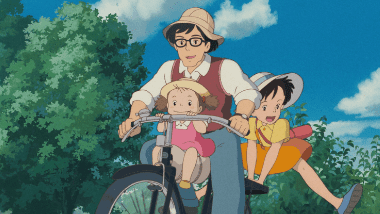
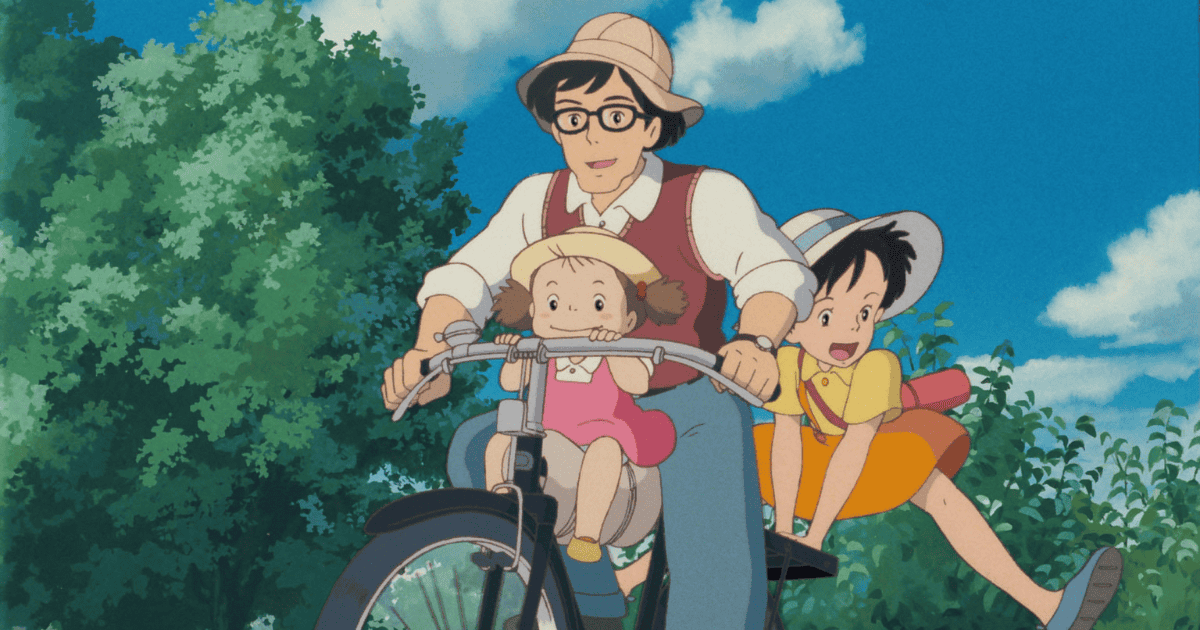
Once the family is settled, they take a joyous bicycle ride—all three crammed onto one bike—to visit Shichikokuyama Hospital.
At the hospital, while their father consults with the doctors, the girls rush into their mother’s room. In a deeply touching scene, Yasuko lovingly brushes Satsuki’s short hair. Satsuki, who carries the heavy burden of cooking, cleaning, and managing the household, is finally allowed to relax and just be a child in her mother’s presence.
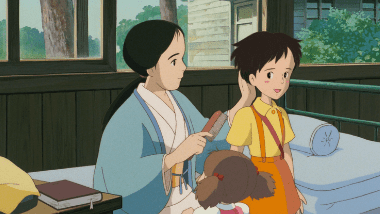
The visit is brief but incredibly reassuring. The girls leave the hospital buzzing with hope, eagerly counting down the days until their mother is strong enough to come home.
On weekdays, Satsuki attends the local school, leaving Mei at home under the supervision of either her father or Granny. One sunny afternoon, while her father is deeply engrossed in his university research papers, Mei decides to play alone in the yard, transforming into a tiny “flower shop” owner to entertain herself.
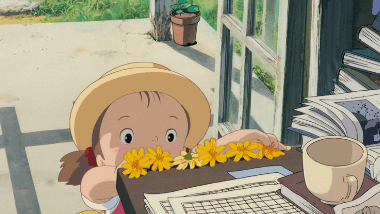
While exploring the tall grass, Mei discovers a trail of acorns. Following the trail, she spots a bizarre, semi-transparent, rabbit-like creature waddling through the yard.
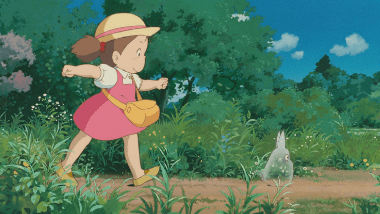
Driven by pure toddler curiosity, Mei ruthlessly chases the creature under the house. When it emerges, it is joined by a slightly larger, blue version of itself carrying a sack of acorns. The chase is on.
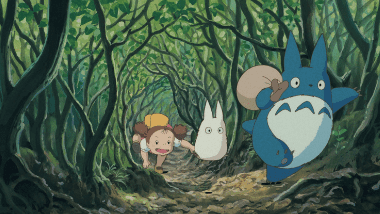
Mei follows them through a dense tunnel of briars, completely losing her bearings. She arrives at the base of a massive, ancient camphor tree. Seeing the creatures vanish into the roots, she spots an acorn resting near a gap. Reaching for it, she loses her balance and tumbles headfirst down a long, dark tunnel.
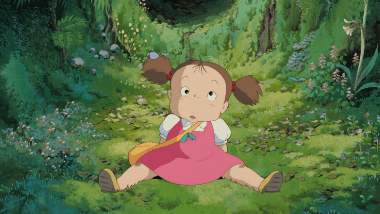
She lands softly on a massive, furry stomach. Looking up, she finds herself face-to-face with a gigantic, slumbering beast. Completely unafraid, she pokes its nose and asks its name. The creature lets out a massive, booming yawn that sounds roughly like “To-to-ro.” Taking this as an introduction, Mei settles onto his incredibly soft belly and promptly falls fast asleep.
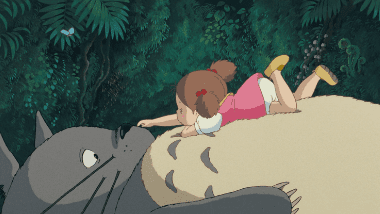
When Mei finally wakes up, she is lying alone in the briar patch near her house; the magical hollow, the giant tree, and Totoro are completely gone. She excitedly tells Satsuki and her father about the encounter. While they playfully indulge her story, they don’t dismiss it as a lie. Her father explains that Mei must have met the “King of the Forest,” a rare spirit that only reveals itself when it wants to. They walk to the local shrine to thank the giant tree for protecting her.
Part 3: The Bus Stop in the Rain
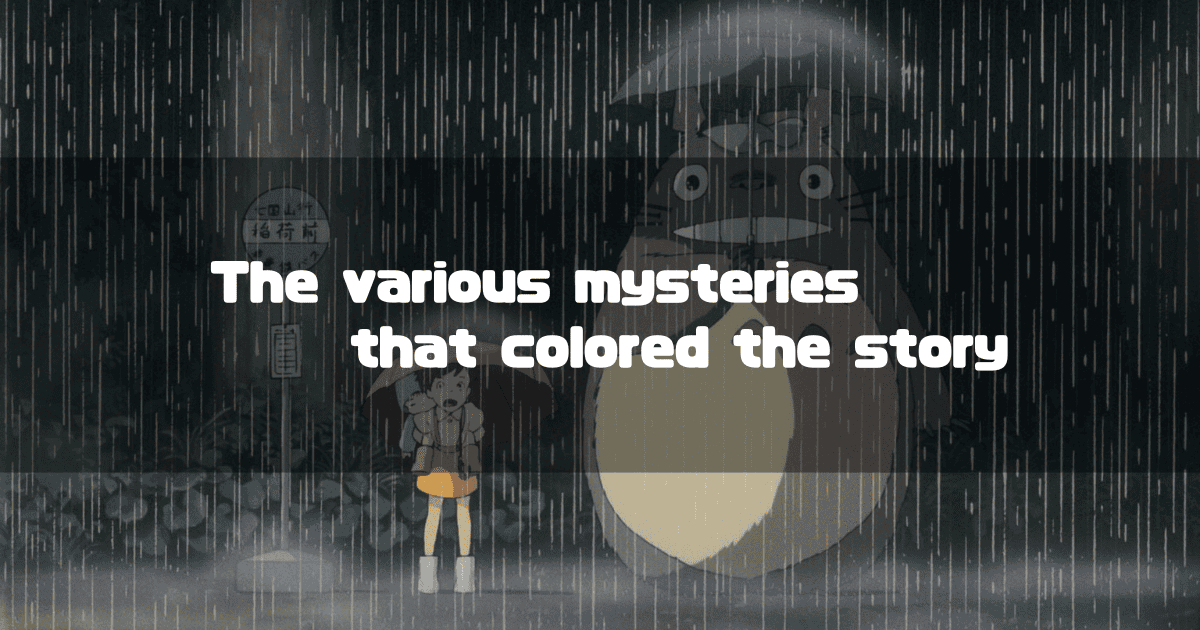
Days later, a sudden, heavy rainstorm hits the village. Realizing their father didn’t take an umbrella to the university, Satsuki and Mei walk to the desolate countryside bus stop to wait for his return. As the sky grows darker and the rain falls harder, the wait becomes agonizingly long.
Exhausted, Mei falls fast asleep while standing up. Satsuki hoists her sister onto her back, struggling to stay awake in the eerie, silent darkness. Suddenly, she hears heavy, squishy footsteps approaching. Expecting her father, she looks over—and freezes. Standing right beside her is the massive, furry creature Mei had described: Totoro.
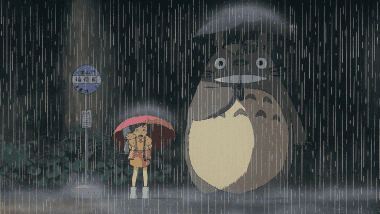
Noticing that Totoro is attempting to shield himself with a single, tiny leaf, Satsuki nervously offers him the spare umbrella meant for her father. Totoro accepts it. Fascinated by the loud “plop” of heavy raindrops hitting the fabric, he deliberately jumps, causing a massive cascade of water to fall from the trees above.
Suddenly, the darkness is pierced by two blinding, glowing eyes. A massive, multi-legged creature hurtles down the road and screeches to a halt at the bus stop. It is a living bus shaped like a giant cat.
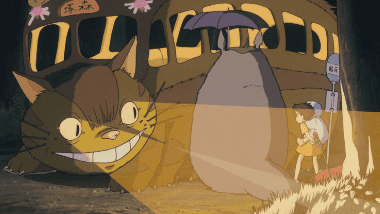
Totoro boards the Catbus, but before he leaves, he hands Satsuki a small package wrapped in bamboo leaves. The Catbus bounds away into the night sky just as the real bus arrives, carrying their very apologetic father. Satsuki is so overwhelmed with joy and magic that she can barely contain herself.
The girls open the package to find it full of magical acorns. They carefully plant them in the front yard, but weeks pass with no signs of growth. Then, late one moonlit night, the girls wake up to see Totoro and his smaller companions marching around the garden in a ceremonial circle. Satsuki and Mei rush outside to join the ritual. Through their combined magic, the acorns sprout instantly, erupting violently from the earth to form a colossal, towering tree that reaches into the stratosphere.
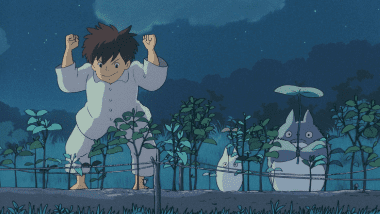
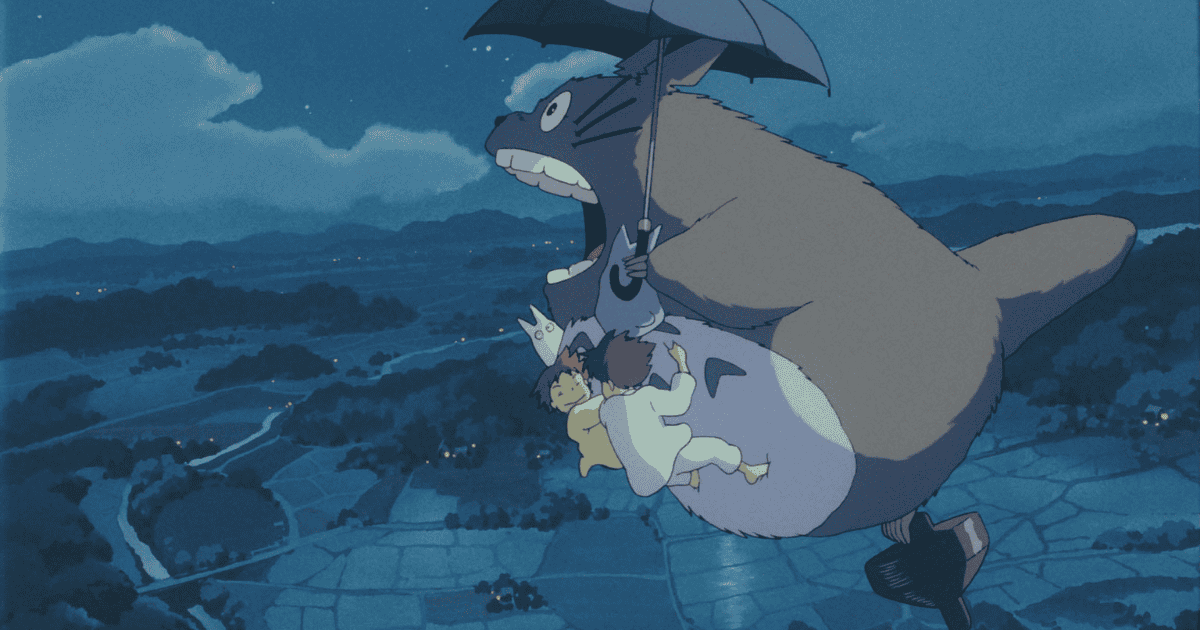
Totoro produces a magical spinning top, pulls the girls onto his chest, and flies them to the very top of the massive tree, where they play the ocarina under the moonlight. When they wake up the next morning, the giant tree is gone, but a cluster of healthy, green sprouts has pushed through the soil. The magic was real.
Part 4: The Disappearance and the Miracle
The joyous atmosphere is shattered when an urgent telegram arrives from Shichikokuyama Hospital reading: “CONTACT ME.” Panicking, Satsuki sprints to a neighbor’s house to use the telephone and reaches her father at the university.
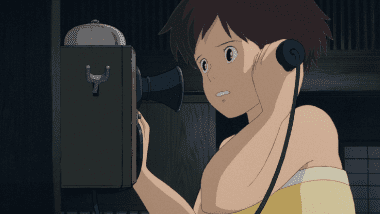
He calls the hospital and learns that while their mother isn’t in critical danger, her condition has destabilized, and she will not be able to come home for the weekend as planned. When Satsuki delivers the crushing news, Mei throws a massive tantrum. Satsuki, pushed beyond her emotional limits, snaps at her sister and runs off to Granny’s house.
There, Satsuki finally breaks down. The stoic facade she has maintained for months shatters. Sobbing hysterically, she confesses her deepest, darkest fear: what if her mother never comes home? What if she dies?
Mei secretly witnesses her sister’s devastating breakdown. Driven by guilt and a desperate need to fix things, the four-year-old decides to walk to the hospital by herself to deliver a fresh ear of corn, convinced its “magic” will cure her mother.
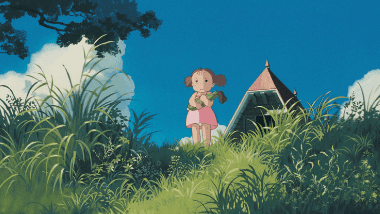
Hours pass. When Satsuki realizes Mei is gone, sheer panic sets in. The entire village mobilizes, searching the forests and dragging the local ponds. When a small sandal is found floating in the water, Satsuki experiences a moment of absolute terror before confirming it isn’t Mei’s. Realizing she is out of earthly options, Satsuki sprints into the forest, desperately begging the King of the Forest for help.
She tumbles into the briar patch and lands on Totoro’s stomach, sobbing uncontrollably. Moved by her despair, Totoro grabs her, leaps to the top of the giant camphor tree, and unleashes a massive roar to summon the Catbus.
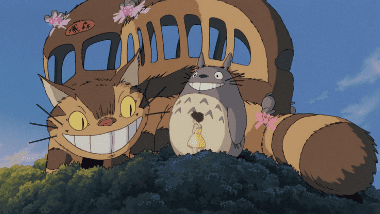
The Catbus bounds through the sky, its destination sign flipping rapidly before locking onto the word “MEI.” Satsuki climbs aboard, and the magical vehicle tears across the countryside, invisible to the frantic adults below. It leaps over forests and sprints across high-voltage power lines until it finally locates Mei, crying alone by a row of Jizo statues.
The sisters share a tearful, desperate embrace. The benevolent Catbus then alters its destination sign to “Shichikokuyama Hospital.” It carries the girls straight to their mother’s window. While their parents talk inside, the girls secretly leave the ear of corn on the windowsill. Seeing their mother laughing and looking healthy instantly cures their anxiety.
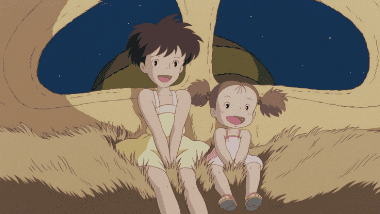
That concludes the emotional rollercoaster of My Neighbor Totoro. The watercolor illustrations shown during the end credits act as an epilogue, proving that the mother eventually recovers and returns home to a happy, reunited family.
▼ Explore the film’s memorable dialogue in Japanese and English
Many of the film’s most important emotional moments are expressed through deceptively simple dialogue—from Mei naming Totoro and Satsuki losing her temper to the sisters declaring that their experience “was a dream, but wasn’t a dream.” See the original Japanese, romanization, English subtitles, literal translations, and detailed commentary in 14 My Neighbor Totoro Quotes in Japanese and English, Explained.
Now, let’s peel back the magical surface and dive into the deeper, psychological mysteries of the film.
My Neighbor Totoro (1988) Deep Analysis: Uncovering the Film’s Hidden Meanings
The Heartbreaking Lie Satsuki’s Mother Tells
One of the most beautiful, tender scenes in the film is when Yasuko combs Satsuki’s hair in the hospital. In that brief moment, the heavy burden of responsibility lifts off Satsuki’s shoulders, and she looks genuinely radiant.
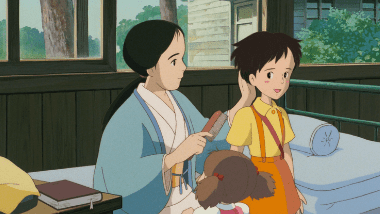
However, many critical viewers believe that during this very scene, Yasuko tells Satsuki a devastating, necessary lie. What exactly did she lie about, and why was she forced to deceive her own daughter? I unpack this emotional theory in our dedicated breakdown below.
Read the full analysis: The Two Heartbreaking Lies Satsuki’s Mother Told
The True Psychological Weight of Satsuki’s Tears
The scene where Satsuki collapses into Granny’s arms and sobs uncontrollably is harrowing. As a child, you might view Mei’s tantrum as annoying and Satsuki’s crying as an overreaction. But as an adult, the psychological weight of that breakdown is staggering.
What is the true catalyst behind Satsuki’s emotional explosion?
It isn’t just about a delayed homecoming; it is the sudden, terrifying realization of her own mortality and the crushing weight of playing an adult. Compare Satsuki’s breakdown to Mei’s tantrums by exploring our psychological deep dive.
Read the full analysis: The Devastating Meaning Behind Satsuki’s Tears
The Symbolic Cruelty of the Farm Truck Couple
During the frantic search for Mei, Satsuki flags down a passing farm truck to ask for help. The occupants of the truck are a young, attractive couple in love.
Why did Miyazaki specifically draw a happy couple in this high-tension scene? He could have drawn anyone—a lonely old man, a grumpy farmer. The inclusion of romantic imagery right before Satsuki crosses paths with a sweaty, struggling Kanta on his bicycle is incredibly deliberate.
I argue that this scene is a harsh visual contrast designed to foreshadow Kanta’s ultimate romantic fate.
Read the full analysis: Why Kanta’s First Love Was Doomed From the Start
The Dark Origins of the “God of Death” Urban Legend
Finally, we must address the elephant in the room. My Neighbor Totoro is famously plagued by a morbid, viral urban legend. The theory posits:
- The sandal in the pond belonged to Mei; she actually drowned.
- Satsuki, driven mad by grief, seeks out Totoro (a God of Death/Grim Reaper) to take her to the underworld (Meikai).
- The Catbus is the transport to the afterlife.
- The mother can’t see them at the hospital because the girls are ghosts.
- The missing shadows in the animation’s final act “prove” they are dead.
Studio Ghibli has officially debunked this theory. But the more fascinating question isn’t whether it’s true; it’s why did our collective consciousness invent such a dark narrative for a children’s movie? Why are audiences so eager to kill off Mei and Satsuki?
I explore the terrifying vulnerability of childhood and how Miyazaki’s hyper-realistic animation inadvertently birthed this morbid legend in our final analysis piece.
Read the full analysis: The Dark Psychology Behind the Totoro Urban Legend
The images used in this article are from the Studio Ghibli Still Images collection.
Can you name the movie before the scene comes into focus?
Put your visual memory to the test with a blurred Studio Ghibli scene.


Reader Comments