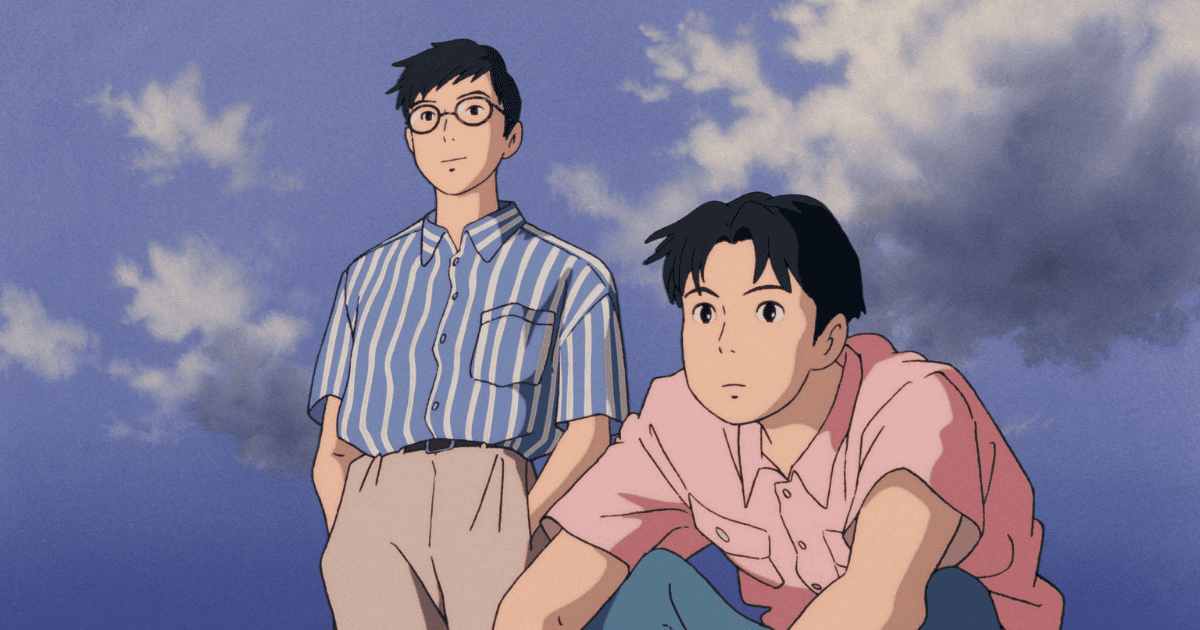
Ocean Waves (Studio Ghibli Official) is a television anime special directed by Tomomi Mochizuki. It originally aired on Nippon TV on May 5, 1993, and has a runtime of approximately 72 minutes.
In this article, I have selected seven of my favorite quotes from Ocean Waves.
Looking back at the story through its dialogue, I keep returning to the idea that Ocean Waves is fundamentally a story about lying to yourself.
The characters tell small lies about what they really feel. Those lies create minor misunderstandings, enormous detours, and relationships that take far longer to reach their destination than they should. That, for me, is one of the most fascinating things about the film.
The dialogue also contains expressions that are difficult to translate directly, so I became curious about how these lines were rendered in English. For each quote, I will look at the original Japanese, romanization, English subtitle, literal translation, and what the line reveals about the characters.
The film’s official English title is:
Ocean Waves
Translation note: The English subtitle wording in this article is based on the commercially released Blu-ray available to the author. Subtitle wording may vary between releases and territories.
▼ Read the full story and analysis behind these quotes

On this pageContents
Taku Morisaki Quotes in Japanese and English
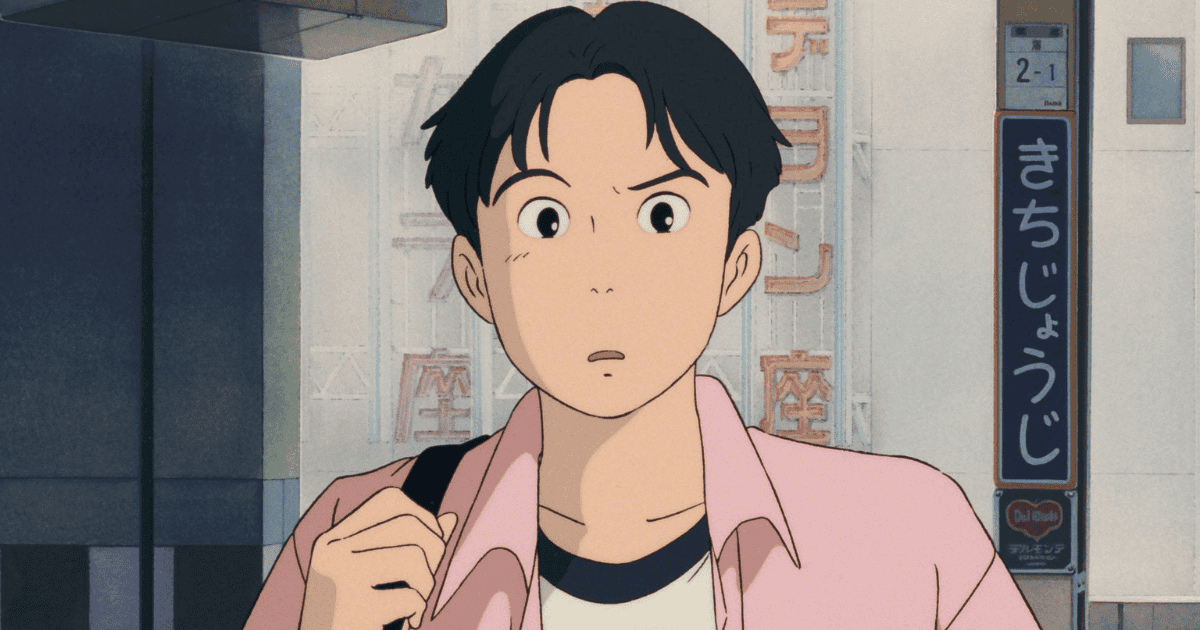
“It really irritated me when I realized that Yutaka was interested in Rikako.”
松野が里伽子に魅かれているのを知って僕は理不尽に腹立たしかった。やめちょきや。女はどうせ男の表面しか見んがよ。女なんぞにお前のよさは解りゃせんと。
Matsuno ga Rikako ni hikarete iru no o shitte, boku wa rifujin ni haradatashikatta. Yamechoki ya. Onna wa dōse otoko no hyōmen shika min ga yo. Onna nanzo ni omae no yosa wa wakarya sen to.
It really irritated me when I realized that Yutaka was interested in Rikako. Better forget it! Girls only care about looks. I thought she’d never see his real value.
When I realized Matsuno was attracted to Rikako, I felt unreasonably angry. Better give it up. Women only look at the surface of men anyway. A woman could never understand what is good about you.
Read the Commentary and Analysis
This is Taku’s internal monologue when he realizes why Matsuno has gone out of his way to call him after their summer classes.
The first important word is rifujin—“unreasonable” or “irrational.”
Normally, we might interpret that as “without any particular reason” or “even though this does not disadvantage me in any way.”
In other words, the fact that Matsuno is attracted to Rikako should cause Taku absolutely no harm.
And yet it makes him angry.
That brings us to the second important expression: haradatashikatta—“I was angry” or “I was irritated.”
Usually, anger is produced because something inconvenient, threatening, or unpleasant has happened to us.
But Taku himself admits that his anger is irrational, and objectively speaking, Matsuno has done nothing to hurt him.
That means the aggression appearing inside Taku must have been created to crush something else that was already inside him.
And that “something” was obviously his own attraction to Rikako Muto.
Taku had fallen for her too.
But Matsuno announced his feelings first. Taku therefore reacted by immediately suppressing his own.
Because he buried those feelings at this exact point, his relationship with Matsuno eventually deteriorates during the second half of their high school years.
Nothing good comes from hiding what you honestly feel.
Of course, I have memories of doing something similar myself.
The interesting English word is “irritated.” To irritate someone means to annoy or anger them.
Unfortunately, the subtitle does not fully preserve what I consider the most important word in the Japanese: rifujin.
Taku is not merely irritated. He knows that his irritation is unreasonable.
That self-awareness is what reveals that something else is happening beneath the surface.
If we wanted to preserve that nuance more explicitly, “unreasonably angry” would be one possible translation.
“And that’s when I knew—I’d always been crazy about her.”
あぁ、やっぱり僕は好きなんや……そう感じていた。
Ā, yappari boku wa suki nan ya… sō kanjite ita.
And that’s when I knew – I’d always been crazy about her.
Ah, I really do love her after all… that was how I felt.
Read the Commentary and Analysis
If the previous quote is Taku hiding his real feelings from himself, this final monologue is the exact opposite.
It is remarkably simple, honest, and beautiful.
If Taku had been capable of admitting this one sentence earlier, perhaps he would never have become estranged from Matsuno.
Perhaps he and Rikako could even have enjoyed an actual high school romance.
Once again: nothing good comes from hiding what you honestly feel.
What makes it worse is that the film’s narration comes from Taku after high school.
It therefore took him a remarkably long time to acknowledge something that had apparently been true all along.
Even after Matsuno punched him, Taku could not be honest with himself.
Instead, he seems to have used the tragedy of losing his friendship with Matsuno as another excuse to continue hiding his feelings for Rikako.
He was extraordinarily lucky that Rikako’s feelings did not disappear during that time.
You were lucky, Taku. That is all I am saying.
The most interesting English expression is “crazy about.”
To be “crazy about” someone means to be extremely attracted to or enthusiastic about that person.
Even more interesting is the use of the past perfect:
“I’d always been crazy about her.”
A more literal translation of the Japanese might simply be “I realized I liked her.”
The subtitle instead tells us that Taku realizes something had already been true for a long time.
That captures beautifully what the Japanese leaves unstated: he did not suddenly fall in love at the end. He finally recognized the love that had been there all along.
“And that’s when…” also means “that was the moment when…,” making it a useful expression for identifying a decisive moment in the past.
▼ Read more about Taku Morisaki and his self-deception
Rikako Muto Quotes in Japanese and English
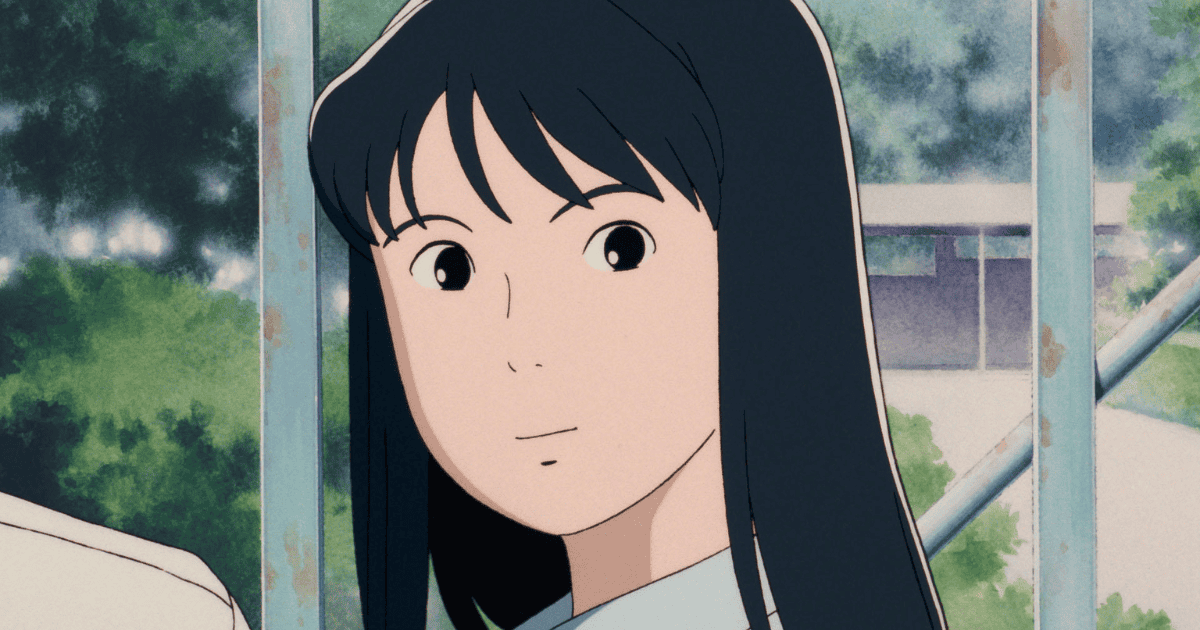
“My period just started. Sometimes it’s really bad.”
私、生理の初日が重いの。貧血起こして寝込むこともあるのよ。
Watashi, seiri no shonichi ga omoi no. Hinketsu okoshite nekonmu koto mo aru no yo.
My period just started. Sometimes it’s really bad.
The first day of my period is especially difficult. Sometimes I become anemic and have to stay in bed.
Read the Commentary and Analysis
Rikako says this to Taku after Yumi Kohama calls him to come and help.
There is an obvious aggressiveness in the way Rikako speaks.
At that moment, she seems to view Taku as an enemy who may interfere with her plan.
Yet the instant she realizes that Taku is not going to stop her trip to Tokyo—and is actually willing to accompany her—her attitude changes.
Why?
Rikako’s original plan was to tell her mother that she and Yumi were going to Osaka for a concert and staying there for two nights, while secretly traveling to Tokyo instead.
Her mother had apparently agreed because Yumi would be accompanying her.
Yumi’s presence was therefore essential to obtaining permission.
But in the end, after Taku’s intervention, Yumi goes home because she is supposedly feeling ill, leaving Rikako to travel toward Tokyo without her.
Rikako may certainly have been angry that her plan was disrupted.
But the fundamental obstacle had already been overcome. She was already on her way.
There was no practical reason for her to remain so hostile toward Taku.
She could simply have continued to Tokyo.
That suggests that the aggression had another source.
Put simply, I think that source was anxiety.
Compared with Taku, Matsuno, and Yumi, Rikako often appears unusually mature and self-possessed.
Yet she was lying to her mother, traveling secretly to Tokyo, and preparing to confront her estranged father.
She was obviously frightened.
Whatever sophisticated atmosphere she projected, she was still a child.
Her determination to hide that anxiety appears on the surface as aggression.
Perhaps when we notice ourselves becoming unnecessarily aggressive, we should occasionally ask whether there is some anxiety underneath it that we do not want to acknowledge.
The important English word here is “period.”
Formal medical terms include “menstruation” and “menses,” but in ordinary conversation “period” is the standard expression.
It is therefore somewhat euphemistic compared with the formal terminology.
An even more indirect expression is “that time of the month.”
The subtitle also removes Rikako’s explicit reference to anemia and being forced to stay in bed, compressing the sentence into the much shorter “Sometimes it’s really bad.”
“I hate Kochi, and boys who speak Kochi dialect!”
私……高知も嫌いだし、高知弁喋る男も大嫌い! まるで恋愛の対象にならないし、そんなこといわれるとゾッとするわ!
Watashi… Kōchi mo kirai da shi, Kōchi-ben shaberu otoko mo daikirai! Marude ren’ai no taishō ni naranai shi, sonna koto iwareru to zotto suru wa!
Look – I hate Kochi, and boys who speak Kochi dialect! Don’t say that to me! It makes me sick!
I hate Kochi, and I absolutely hate men who speak the Kochi dialect! I could never see them as romantic prospects, and hearing something like that gives me the creeps!
Read the Commentary and Analysis
Rikako says this after Matsuno unexpectedly confesses his feelings while they are walking home from the library.
She must have been shocked because the confession was completely unexpected.
Even so, saying that the idea makes her physically recoil is exceptionally harsh.
The fact that Matsuno survives with nothing worse than temporarily declining grades demonstrates psychological strength beyond imagination.
But just as with Rikako’s earlier comment about her period, aggression toward another person can sometimes function as a way of hiding something inside ourselves.
Perhaps Matsuno’s confession suddenly forced Rikako to recognize that her feelings for Taku were beginning to become real.
Unable to process that realization, she lashes out with words she may not actually mean.
Without realizing it, Matsuno has just delivered Taku a perfect assist.
I personally believe Rikako’s feelings for Taku become completely undeniable later, during the cultural festival, when she slaps him after realizing that he stood by and watched while their classmates surrounded her.
I discuss that interpretation in detail here:
But without Matsuno’s confession, perhaps even that later realization would not have happened.
Throughout Ocean Waves, Matsuno spends a remarkable amount of time playing the tragic clown who pushes everyone else’s romance forward while getting absolutely nothing in return.
Still, judging from his academic ability, he probably made it into Kyoto University.
Let us call that enough.
You did well, Matsuno!
The notable English phrase is “It makes me sick.”
It is a very harsh expression, communicating disgust rather than simple discomfort.
A closer everyday equivalent of the Japanese zotto suru in this context might be “It gives me the creeps” or “It makes my skin crawl.”
Whichever version we choose, the conclusion remains the same:
It is brutal.
Matsuno’s heart of steel deserves our respect.
▼ Read more about Rikako Muto and her emotional growth
Yutaka Matsuno’s Quote in Japanese and English
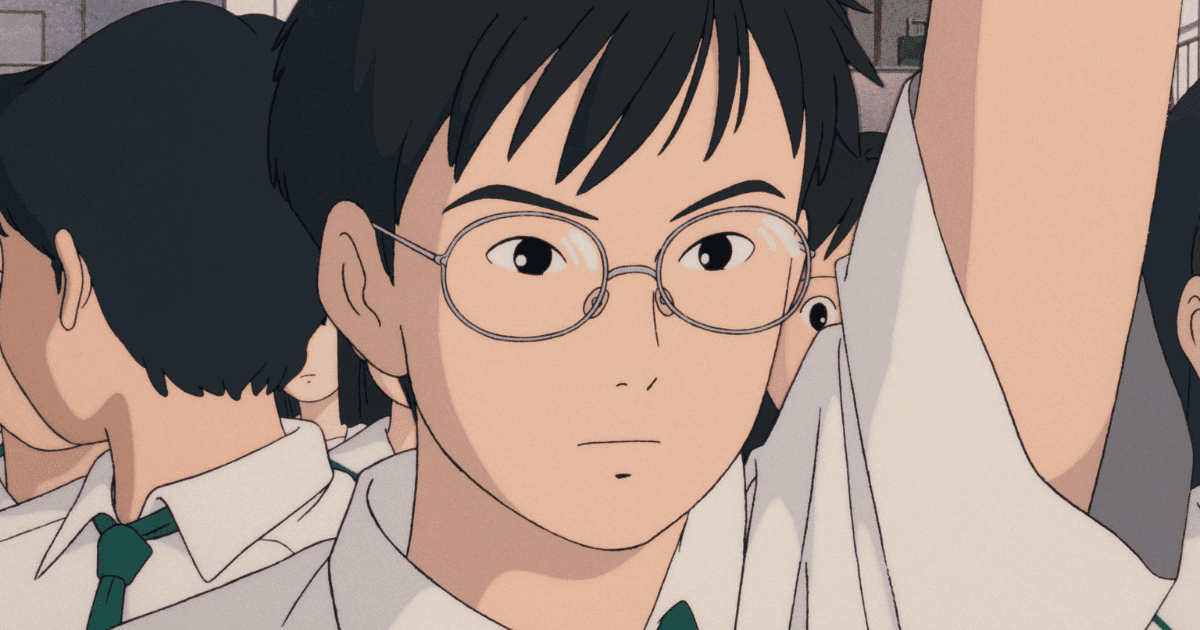
“I knew you were holding back on my account.”
あの時、俺が怒ったがは、お前が俺に遠慮しよったのがわかったきぞ。あの時まで気がつかんかった……お前が武藤を好きやったこと。
Ano toki, ore ga okotta ga wa, omae ga ore ni enryo shiyotta no ga wakatta ki zo. Ano toki made ki ga tsukankatta… omae ga Mutō o suki yatta koto.
I was angry that time … because I knew you were holding back on my account. I hadn’t noticed ’til then … that you really liked Rikako.
The reason I got angry then was because I realized you were holding yourself back because of me. Until that moment, I hadn’t realized that you loved Muto.
Read the Commentary and Analysis
The word enryo—roughly “holding back” or “showing restraint”—is an extremely Matsuno-like euphemism.
What Matsuno actually experienced at that moment was probably far uglier.
He saw Taku acting relaxed and superior.
He felt his own inferiority.
And he understood that he had lost.
The fact that Matsuno does not swallow those feelings and instead punches Taku demonstrates how strangely honest he is.
In that respect, he is completely different from Taku and Rikako, who spend much of the story lying about their inner lives.
Yet if we treat the word “holding back” as Matsuno’s one lie—his polite way of refusing to describe his humiliation directly—then the three central characters have all been lying throughout the story.
Matsuno’s lie is simply the most beautiful of the three.
The useful English expression is “hold back.”
It can mean to restrain yourself, conceal something, or avoid acting fully.
“Don’t hold back” can therefore mean “Don’t hesitate” or “Don’t be reserved.”
In formal business English, we often encounter expressions such as “Please don’t hesitate to…,” while “Don’t hold back” is much more conversational.
Another useful phrase is “on my account.”
Here it does not mean a bank account or online account. It means “because of me” or “for my sake.”
For example:
“Don’t wait on my account.”
means:
“Don’t wait just because of me.”
The past perfect in “I hadn’t noticed” is also important.
Matsuno realizes Taku’s feelings at one particular moment in the past. Before that moment, he had remained unaware of them for an extended period.
That is exactly the sort of relationship between two past events that calls for the past perfect.
English tense remains surprisingly difficult for Japanese speakers.
▼ Read more about Yutaka Matsuno and his role in the love triangle
Yumi Kohama’s Quote in Japanese and English
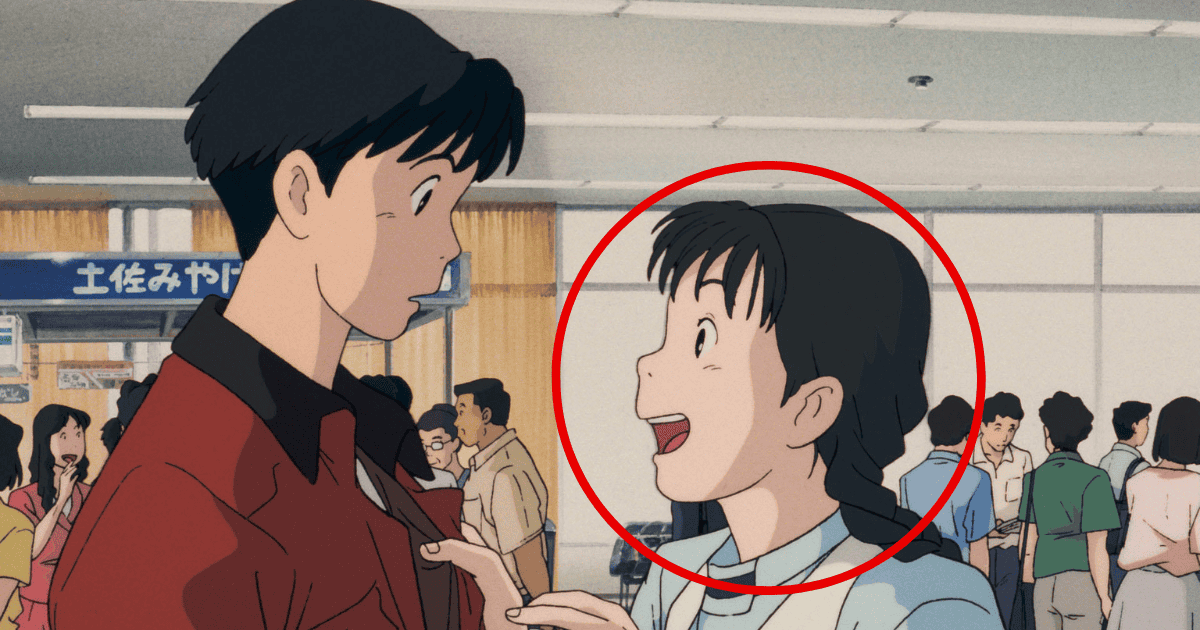
“She said there’s someone in Tokyo she wants to see.”
あっ、そういうたら里伽子、東京に会いたい人がおる言うて、言いよったよ。けんど、ようわからんがよ。誰にあうがあ言うても、お風呂で寝る人やと。
A, sō iutara Rikako, Tōkyō ni aitai hito ga oru iute, iiyotta yo. Kendo, yō wakaran ga yo. Dare ni au ga a iute mo, ofuro de neru hito ya to.
That reminds me… she said there’s someone in Tokyo she wants to see. But she didn’t say who. It’s someone who likes to sleep in bathtubs!
Come to think of it, Rikako said there was someone in Tokyo she wanted to see. But I didn’t really understand. When I asked who, she said it was someone who sleeps in the bathtub.
Read the Commentary and Analysis
Yumi casually reveals this fact while looking at Kochi Castle with Taku, Matsuno, and the others after their high school reunion.
Something remarkable happens immediately afterward.
Taku’s internal monologue, which has spent almost the entire film lying about his feelings, suddenly becomes honest.
He begins thinking that he wanted to see Kochi Castle with Rikako.
Then he finally admits that he loves her.
Yumi’s comment has placed Taku completely inside the emotional safe zone.
He finally knows that Rikako has been thinking about him too.
That knowledge gives him permission to stop lying.
Something similar happened during the Tokyo trip.
Yumi Kohama has an extraordinary ability to deliver perfect romantic assists to Taku without any intention whatsoever.
She is essentially Cupid.
If Matsuno has one fundamental reason for losing this romantic contest, perhaps it is simply that Yumi never descended from the heavens to provide the same service for him.
An innocent Cupid can be a dangerous thing.
Yumi will probably never realize that this casual sentence was the decisive pass that sent Taku toward the goal.
At the very least, she owes Matsuno an apology.
The useful English expression is “That reminds me…”
It is used when something that has just been said or seen causes you to remember something else.
In this scene, the group has been talking about Rikako, which causes Yumi to suddenly remember what Rikako told her.
That makes “That reminds me” a very natural translation.
The bathtub detail is also crucial to the ending. Taku immediately understands who Rikako means because sleeping in the bathtub is a private memory from their Tokyo trip.
▼ Read more about Yumi Kohama and the film’s other characters
Taku’s Mother’s Quote in Japanese and English
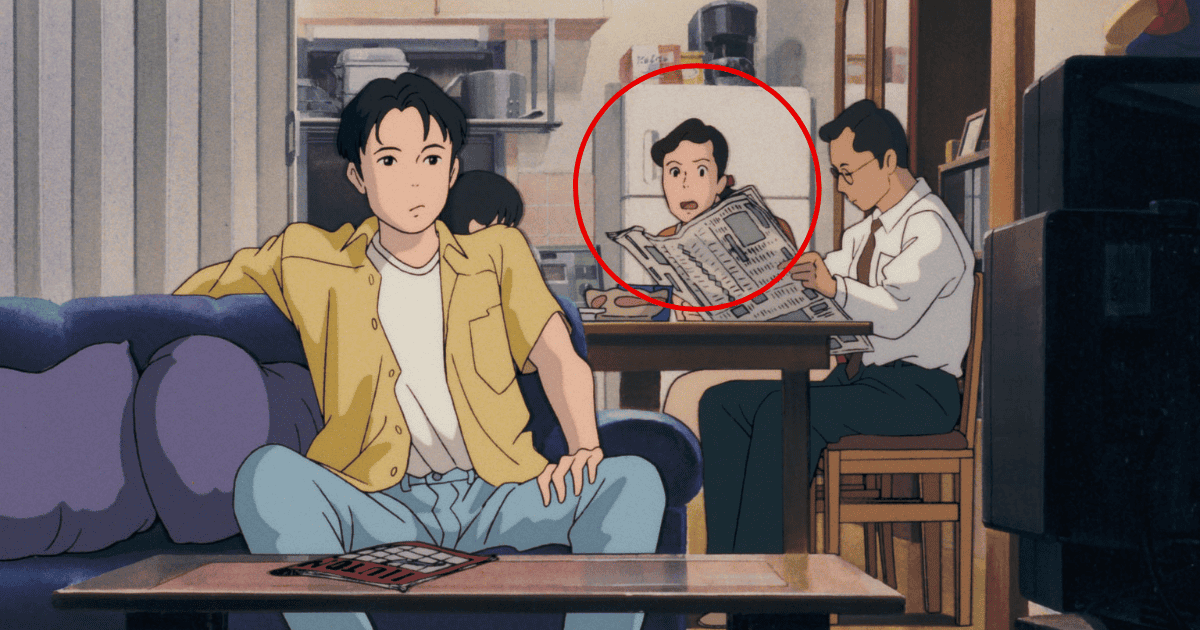
“A mother needs her children with her!”
そういうもんじゃないわね、母親やったら。子供も一緒に連れていきたいもんぞね。色々あって実家に帰るゆうがは大変じゃき。そんな時に受験がどうのこうのって、子供を残しちょけるもんかね! 何があっても一緒に連れてくらあね。
Sō iu mon ja nai wa ne, hahaoya yattara. Kodomo mo issho ni tsurete ikitai mon zo ne. Iroiro atte jikka ni kaeru yū ga wa taihen jaki. Sonna toki ni juken ga dō no kō no tte, kodomo o nokoshichokeru mon ka ne! Nani ga atte mo issho ni tsurete kurā ne.
Now don’t talk like that! A mother needs her children with her! Relocating is a tough decision! She can’t leave them behind just for school! It’s natural for her to want them with her!
That isn’t how a mother feels. A mother would want to take her children with her. Going back to her parents’ home because of difficult circumstances is a major decision. At a time like that, do you really think she could leave her child behind just because of entrance exams? No matter what happened, she would take her child with her.
Read the Commentary and Analysis
Taku’s mother reacts strongly after he casually comments over dinner that Rikako has been treated badly by her parents.
Taku essentially says that Rikako is an excellent student who could have gone to university in Tokyo anyway, and that it seems cruel for a child to be dragged away because of a parent’s circumstances.
If this scene existed in isolation, it might simply illustrate the familiar idea that children do not understand their parents.
But his mother’s words do something much more important.
They make Taku slightly more adult.
Later, during the Tokyo trip, Taku ends up sitting with Rikako and her former boyfriend.
When the two of them discuss the situation entirely from the perspective of injured children, Taku becomes angry and tells them that they do not understand what their parents are going through.
Those words are essentially the lesson his mother gave him at the dinner table.
I think that confrontation must have shaken Rikako awake.
She had been thinking about her family situation inside an extremely narrow world, and Taku suddenly forces another perspective into it.
That incident alone may not have made Rikako fall in love with him.
But it was unquestionably important.
Taku Morisaki will owe his mother for the rest of his life.
There is nothing especially difficult in the English vocabulary here.
What is interesting is how strongly the subtitle compresses the mother’s personality.
The Japanese is full of Kochi dialect, rhythm, repetition, and the emotional insistence of a mother speaking from experience.
The subtitle strips much of that away and preserves the essential argument:
A mother in that situation would want her child beside her.
That loss of personality is unavoidable to some degree in subtitles, but the result is also useful from the perspective of English composition. It demonstrates how a long, emotionally textured Japanese statement can be reduced to several simple English propositions while retaining the main meaning.
These seven lines capture much of what makes Ocean Waves so compelling to me.
Taku hides his love behind irritation. Rikako hides anxiety and affection behind aggression. Even Matsuno chooses the gentle word “holding back” rather than describing exactly how humiliated he felt.
Then, near the end, one completely innocent comment from Yumi finally makes honesty possible.
Perhaps that is why the film feels so painfully familiar. The characters are not separated because they do not have feelings for one another. They are separated because admitting those feelings is harder than lying about them.
The images used in this article are from the Studio Ghibli Works Still Image Collection.
Can you name the movie before the scene comes into focus?
Put your visual memory to the test with a blurred Studio Ghibli scene.


Reader Comments