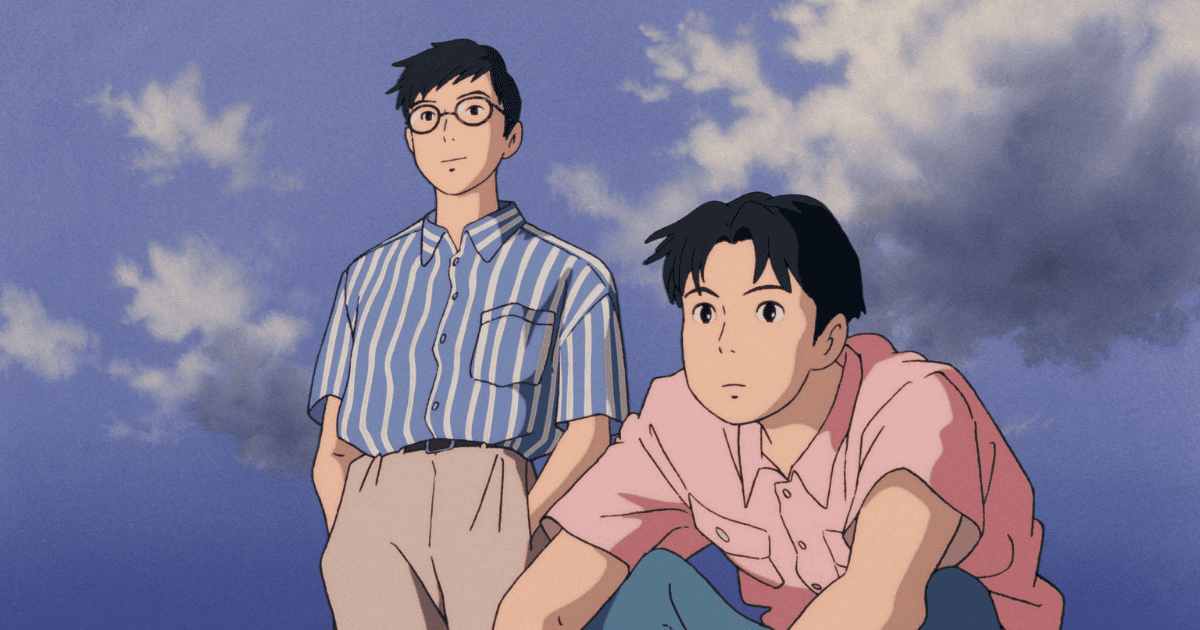
Ocean Waves(Studio Ghibli Official) was broadcast on Nippon TV on May 5, 1993, in a 90-minute slot. From Kiki’s Delivery Service onward, Ghibli began employing animators as permanent staff, and Ocean Waves was made by a “young team” of those employees. Young they may have been, but director Tomomi Mochizuki and animation director Katsuya Kondo are now established figures in the industry.
As producer Toshio Suzuki has discussed, using that younger team was part of Ghibli’s plans for the future. The studio needed to be able to make good films outside the control of Miyazaki and Takahata. I take this project as an experiment in doing just that.
I love the resulting film, though Miyazaki apparently did not feel the same way. A staff roundtable included on the Blu-ray of Ocean Waves recounts his criticism: Ocean Waves shows only how young people are, whereas a work should go as far as showing how they ought to be.
Perhaps so. Even then, this remains one of my favorite Ghibli films. I want to explain what I like about it, but first, a look back at the story. (Full spoilers ahead.)
*This is a translated version. The original (Japanese) is available here.
- Detailed Synopsis and Character Map
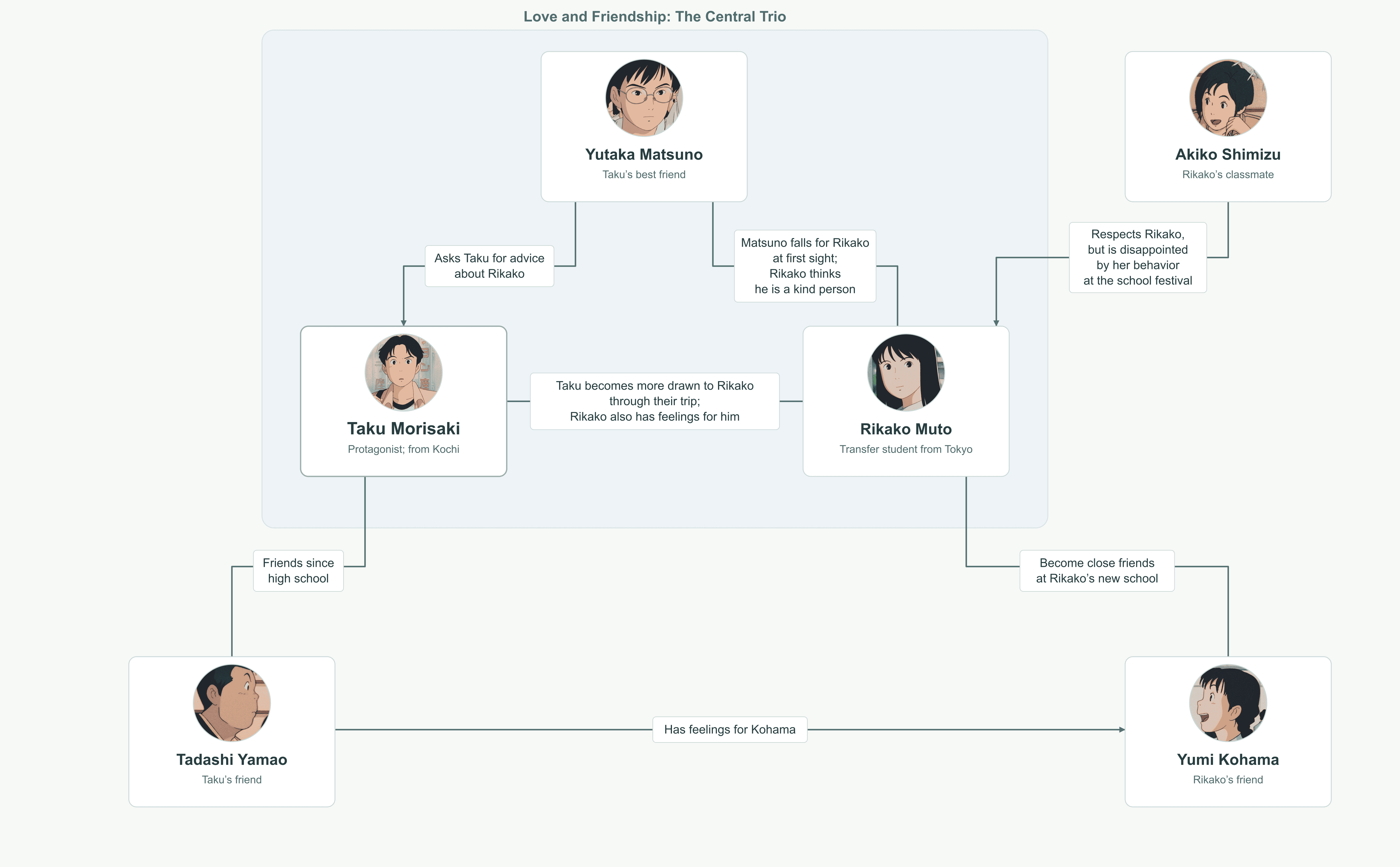
Taku Morisaki, a university student in Tokyo, recalls his high school days on his way to a reunion in Kochi. His memories involve his friend Matsuno, transfer student Rikako Muto, a trip to Tokyo, and the misunderstandings that fracture his friendship. Reconciliation with Matsuno and a reunion with Rikako bring his feelings back into focus. Below is a fuller synopsis and character map. - The Lies and Misunderstandings of Youth
Ocean Waves centers on Taku’s struggle between friendship and love. In my reading, his attempts to conceal his own feelings lie at the heart of this coming-of-age story. - Self-Deception Through Narration
Taku’s inner monologue narrates the film, but I read that narration as a lie told to us viewers. This structure has an intriguing parallel in The Melancholy of Haruhi Suzumiya.
On this pageContents
Ocean Waves (1993): Synopsis (Spoilers)
Key Points and Character Map
- Youth and a New Arrival
In a seaside town, high school student Taku Morisaki meets Rikako Muto, a transfer student from Tokyo, and begins to develop feelings he keeps to himself. - Friendship and Conflict
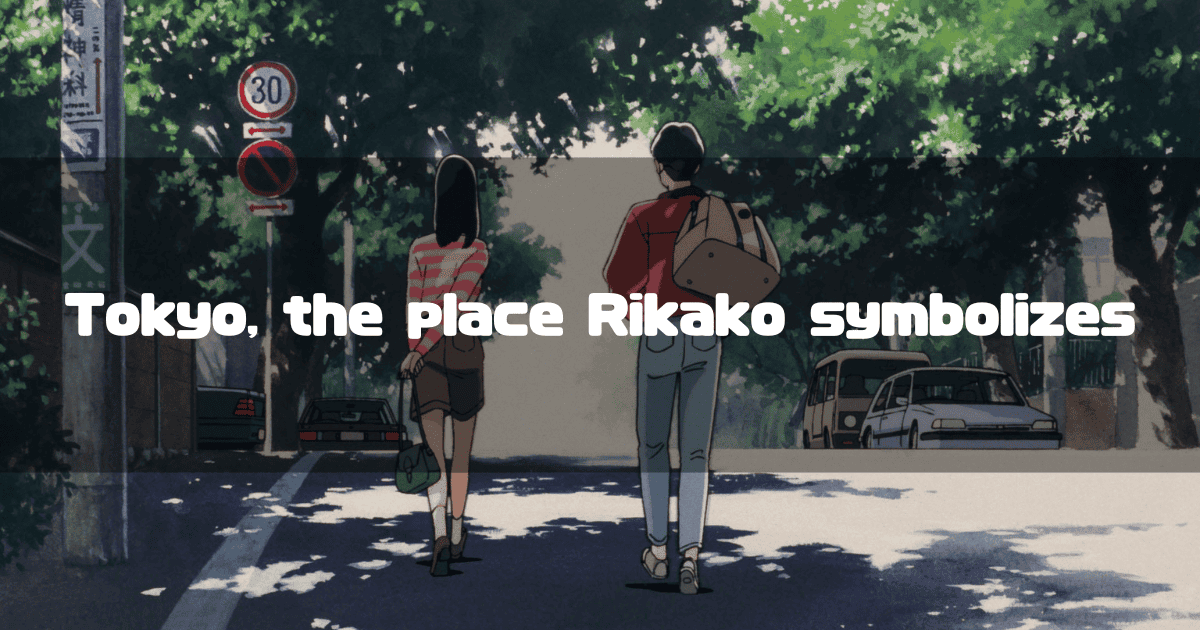
Taku’s friendship with Yutaka Matsuno brings both closeness and conflict, especially as their feelings for Rikako become entangled. - The Appeal of Tokyo
The trip Taku takes with Rikako deepens his attraction to Tokyo. Rikako herself also comes to embody that city’s appeal. - The Seaside Landscape
As the title suggests, the sounds and scenery of the sea run through the film, giving its fleeting moments of youth an enduring vividness. - Memory and Retrospection
Now at university, Taku looks back on his high school years and his memories of love, with both nostalgia and sadness.
Complete Character Map
Detailed Synopsis
Taku Morisaki has graduated from a combined junior and senior high school in Kochi and is now at university in Tokyo. On his way home for a class reunion, he recalls his school days.
His friendship with Yutaka Matsuno begins in junior high. When the school cancels the class trip because of declining academic performance, the students object. At a school assembly, the administration offers an explanation session to anyone interested—but asks them to volunteer by raising their hands.
Taku summons the courage to raise his hand. Only one other boy does the same: Matsuno.
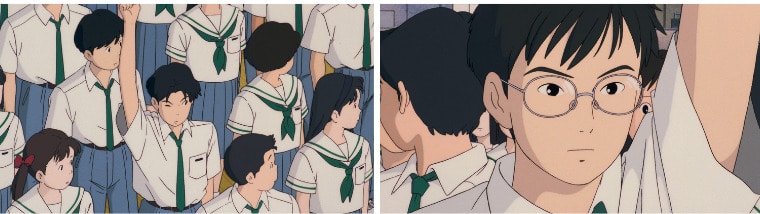
The school does not hold a session for just two students. A note on the classroom blackboard announces the cancellation and asks them to write down their opinions instead. They have effectively been ignored, but their time together in that empty room becomes special to Taku. From then on, they are best friends.
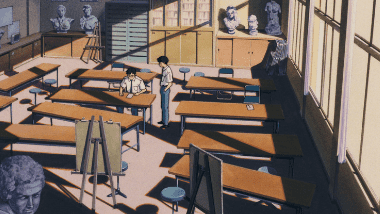
In their second year of high school, a girl named Rikako Muto transfers from Tokyo to their school in Kochi.
As class representative, Matsuno helps her settle in, and falls for her along the way. He is so excited that he phones Taku even to report something as ordinary as visiting her house. Taku is not pleased: he dislikes seeing his friend so infatuated.
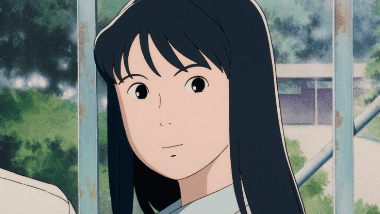
Rikako has moved because her parents have divorced and she has accompanied her mother to her mother’s hometown. Unhappy with that decision, she makes plans to visit her father in Tokyo.
Taku gets drawn into her plans and ends up accompanying her. In Tokyo, Rikako discovers that her father has a new girlfriend, upsetting her hopes of returning to her former life. When she comes to Taku’s hotel room, he gives her the bed and sleeps in the bathtub. The trip strengthens his feelings about Tokyo and leaves him with an experience he is uncomfortable sharing with Matsuno.
Back in Kochi, life seems to continue as if nothing happened. But at the school festival, Rikako is called behind the school and surrounded by girls from her class, who accuse her of not helping with the festival.
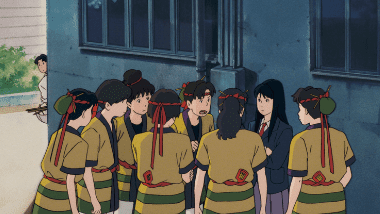
Rikako fights back verbally and sees them off. Taku, who has been watching from hiding, casually says, “You’re amazing.”
Rikako responds by slapping him and saying, “You’re the worst!”
Matsuno then appears. When Taku tells him what happened, Matsuno punches him, saying, “You really are the worst!”
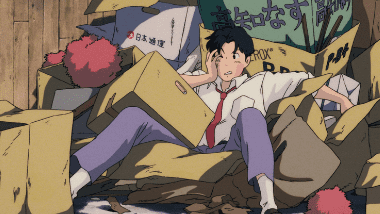
After that, Taku grows distant from the friend who had meant so much to him.
When Taku arrives in Kochi in the present, Matsuno is there to meet him. At a nearby pier, they talk about their school days. Matsuno explains that he hit Taku because he had realized Taku was in love with Rikako.
Taku had tried to hide those feelings out of consideration for Matsuno, but they had been exposed at that moment. The two reconcile.
They attend the reunion, but Rikako is absent. A woman who has seen her recently tells Taku that Rikako described the person she likes as “a guy who falls asleep in bathtubs.”
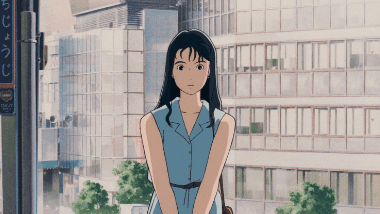
That person is Taku: he slept in the bathtub after giving Rikako the hotel bed in Tokyo. He does not see her in Kochi, but after returning to Tokyo, he meets her again on a station platform and recognizes his own feelings for her.
That, roughly, is the story of Ocean Waves. What makes it so interesting?
What Makes Ocean Waves (1993) Interesting?
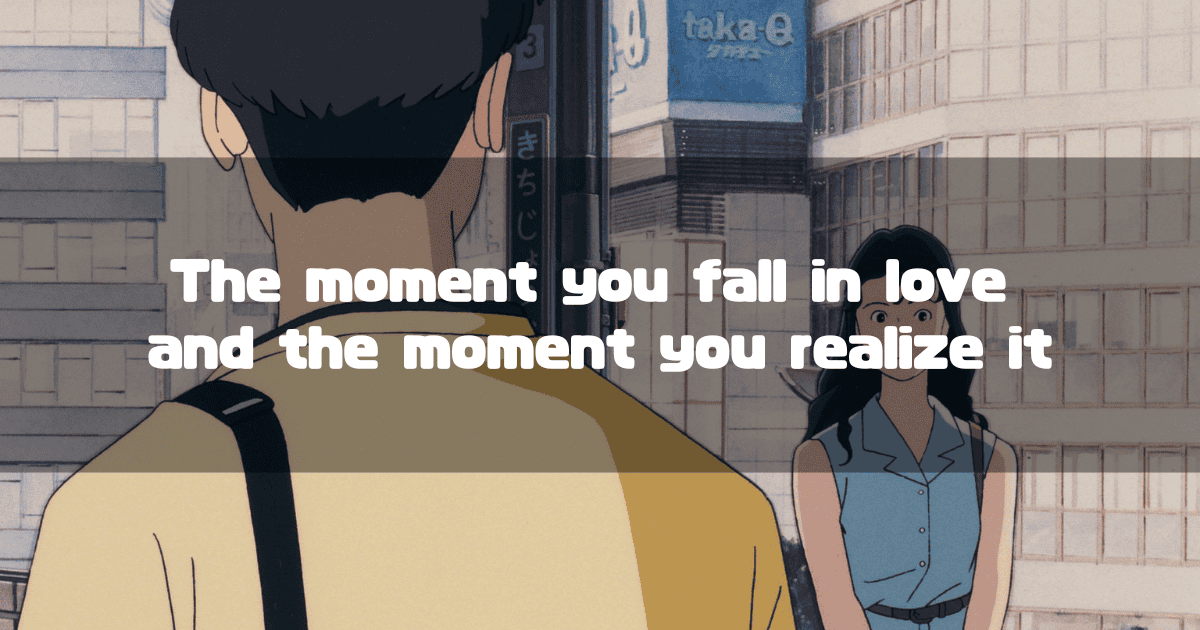
The basic plot of Ocean Waves concerns the feelings among Taku, his best friend Matsuno, and Rikako. Only Matsuno’s attraction is explicit: for him, it is simply love at first sight. One of the film’s first intriguing questions is when Taku falls for Rikako, and when she falls for him. Let’s start with Rikako.
When Did Rikako Fall for Taku?
It is hard to say when Rikako falls for Taku. But I think the moment when she recognizes those feelings is clear: the incident at the school festival.
Taku has watched her confrontation with her classmates without doing anything. As she slaps him and says, “You’re the worst!”, I read her as realizing, “Oh, I’m in love with Taku.” Her expression just afterward conveys it.
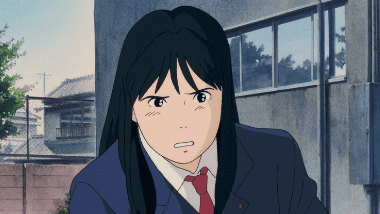
She hits him because he is Taku. Had it been someone else, she could simply have ignored him. Hitting him expresses a particular grievance.
That grievance is, ultimately, that he merely stood by while she was having a hard time: “Why didn’t you do anything?” You do not feel that disappointment toward someone who means nothing to you. It matters that Taku did nothing because Taku matters to her. That is why, in my reading, she goes out of her way to slap him.
So, if that was the realization, when did the actual affection begin?
That is harder to pin down, but I would say during the trip to Tokyo—perhaps at the meeting with her former boyfriend. When he criticizes her mother for bringing her to the countryside, Taku says, “You don’t understand how a parent feels. You’re pathetic!” and leaves.
When Rikako catches up with him, she seems as though a weight has lifted—or, in another sense, rather indifferent. That must have been when Taku became someone different from the others in her eyes.
Taku’s words come from his mother. Earlier, he had lightly remarked on how unfair it was for Rikako’s life to change because of her parent’s circumstances. His mother scolded him: “Of course a mother takes her child with her! Try thinking about how a parent feels!” Thanks to that scolding, Taku gets Rikako to notice him. He owes his mother one.
When Did Taku Fall for Rikako?
Taku is much easier to read. Early in the film, Rikako easily beats a tennis club member during PE. Look at the way Taku watches her.
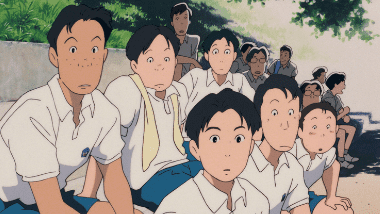
He is depicted quite differently from the other boys. They are all watching Rikako, but he is seeing something different: something has changed in his perception.
After class, he meets Matsuno and starts talking at length about Rikako’s tennis, without being asked. He is trying very hard to show that she means nothing to him.
Put simply, I think he has already fallen for her when they first meet.
Having heard Matsuno’s feelings first, he tries to put friendship ahead of his own attraction. Yet he, too, is in love with Rikako. I think that is the foundation of Ocean Waves.
The Haruhi Suzumiya Connection: The Unreliable Narrator
What kind of story is Ocean Waves, then? To me, it is the story of a boy lying to himself for the first time. That boy is Taku.
Even as Matsuno confides his feelings to him, Taku has already fallen for Rikako. Wanting to prioritize their friendship, he tries to conceal that. When Matsuno phones simply to say he has visited her house, Taku’s monologue presents his irritation as displeasure at his friend’s infatuation. What he really wants, in my reading, is for Matsuno’s interest in her to disappear.
This contradiction becomes even clearer in the original Japanese, where Taku explicitly admits that his anger was rifujin—unreasonable. Compare the Japanese wording, romanization, English subtitle, literal translation, and what that single word reveals about his hidden jealousy in our analysis of Taku’s “It really irritated me” monologue.
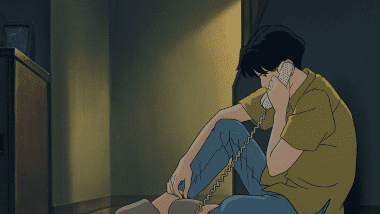
In Ocean Waves, the protagonist’s inner monologue becomes the narration. And, in this reading, it is all a lie.
What is youth? There is no single answer, but I think two possibilities are being honest with yourself for the first time, and lying to yourself for the first time.
I think Ocean Waves depicts the latter. Taku struggles to conceal his feelings for Rikako, primarily from Matsuno. But through the narration, he is also lying to us.
We know another story like this, don’t we? The Melancholy of Haruhi Suzumiya. There is room to debate who its protagonist is, but for me it is Kyon. His inner monologue also serves as narration, and it is constantly negative about Haruhi.
In Haruhi, I read that negativity as a flat-out lie. In my view, Kyon falls for Haruhi on first meeting her, then does everything he can to hide it. The Disappearance of Haruhi Suzumiya is where that concealment is exposed.
Like Kyon’s story, Ocean Waves is about lying to yourself.
Isn’t that a kind of youth many of us remember? As we get older, we learn how important it is to be straightforward—and how much quicker that can make things. Yet youth may be the moment when we make life needlessly complicated anyway. Thinking about Taku’s determined self-deception is, for me, what makes Ocean Waves so interesting.
The images used in this article are from Still Images from Studio Ghibli Works.
Can you name the movie before the scene comes into focus?
Put your visual memory to the test with a blurred Studio Ghibli scene.


Have you consider the idea that Taku really spends the entire movie desperately hiding his love for Matsuno?
Immediately after gym class, Taku bumps into Matsuno and proceeds to aggressively ramble about Rikako’s tennis skills for minutes on end, “completely unprompted.” He is overcompensating. He is desperated because be already Matsuno formally had “called dibs” and confessed his crush for her.
Consider the scene where Matsuno calls Taku at night, bragging about visiting Rikako’s house. Taku’s internal monologue claims he is “annoyed that Matsuno is acting pathetic over a girl.” Not to mention a previous scene where Taku states that “no girl would ever appreciate how wonderful Matsuno was”
And,after repetive situations of Rikako taking advantage of Taku, he fiercely explode and slaps Rikako only after learning she rudely rejected Matsuno.
Rikako slapped later Taku at the gimnasium, just because this was the first time that Taku was not putting her in first place, and she realized there was no one at her side anymore.
Matsuno completely missread it and thought all the fuss was about Taku being also in love with Rikako.
Final scene is only Rikako apologizing to Taku, as she spent the whole high school taking advantage of him, when he had been only a loyal friend to both Matsuno and, by extension, Rikako.
This perspective had never occurred to me. It is a very interesting interpretation, and it slightly changed the way I see the film while reading your comment. Thank you for such a thoughtful comment.