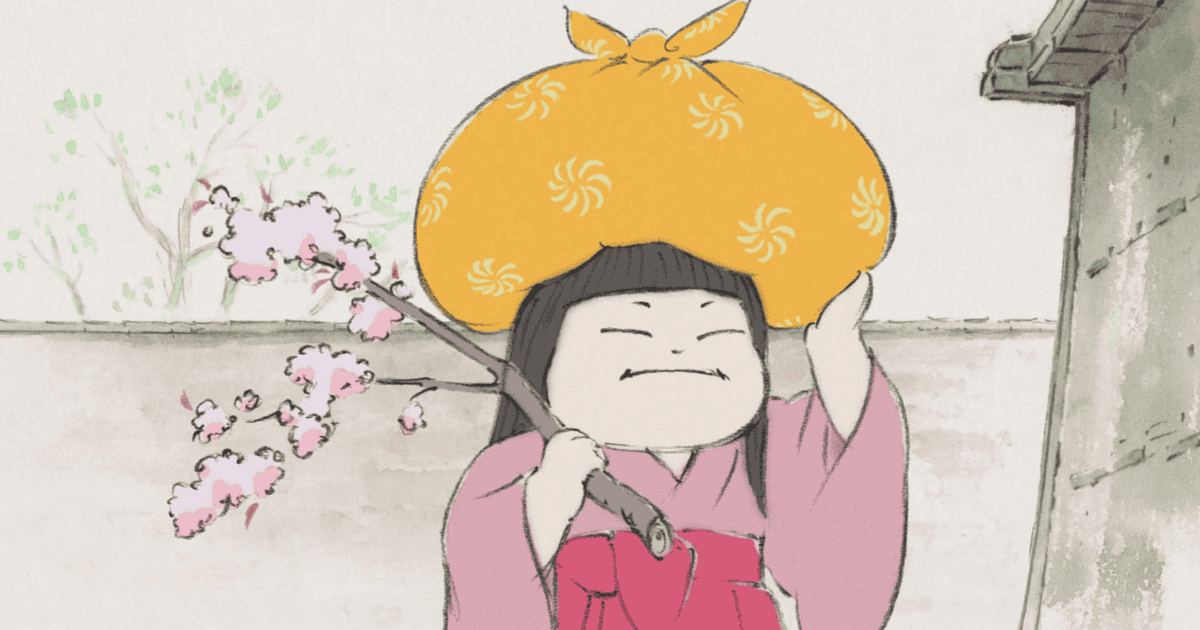
Isao Takahata’s masterpiece, The Tale of the Princess Kaguya (Official Studio Ghibli), isn’t just a beautiful adaptation of a folktale; it is a profoundly devastating exploration of societal suffocation.
While the film uses “The Tale of the Bamboo Cutter” as its foundation, it dives deep into Kaguya’s internal turmoil, crafting an intensely painful narrative. If you want to understand the exact nature of this underlying tragedy, check out our deep-dive analysis here:
Yet, amidst this heavy tragedy, one character never fails to steal the show: Menowarawa, the young serving girl. After Kaguya moves from her idyllic mountain home to the rigid capital of Kyoto, Menowarawa becomes her devoted caretaker. Brought to life by the brilliant voice acting of Tomoko Tabata, she provides a desperately needed touch of comedy, acting as a small glimmer of “salvation” within an otherwise agonizing narrative.
Throughout the film, Menowarawa projects an aura of absolute loyalty, suggesting she would never abandon the princess. However, during the film’s climax, she pulls off an unbelievable “miracle move”—a surprising action that perfectly seals the emotional weight of the ending.
In this analysis, we will unpack Menowarawa’s final moments on screen. How did she manage to execute this incredible move while everyone else was incapacitated? And more importantly, why did she do it?
*This is a translated version. The original (Japanese) is available here.
-
A Repressed Servant and Her “Selfish” Master
To Menowarawa, Kaguya might have seemed like a “selfish girl” who carelessly rejected her lavish naming ceremony, mountains of love letters, and even the Emperor’s proposal. The young maid likely harbored complex feelings toward a princess who actively threw away the exact social happiness that Menowarawa herself could never dream of obtaining. -
The Hidden Princess Kaguya
Trapped within the rigid class system of the era, Menowarawa faced a different kind of oppression than Kaguya. By silently supporting the princess while watching her reject ultimate privilege, Menowarawa essentially acts as the story’s “hidden Princess Kaguya.” -
The Breaking Point and the Final Song
During the climax, Menowarawa vanishes because she suddenly questions the absurdity of risking her life for such a “selfish” master. However, as Takahata’s storyboard notes describe her as “somewhat desperate,” she ultimately reclaims her duty, singing a childhood song to support the princess one last time. -
A Multilayered Masterpiece
While the film highlights Kaguya’s oppression, it also sheds light on the exploited lower classes around her. Menowarawa represents the silent anguish of those forced to internalize the era’s harsh realities, adding a rich dynamic to the story and emphasizing the value of those who quietly support from the shadows.
On this pageContents
The Tale of the Princess Kaguya (2013) The Final Climax: Menowarawa’s Miracle Move
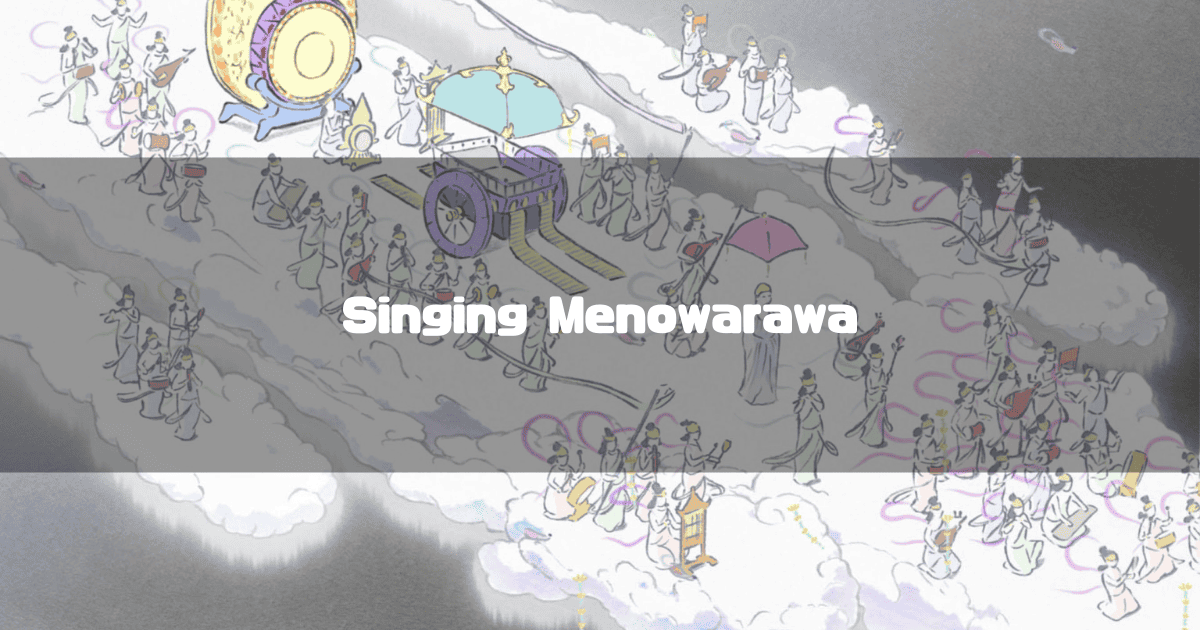
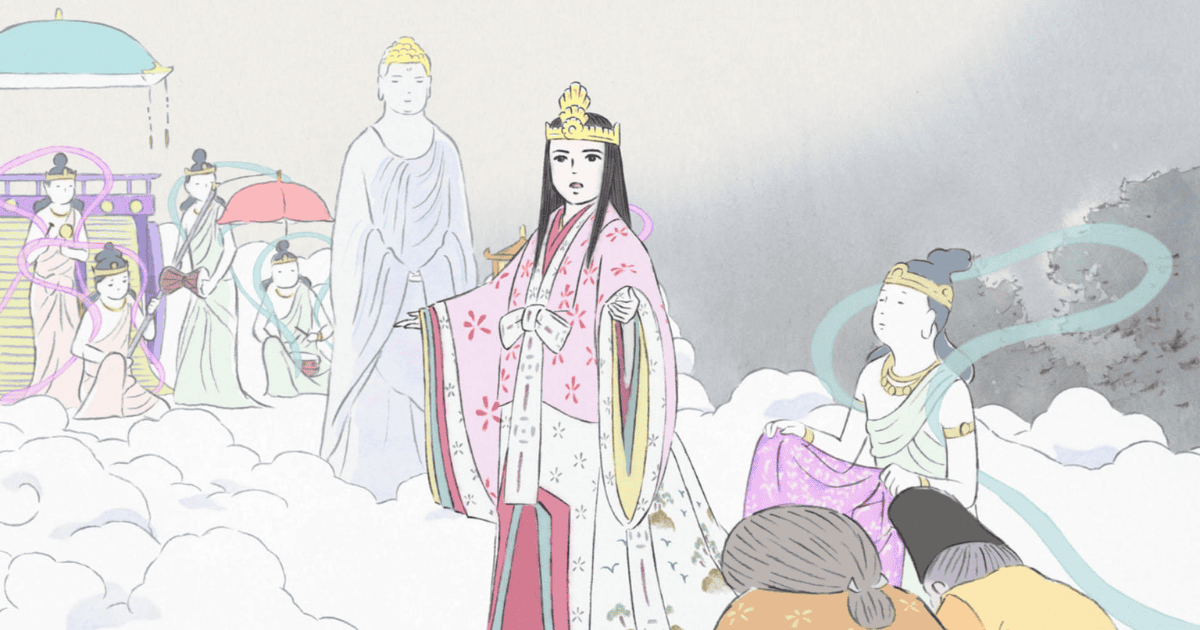
At the end of the story, heavily armed samurai gather at Kaguya’s mansion, determined to repel the celestial welcoming party descending from the moon.
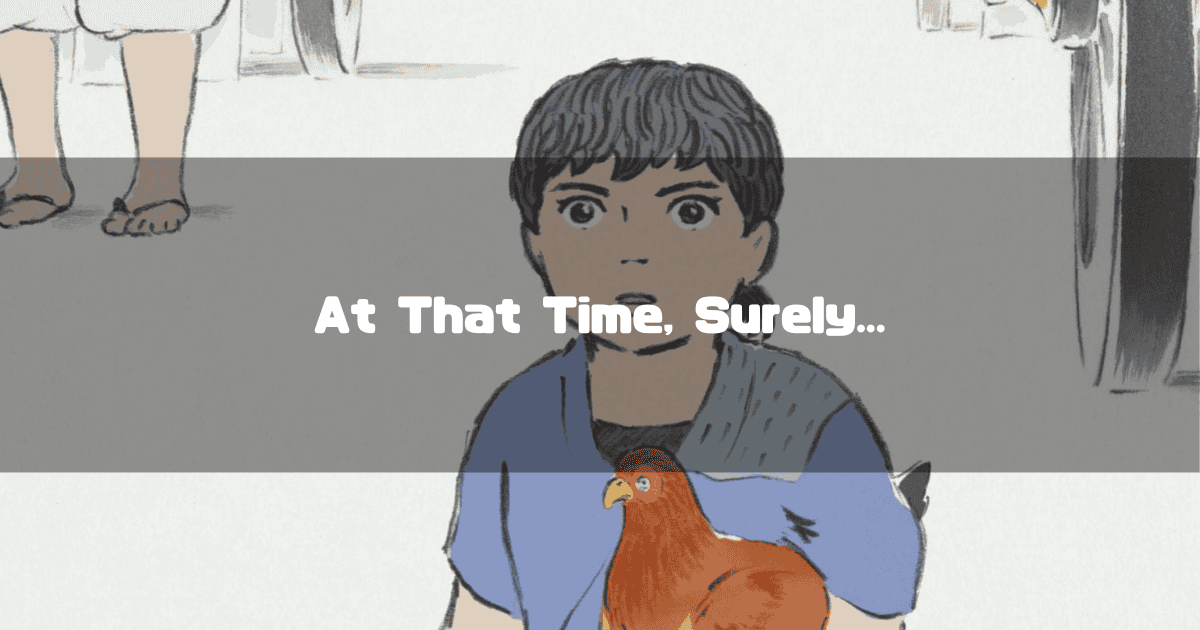
Menowarawa, who has diligently cared for Kaguya throughout her time in the capital, waits outside the princess’s hiding room. Gripping a naginata (a traditional polearm), she seemingly braces for the ultimate battle.
However… the moment the Moon People actually arrive and cast a supernatural sleep over everyone in the mansion, Menowarawa mysteriously vanishes from her post.
If we consult the official storyboard included in the Blu-ray release, Isao Takahata specifically notes: “Menowarawa, missing for some reason. Leaving behind her naginata and headband.”
If the story left it at that, we might just assume she cowardly ran away. But this is where her true miracle move begins.
Suddenly, outside the mansion among the playing children, Menowarawa begins to sing Kaguya’s beloved childhood nursery rhyme: “Birds, bugs, beasts, grass, trees, flowers…”
Hearing this melody cuts through the celestial magic. Princess Kaguya, along with Okina and Ouna, regains consciousness. This brief awakening allows them to bid their final, heartbreaking farewells, giving Kaguya the chance to deliver the emotional speech of a lifetime to the Moon People.
While elite samurai and seasoned guards fell into an instant slumber, Menowarawa somehow escaped the magic and beautifully anchored the film’s climax.
This raises a fascinating question.
While everyone else focused entirely on the celestial beings and succumbed to their power, how and why did Menowarawa manage to orchestrate this?
Let’s break down the psychology behind her actions.
The Tale of the Princess Kaguya (2013) Deep Analysis: Why Did Menowarawa Disappear?
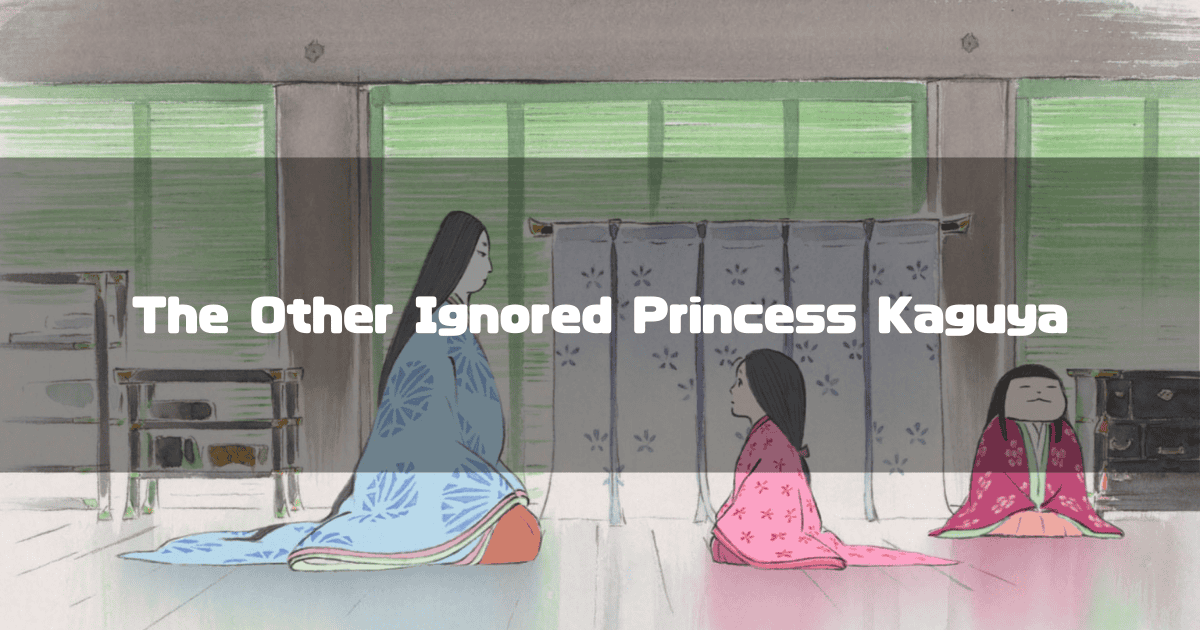
A Servant’s Perspective: Princess Kaguya as a “Selfish Girl”
Because The Tale of the Princess Kaguya focuses so intimately on Kaguya’s internal struggles, we naturally deeply empathize with her. However, to truly understand Menowarawa, we must shift our perspective and consider how the princess appeared to the people serving her.
Once we look through Menowarawa’s eyes, her reason for fleeing the battlefield becomes painfully clear.
To put it bluntly, the Princess Kaguya that Menowarawa observed in the capital was a girl who:
- Threw a fit over her own lavish naming ceremony,
- Ignored mountains of romantic letters from the country’s most eligible bachelors,
- Coldly rejected marriage proposals from five elite nobles,
- Demanded spontaneous cherry blossom viewings without considering anyone’s schedule,
- Forced everyone to rush home the moment she felt slightly gloomy,
- Played the ultimate victim upon hearing of Isonokami no Chunagon’s death,
- Flat-out rejected the Emperor of Japan, and finally,
- Selfishly forced everyone to risk their lives defending her, even though returning to the moon was her own hidden wish.
From a modern standpoint, Kaguya’s reactions to an oppressive patriarchal system are entirely justified. But we cannot forget that Menowarawa is a peasant girl living in the 9th century.
In that era, receiving a grand naming ceremony, being courted by high nobility, and catching the eye of the Emperor were the ultimate forms of societal success. Rejecting them was unheard of.
In Menowarawa’s eyes, didn’t Kaguya look like an unbelievably spoiled and selfish girl who only cared about her own feelings?
The original “The Tale of the Bamboo Cutter” was written around the 9th century and has survived for over a millennium. Over the centuries, audiences have often interpreted Kaguya as a “capricious, selfish woman.”
When we watch Takahata’s The Tale of the Princess Kaguya, we view Kaguya as a tragic victim of a society that refuses to understand her. However, by introducing Menowarawa’s grounded perspective, Takahata brilliantly acknowledges that classic “selfish” interpretation, adding immense depth to the narrative.
The Hidden Mirror: Menowarawa as the “Other” Princess Kaguya
If Kaguya appeared this selfish to her, imagine the toll it took on Menowarawa to dutifully serve her day in and day out. In many ways, she was even more repressed than Kaguya.
Kaguya had the luxury of ignoring the “common sense” of the era because of her divine origins and immense wealth. Menowarawa, however, was bound by it for her very survival.
She spent her days meticulously tending to a master who casually tossed away the exact privileges and “happiness” that a peasant girl could never hope to touch.
Deep down, Menowarawa must have screamed, “Why?! Are you out of your mind?!“
The Tale of the Princess Kaguya is fundamentally a story about how women are repressed and exploited by societal expectations. Kaguya’s innocent dreams are crushed by Okina, who acts as the ultimate enforcer of patriarchal common sense. But Menowarawa experiences this exploitation on a completely different, invisible level.
In short, Menowarawa will never have access to the social happiness that Kaguya so casually rejects.
Because she lacks Kaguya’s divine beauty and status, she simply has to swallow this unfair reality and do her job.
Serving a master who discards everything you’ve ever wanted makes Menowarawa the hidden, parallel Princess Kaguya of the story.
Yet, because she isn’t the protagonist, her quiet suffering goes entirely unnoticed.
The Breaking Point: The True Reason Behind Her Disappearance
When you understand her quiet resentment, her sudden disappearance during the final battle makes perfect sense. To put it simply: she finally realized how ridiculous it all was.
Why should she hold a naginata, tie on a headband, and literally risk her life for a girl who caused this entire disaster through her own selfish whims? Even the Emperor’s elite guards were powerless against the Moon People.
The more she thought about it, the more absurd it became.
Menowarawa had fulfilled her duties to this impossible master up to the very last moment. She owed Kaguya nothing more, especially not her life. Her retreat was essentially saying: “You brought this on yourself. Deal with it.”
When viewed through this lens, her disappearance feels intensely justified… but what do you think?
Still, it feels incredibly tragic to think that Menowarawa, who provided the only moments of genuine warmth in the agonizing world of The Tale of the Princess Kaguya, would just coldly abandon her post.
But don’t worry—Takahata left us a beautiful piece of salvation.
The Final Salvation: Decoding the “Somewhat Desperate” Storyboard Note
Let’s look at Takahata’s storyboard notes one more time.
During the final scene where Menowarawa joins the children to sing Kaguya’s favorite song, Takahata adds a very specific direction: she looks “somewhat desperate.“
What exactly does this desperation mean?
I believe her internal monologue went something like this:
“These terrifying things came down from the moon. The guards are dropping like flies. I don’t want to die for this, so I ran away… but isn’t there something I can do? I can’t fight them… Wait, maybe I can just sing her favorite song!”
This is the essence of her character.
She may have resented Kaguya’s privilege, and her survival instinct may have made her drop her weapon, but once she stepped away from the danger, her empathy kicked back in. That is a profoundly human reaction.
Menowarawa abandoned the physical battlefield, only to return to her true duty: offering emotional support. By singing that song, she returned to being the one character who genuinely anchored and healed Kaguya’s broken heart.
When you think about it, Kaguya spent her life obeying Okina’s suffocating orders because, as his daughter, it was her “job.” In that sense, Kaguya and Menowarawa were bound by the exact same sense of duty. They are mirrors of each other.
Personally, I believe highlighting the sharp contrast between Kaguya’s privilege and Menowarawa’s realism makes The Tale of the Princess Kaguya a much richer film. However, another valid interpretation is that Menowarawa never “abandoned” her post at all.
You could argue that her “desperation” implies she recognized the physical battle was lost, realized weapons were useless against magic, and strategically retreated to find the only method that could actually reach Kaguya’s soul: the song. Ultimately, the beauty of the film lies in how you choose to read her actions.
Summary: The Weight of the Supporting Cast
To summarize the brilliance of Menowarawa’s final act:
The Tale of the Princess Kaguya is a heartbreaking critique of systemic repression, with Kaguya serving as its primary victim. We cry for Kaguya, but we must also acknowledge Menowarawa as a symbol of the forgotten, exploited lower class.
While Kaguya feels tormented by her gilded cage, to the peasant girl serving her, the princess looks like someone casually throwing away the ultimate lottery ticket, completely oblivious to the struggles of normal people.
Disgusted by a situation where even the Emperor’s army is mobilized for Kaguya’s personal drama, Menowarawa drops her weapon. Yet, driven by pure human empathy, she finds a way to cut through the celestial magic, leading the children in a song to give Kaguya one final moment of peace.
The crucial takeaway is that Kaguya is the only person in the film who operates completely outside the “common sense” of her era. Ouna loved Kaguya dearly, but even she understood Okina’s societal ambitions (which makes Ouna’s quiet rebellion so touching).
Menowarawa shared the exact same harsh reality as the infuriating Okina. Acknowledging the perspective of someone like her is essential to grasping the full masterpiece of Takahata’s vision.
The Tale of the Princess Kaguya (2013) Bonus Theory: Was Sutemaru the Ultimate Victim?
While we’ve explored Kaguya’s perceived “selfishness” through the eyes of her maid, we must address the character who arguably suffered the most from it: Sutemaru.
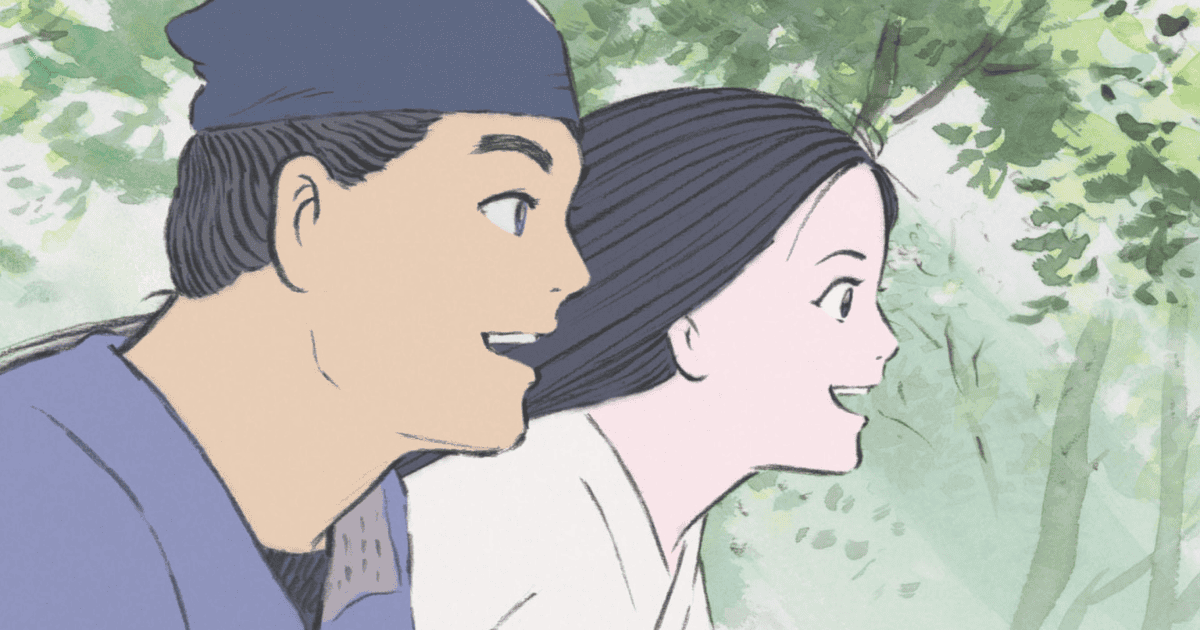
Back in Kaguya’s idyllic mountain childhood, Sutemaru was the charismatic leader of the local village kids.
Watching the supernaturally fast-growing “Takenoko” (Little Bamboo), Sutemaru senses her divine nature, sadly telling her, “I feel like you’re going to go somewhere far away.” Kaguya cheerfully dismisses this, replying, “Takenoko will always be with Sutemaru-niichan. I’ll be your underling forever and ever!”
From an outside perspective, it’s clear that Kaguya innocently completely missed the heavy implications of his words. As a child, her naive response is entirely forgivable.
But the tragedy doesn’t stop there. Years later, after being forced into the capital’s high society, Kaguya accidentally spots Sutemaru attempting to steal to survive. In a moment of selfish excitement, she calls out his name, blowing his cover and directly causing him to be brutally beaten by a mob.
Then comes the devastating finale. Realizing her time on Earth is ending, Kaguya flees back to the mountains and reunites with Sutemaru.
Completely ignoring the fact that Sutemaru now has a wife and a baby, she pulls him into a magical, passionate dream sequence where they fly over the earth together.
When the magic breaks, Sutemaru wakes up alone in the grass. He is forced to return to his peasant life, forever haunted by this impossibly beautiful, illusory memory of the girl he loved. Even though his wife and child are right there waiting for him.
If Kaguya hadn’t selfishly returned to see him one last time, Sutemaru could have lived a peaceful, ordinary life. Now, that celestial memory will torment him until the day he dies.
When you look at it this way, Sutemaru is undoubtedly the story’s greatest victim.
So please, cut the guy some slack and stop calling him “Family-Abandoning Sutemaru.”
The Pun of “Kazoku Sutemaru”
In Japanese SNS communities, Sutemaru is often jokingly referred to as “Kazoku Sutemaru” (Family-Abandoning Sutemaru). This is a wordplay on his name. The kanji character for “Sute” (捨) in Sutemaru means “to throw away” or “abandon.” When combined with the word “Kazoku” (family), his name sounds exactly like the phrase for “abandoning one’s family” (kazoku o suteru), humorously pointing out his immediate willingness to leave his wife and child behind for Princess Kaguya.
Can you name the movie before the scene comes into focus?
Put your visual memory to the test with a blurred Studio Ghibli scene.


Reader Comments