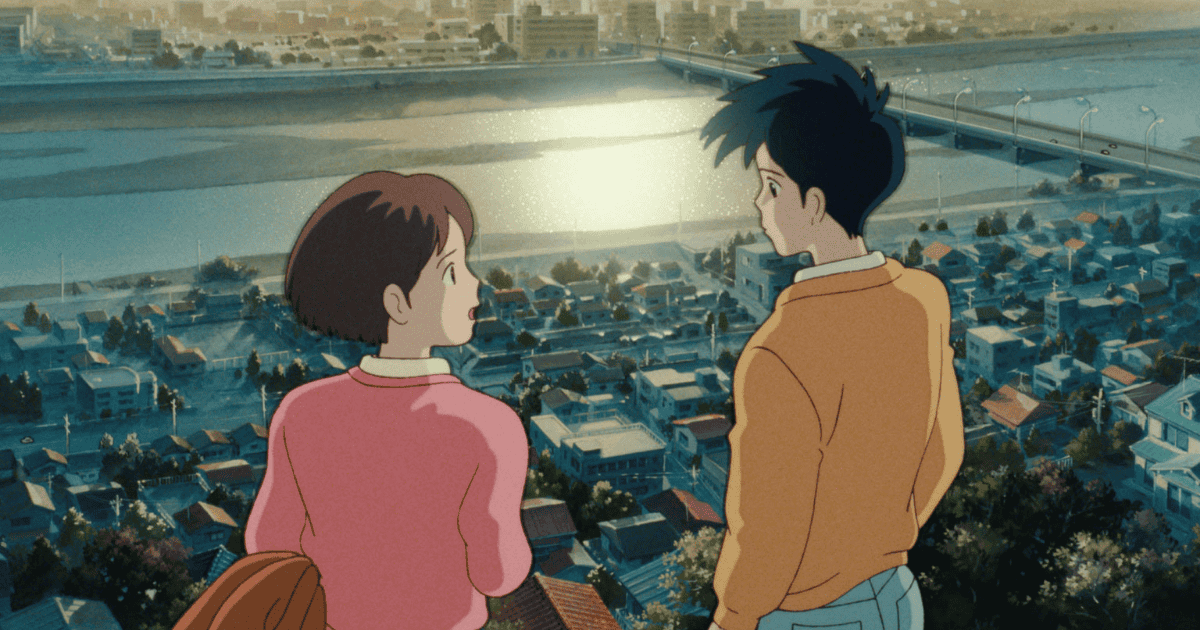
In earlier articles, I discussed Sugimura’s place in the film and the promises Seiji and Shizuku make. This time, I want to consider the trains that keep appearing in Whisper of the Heart(Studio Ghibli Official), and the people passing through its end credits. Why are they there?
Alongside that question, I want to consider a possible connection with Pom Poko: could this film be read as a kind of sequel to it?
*This is a translated version. The original (Japanese) is available here.
- Putting Shojo-Manga Subjectivity in Perspective
Shizuku’s intensely subjective world takes visual form, but trains and people outside her story bring a more objective perspective into it. I see the film as both embracing and questioning that shojo-manga outlook. - A Kind of Sequel to Pom Poko
The film depicts human lives on land taken from the tanuki in Pom Poko. It can be read as asking us to acknowledge that harm while still cherishing the lives lived there.
On this pageContents
Whisper of the Heart (1995): Bringing Shojo Manga to Film
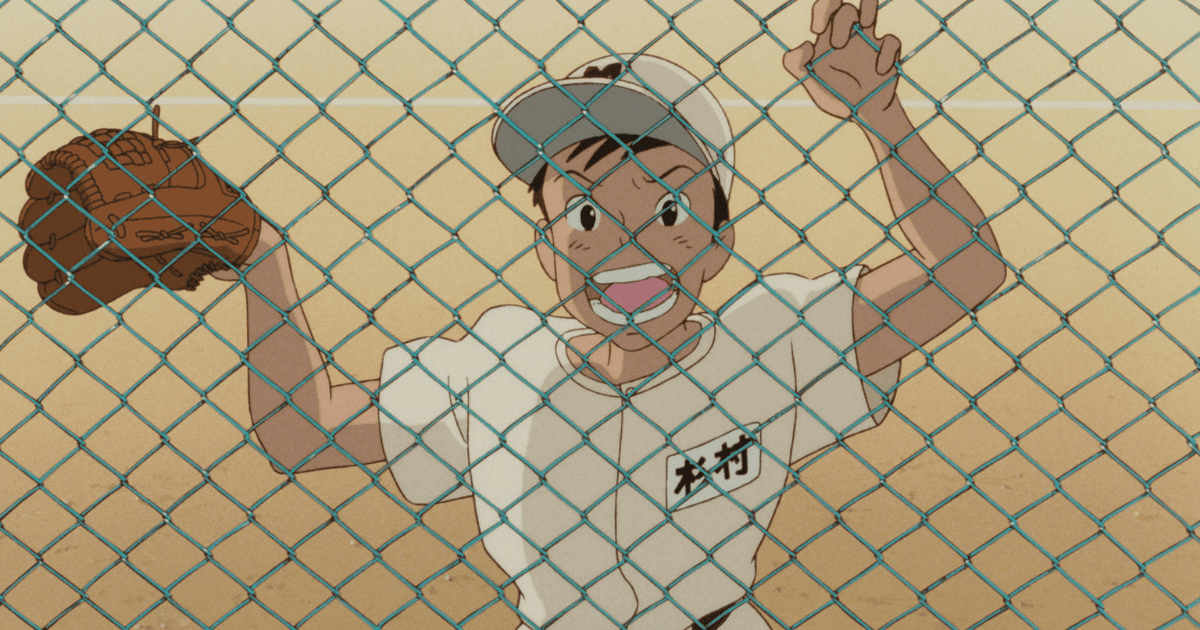
As I argued in the Sugimura article, one theme of Whisper of the Heart is bringing shojo manga to film. Central to that is the protagonist’s extreme subjectivity: what matters to her is beautiful, while everything else scarcely registers. I think this helps explain why Sugimura, apparently playing third base, is drawn with his glove on his right hand.
This is not confined to shojo manga. Characters caught up in a story can be so absorbed in their own problems that they see little else. We, too, take their concerns to heart, sympathizing with them while neglecting the other people who make their world possible.
I think the recurring trains briefly draw us out of the protagonists’ perspectives, giving the story a more objective dimension. They can also be read as gently poking fun at shojo manga’s extreme subjectivity. Perhaps, even as the film realizes Shizuku’s intensely personal story, it questions that outlook: “Shojo manga can be pretty cruel, can’t it?”
The people in the end credits who have no part in Shizuku and Seiji’s story seem to have a similar effect. Her future and her feelings for Seiji are serious matters to her. Yet she can face those concerns and do something about them because these “unrelated people” sustain the world around her. Perhaps that is another message here. A little preachy, admittedly.
That offers an answer to the trains and the end credits, but I think there is another side to them.
Whisper of the Heart (1995): Reading It as a Sequel to Pom Poko
Whisper of the Heart opens with an aerial view of a city at night. We can see it as picking up where Pom Poko leaves off: in Pom Poko, the camera pulls back into a nightscape; in Whisper of the Heart, it moves in toward people’s lives. That structure makes it hard not to think of the connection.
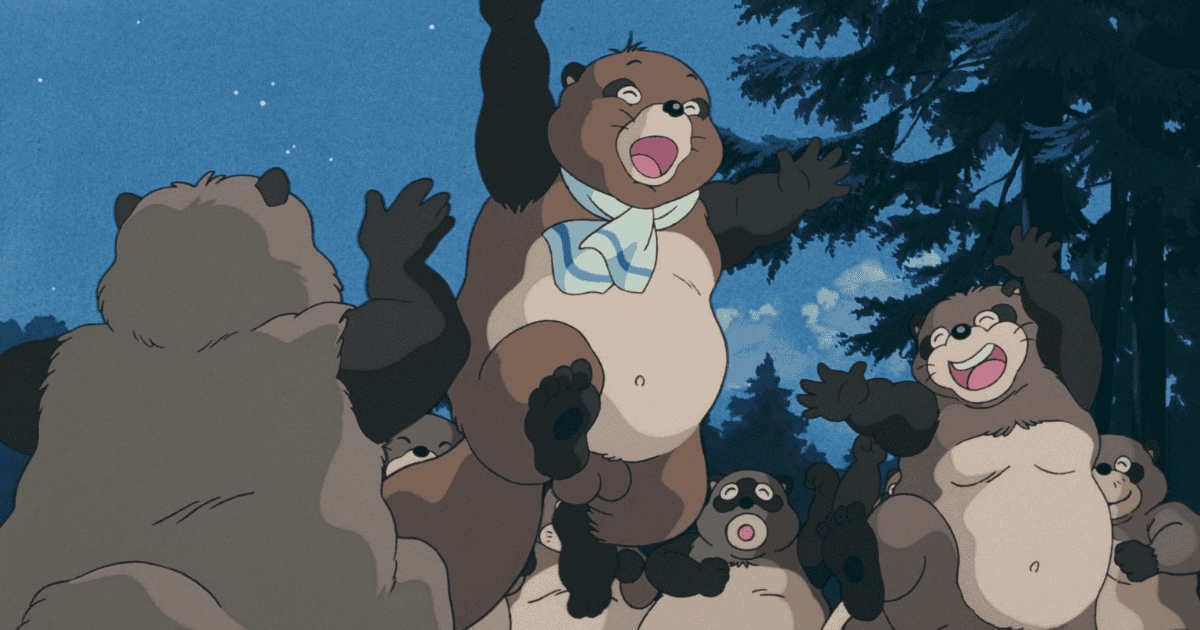
Pom Poko depicts a final struggle between tanuki and humans. Sadly, the tanuki’s efforts end in defeat without the humans even noticing. However comically it is presented, it is a deeply painful story.
But Pom Poko is not simply about feeling sorry for the tanuki or condemning humanity as cruel. The crucial point is that we humans live on the land they risked their lives to reclaim. Irreplaceable human lives are unfolding there, too.
We are still in the struggle for survival; we merely seem to be winning. Feeling sorry for the tanuki does not mean we can destroy the lives established there. But we should at least be aware of what we are doing, living with the tension between our own lives and those of others.
That is a heavy subject, but it is roughly how I read Pom Poko. Perhaps Miyazaki responded by depicting people’s lives on the land taken from the tanuki in Whisper of the Heart. Kondo directed the film, but Miyazaki wrote the screenplay and drew the storyboards.
The trains in Whisper of the Heart symbolize those lives. Growing up outside the city, I rarely had trains in my everyday surroundings or my childhood landscape. For someone raised in Tokyo, they must be part of that familiar scenery. Within it are days and memories as precious as Shizuku’s.
Watching only Pom Poko, we might feel tempted to curse even those precious days. But Whisper of the Heart reminds us that we can love them, too. They need not be as dramatic as Shizuku and Seiji’s: the days of the other people in the end credits are also worth cherishing.
In that sense, I see Whisper of the Heart as a sequel to Pom Poko, depicting human lives that remain worthy of love. It really is a lovely film.
The images used in this article are from the Studio Ghibli Works Still Images collection.
Can you name the movie before the scene comes into focus?
Put your visual memory to the test with a blurred Studio Ghibli scene.

Reader Comments