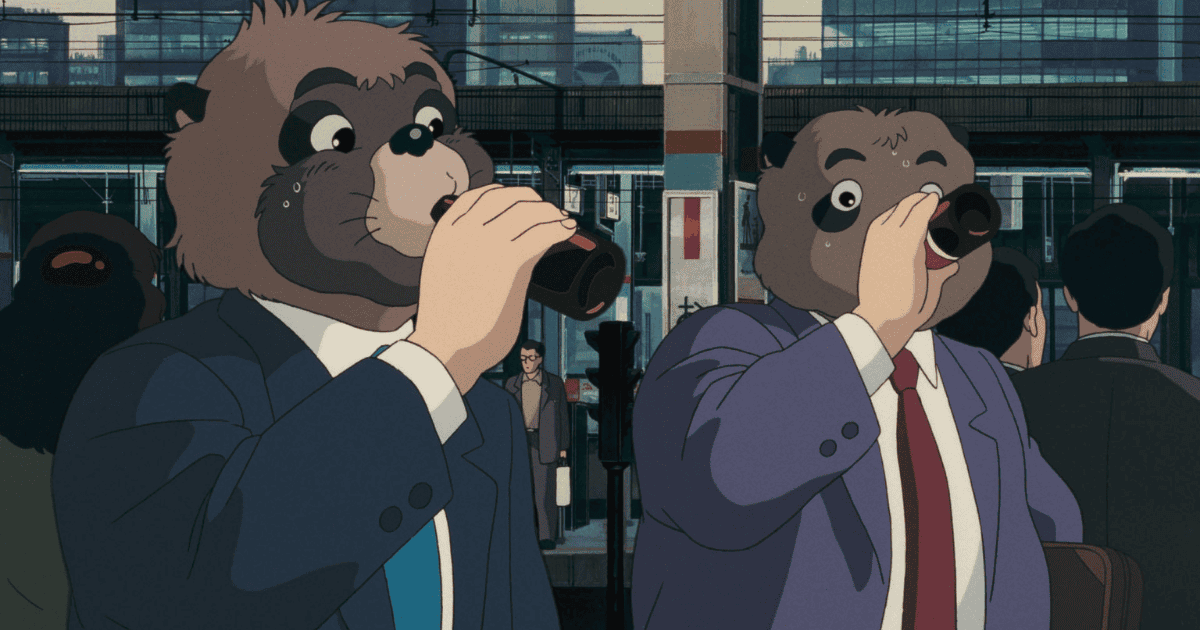
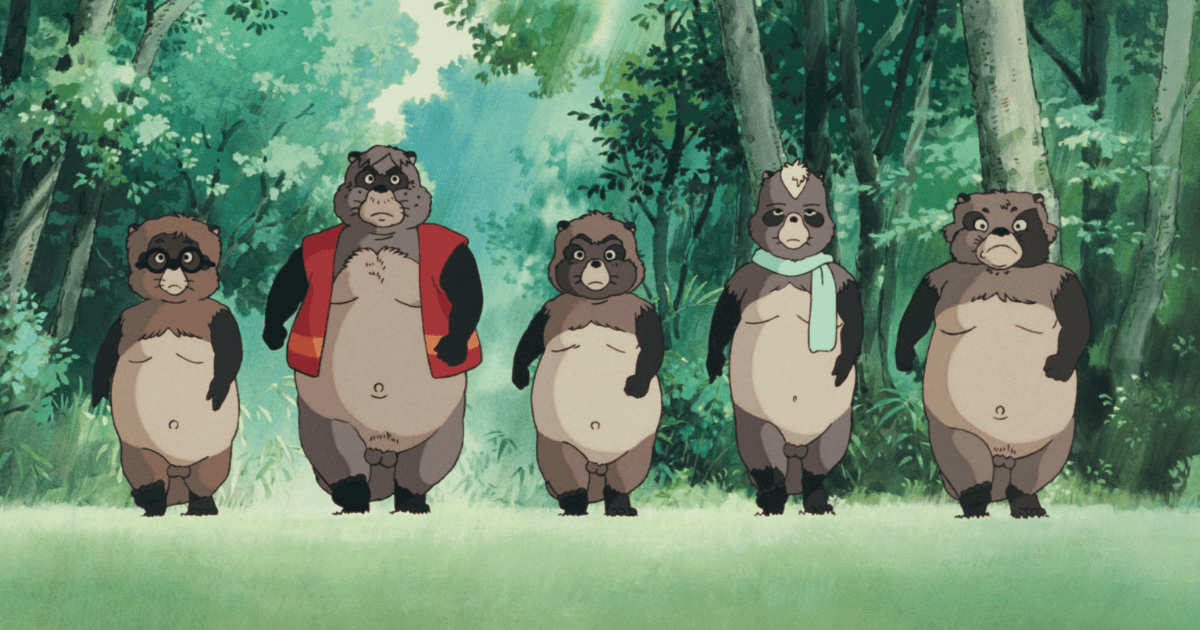
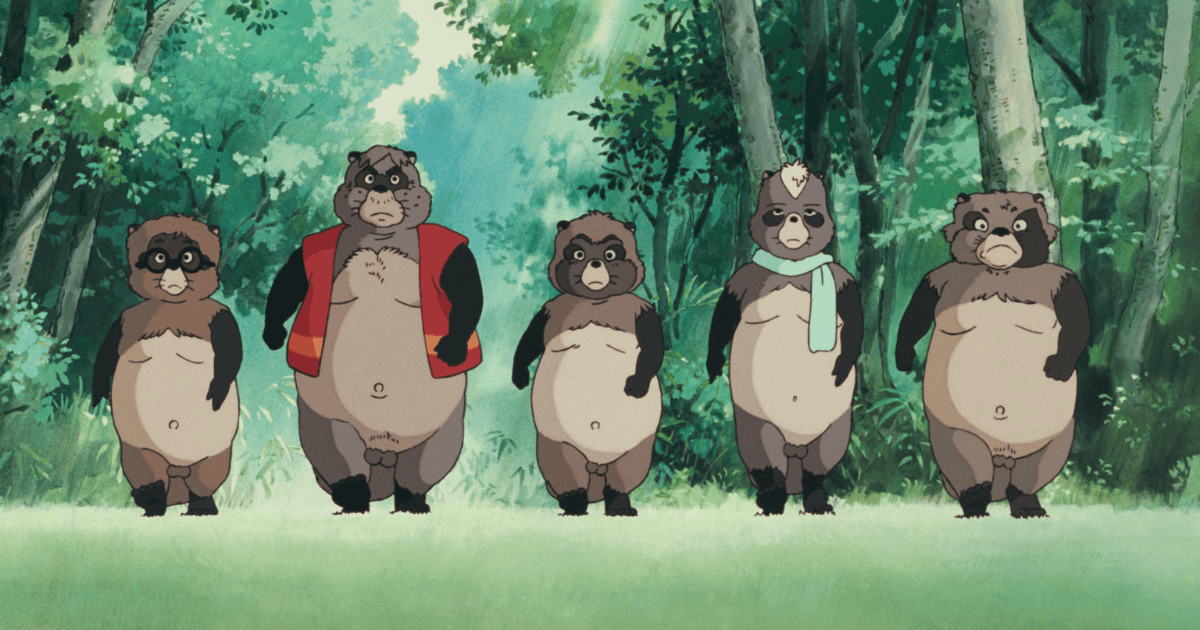
I have written about Oroku’s words and Operation Specter. This time, I want to consider what kind of story Pom Poko(Studio Ghibli Official) is as a whole.
Looking back, Pom Poko seems to give away its ending in its title. At least, together with the trailers and television advertisements, it makes clear that this is a story in which the tanuki lose. I was in the lower grades of elementary school when my parents took me to see it. I was lucky—but going out of our way to watch the tanuki lose does seem a little strange.
Yet Pom Poko is still worth watching. In this final article of the series, I will revisit the tanuki’s struggle and think about defeat.
*This is a translated version. The original (Japanese) is available here.
- Four Steps Toward Defeat
Pom Poko moves from an illusory victory to popular frenzy, a desperate dream, and finally a last charge, suicide, and transformation. I see a resemblance to the course of a losing war. - Comedy Makes the Tragedy Watchable
Told with human characters, this futile struggle could be unbearable. The comic tanuki and the humor of rakugo storytelling let us watch a deeply serious tragedy. - A More Abstract Structure of Defeat
The film reminds me of Japan’s defeat in the Pacific War. But I think it also depicts something broader: the emptiness and earnestness of fighting a battle that cannot be won. - Somehow, We Go On Living
I hear a gentle but stern message in the ending: defeat is precisely when we should stop spinning our wheels and choose to live on.
On this pageContents
Four Steps Toward Defeat
Stage 1: Gonta’s Lethal Success [The Phantom Victory]
Anyone who has seen Pom Poko may have thought, “Gonta’s first operation was the most effective one, wasn’t it?” It is the only operation in the film that really harms the humans. Critical news coverage of the Tama New Town development follows, and the tanuki’s spirits soar. They are so delighted that they hold a great banquet that same day.
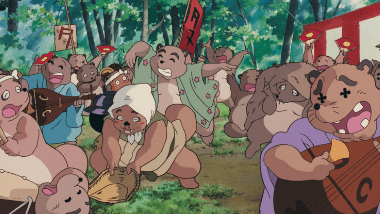
Yet this is also the first step toward defeat. Had Gonta’s operation failed, the tanuki might have lost heart, and the later events might never have happened. In a sense, its success accelerates their near-extinction in Tama. More importantly, harming humans does not change the situation: development continues steadily. Their victory is an illusion.
This is the first psychological step of defeat: the blinding “phantom victory.”
Stage 2: Operation Twin Stars [The Frenzied Masses]
Gonta’s success gives the tanuki momentum, but they begin concentrating on tricking people. That is painful enough to watch. Even Shoukichi carries out Operation Twin Stars because of his feelings for Okiyo.

That operation is only another trick, and achieves nothing. (Still, I can understand Shoukichi’s feelings, so it is hard to blame him.) Only Gonta is frustrated. The excited tanuki cannot stop themselves. To him, they probably no longer look like warriors fighting humans, but a crowd carried away by the success of his first attack.
This is the second step toward defeat: “the frenzied masses.”
Stage 3: Operation Specter [A Desperate Dream]
Eventually, even the excited tanuki realize that this cannot go on. Just then, their saviors arrive: the elders from Shikoku.
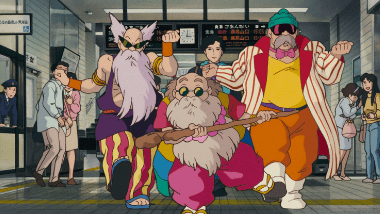
Look at the baffling outfits in which the elders arrive, full of enthusiasm for their trip to Tama. A group that entrusts its fate to them hardly seems capable of sound judgment anymore. The tanuki pin their last hope on Operation Specter, a huge effort with nothing to show for it. From outside, we can see that they have realized their tricks can no longer change the situation. That is why they have become desperate.
This is the third step toward defeat: clinging to “a desperate dream.”
Yashimano Hage’s grand prediction perfectly captures this desperate optimism. He insists that the humans will be overwhelmed by the mysteries of the cosmos and recognize their own insignificance—a claim that becomes painfully ironic after the operation fails. Compare the original Japanese, romanization, English subtitle, literal translation, and the much more elaborate dub in our analysis of the Shikoku elder’s declaration.
Stage 4: The Bitter End [Kamikaze Attacks, Mass Suicide, and Assimilation]
When Operation Specter fails, the tanuki divide into three main groups: the hardliners led by Gonta, the escapists led by Yashimano Hage, and those who want to reveal the truth to humans.
The hardliners lose their lives at human hands.
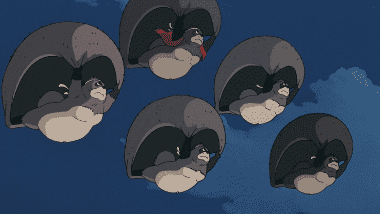
The escapists board the treasure ship and attempt collective suicide.
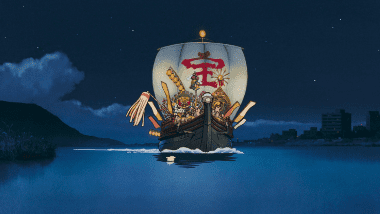
Both groups have lost faith in any future in which they survive, and choose destructive, short-sighted paths. The third group reveals that the tanuki carried out Operation Specter…
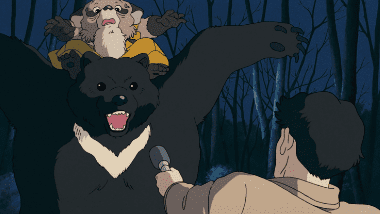
…and eventually chooses to live in the form of the humans they had opposed: their final transformation.
After defeat, they face a choice between death and assimilation. Looking back, it all began with Gonta’s operation; Shoukichi joined that momentum too. Gonta simply tried too hard, right to the very end. Thinking about him leaves me sad. What, then, is the film saying?
What Kind of Story Is Pom Poko?
An Abstract Structure of Defeat
The steps—an illusory victory, popular excitement, a desperate dream, a last charge, and assimilation—inevitably remind me of Japan’s defeat in the Pacific War.
I see the “illusory victory” in Pearl Harbor, the public joining the struggle, and the desperate dream in the construction of the battleship Yamato. At the end came suicide attacks, scarcely a strategy at all, and then the decision to live “like Americans.” Rather comical—and not really “like Americans” in the end, either.
But I doubt Takahata wanted only that specific comparison. I think he was working at a more abstract level, beyond the Pacific War alone.
Ultimately, we lose not because of something we did or failed to do, but because we began a battle we could never win. That is what I think the film depicts.
And importantly, those caught up in a losing battle are always entirely serious about it. From outside, though, their efforts can look like so much spinning of wheels.
With human characters, that structure might give us another Grave of the Fireflies. It need not even be about war. A person gets carried away by a small success, enters a battle they cannot win, keeps trying with complete seriousness, and loses anyway. Who could bear to watch that?
I think this rawness of defeat explains why the film needed tanuki and rakugo storytellers. Turning futile effort into a comic tale makes it watchable. Perhaps it comes down to “tragedy is comedy, and comedy is tragedy.”
But the film does not simply say, “Defeat is rather funny, isn’t it?” It also shows what comes afterward.
“Somehow, We Go On Living”
The answer Pom Poko offers is, of course, “Somehow, we go on living.”
When we are caught up in defeat, we may be unable to stop spinning our wheels even after we have lost. Like Gonta or Yashimano Hage, we can reach a destructive conclusion.
I hear Takahata asking us: “Precisely when we are defeated, should we not stop spinning our wheels and choose to keep living?”
Perhaps that is what “Somehow, we go on living” means. If we die, it is over.
The final message may seem rather ordinary.
Yet turning the harsh story of defeat into a comic tale through tanuki and storytellers is a remarkable feat on Takahata’s part.
For me, Pom Poko will remain a masterpiece. Perhaps I will find something else in it as I get older. This article and the earlier pieces gather thoughts I have carried for a long time.
- Part 1: Oroku’s Words and Secret Art: An Interpretation
- Part 2: Operation Specter, Comedy, and the Work of Animation
- Childhood Essay: Memories of the First Ghibli Film I Ever Saw in a Theater
Until the next discovery, let us somehow keep living.
The images used in this article are from Still Images from Studio Ghibli Works.
Can you name the movie before the scene comes into focus?
Put your visual memory to the test with a blurred Studio Ghibli scene.

Reader Comments