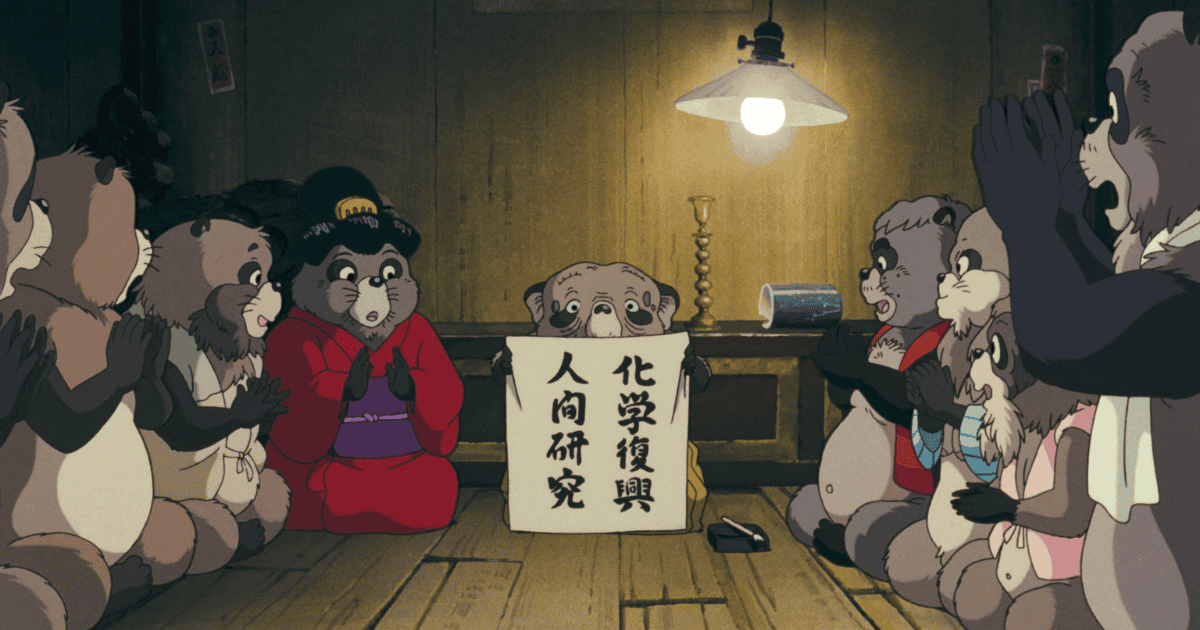
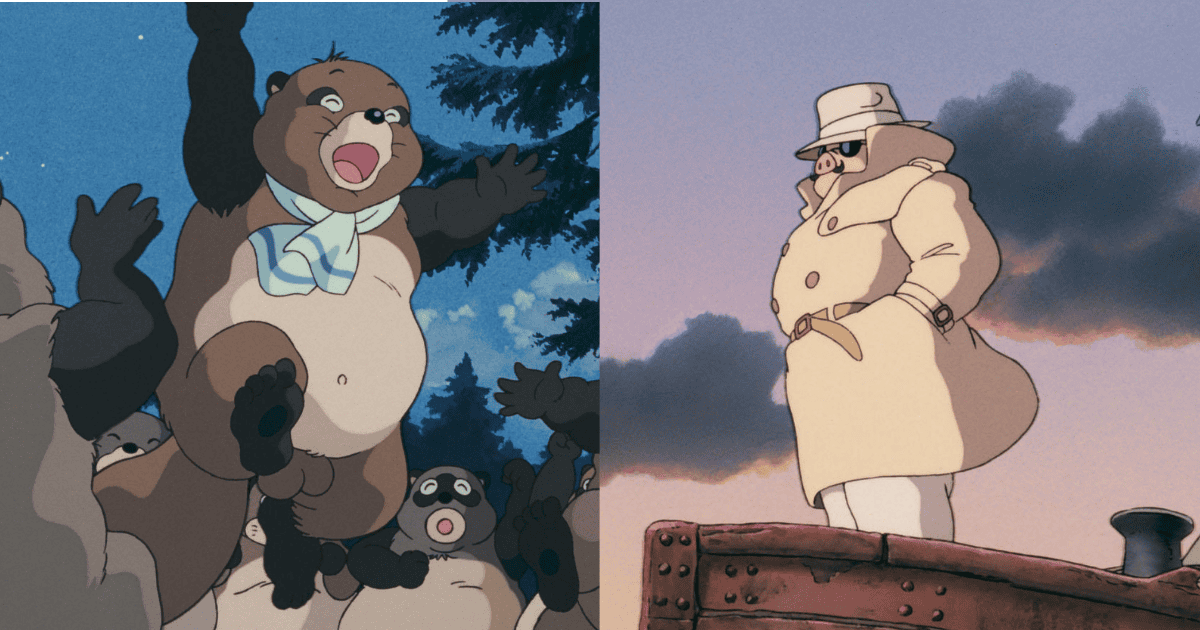
What was the first Studio Ghibli film you saw in a cinema? Mine was Pom Poko(Studio Ghibli Official). Perhaps that is part of the reason it remains my favorite Ghibli film.
I will write about the film itself another time. For now, I want to share some childhood memories.
Pom Poko was released in 1994, when I was in the lower grades of elementary school. I hardly remember why we went to see it, but I doubt I was the one who asked. Judging by my father’s behavior afterward, I think he simply wanted to see it himself and took me along.
My memories of the screening are hazy, but one thing remains very clear. I will start there.
*This is a translated version. The original (Japanese) is available here.
- One Song, Two Films
The ending song of Pom Poko, Itsudemo Dareka ga (Someone Is Always There), was also used in the previous year’s film, The Night Movers 2. I hear a different message in each setting. The story behind Pom Poko’s delayed release adds another unexpected connection. - A Store-Bought VHS and My Father’s Love of Rakugo
The only store-bought Ghibli VHS in our house was Pom Poko. My father seemed to love its rakugo-like humor. That 12,800-yen tape is a small reminder of how a parent’s tastes can shape a child’s viewing.
On this pageContents
Shang Shang Typhoon’s “Itsudemo Dareka ga”
What I remember most clearly about seeing Pom Poko in the cinema is the moment its ending song, Itsudemo Dareka ga by Shang Shang Typhoon, began. My immediate thought was, “Oh, that’s the song from Yonige-ya Honpo!“
Pom Poko opened on July 16, 1994. The previous year, on May 15, 1993, a Japanese comedy called Yonige-ya Honpo 2 (The Night Movers 2) had been released. As its title suggests, the series follows a company that helps people burdened with debt move away under cover of night. (I learned what “personal bankruptcy” meant from these films.)
I liked the Yonige-ya Honpo series, so naturally I had seen the sequel the year before. That one I may have asked my parents to take me to. At the end of the debt-escape film, I hear Itsudemo Dareka ga as a promise: “However hard things get, we’ll be there for you!” At the end of Pom Poko, though, it suggests something different to me. I will write about that another time, too.
The two films shared an ending song about a year apart, but the gap might have been shorter. The story is told in Ghibli Textbook 8: Pom Poko (ジブリの教科書8:平成狸合戦ぽんぽこ, in Japanese).
According to producer Toshio Suzuki’s account, Pom Poko was originally scheduled for winter 1993. But, as so often happened with Isao Takahata, production fell behind, and it clearly would not be ready. Suzuki decided to postpone the release; the following summer looked like the realistic date. Yet telling Takahata, “We’re postponing it until next summer!” might mean missing that deadline as well. Instead, Suzuki told him it would open the following spring and even had posters printed with “Spring ’94” on them to make him believe it. Perhaps that helped: the film opened in summer 1994.
I am an animation fan, but not a collector; I do not own a single anime figure. Even so, I would like to get hold of one of those posters made to fool just one person: Isao Takahata. I doubt any still exist, but I would have loved to see one.
I have wandered off the subject a little. My point is that the first thing I thought about when I saw my first Ghibli film in a cinema was its ending song.
The Only Store-Bought Ghibli VHS in Our House
When I was in elementary school, Ghibli films were already available on VHS. But the copies I watched at home were recordings of television broadcasts, not store-bought tapes.
And yet, for some reason, we did have a store-bought copy of Pom Poko.
I suppose my father liked it. I do not remember asking him to buy it, and, as I said earlier, I am fairly sure the trip to the cinema was his idea rather than mine.
His reason for liking Pom Poko, or for taking his child to the cinema to see it, did not seem to be to teach me to cherish nature or to show how human activity hurts other animals.
He seemed to like the film’s comic side: its sheer absurdity. He never told me directly, but things he said suggested he was a fan of rakugo, traditional Japanese comic storytelling.
Perhaps that influenced me. My earliest impression of Pom Poko was also that it was “comic.” Not laugh-until-you-cry funny, but the rakugo-like absurdity that makes you think, “What on earth are you doing? You’re hopeless.”
Whatever his reasons, my father’s liking the film meant we had a store-bought VHS. It came out on January 1 of the year after the theatrical release and cost 12,800 yen, including tax, as printed on the package. That hardly seems like a price a child could persuade a parent to pay.
When a parent likes a film, the child gets a little benefit. These days, with streaming subscriptions and online rentals, perhaps parents no longer go out of their way to buy discs. In a way, I was lucky.
Those are my personal memories of Pom Poko. Next time, I will turn to the film itself.
Read my analysis: Oroku’s Words and Secret Art: An Interpretation
The images used in this article are from “Still Images of Studio Ghibli Works“.
Can you name the movie before the scene comes into focus?
Put your visual memory to the test with a blurred Studio Ghibli scene.


Reader Comments