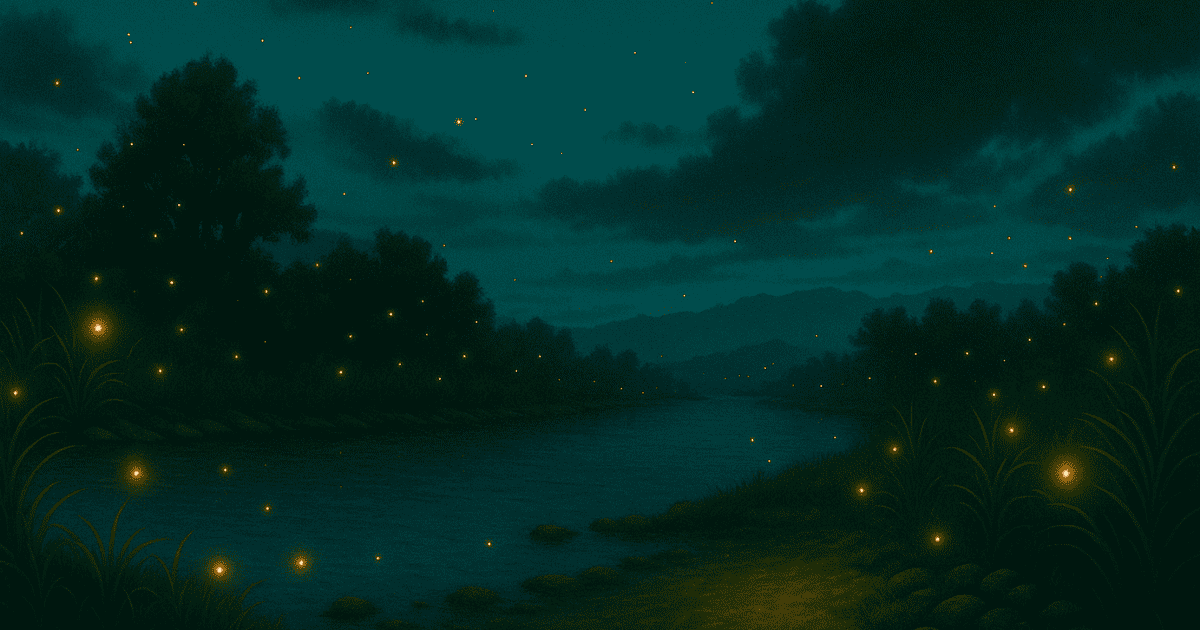
Grave of the Fireflies(Studio Ghibli Official), the 1988 animated masterpiece directed by Isao Takahata, opens with one of the most haunting, unforgettable lines in cinematic history: “September 21, 1945. That was the night I died.”
The line becomes even more revealing when its original Japanese wording is compared with the English subtitle. See the Japanese, romanization, literal translation, and detailed commentary in our analysis of “September 21, 1945. That was the night I died.”
This opening completely shatters any hope of a happy ending. We are immediately told that our young protagonist, Seita, and his little sister, Setsuko, are doomed. The entire movie essentially operates under a massive spoiler, forcing us to watch their agonizing descent while knowing exactly how it ends.
However, the true, chilling tragedy of the film is revealed in its final frames. The movie ends by showing the glowing, translucent ghosts of Seita and Setsuko sitting on a hilltop, gazing down at a modern, neon-lit skyline of present-day Japan. This confirms a horrifying reality: decades after their deaths, the two children have not passed on to the afterlife. They are still trapped “here.”
If the opening scene—where they are enveloped in warm fireflies and board a mystical train—was the end of the story, we could assume they were peacefully traveling to heaven. But the final shot shatters that comfort. Why are they cursed to exist as wandering spirits, unable to find peace?
If their inability to cross over was simply due to the tragic nature of their deaths, then shouldn’t the ghosts of everyone who died in the war be sitting on that hill with them? Shouldn’t their mother and father be there to guide them?
The key to resolving this deeply unsettling mystery lies in the Japanese concept of “shinjū” (a lovers’ suicide pact).
By analyzing the film through the dark lens of “shinjū,” we can uncover exactly why Seita and Setsuko remain trapped as ghosts, and understand the devastating, accusatory message Seita delivers when he breaks the fourth wall to stare directly at the audience.
To begin, we must look at a crucial confession from Director Isao Takahata himself.
*This is a translated version. The original (Japanese) is available here.
- Takahata’s “Shinjū” (Suicide Pact) Framework
Director Takahata deliberately structured Grave of the Fireflies as a “shinjū-mono” (a suicide pact story), illustrating how Seita and Setsuko willingly isolated themselves from society, walking hand-in-hand toward death within their own closed-off world. - Why They Remain as Ghosts
The siblings are trapped as wandering spirits because the war violently robbed them of their “precious time to simply be children.” As ghosts, they are desperately trying to reclaim the innocent, fulfilling childhood days they were denied in life. - The Tragedy of “Stolen Time”
When Seita stares directly at the modern audience in the final shot, he is delivering the film’s core thesis: war doesn’t just slaughter bodies; it permanently steals “precious time” that can never, ever be recovered.
On this pageContents
Grave of the Fireflies (1988) Director’s Vision: The “Shinjū-mono” Structure

In a revealing interview with the Asahi Shimbun, Director Isao Takahata offered a fascinating, slightly morbid explanation for why he adapted the novel:
What drew me to Akiyuki Nosaka’s original work was its structure as a “shinjū-mono” (love suicide story), depicting how the two headed towards death within a closed world. I had a strong creative ambition, believing that animation could portray this with a new centripetal force.
(Original Text, in Japanese)
From Experience of the air raids, properly made into a film: Grave of the Fireflies Director Isao Takahata
野坂昭如さんの原作にひかれたのは、2人がいかに死に向かっていったかを閉じた世界の中で描くという「心中もの」の構造があったこと。アニメなら新しい求心力で描けるのではないかという表現上の野心が強かった。
There are two massive psychological points we need to unpack here:
- What exactly does Takahata mean by a “shinjū-mono” structure involving children?
- Why was a master animator so deeply drawn to the concept of a suicide pact?
Keeping these dark, psychological questions in mind, let’s dissect the core mystery: “Why do Seita and Setsuko continue to exist as ghosts?”
Grave of the Fireflies (1988) Analysis: Why They Cannot Find Peace
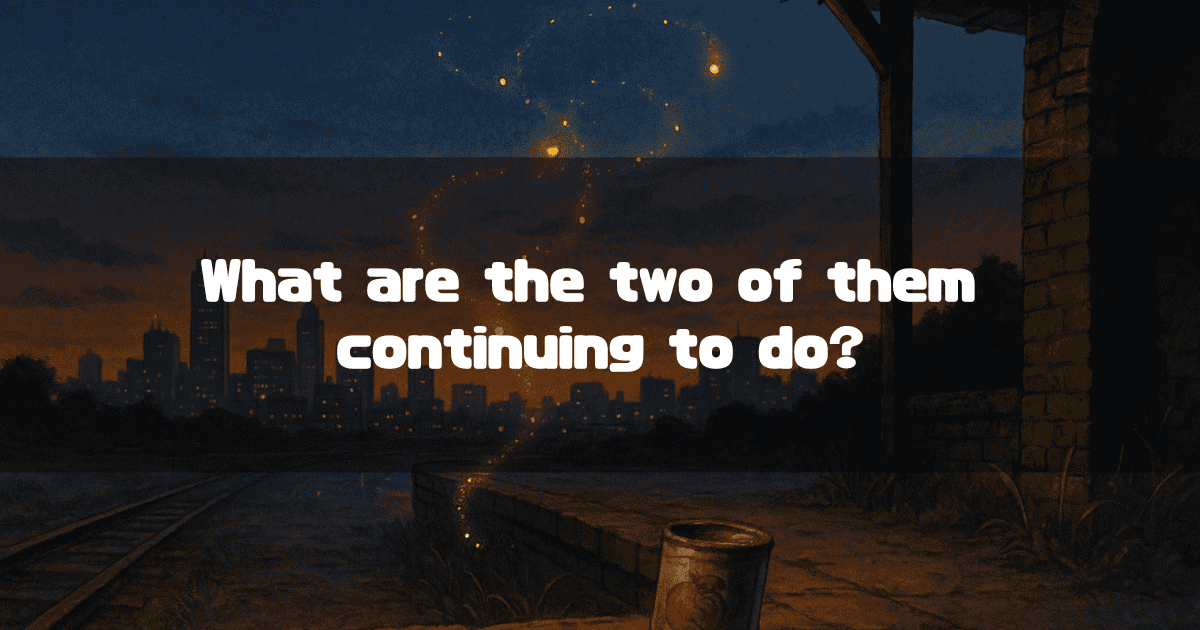
To understand why the siblings are trapped in an endless purgatory, unable to “pass on” to the afterlife, it is easiest to analyze them individually. Let’s start with Seita.
Reason 1: Why Seita Cannot Pass On – The Guilt of Killing Setsuko?
To put it as bluntly as possible, the most logical assumption is that Seita’s soul is chained to the earth by immense guilt because his stubborn pride “drove Setsuko to her death.“
If we accept this theory, the immediate, frustrating response from the audience is: “Then why didn’t he just apologize to his aunt and save her?!” It is a perfectly reasonable psychological reading. However, relying on “guilt” as the sole reason for his purgatory creates a massive narrative contradiction.
At the very beginning of the film, Seita’s ghost is reunited with Setsuko’s ghost. (Since Setsuko died a month before he did, it means her pure soul was also trapped on earth). If Seita was drowning in guilt, it feels completely unnatural that he wouldn’t immediately drop to his knees, sobbing, begging for her forgiveness upon their reunion.
Instead, what happens? They greet each other with radiant, beaming smiles.
They are incredibly happy to see each other. There is absolutely no apology, no tears of regret. They peacefully board the train together and eventually arrive at the modern-day hilltop.
Therefore, it is entirely unreasonable to claim Seita is trapped in purgatory because he feels he “murdered” his sister. That is our modern judgment, not his internal reality.
So, what is the real reason he cannot find peace?
To solve Seita’s mystery, we actually have to decode why the innocent, four-year-old Setsuko is trapped alongside him.
The Reason Setsuko Cannot Pass On – A Stolen Childhood
While we can easily project complex guilt onto a teenager, explaining why a pure, innocent toddler is denied entry into heaven is much more difficult.
The most common hypothesis is that Setsuko is tethered to the earth “because she died before she could reunite with her beloved mother.“
This theory perfectly explains why her soul didn’t cross over when she died in the cave. And, because Setsuko couldn’t find peace without her mother, Seita naturally stayed behind to protect her. It sounds logical.
However, this theory also shatters upon closer inspection. If Setsuko’s soul is desperately longing for her mother, why does her ghost never once exhibit a single shred of loneliness or sadness throughout the entire framing narrative?
In every ghostly sequence—from the opening train ride to the final shot—Setsuko looks utterly relieved, joyful, and content. The film concludes with her sleeping peacefully, using Seita’s lap as a pillow. She doesn’t appear to be searching for her mother at all. In fact, it seems that reuniting with *Seita* was her ultimate, true desire.
This is exactly where we must apply Director Takahata’s dark framework of a “shinjū-mono” (suicide pact).
What if the reason Setsuko cannot pass on is simply that she “was denied the chance to live a fulfilling life with her beloved brother“?
To reinforce this, let’s look at another quote from Director Takahata (sourced from Studio Ghibli Works Related Materials Collection II):
“This work is by no means a simple anti-war film, nor is it a tear-jerking story of pitiful war victims, but rather it depicts the tragic story of an ordinary child who lived through the era of war.“
(Original Text, in Japanese)
「本作は決して単なる反戦映画ではなく、お涙頂戴のかわいそうな戦争の犠牲者の物語でもなく、戦争の時代に生きた、ごく普通の子供がたどった悲劇の物語を描いた」
What exactly is the core of this “tragic story of an ordinary child”? It is the devastating reality that they were violently robbed of the physical time required to simply be children.
When viewed through this tragic lens, Seita’s inability to pass on suddenly makes perfect, heartbreaking sense.
Reason 2: Why Seita Cannot Pass On – The Burden of Forced Adulthood
In the first act of the film, Seita behaves with terrifying maturity. He flawlessly manages air raid protocols, buries rations, and stoically processes his mother’s horrific death while shielding his sister. The film is screaming at us: a 14-year-old boy has been violently stripped of his adolescence and forced to become a hardened adult.
If we apply Setsuko’s logic to him, the real reason Seita cannot pass on is that he “was denied the right to live a carefree, childlike life with Setsuko.“
Furthermore, carrying the agonizing weight of being an “older brother” and a surrogate father, he is trapped by the crushing realization that he “failed to provide Setsuko with a normal, happy childhood.“
While adult viewers aggressively condemn Seita’s foolish decision to leave his aunt’s house, if we view that decision as a desperate, psychological attempt “to reclaim his own childhood” and “create a fantasy world where Setsuko could just be a kid,” it becomes much harder to hate him. He was just a child playing house in a bomb shelter.
When Takahata speaks of “the tragedy of an ordinary child,” he is talking about the atrocity of “being denied the fundamental human right to live as a child should.“
Armed with this understanding, the final mystery—what exactly are these two ghosts doing on that hilltop?—becomes painfully clear.
The Endless Purgatory – Reclaiming Their Stolen Time
If their souls are chained to the earth because they were “denied their childhood,” then their ghostly actions make perfect sense. They are locked in an eternal loop, playing together as brother and sister forever, reclaiming the days that were stolen from them.
Normally, you would assume that after decades of playing in the afterlife, they would eventually find satisfaction and cross over into heaven. But the chilling fact that they *never* cross over is Miyazaki and Takahata’s ultimate point. It physically expresses the unfathomable, irreplaceable value of the “childlike time” that war permanently destroys.
Here, the grim structure of the “shinjū-mono” is fully realized. In traditional Japanese theater, a suicide pact (shinjū) represents the romantic ideal: “Since society will not allow us to be happy in this world, let us die so we can be happy together in the next.”
Seita and Setsuko couldn’t be happy in the brutal reality of 1945. So, they retreated into their own isolated, closed-off world (the dugout), slowly died together, and are now achieving their “shinjū” fantasy as ghosts, forever playing in the shadows of the modern world.
Which brings us to the final, haunting image: Seita staring directly into the camera.
The Message in Seita’s Final Gaze
As the film closes, Seita turns his head and stares intensely, almost accusingly, at the modern audience. It is a jarring, meta-narrative choice. But knowing what we know now, we can read the emotion behind those dead eyes.
If we were to translate the silent message of Grave of the Fireflies into a single, crushing thesis, it would be this:
War is a horrific tragedy that slaughters millions of physical bodies. But an equally devastating, silent tragedy occurs alongside it: the violent theft of “precious time.” And just like a human life, a stolen childhood can never, ever be brought back.
When Seita stares at us, he isn’t asking for pity. He is a ghost from the past, sitting in our modern world, silently demanding that we never allow the theft of childhood to happen again.
How do you interpret Seita’s final gaze? I would love to hear your thoughts.
Can you name the movie before the scene comes into focus?
Put your visual memory to the test with a blurred Studio Ghibli scene.

Reader Comments