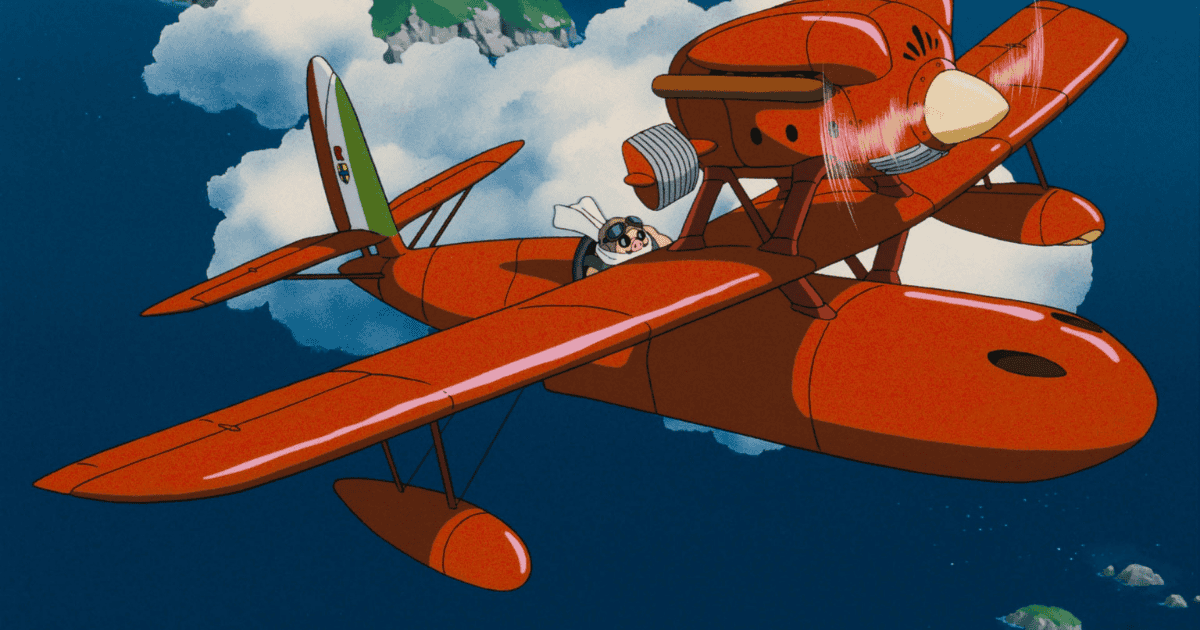
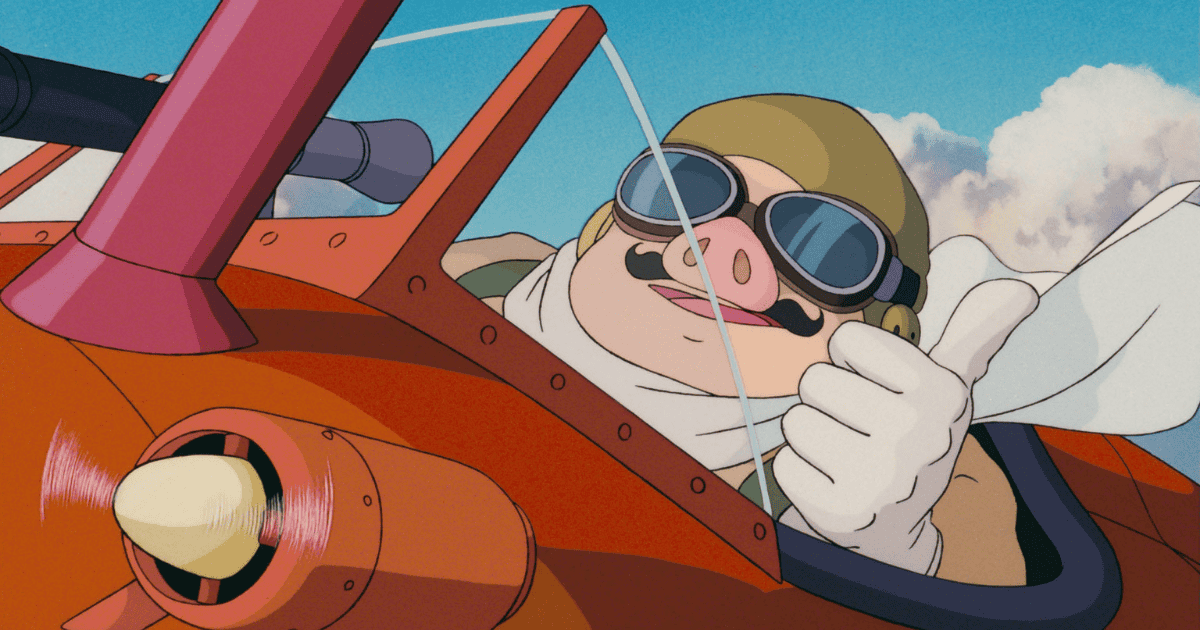
Hayao Miyazaki’s 1992 animated masterpiece, Porco Rosso(Studio Ghibli Official), is arguably the most fiercely adult film in the entire Ghibli catalog. While I vividly remember watching it on a Friday night TV broadcast as an elementary schooler, it completely failed to capture my childhood imagination. Today, however, it stands as one of my absolute favorite cinematic experiences.
Today, we are starting Part 1 of our special three-part series, “The Melancholy of Men,” where we psychoanalyze the hidden tragedies and quiet sorrows of Hayao Miyazaki’s adult male characters. Let’s begin with his most profound, melancholic mystery: why does the protagonist deliberately choose to live his life as a pig?
While we could simply dismiss his curse as inexplicable magic, doing so robs the narrative of its thematic depth. Today, I don’t want to technically explain “why he became a pig.” Instead, I want to psychoanalyze “what it fundamentally means to be a pig” in a rapidly changing world. Please keep this crucial distinction in mind as we dive in.
*This is a translated version. The original (Japanese) is available here.
- The Reason Porco Remains a Pig
Porco remains a pig to protect his own rigid sense of “justice” from being corrupted by the turbulent currents of a changing world. His porcine form is a physical manifestation of his rebellion—a cynical refusal to conform to the rise of fascism and societal decay. - His Relationship with Gina and His Eventual Change
While Porco stubbornly resists Gina’s quiet attempts to “capture” his heart, a pivotal moment ultimately forces him to drop his defenses. Yet, even after accepting love, Porco continues to fly, desperately seeking to maintain a shred of his ultimate “freedom.”
On this pageContents
Porco Rosso (1992) Analysis: Why Does Porco Choose to Be a Pig?
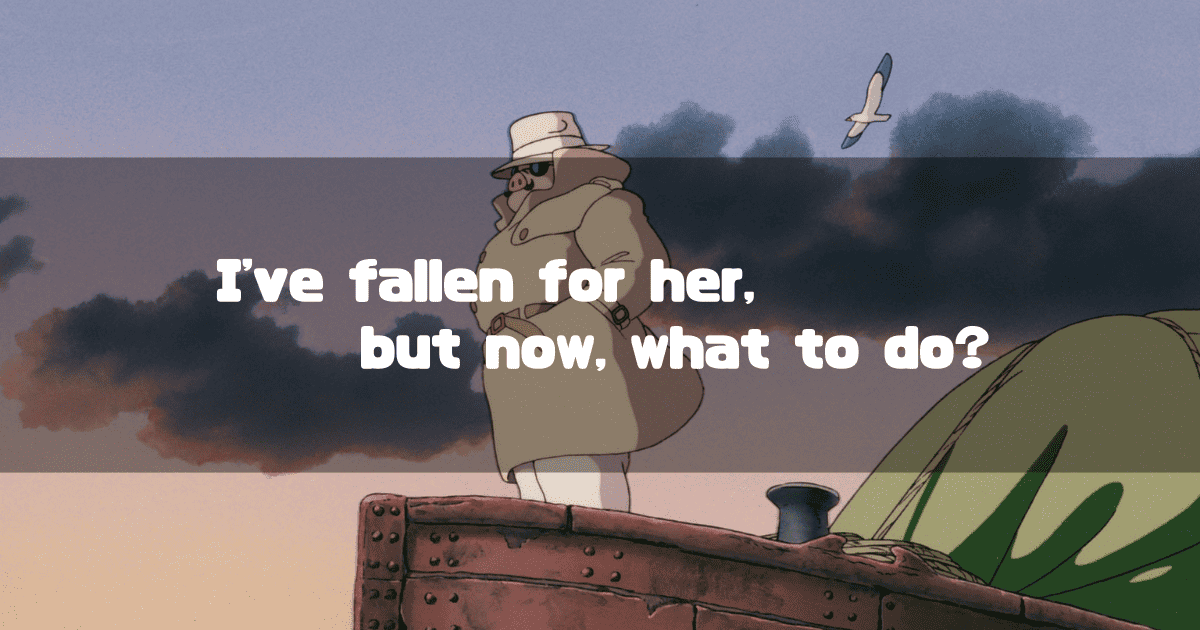
The Cynical Defiance Against the Tides of Time
When dissecting Porco Rosso, we must confront Director Hayao Miyazaki’s famously blunt description of his own film: “a cartoon movie for tired middle-aged men whose brains have turned to tofu.”
While it is difficult to perfectly translate the cultural nuance of a “tofu brain,” the phrase is undeniably self-deprecating. More importantly, it isn’t an aggressive insult; it carries an underlying tone of gentle, humorous resignation.
Miyazaki is implying that, eventually, every man reaches an age where his brain metaphorically turns to mush. It describes the exhausting state of losing your youthful edge, mindlessly grinding through the daily routine, and quietly accepting, “I guess this is all life has left to offer.” Looking at Miyazaki’s legendary work ethic, it is hard to imagine him ever succumbing to this state, but perhaps he carried an internal exhaustion we couldn’t see.
Historically, he might have been reflecting on his bitter days fighting in the Toei animation labor union, or grappling with the global collapse of socialism—ideals that were actively being ignored or met with outright hostility during the 1990s.
However, moving past specific political allegories, I believe the core premise is a much more abstract, universal sense of middle-aged resignation: the quiet despair of realizing, “Ah, nothing genuinely new or exciting is ever going to start again.”
So, within this framework of crushing disillusionment, what does it mean to “be a pig”?
It is the ultimate symbol of rebellion against an absurd reality, and a defiant declaration of masculine pride. It is a man screaming that he isn’t finished yet.
The world relentlessly marches forward, constantly leaving us behind. But many aging individuals feel a deep, stubborn conviction: “Just because society is rushing in a new direction doesn’t mean it is right.” It isn’t that Porco lacks the skill to catch up to the changing times; it is that he refuses to abandon the value of his own personal “righteousness.” And above all, he knows that he is the only one left who will protect that righteousness.
Porco choosing to remain a pig is a physical declaration of his personal moral code. It is a head-on, deeply cynical challenge to the world.
If a teenager or a twenty-something adopted this level of extreme cynicism, we would write it off as immature angst. But perhaps there comes a defining “moment” in every adult’s life where the only language left to speak is cynicism. Miyazaki likely crafted Porco Rosso as a glorious anthem for these exhausted cynics.
Yet, we know that Director Miyazaki didn’t stop there; he continued to create breathtaking art for decades.
Ending your life solely on a note of cynicism isn’t the mark of a mature adult; it’s the mark of a juvenile punk. Ultimately, Porco Rosso served as Miyazaki’s cinematic declaration: a “resolve to keep creating, no matter what.”
We, too, should strive to follow Miyazaki’s lead and keep pushing forward. Whether or not our passions align with current societal trends is completely irrelevant. “A pig that doesn’t fly is just a pig.” We must fly for our own sense of justice!
(Though, to be fair, I have been nothing but a lazy pig since the day I was born.)
The distinction between a pig that does not fly and one that cannot fly is essential to Porco’s character. Compare the original Japanese wording, romanization, English subtitle, literal translation, and dub in our detailed analysis of “A pig’s gotta fly.”
The Pride and Sorrow of a Man Refusing to Be Captured
While the previous points explain the political and philosophical meaning behind “being a pig,” we absolutely cannot ignore the romantic anchor of the film: Gina.
To understand Porco’s stubbornness, we must analyze one of Gina’s most famous, heartbreaking lines.
“I’m making a bet. I’m betting that someone will visit me here during the day, and if he does, I’ll tell him I love him.”
As a child, this line flew right over my head. But as an adult, you realize it is an incredibly complex, almost insulting ultimatum. Stripped of its romance, Gina is essentially saying, “All the good men are gone, so I guess I can finally force myself to love this guy now.”
Of course, the elegant Gina would never say something so explicitly rude to Porco’s face. But Porco, possessing a sharp emotional intelligence, is more painfully aware of this grim reality than anyone else.
He has been deeply in love with Gina for years, watching silently as she never once paid him any romantic mind. So, when she finally attempts to “capture” his heart immediately after her third husband dies, Porco’s immense pride simply won’t allow him to eagerly accept the role of a consolation prize.
Yet, because he is fundamentally an honorable man, he cannot completely abandon a lonely woman who is driven to make such a desperate gamble. At the same time, openly surrendering to her terms feels like a humiliating defeat.
Porco Rosso is the story of this exhausting, roundabout emotional journey.
Porco continuously circled the Adriatic skies, desperately waiting for the right moment to be “captured” by Gina on his own terms. So, what finally tipped the scales and forced him to drop his emotional armor?
Without a doubt, it was Fio’s innocent kiss.
Through that pure, unburdened kiss, Porco—a man who stubbornly believed he was unlovable—was reminded of what it felt like to be genuinely loved. (Perhaps saying he was loved “by no one” is too harsh, but he certainly felt that way).
In that fleeting, magical moment, Porco likely realized, “Maybe this world isn’t so terrible after all.” By accepting her affection, the fiercely defiant pig finally affirmed the very world he believed had left him behind. That is exactly why, for a brief, glorious moment, his human face returns.
Armed with this renewed sense of self-worth, Porco could finally walk into Gina’s garden with his head held high.
It might feel a little pathetic to accept the love of a woman who ignored you in your youth. But for a tired middle-aged man who has survived the loss of all his friends, perhaps this quiet, compromised love is exactly what he needs.
So, did Porco truly stop being a pig in the end?
The definitive answer is hidden in the final, breathtaking shot after the credits roll.
He is still flying today. Even after allowing himself to be captured by Gina’s love, he continues to defiantly streak across the blue sky, as if to boldly declare: “No! I am still free!”
And perhaps, deep down, so are you.
The images used in this article are from Studio Ghibli Works Still Images.
Can you name the movie before the scene comes into focus?
Put your visual memory to the test with a blurred Studio Ghibli scene.

Reader Comments