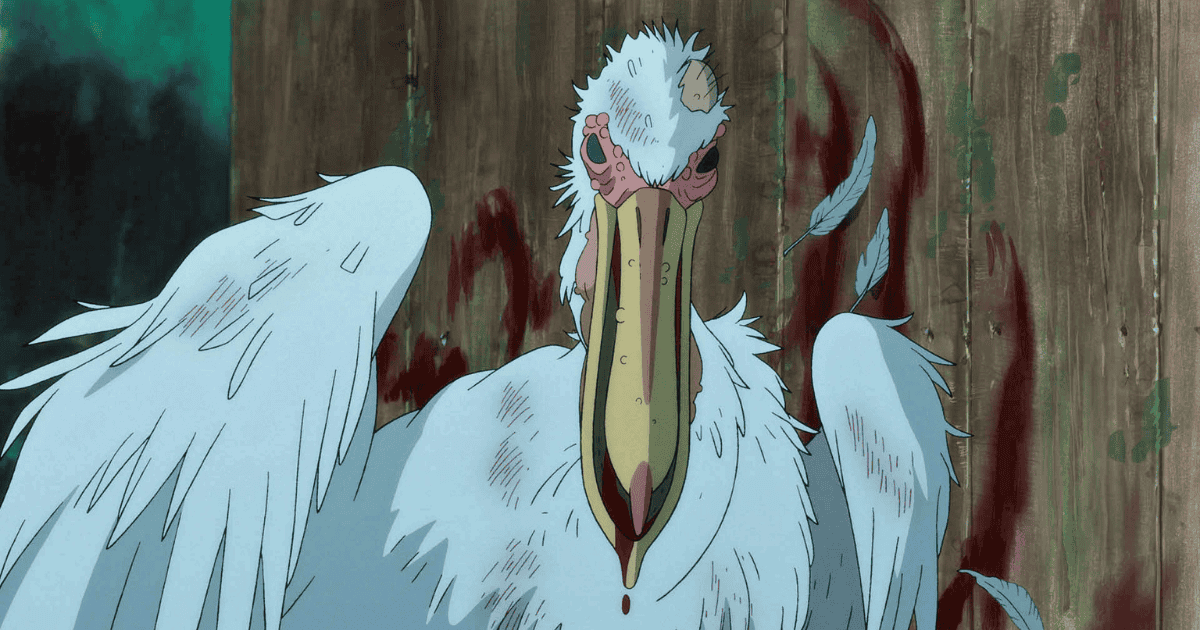
Hayao Miyazaki’s The Boy and the Heron (Official Studio Ghibli Website) is not just a breathtaking fantasy; it is a dense, psychological labyrinth. Released in 2023, the film leaves an undeniable, unforgettable impact, but decoding its surreal symbolism is a monumental challenge.
The primary reason this film is so difficult to fully grasp is its shifting metaphors. A single entity is often burdened with multiple, complex meanings. Just when you think you understand what a character represents, the context shifts, and it becomes something entirely different. This intentional ambiguity is the engine that drives the film’s profound mystery.
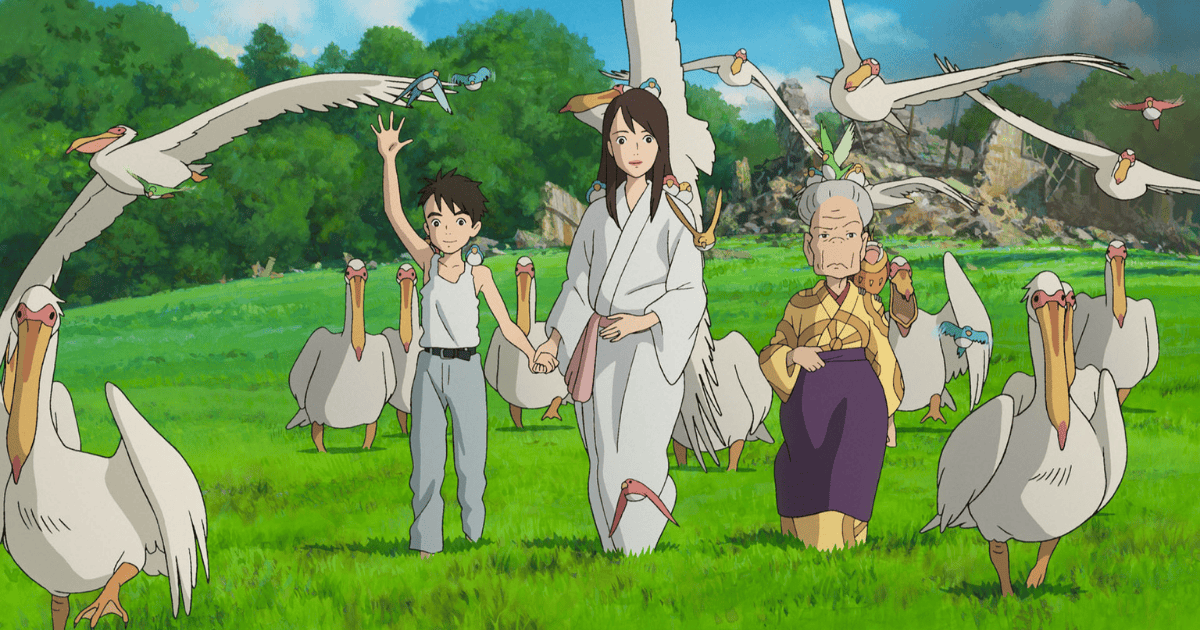
Today, we are going to unpack one of the most jarring visual elements in The Boy and the Heron: the ravenous flocks of pelicans and man-eating parakeets.
While we may never have a definitive answer as to “why” Miyazaki specifically chose these two birds, we can certainly theorize what the parakeets and pelicans signify within the master’s psyche.
To decode these creatures, we must first establish a foundational understanding of the “Granduncle’s Tower,” the “world below,” and the deeply complicated real-life relationship between Hayao Miyazaki and his late mentor, Isao Takahata. From there, we will descend into the madness of the flock.
*This is a translated version. The original (Japanese) is available here.
- The Tower and the Underworld: A Metaphor for Creation
The Granduncle’s crumbling tower and the strange world below serve as a direct, physical manifestation of Studio Ghibli and Hayao Miyazaki’s own mind. To understand the film, we must accept that Mahito is an extension of Miyazaki, and the Granduncle is heavily modeled after his mentor, Isao Takahata. - The Starving Pelicans: The Guilt of Devouring Talent
The pelicans tragically forced to consume the innocent Warawara represent a raw confession from Miyazaki. They symbolize the harsh reality of his creative process, where the immense talent of the animators around him is inevitably “devoured” to fuel his own cinematic visions. - The Parakeet King and the Mob: Rebelling Creators and Ravenous Consumers
The Parakeet King is another facet of Miyazaki, specifically the part of him rebelling against the Granduncle (Takahata). Meanwhile, the chaotic, consuming flock represents both the internal pressure of the studio and a cynical reflection of us—the audience who blindly consumes his art. - From “Malice-Filled Stones” to “Friends”
The existential clash between the Granduncle and the parakeets illustrates two things: a lingering rebellion against Isao Takahata’s philosophy, and a brutal self-reflection on the toxic, unforgiving nature of animation production.
On this pageContents
Decoding the Metaphor: The Granduncle’s Tower and the World Below
To set the stage, we must look to legendary Ghibli producer Toshio Suzuki. In an illuminating interview with Hito Cinema (Wayback Machine, in Japanese), Suzuki explicitly stated that Miyazaki approached The Boy and the Heron as a deeply autobiographical project:
“One of his goals was to depict himself. The reason he had never made a boy the protagonist before is that he understands boys all too well. He didn’t want to draw a boy exactly as he is, but he also refused to lie. With girls, because he didn’t fully understand them, he could draw them as an idealized concept. But the desire to draw himself finally bubbled to the surface. He is the most un-protagonist-like protagonist, isn’t he?”
(Original Text in Japanese)
「一つは、自分のことを描く。これまで少年を主人公にしなかったのは、少年のことはよく分かっちゃうから。でも、そのまま描くのはイヤ、といってウソもイヤ。女の子ならよく分んないから、理想として描けたんですよ。それがふつふつと湧き上がって、自分のことを描きたくなった。もっとも主人公らしくない主人公ですよね」
Furthermore, in SWITCH Vol.41 No.9 Special Feature: The Adventure Surrounding Ghibli(SWITCH Vol.41 No.9 特集 ジブリをめぐる冒険, in Japanese), Suzuki dropped a massive hint regarding the film’s setting:
“I don’t really know the absolute truth. But I genuinely believe that tower is probably Ghibli.”
“That’s just what I’ve been assuming on my own. I try not to ask him too many questions about it. He just gets annoyed.”
(Original Text in Japanese)
「本当のところは僕なんかにはよくわからないですけどね。あの塔はたぶんジブリだと思うんです。」「そうじゃないかな、とか勝手に思っているんです。あんまり訊かないようにしているんです。うるさいから。」
I completely agree with Suzuki’s assessment. When I sat in the theater, watching the surreal landscape unfold, my immediate thought was: “I am walking through Hayao Miyazaki’s mind.”
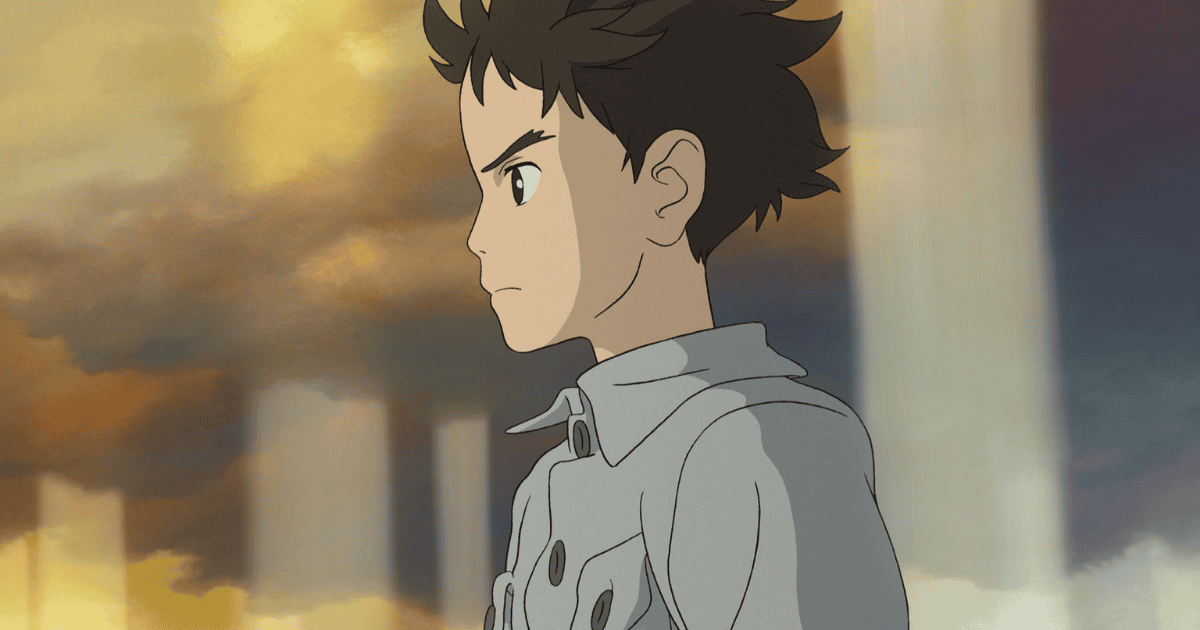
For the remainder of this analysis, we will proceed under the firm assumption that the “Granduncle’s Tower” and the “world below” are direct symbols for Studio Ghibli, Hayao Miyazaki’s creative ecosystem, and Miyazaki’s inner psyche. Consequently, this also means that the protagonist, Mahito, is a direct extension of Hayao Miyazaki himself.
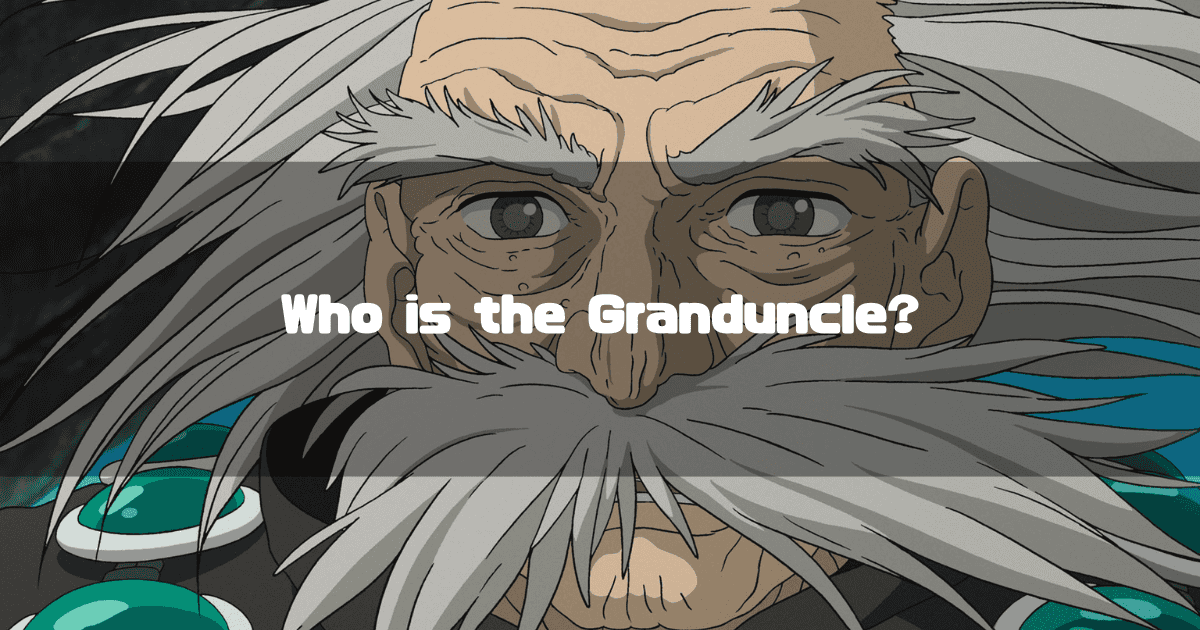
Unmasking the Granduncle: A Complicated Avatar
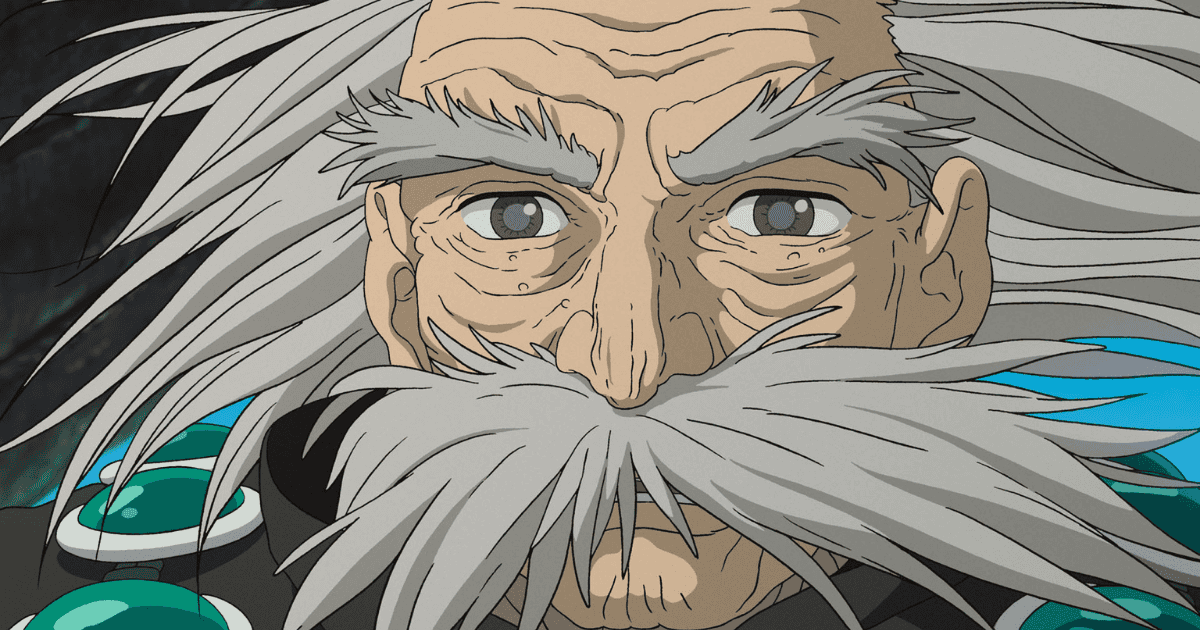
If the tower is Studio Ghibli or Miyazaki’s creative domain, it stands to reason that the Granduncle who rules it is also a projection of Miyazaki. I still view him through that lens. However, as has been widely discussed in the media, the primary model for the Granduncle is the late director Isao Takahata. Toshio Suzuki confirms this in the same SWITCH magazine interview:
“It’s always fascinating to hear Miya-san explain the structure of the movie. You know the Granduncle in the film? The model for that character is Isao Takahata, the senior colleague who first recognized Miyazaki’s talent and gave him his big break in the animation world.”
(Original Text in Japanese)
「宮さんに映画の構成の話を聞いていると面白いんです。映画の中に大叔父が出てくるじゃないですか。自分を抜擢してくれて、このアニメーションという世界でなんとかやれるというきっかけを作ってくれた先輩である高畑勲さんがこの大叔父のモデルなんです。」
This dynamic is also explicitly highlighted in the NHK documentary Hayao Miyazaki and the Grey Heron and…(宮崎駿と青サギと, in Japanese).
However, if we rigidly assume that the Granduncle represents only Isao Takahata, the thematic coherence of the entire film collapses. Being the “model” for a character does not mean encompassing the character’s entire meaning. In reality, I strongly believe that Hayao Miyazaki’s own anxieties and traits are heavily projected onto the Granduncle as well.
When Miyazaki sets out to craft an autobiographical magnum opus, it is impossible for him to exclude Takahata, his greatest rival and mentor. Yet, Miyazaki’s entire life is defined by the act of creation. Because the Granduncle is the ultimate “creator” within the film’s lore, Miyazaki’s own ego and artistic burdens inevitably bleed into the character.
Therefore, we will proceed with the understanding that while the Granduncle is primarily modeled after Isao Takahata, he simultaneously functions as a projection of Hayao Miyazaki the Creator.
The Master and the Mentor: Miyazaki and Isao Takahata
To fully grasp the gravity of the Granduncle in The Boy and the Heron, we must understand the profoundly complex relationship between Hayao Miyazaki and Isao Takahata.
As Suzuki noted, Takahata discovered Miyazaki’s talent. Their dynamic was essentially “master and apprentice.” We can glimpse the intensity of their bond through interviews included on the Blu-ray for My Neighbors the Yamadas. Let’s first look at Takahata’s brutally honest critique of Miyazaki’s Princess Mononoke:
“(Regarding Princess Mononoke) I’m just going to say it; I want to criticize it. I want to critique it on two fronts. First, I am in complete awe of it as an overwhelmingly powerful fantasy. I take my hat off to him. But, for the young people who only focus on that aspect, I think they are taking away a massive misunderstanding about the relationship between nature and humanity. I highly doubt the film’s message is true. To be blunt, I believe it is a mistake. In fantasy, people love to talk about grand concepts like love, justice, and courage. But I want to declare right now: that does not serve as valid mental training for surviving in reality.”
(Original Text in Japanese)
「(もののけ姫について)言ってしまいますけど、批判したいんです。ということは、あの~、2つに分けて批判したい。ひとつは、えっと~、圧倒的な、ものすごい力のあるファンタジーであることについては、もう、完全に脱帽します。けど、しかし、あれしか意味ない人がね、自然と人間の関係ってことについて、若者なんかが、すごい誤解をしてるって思うんですね。で、あれは本当かどうかもすごく怪しいと。その、僕は、あの、本当じゃなくて間違いだと思ってます。はっきりいいますけど。ファンタジーの中で、愛とか正義とか、勇気とかっていうものですね言いますね。しかしそれは、現実を生きるためのイメージトレーニングになりませんって、僕はもう断言したいんです。」
In the same documentary, Miyazaki fires back with his own fierce loyalty:
“I am probably the person who speaks the most ill of Paku-san (Isao Takahata) in the world. But if anyone else dared to say something bad about him, I would be the first one to get pissed off and shout, ‘You’re wrong!'”
(Original Text in Japanese)
「たぶん、僕が1番パクさん(高畑勲)の悪口を言うけど、誰かが悪口言ったら1番ムカついてね、こう、「それは違う!」というふうな言い方をする人間だろうっていうふうには思っています。」
Takahata also reminisces about their early days:
“From the very beginning, even when he was young, I was constantly admiring Hayao Miyazaki’s abilities. I’d think, ‘Wow! This guy is amazing!’ and then figure out how I could extract and utilize that talent. That is when collaborative work is truly fun.”
(Original Text in Japanese)
「最初っから宮崎駿っていう人の、彼の若い時からの能力ってのも感心しながらできるわけですよ。わ~!この人の、すごいな、でこう、その、どういうふうに例えば活かすことができるかとかね。その、楽しい、共同作業っていうのはそういう時なんですよね。」
And Miyazaki reflects on their unspoken synergy:
“I understood what he wanted to achieve without him ever having to tell me. We spent long periods without talking, but honestly, that was the happiest era of my life.”
(Original Text in Japanese)
「彼が何をやりたいのかっていうのも、彼から聞かなくても、お互いわかるという。長い期間ではな語ったけれども、まあ、1番幸せな時期だったんですよ。」
Yet, when asked about Takahata’s My Neighbors the Yamadas, Miyazaki delivers a cutting dismissal:
“I have absolutely no desire to make something like that. I don’t even want to watch it. But I understand what he is trying to do… I get that there is an audience who wants to see that kind of thing. But I’m good. I am perfectly satisfied doing my own thing.”
(Original Text in Japanese)
「やりたいと全然思わないですけどね。見たいとも思わないですけど。でもやりたいと思っていることはわかるし・・・。ああいうものを見たいという人がいるのも分かりますよ。でも俺はいい。自分でやってるから十分ですよ。」
For Miyazaki, Isao Takahata was a figure of profound affection and towering respect, yet their relationship was marred by intense rivalry and ideological clashes.
While these dynamics exist “outside the movie,” understanding them is absolutely critical to deciphering the emotional code of The Boy and the Heron.
With that psychological foundation laid, let us finally confront the mystery of the parakeets and pelicans.
Devouring Talent: The True Meaning of the Parakeets and Pelicans
To understand the terrifying avian hordes in The Boy and the Heron, we must look at a devastatingly candid confession Miyazaki made in the 2017 NHK documentary, Never-Ending Man: Hayao Miyazaki(終わらない人 宮崎駿, in Japanese).
Miyazaki’s Dark Confession: “The Studio Eats People”
Speaking to the camera following the release of The Wind Rises and the subsequent dissolution of Studio Ghibli’s full-time production department, an exhausted Miyazaki stated:
“I really feel like it’s over. Sure, I raised successors. But when those successors grew up and I handed them the reins, I ultimately ended up eating them. I devoured their talent.
There is not a single person left whom I want to entrust a project to. The studio eats people. Well, I suppose that is just our fate. It devours them. And then it’s over, just like that. I have absolutely no lingering regrets.”
(Original Text in Japanese)
「おわったんだなーってほんとに思うんだよ。いや、後継者を育てたよ。それで、後継者がそだって、やらせると、結局食べちゃうことになるんですよ。この人たちの才能食べちゃう こいつにやらせてみたいという人間は一人もいなくなった。スタジオは人を食べてくんですよ。まあ、これがだから宿命だからね~。まあ、食べて。それで、おしまいになっちゃって、ぴしゃっとさ。なんの未練もないんだよ。」
Miyazaki’s filmmaking process is famously autocratic. He meticulously reviews and manually corrects the key animation drawn by his highly skilled staff. Legendary animator Kitaro Kosaka contrasted this brutal environment with director Yoshifumi Kondo’s methods in Ghibli Textbook 9: Whisper of the Heart(ジブリの教科書9 耳をすませば, in Japanese):
“Mr. Kondo’s checks happen in two stages. When the key animation comes in, he first corrects only the character models, leaving the acting unchecked… The key animator’s painstaking effort is not completely wasted and thrown away like it is during Mr. Miyazaki’s checks.“
(Original Text in Japanese)
「「おわったんだなーってほんとに思うんだよ。いや、後継者を育てたよ。それで、後継者がそだって、やらせると、結局食べちゃうことになるんですよ。この人たちの才能食べちゃう こいつにやらせてみたいという人間は一人もいなくなった。スタジオは人を食べてくんですよ。まあ、これがだから宿命だからね~。まあ、食べて。それで、おしまいになっちゃって、ぴしゃっとさ。なんの未練もないんだよ。」」
*(Note: The provided Japanese text in the original quote was mistakenly duplicated, but the English context remains clear.)*
Surviving in Miyazaki’s studio requires immense, almost magical talent. Yet, even those who possessed that “wizard-like” ability often found themselves ousted, not for a lack of skill, but simply because their art “didn’t align with Miyazaki’s physiological sense.”
To exist in Miyazaki’s orbit meant you were either “an excellent talent destined to be devoured” or “incompetent (someone unworthy of being entrusted with his vision).” The creative battlefield of animation is unforgiving, but Miyazaki’s kingdom was a particularly brutal meat grinder.
With this harrowing context, the symbolism of the “pelicans” finally snaps into focus.
The Starving Pelicans: A Metaphor for Devouring Talent
If the “world below” is the grueling production floor of Studio Ghibli, who are the innocent, balloon-like Warawara floating toward the surface to become “humans”?
They symbolize the young, raw talents trying to graduate from the studio and fly on their own.
The horrifying scene where the pelicans ruthlessly swallow the ascending Warawara is Hayao Miyazaki’s raw confession of his own artistic sins. The starving pelicans are a direct projection of Miyazaki himself, tragically unable to stop himself from devouring the potential of the youth around him to feed his own cinematic hunger.
The Golden Gate: “Those Who Learn From Me Shall Die”
This grim interpretation perfectly decodes the terrifying sequence where Mahito arrives in the underworld and is immediately swarmed by pelicans.
Carved into the towering golden gate is the warning: “Those who learn from me shall die.” As the pelicans crowd Mahito, they excitedly whisper, “Let’s go, let’s go, let’s go eat.”
The realm beyond that gate is Miyazaki’s creative purgatory. “Those who learn from me shall die” is a brutal translation of his documentary confession: “If you work under me, your artistic independence will be consumed.” The pelicans whispering to Mahito (Miyazaki’s avatar) are the toxic impulses of his own ego urging him: “Come on, let’s start another movie and go devour some more talent.“
The Old Pelican’s Dying Confession
If we accept the pelicans as “Miyazaki the Talent-Devourer,” the tragic final words of the dying old pelican that Mahito buries become incredibly profound:
My kind were brought to this hellscape so we would eat the Warawara.
This sea has few fish we can eat. My kind were all starving.
We flew as high as we could. As high and far as our wings could carry us.
But… it always ended the same. We could only reach this island.
Now our newborns are forgetting how to fly. We eat the Warawara. The fire maiden burns us…
This sea here… is cursed…
Does this not sound exactly like the exhausted, defeated confessions of Hayao Miyazaki?
The old pelican is essentially weeping: “I know I destroy the talent of the youth around me, and I know it is a terrible sin, but whenever I try to make a film, I am starved for perfection, and I repeat the cycle.” It is Miyazaki’s agonizing plea for absolution.
The Parakeet King: Miyazaki’s Tyrannical Alter Ego
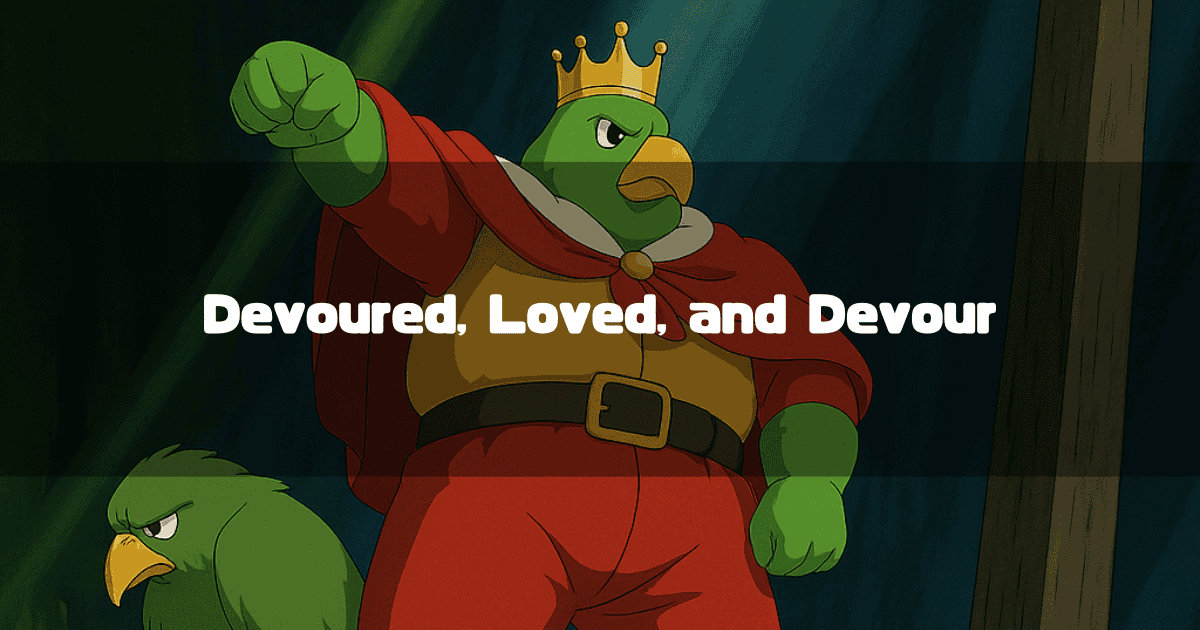
While the pelicans consume the innocent Warawara, the giant, colorful parakeets are introduced as the apex predators of the underworld. According to the Grey Heron, they “even eat elephants.” They are an all-consuming plague (and have already devoured the blacksmith).
To decipher them, we return to Toshio Suzuki’s insights from SWITCH Vol.41 No.9:
Miya-san says, “The Parakeet King is me.” And he also said, “The other self I desperately wanted to be is Mahito.”
(Original Text in Japanese)
宮さんは「インコ大王は自分だ」と言う。そして「なりたかったもう一人の自分が眞人だ」と言っていました。
If the militant Parakeet King is a self-insert for Director Miyazaki, then his “devouring” nature is another reflection of his tendency to consume talent. If the King is Miyazaki, it logically follows that the endless swarm of parakeets marching behind him represents the legion of animators who have propped up Studio Ghibli for decades.
However, the film deliberately paints the parakeets not as noble artisans, but as a foolish, “disorderly mob.” Why? We must refer back to Miyazaki’s bitter quote:
There’s not a single person left who I want to let try.
(Original Text in Japanese)
こいつにやらせてみたいという人間は一人もいなくなった。
The depiction of the parakeets as a mindless, hungry horde is born directly from Miyazaki’s deep-seated frustration with his staff.
To us, Ghibli animators are unparalleled wizards. But to the Grand Wizard himself, they were endlessly unsatisfactory. It paints a picture of a truly merciless creative ecosystem.
The Clash of Kings: Rebelling Against the Mentor
The Parakeet King (Miyazaki) harbors a complex mix of deep reverence and explosive rebellion toward the Granduncle (Takahata). In the climax, the King violently rejects the Granduncle’s plan to pass the world onto Mahito, drawing his sword and severing the magical stones. What is the psychology behind this ultimate betrayal?
It represents two distinct psychological fronts:
- A lifelong rebellion against Isao Takahata’s creative ideology.
- A destructive rejection of Hayao Miyazaki’s own toxic legacy.
As previously established, Miyazaki held deep-seated, conflicting emotions toward Takahata. The ideological war between the parakeets and the Granduncle is the cinematic realization of that decades-long rivalry.
However, because the Granduncle also contains elements of Miyazaki himself, the King’s violent destruction of the tower is an act of brutal self-critique against the “malice-filled stones” of his own career.
As animator Kitaro Kosaka testified, Miyazaki’s studio was a crucible built upon “malice-filled stones.” While a certain degree of ruthlessness is required to achieve cinematic perfection, in his twilight years, Miyazaki is finally questioning the cost. The film suggests an agonizing realization: “There had to be a better way.”
This epiphany is projected onto Mahito, who denies the Granduncle’s cursed architecture and actively chooses to “make friends” in the real world instead. Suzuki elaborated on this struggle in Ghibli Textbook 2: Castle in the Sky(ジブリの教科書 2 天空の城ラピュタ, in Japanese):
When Nausicaä of the Valley of the Wind was completed, Hayao Miyazaki declared, “I will never direct again. I don’t want to lose any more friends.” To finish a masterpiece, you are sometimes forced to say cruel things to the people sitting right next to you. If an animator’s work deviates from your vision, you have to tell them, “That’s wrong.” With every harsh correction, people pull away. Miya-san says he simply cannot bear that loneliness.
(Original Text in Japanese)
『風の谷のナウシカ』が完成した時、宮崎駿は「もう二度と監督はやらない。友達を失うのはもう嫌だ」と宣言しました。一本の作品を完成させるためには、机を並べていた人に対して厳しいことを言わなければならないこともある。アニメーターの描いた芝居が自分の意図と違う方向に向かっていると「違う」と指示を出さなきゃならない。その一言ごとに、みんなが離れていく。宮さんは、この孤独に耐えられないという言うんですよね。
Miyazaki’s uncompromising standard—his “malice-filled stones”—cost him dearly in human connection. He couldn’t stop being ruthless, just as he couldn’t stop making films. The Granduncle embodies that stubborn permanence. Mahito, who chooses friendship over the cursed stones, is explicitly “the other self I desperately wanted to be.“
Inheriting the Cruelty of Creation
The dying pelican mentions that his kind were “brought here” to the underworld by the Granduncle.
On one level, this is an admission of personal guilt. But if we remember that the Granduncle represents Isao Takahata, this line reads like a defensive justification: “I learned this ruthless, talent-devouring method from Takahata, so I had no choice!“
It is an acknowledgment of the severity of the craft he learned from his master, but it is also a defiant boast: “I was thrown into the meat grinder, but I survived and sprouted without being completely devoured!“
Perhaps Miyazaki’s lament that “there is no one left to let try” simply means there is no one left with the sheer grit to survive the crucible and fly away on their own.
The Ravenous Flock: A Mirror Reflecting the Audience
While the meta-analysis of studio politics is fascinating, the parakeets evoke a much more immediate, visceral reaction from the audience. When sitting in the theater, watching the brightly colored, mindless birds devour everything in their path, the most natural conclusion is that the parakeets represent us: the consuming public.
We are the flock that relentlessly demands more content, blindly devouring the art he bleeds to create.
And if the parakeets are the audience, then the Parakeet King—who arrogantly yells “No!” at the creator of the world and shatters the narrative—perfectly represents critics and essayists like myself, who lazily freeload off his painstakingly spun stories by churning out “deep-dive analyses.”
This theory is heavily supported by the role of Toshio Suzuki’s avatar: the Grey Heron.
The Grey Heron as the Ultimate Shield
As confirmed in the documentary Hayao Miyazaki and the Grey Heron and…(宮崎駿と青サギと, in Japanese), the Grey Heron is the cinematic stand-in for producer Toshio Suzuki.
Initially, the Heron acts as a shady manipulator, luring Mahito into the tower—a perfect parallel for Suzuki constantly coaxing a reluctant Miyazaki out of retirement to make “just one more film.”
However, by the climax, the Heron is fighting desperately alongside Mahito, repeatedly saving him from being eaten alive by the parakeets. This shifting dynamic beautifully illustrates how Toshio Suzuki has historically stood on the brutal frontlines of the “business” world, constantly shielding Hayao Miyazaki so he can remain protected as a pure “creator.”
This perfectly contextualizes the tragic fate of the blacksmith devoured by the parakeets early on. The blacksmith symbolizes the countless pure artists who have been crushed by greedy corporate executives and a ravenous, unforgiving public. The Grey Heron (Suzuki) fights tooth and nail to ensure Mahito (Miyazaki) doesn’t suffer that same fate. The film is Miyazaki’s way of finally saying “thank you” to his lifelong producer.
There is a highly deliberate scene where the fleeing Grey Heron is completely drenched in “muddy water.” This visual metaphor is Miyazaki acknowledging: “Thank you for getting your hands dirty and taking the fall for me, and thank you for maintaining the illusion that I am a ‘pure’ artist.“
When Mahito proudly declares the Grey Heron is his “friend” at the end of the film, it is a genuinely heartwarming conclusion to a decades-long partnership.
However, the film’s message for us—the freeloading consumers and critics—remains razor-sharp. We are not the profound “malice-filled stones”; we are merely “foolish stones.” We lack the gravity to even be sliced by the Parakeet King’s blade.
“Stop consuming and go create something yourself!“
That is perhaps the ultimate, stinging directive meant for the audience. But then again, challenging the viewer has always been the hallmark of a true Miyazaki film.
This concludes my deep dive into the hidden meanings behind the parakeets and pelicans. Writing this out has helped untangle the beautiful chaos of the film in my own mind.
While I certainly feel the sting of Miyazaki’s critique against passive consumers… I have no choice but to silently apologize to the master and keep writing. Because, much like him, I simply can’t help myself.
Can you name the movie before the scene comes into focus?
Put your visual memory to the test with a blurred Studio Ghibli scene.
Reader Comments