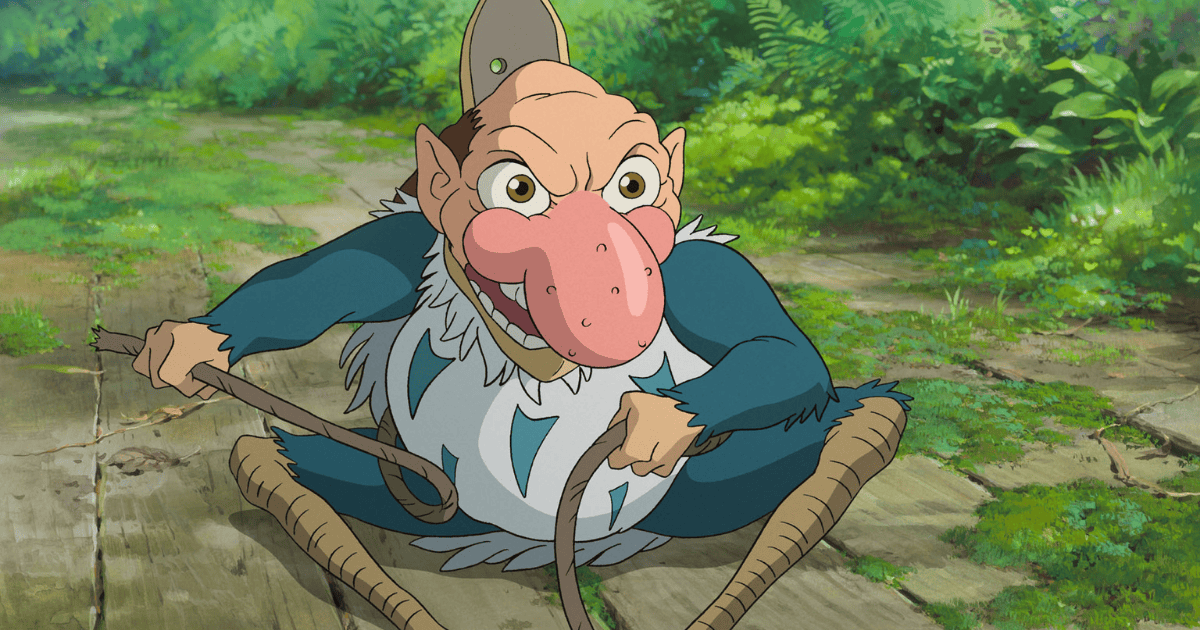
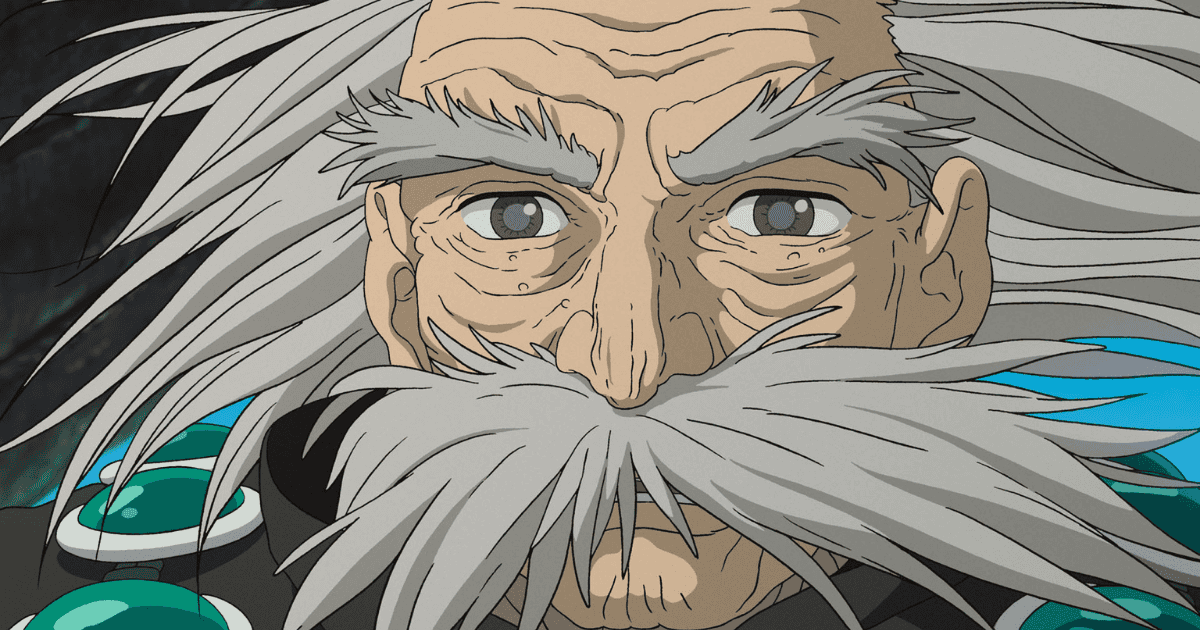
Hayao Miyazaki’s The Boy and the Heron (Studio Ghibli Official) is universally praised for its breathtaking animation, but the most fascinating character in the 2023 film isn’t a magical creature—it’s a direct caricature of the man who secretly pulled the strings of Studio Ghibli for decades.
The Boy and the Heron operates as a deeply personal autobiography, with characters acting as stand-ins for Miyazaki’s closest confidants (such as Kiriko representing Michiyo Yasuda, and the Granduncle representing Isao Takahata). Today, we are turning the spotlight onto producer Toshio Suzuki, the undeniable real-life model for the Gray Heron. By examining his legendary, borderline-deceptive business tactics, you will quickly understand why he earned his avian alter ego.
A Quick Note on a Brilliant Japanese Pun
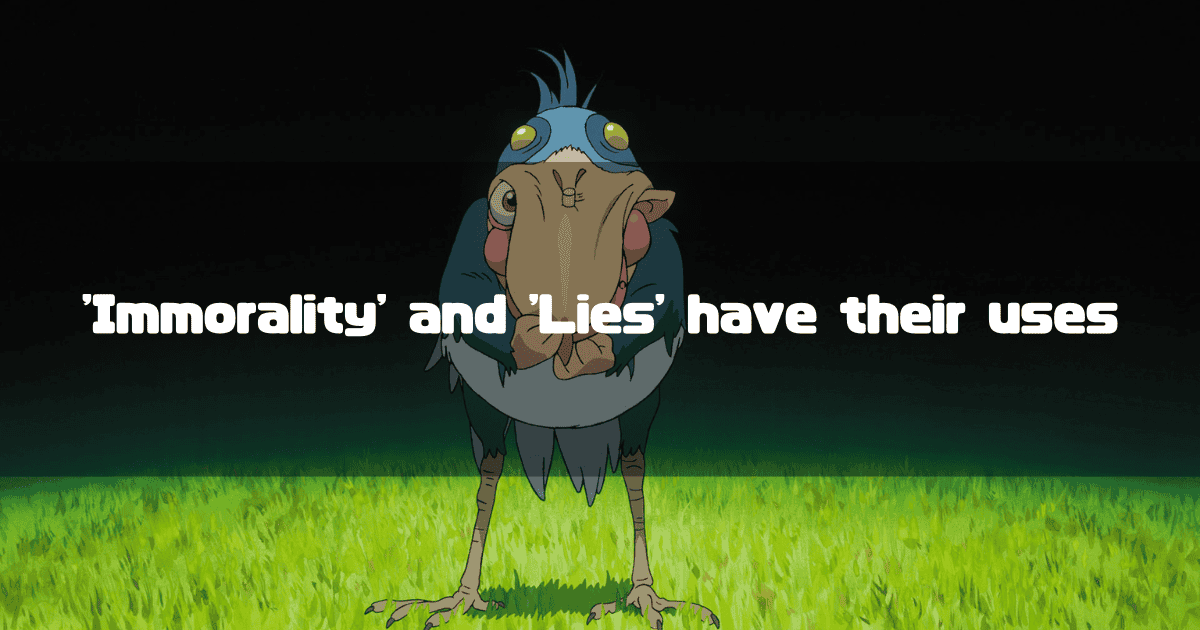
To fully appreciate the genius of this character, you have to understand a clever Japanese play on words. The Japanese word for “heron” is sagi (サギ).
This exact same sound, sagi, is also the word for “fraud” or “swindler” (詐欺). Therefore, casting producer Toshio Suzuki as the “Heron Man” (Sagi Otoko) is a deliberate pun by Miyazaki. It playfully acknowledges Suzuki as a masterful “swindler” in the business world, famous for his bold, cunning strategies that literally built Studio Ghibli.
The fact that Toshio Suzuki is the model for the Gray Heron has been openly confirmed in various media, including the NHK production documentary Hayao Miyazaki and the Gray Heron and…(宮崎駿と青サギと…, in Japanese). In a revealing interview for SWITCH Vol.41 No.9 Special Feature: The Adventure Surrounding Ghibli(SWITCH Vol.41 No.9 特集 ジブリをめぐる冒険, in Japanese), Suzuki himself shared this hilarious exchange:
Anyone can look at the screen and see that the Heron Man is me. Since he had already drawn it, the only question was how to bring it up to Miya-san. I had no choice but to casually say, “Miya-san, the Heron Man is a really great character, isn’t he? Is there a model for him?” Miya-san instantly shot back, “No!” The sheer force of his denial was incredible. “No, no. There isn’t! It’s definitely not you, Suzuki-san!” That is Hayao Miyazaki for you.
(Original Text in Japanese)
サギ男は誰がどう見たって僕なわけですよ。それでね、描いてしまったものはしょうがない、どうやって宮さんに言うかですよね。もう仕方なく「宮さん、サギ男って良いキャラクターですよね」と言った。「モデルがいるんですか?」と訊ねると「いないよ!」と宮さんは答えた。そのもの言い、すごかったですよ。「いない、いない。いないよ!鈴木さんじゃないよ!」と。これがね、宮崎駿なんです。
The parallels are undeniable. In the film, the Heron manipulates and lures Mahito into the tower, perfectly mirroring how Suzuki constantly persuaded a reluctant Miyazaki to make “just one more film.” When the Heron saves Mahito from being devoured by parakeets—getting covered in muddy water in the process—it symbolizes Suzuki getting his hands dirty in the corporate world to protect Miyazaki the “creator” from ruthless critics and money-grubbers.
That relationship becomes especially poignant at the end of the film, when the Heron finally calls Mahito “friend.” I look more closely at that farewell—and the slight difference in the English dub—in my analysis of The Boy and the Heron’s memorable quotes.
However, running a powerhouse like Studio Ghibli and managing brilliant, stubborn auteurs like Miyazaki and Takahata requires extraordinary, sometimes ruthless decisions.
Today, I am going to expose some of those exact “decisions” that border on absolute “fraud.” Once you read these legendary behind-the-scenes bluffs, you will perfectly understand why Toshio Suzuki had to be the Heron Man.
*This is a translated version. The original (Japanese) is available here.
-
The “Fraud” Legends of Toshio Suzuki: Building Ghibli on Bluffs
We explore the history of Studio Ghibli through Suzuki’s most brazen corporate maneuvers: inflating manga sales figures by 10x to secure movie funding, hiding unfinished animation frames from the public, printing fake release date posters to trick his own directors, and forcibly hijacking a movie title. -
The Infamous Spirited Away “Red Tint” Scandal
When the 2002 DVD release of Spirited Away suffered from a severe red color tint, Suzuki officially brushed it off as an “artistic choice to express Chihiro’s feelings.” He refused to offer exchanges, resulting in massive consumer confusion and actual lawsuits.
On this pageContents
The Masterful “Frauds” of Toshio Suzuki: The Real Heron Man
The 500,000-Copy Bluff That Birthed Nausicaä
After graduating from university in 1972, Toshio Suzuki joined the publishing giant Tokuma Shoten. By the spring of 1978, he was deeply involved in launching the revolutionary animation magazine Animage.
Eager for content, he requested an interview with Isao Takahata. Takahata subjected him to an exhausting one-hour phone lecture before ultimately declining. Hayao Miyazaki then took the receiver and rejected Suzuki after another 30 minutes. It was a brutal initiation, but it forged the fateful connection that would change cinema forever.
Through subsequent interviews for Lupin the 3rd: The Castle of Cagliostro and Chie the Brat, Suzuki slowly earned the trust of both masters.
“If You Don’t Have an Original Story, Draw One”
In 1981, following a mandate from Tokuma Shoten’s president, Suzuki approached Miyazaki with a film proposal titled “Sengoku Majo” (Warring States Demon Castle). Unfortunately, corporate executives killed the project.
The reason? It “lacked an original story.” At the pitch meeting, an executive from Daiei bluntly stated, “An anime without a pre-existing original story can’t be a hit.” When Suzuki relayed this devastating news to Miyazaki, the director simply replied, “Then let’s just draw the original story.” Thus, the legendary manga Nausicaä of the Valley of the Wind was born, serialized directly in Animage.
This mindset is staggering. A normal person would just search for an existing novel to adapt. The bold decision to “create the IP from scratch just so we can make a movie later” is pure genius. It probably didn’t hurt that Miyazaki desperately wanted an excuse to draw a sprawling manga.
The 10x Lie That Secured the Movie Deal
Creating the original manga was only half the battle. When it came time to actually pitch the cinematic adaptation of Nausicaä, the executives naturally demanded to know how popular the comic was.
In his autobiographical book Shigoto Doraku, Toshio Suzuki confesses to a massive corporate bluff:
When the idea of adapting ‘Nausicaä’ into a film surfaced, Hakuhodo (the advertising agency) asked me for the circulation numbers of the original manga. The actual number was fifty thousand. But after a moment’s hesitation, I looked at them and said, ‘five hundred thousand.’ The thought crossed my mind that they would refuse to fund a movie based on a measly fifty thousand copies. Since I blatantly falsified the numbers, that kind of lie really sticks with you afterward.
(Original Text in Japanese)
『ナウシカ』の映画化案が浮上したとき、博報堂から原作本の部数を聞かれた。実際は五万部だったんですが、一瞬逡巡して「五〇万部」と言ったんです。五万部では映画化を渋るかもしれないという考えが頭をよぎったんです。はっきり数字を誤魔わしてますから、こういう嘘はあとに残る。
Because Suzuki lied through his teeth, the executives greenlit Nausicaä of the Valley of the Wind, directly benefiting millions of fans worldwide.
Fortunately, his gamble paid off in spades. Nausicaä was a massive box office triumph. According to the book Ghibli no Nakamatachi(ジブリの仲間たち, in Japanese), its distribution revenue alone hit a staggering 740 million yen.
Consequently, a massive sum of money flooded into Hayao Miyazaki’s bank account, largely thanks to Suzuki’s aggressive negotiating. In Ghibli Textbook 2: Castle in the Sky(ジブリの教科書2 天空の城ラピュタ, in Japanese), Suzuki explains:
Actually, when we were making ‘Nausicaä,’ I specifically drafted the contract so that Hayao Miyazaki, as the director, would receive a direct share of the profits, including box office revenue.
~Omitted (Discussion about “work for hire (wiki)”)~
As a man from the publishing world, I had immense respect for original creators and wanted to protect his rights. I also knew exactly how poorly creators were usually treated in the industry. So, I studied corporate law and used this opportunity to legally establish the director’s personal copyright.
(Original Text in Japanese)
じつは『ナウシカ』を作る時、僕は宮崎駿という監督に映画の興行収入その他のものも含めて利益配分があるように契約書を作っておいた。~中略(「職務著作(wiki)」の話がなされてる)~
僕は出版社の人間だったので直鎖物に対する敬意がありそれは守りたかった。作った人がどういう扱いをされているかも知っていたので、ちょっと勉強して、この機会に監督個人の著作権を発生させることにしてあったんです。
While this newfound wealth ironically caused Miyazaki immense stress, it would directly fund the creation of his next masterpiece: Castle in the Sky.
Funding a Nightmare: The Creation of Castle in the Sky
Flush with cash from Nausicaä, Miyazaki decided to act as producer and invest his personal fortune into Isao Takahata’s passion project: The Story of Yanagawa’s Canals.
This live-action documentary chronicled the decay of the intricate canal system in Yanagawa City and the desperate efforts of locals to restore it.
However, Takahata’s legendary perfectionism struck again. Production dragged on, and the massive fortune Miyazaki earned from Nausicaä completely evaporated (Reference: The Story of Yanagawa’s Canals | Ji-Movie! Film Information, in Japanese).
Facing financial ruin, Miyazaki turned to Toshio Suzuki in a panic. In Ghibli Textbook 2, Suzuki vividly recounts the desperate meeting:
Miya-san came to me seeking advice.
“I’ve spent a massive amount of time and money, and it’s still nowhere near finished. My house is falling apart, but I refuse to mortgage it just to make a movie. Suzuki-san, do you have any brilliant ideas?”
I answered him immediately.
“I know it’s tough, but why don’t we just make one more movie? That should sort out the money problem.”
(Original Text in Japanese)
宮さんが僕のところに相談に来ました。「時間もお金も費やしたけどどまだできない。僕の家はボロ家だけれど、家を抵当に入れてまで映画を作ろうとは思わない。鈴木さん、なにか知恵はないものだろうか。」
僕は即答しました。
大変だけどもう一本映画を作りませんか。そうすりゃなんとかなりますから。
According to the book, “On the spot, in just five minutes, he pitched me the entire story of Castle in the Sky.”
You have to ask: “Why would making a massive, expensive new movie solve a debt problem?” It defies logic.
But in the brutal world of corporate expansion, it makes perfect sense: you cover the gaping deficit of one failing project by instantly raising capital for a brand-new project.
It sounds dangerously close to a Ponzi scheme, but that is the ruthless reality of rapid business expansion.
While Suzuki’s advice wasn’t technically illegal, dragging Miyazaki into an infinite, exhausting loop of filmmaking just to pay off debts borders on psychological manipulation. When you watch the Gray Heron in The Boy and the Heron aggressively luring Mahito into the treacherous “Granduncle’s Tower,” it perfectly mirrors Suzuki casually telling Miyazaki, “Let’s just make one more movie.”
Artistic Silence: The Unfinished Scenes in Grave of the Fireflies
Fast forward a few years: Studio Ghibli is officially established, and they are attempting an impossible double-feature release of My Neighbor Totoro and Grave of the Fireflies.
Unsurprisingly, Isao Takahata’s production of Grave of the Fireflies was catastrophically behind schedule. As the unmovable premiere date arrived, the studio was forced to accept Takahata’s grim reality: the film would debut in theaters with two scenes completely uncolored. Suzuki confesses his handling of this disaster in Ghibli Textbook 4: Grave of the Fireflies(ジブリの教科書 4 火垂るの墓, in Japanese):
Ultimately, when it was released in April 1988, two sections were not painted in time and remained stark white on the screen. As a producer, I was absolutely mortified. But publicly, I never once admitted that it was an unfinished product. Some colleagues argued, “You need to be honest with the audience,” but the more you try to explain something like that, the more complicated the backlash gets. So I steeled myself and decided, “In times like this, it’s best to just keep my mouth shut.”
(Original Text in Japanese)
結局、一九八八年四月に公開さた時点では、二か所の色塗りが間に合わず、シロのままになりました。関係者の一人として、もちろん忸怩たるものがありましたが、表向きにはこれが未完成品であるということは一切、言いませんでした。「ちゃんと言うべきだ」という人もいましたが、説明すれば説明するほど話がややこしくなるから、「こういう時はだまってりゃいいんだ」と腹を括っていました。
Because the uncolored sequence featured Seita frantically stealing tomatoes in the dead of night, audiences naturally assumed the stark, colorless lines were a highly stylized “artistic choice” meant to convey desperation. Suzuki’s strategy of total silence worked flawlessly.
While hiding the truth from paying customers is undeniably dishonest, it miraculously preserved (and arguably enhanced) the film’s haunting legacy.
It proves that sometimes, “even dishonesty has its practical uses in cinema.“
The boardroom battle leading up to the uncolored premiere was vicious. Takahata fiercely demanded the release be postponed, clashing violently with producer Toru Hara and Suzuki. Takahata’s inflexible commitment to quality would continue to terrorize Ghibli producers for the rest of his career.
The Fake Movie Poster: Tricking Isao Takahata
Because Takahata’s schedules were always a disaster, the delays inevitably bled into their subsequent film, Only Yesterday.
To prevent a repeat of the Fireflies fiasco, producer Hayao Miyazaki gathered the staff—including Takahata—and delivered a terrifying ultimatum: “If this movie isn’t ready in time for the premiere, we will shelve it permanently. We will absolutely not screen another incomplete version.” This brutal threat worked, and Only Yesterday hit its deadline. (Reference: Nozomu Takahashi talks about ‘the greatness of Toshio Suzuki’ and ‘the bond between Takahata and Miyazaki’, in Japanese)
When it came time to produce Pom Poko, Suzuki knew Takahata would delay it again. So, he executed a brilliant preemptive strike. In Ghibli Textbook 8: Pom Poko(ジブリの教科書 8 平成狸合戦ぽんぽこ, in Japanese), he reveals the trap:
After breaking out in a cold sweat on every single movie over whether we’d make the deadline, I finally learned my lesson. This time, I devised a sinister little plan. The actual scheduled release was for the summer of 1994, but I lied to Takahata-san’s face and told him, “It’s a spring release.” To ensure he believed the bluff, I actually printed fake promotional posters with the words “Spring Release” plastered on them, and I explicitly ordered the distributors at Toho to play along with the lie.
(Original Text in Japanese)
毎回、間に合う、間に合わないで冷や汗をかき続けてきて、僕も流石に学習しています。今回はちょっと作を弄しました。公開予定は一九九四年の夏だったんですが、サバを読んで、高畑さんには「春公開です」と伝えておいたのです。しかも、念には念を入れて「春公開」という文字を入れたポスターまで作り、配給の東宝の人たちにも口裏を合わせてもらいました。
When it became mathematically certain that Takahata would miss the fake “Spring” deadline, Suzuki played the benevolent producer and “mercifully” postponed the release to Summer.
But because Takahata is Takahata, he missed the Summer deadline too.
However, paralyzed by the guilt of “delaying” the film a second time, Takahata finally surrendered to Suzuki’s demands to hack apart the storyboards. They violently truncated the third act, gutting 10 full minutes of animation from the movie, and barely managed to hit theaters on time.
Hijacking Princess Mononoke’s Title
As the marketing campaign for Princess Mononoke ramped up, Hayao Miyazaki approached Suzuki with a massive demand: he wanted to change the title of the epic to The Legend of Ashitaka (“Ashitaka Sekki”).
Suzuki knew from a marketing perspective that discarding a punchy, evocative title like Princess Mononoke would be box-office suicide. So, he went rogue. He details his treachery in Shigoto Doraku(仕事道楽, in Japanese):
Our opinions were deadlocked, so I simply resolved it with a show of brute force. Miyazaki has absolutely no interest in watching promotional teasers or TV trailers. So, when the very first teaser was scheduled to broadcast nationwide on Nippon TV, I just bypassed him entirely and slapped the title Princess Mononoke on the screen.
(Original Text in Japanese)
意見が対立したままだったんですが、ここでぼくは、実力行使で解決しちゃいました。彼は特報とか予告編とかにまったく興味を示しませんから、日本テレビで特報第一弾というとき、「もののけ姫」のタイトルを出しちゃったんです。
You might expect Miyazaki to explode with rage upon discovering this betrayal. Instead, he simply asked, “Did you release the title?” When Suzuki unapologetically replied, “I did,” Miyazaki sighed, turned around, and walked back to his drawing desk in exasperation.
It was a ruthless, authoritarian tactic by Suzuki. But considering Princess Mononoke shattered records by grossing 19.3 billion yen, history proved the Heron Man was absolutely right.
The “Godfather” of Earthsea
Tales from Earthsea was directed by Hayao Miyazaki’s eldest son, Goro Miyazaki. Placing a man with zero animation directing experience at the helm of a massive Ghibli feature was incredibly controversial, but Suzuki knew it guaranteed endless press coverage.
While Suzuki’s official promotional strategy was to avoid exploiting Hayao Miyazaki’s name to sell the film, he playfully admitted to considering some truly unhinged marketing ideas in The World’s Earliest ‘Tales from Earthsea’ Interview, in Japanese:
I was struggling with how to market it. In my desperation, I brainstormed some truly bizarre ideas. Like putting “Father: Hayao Miyazaki” in the credits (laughs). I mean, there’s no point in using a boring, plausible title like “Advisor.” If I had to pick the best alternative, it would definitely be: “Godfather: Hayao Miyazaki.”
(Original Text in Japanese)
悩んでいます。苦し紛れに珍案奇案も考えました。「父 宮崎駿」とか(笑)。だって「アドバイザー」とかもっともらしいこと言っても仕方ないでしょう。あえてもう一つ候補があるとすれば「ゴッドファーザー 宮崎駿」。
While he wisely abandoned this idea, the fact that his brain defaults to such provocative, carnival-barker tactics perfectly encapsulates the spirit of the Gray Heron.
Those are just a few of the legendary Toshio Suzuki ‘Frauds’ that built the Ghibli empire. I am certain there are countless darker secrets buried in the studio’s vaults.
Because I observe Suzuki from the safe distance of an audience member, I can laugh at these stories. However, for the artists trapped in the crossfire, his manipulations were infuriating. Renowned animation director Hiroyuki Kitakubo famously scorched Suzuki on X (formerly Twitter):
俺が鈴木敏夫を嫌いな理由はシンプルな二点。「他人の権威を傘にきて、人を見下して底の浅い説教モードに入る」事と「スタッフもお客さんも含め、その場を取り繕う為なら平気で嘘を吐く」事だなぁ。前者はまだ我慢する事も出来るけど、後者は救いようが無い。
— 佐倉 大 (北久保弘之) (@LawofGreen) September 15, 2012
The reasons I despise Toshio Suzuki are incredibly simple. First, “He borrows the authority of others to look down on people and lecture them with shallow logic.” Second, “He will lie through his teeth without a second thought to smooth things over in the moment, whether he is lying to his staff or to the customers.” I can tolerate the first flaw, but the second one makes him completely beyond saving.
It is a stark reminder that the men who build cinematic empires are rarely saints.
But there was one specific incident where Suzuki’s “lies” directly impacted millions of fans—including myself. I will conclude with the most infamous DVD release in anime history.
The Spirited Away DVD Controversy: That Summer, You Were Red
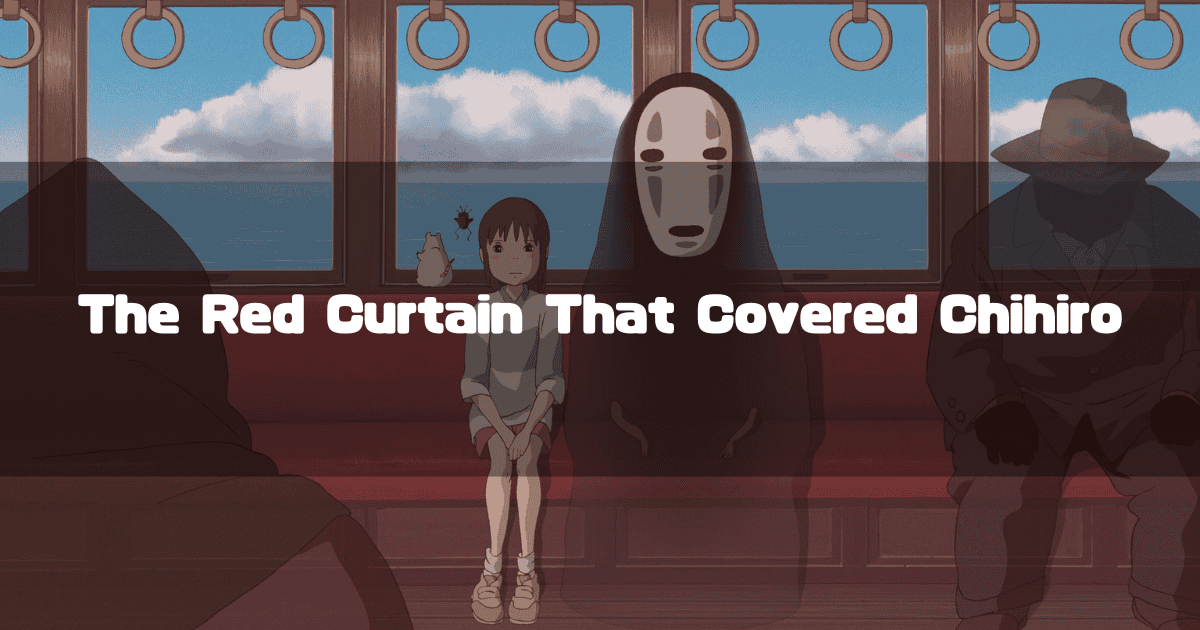
Hayao Miyazaki’s magnum opus, Spirited Away, shattered box office records upon its release in July 2001. A year later, on July 19, 2002, Buena Vista Home Entertainment unleashed the highly anticipated DVD.
As a kid, I sprinted to TSUTAYA, rented a copy, and practically danced in front of the TV as the movie started. But the moment the film began, a wave of confusion washed over the living room. My brother stared at the screen and perfectly articulated our collective dread:
“…Why is the whole movie red?“
Millions of fans rushed to watch the newly released DVD, only to realize the entire movie was cloaked in a bizarre, muddy red hue. The outrage was so severe it actually escalated into a class-action lawsuit. You can read a fantastic breakdown of the legal chaos in this blog post: The Mystery of the Red ‘Spirited Away’ DVD (in Japanese).
However, as clueless kids in 2002, my brother and I reached a much simpler conclusion: “It’s probably just because we’re watching it on the PS2.“
At the time, the PlayStation 2 was doing double duty in millions of households as both a gaming console and a primary DVD player. We just assumed the red tint was a technical glitch caused by watching a movie on a video game console.
But the outrage was real, and the media demanded answers. Toshio Suzuki delivered his official, staggering defense in the November 2002 issue of HiVi magazine. His official verdict? It was “by design.”
Suzuki shamelessly claimed that the heavy red tint was not a mastering error, but a deliberate creative choice designed to “express the emotional warmth of Chihiro’s feelings.“
This excuse is objectively infuriating. If changing the entire color palette of a masterpiece was a deliberate artistic choice, they should have proudly announced it beforehand. If it was a technical mastering error, they should have swallowed their pride and admitted it.
But if they admitted it was a glitch, they would have been legally obligated to issue mass product exchanges and millions of dollars in refunds. Unwilling to bleed cash, Suzuki doubled down on the “it’s by design” defense. To force the lie into reality, the initial TV broadcast on Kinyo Roadshow was intentionally aired with the exact same red tint just to “prove” it was the intended master.
Animator Hiroyuki Kitakubo, who I quoted earlier, absolutely eviscerated Suzuki’s technical excuses on X:
その一手間をキチンとやらなかったせいで、何でお金を払ってDVDを買ったお客さんが「色が赤い」状態で我慢しなきゃならんのか。「◯◯ケルビンが〜」とか元データの数値を拾うだけで「映画と同じ発色になる」訳ないじゃんか。で、鈴木敏夫氏はあちこちで専門知識が無い言い訳をするのだが(続く
— 佐倉 大 (北久保弘之) (@LawofGreen) May 2, 2015
Because they were too lazy to do the technical work properly, why do paying customers have to suffer through a “red” DVD? Just lazily copying the raw numeric data like “XX Kelvin” from the master file isn’t going to magically result in the “same color as the theatrical print” on a home TV. And yet, Toshio Suzuki goes around making excuses everywhere, completely exposing his lack of technical knowledge (continued).
When an industry expert ruthlessly calls out the technical nonsense, it holds infinitely more weight than our wild fan theories. We will never get a true confession, but the evidence of a cover-up is staggering.
Because the “Red Chihiro” incident happened over two decades ago, it has transcended anger and mutated into a bizarre badge of honor. Fans of my generation now joke with a strange sense of nostalgic pride: “I survived the Red Chihiro summer!“
Perhaps it is because I was just a naive kid, but it perfectly illustrates the phrase: “Everything loses its sharp edges and becomes a classic in the distance of history.“
For the record, all modern Blu-ray and DVD releases of Spirited Away feature the correct, pristine color grading. The red tint has been quietly erased from history.
Ironically, Studio Ghibli faced another media defect issue recently with the 4K UHD release of The Boy and the Heron: Apology and Notice Regarding Dolby Vision Video Defect (in Japanese).
This time, the glitch involved Dolby Vision playback coding. Unlike the glaring red tint of 2002, this was a subtle metadata error that most viewers would never have noticed if Ghibli stayed quiet. Surprisingly, they issued a formal apology and offered a proper disc exchange program. I actually mailed mine in for a replacement. Perhaps the Heron Man has finally softened in his old age.
The images used in this article are provided by the “Studio Ghibli Still Images” collection.
Can you name the movie before the scene comes into focus?
Put your visual memory to the test with a blurred Studio Ghibli scene.

Reader Comments