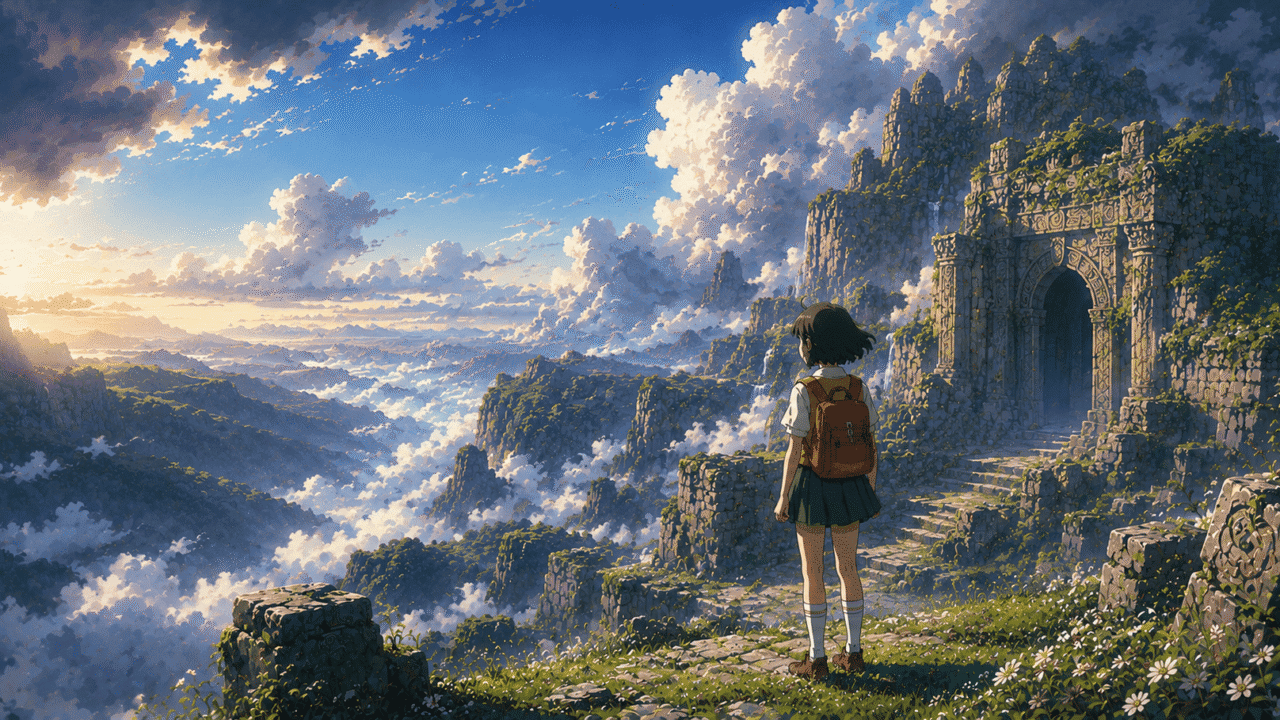
Makoto Shinkai’s Children Who Chase Lost Voices (official website) was released in 2011. Already a fan of Shinkai’s work, I naturally went to see it at the cinema.
From the opening scenes, Ghibli-like images and characters keep appearing. I imagine many viewers thought, “What on earth is this?” I was one of them.
Here, I want to consider why this Makoto Shinkai film feels so much like Ghibli.
The familiar-looking scenes are inserted with such craftsmanship that the resemblance seems clearly intentional. Why did Shinkai need to make Children Who Chase Lost Voices this way?
*This is a translated version. The original (Japanese) is available here.
- The First “Ghibli-like” Film: Tales from Earthsea
In my reading, Goro Miyazaki built Tales from Earthsea by accepting, rather than rejecting, its Ghibli qualities. Through them, he confronted both himself and the presence of his father, Hayao Miyazaki. - A Declaration of Farewell
Shinkai blends Ghibli-like elements with influences from other works. I see the film as his way of saying goodbye to those influences and declaring his resolve to follow his own path.
On this pageContents
What Makes a Film “Ghibli-like”?
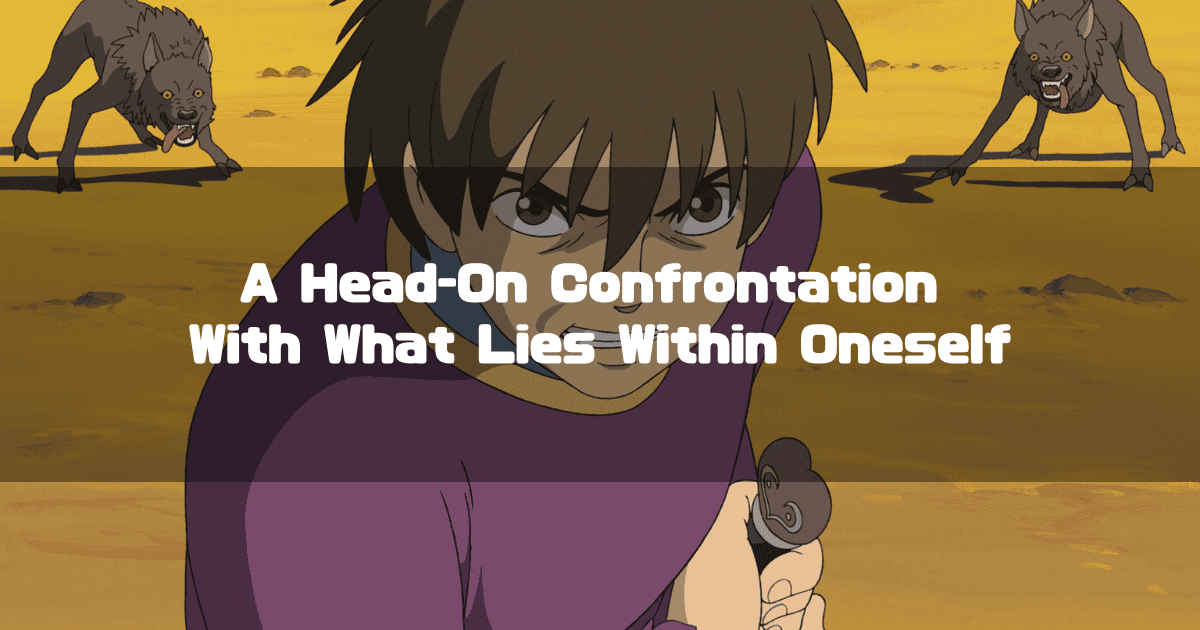
Children Who Chase Lost Voices certainly feels Ghibli-like, but it was not the first film to give us that impression. Surely that was Tales from Earthsea.
The First “Ghibli-like” Film: Tales from Earthsea
Released in 2006, Tales from Earthsea is an animated feature directed by Goro Miyazaki. It is based on Ursula K. Le Guin’s Earthsea books, but the result feels like a blend of them and Hayao Miyazaki’s manga The Journey of Shuna (シュナの旅, in Japanese).
With Tales from Earthsea, the fact that Goro Miyazaki was directing was itself a point of interest. I was still a student when it came out, and I remember rather presumptuously thinking, “Seriously? Goro Miyazaki!”
Tales from Earthsea contains many scenes reminiscent of earlier Ghibli films and other works Hayao Miyazaki was involved in. I assume that resemblance was intentional.
What might that intention have been? We can only imagine, but perhaps Goro felt he had to confront himself. Rather than reject the “Hayao Miyazaki” within him and seek an entirely different mode of expression, he needed to work through that influence by using the forms of expression already present in himself. At that moment, he must have felt that this very process was what it meant to express something—to make a film. Or so I think.
Perhaps It Is Really “Earthsea-like”
Just as working through the “Hayao Miyazaki” within him seems to have mattered deeply to Goro Miyazaki, perhaps something similar mattered to Makoto Shinkai.
When Children Who Chase Lost Voices was being made, people may have been starting to call Shinkai the “next Miyazaki.” He probably felt, “I am not the next Miyazaki; I am myself.” Yet he surely also respected Miyazaki as a filmmaker.
Needing to take his next step as a director, Shinkai may have decided to confront the influences that inevitably lived within him. He seems to have used Ghibli films as a “scapegoat,” while putting other things from within himself into the film too.
By “scapegoat,” I mean that the film is not just Ghibli-like. Creatures resembling the “future humans” in Kazuo Umezu’s The Drifting Classroom appear, as does a circular structure reminiscent of Stargate. In one scene, Morisaki—who looks for all the world like Muska from Castle in the Sky—suddenly looks like Lupin III. That is extraordinary craftsmanship. There may be all kinds of other homages we simply have not noticed.
Perhaps Shinkai put the Ghibli style everyone recognizes at the forefront to tell viewers what sort of film this was, then slipped homages to other works in alongside it. In that sense, perhaps it is less “Ghibli-like” than “Tales from Earthsea-like.”
Children Who Chase Lost Voices was a tale of farewell. By bringing those influences into the film, perhaps Shinkai was declaring his goodbye to them. To put my reading another way: “Thank you, films that helped shape me. But now I am saying goodbye and going my own way. See you!”
Shinkai’s next film was The Garden of Words (2013), neither science fiction nor fantasy. Perhaps the same could be said of 5 Centimeters per Second, but this time something else that had been there before was absent: Tenmon’s music. Children was the last of these films to feature his score. Tenmon composed the music from Voices of a Distant Star through Children Who Chase Lost Voices, but not for The Garden of Words or the films that followed.
Children Who Chase Lost Voices must have been a way of shaking off what came before and making a “declaration of a new step forward.” At least, that is how it looks to me.



Reader Comments