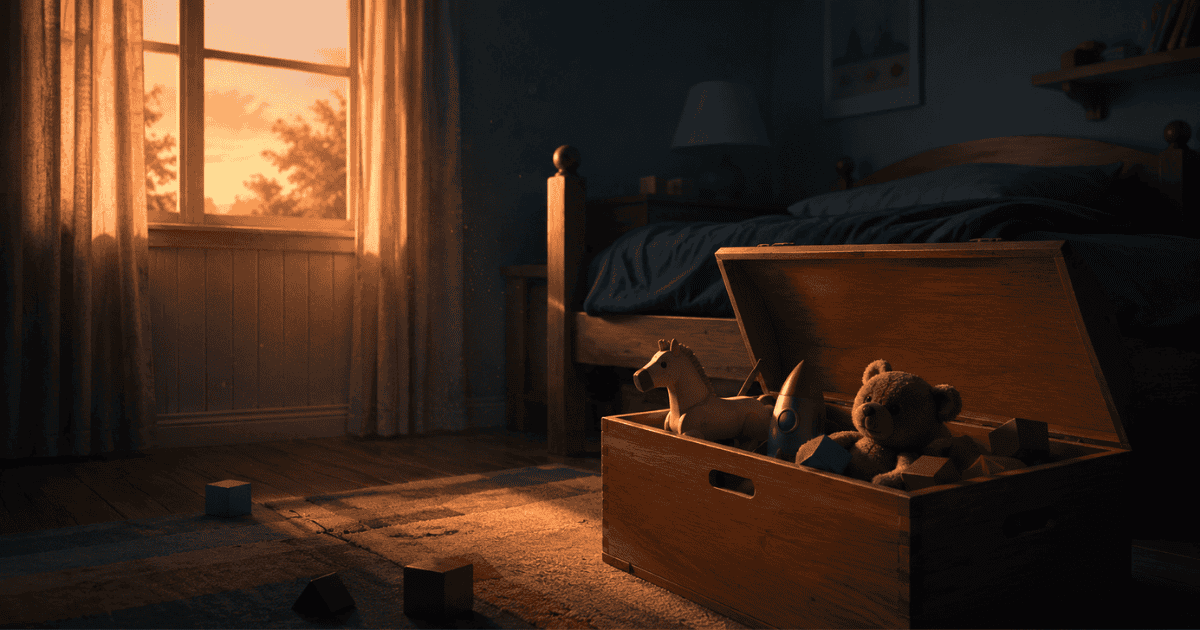
The toys in the Toy Story series want nothing more than to be needed by a child.
But children grow up, and one day they stop playing with their toys. The toys, however, continue to love them.
That devotion is beautiful. At the same time, it creates an extremely convenient relationship for the humans who will ultimately forget their toys.
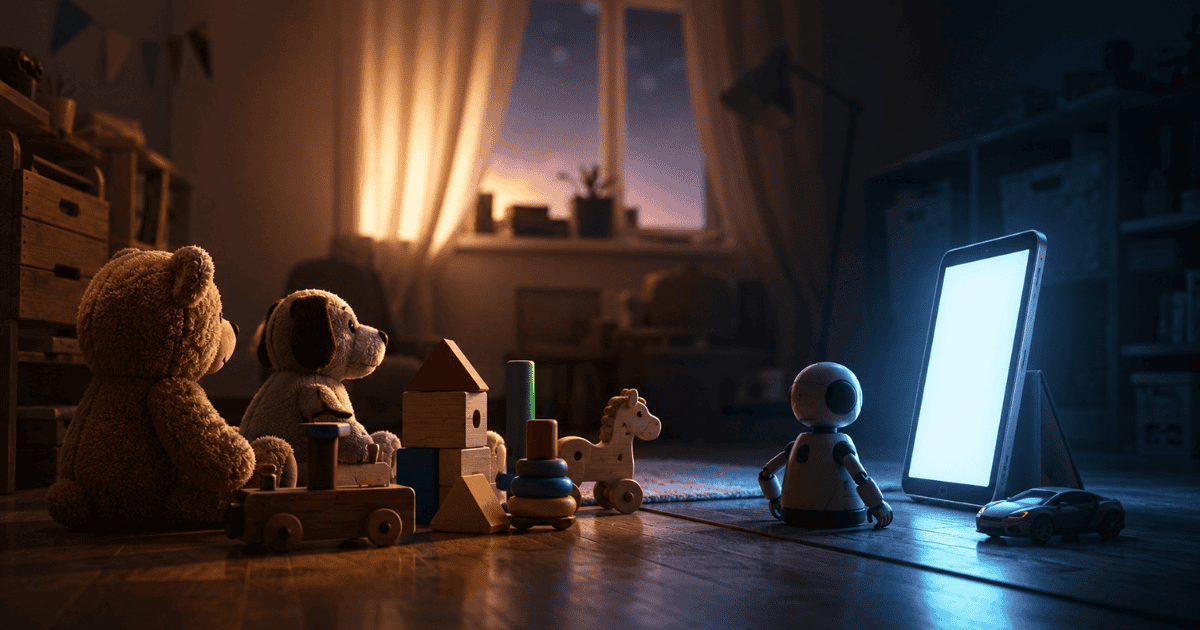
This fundamental relationship remains unchanged even in Toy Story 5, which introduces tablet devices. Whether they are dolls, handmade toys, or electronic devices, they all love children and try to affirm their own worth by being needed.
The toys’ fear of no longer being needed is familiar to humans, too. We also want a role in society or our community, and to feel that someone needs us.
In this article, I want to consider why the toys’ unwavering affection moves us so deeply while also making us feel guilty.
The discussion below makes no attempt to avoid spoilers, so please proceed with caution if you have not seen the films.
*This is a translated version. The original (Japanese) is available here.
- Worth determined by children: A toy becomes a “treasured toy” by being needed by a child.
- A metaphor for human society: The toys’ fear of losing their role overlaps with the human fear of no longer being needed by society.
- Love without end: Children grow up and forget their toys, but both dolls and devices continue to love them.
- Beautiful self-deception: Giving a toy to someone else or confirming that it was never forgotten can also be a way for humans to escape their guilt.
- More than one way to live: The films also suggest that living for a child does not have to be a toy’s only possible source of happiness.
On this pageContents
When Your Worth Is in Someone Else’s Hands
A Fear Deeper Than Losing the Number-One Spot
In the first film, Woody was Andy’s favorite toy. Woody was given a place on the bed and held something like a leadership position among the toys.
But a new birthday present, Buzz Lightyear, soon displaces him. Andy becomes absorbed in Buzz, and even his room’s decorations change from a Western theme to a space theme.
Woody’s jealousy is intense. But surely this is more than resentment of a toy who is more popular than he is.
What Woody feared was becoming unnecessary in Andy’s world.
Andy chooses him, plays with him, and needs him. That is what allows Woody to believe he is a valuable toy. If Andy stops choosing him, what basis does he have for believing in his own worth?
What Buzz appeared to take from him was not merely his place on the bed or his status as leader. It was the very foundation that allowed Woody to be Woody.
The Cruelty of Being Shown That the World Can Go On Without You
Woody’s fear has its counterpart in human society. We would like to think we are not objects for someone else to own and play with, of course, but the same kind of fear certainly exists.
Someone new appears at work, at school, in the family, or within a community and easily performs the role that once belonged to us. It is not unusual for someone who was previously needed by others to begin wondering whether anything would really go wrong if they were no longer there.
For people who have built their sense of worth around what they can do or whom they can help, losing a role is more than a change in circumstances. It feels like a rejection of their value as a person.
Woody’s jealousy of Buzz closely resembles that fear. The arrival of someone newer, more conspicuous, and equipped with more features made Woody afraid that he would lose his role in Andy’s world.
Woody was not afraid of falling in the rankings of Andy’s favorite toys. He was afraid of becoming useless.
That is why Woody’s conflict in the first film does not feel like a problem unique to toys.
Through Woody, the film depicts the anxiety experienced by someone who has sustained their self-worth by being needed and now fears that their role is about to be taken away.
The Fictional Story That Sustained an Identity
Buzz Lightyear, by contrast, does not initially define his worth through his relationship with Andy.
Buzz does not even recognize that he is a toy. He believes that he is a real Space Ranger, a special individual dispatched to protect peace throughout the universe.
The sight of a mass-produced toy believing that he alone is a genuine hero is undeniably absurd. Yet that misconception also gives Buzz overwhelming confidence.
Because he never doubts that he has a mission or that he possesses the power to overcome the challenges before him, he can act without hesitation.
Then Buzz sees a television commercial advertising toys identical to him. The equipment and backstory he believed were uniquely his belong to every copy of the same product. He also discovers that he cannot fly.
What Buzz loses at that moment is not merely a set of false beliefs.
He loses the story he needed in order to believe that he had value.
Learning the truth does not simply make Buzz more realistic. He no longer knows who he is and becomes unable even to act as he once did.
Later, when he sees Andy’s name written on the bottom of his foot, Buzz realizes that although he is not a hero who can save the universe, he is still a treasured toy to Andy.
Buzz thus abandons his inflated self-image and begins to accept who he really is. Yet the sense of worth he gains here also exists within his relationship with Andy.
He loses the story that says, “I have value because I am special,” and replaces it with a new one: “I have value because Andy needs me.”
A Hero’s Fall and the Human Drama of Accepting Yourself as You Are
Buzz’s story is not only about a toy, either.
Humans can sometimes confront hardship by believing that they possess a special talent or mission. That confidence may not be based entirely on fact, but it can still provide the strength required to act.
When reality reveals that we are not as exceptional as we imagined, however, we may lose that confidence and begin to deny our own worth as well.
The moment Buzz learns that he is not a real hero, he does not stop at accepting the fact that he is merely a toy. He falls all the way to the conclusion that he has no value at all.
But not being a real Space Ranger is not the same thing as being worthless.
Even though he cannot fly and is only one of countless mass-produced toys, he remains irreplaceable to Andy and his friends.
He loses his inflated self-image, yet discovers that there are still things he can do.
Buzz’s transformation is both the story of a toy recovering his confidence and a human drama: letting go of an idealized self and discovering the worth of the person you actually are.
Woody experiences the fear that a newcomer will take away his place. Buzz learns that he is not special and loses the idealized version of himself.
Lilypad, who appears in Toy Story 5, occupies a different position from either of them. She enters Bonnie’s room as a new presence capable of helping Bonnie, but Jessie and the other toys see her as an enemy who may take away their place.
In the first film, Woody, an established toy, fears that a newcomer will displace him. In Toy Story 5, Lilypad is the newcomer, yet the established toys refuse to accept her as one of them.
Their positions are reversed. Both, however, struggle with the same question: “Do I have any value in this place?”
Their struggles are scarcely different from our own attempts to find a sense of worth through society and the people around us.
For a closer examination of why Lilypad was rejected by the traditional toys and why a device designed to connect people remained more isolated than anyone else, see my analysis of Lilypad in Toy Story 5.
Toys That Offer Eternal Love and Humans Who Eventually Forget
What Feels Natural to Humans Can Wound Toys Deeply
Toy Story 2 depicts both the happiness of being needed by a child and the fact that this happiness cannot last forever.
Jessie was once treasured by a girl named Emily. They always played together, and Emily took Jessie everywhere she went.
But Emily grew older, and her interests changed.
Jessie fell beneath the bed and was left there for a long time. When she was finally taken out again, what awaited her was not another chance to play but a farewell as she was placed in a donation box.
From a human perspective, this is not an exceptionally cruel story. Children normally grow up and stop playing with toys. Emily did not hate Jessie, nor were the years they spent together a lie.
To Jessie, however, it still means being abandoned by the child who loved her.
What humans call “growing up” becomes “betrayal” to a toy.
This irreconcilable mismatch has existed within the relationship between humans and toys from the very beginning.
“Unconditional Love” That Accepts Being Abandoned One Day
In Toy Story 2, Woody has the option of not returning to Andy.
If he goes to the museum, he will never be broken or stained. Andy will never grow tired of him, and Woody will be treasured forever as a rare and valuable toy.
After learning about Jessie’s past, Woody also understands that his relationship with Andy will inevitably end. Andy will grow up, stop playing with him, and no longer need him.
Even so, Woody chooses to return to Andy rather than go to the museum. He chooses to be needed by a child for a limited time instead of being preserved forever.
It is unquestionably a beautiful choice.
From the human perspective, however, it is almost too convenient.
Humans inevitably grow up and forget their toys. Yet even after understanding that ending, the toys still return to us.
Human affection comes to an end. The toys’ affection does not.
The toys accept the entire burden of this unequal relationship.
When the same unconditional love is considered not as a form of troubling dependence but as the image of “the ideal parent a child wished for,” a different interpretation emerges. I discuss this perspective in more detail in my analysis of Woody as the ideal parent adults wished they could have been—and as a grandfather.
The Innocent Betrayal of “Simply Growing Up”
Then, in Toy Story 3, Andy himself has finally grown up and stopped playing with Woody and the others. The toys that once stood at the center of his life are left waiting to learn whether they will be stored in the attic or thrown away as garbage.
Andy, however, has done nothing wrong. He has not come to dislike Woody and the others, nor has he denied the time he spent playing with them. He has simply grown up and stopped playing.
That is precisely what makes the problem so difficult.
If the human who forgot the toys were a villain, it would be easy to condemn them. But Andy and Emily merely grew up in an ordinary way.
Humans are not necessarily at fault. Yet from the toys’ perspective, the result remains the same: they are no longer needed.
The toys are hurt even though no villain exists.
Perhaps this is where the human guilt depicted by Toy Story can be found.
The same thing happens to Bonnie in Toy Story 5, although she does not simply lose interest in her toys.
Bonnie introduces Jessie and Bullseye to her classmates. When they laugh at her for still playing with toys like them, she throws the two of them into the car.
Later, when a photo of Bonnie playing with Blaze and the toys is mocked in a group chat, she tries to give Jessie and the others to Blaze even though that is not what she truly wants.
Bonnie has not stopped loving Jessie. She has become afraid of other people seeing the part of her that loves Jessie.
Learning to see oneself through other people’s eyes and realizing that others hold different values are also part of the growth through which a child’s world expands.
From a toy’s perspective, however, even that growth appears as betrayal.
Emily loses interest, Andy grows up, and Bonnie becomes conscious of other people’s opinions. Their reasons differ, but the outcome for the toys is the same.
The Universal Human Desire to Be Needed
It is not only Woody and Jessie. Throughout the Toy Story series, the toys consistently fear that they will no longer be needed.
They fear no longer being played with, being shut away inside a box, or being thrown out. Each possibility means losing their role as toys and being cut off from a child’s world.
This fear also exists within human society.
Humans also want to be useful to someone. Within a family, workplace, friendship, or local community, we want to feel that we have some kind of role and that our presence helps someone.
Conversely, feeling that we are of no use and that no one would miss us can hurt as though our very existence has been rejected.
Losing a job or becoming unable to fulfill a former role because of age is painful for reasons that go beyond income or ability. It can feel as though the place to which we belonged has decided that we are no longer needed.
The toys’ fear of being discarded overlaps with the human fear of being judged useless by society or a community and losing one’s place within it.
That is why Woody and his friends’ struggles are not simply someone else’s problems, even though real toys have no minds of their own.
We want to be needed by someone. We want to have a role. We want to know why we are allowed to be here.
What the toys seek from children is not so different from what humans seek from society and the people around them.
The devices introduced in Toy Story 5 are no exception. Despite being electronic devices, Smarty Pants, Atlas, and Snappy treasure the time when Blaze once needed them.
Lilypad also grounds her sense of worth in her ability to help Bonnie.
Whether they are dolls or electronic devices, the underlying structure remains unchanged: they can affirm their worth only by being useful to a child.
The Guilt We Face as Viewers
As viewers of the Toy Story series, we naturally empathize with Woody and the others. We sympathize with the forgotten Jessie, worry about the toys facing abandonment, and support Woody as he tries to return to his child.
In reality, however, we are not on Woody’s side.
We are on Andy and Emily’s side.
We, too, became fascinated with new toys and stopped playing with old ones. We put them in boxes, forgot them, and may have thrown them away while moving or cleaning.
Real toys, of course, do not have minds. But Toy Story has created a world in which they do.
Even when humans are absent, the toys continue thinking about their owners. They wonder why no one plays with them anymore, yet still hope to be needed again.
Once we have seen them this way, we can no longer avoid considering what we once did to our toys from the toys’ perspective.
This is guilt for a crime that does not exist in reality.
While we are watching the films, however, we undeniably become humans who have forgotten beings that continued to love us.
The “Self-Deception” Hidden in the Beautiful Ritual of Giving Toys Away
How a Moving Farewell Defers the Underlying Problem
At the end of Toy Story 3, Andy gives Woody and the others to Bonnie. He introduces the toys one by one, explaining their personalities and how much each of them means to him. Finally, he plays with them one more time.
There is no question that the scene is moving.
Andy does not throw the toys away as garbage. Because he can no longer play with them himself, he sends them to a place where another child can.
It was probably close to the best choice a human could make.
That does not mean, however, that the fundamental problem between humans and toys has been resolved.
Bonnie will also grow up one day, and Woody and the others may once again find themselves no longer needed.
When ownership passes from Andy to Bonnie, the toys’ future is not necessarily saved. The same problem may simply have been postponed.
A “Ritual” for Wiping Away Guilt
Andy undoubtedly gives the toys to Bonnie out of kindness. He wants Woody and the others to continue playing with someone.
At the same time, the act of giving toys to someone else also seems to help humans process their own guilt.
I did not throw the toys away. I carefully passed them on to the next child. Therefore, I did not abandon them.
Thinking this way allows humans to feel a little more at ease.
This does not mean that Andy’s kindness was false.
It means that the desire to save the toys and the desire to save oneself from guilt can exist at the same time.
Human actions cannot always be divided neatly into a single motivation. Good intentions can contain a desire for self-protection. Conversely, something done for self-protection can genuinely save someone else.
Andy’s choice may have contained both.
In Toy Story 5, the same human guilt is processed in a form other than giving a toy away.
After once again being rejected by her owner and having the wound of her separation from Emily reopened, Jessie reaches the tree where she once spent time with Emily.
From a photograph she finds there, Jessie learns that Emily gave her daughter the same name.
Knowing that Emily never forgot her gives Jessie a way out of her pain.
Emotionally, it is a beautiful resolution.
Yet it also feels slightly too convenient.
If Jessie mattered enough for Emily to give her daughter the same name, one uncharitable question remains: shouldn’t Emily have searched harder for Jessie?
Of course, it would be cruel to burden Emily, who was still a child at the time, with a responsibility to continue searching indefinitely for a lost toy.
Even so, the structure in which Jessie is saved by a human being’s memory reveals a distinctly human wish.
I threw away or lost my toy, but I never truly forgot it. Please forgive me.
The knowledge that Emily continued to love Jessie saves Jessie.
At the same time, it neatly relieves the guilt of the human who let her go.
This may be a cynical interpretation. Yet it is also true that Toy Story is remarkably kind to humans.
We want the toys to forgive us.
Andy did not abandon Woody and the others. But it is also true that he let them go.
Emily did not forget Jessie. But it is also true that Jessie lost her place at Emily’s side.
Giving toys away and remembering them are acts of kindness that can save the toys. At the same time, they also offer humans the reassurance of believing, “I did not throw them away” and “I did not forget them.”
The Toys’ Choices Between Dependence and Independence
The Fate Andy Passed On: Eventually, No One Will Play with Them
In Toy Story 4, Bonnie almost never chooses Woody during playtime. Andy asked her to take good care of him, yet Bonnie leaves Woody in the closet. It is understandable that some viewers find her treatment of him difficult to accept.
But Bonnie cannot truly be blamed. She is not uniquely coldhearted.
Andy, Emily, and all of us once loved our toys sincerely. Then, as we grew up or our circumstances changed, we stopped playing with particular toys. The same thing simply happened to Bonnie.
If anything, Bonnie precisely repeats the relationship between humans and toys that the series has always depicted.
Children love toys. They cannot maintain that love forever.
Bonnie’s attempt to reject Jessie and the others in Toy Story 5 is an extension of the same relationship. Tablets and the judgment of her classmates add new elements, but the underlying structure remains unchanged: as a child’s world expands, former playmates are no longer needed.
Bonnie did not destroy the series’ previous worldview. She merely brought the human guilt that had been present from the beginning back to the surface.
Created for Human Convenience, with Your Worth Decided by Others
Forky is the toy Bonnie creates from a spork and pipe cleaners.
Forky does not consider himself a toy. He believes he is trash and that being inside a trash can is his natural state.
Bonnie, however, treats Forky as a treasured toy. Because Bonnie needs Forky, Woody repeatedly brings him back no matter how many times he escapes.
There is something strange about this situation.
Forky himself insists, “I am not a toy.” Despite that, Woody tries to make him live as a toy because Bonnie needs him.
A human needs you, so you are a toy.
Put somewhat bluntly, that is what Woody is arguing.
Woody is, of course, acting for Bonnie. He knows that Bonnie will be upset if Forky disappears, so he repeatedly risks danger to bring him back. His actions are as devoted as ever.
At the same time, however, Woody appears to impose the “happiness of being a toy” in which he has always believed upon Forky.
Being needed by a child and living for that child are wonderful. Therefore, you should live that way as well.
I believe Woody’s good intentions are genuine. Yet precisely because they are well intentioned, it is difficult for him to recognize that he is imposing his own values.
There is something rather cruel—and fascinating—about all this.
Woody’s Need to Be Needed
Look a little closer, and Woody’s fixation on Forky does not seem to be entirely for Bonnie’s sake. Bonnie is already beginning to need Woody less.
By protecting Forky, whom Bonnie needs, Woody can still help her indirectly. Even if she no longer chooses him at playtime, he has a role.
While protecting Forky, Woody appears to be helping Bonnie and simultaneously reassuring himself that he still has value.
In the first film, Woody fears that Buzz will take away his role. In Toy Story 2, he chooses to be needed by Andy rather than be preserved forever. In Toy Story 3, he remains loyal to Andy until the end even after Andy stops playing with him.
After Bonnie stops playing with him, Woody continues searching for a role that allows him to work for someone else.
Seen this way, Woody is not merely devoted.
He desperately needs to be needed.
He wants to believe that he has value because he is useful to someone.
This is one of Woody’s virtues. When someone is in trouble, he tries to help even at the risk of being hurt himself.
At the same time, it is also Woody’s weakness: he cannot accept a version of himself that no one needs.
Lilypad displays the same weakness in Toy Story 5.
She tries to make friends for Bonnie and use her functions to relieve Bonnie’s loneliness. But the moment Lilypad realizes that those functions have hurt Bonnie, she concludes that she no longer has any value at Bonnie’s side.
Without consulting anyone, she throws herself onto a truck carrying donated items.
For Lilypad as well, helping Bonnie and having a reason to exist are closely connected.
If I cannot be useful, it would be better if I did not exist.
That extreme conclusion reveals the danger of entrusting one’s entire sense of worth to being needed by a child.
Bo Peep’s Different Way of Life
Bo Peep lives as a toy in a way that differs from Woody.
She does not belong to one particular child. Rather than remaining in a single room and waiting for an owner to play with her, she travels and acts according to her own will.
She has not completely abandoned relationships with children, however. At the carnival, she helps prize toys find their way into children’s hands.
She does not reject playing with children. She simply does not regard belonging to one particular child as the only possible source of happiness for a toy.
This way of life is undeniably attractive. A toy does not have to believe it is worthless simply because its owner no longer chooses it, nor does it have to wait inside a box until another child appears.
Even so, I do not believe Bo’s way of life offers salvation to every toy.
Some toys may find happiness in being needed by one child. Others may genuinely want to continue waiting for a particular owner.
What the film presents here is not a universal solution. It places another possibility beside the way of life that had previously seemed absolute.
The Sadness of Preserving Your Worth Only by Helping Others
At the end of the story, Woody does not return to Bonnie. He remains with Bo Peep. Looking only at the outcome, it may appear that Woody abandons the life of belonging to one child and chooses freedom.
But Woody does not leave Bonnie because he decides to prioritize his own happiness. Rather, he seems to choose to remain with companions facing harsher circumstances.
Bonnie’s room still contains Buzz, Jessie, and many other toys. Even without Woody, toys remain there to support her.
At the carnival, by contrast, some toys have never even been given a chance to meet a child.
Woody does not choose “a life in which no one owns me.”
He chooses to remain beside those who need him more.
In this reading, Woody has not escaped the need to be needed. His role has changed: rather than being needed by one child, he is needed by many lost toys.
He does not stop sacrificing himself. He finds a new place where he can continue doing so.
It is a severe conclusion, but also one that remains true to Woody until the very end.
To the Toys Who Keep Loving Us Despite Our Selfishness
The toys in the Toy Story series find happiness in being needed by children. This is beautiful, but it is also self-sacrificing and reflects a set of values that is extremely convenient for humans.
Children love their toys. But as they grow up, they stop playing with them and eventually let them go. The toys, however, continue to love the children.
That is why Woody and the others move us so deeply. At the same time, they make us remember the toys we have forgotten and feel guilty about them.
Giving a toy to someone else offers a little reassurance. We can tell ourselves that we did not throw it away. We entrusted it to the next child.
Knowing that a lost toy was never truly forgotten gives us still more reassurance. We can tell ourselves that we did not forget it, and that our past love was not lost.
This is genuine kindness. At the same time, it is also a form of self-deception through which humans forgive themselves. Kindness and self-deception are not mutually exclusive. They can exist within the same act.
The toys move us for reasons that go beyond reminding us of the toys we once owned.
Woody loses his role to a newcomer. Buzz loses confidence after learning that he is not special. Jessie fears that she will no longer be needed. They also reflect the lives we lead within human society.
Lilypad, Smarty Pants, and the other characters introduced in Toy Story 5 do not change that structure.
They may be electronic devices with functions unlike those of traditional toys, but they still love children and want to help and be needed by them.
The arrival of a new kind of toy does not alter the fundamental relationship.
They confirm their worth by being useful to someone, and when they lose that role, they feel as though they have lost their place as well.
The struggles experienced by the toys express, in a purer form, the struggles humans face within society and their communities.
Some toys live for children, while others, like Bo Peep, choose a path away from any particular owner.
Being needed by someone can bring happiness. But it does not have to be the only way of determining one’s worth.
Lilypad is able to recover from her failure not merely because Bonnie needs her again. She also gains companions—Jessie, Smarty Pants, and the others—who accept her mistake and help her think of another approach.
Toys love children, and children forget toys.
The relationship is terribly convenient for humans.
Yet even after recognizing that convenience, we cannot help finding the toys’ devotion beautiful.
Toy Story is a story about saving toys. At the same time, it is also a story about humans who have forgotten, lost, and hurt their toys but still wish to be loved and forgiven.
We want the toys to forgive us.
And they are far too convenient for us—and love us all the same.
The following article examines the Toy Story series from another perspective:


Reader Comments