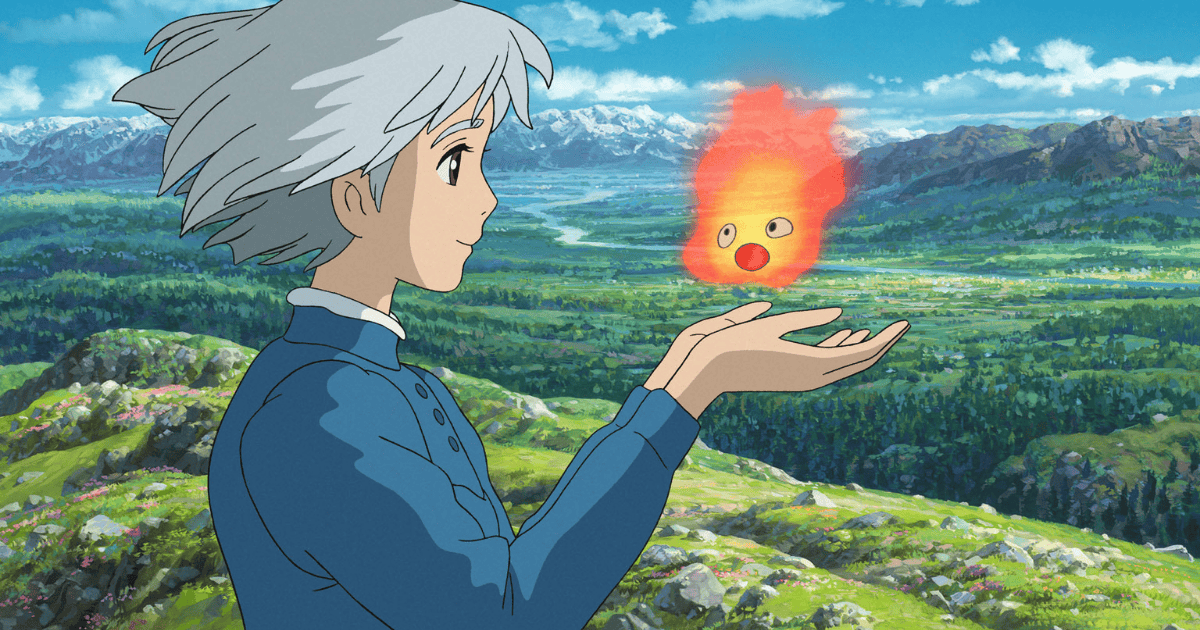
When Hayao Miyazaki’s Howl’s Moving Castle(Official Studio Ghibli Website) opened in 2004, I remember much of the conversation centering on its Japanese leads, Chieko Baisho and Takuya Kimura. Before seeing it, I was highly skeptical of those choices. Afterward, my verdict was simple: “Perfect.”
People around me changed their minds about Howl, but were less convinced by Sophie. Personally, I thought both performances were perfect.
This is Part 2 of “The Melancholy of Men,” a series about Miyazaki’s male characters. Last time, I considered Porco’s struggle to avoid being captured. Here, I’ll look at things from the other side.
Read Part 1: Porco Rosso: Why He Remains a Pig — The Melancholy of Men, Part 1
My subject is Sophie’s determination to “capture” those around her, and what that reveals about the melancholy of men. What sort of sorrow do I see in this film?
*This is a translated version. The original (Japanese) is available here.
- Sophie Creates a New Family
Howl’s Moving Castle can be read as the story of a woman who loses hope in her family and builds a new one. Through the “magic of a kiss,” she captures Howl, the Witch of the Waste, Turnip Head, and Calcifer, and finally finds the freedom to live as herself. - The Captured Man and the Defeat of Male Pride
Sophie’s determination to capture Howl reveals what I call the “melancholy of the captured man.” The handsome charmer finally falls into her hands: his ideal of remaining uncaught has been defeated. In contrast to Porco Rosso, this film also suggests the happiness of letting yourself be caught.
On this pageContents
Howl’s Moving Castle: Sophie’s Determination and the Melancholy of Men
Sophie’s Captives and Her Disappointment in Her Family
Howl may be in the title, but Sophie is clearly the protagonist.
As the film begins, I get the impression that Sophie’s family life is not going well. At least for her, family does not seem to be something to cherish. The black smoke from the train, billowing before her as she works on a hat, expresses the darkness I see within her.
From that perspective, Howl’s Moving Castle is a story about making a new family.
The Witch of the Waste turns Sophie into an old woman at the beginning of the story. There may be several reasons she adjusts so quickly, but her conversation with her sister offers a clue. With so little confidence in her looks, perhaps she thinks, “I wasn’t that different to begin with.” Of course she was—but her opinion of herself seems to have been that low.
Above all, the transformation gives her a reason to leave her family behind. Perhaps that helps explain her composure: her birth family no longer seems to be something she wants to hold on to.
Toward the end, Sophie adds one person after another to her new family through the “magic of a kiss.” Let’s follow her captures in order.
Victim #1: Howl
The first person she captures with a kiss is Howl.
After witnessing the past of Howl and Calcifer, Sophie returns to the present to find Howl covered in wounds. She kisses him.

It is a touching scene, but, in the terms of my reading, this is where she captures him. However much he might struggle, Howl the charmer dies here. He belongs to Sophie forever.
The changing relationship between Sophie and Howl is also reflected in some of the film’s most memorable dialogue. For the original Japanese lines, English subtitles, and my interpretation of them, see the most memorable quotes from Howl’s Moving Castle.
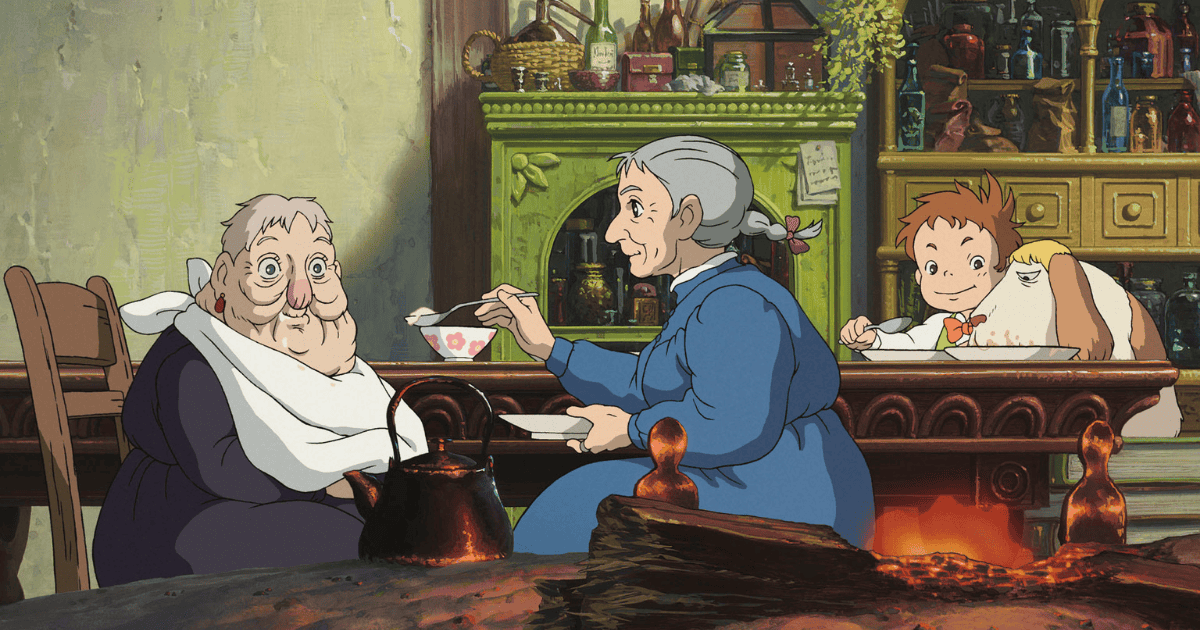
Victim #2: The Witch of the Waste
After the kiss, Sophie calmly asks the wounded Howl to take her to Calcifer. Still in his strange bird form, he slowly moves to carry her and Hin, Suliman’s dog, there. He has already been completely captured.
The Witch of the Waste is clutching Calcifer, determined not to let anyone take him. Sophie gently embraces her and persuades her to hand him over.
Then Sophie gives the Witch a gentle kiss.
Through this “magic,” the Witch not only joins Sophie’s family but has her fangs pulled as well. Without the kiss, she might have freed herself from Howl and taken a new path. Instead, she remains tied to his side.
Does Sophie resent the Witch’s attachment to Howl, yet dislike the idea of setting her free? You’re a little scary, Sophie.
Victim #3: Turnip Head
After retrieving Calcifer, Sophie returns Howl’s heart to him.
Freed from his contract, Calcifer leaves. What remains of the castle stops working, and Sophie ends up sliding toward a cliff on a single board. Turnip Head saves her.
She gives this silent hero a kiss too.
He changes form, revealing that he is a prince from a neighboring country who had been turned into a scarecrow.
It is an unexpected turn of events. Sophie already has Howl, and now she has won over a neighboring prince as well.
At least, the prince certainly seems interested.
What are you going to do now, Sophie?
Victim #4: Calcifer
After all that, Calcifer returns to her. He has finally gained his freedom, yet he comes back.
Sophie gives him a kiss too.

She has secured an important source of power without sacrificing anything—not a heart, not an eye.
Then Sophie and the others say goodbye to the troublesome world below and live freely aboard Howl’s Moving Castle—or perhaps we should call it Sophie’s Flying Castle.

On the ground, Sophie had seemed unable to make much headway. With a family of her own, perhaps she can finally spread her wings and live as herself. It is a happy ending, more or less. But are the people caught by her kisses enjoying themselves? Yes, surely they are. Let’s leave it at that!
The Man Who Gets Captured After All
Sophie has captured everyone she meets through the “magic of a kiss,” but Howl is the most important case.
This is the second installment of “The Melancholy of Men,” following my discussion of Porco.
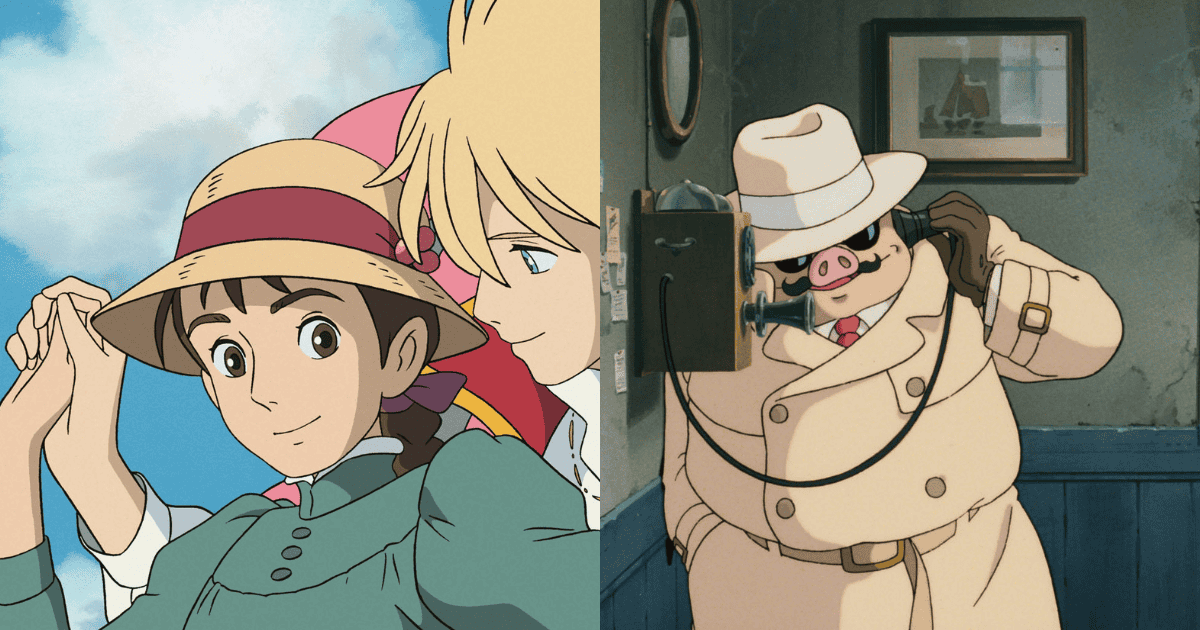
Porco Rosso depicts a man’s stubborn refusal to be captured. Howl’s Moving Castle can be read as showing the determination of the person doing the capturing.
There is something significant about the fact that even a charmer like Howl ends up captured by Sophie.
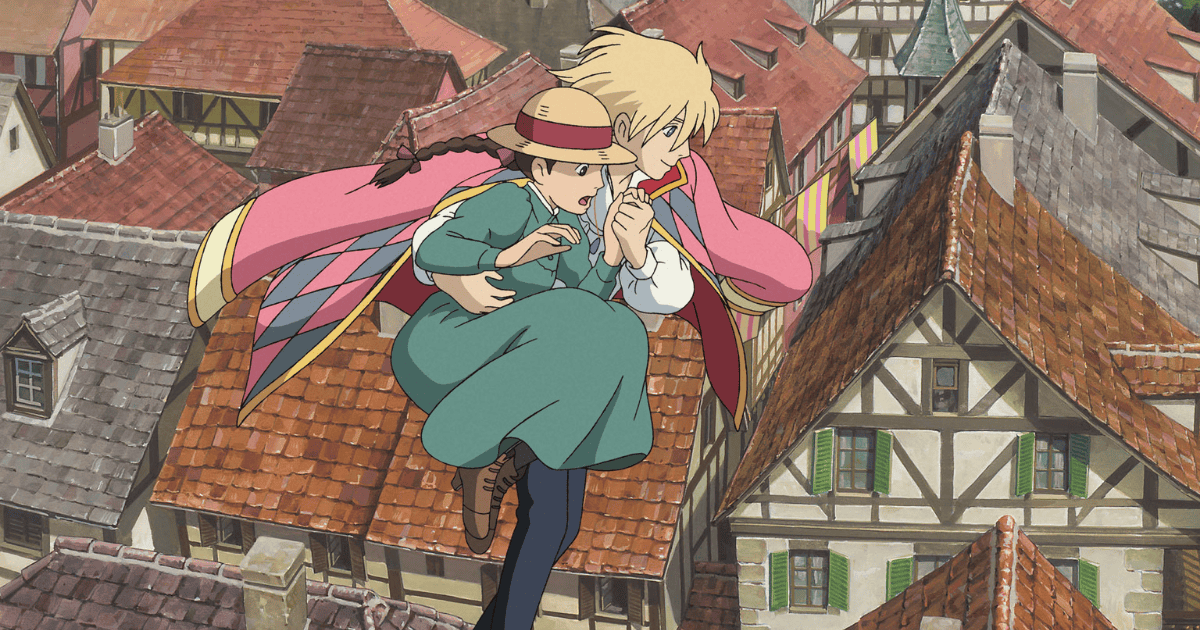
At the end, Howl stands with Sophie in their flying castle, showing none of Porco’s struggle to resist.
By presenting a charmer like Howl, the film hints at the ideal of a man who cannot be caught. Yet what it depicts, I think, is the happiness of being captured.
After all, isn’t the very existence of someone who wants to capture you a kind of happiness?
In Porco Rosso, the hero insists to the very end that he will not be caught. Howl’s Moving Castle seems to conclude, “Ah, so I get caught after all—and those days are happy too.” In other words, putting up a tough front gets you nowhere.
To me, Howl’s Moving Castle shows the melancholy of men who, however tough they act, still long for women.
The sorrow lies in the wish that remains: even so, they do not want to be captured. In that sense, Howl’s Moving Castle is a declaration of defeat. That is the shade of melancholy I see in it.
Though, in the end, all this is just a man boasting about the person who caught him.
The images used in this article are from the “Studio Ghibli Still Images” collection.
Can you name the movie before the scene comes into focus?
Put your visual memory to the test with a blurred Studio Ghibli scene.



Reader Comments