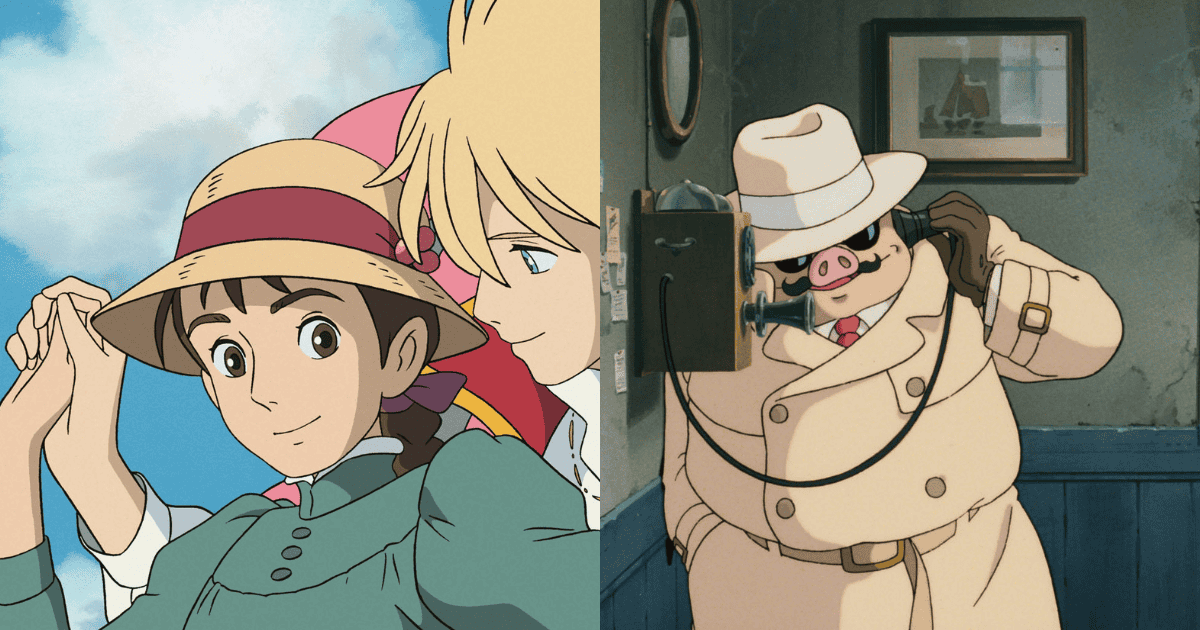
Howl’s Moving Castle(Official Studio Ghibli Website) is an animated feature directed by Hayao Miyazaki, released in 2004. I previously discussed the film as part of my Melancholy of Men series:
Read the related article: Howl’s Moving Castle: Sophie’s Determination to Capture Everyone
I see Porco Rosso, Howl’s Moving Castle, and Ponyo as three films about the melancholy of a man being captured. In the middle of that sequence, Howl tells the story of a handsome charmer who is caught quite beautifully.
Here, I want to consider one of the film’s most distinctive features: its protagonist becomes an old woman. I’ll use Porco Rosso as a point of reference. What do the two films have in common?
*This is a translated version. The original (Japanese) is available here.
- Becoming Old as a Way Out
Sophie’s transformation gives her a reason to leave the situation that has been holding her back and go to Howl. In my reading, she accepts becoming an old woman because it offers a way out of her dissatisfaction with family life. - Sophie and Porco: Rejection and Self-Acceptance
Both Sophie and Porco want to reject their circumstances, yet they also accept them to some extent. Sophie grows young in moments of self-affirmation; Porco appears human when, for a moment, he accepts the world around him. - Howl’s Appearance and Porco’s Inner Self
I read Howl’s conspicuous charm as a counterpart to Porco’s inner self. Comparing the two films leads to a rather amusing resemblance.
On this pageContents
Howl’s Moving Castle (2004) Analysis: The Mystery of the Old Woman
Sophie’s Puzzling Response to the Curse
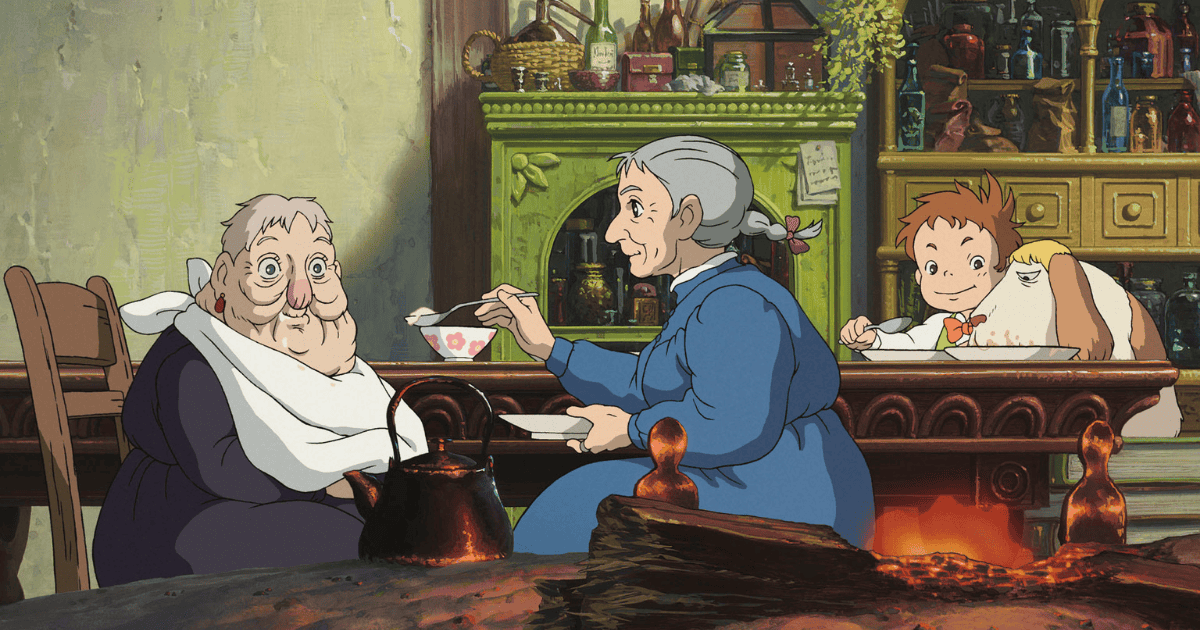
Perhaps the most puzzling thing in Howl’s Moving Castle is Sophie’s response after becoming old. The Witch of the Waste, who wants Howl for herself, transforms her into an old woman.
Something extraordinary has happened. Yet Sophie’s response is extraordinary too.
At first, she is upset by the change, but she quickly recovers her composure. Almost as a matter of course, she leaves her old life behind and goes to Howl.
In other words, although becoming old unsettles her, she also accepts it positively.
I think her family circumstances and her opinion of herself help explain why.
Sophie works to keep the hat shop her father left her going. Yet neither her sister nor her stepmother seems to value it very much.
She also seems to look down on her own “plain” appearance beside her sister, the shop’s attractive public face.
But Sophie does not seem to hate either her sister or her mother. What frustrates her, I think, is the situation created by all these things together.
Becoming an old woman finally gives her a reason to escape the circumstances that have bound her. So she heads for Howl, apparently untroubled.
Why Howl? Well, obviously she fell for him at first sight!
Porco Rosso’s Ironic Rejection of His Circumstances
We know another Miyazaki protagonist in much the same position: the hero of Porco Rosso.
Just as Sophie seems unconcerned by the crisis of becoming old, Porco seems unconcerned by being a pig. He even accepts it. It is as if he were saying, “Why get worked up over all this nonsense? Count me out.”
Porco survived the war while losing many comrades. The ordinary world may no longer have seemed so wonderful to him; perhaps it was something he wanted to reject. That he keeps living nonetheless may express human sorrow—or human strength.
Both characters, then, seem to want to reject their present circumstances. That already makes them similar, but there is another connection.
In Porco Rosso, there are two moments that suggest Porco is no longer a pig.
The first is seen through Fio’s eyes on the night before the duel. The second is through Curtis’s reaction afterward.
Sophie, too, repeatedly returns to her younger appearance in Howl’s Moving Castle. Her changes are easier to follow, so let’s use them to think about what happens to Porco.
Why Does Sophie Sometimes Become Young Again?
Self-Acceptance as a Momentary Acceptance of the World
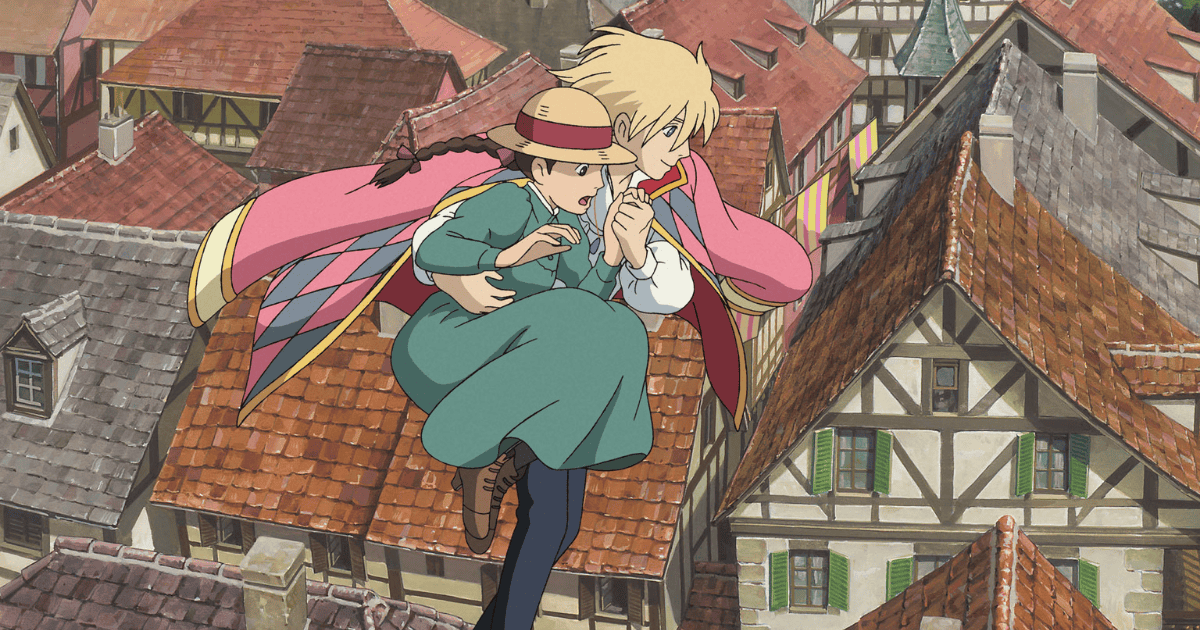
Sophie’s early returns to youth seem connected to moments when her spirits rise. Put another way, she becomes young when she feels that the world may not be so bad.
She also looks young while crying intensely. Even being able to let her feelings burst out like that may be a welcome change from the life she had before.
The corresponding moment in Porco Rosso, in my reading, comes after the duel with Curtis. Fio gives Porco a light kiss, and he briefly thinks, “Ah, perhaps this world isn’t so bad.”
But that feeling lasts only a moment. The world still does not look beautiful to them. Sophie soon becomes old again, rejecting reality, and I suspect Porco becomes a pig again too.
Perhaps, for a moment, they have also felt that being themselves is not so bad. The old woman and the pig can represent rebellion against the world that hurts them, but also rejection of the selves that cannot get along in it. In those moments, they may have accepted themselves a little.
That seems to give us an explanation. But Howl’s Moving Castle differs from the earlier film in one important respect: from a certain point onward, Sophie remains young.
Why Does Sophie Remain Young?
This is one of the film’s more puzzling features, but I think there is a way to explain it.
Sophie’s despair concerns her family. After arriving at the castle, she gains something like an ideal family.
To put it a little less kindly, she now has a family that needs her.
She had seemed to reject the whole world, but there was a particular thing she wanted to reject: her family situation. By turning the castle’s inhabitants into her own family, she gains a measure of satisfaction. That, I think, is why she remains young.
Yet one question remains. Sophie looks young again, but her hair is still white. Why?
The World She Still Wants to Reject
I read her white hair as a sign that she still wants to reject the world beyond the family she has made.
Becoming old lets her leave behind a situation she dislikes. By making the people she cares for into a family, she creates an immediate world she can accept. Yet she remains critical of the foolishness outside it—or simply wants to leave it behind.
That is how I explain the young Sophie’s white hair.
By keeping an appearance that differs from what this world considers normal, she can continue to express criticism and irony toward it.
Applying that reading to Porco Rosso, I would say that Porco briefly becomes human after the duel but ultimately takes to the skies as a pig again.
Does that make Sophie—and Porco—a little easier to understand? It makes sense to me, at least.
But one final question remains, this time about Howl. Why is he presented as such an irresistible man?
The Mystery of Howl’s Extraordinary Charm
So far, I have compared Sophie’s old appearance in Howl’s Moving Castle with Porco’s pig form in Porco Rosso.
Yet one character seems completely unlike anyone in the earlier film.
That is, of course, Howl.
No one in Porco Rosso is presented as quite so irresistible. Perhaps someone was, but certainly not as openly.
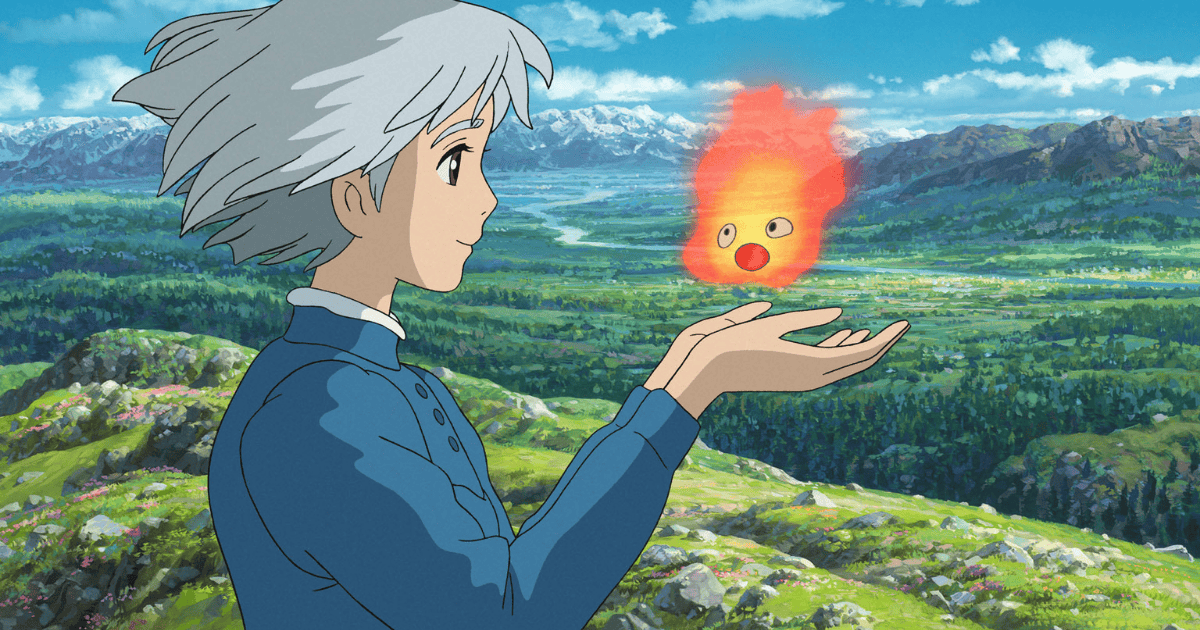
In Howl’s Moving Castle, the women who encounter Howl seem unable to forget him. Sophie is drawn to him, as are the Witch of the Waste and Madam Suliman.
If we continue comparing the films, what might Howl represent?
I think he represents Porco’s “inner truth.”
In other words, Porco may look like a pig, but inside he imagines himself to be a tremendous charmer.
Gina is not shown making a direct approach to Porco. Yet Porco, with Howl on the inside, may keep thinking, “You’re really in love with me, aren’t you?”
It is a foolish piece of male vanity. But didn’t you ever think something like that when you were young?
Conclusion
To bring these ideas together:
Sophie becoming old in Howl’s Moving Castle and Porco being a pig in Porco Rosso can be read as two sides of the same thing. Both live with dissatisfaction and irony toward their circumstances. Howl, meanwhile, may be Porco’s inner self made visible: inside, Porco is a charmer like him.
That is the connection I see.
If we also read Porco as Miyazaki’s alter ego, perhaps the director has an “inner Howl” too…
But that would make me sound needlessly like a critic, so let’s not go there.
The images used in this article are from the Studio Ghibli Still Images collection.
Can you name the movie before the scene comes into focus?
Put your visual memory to the test with a blurred Studio Ghibli scene.


Reader Comments