We have all experienced the agonizing, awkward sting of a childhood crush. In Hayao Miyazaki’s 1988 masterpiece My Neighbor Totoro(Official Studio Ghibli), that universal rite of passage is perfectly captured by Kanta, the shy farm boy hopelessly smitten with Satsuki. But does the film actually hide a definitive, tragic answer about their romantic future?
The secret to Kanta’s ultimate fate lies hidden in a seemingly random encounter: the young couple driving the passing farm truck. When Satsuki is desperately searching for the missing Mei, she stops this specific vehicle. From a narrative standpoint, it could have been an old farmer. It could have been a solitary driver. But Miyazaki deliberately chose to place a young couple in love right in front of her.
Why did this specific romantic imagery cross paths with Satsuki at the height of the film’s tension? Today, we are going to decode the bittersweet destiny of Kanta, exploring why his innocent childhood crush was likely doomed from the start.
*This is a translated version. The original (Japanese) is available here.
- The Awkward Agony of a Childhood Crush
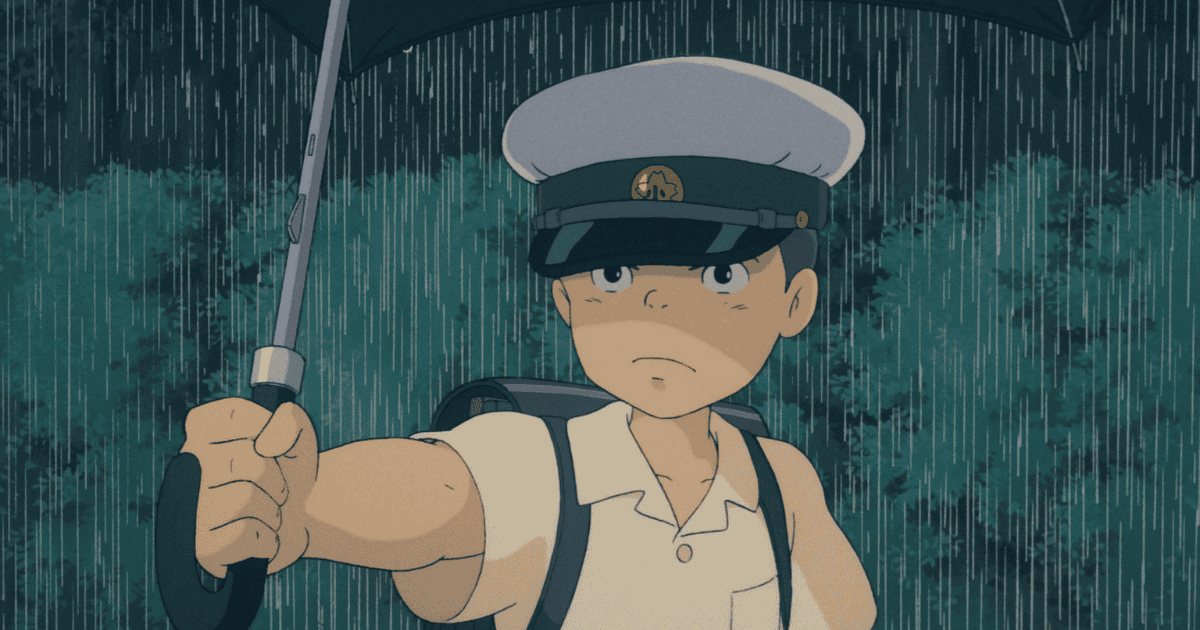
Kanta’s deep infatuation with Satsuki is broadcasted clearly through his intense staring, his defensive “haunted house” insult, and his heroic (yet clumsy) umbrella sacrifice. However, his sheer adolescence prevents him from ever truly bridging the emotional gap. - The Cruel Contrast of the Farm Truck Couple
Miyazaki intentionally contrasts the mature, helpful couple in the farm truck with the image of Kanta desperately struggling to pedal an adult-sized bicycle. This visual disparity hints at Kanta’s fate: they will only ever remain “friends.” - Hayao Miyazaki’s Own Unrequited First Love
The director’s deeply personal memories of an unfulfilled childhood romance heavily influence Kanta’s storyline, grounding the boy’s bittersweet trajectory in harsh, relatable reality rather than fairy-tale wish fulfillment.
On this pageContents
My Neighbor Totoro (1988) Analysis: Decoding Kanta’s Awkward Affection
To fully understand Kanta’s tragic trajectory, we must first establish the undeniable premise: Kanta is head-over-heels in love with Satsuki. While this is a widely accepted fan interpretation, breaking down the specific directorial choices makes his infatuation impossible to ignore.
The “Love-at-First-Sight” Stare
The very first time Kanta lays eyes on Satsuki is during the opening sequence when her father greets the locals working in the rice paddies.
In that brief moment, Kanta is caught staring intently at her. It is the classic cinematic hallmark of love at first sight.
While the young boy himself might not possess the emotional maturity to understand the sudden butterflies in his stomach, from an objective storytelling perspective, Kanta is instantly captivated.
The Classic “Haunted House” Insult
When you think of Kanta, his iconic, taunting line immediately comes to mind: “Your house is a haaauuunted hooouse!” He shouts this defensive barb when forced to visit Satsuki’s home on an errand for his mother.
This is playground psychology 101. He resorts to teasing the girl he likes because he is utterly unequipped to handle his own vulnerability. He likely walked away kicking himself, not fully understanding why he blurted out something so rude.
Kanta’s insult is extremely simple in the English subtitle, but its childish rhythm and emotional purpose become clearer when it is compared with the original Japanese. See the Japanese line, romanization, English subtitle, and literal translation in our analysis of “You live in a haunted house!” from My Neighbor Totoro.
This theory is proven during their very next interaction. When face-to-face with Satsuki again, Kanta is completely paralyzed by silence. His internal emotional compass is spinning wildly out of control.
The Heroic Sacrifice of a Busted Umbrella
The emotional turning point arrives on a rainy school day. Satsuki is stranded at a roadside shrine, burdened with the unexpected responsibility of looking after a soaked, exhausted Mei.
Enter Kanta, trying his absolute hardest to be a gentleman.
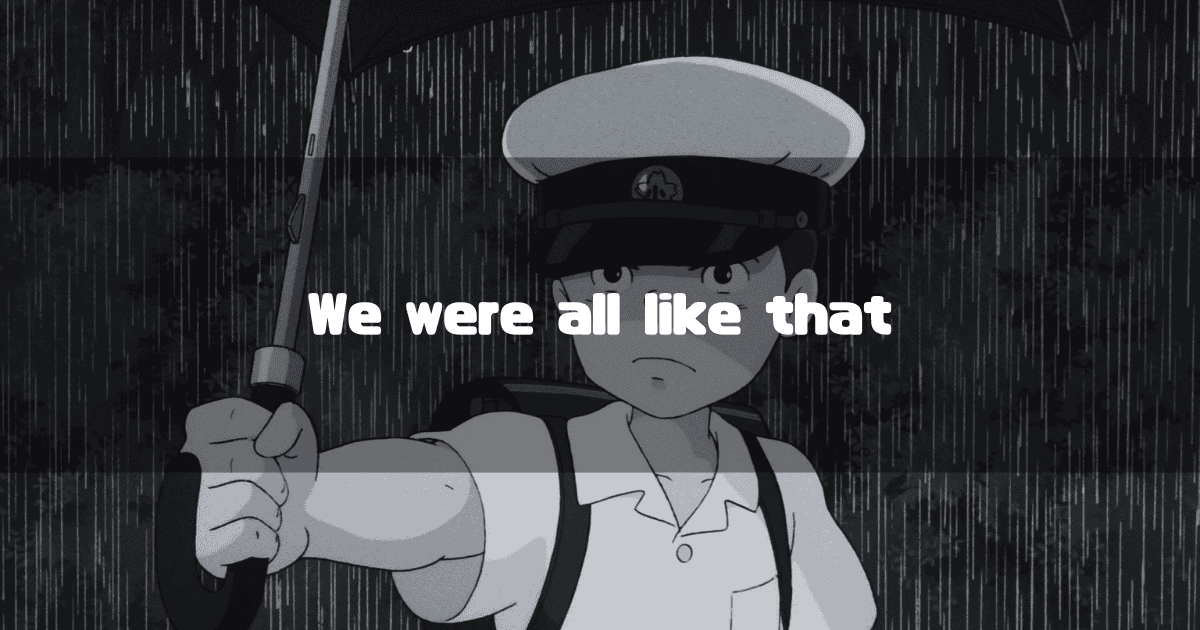
Without making eye contact, he aggressively shoves his umbrella at Satsuki with a gruff, panicked “Nn! Nn!” before sprinting home in the pouring rain. Basking in the secret glory of his chivalry, he is still too embarrassed to confess the truth to his mother, instead feeding her the bold lie that he simply “forgot” his umbrella.
Lending a battered, hole-ridden umbrella might seem like a clumsy gesture. But for Satsuki, it was a profound lifeline.
Satsuki is a child forced to play the role of an adult—managing a household, worrying about her hospitalized mother, and acting as a surrogate parent to Mei. School is supposed to be her sanctuary, her only time to just be a kid. When Mei unexpectedly shows up and the rain starts pouring, Satsuki is pushed to her emotional breaking point.
In that dark moment, Kanta’s clumsy act of kindness essentially saves her. He did exactly what needed to be done, asking for absolutely nothing in return. Good job, Kanta.
The Silent, Infinite Distance
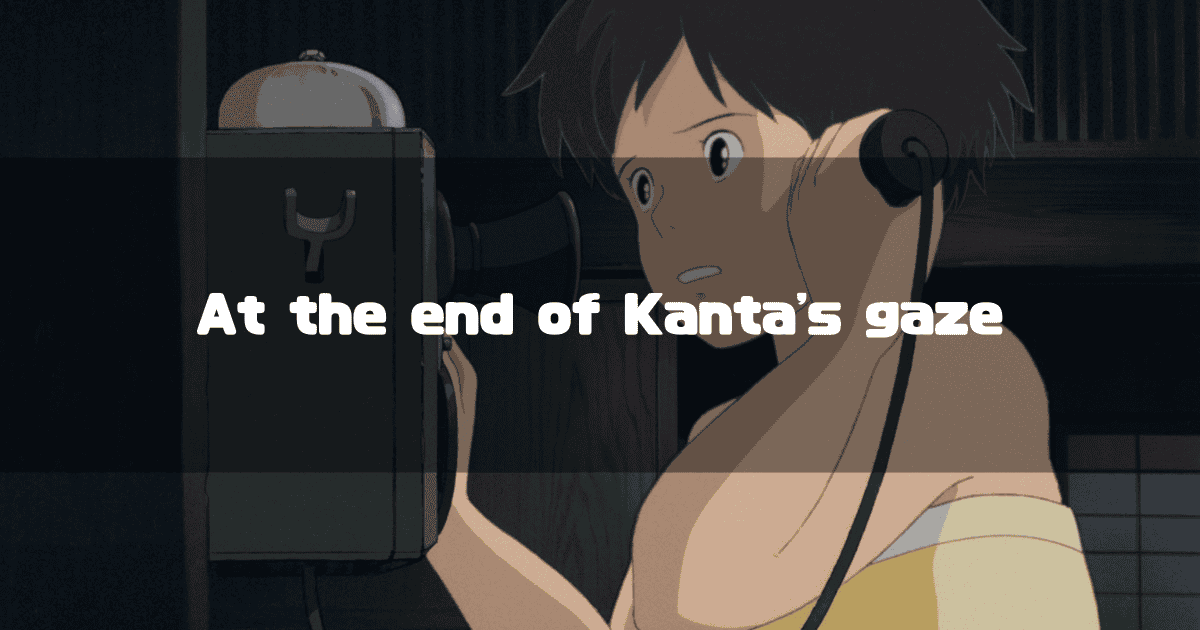
The final, most poignant depiction of Kanta’s affection occurs when Satsuki is desperately using the neighbor’s telephone to contact her father regarding a telegram from Shichikokuyama Hospital.
Kanta stands in the background, keeping a distinct physical distance while watching her intently.
Naturally, he is deeply worried about her family crisis. Yet, Miyazaki also animates Satsuki wearing a tube top that exposes her upper back. It is highly probable that Kanta, an adolescent boy, is grappling with a confusing mixture of genuine empathy and newly awakened, awkward attraction. You might call it inappropriate for the situation, but it is brutally honest human nature.
What makes this scene truly devastating, however, is the spatial framing. The physical distance between a paralyzed, helpless Kanta and a panicking Satsuki represents their insurmountable emotional gap. He desperately wants to comfort her, but the distance feels infinite.
As the audience, we desperately want him to close that gap. But the harsh reality of Miyazaki’s script dictates a sadder ending: he never will.
My Neighbor Totoro (1988) Foreshadowing: The Bittersweet Reality of First Love
The Devastating Symbolism of the Farm Truck Couple
To understand why Kanta’s love is ultimately unrequited, we must analyze the seemingly random couple in the farm truck.
From a purely functional standpoint, Satsuki just needed to ask a passerby if they had seen Mei. Miyazaki could have drawn a kindly old grandmother or a solitary mailman. There was absolutely no narrative requirement for the driver and passenger to be a young couple in love.
Therefore, their presence is a deliberate, symbolic choice. They serve as a harsh, cinematic contrast to Kanta.
Immediately after Satsuki interacts with this mature, functioning romantic couple, she crosses paths with Kanta. And how is Kanta depicted? He is sweating profusely, standing up to violently pedal an adult-sized bicycle that is far too big for him. While his sheer grit and determination to help find Mei are admirable, visually, he looks like a struggling child desperately trying to fill an adult’s shoes.
It is a merciless juxtaposition. The film silently communicates a harsh reality: Kanta is simply too immature, and his feelings will never blossom into a real romance with Satsuki.
This is confirmed during the film’s end credits. The illustrations clearly establish their future dynamic as strictly platonic “friends.” Much like Sugimura’s doomed crush on Shizuku in Whisper of the Heart, Kanta will always carry a quiet torch for Satsuki, but those feelings will remain forever unrequited.
Does this sound like I am reading too much into a children’s cartoon? Perhaps. But there is a piece of real-world evidence that strongly supports this tragic interpretation.
Director Hayao Miyazaki’s Own Unrequited First Love
Toshio Suzuki, the legendary producer and mastermind behind Studio Ghibli, once shared a deeply personal anecdote about Miyazaki. It happened while they were scouting locations to build their new studio in Koganei (Reference: Studio Ghibli’s Location Was Near Hayao Miyazaki’s First Love’s House… Producer Suzuki Reveals Secret Episode(in Japanese)).
While walking through Koganei, Miyazaki suddenly pointed out a specific house—it belonged to his very first love. He confessed to Suzuki that the romance was entirely unrequited. Rather than laughing it off as a brief nostalgic memory, a deeply moved Miyazaki silently trudged all the way to Musashi-Sakai Station, completely lost in the ghosts of his past.
This anecdote doesn’t imply that the legendary director is still actively mourning a childhood crush; rather, it proves that he recalls the visceral sting of unrequited love with crystal-clear emotional clarity.
When an auteur with that kind of emotional memory sits down to write a character like Kanta, what will he draw? Will he draw a sanitized, fairy-tale ending where the boy gets the girl? Or will he draw the messy, unchangeable, unrequited reality that he himself experienced?
When you combine Miyazaki’s personal history with the deliberate visual of the mature couple in the truck, the pessimistic conclusion becomes undeniable. Kanta’s love will remain a secret, bittersweet memory. But then again, isn’t that how first love ends for almost all of us?
The images used in this article are from the “Studio Ghibli Still Images” collection.
Can you name the movie before the scene comes into focus?
Put your visual memory to the test with a blurred Studio Ghibli scene.

Reader Comments