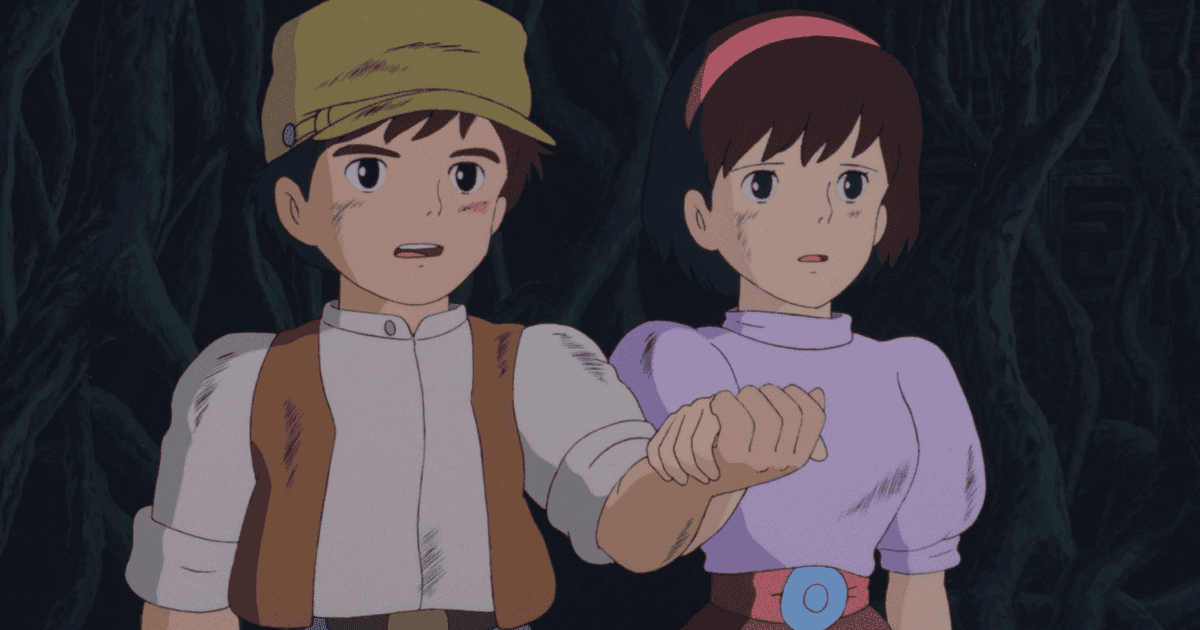
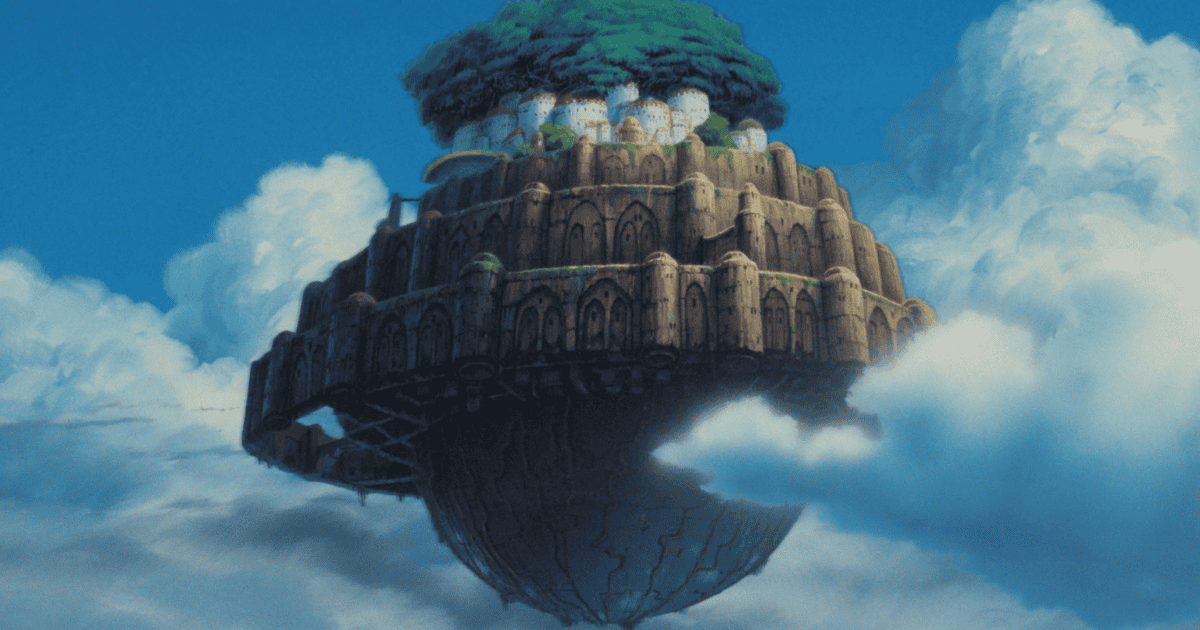
Castle in the Sky (Studio Ghibli Official) is a 1986 animated feature film written and directed by Hayao Miyazaki. It was released in Japan on August 2, 1986.
In this article, I have selected 19 of my favorite quotes from the film.
The dialogue in Castle in the Sky often becomes even more interesting when the original Japanese is compared with its English translation. For each quote, I will look at the Japanese line, its romanization, the English subtitle, a literal translation, and what the dialogue tells us about the characters and the story.
These are not necessarily the 19 most objectively famous lines in the film. This is a personal selection, and several of them are included simply because they have remained strangely fixed in my memory for years.
The film’s official English title is:
Castle in the Sky
An early English-language version released in the United Kingdom was titled Laputa: The Flying Island. Later Disney home-video releases used the shorter title Castle in the Sky, while “Laputa” remained the name of the floating island within the story.
Translation note: The English subtitle wording in this article is based on the commercially released Blu-ray available to the author. The English dub is discussed only where its wording creates a meaningful difference. Subtitle and dub wording may vary between releases and territories.
▼ Read the full story and analysis behind these quotes
On this pageContents
Pazu Quotes in Japanese and English
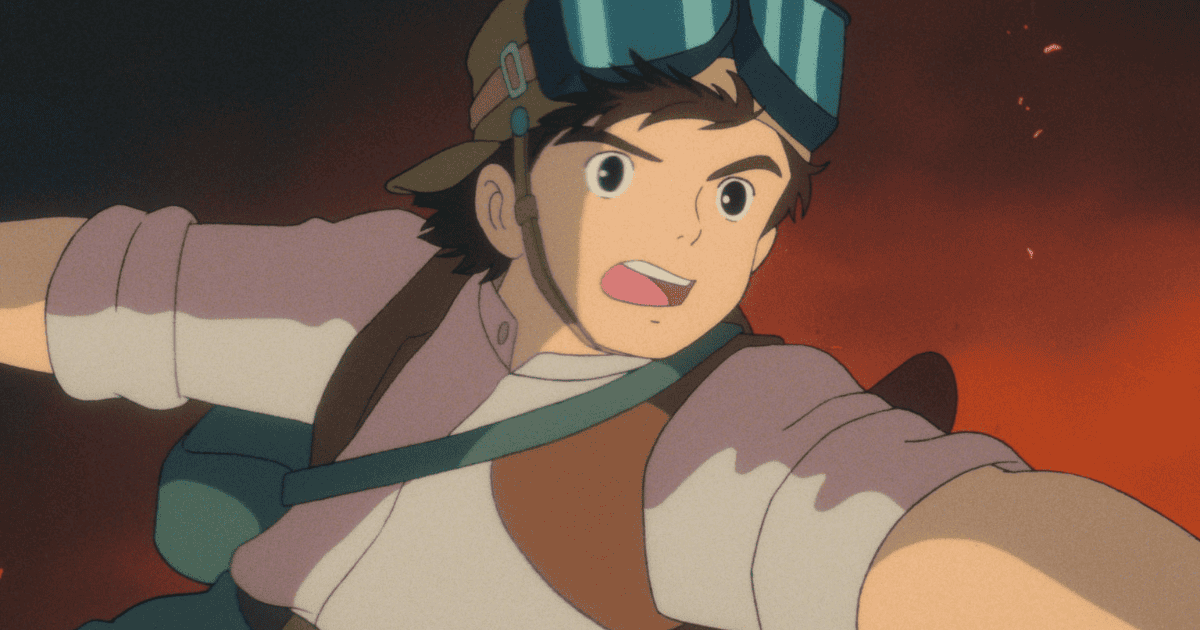
“My head’s harder than my boss’s fists.”
僕の頭は親方のゲンコツより硬いんだ。
Boku no atama wa oyakata no genkotsu yori katai n da.
My head’s harder than my boss’s fists.
My head is harder than my boss’s fist.
Read the Commentary and Analysis
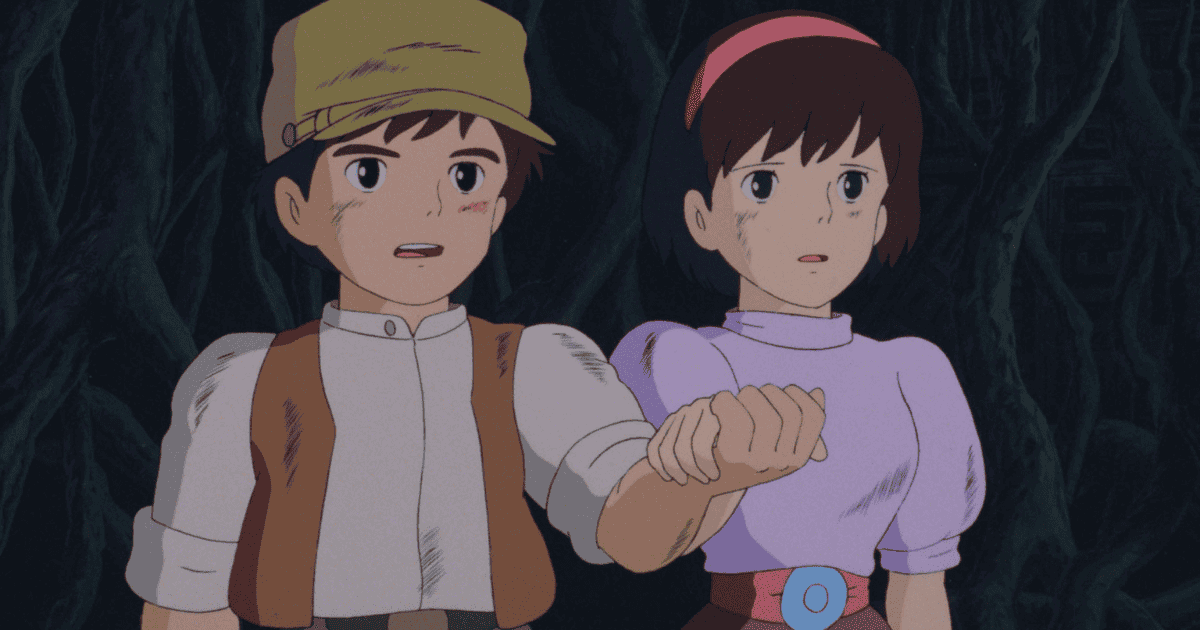
Pazu says this to reassure Sheeta after crashing to the floor while experimenting with her crystal.
On the surface, it is a cheerful display of courage. He is telling her not to worry because he can take a hit.
Look at the line from the opposite direction, however, and it also tells us that Pazu has apparently been struck by his boss’s fist often enough to make the comparison.
Pazu’s energy and optimism make it easy to overlook how difficult his daily life must have been. He lives alone, works late into the night in a dangerous mine, and seems to have endured a rather physical form of workplace discipline.
The subtitle follows the Japanese closely. The Japanese word genkotsu refers to a clenched fist and is often used specifically for a blow to the head given as punishment.
The joke therefore works because Pazu treats something potentially grim as though it were proof of his toughness.
“But my father never lied. I’m going to find Laputa!”
父さんは詐欺師扱いされて死んじゃった……。けど、ぼくの父さんはうそつきじゃないよ! 今、本物を作ってるんだ。きっとぼくがラピュタを見つけてみせる!
Tōsan wa sagishi atsukai sarete shinjatta… Kedo, boku no tōsan wa usotsuki janai yo! Ima, honmono o tsukutteru n da. Kitto boku ga Rapyuta o mitsukete miseru!
Until he died, they called him a liar. But my father never lied. I’m building a real plane. I’m going to find Laputa!
My father died after being treated like a fraud. But my father wasn’t a liar! I’m building a real one now. I’ll find Laputa myself!
Read the Commentary and Analysis
A devastating fact is dropped almost casually near the beginning of the film.
Pazu lets the darkness of his past slip out while speaking with Sheeta. He then immediately smiles and declares that he will find Laputa himself.
That ability to turn grief into determination is one of the qualities that makes Pazu such an admirable character.
I also find myself wondering when he last told anyone about his father’s humiliation.
He must have spent countless nights building his ornithopter alone, unable to speak openly about the injustice done to his father. Thinking about those years makes it difficult not to feel for him.
Perhaps the fact that he accidentally tells Sheeta so much is itself evidence that he has already begun to place extraordinary trust in her.
The subtitle reorganizes the Japanese sentence as “Until he died, they called him a liar.” That is not a word-for-word translation, but it expresses the situation in concise, natural English.
The Japanese phrase sagishi atsukai sareta is slightly stronger than simply being called a liar. It means that people treated him as a fraud or con man. The accusation did not merely challenge one story; it destroyed his reputation.
“When you fell from the sky, my heart was racing.”
君が空から降りてきたとき、ドキドキしたんだ。きっと、素敵なことが始まったんだって!
Kimi ga sora kara orite kita toki, dokidoki shita n da. Kitto, suteki na koto ga hajimatta n da tte!
When you fell from the sky, my heart was racing. I knew something wonderful had begun.
When you came down from the sky, my heart pounded. I thought something wonderful must have begun.
Read the Commentary and Analysis
Pazu had spent his nights building an aircraft and waiting for the day when he could clear his father’s name.
Those years could not have been easy. He worked long hours in a dying mining town, lived alone, and must have faced many nights when abandoning the entire dream seemed reasonable.
For Pazu, the girl who suddenly floated down from the sky was almost literally a gift from heaven.
Sheeta was not only a mysterious stranger. She was the first visible sign that the extraordinary world described by his father might be real.
That makes his determination to save her later in the film feel inevitable. She was both a person he cared about and the light that broke into an increasingly bleak life.
What would have happened to Pazu if Sheeta had not descended from the sky that night?
I do not particularly want to imagine it. In a strange sense, Dola’s decision to attack the airship may have become the greatest blessing of Pazu’s life.
The subtitle turns the Japanese sound-symbolic word dokidoki into “my heart was racing.” The English expression conveys both physical excitement and emotional anticipation without sounding childish.
“Laputa really does exist!”
その石はもう二度もシータを助けてくれたじゃないか! すごいぞぉ、ラピュタは本当にあるんだ!
Sono ishi wa mō nido mo Shīta o tasukete kureta janai ka! Sugoi zō, Rapyuta wa hontō ni aru n da!
It already saved Sheeta twice! Amazing! Laputa really does exist!
That stone has already saved Sheeta twice! This is amazing—Laputa really exists!
Read the Commentary and Analysis
This is the moment when Pazu’s belief in Laputa begins to become certainty.
Several enormous revelations arrive almost on top of one another:
- Uncle Pom recognizes the power inside Sheeta’s crystal.
- He explains that only the people of Laputa knew how to produce Volucite crystals.
- Sheeta reveals the secret name inherited by her family.
Because many of us have watched the film repeatedly since childhood, it is easy to forget how dramatic this sequence actually is.
For Pazu, these are not merely pieces of fantasy lore. They are successive confirmations that his father was telling the truth.
The English subtitle uses the auxiliary verb “does” in “Laputa really does exist.” This is emphatic rather than grammatically necessary. It expresses Pazu’s triumph over years of doubt and public ridicule.
“Just as Dad said. The wind’s blowing the other way.”
父さんの言ったとおりだ。向こうは逆に風が吹いている。
Tōsan no itta tōri da. Mukō wa gyaku ni kaze ga fuite iru.
Just as Dad said. The wind’s blowing the other way.
It is exactly as Dad said. Over there, the wind is blowing in the opposite direction.
Read the Commentary and Analysis
This is my personal favorite line in Castle in the Sky. I like it so much that I wrote an entire article about it:
The most important point is simple: Pazu never forgot his father.
His father’s face, his excitement after returning from the journey, and the details of what he had seen remained alive inside Pazu.
When Pazu recognizes the reversed wind, he is not merely applying useful meteorological information. He is hearing his father’s voice again.
For years, the rest of the world insisted that his father was a liar. At that moment, the sky itself confirms that his father had been right.
Good for you, Pazu.
The subtitle’s “the other way” is natural conversational English. A more direct rendering would be “in the opposite direction,” which is also used in some dubbed dialogue, but the subtitle sounds more like something a boy would say in a moment of discovery.
“Dad did it. He made it back.”
行こう、おばさん! 父さんの行った道だ! 父さんは帰ってきたよ!
Ikō, obasan! Tōsan no itta michi da! Tōsan wa kaette kita yo!
Let’s go! Dad did it. He made it back.
Let’s go, ma’am! This is the path my father took! My father came back!
Read the Commentary and Analysis
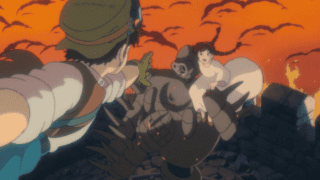
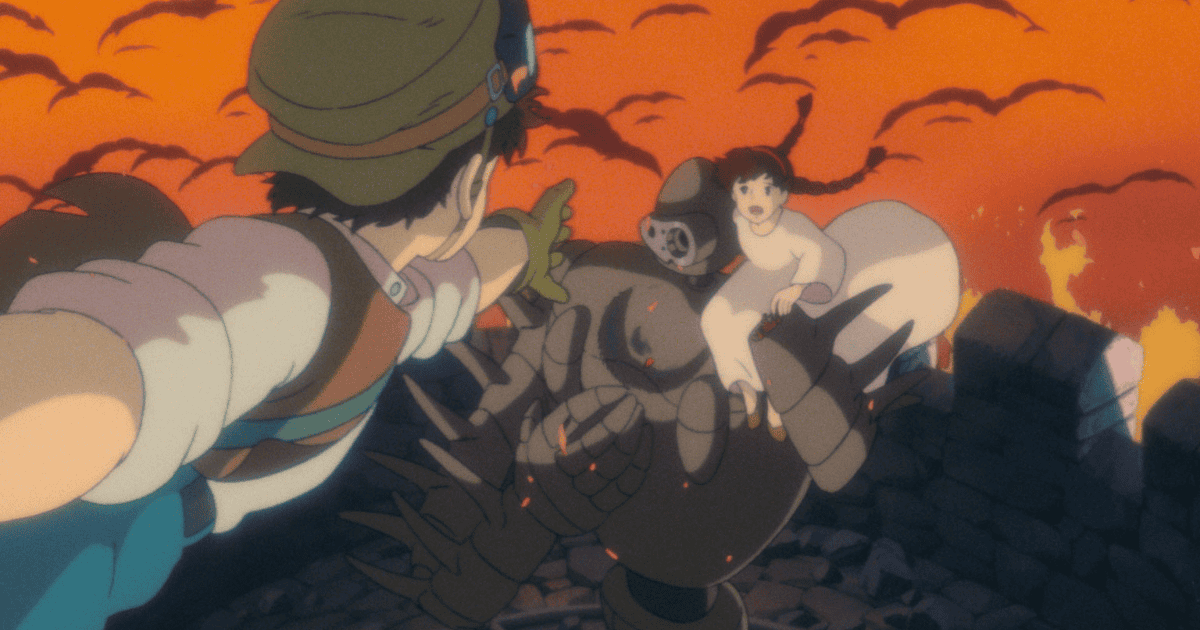
Immediately after this line, Pazu sees the image of his father inside the Dragon’s Nest.
It is almost certainly a vision rather than a literal supernatural encounter. Even so, in that moment, Pazu regains the father who had been taken from him.
What draws him into the storm is not simply the island hidden inside it. Somewhere within that storm lies the part of his father that society had dismissed and abandoned.
The story reaches an important dividing line here.
Until this point, Pazu’s journey has largely been a journey for himself: to vindicate his father and prove that Laputa exists.
After passing through the Dragon’s Nest and reaching the island, the journey becomes increasingly focused on Sheeta. He has found the truth he was seeking. His next task is to protect someone else.
The subtitle condenses the repeated references to the path and the return into “Dad did it. He made it back.” The phrase “made it back” implies successfully returning from a dangerous place, which is exactly what Pazu needs Dola to understand.
▼ Read more about Pazu’s age, voice actor, background, and character analysis
Sheeta Quotes in Japanese and English
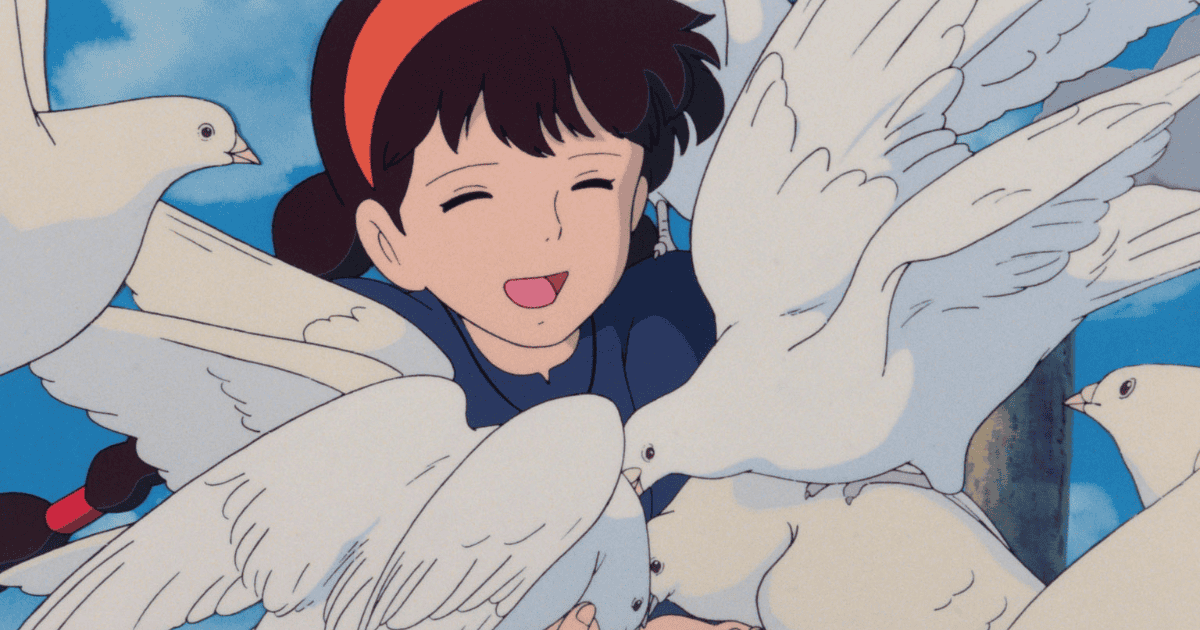
“My name is Lucita, Lucita Toelle Ur… Laputa.”
私の継いだ名は……ルシータ。ルシータ・トエル・ウル……ラピュタ。
Watashi no tsuida na wa… Rushīta. Rushīta Toeru Uru… Rapyuta.
My name is Lucita, Lucita Toelle Ur… Laputa.
The name I inherited is Lucita—Lucita Toel Ul Laputa.
Read the Commentary and Analysis
Sheeta had known how deeply Pazu cared about Laputa, yet she kept her secret inherited name hidden until after their meeting with Uncle Pom.
Revealing the name therefore represents more than the delivery of important information. It is the moment when Sheeta fully opens her heart to Pazu.
Pazu must have been astonished to hear the name of his father’s legendary island inside the identity of the girl he had just met.
Sheeta’s experience was no less extraordinary. She fell into the home of a boy she had never met and immediately found a photograph marked with the word “Laputa.”
It is difficult to imagine a clearer declaration that these two children were destined to meet.
The spelling of Sheeta’s inherited name varies between English materials. The subtitle used here renders it as “Lucita Toelle Ur Laputa,” while other English releases and reference materials use forms such as “Lusheeta Toel Ul Laputa.”
The Japanese pronunciation remains Rushīta Toeru Uru Rapyuta. These differences are transliteration choices rather than changes to her identity.
“You can’t survive apart from the earth.”
土に根をおろし、風と共に生きよう。種と共に冬を越え、鳥と共に春をうたおう。どんなに恐ろしい武器を持っても、たくさんのかわいそうなロボットを操っても、土から離れては生きられないのよ!
Tsuchi ni ne o oroshi, kaze to tomo ni ikiyō. Tane to tomo ni fuyu o koe, tori to tomo ni haru o utaō. Donna ni osoroshii buki o motte mo, takusan no kawaisō na robotto o ayatsutte mo, tsuchi kara hanarete wa ikirarenai no yo!
Put down your roots in the soil. Live together with the wind. Pass the winter with the seeds, sing in the spring with the birds. Your weapons may be powerful. Your pitiful robots may be many. But you can’t survive apart from the earth.
Put roots into the soil and live with the wind. Pass the winter with the seeds and sing of spring with the birds. No matter how terrible your weapons or how many poor robots you control, you cannot live separated from the earth.
Read the Commentary and Analysis
Sheeta delivers this speech while Muska holds her at gunpoint. It is perhaps the line most closely associated with the moral core of Castle in the Sky.
Whenever I hear it, I find myself wondering why the royal family originally abandoned Laputa and returned to the surface.
The complete lack of contact between Muska’s family and Sheeta’s family suggests that the royal descendants may already have been divided before or soon after leaving the island.
One possible interpretation is that Sheeta’s direct ancestors belonged to a faction that actively supported abandoning Laputa, while Muska’s ancestors wanted to preserve its power and someday restore it.
The confrontation in the throne room would then become a repetition of an ancient conflict.
Sheeta does not merely defeat Muska as an individual. She completes the decision made by her ancestors and finally ends the possibility of restoring Laputa as an empire.
The subtitle divides the Japanese sentence into balanced, almost biblical phrases. “Put down your roots in the soil” retains the central metaphor: human beings are like living plants and cannot survive when permanently severed from the ground that sustains them.
The word “pitiful” preserves Sheeta’s compassion for the robots. She does not describe them as evil machines. They are tragic beings being controlled and used by human ambition.
▼ Read more about Sheeta’s age, voice actor, background, and character analysis
Muska Quotes in Japanese and English
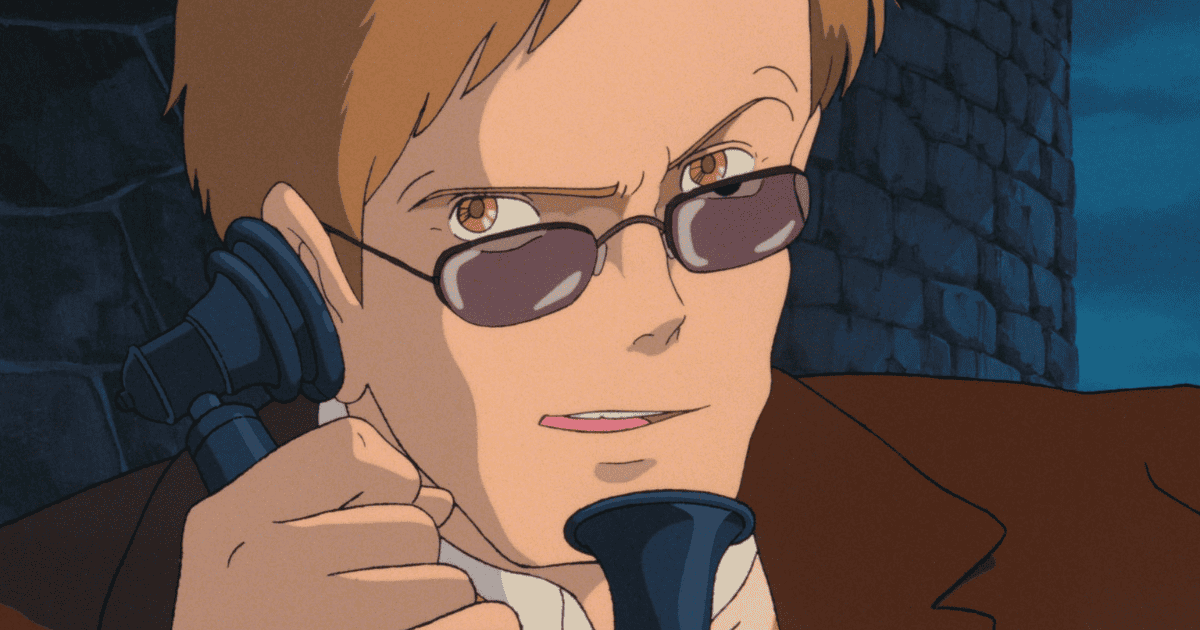
“Until he fell from the sky, no one believed Laputa was real.”
すさまじい破壊力を持つ、ロボットの兵隊だよ。こいつが空から降ってこなければ、誰もラピュタを信じはしなかったろう。
Susamajii hakairyoku o motsu, robotto no heitai da yo. Koitsu ga sora kara futte konakereba, dare mo Rapyuta o shinji wa shinakatta darō.
A mechanical soldier with vast destructive power. Until he fell from the sky, no one believed Laputa was real.
It is a robot soldier with tremendous destructive power. If this thing had not fallen from the sky, no one would have believed in Laputa.
Read the Commentary and Analysis
Turn Muska’s statement around, and it reveals something important about his own rise.
Because the robot fell from the sky, people finally began to believe that Laputa existed. That physical evidence must have allowed Muska to gain government support, military resources, and ultimately the rank and authority needed to pursue his ambition.
As discussed above, the royal family that descended from Laputa appears to have divided into separate branches.
Sheeta’s family inherited the crystal and the secret words. What Muska’s family inherited may have been something different: history.
Generation after generation, his ancestors may have preserved the knowledge that Laputa was real while the rest of the world dismissed it as myth.
Muska’s attempt to restore the kingdom must therefore have involved a long and lonely struggle before the robot finally provided undeniable proof.
I examine this possibility—and the mystery of why that particular robot fell from Laputa—in a separate article:
One of the great strengths of Miyazaki’s films is that even the villain can possess a history worth thinking about.
The English subtitle once again uses an “until” construction. Rather than mechanically following the Japanese conditional sentence, it creates a concise historical turning point: before the robot fell, nobody believed; after it fell, everything changed.
“Die, you insects!”
見ろ! 人がゴミのようだ! ハッハッハッハッハッハ……。
Miro! Hito ga gomi no yō da! Hahhahahahaha…
Die, you insects!
Look! People are like garbage! Hahahahaha!
Read the Commentary and Analysis
Many Japanese viewers probably remember looking down from a tall building as children and quietly repeating this line. I certainly do.
It is an exceptionally evil thing to say.
For Muska, however, other human beings were probably “garbage” long before he reached Laputa. He appears to regard even his closest subordinates as disposable tools, so ordinary soldiers and civilians must mean almost nothing to him.
That contempt creates his ultimate weakness.
In the final confrontation, Muska is only one reliable ally away from victory. A single person guarding his back or helping him control the children could have changed the outcome.
His complete inability to value or trust another human being leaves him alone at the exact moment when he most needs help.
The subtitle does not translate the garbage image directly. It replaces it with “Die, you insects!” The basic contempt remains, but the metaphor changes from worthless refuse to creatures beneath his notice.
Some dubbed versions reduce the moment to Muska’s laughter, losing one of the most famous phrases in the Japanese film entirely.
“My eyes! My eyes!”
目がぁー! 目がぁーぁぁぁぁぁぁぁ!
Me ga! Me gaaaaa!
My eyes! My eyes! I can’t see…
My eyes! My eyes!
Read the Commentary and Analysis
This is one of the defining lines of Castle in the Sky. Perhaps only “Be ready in 40 seconds” can compete with it in Japanese popular memory.
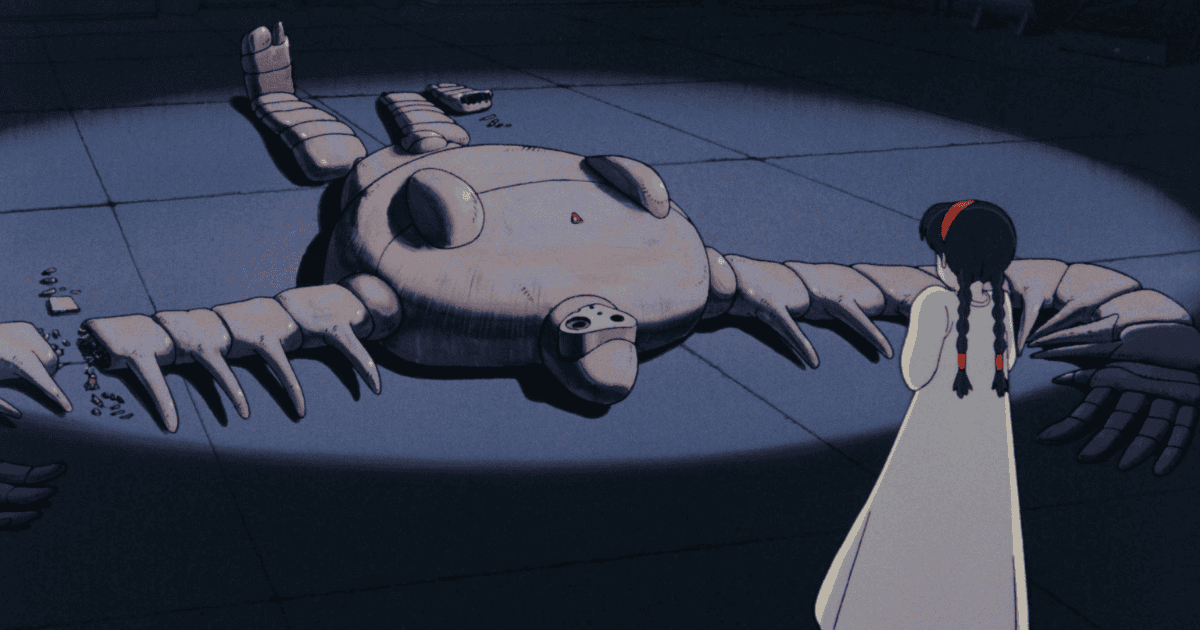
Shortly afterward, the lower structure of Laputa collapses and Muska falls into the sea with the debris.
If you watch the falling fragments carefully, Muska’s tiny body is actually visible among them.
Everyone should probably try to find him at least once in their life—although searching online now makes the challenge considerably less satisfying.
The subtitle adds “I can’t see,” which is not needed to understand the Japanese but makes the situation explicit for an English-speaking audience.
▼ Read more about Muska’s age, voice actor, background, and character analysis
Dola Quotes in Japanese and English
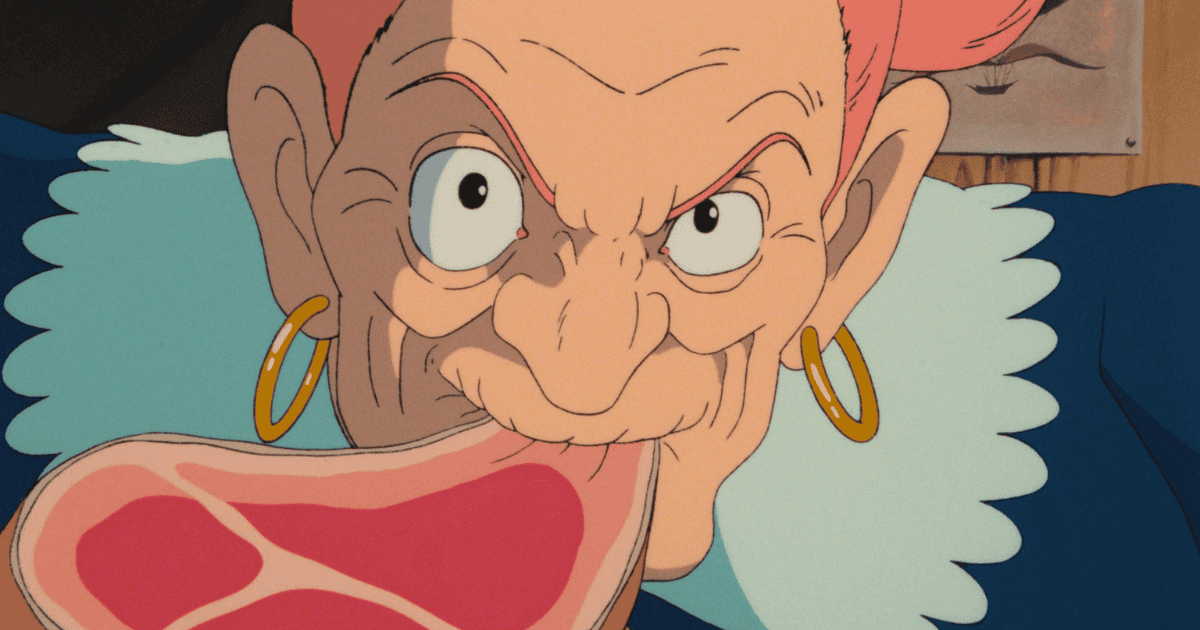
“Be ready in 40 seconds.”
40秒で支度しな!
Yonjū-byō de shitaku shina!
Be ready in 40 seconds.
Get yourself ready in 40 seconds!
Read the Commentary and Analysis
Alongside Muska’s description of people as garbage, this is probably the most famous line in the film.
I still do not know whether Pazu truly managed to complete every part of his preparation within exactly forty seconds.
Knowing Pazu, he probably did.
The English subtitle is admirably direct. The phrase contains no unnecessary explanation and preserves Dola’s absolute expectation that her order will be obeyed.
It also marks the moment when she accepts Pazu into the operation. Her kindness is expressed not through reassurance but by immediately giving him an almost unreasonable task.
“She steels her heart to save her man.”
泣かせるじゃないか。男を助けるためのつれないしぐさ。あたしの若い頃にそっくりだよ! お前たちも嫁にするなら、ああいう娘にしな。
Nakaseru janai ka. Otoko o tasukeru tame no tsurenai shigusa. Atashi no wakai koro ni sokkuri da yo! Omaetachi mo yome ni suru nara, ā iu musume ni shina.
She steels her heart to save her man. How touching. Reminds me of my youth. If you boys want to marry, look for one like her.
How moving. She acts cold in order to save the man she loves. She is exactly like me when I was young! If you boys take a wife, choose a girl like that.
Read the Commentary and Analysis
At first, this sounds like the sort of exaggerated joke an older person makes about their youth.
Later, however, the film reveals that Dola was apparently telling the truth. A portrait in her room shows that she was remarkably beautiful when she was young and strongly resembled Sheeta.
Look at the implication in the opposite direction, and it also means that Sheeta may someday resemble Dola.
There is nothing particularly wrong with that, of course. Still, the realization may cause some viewers to stare silently toward the heavens for a moment.
The phrase “steels her heart” is an effective translation of Sheeta deliberately behaving coldly toward Pazu. To “steel” oneself means to make oneself emotionally hard enough to endure something painful.
Dola understands immediately that Sheeta’s rejection is not cruelty. It is an act of protection.
“Pathetic. All that work, and only this to show.”
情けないじゃないか。さんざん苦労して、これっぱかしさ。
Nasakenai janai ka. Sanzan kurō shite, koreppocchi sa.
Pathetic. All that work, and only this to show.
How miserable. After all that trouble, this is all we have.
Read the Commentary and Analysis
Throughout the film, the Dola Gang fails to complete a single profitable operation successfully.
At the very end, however, they manage to preserve a few pieces of treasure and maintain at least some pride as pirates.
It was, admittedly, a form of looting during a catastrophe.
Still, I wonder whether the jewels were enough to cover the expenses they had accumulated since first pursuing Sheeta’s crystal.
Let us hope the expedition ended in profit.
The subtitle’s “only this to show” refers to the disappointing visible result of a great deal of labor, risk, and expense. It captures Dola’s frustration without needing to specify the treasure directly.
▼ Read more about Dola’s age, voice actor, background, and character analysis
Uncle Pom Quotes in Japanese and English
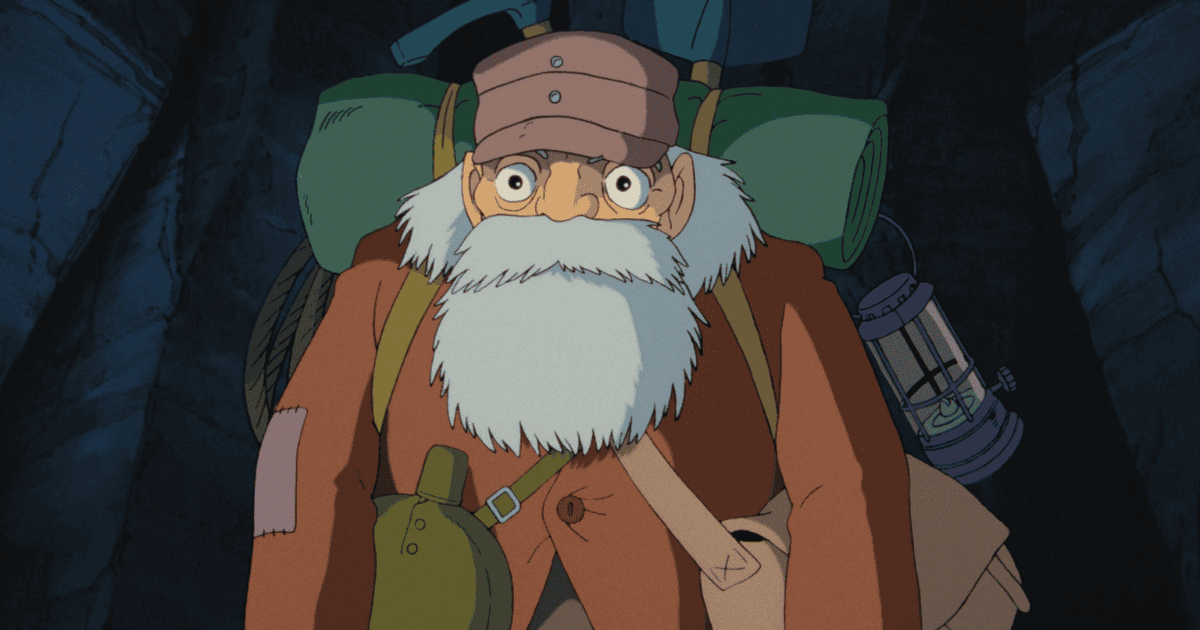
“Only Laputans knew how to make Volucite crystals.”
その昔、ラピュタ人だけが結晶にする技を持っていたと聞いたがなあ。
Sono mukashi, Rapyuta-jin dake ga kesshō ni suru waza o motte ita to kiita ga nā.
I thought only Laputans knew how to make Volucite crystals.
I heard that long ago, only the people of Laputa possessed the technique for turning it into a crystal.
Read the Commentary and Analysis
This is the only concrete testimony about Laputa that Pazu receives from someone other than his father.
Sheeta’s arrival, the mysterious crystal, and Uncle Pom’s knowledge finally give Pazu reasons to believe that go beyond his own loyalty to his father.
The decisive confirmation may still be Sheeta’s secret name, but Uncle Pom prepares the ground for it.
And who exactly is Uncle Pom?
I discuss that question in the appendix of my detailed article about Pazu and his father:
The subtitle calls the substance inside the rocks “Volucite.” The English dub instead uses more transparent terms such as “levitation stone” or “Levistone.”
“Volucite” is a fictional word and does not have an established dictionary definition.
I once wondered whether it might combine part of the name “Lucita” with another element, perhaps suggesting Lucita’s will or desire. I have not found an authoritative source confirming that theory, however, and the word may simply have been coined to evoke flight or levitation.
For now, its precise linguistic origin remains uncertain.
“A stone so powerful brings happiness, but it also often brings misery.”
力のある石は人を幸せにもするが、不幸を招くこともようあることなんじゃ。
Chikara no aru ishi wa hito o shiawase ni mo suru ga, fukō o maneku koto mo yō aru koto nan ja.
A stone so powerful brings happiness, but it also often brings misery.
A powerful stone can make people happy, but it can also frequently invite misfortune.
Read the Commentary and Analysis
This line could almost serve as a summary of Castle in the Sky itself.
The ancient Laputans must eventually have learned the same lesson through catastrophe.
The decision made by the old royal family to abandon such extraordinary power was remarkable.
I do not think I would have been capable of giving it up so completely. Their suffering must therefore have been enormous.
The film’s opening images show us a broad outline of the rise and collapse of the airborne civilization. I cannot be the only person who thinks that the complete history of that disaster could become an extraordinary film of its own.
The English subtitle uses the verb “brings” for both happiness and misery. This treats the stone not as something that directly manufactures emotions, but as a force that carries consequences into people’s lives.
▼ Read more about Uncle Pom’s voice actor, background, and character analysis
Henri Quote in Japanese and English
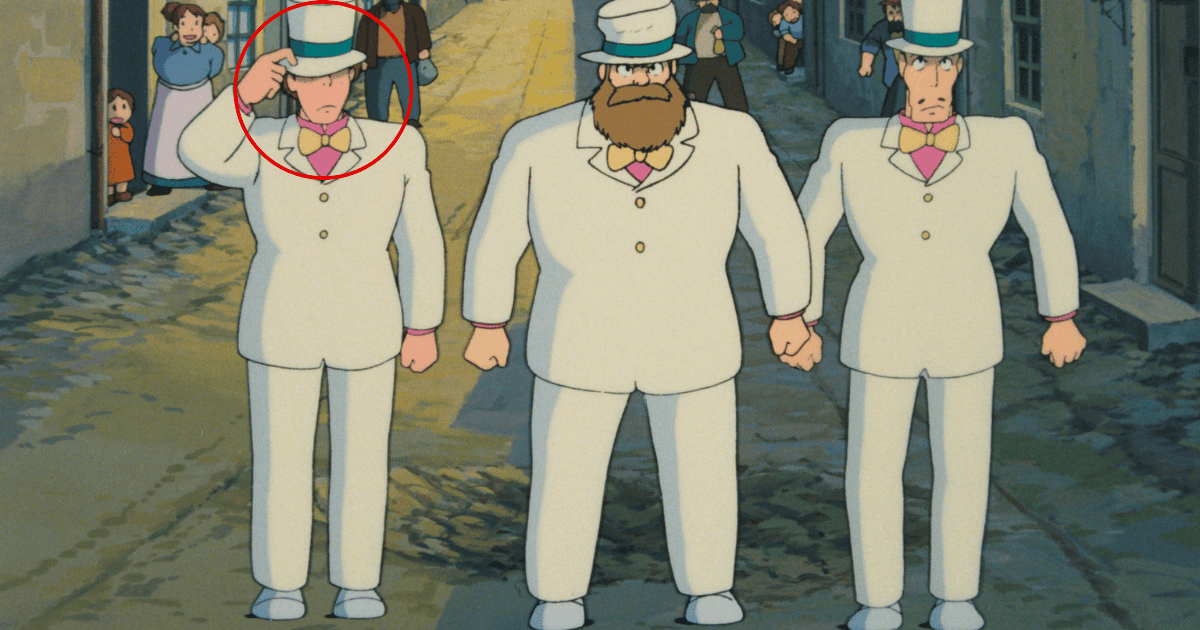
“We want the crystal, not the girl.”
嫁はいらねぇ、飛行石さ!
Yome wa iranē, hikōseki sa!
We want the crystal, not the girl.
We don’t need a bride. It’s the Levistone we want!
Read the Commentary and Analysis
This is a wonderfully direct line for a sky pirate.
It also tells us something about the Dola Gang. However foolish they may sometimes appear, they are a professional group with a clear objective.
The Japanese word yome literally means a bride or wife. Henri is responding to Pazu’s determination to rescue Sheeta and rejects the romantic implication: they are not looking for a wife; they want the stone.
The subtitle replaces “wife” with “girl.” That is less literal, but considerably more natural in the immediate English conversation.
“We don’t want a wife, but the stone” would preserve the individual words while sounding as though the entire pirate gang were collectively shopping for a spouse.
The subtitle therefore sacrifices the joke’s exact wording in order to preserve the practical contrast.
▼ Read more about Henri’s voice actor, background, and character analysis
Louis Quote in Japanese and English
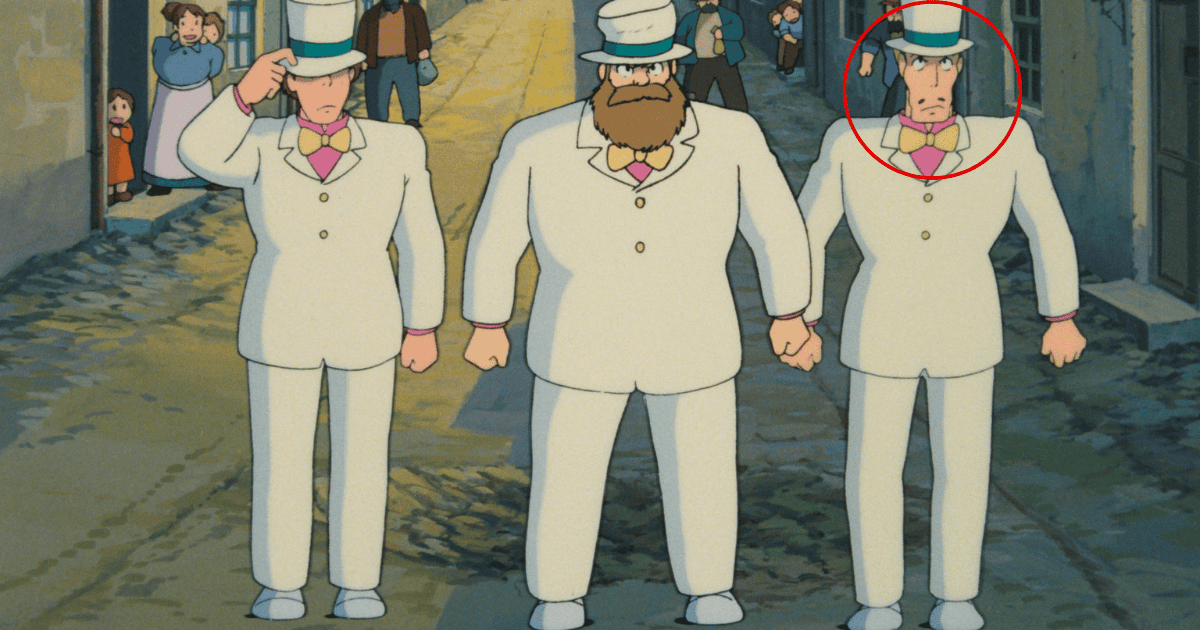
“Beautiful…”
いい……。
Ii…
Beautiful…
Nice…
Read the Commentary and Analysis
Henri may insist that the gang wants the crystal rather than a bride, but Louis is defeated almost instantly when he sees Sheeta in Dola’s clothing.
Eventually, of course, every member of the Dola Gang becomes equally fond of her.
Such is the power of a princess from the royal family of Laputa.
The Japanese word ii is deliberately vague. Depending on the situation, it can mean good, nice, attractive, or desirable.
The subtitle chooses “Beautiful,” making Louis’s immediate attraction explicit. Some dubbed versions use the simpler “Good,” which is closer to the individual Japanese word but less natural as a reaction to Sheeta’s appearance.
▼ Read more about Louis’s voice actor, background, and character analysis
Okami Quote in Japanese and English
“Who’s going to mend that shirt?”
誰がそのシャツを縫うんだい。
Dare ga sono shatsu o nuu n dai.
Who’s going to mend that shirt?
Who is going to sew that shirt?
Read the Commentary and Analysis
There is no particularly profound philosophy hidden in this line. Even so, it has always remained in my memory.
The boss hesitates for a fraction of a second after hearing it and immediately receives the first blow of the fight.
That punch may have been thrown by Charles, but spiritually, it belonged to Okami.
The Japanese verb nuu literally means to sew. The subtitle uses “mend” because the shirt has already been torn and now needs to be repaired rather than created from new fabric.
It is a small but precise translation choice.
▼ Read more about Okami’s voice actor, background, and character analysis
My Three Favorite Castle in the Sky Quotes
Those are the 19 lines I personally selected from Castle in the Sky.
My own top three are:
- “Just as Dad said. The wind’s blowing the other way.”
- “Die, you insects!”
- “Be ready in 40 seconds.”
The first expresses the emotional completion of Pazu’s long effort to vindicate his father.
The second captures Muska’s terrifying contempt for humanity, even though the subtitle replaces the Japanese garbage metaphor with insects.
The third reveals Dola’s entire personality in five words: decisive, unreasonable, and ultimately willing to give Pazu his chance.
Which quote from Castle in the Sky has stayed with you?
The images used in this article are from the Studio Ghibli Works Still Image Collection.
Can you name the movie before the scene comes into focus?
Put your visual memory to the test with a blurred Studio Ghibli scene.
Reader Comments