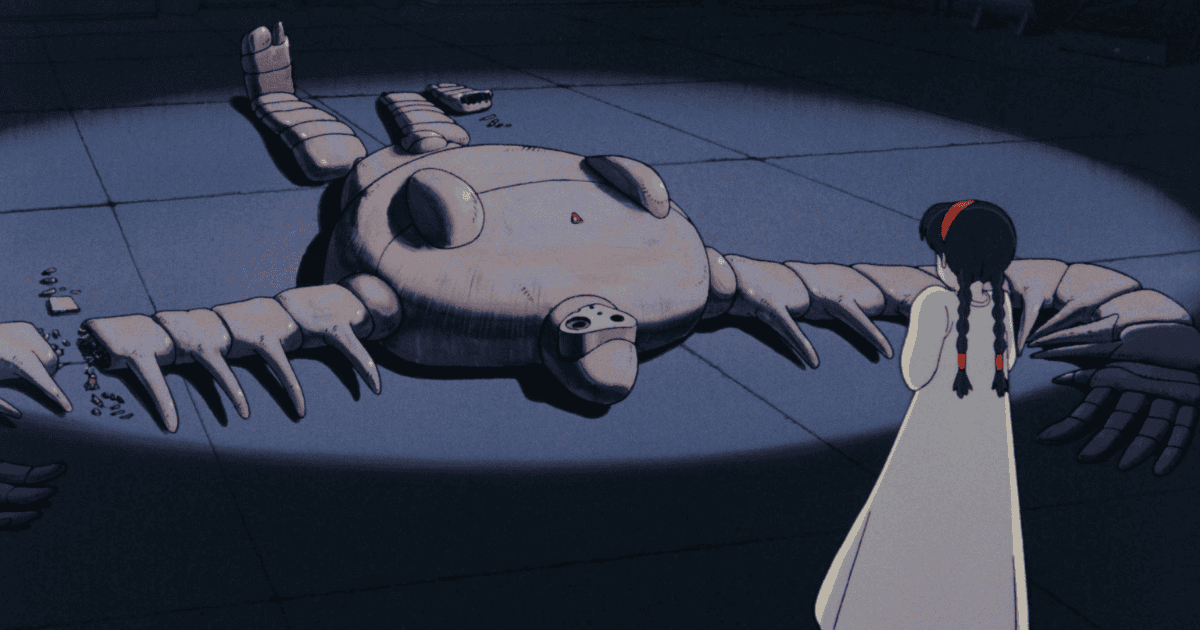
In Hayao Miyazaki’s Castle in the Sky(Studio Ghibli Official), a massive, seemingly invincible robot plummets from the heavens, setting the entire military into a frantic frenzy. But have you ever stopped to ask *why* this specific machine fell to Earth in the first place? It is a subtle detail woven so naturally into the 1986 cinematic masterpiece that most viewers completely overlook the mystery of its fatal descent.
Consider the facts: the moss-covered gardener robots Pazu and Sheeta later encounter on Laputa are still functioning, as are the terrifying combat drones securely stored in the city’s depths. So, what triggered that singular robot to fall from the sky? Today, I want to explore this lingering plot hole and unpack the profound narrative weight behind a machine crashing into the human world.
*This is a translated version. The original (Japanese) is available here.
- The Sole Guardian of Laputa’s Seal
The robot that crashed to Earth had completely drained its energy reserves. I believe its specific directive was to protect Laputa’s seal, and it catastrophically failed while attempting to intercept the first human to ever breach the storm: Pazu’s father. - Sheeta as Pazu’s “Spider’s Thread”
Sheeta descending from the sky served as a vital lifeline—a “spider’s thread” of hope—for Pazu. Her sudden appearance gave him the tangible proof he desperately needed to vindicate his disgraced father, bringing light back to his grueling daily life. - The Robot as Muska’s Ultimate Vindication
Generations of Muska’s family clung to their secret royal lineage, likely mocked or ignored by the rest of the world. The crashed robot provided the definitive “physical evidence” that validated their history, instantly igniting Muska’s dormant, terrifying ambition.
On this pageContents
The Mechanical Mystery: Why Did the Robot Trooper Fall?
Running on Empty: The Energy Depletion Theory
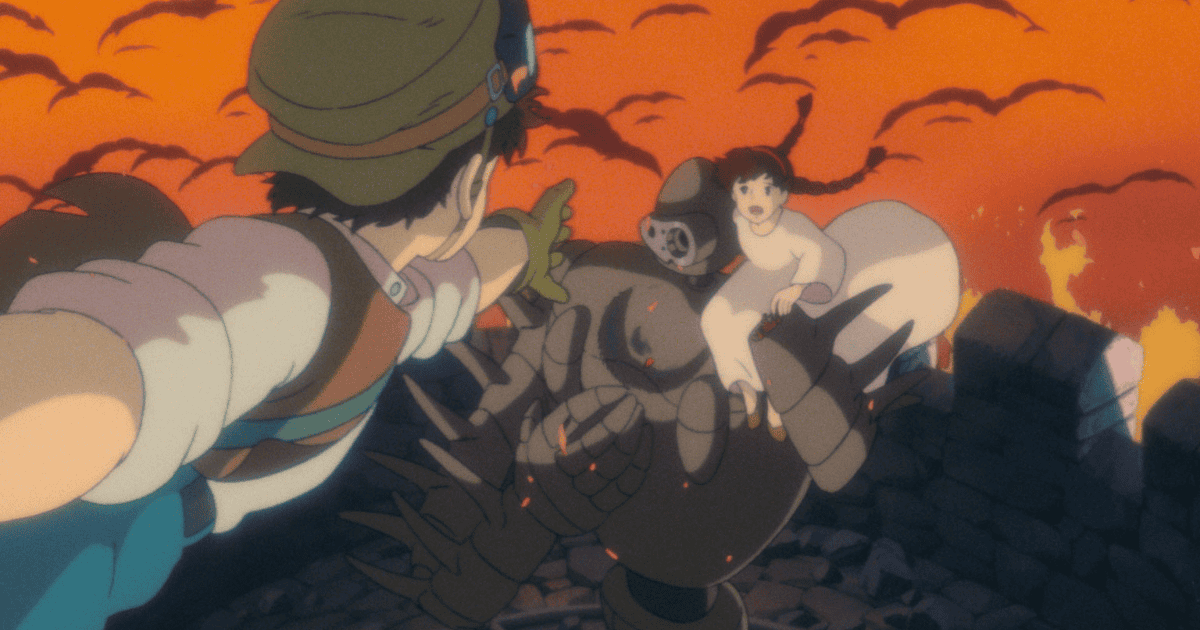
To unravel this mystery, we must look at the crucial scene where the dormant robot suddenly awakens upon receiving a pulse of energy from Sheeta’s Levistone. This violently implies that the machine’s internal power reserves were entirely depleted. Therefore, it is highly logical to assume the robot didn’t simply break from the impact of hitting the ground; it fell because its battery died mid-flight.
While that answers the *how*, it doesn’t answer the *what*. What exactly was this combat robot doing back on Laputa that caused it to drain all its energy?
The Sole Guardian of the Sealed City
When Pazu and Sheeta first arrive on Laputa, they are greeted by a gentle gardener robot. That unit, unlike the combat models, has been endlessly performing basic maintenance on the abandoned ruins for centuries. Tragic as it is, we see other gardener robots scattered around that have permanently shut down, proving that energy depletion is a common fate on the deserted island.
The role of a gardener is easy to grasp. The fallen combat robot’s role, however, is much darker. Since all the other military drones were securely locked away in sleep mode, this particular unit was left intentionally active.
I theorize that the primary function of the combat robots fundamentally changed after the royal family sealed Laputa and abandoned the sky. Instead of waging war, this lone, active machine was tasked with a single, eternal mission: guarding the seal of the city.
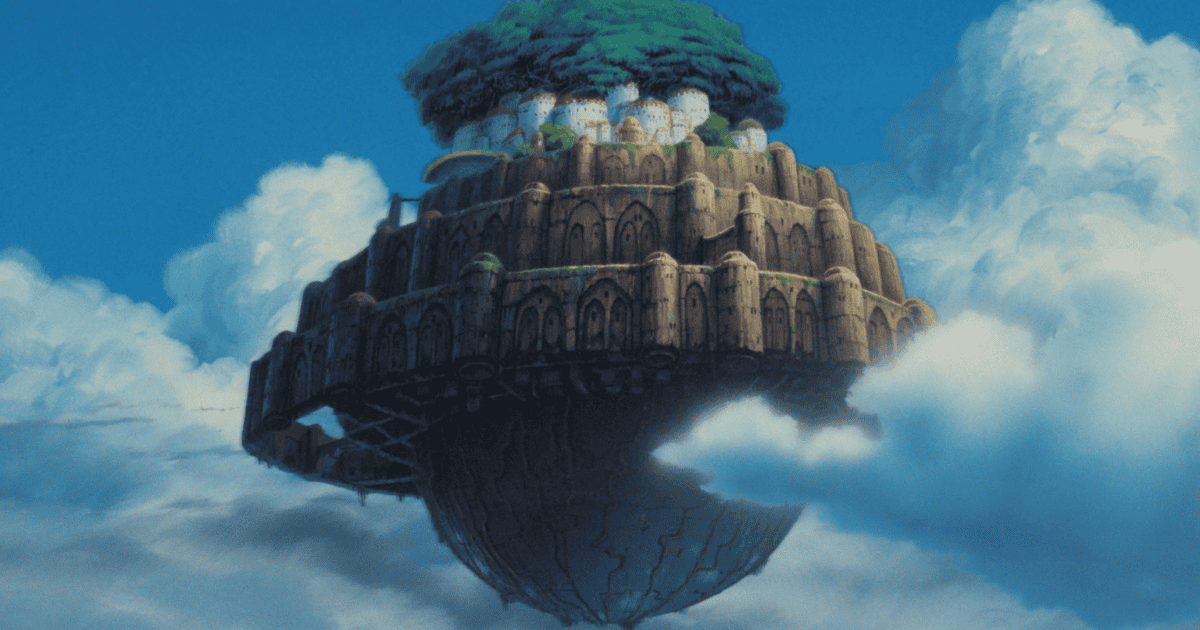
Given that Laputa is already hidden inside a monstrous, violent supercell (the Dragon’s Nest), leaving just one heavily armed, virtually indestructible robot on patrol would be more than enough to eliminate any wandering intruders.
This means the robot would only engage its thrusters and weapons if someone actually managed to breach the storm and approach the city.
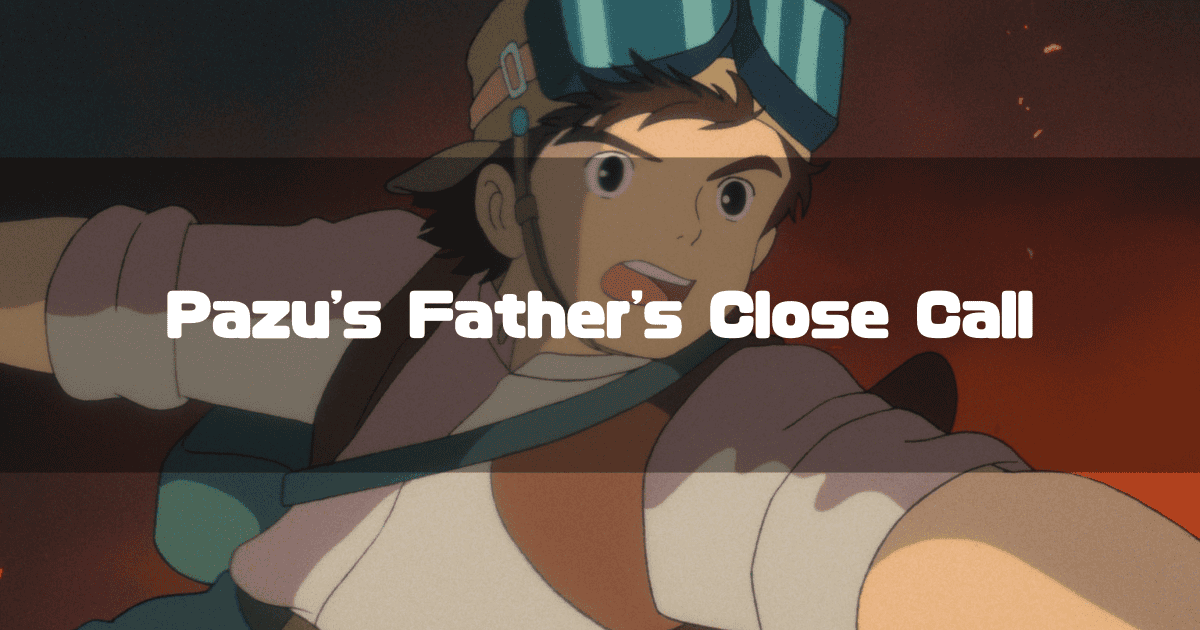
You can probably see where I am going with this. Who was the very first person in the lore of Castle in the Sky to successfully navigate the Dragon’s Nest and lay eyes on Laputa? Pazu’s father.
I strongly believe that on the day Pazu’s father breached the clouds, this guardian robot launched to intercept his airship. However, running on fumes after centuries of patrol, it depleted its final reserves of energy during the chase and plummeted helplessly to Earth. To put it bluntly: Pazu’s father narrowly escaped death by a matter of seconds. *(If you want to understand the deep psychological trauma this discovery caused his family, be sure to read our previous deep dive into Pazu’s hidden motivations.)*
While this remains an unconfirmed fan theory, it beautifully ties up a loose end in the lore. Don’t you think it makes perfect sense?
The Narrative Weight: What the Fallen Robot Truly Represents
Sheeta’s Descent: Pazu’s “Spider’s Thread” of Hope
Now, I want to shift our focus from in-universe mechanics to pure storytelling. What is the literary significance of a robot falling from the heavens?
To understand this, we have to draw a direct parallel to the film’s other major falling object: Sheeta. Her descent carries profound emotional weight, especially when you consider the bleak reality of Pazu’s daily life.
Because his father discovered Laputa but couldn’t prove it, he was branded a delusional liar and died in utter disgrace. Pazu, desperate to clear his family’s name, spent his nights feverishly building an ornithopter while surviving as a manual laborer in the mines.
Realistically, a makeshift airplane built by an impoverished child was never going to pierce a supercell and reach Laputa. As the years passed, even Pazu must have harbored agonizing doubts about his father’s sanity. He didn’t build his plane out of unwavering faith; he built it because he *wanted* to believe.
For a boy quietly drowning in despair, a glowing girl floating down from the sky was like a magical “spider’s thread”—a desperate, beautiful lifeline pulled straight from a fairy tale. Sheeta was the tangible proof that his father wasn’t crazy. Her arrival instantly shattered the mundane misery of his world, injecting his life with blinding hope.
So, if Sheeta was Pazu’s salvation, what did the falling robot mean to the story’s villain?
The Fallen Robot: Muska’s Ultimate Vindication
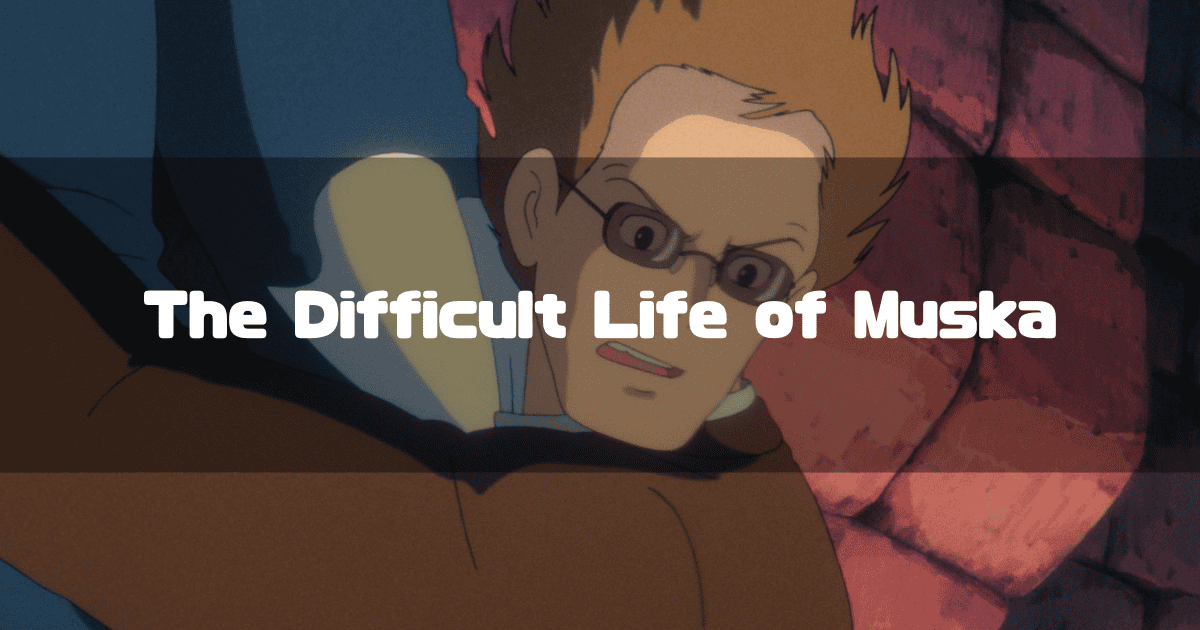
Let’s take a moment to analyze the heavily guarded life of Romuska Palo Ul Laputa.
Throughout the film, Muska projects the aura of a cold, calculating, and highly successful government agent. However, he accidentally reveals a deep vulnerability when he tells Sheeta that if the robot hadn’t fallen, “no one would have believed in Laputa’s existence.”
This is one of Muska’s most revealing lines in the film. Its original Japanese, English subtitle, literal translation, and wider context are examined in our collection of memorable Castle in the Sky quotes.
Think about the implications of that statement. What was Muska’s life like *before* the military secured the robot? It was likely identical to the miserable, disgraced life of Pazu’s father.
Muska’s ancestors held fiercely to their royal lineage and the history of Laputa, yet they lacked the physical power of the Levistone. For generations, they lived in the shadows. If his clan had been respected aristocrats comfortably integrated into society, Muska wouldn’t possess such a venomous, burning desire to conquer the world. The intense, arrogant pride he displays masks a lifetime of being dismissed or forced to hide his true identity.
When the royal family split, Sheeta’s ancestors took the Levistone and the spells, forgetting their true purpose. Muska’s ancestors chose to remember the history, treating the legacy of Laputa like a dormant nuclear deterrent they hoped to one day reclaim.
But carrying the secret history of a mythical floating super-weapon is a heavy, isolating burden. To the ordinary citizens and military brass of the world, Muska’s ancient Laputian notebook was nothing more than a book of fairy tales.
Then, the impossible happened. A giant, highly advanced combat robot crashed into the earth.
For Muska, the impact of that crash was earth-shattering. It was the absolute, undeniable proof that his ancestors weren’t crazy. It justified his arrogance and validated his entire existence. Just as Sheeta was the spider’s thread that pulled Pazu out of despair, the fallen robot was the catalyst that ignited Muska’s terrifying, long-held ambitions.
In Miyazaki’s masterful narrative design, both the hero and the villain have their destinies rewritten by miracles falling from the exact same sky.
I know this ventures deep into speculative territory, but viewing the film through this lens adds a tragic, brilliant layer to an already perfect movie.
The images used in this article are from Studio Ghibli Still Images.
Can you name the movie before the scene comes into focus?
Put your visual memory to the test with a blurred Studio Ghibli scene.


Reader Comments