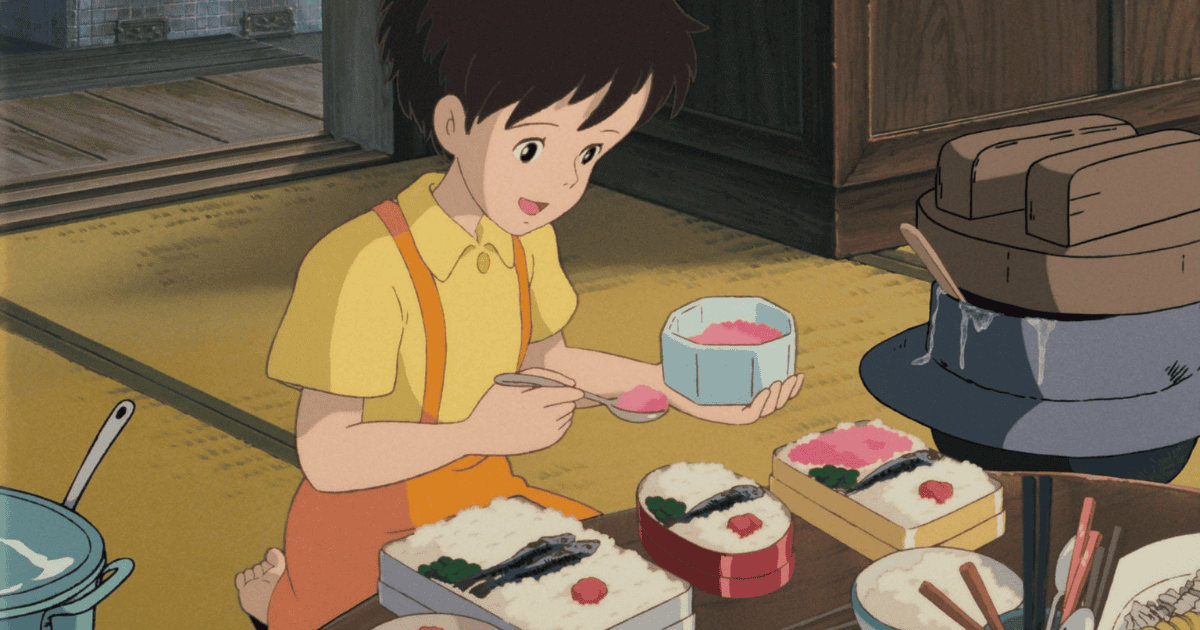
For decades, audiences have marveled at Satsuki Kusakabe, the endlessly cheerful and responsible older sister in Hayao Miyazaki’s 1988 masterpiece, My Neighbor Totoro(Official Studio Ghibli). But beneath her sunny disposition and tireless work ethic lies a terrifying psychological burden for an eleven-year-old girl. When her stoic facade finally shatters in the film’s most emotionally devastating scene, we aren’t just watching a child cry—we are witnessing a masterclass in character writing that ultimately saved Satsuki’s soul.
*This is a translated version. The original (Japanese) is available here.
- Satsuki’s Tears Reclaim Her “Humanity”
Portrayed as a relentlessly cheerful “perfect anime character” who flawlessly handles housework and childcare, Satsuki finally breaks down when her mother’s return is delayed. This raw emotional release shatters her facade, revealing the terrified, vulnerable child hiding beneath. - Miyazaki’s Mission to Save Satsuki
This crucial crying scene was actually born from a sharp observation by producer Toshio Suzuki. To prevent Satsuki from becoming a hardened “delinquent” crushed by adult responsibilities, Miyazaki drew upon his own childhood trauma to give her a moment of necessary weakness. - The Hidden Blessing of Mei’s Sobbing
Satsuki was only able to break down because Mei threw a tantrum first. By unapologetically acting like a crying toddler, Mei inadvertently gave her exhausted older sister the “right to cry,” making Mei’s outburst a profound psychological blessing.
On this pageContents
My Neighbor Totoro (1988) Analysis: The True Meaning of Satsuki’s Tears
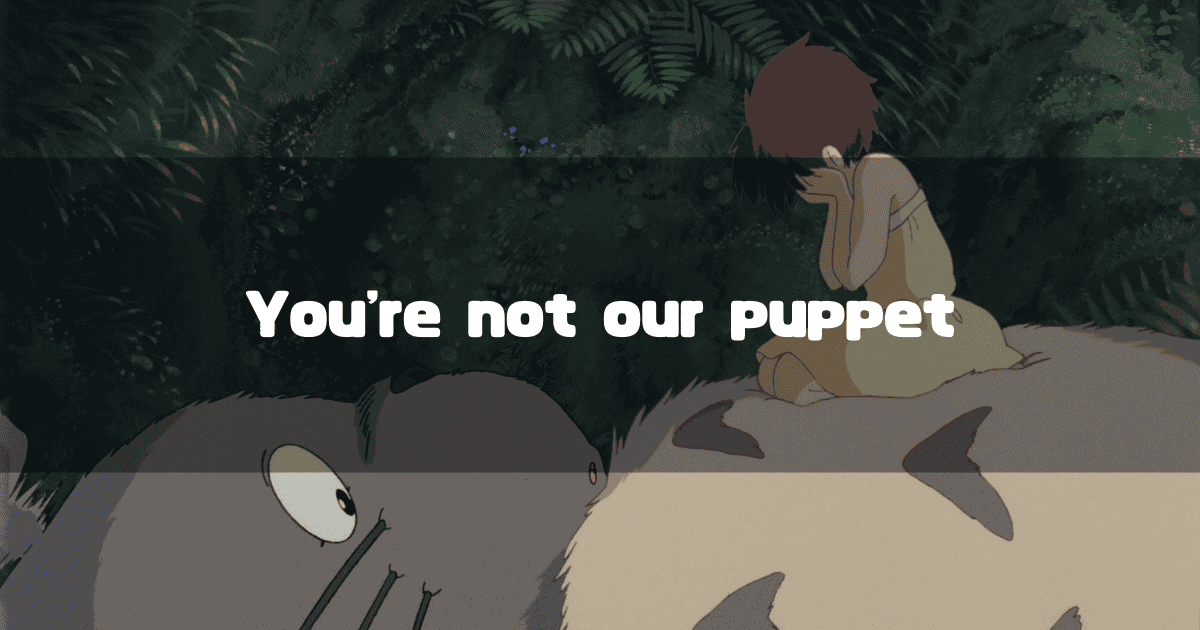
The Behind-the-Scenes Conflict Over Satsuki’s Breakdown
The creation of Satsuki’s heartbreaking crying scene is fascinatingly documented in Toshio Suzuki’s book, Shigoto Douraku New Edition – The Studio Ghibli Workplace (仕事道楽 新版―スタジオジブリの現場, in Japanese). Suzuki felt a deep sense of unease watching the young Satsuki perfectly manage the household and parent her younger sister without a single complaint. When he pointed this out to Director Miyazaki, a legendary creative clash occurred:
…”There’s no way a child like that really exists.” At the time, perhaps because I was young, I added, “If she does all this stuff as a child, Satsuki will become a delinquent when she grows up.”
At that, Miya-san (Miyazaki) got genuinely angry. “No, a child like that does exist. Or rather, did exist.” I wondered what he was going to say, and he said, “I was like that.”
[Omitted]
…You know the scene where Satsuki cries, worried that her mother might die? When the storyboard for that scene was ready, he said, “Suzuki-san, take a look.”
When I said, “Oh, so she cries here,” he replied, “I made her cry.” Then he said, “Suzuki-san, now Satsuki won’t become a delinquent, right?” When I replied, “No, she won’t,” Miya-san was pleased and said, “Good.”
(Original Text, in Japanese)
……「こんな子がほんとにいるわけないじゃないですか」。そのとき、ぼくも若かったからですけど、さらにこう言った。「こんなことを子供のうちから全部やってたら、サツキは大きくなった時に不良になりますよ」。子の時、みやさんは本気で怒りましたねえ。「いや、こういう子はいる。いや、いた」。なにを言うのかと思ったら、「おれがそうだった」。
中略
……お母さんが死ぬんじゃなかと心配してサツキが泣くシーンがあるでしょう、そこのシーンの絵コンテできて「鈴木さん、みて」と言うんです。
「お、ここで泣くんですね」と言ったら、「泣かせた」というんですよ。そして「鈴木さん、これでサツキは不良にならないよね」。ぼくが「なりません」と言うと、宮さんは「よかった」と喜ぶ。
Director Miyazaki also reflects on this deeply personal scene in an interview featured in Ghibli Textbook 3: My Neighbor Totoro (ジブリの教科書3:となりのトトロ, in Japanese).
Knowing the intense directorial intent behind the tears is powerful, but we must also examine the profound impact this scene has on how we, as the audience, perceive Satsuki.
From “Perfect Anime Character” to a Flawed, Real Human
When I recall how I viewed Satsuki as a child, I simply accepted her as a “cheerful girl who effortlessly handled housework and took care of her little sister.” I viewed her so naturally as a flawless archetype that I never stopped to question the reality of her situation. Take, for example, the famous breakfast scene:
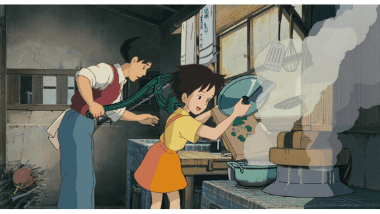
In this scene, Satsuki masterfully prepares a traditional Japanese breakfast while her father—who horribly overslept and neglected his domestic duties—casually washes his face. As a kid, I thought, “Wow, her dad is useless!” but regarding Satsuki, my only thought was, “She is so grown-up and reliable.” However, we owe Satsuki far more empathy than that. Think about the internal monologue of an eleven-year-old girl in that exact moment:
“Damn it, Dad, you overslept again. I knew this would happen. Why do I have to do all the cooking? You are the adult, you should be doing this!“
It is highly probable she was screaming this in her head. Her calm, practiced demeanor suggests that this infuriating morning routine has happened countless times. Beyond the cooking, she must have also harbored quiet resentment regarding her sister:
“Why am I the only one who has to watch Mei? She is your daughter too! Pay attention to her!“
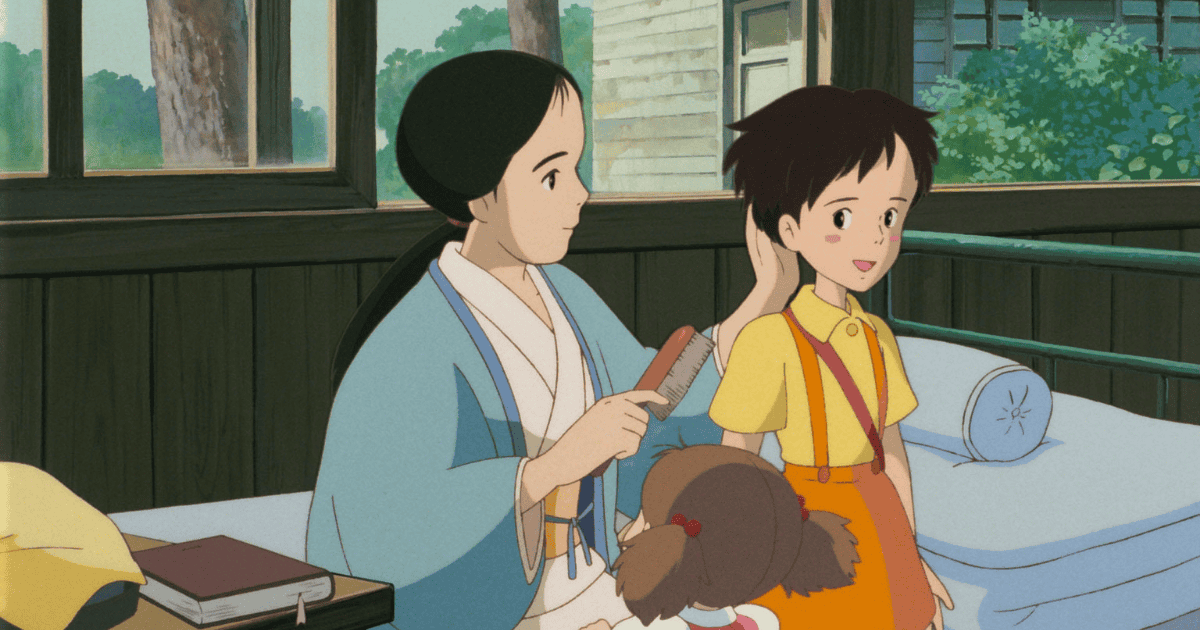
Satsuki’s internal world, as she patiently braids Mei’s hair every single morning, could not have been pure sunshine. And beneath the bubbling frustration of raising her sister and covering for her father, the darkest, heaviest thought naturally follows: “If only Mom were here.“
When you view the story through this psychological lens, Satsuki’s emotional state while waiting for her mother’s return becomes infinitely more agonizing.
Yes, she genuinely wants her beloved mother to heal. But on a primal level, “Mom coming home” also means “an escape from this suffocating nightmare” (because her father is clearly incapable of managing the household). Her mother is her only hope for a normal childhood.
Therefore, when Satsuki receives the telegram that her mother’s return is delayed, she is violently struck by two parallel terrors: the horrifying fear that “Mom might actually die,” and the crushing despair that “I am going to be trapped in this miserable, exhausting life forever.” The sheer weight of these two thoughts is what finally shatters her.
It is only at this exact moment that the audience gasps, “Of course she’s crying,” finally realizing that Satsuki has been walking on a razor’s edge the entire movie.
In that sobbing collapse into Granny’s arms, Satsuki magically transforms from a flat, perfect “anime character” playing the role of a flawless daughter, into a beautifully broken, real human being who is desperately trying to survive while suffocating under complex, unspoken trauma.
Audiences are conditioned to accept animated characters at face value. We assume a smiling face means a happy heart. But human beings are messy and complicated. Toshio SuFzuki challenged Hayao Miyazaki to break Satsuki precisely to force viewers like me to realize: Satsuki isn’t a superhero. She is just a little girl.
My Neighbor Totoro (1988) Appendix: The Unexpected Blessing of Mei’s Sobbing
We’ve spent a lot of time analyzing Satsuki’s tears, but we cannot ignore the other major breakdown in the film: Mei throwing a massive tantrum. Growing up with older siblings, I initially found Mei’s sobbing to be incredibly frustrating. I remember watching it and thinking, “Stop crying and making things harder for your poor sister!”
Satsuki’s outburst is considerably harsher in Japanese than the English subtitle suggests. For the original Japanese, romanization, English subtitle, literal translation, and a comparison with the dub, see “Mei, you idiot! I don’t care anymore!” in our guide to memorable My Neighbor Totoro quotes.
I am sure many viewers have felt that exact same annoyance. But if we look closer at the family dynamic, Mei’s tantrum reveals a brilliant psychological layer.
“Satsuki was only able to cry because Mei cried first.“
Think about it. Throughout the entire first half of the film, Satsuki and Mei refuse to cry. Even when Mei falls down, she forcefully holds back her tears. Satsuki, ever the observant older sister, realizes that Mei is also fighting a desperate, silent battle against the “loneliness of a motherless home.”
Because Satsuki saw Mei trying to be brave, Satsuki felt absolutely obligated to lock away her own trauma and be the unbreakable pillar of the family. However, when Mei finally explodes into selfish, unabashed tears upon hearing the bad news, she inadvertently grants Satsuki the “right to cry.”
By dropping her brave facade and acting like a terrified toddler, Mei gives Satsuki permission to stop being an adult. In a twisted, beautiful way, Mei’s frustrating tantrum was the ultimate psychological blessing that allowed Satsuki to finally release her own pain. Good job, Mei.
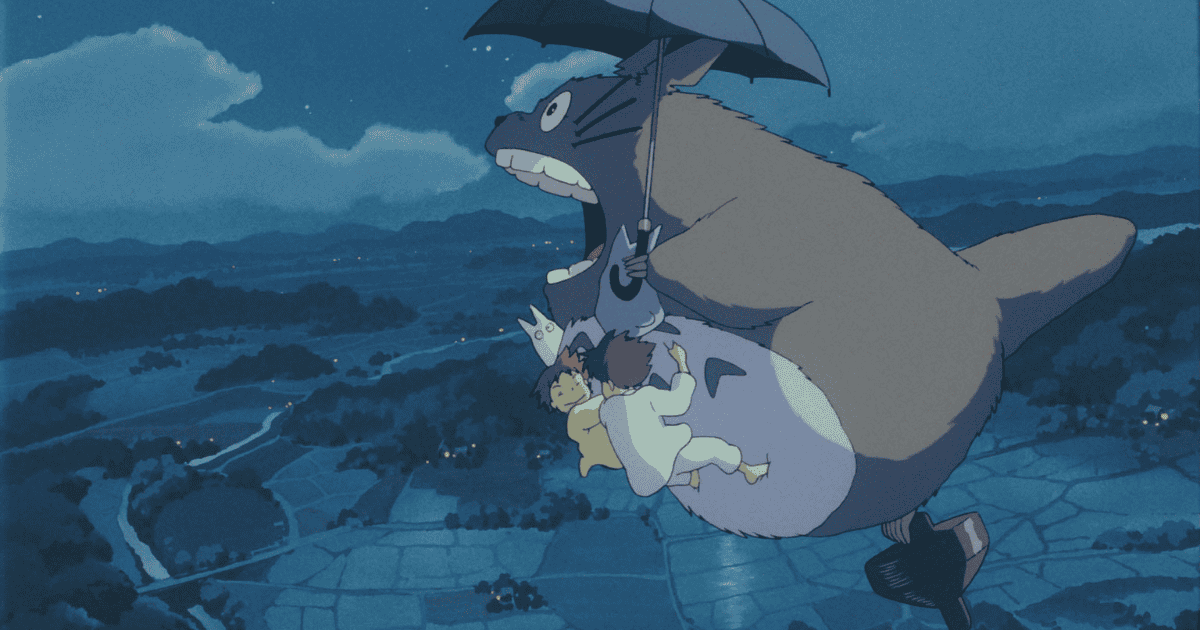
The images used in this article are from Still Images of Studio Ghibli Works.
Can you name the movie before the scene comes into focus?
Put your visual memory to the test with a blurred Studio Ghibli scene.
Reader Comments