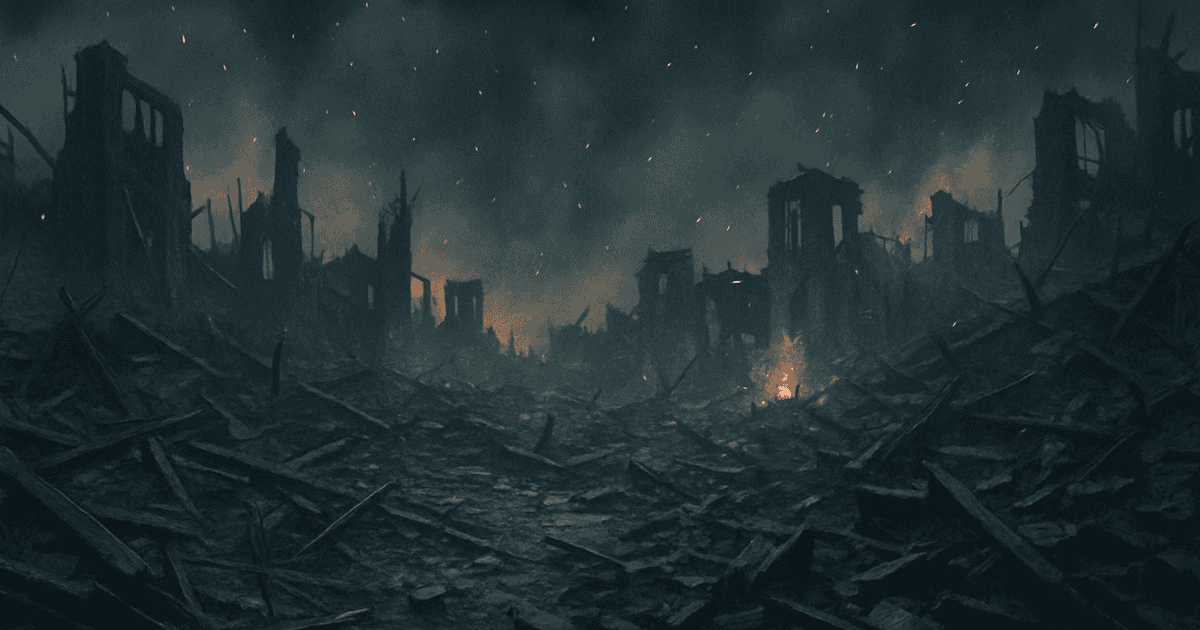
For most viewers, Isao Takahata’s 1988 animated masterpiece, Grave of the Fireflies(Studio Ghibli Official), is a deeply traumatic experience—a film universally labeled as “the greatest movie you will only ever watch once.” It is easy to sum it up simply as “war is a tragedy” and lock the memory away. However, dismissing it with such a broad platitude strips away the agonizing, brilliant psychological layers Takahata wove into the narrative. Today, we are asking the darkest, most uncomfortable question of all: Why did Seita and Setsuko actually have to die?
How deeply should we analyze the starvation of two fictional children? To find the answer, we must first look at the startling, controversial words of the director himself.
*This is a translated version. The original (Japanese) is available here.
- Takahata’s Controversial Stance
Director Isao Takahata explicitly stated that the film is “not an anti-war anime” and “not just a tearjerker.” Instead, he positioned it as a story of failed “resistance against totalitarianism.” He refused to call it an anti-war film simply because he could not offer a realistic methodology to actually eliminate war. - The Hypocrisy of Blaming Seita
While it is natural to blame Seita’s stubborn pride for taking Setsuko with him to her death, our anger might actually be a projection of our own societal guilt. By condemning a 14-year-old boy, we avoid the uncomfortable realization that the surrounding adults—and perhaps we ourselves in modern society—often ignore people in desperate need. - The “Shinju” (Lovers’ Suicide) Structure
Takahata intentionally framed the narrative as a “shinju-mono” (a suicide pact story), depicting two people isolating themselves in a closed world until death. While Seita seemingly forces this fate upon Setsuko (“muri shinju” or forced suicide), one can also argue that the overwhelming burden of keeping Setsuko alive accelerated Seita’s own physical and emotional ruin. - Animation as Ethnographic Testimony
By meticulously animating the mundane realities of wartime—showing that banks were still functioning, doctors were still seeing patients, and children were still playing amidst the ashes—the film transcends fiction to become vital “ethnographic material.” - The Lethal Consequence of Isolation
Seita ultimately becomes completely “information-starved”—so disconnected from the community that he doesn’t even know the war has ended. The film delivers a devastating, universal message: human beings cannot survive without connecting to others.
On this pageContents
Grave of the Fireflies (1988) Analysis: Decoding the Tragedy

The Startling Words of Director Isao Takahata
The intent of an auteur carries massive weight, and Director Isao Takahata’s personal commentary on Grave of the Fireflies is absolutely fascinating. The following quote is crucial to understanding the film’s true purpose:
At the time, it was an era where a very oppressive, rock-bottom “totalitarianism” was affirmed in social life. Seita resists this totalitarian era and tries to build a “pure family” with just Setsuko and himself. But is that possible? It isn’t, and that’s exactly why Seita lets Setsuko die. But can we criticize him for that? The reason we modern people can easily sympathize with Seita is that the times have reversed. If the times were to reverse again someday, an era where opinions denouncing Seita more than the widow (the aunt) did might become the majority, and that thought terrifies me.
(Original Text, in Japanese)
当時は非常に抑圧的な、社会生活の中でも最低最悪の『全体主義』が是とされた時代。清太はそんな全体主義の時代に抗い、節子と2人きりの『純粋な家族』を築こうとするが、そんなことが可能か、可能でないから清太は節子を死なせてしまう。しかし私たちにそれを批判できるでしょうか。我々現代人が心情的に清太に共感しやすいのは時代が逆転したせいなんです。いつかまた時代が再逆転したら、あの未亡人(親戚の叔母さん)以上に清太を糾弾する意見が大勢を占める時代が来るかもしれず、ぼくはおそろしい気がします
Beyond this chilling warning, Takahata has made several other shocking statements that you can easily find documented on the Japanese Wikipedia page for Grave of the Fireflies.
For example, he famously stated:
“It is not an anti-war anime at all, and it contains no such message.”
(Original Text, in Japanese)
「反戦アニメなどでは全くない、そのようなメッセージは一切含まれていない」
“This work is by no means just an anti-war film, nor is it a tear-jerking story about pitiful victims of war; it depicts the tragic story of a very ordinary child who lived in an age of war.”
(Original Text, in Japanese)
「本作は決して単なる反戦映画ではなく、お涙頂戴のかわいそうな戦争の犠牲者の物語でもなく、戦争の時代に生きた、ごく普通の子供がたどった悲劇の物語を描いた」
For a global audience that considers this the quintessential anti-war film, these comments seem entirely contradictory. They clash violently with our emotional experience of the movie.
However, I firmly believe there is no contradiction here at all. Let’s break down exactly what Takahata meant.
The Hypocrisy Behind Blaming Seita
If you watch Grave of the Fireflies with a modern, logical mindset, you inevitably want to scream at Seita. The core of our frustration is undeniable: his stubborn pride directly dragged Setsuko to her death.
That is a factual assessment, and I share that frustration.
But stepping back from Seita for a moment, weren’t there countless adults in the narrative who could have intervened and saved a four-year-old girl?
Even the emotionally abusive aunt could have simply said, “Seita, you can leave, but leave Setsuko here.” And even after the children moved into the abandoned bomb shelter, absolutely no one in the local farming community offered them a lifeline.
We usually justify the adults’ apathy by saying, “It was the end of a brutal war; everyone was starving and prioritizing their own survival.” Historically, that is completely true.
But there is a subtle, unsettling hypocrisy in defending the adults’ apathy while ruthlessly condemning a 14-year-old boy.
In other words, do we aggressively blame Seita because, deep down, we know that even in our modern, peaceful society, we might also turn a blind eye and leave someone like Seita to die?
We justify our own apathy every day. We are “too busy” with our jobs and our daily lives to help strangers. We suppress our sense of justice, walking past the homeless, thinking, “I really should do something,” but ultimately doing nothing.
That quiet, gnawing “guilt” haunts us. We tell ourselves, “I was busy, but I wasn’t *so* busy that I couldn’t have helped.”
Could it be that we attack Seita so viciously to mask our own societal guilt?
Takahata’s “Frightening” Societal Warning
The Loss of Fundamental Human Kindness
I believe we are rapidly evolving into the exact society Director Takahata found so “frightening.” It isn’t just about how audiences review an anime; it is about living in a society that has normalized abandoning the vulnerable, all while carrying a quiet, collective guilt about it.
We are losing the fundamental “kindness” required to reach out to those in need.
Director Takahata survived a horrific air raid in Okayama when he was just nine years old. Separated from his parents, he and his older sister fled through burning streets, eventually surviving the night huddled by a river in the freezing rain (Reference: Introducing a Dialogue with Director Isao Takahata, in Japanese).
While we don’t know if adults actively ignored him that night, the sheer, paralyzing loneliness he felt as an isolated nine-year-old must have been unimaginable.
What terrified Takahata was the realization that even today—in a wealthy society where food is abundant and bombs aren’t falling—people would still walk right past an isolated, shivering child by a river without offering a hand.
But this raises a grim question. From a narrative standpoint, Takahata’s point would have been made clearer if the children had starved immediately. Why did he allow Seita and Setsuko to survive in the cave for as long as they did?
I believe the film is a ruthless simulation. Takahata wanted to test a horrifying hypothesis: *If the adults vanished, exactly how far could two children make it on their own?*
Takahata wasn’t dealing in naive fantasy. If you approach survival realistically, a catastrophic end was mathematically inevitable.
Through this simulation, Takahata is screaming at the audience: “Look! No matter how hard a child tries, survival in isolation is physically impossible. Yes, in 1945, Seita was foolishly impatient. But what about today? Is it still the victim’s fault when they fall through the cracks?“
The “Rice Ball” as a Singular Ray of Hope
While Takahata’s sociological critique is harsh, the film isn’t entirely devoid of light.
In the opening sequence, a hollow, dying Seita slumps against a pillar in Sannomiya Station. The commuters passing by treat him like human garbage, actively stepping over him with disgust.
Yet, amidst this horrific apathy, there is a brief, profound moment where a single stranger stops and places a rice ball near him. Every time I watch that scene, it breaks me.
It is the sole act of unprompted grace in an otherwise suffocating tragedy.
Takahata is quietly urging us: “Live your life in a way that you can be the person who offers a rice ball to someone in the dark.” It sounds almost cliché in text, but when executed within this grueling narrative, it pierces the soul.
Why Takahata Insisted It Was Not an “Anti-War” Film
Let’s address the most confusing quote of all: Takahata’s insistence that “It is not an anti-war anime at all.”
To understand this, we must view the statement through two specific lenses: the lack of a “How-to” methodology, and the film’s function as an ethnographic autobiography.
The Lack of a Methodology for Peace
When analyzing Takahata’s intent, we must acknowledge a profound cultural reality: Since 1945, Japanese audiences have practically never consumed a war story that wasn’t inherently “anti-war.”
What would a “pro-war” Japanese film even look like today? We are so saturated in media screaming “war is hell” that the message has lost its actionable power. We all know war is bad, but these stories rarely answer the ultimate question: “So, what do we actually do about it?”
For a fiercely intellectual director like Takahata, a true “anti-war film” shouldn’t just showcase suffering; it must boldly present a tangible, realistic methodology for eradicating war from the globe.
He refused the “anti-war” label simply because he knew his film didn’t offer that geopolitical solution.
Animation as Ethnographic Testimony
Instead of a political manifesto, Grave of the Fireflies serves as an animated autobiography and a vital historical document.
This is reflected in his quote: “…it depicts the tragic story of a very ordinary child who lived in an age of war.“
Takahata wanted audiences to viscerally re-experience the sensory details of his own survival. Furthermore, animation allowed him to achieve a level of hyper-realism that live-action couldn’t safely replicate. By meticulously animating the mundane details, Takahata preserved the exact societal conditions at the end of the war.
Because he lived it, he could direct it with absolute authenticity. As a result, Grave of the Fireflies functions as a breathtaking historical documentary.
As a testament to Takahata’s obsessive pursuit of perfection, the film was famously released in theaters with two scenes completely uncolored (shown as raw line-art). Takahata refused to compromise the historical quality of his animation just to meet a corporate deadline. While it must have been a nightmare for the production staff, this unyielding dedication is exactly why the film remains an undisputed masterpiece.
Through this painstaking sacrifice, the film acts as crucial “ethnographic material.”
Historians learn about the past through documents (historiography) and artifacts (archaeology). But understanding how people *felt* and *lived* requires ethnography. While Grave of the Fireflies is technically fiction, it provides vital ethnographic testimony:
- It proves that banks were still operational during the bombings.
- It shows that despite the horror, a mundane daily routine persisted.
- It documents that civilians could still access doctors, albeit overwhelmed ones.
- It captures children still finding ways to play and laugh in the ashes.
Textbooks paint the end of the war as an endless, pitch-black void. Takahata’s visual testimony proves that human normalcy stubbornly endures, even in hell.
By capturing this, he wasn’t making an anti-war statement; he was leaving behind a testimony.
(Note: This doesn’t mean every single animated frame is a flawless historical record. For instance, historians debate the mechanical accuracy of the incendiary bombs shown in the film. Read our deep dive: Did Director Takahata Make a Historical Mistake?)
Why Was Seita Dying at the Train Station?
If we view the film as a study of human nature rather than just war, we must ask: Why did Seita die in Sannomiya Station instead of the bomb shelter?
The film opens with the haunting line: “September 21, 1945. That night, I died.” We know Setsuko passed away a full month earlier, on August 22.
The subtitle slightly restructures the original Japanese statement. For its exact Japanese wording, romanization, literal translation, and an analysis of why the date matters, see our guide to the film’s unforgettable opening line.
What did Seita do for those 30 agonizing days?
The money in his bank account had become worthless paper. Yet, a severely malnourished 14-year-old cannot survive 30 days without sustenance. This means he was scavenging just enough calories to stave off death.
Without the social skills to reintegrate into a community, he likely resorted to petty theft until his physical energy completely gave out. Once he could no longer steal, begging was his only option. Moving to a highly trafficked train station was a calculated, desperate survival tactic.
What we witness here is the raw, undeniable biological imperative to survive.
Even after his soul was destroyed by Setsuko’s death, his body still demanded food. This profound, tragic testament to the human survival instinct is exactly why Takahata wanted audiences to see beyond the “war” label and witness the raw essence of humanity itself.
The Dark Structure of a “Shinju” (Lovers’ Suicide)
To truly grasp the psychological horror of the film, we must dissect another fascinating quote from the director:
What drew me to Akiyuki Nosaka’s original work was the structure of a “shinju-mono” (suicide pact story), which depicts how the two of them head toward their deaths in a closed world. I had a strong creative ambition that I could depict it with a new kind of appeal through animation.
(Original Text, in Japanese)
野坂昭如さんの原作にひかれたのは、2人がいかに死に向かっていったかを閉じた世界の中で描くという「心中もの」の構造があったこと。アニメなら新しい求心力で描けるのではないかという表現上の野心が強かった。
From “My Air Raid Experience, Properly in a Film: ‘Grave of the Fireflies’ Director Isao Takahata”
The Unidirectional Ruin of “Muri Shinju” (Forced Suicide)
In traditional Japanese literature, a “shinju” implies a romantic, mutual agreement between two lovers to die together to escape a cruel world. But does “mutual consent” really exist when one party is a four-year-old child?
I argue that Takahata recognized the inherent power imbalance in the story. What Seita might have subconsciously viewed as a romanticized isolation (a shinju) was, in reality, a “muri shinju” (a forced double suicide) imposed upon Setsuko.
Seita actively chose the closed world. Setsuko simply followed him into the grave.
If we project this dark dynamic onto modern society, Takahata’s warning becomes deafening: If we continue to isolate ourselves and refuse to help each other, we are dragging society into a collective suicide pact.
The Uncomfortable Reverse Perspective
While it is universally accepted that “Seita dragged Setsuko to her death,” the concept of a mutual suicide pact allows for a highly uncomfortable, reverse interpretation: Did the burden of Setsuko actually drive Seita to his death?
By viewing the film through this deeply cynical lens, we achieve a profound, objective clarity:
- Seita was foolishly proud, but the aunt was genuinely cruel.
- Seita’s decisions killed Setsuko, but he fiercely loved and cared for her until her last breath.
- Their deaths were self-inflicted, but society was undeniably complicit through apathy.
- It is a horrifying thought, but if Setsuko hadn’t existed, the unburdened Seita likely could have survived at the aunt’s house.
- Setsuko died, but her final days spent laughing with her brother were far more emotionally fulfilling than surviving under the aunt’s emotional abuse.
Takahata is an absolute master at preventing the audience from taking a comfortable moral high ground. We watch Takahata films precisely to be challenged, to agonize over the gray areas of human morality.
Two Hearts Already Broken by War
Finally, we must acknowledge the invisible psychological wounds driving this “suicide pact.”
Seita didn’t just survive an air raid. He watched his mother’s body, wrapped in blood-soaked bandages, be tossed into a mass grave like discarded garbage. To expect a 14-year-old boy to endure that trauma and remain a highly functioning, polite houseguest is absurd.
Read our analysis: The Unseen Emotional Scars of Seita
The trauma of war completely shattered Seita’s ability to operate within normal society. When he retreats to the cave, it isn’t just teenage rebellion; it is a profound psychological withdrawal from a community that failed him. Seita had no path left but isolation, making the war itself the true architect of their tragic end.
Read our analysis: Why Seita and Setsuko Cannot Pass On
Reevaluating the “Evil” Aunt
The Aunt’s Wartime Jealousy
While Seita is the protagonist, the aunt is the actual narrative catalyst. Without her hostility, there is no story.
Why was she so incredibly cruel to two orphaned children? Beyond the obvious strain of wartime rationing, we must consider the socio-economic undertones: Seita and Setsuko’s father was a highly ranked Captain in the Imperial Japanese Navy.
During the war, a Naval Captain held immense social prestige and wealth. Prior to the bombings, Seita’s family lived in sheer luxury compared to the struggling aunt. It is highly probable that the aunt harbored deep, simmering jealousy toward her privileged relatives.
Even though they were now destitute orphans, Seita still carried the arrogant scent of a “Navy Captain’s son.” His massive bank savings and ungrateful attitude likely triggered years of the aunt’s repressed class resentment, weaponizing her into the villain we love to hate.
The Aunt as a Victim of Narrative Framing
From a meta-perspective, the aunt is a tragic victim of storytelling. She is forced to play the “wicked stepmother” role so Takahata’s simulation can commence.
Interestingly, modern audiences—exhausted by their own economic struggles—increasingly sympathize with the aunt’s pragmatic frustration. While Takahata found this modern shift in sympathy “frightening,” if the fictional aunt were real, she might sigh and say, “Finally, a generation that understands how hard it was to feed my own children.”
The Ultimate Message: Survival Requires Connection
The tragedy of Setsuko’s starvation is devastating. But the true horror of the film is the agonizing realization that Seita didn’t even know the war was over.
By completely severing ties with society, Seita became dangerously “information-starved.” Setsuko died on August 22—a full week after Japan officially surrendered. If Seita had remained connected to the community, he would have learned the war was over. That news would have shattered his pride, forced him to apologize to his aunt, and almost certainly saved Setsuko’s life.
This unbearable dramatic irony serves as Takahata’s final, crushing thesis: Human beings simply cannot survive in isolation; we must live connected to others.
In our modern era, we are increasingly obsessed with individualism, striving to free ourselves from the messy obligations of “community.” While we celebrate this independence, Grave of the Fireflies stands as a towering, terrifying reminder of the lethal risks of absolute isolation.
As society continues to isolate itself, perhaps future generations will look back at Seita not as a foolish child, but as a tragic martyr who bravely, yet fatally, resisted a broken world.
These are my deeply personal reflections on a film that refuses to leave my mind. Grave of the Fireflies is an agonizing masterpiece that demands constant re-evaluation. How do you interpret Seita’s fatal choice? I would love to hear your thoughts.
Can you name the movie before the scene comes into focus?
Put your visual memory to the test with a blurred Studio Ghibli scene.

i just finished watching this film and can’t stop crying, mainly because i see seita and setsuko and it reminds me of the countless children in gaza, sudan, and other places who are facing worse conditions.
i wish we had learnt a lesson.