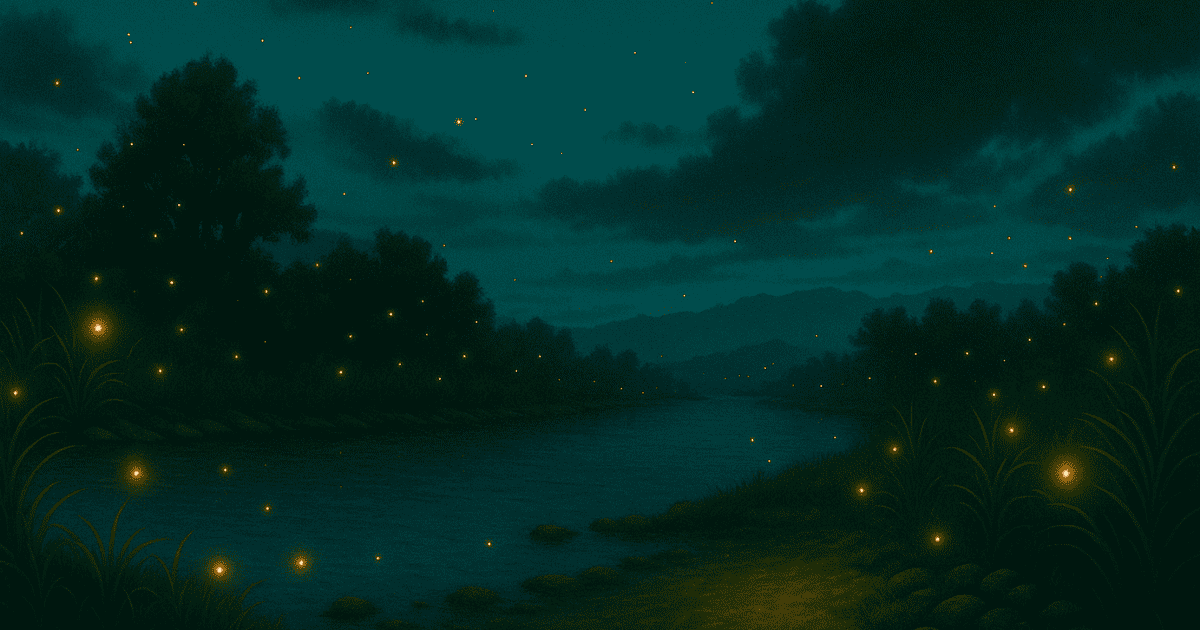
Isao Takahata’s Grave of the Fireflies (Official Studio Ghibli) is a 1988 animated feature film widely regarded as a cinematic masterpiece.
In this article, we will explore some fascinating trivia and behind-the-scenes facts about the production of Grave of the Fireflies. While knowing these details isn’t strictly necessary to understand the main story, discovering the unique challenges and ingenuities of the production team offers a wonderful new perspective on the film.
*This is a translated version. The original (Japanese) is available here.
On this pageContents
Grave of the Fireflies (1988) Trivia & Fun Facts
The Surprising Double Feature with My Neighbor Totoro
When Grave of the Fireflies was originally released in 1988, it was screened as a double feature alongside My Neighbor Totoro.
Given the drastically different tones of a heartbreaking wartime drama and a heartwarming fantasy, modern audiences often wonder: “In what order were the films shown?“
The surprising answer is: “It depended entirely on when you entered the theater.” At the time, Japanese cinemas did not use the reserved seating or scheduled clearance systems we have today. As long as you had a ticket, you could walk in at any time, take any open seat, and stay for as many showings as you wanted, as the films played on a continuous loop.
Because of this, some viewers watched Totoro first, while others started with Fireflies. Naturally, this completely altered the viewing experience. According to an interview with Director Isao Takahata featured on the Japanese Blu-ray release, many people who watched the uplifting My Neighbor Totoro first found themselves too emotionally overwhelmed to watch Grave of the Fireflies to the very end.
While this viewing culture is a fascinating relic of its era, an even more pressing situation was unfolding behind the scenes.
- Grave of the Fireflies Blu-ray(Japanese edition), Special Features
The Secret Behind the Uncolored Scenes
While the production of Hayao Miyazaki’s My Neighbor Totoro proceeded relatively smoothly, Isao Takahata’s Grave of the Fireflies faced severe scheduling delays.
Takahata was well-known in the animation industry for his uncompromising dedication to quality. Throughout his career—from Horus: Prince of the Sun at Toei Animation to Studio Ghibli works like Only Yesterday, Pom Poko, My Neighbors the Yamadas, and The Tale of the Princess Kaguya—his projects frequently ran behind schedule.
To meet release dates, drastic measures were sometimes required. For example, 10 minutes of storyboards were cut from Pom Poko at the last minute. As the deadline for Grave of the Fireflies loomed, producer Tōru Hara, publisher Ryōichi Satō, and Toshio Suzuki urged Takahata to speed up. Takahata, however, steadfastly requested that the release date be postponed.
When a delay proved impossible, Takahata proposed a shocking compromise: “We will release the film with two scenes left completely uncolored.“
Thanks to a clever PR strategy by Toshio Suzuki, the film hit theaters without any public announcement that it was “unfinished.” Because one of these uncolored sequences was the tense scene where Seita steals tomatoes at night, the audience interpreted the stark, colorless lines as a deliberate “artistic choice” to convey psychological distress. The fact that it was incomplete went largely unnoticed.
While showing an unfinished film in theaters is highly unusual, looking back from a modern perspective, one can’t help but feel a bit envious of the audiences who experienced the uncolored version of Grave of the Fireflies. Seeing Takahata’s raw line art on the big screen must have been quite striking.
- Ghibli Textbook 4: Grave of the Fireflies(ジブリの教科書4:火垂るの墓, in Japanese)
- Ghibli Textbook 8: Pom Poko(ジブリの教科書8:平成狸合戦ぽんぽこ, in Japanese)
- Ghibli Textbook 19: The Tale of the Princess Kaguya(ジブリの教科書19:かぐや姫の物語, in Japanese)
The Tug-of-War for Yoshifumi Kondō and Michiyo Yasuda
Because Grave of the Fireflies and My Neighbor Totoro were produced simultaneously, Studio Ghibli had to split its staff across two major feature films.
This logistical challenge sparked a quiet tug-of-war between the two legendary directors, who both wanted the same highly skilled personnel for their teams.
The two key figures caught in the middle were animator Yoshifumi Kondō and color designer Michiyo Yasuda.
Hayao Miyazaki aggressively courted Yoshifumi Kondō (who was not yet a Ghibli employee), visiting him repeatedly. Isao Takahata, conversely, remained passive but bluntly told Toshio Suzuki, “If Kondō doesn’t do it, we won’t be able to make the movie.”
Kondō was an irreplaceable talent for both directors, but ultimately, he was assigned to Grave of the Fireflies.
This was a strategic decision made by Toshio Suzuki, based on the rationale that “Miyazaki is an excellent animator and can draw it himself if necessary, but Takahata cannot.”
Miyazaki was understandably frustrated by this decision, jokingly threatening to fake tendonitis and check into a hospital. However, Toshio Suzuki shared a humorous anecdote about what happened the very next day in Ghibli Textbook 3: My Neighbor Totoro(ジブリの教科書3:となりのトトロ, in Japanese):
The next morning, around eight o’clock, I got a call from Miya-san, who suddenly said, “I hit Kon-chan,” which surprised me. After listening carefully, it turned out to be a dream, but he said, “I feel better now, so I’ll do it,” and that was the start of Totoro.
(Original Text in Japanese)
次の日の朝、八時ぐらいに宮さんから電話がかかってきて、いきなり「コンちゃんのこと、殴った」というのでビックリしました。よくよく聞いてみたらそれは夢だったんですが、「気が済んだからやる」ということになり、それが『トトロ』のスタートでした。
This playful but intense anecdote shows exactly how much both directors respected and desired Kondō’s talent.
A similar debate occurred over color designer Michiyo Yasuda, a trusted colleague from their Toei Animation days. Eventually, the producers mediated a compromise: Yasuda would “primarily be in charge of Grave of the Fireflies, while handling the basic color design for Totoro and assigning another staff member for the daily specifications.”
In short, Isao Takahata secured both of the key staff members Hayao Miyazaki desperately wanted.
The result was two phenomenal masterpieces, proving the arrangement worked perfectly. However, it still leaves animation fans wondering what a “full-spec My Neighbor Totoro“ would have looked like with the undivided attention of both Kondō and Yasuda.
Another famous piece of trivia regarding staff assignments involves a young Hideaki Anno. Anno successfully animated the impressive naval review cruiser scene in Grave of the Fireflies. According to industry lore, when asked whether he wanted to animate the opening sequence of Totoro or the cruiser in Grave of the Fireflies, Anno chose Takahata’s project simply because he had already experienced working under Miyazaki (on the Giant Warrior in Nausicaä). While primary sources confirming this exact conversation are scarce, it remains a widely accepted anecdote.
If this story is accurate, it means Hayao Miyazaki lost three key talents to Isao Takahata during that production cycle, making the “what if” scenario of a fully-staffed Totoro even more intriguing.
- Ghibli Textbook 3: My Neighbor Totoro(ジブリの教科書3:となりのトトロ, in Japanese)
- Ghibli Textbook 4: Grave of the Fireflies(ジブリの教科書4:火垂るの墓, in Japanese)
Director Isao Takahata’s Real-Life Air Raid Experience
Director Isao Takahata did not just research the air raids; he lived through one. Born in Mie Prefecture in 1935, his family moved to Okayama in 1943 when his father became a middle school principal.
The following year, at just nine years old, Takahata survived the Okayama Air Raid.
At 2:43 AM on June 29, 1945, American B-29s launched a devastating nighttime incendiary bombing over the city.
Takahata and his older sister fled barefoot through the burning streets. They eventually reached the banks of the Asahi River, where they huddled together, shivering under the “black rain” until dawn broke.
Because of this, the intense, visceral depictions of the firebombing in Grave of the Fireflies are deeply informed by the director’s own harrowing childhood memories.
However, the specific “Kobe Air Raid” depicted in the film is based on the actual experiences of the original author, Akiyuki Nosaka, which occurred during the daytime on June 5, 1945. To accurately animate how incendiary bombs would look falling in broad daylight, Takahata conducted meticulous research.
During this process, a technical debate arose. Takahata and other survivors vividly recalled the bombs falling as a “rain of fire,” igniting in mid-air. Yet, when his assistant director consulted a Self-Defense Forces specialist, the expert claimed that “due to their structure, it is impossible for incendiary bombs to ignite in mid-air,” contradicting the survivors’ memories and historical photographs.
Because Takahata was famous for his strict adherence to realism, the depiction of the bombs in the film has sparked fascinating discussions among history buffs. I have explored this historical discrepancy in detail below:
Read our full analysis: Did Director Takahata Make a Mistake? Investigating the Incendiary Bombs
Ultimately, it is possible to reconcile the survivors’ testimonies with the military explanation, but it highlights how carefully Takahata crafted every frame of his film.
- “Wikipedia – Isao Takahata” (Japanese)
- “Wikipedia – Okayama Air Raid” (Japanese)
- “Introducing a Dialogue with Director Isao Takahata (jodo-shinshu.info)” (Japanese)
- “The place where the author of ‘Grave of the Fireflies’ was separated from his sister by death is in Fukui Prefecture. The shop where he bought his sister’s ‘boxwood comb’ mentioned in the novel still exists today (Fukui Shimbun)” (Japanese)
- Ghibli Textbook 4: Grave of the Fireflies(ジブリの教科書4:火垂るの墓, in Japanese)
Original Author Akiyuki Nosaka Guided the Location Scouting
To capture the authentic atmosphere of the original novel, Director Takahata and his staff went on location scouting trips to the actual settings of the story. Fascinatingly, their personal guide was the original author, Akiyuki Nosaka.
In Ghibli Textbook 4: Grave of the Fireflies(ジブリの教科書4:火垂るの墓, in Japanese), art director Nizō Yamamoto recalls how Nosaka carefully walked the production team through the real-world locations in Kobe, Ashiya, Mikage, and Mandanidani.
Nosaka was highly impressed with the final animated adaptation. He even contributed a praising essay titled Anime is Formidable to the literary magazine Shōsetsu Shinchō, demonstrating his deep satisfaction with Studio Ghibli’s work.
- Ghibli Textbook 4: Grave of the Fireflies(ジブリの教科書4:火垂るの墓, in Japanese)
The Subtle Genius of the Brown Outlines
One of the most unique, unifying artistic features of both Grave of the Fireflies and My Neighbor Totoro is the fact that “the character outlines are painted in brown.”
In traditional animation, character outlines are almost always black. However, the creative team decided that harsh black lines would disrupt the delicate, atmospheric worldviews of these two films, prompting them to adopt this softer color palette.
Because it was a completely new approach, it caused various technical difficulties for the cel painters. But their tremendous effort paid off, resulting in the birth of two visually stunning masterpieces.
The irony of this brilliant technique is that it is something you “wouldn’t know unless you were told.” Many viewers, including myself, never noticed the brown ink until reading about it in production notes. It serves as a gentle reminder that an immense amount of ingenuity and hard work from the production side often goes completely unnoticed by the consumer.
On the other hand, the fact that we don’t consciously notice the “brown outlines” means the audience is perfectly immersed in the film. The subtle integration of this technique is the ultimate proof of its success.
- Ghibli Textbook 4: Grave of the Fireflies(ジブリの教科書4:火垂るの墓, in Japanese)
Can you name the movie before the scene comes into focus?
Put your visual memory to the test with a blurred Studio Ghibli scene.
Reader Comments