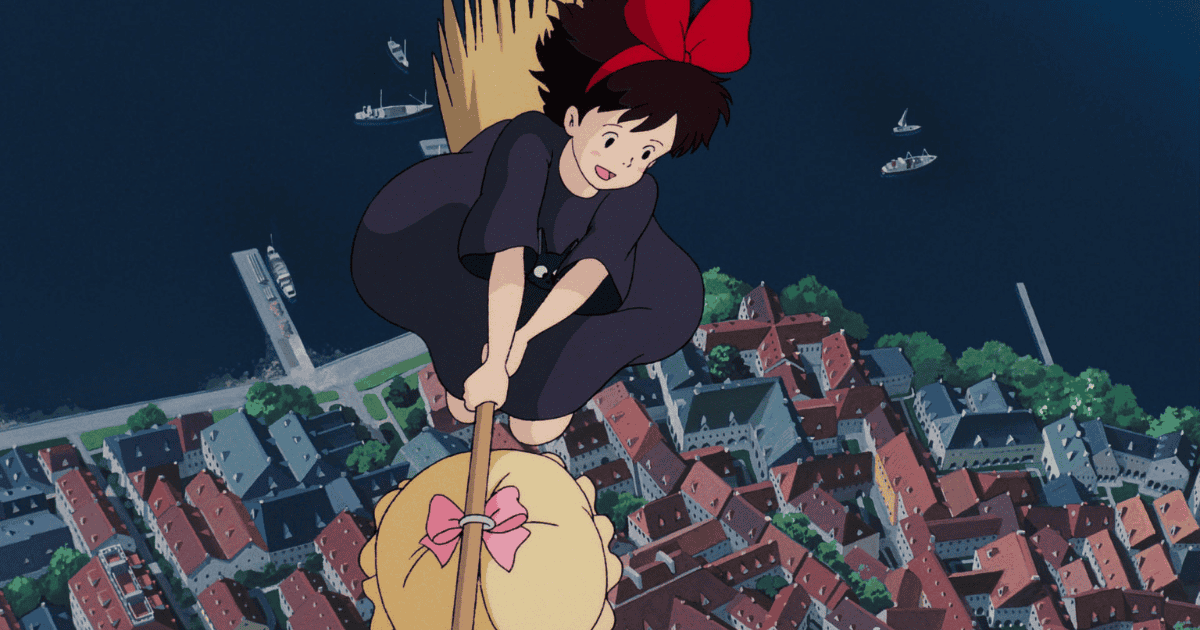
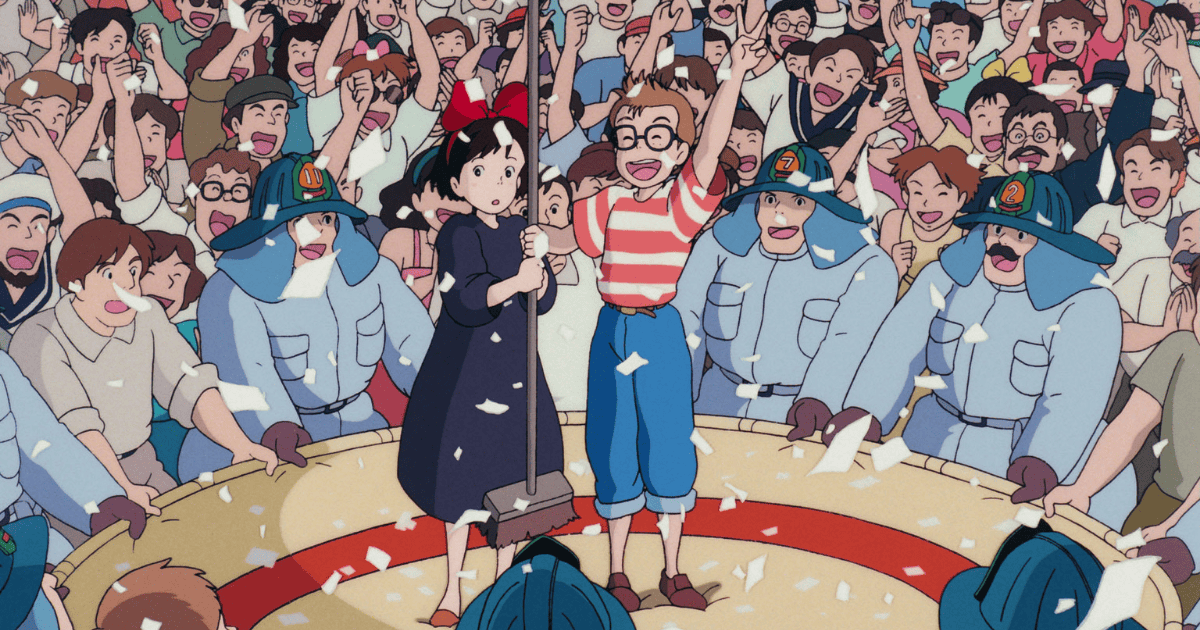
Kiki’s Delivery Service (Studio Ghibli Official) is a 1989 animated feature film written and directed by Hayao Miyazaki. It was released in Japan on July 29, 1989.
In this article, I have selected 15 of my favorite quotes from the film.
The dialogue in Kiki’s Delivery Service often becomes even more interesting when the original Japanese is compared with its English translation. For each quote, I will look at the Japanese line, its romanization, the English subtitle, a literal translation, and what the dialogue tells us about the characters and the story.
These are not necessarily the 15 most objectively famous lines in the film. This is a personal selection, and several of them are included simply because they have remained strangely fixed in my memory for years.
The film’s official English title is:
Kiki’s Delivery Service
Translation note: The English subtitle wording in this article is based on the commercially released Blu-ray available to the author. The English dub is also discussed where its wording creates a meaningful difference. Subtitle and dub wording may vary between releases and territories.
▼ Read the full story and analysis behind these quotes
On this pageContents
Kiki Quotes in Japanese and English
“I’m so excited! It’s like getting a birthday present!”
あらそう? 私は贈り物の蓋を開ける時みたいにワクワクしているわ。
Ara sō? Watashi wa okurimono no futa o akeru toki mitai ni wakuwaku shite iru wa.
I’m so excited! It’s like getting a birthday present!
Really? I’m as excited as I am when opening a present.
Read the Commentary and Analysis
Kiki says this after Jiji warns her that she should choose the timing of her departure more carefully.
The line perfectly captures the innocent, dreamy version of Kiki who exists before the journey begins.
Her excitement is so complete that it makes the viewer slightly worried. Even so, perhaps a departure into the unknown can only happen in this form.
A young person may understand intellectually that the future will not contain only good things. Yet the belief that something brilliant must be waiting ahead is one of youth’s privileges and one of the forces that makes a challenge possible.
Put another way, youth possesses a baseless sense of invincibility.
As we continue living, we inevitably discover our own weakness, foolishness, and limitations. Those discoveries gradually take away our willingness to challenge the unknown and can transform us into conservatives in the ugliest sense of the word.
Perhaps the anxiety I now feel while watching Kiki’s innocence is simply evidence that I am getting older.
The subtitle changes the general image of opening a gift into the more familiar expression “getting a birthday present.”
The dub expands the thought further: “You know, ever since I turned 13, I’ve been excited about making this trip.” The useful expression there is “turned 13.” In English, reaching a new age is commonly expressed with the verb “turn,” as in “I turned 20 today.”
“I didn’t ask for your help.”
助けてくれてありがとう。でもあなたに助けてって言った覚えはないわ。それにキチンと紹介もされてないのに、女性に声をかけるなんて失礼よ。
Tasukete kurete arigatō. Demo anata ni tasukete tte itta oboe wa nai wa. Sore ni kichinto shōkai mo sarete nai noni, josei ni koe o kakeru nante shitsurei yo.
I didn’t ask for your help. I guess I have to thank you… but it was rude for you not to introduce yourself first.
Thank you for helping me, but I don’t remember asking you to help. And it is rude to speak to a lady before you have been properly introduced.
Read the Commentary and Analysis
This is the sort of scene that makes me want to send Kiki a famous line from Char Aznable:
“It is difficult to admit the mistakes caused by one’s own youth.”
Tombo’s cry of “Thief!” allows Kiki to escape being questioned by the police. All she really needed to say was:
“Thank you. You saved me. I’m new to this city and had no idea what to do.”
Instead, Kiki has already had her confidence crushed by the city’s cold reception. She is confused, embarrassed, and painfully aware of her own inadequacy.
Her hostility toward Tombo is produced by that awareness.
I can only admire Tombo’s steel-like spirit for refusing to be discouraged by such treatment.
Tombo is a good man.
The subtitle compresses Kiki’s long reprimand while preserving its basic structure: reluctant gratitude followed by an accusation of bad manners.
The dub makes her reasoning much more explicit: “Thank you for getting me out of trouble, but I really shouldn’t be talking to you… It’s very rude to talk to a girl before you’ve been introduced and before you know her name.”
“Boy, this is expensive.”
暮らすって物入りねぇ。
Kurasu tte monoiri nē.
Boy, this is expensive.
Living on your own costs a lot, doesn’t it?
Read the Commentary and Analysis
Kiki says this while looking at the price of a frying pan after finally securing a room at Osono’s bakery.
Living alone can have many meanings, but one of the most important is simply learning what things cost.
A child living under parental protection may understand the prices of toys, games, and other things personally desired. Food, cleaning products, cookware, and the ordinary objects required to maintain a life remain almost invisible.
Discovering the prices of unremarkable things—and learning to balance income against expenses—is one of the rites of passage into adulthood.
The Japanese word monoiri describes a situation that requires considerable expense. The subtitle focuses on the expensive frying pan directly, while the Japanese makes a broader discovery about the cost of living itself.
The dub uses a similarly direct reaction: “Ah, wow, this costs too much.”
“I don’t find flying that much fun. It’s more of a job to me.”
私のは仕事だもん、楽しいことばかりじゃないわ。
Watashi no wa shigoto da mon, tanoshii koto bakari janai wa.
I don’t find flying that much fun. It’s more of a job to me.
For me, it is work, so it is not always fun.
Read the Commentary and Analysis
Kiki says this after Tombo tells her that he wishes he had been born into a family of witches.
Strictly speaking, flying is not unpleasant simply because it is work. It became less enjoyable because Kiki turned it into her work.
Like many people, I once admired the idea of turning a hobby into a profession or earning money by doing what I loved.
Achieving that can be wonderful. At the same time, in nine cases out of ten, the hobby gradually becomes less enjoyable and the beloved activity begins to feel unpleasant.
Of course it does. It is work.
Most people, however, do not possess a hobby developed enough to become a profession, and they may not love their favorite activities quite that intensely. They are therefore spared this particular form of suffering.
Which life is happier?
There is probably no answer, because neither side can fully experience the life of the other.
The subtitle’s expression “more of a job” implies “more a job than a pleasure,” with the second half of the comparison left unstated.
The dub is even more explicit: “Flying used to be fun until I started doing it for a living.” In that respect, it states the situation more precisely than the Japanese dialogue.
“Without even thinking about it, I used to be able to fly.”
私、前は何も考えなくても飛べたの。でも、今は分からなくなっちゃった。
Watashi, mae wa nani mo kangaenakute mo tobeta no. Demo, ima wa wakaranaku nacchatta.
Without even thinking about it, I used to be able to fly. Now I can’t even begin to remember how I ever managed to do it.
Before, I could fly without thinking about anything. But now I no longer know how.
Read the Commentary and Analysis
Kiki says this to Ursula after losing the ability that had once felt as natural as breathing.
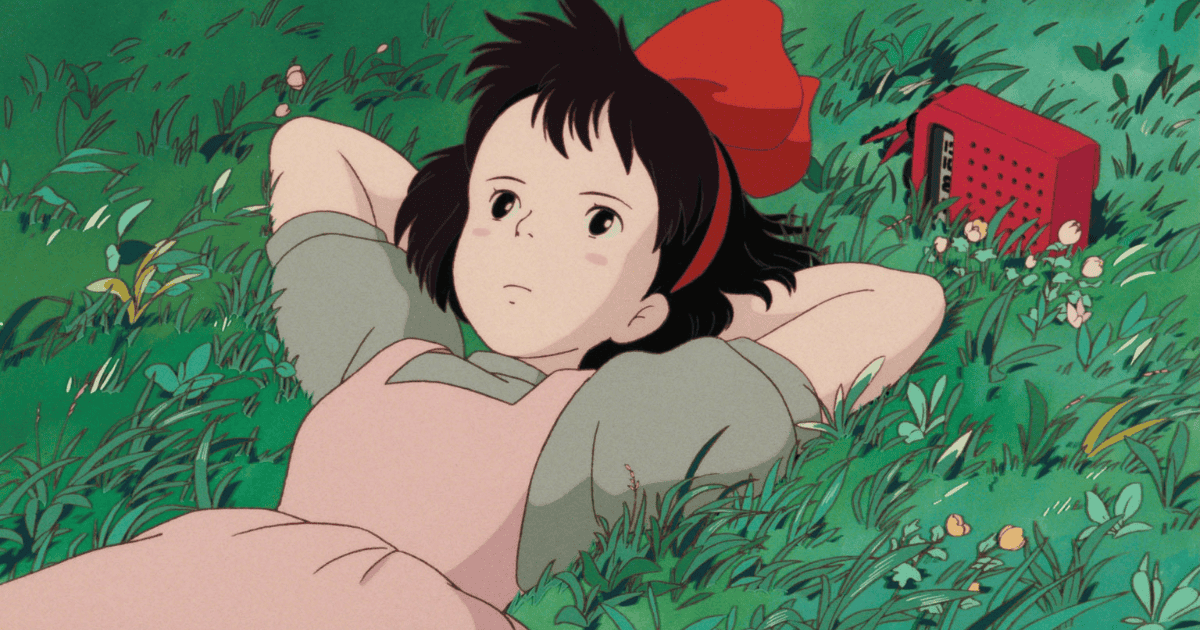
The line describes a frightening stage in any developed skill: the moment when an action that once happened instinctively becomes impossible because we have started watching and judging ourselves too closely.
Kiki has not forgotten a sequence of technical instructions. She has lost the unexamined confidence that allowed her body and magic to work together.
That is why simply trying harder does not solve the problem.
The subtitle intensifies the loss with “I can’t even begin to remember,” making the former ability feel almost inaccessible.
The dub takes a slightly different direction: “Without even thinking about it, I used to be able to fly. Now I’m trying to look inside myself to find out how I did it.” That version emphasizes Kiki’s attempt to understand herself rather than her inability to remember.
“There are still times when I feel sad… but all in all, I sure love this town.”
落ち込むこともあるけれど、私、この街が好きです。
Ochikomu koto mo aru keredo, watashi, kono machi ga suki desu.
There are still times when I feel sad… but all in all, I sure love this town.
There are times when I feel down, but I like this town.
Read the Commentary and Analysis
This famous phrase closes Kiki’s Delivery Service.
Kiki says that she loves the town, but ultimately I think she has learned to love the version of herself that is continuing to work hard within it.
A person fortunate enough to experience a secure and satisfying childhood may not even understand what it means to like oneself.
Life eventually forces us to face difficulties, and those difficulties reveal our weakness. Once we discover the feeling of disliking ourselves, we also begin to understand that the opposite feeling must exist.
To like oneself, perhaps it is first necessary to recognize one’s powerlessness and still confront something difficult.
The result may be insignificant. It may even be terrible.
Yet when we look back, there may remain a series of days that allow us to say, “Well, at least I tried.” Repeating that process may be what learning to like oneself actually means.
I have spent much of my own life running away from various difficulties, so I cannot say that I particularly like or dislike myself.
The subtitle’s “all in all” means “considering everything.” Here, however, it does not weaken “I sure love this town.” It strengthens it.
The feeling is closer to: “A lot has happened, but when all is said and done, I really do love this town.”
The dub uses almost the same structure, replacing sadness with occasional homesickness and “town” with “city.”
▼ Read more about Kiki’s background and character analysis
Jiji Quotes in Japanese and English

“Your mother’s broom would be better.”
ぼくもお母さんのホウキがいいと思う。
Boku mo okāsan no hōki ga ii to omou.
Your mother’s broom would be better.
I also think your mother’s broom would be better.
Read the Commentary and Analysis
The more I think about Kiki’s Delivery Service, the more important the fact that Kiki takes her mother’s broom begins to seem.
It drives the story forward and also functions as a major symbol.
Near the end of the film, Kiki loses her ability to fly. In one sense, this represents the moment when her savings finally run out.
Until then, she has survived through inherited talent and the accumulated experience of her childhood. When she encounters a genuinely new problem, those resources are no longer sufficient, and she is crushed by the discovery of her own powerlessness.
Conversely, the mother’s broom symbolizes the reserve that allowed Kiki to survive as long as she did.
It also supports her journey as a final allowance from home. With one careless decision, Kiki might not even have reached the city.
Jiji betrays Kiki’s preference for her handmade broom and sides with her mother. His judgment was entirely correct.
The subtitle is straightforward. The dub softens the betrayal slightly: “Your broom is nice, but let’s take your mother’s.”
“Disgusting. What a stuck-up cat.”
ヤな感じ。あの猫見た?
Ya na kanji. Ano neko mita?
Disgusting. What a stuck-up cat.
What an unpleasant feeling. Did you see that cat?
Read the Commentary and Analysis
This is Jiji’s reaction to the cat accompanying the senior witch whom Kiki meets shortly after beginning her hopeful journey to find a town of her own.
Kiki never openly states what she thinks of the senior witch, but she probably feels much the same way.
Still, meeting her before reaching the new city may have been fortunate in one respect. The encounter forces Kiki to recognize the weight of the fact that flying is her only special ability.
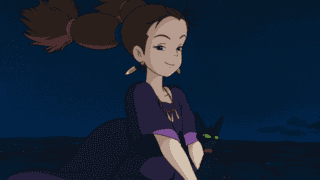
The subtitle’s key expression is “stuck-up,” meaning arrogant or excessively self-important.
The dub uses “snob” instead: “Geez. What a snob—and did you see that cat?” A snob is someone who looks down on others, while “Geez” is an exclamation resembling “Good grief” or “Come on.”
▼ Read more about Jiji’s background and character analysis
Tombo Quotes in Japanese and English
“Miss Witch!”
まじょこさ~ん。
Majoko-sān.
Miss Witch!
Little witch!
Read the Commentary and Analysis
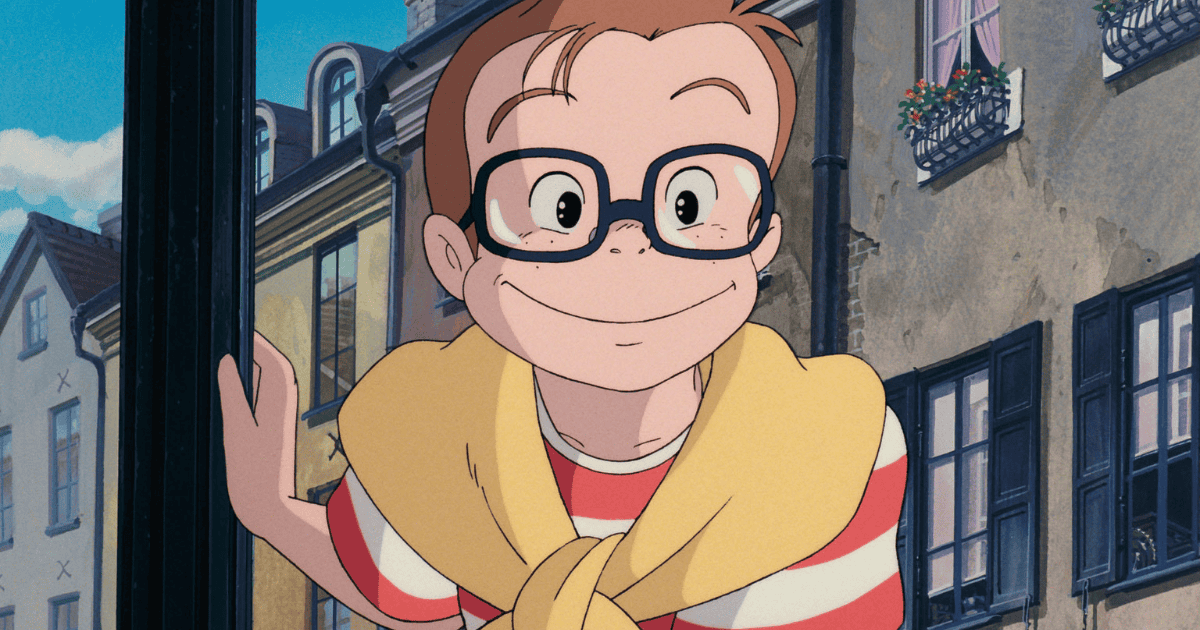
Tombo calls this out when he encounters Kiki again but still does not know her name.
It is not exactly a profound quotation. I included it because I wanted to know how the unusual Japanese form of address had been translated.
Both the subtitle and the dub use “Miss Witch.”
But Tombo, my boy, this is an overwhelmingly boyish thing to shout.
Even if he had to pretend, he should first have expressed concern for Kiki after hearing that she had been ill.
Fortunately, he still has plenty of opportunities to recover.
“He asked how a witch could catch a cold.”
魔女も病気になるんですか?
Majo mo byōki ni naru n desu ka?
He asked how a witch could catch a cold.
Do witches get sick too?
Read the Commentary and Analysis
Strictly speaking, this is not a line we hear Tombo say directly. Osono reports his question to Kiki.
It certainly sounds like something Tombo would ask, but it is also an astonishingly thoughtless and foolish question.
On the other hand, when most people hear the word “witch,” they may first imagine an old woman with a hooked nose. From that perspective, Tombo’s uncertainty about whether witches catch ordinary illnesses may not be completely absurd.
The subtitle changes the direct Japanese question into reported speech because Osono is relaying what Tombo said.
The dub uses essentially the same structure.
“I sure wish I was born into a witch family.”
僕も魔女の家に生まれればよかった。キキなんかホウキでツィーだけどさ。僕なんかコレだもんな。
Boku mo majo no ie ni umarereba yokatta. Kiki nanka hōki de tsuī dakedo sa. Boku nanka kore da mon na.
Gosh, I sure wish I was born into a witch family. You can just fly away on a broomstick, but me… that’s all I can do.
I wish I had been born into a family of witches too. You can simply zoom away on a broom, Kiki, but all I have is this.
Read the Commentary and Analysis
Tombo undoubtedly intends to tell Kiki that she possesses an amazing ability.
Unfortunately, the impression he creates is closer to:
“You have it easy, Kiki.”
The line might have caused no problem while Kiki still lived comfortably in her hometown. For a girl struggling desperately to survive in an unfamiliar city, however, it is not especially pleasant.
This kind of tragedy continues to occur at every age.
When a person is young, others may still tolerate it as a mistake of youth. Once someone passes thirty, the response tends to become, “You should understand that by now.”
It is therefore best to recognize youthful mistakes while we are still young and use them to improve the person we become tomorrow.
Of course, if that were easy, we would not continue repeating the same mistakes throughout our lives.
The subtitle uses the familiar conditional construction “I wish I was born…” The more formally conventional version would be “I wish I had been born…” because Tombo is imagining a different past.
The dub uses the textbook-like sentence “I wish I could fly,” making the unreal wish even clearer.
▼ Read more about Tombo’s background and character analysis
Osono Quotes in Japanese and English
“There are many kinds of people in a big town like this.”
大きな町だからいろんな人がいるさ。でも私はあんたが気に入ったよ。
Ōkina machi dakara ironna hito ga iru sa. Demo watashi wa anta ga ki ni itta yo.
There are many kinds of people in a big town like this. Take me, for instance. I like you very much.
It is a big town, so there are all kinds of people. But I like you.
Read the Commentary and Analysis
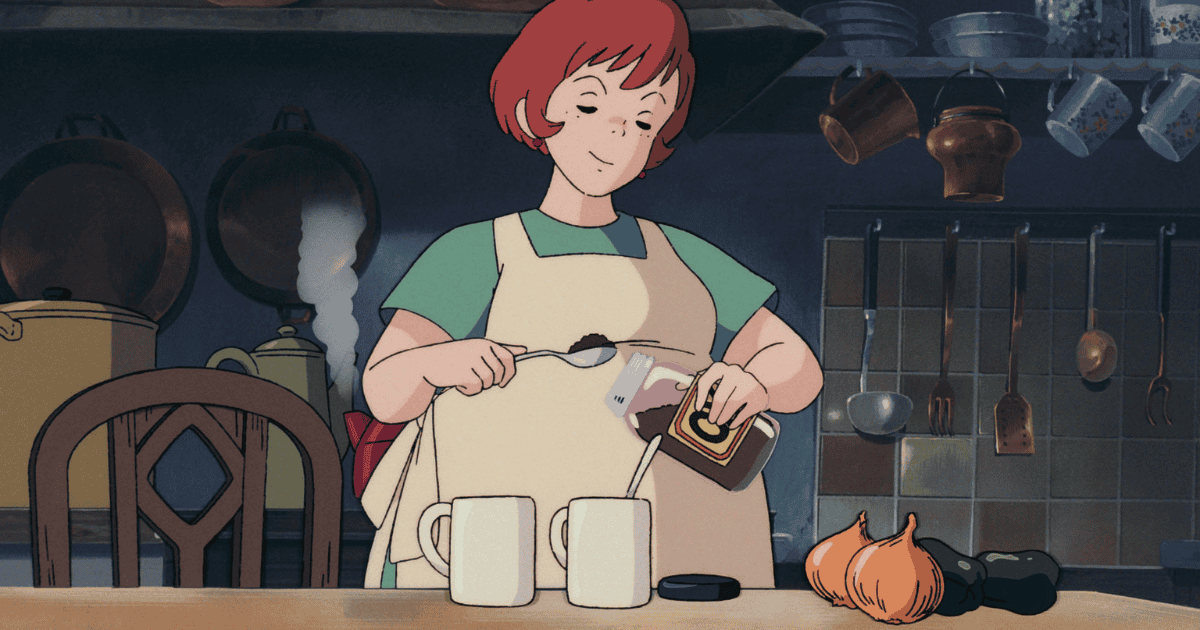
Osono says this after Kiki, discouraged by her first experiences in the city, remarks that the people there do not seem to like witches.
The fact that Osono directly tells Kiki, “I like you,” shows how completely she understands what the girl needs.
A foolish person—and perhaps this is especially common among men like us—might respond with something superficially constructive:
“Maybe the townspeople were just surprised.”
Yet that constructive statement effectively denies the suffering of the person standing in front of us.
It amounts to saying:
“Your pain comes from your own misunderstanding, so the problem is really you.”
Even when we understand this intellectually, it is easy to make the same mistake.
I would like to learn from Osono, eliminate that response as much as possible, and become someone capable of standing beside another person’s pain.
The subtitle expands Osono’s direct statement with “Take me, for instance,” creating a smooth bridge from the many kinds of people in the city to the one person who already likes Kiki.
The dub uses a similar structure: “Depends on the people. Now take me, for instance. I just met you, and I know I like you.”
“It makes you look beautiful and mysterious.”
黒はおんなを美しく見せるんだから。
Kuro wa onna o utsukushiku miseru n dakara.
It makes you look beautiful and mysterious.
Black makes a woman look beautiful.
Read the Commentary and Analysis
Kiki runs to Osono in a panic after receiving Tombo’s party invitation because her black dress is the only outfit she owns.
I do not know what Osono truly thought, but this was probably both the best answer and the only answer available.
She likely had no age-appropriate dress to lend Kiki. There was simply nothing else she could say.
Various events ultimately prevent Kiki from reaching the party.
Perhaps that was fortunate.
A party depends more on behavior than clothing, and Tombo would probably have helped her. Even so, surrounded by guests who had dressed carefully for the occasion, Kiki’s completely black dress would have attracted considerable attention.
Those curious looks might have been extremely difficult for her to endure.
Perhaps paying attention to something as unimportant as clothing is precisely what allows us to stop thinking about clothing once we enter the room.
The Japanese makes a general statement about the color black. The subtitle changes the subject to Kiki’s particular dress and adds “mysterious,” a quality commonly associated with a witch dressed in black.
▼ Read more about Osono’s background and character analysis
Ursula’s Quote in Japanese and English
“I realized that I was just imitating other painters.”
絵、描くの楽しくてさ。寝るのが惜しいくらいだったんだよ。それがね、全然描けなくなっちゃった。描いても気に入らないの。それまでの絵が誰かの真似だって分かったんだよ。どこかで見たことがあるって。自分の絵を描かなきゃって……。
E, kaku no tanoshikute sa. Neru no ga oshii kurai datta n da yo. Sore ga ne, zenzen kakenaku nacchatta. Kaite mo ki ni iranai no. Sore made no e ga dareka no mane da tte wakatta n da yo. Dokoka de mita koto ga aru tte. Jibun no e o kakanakya tte…
I loved painting. So much that I couldn’t sleep. Then one day, for no reason, I became unable to paint. So, I just kept on painting anyway, but still it was no good. I realized that I was just imitating other painters. Just copies of paintings I’d seen somewhere. I swore I’d paint my own pictures.
I loved painting so much that going to sleep felt like a waste. Then I became completely unable to paint. Even when I painted, I disliked the result. I realized that everything I had painted until then was an imitation of someone else—something I had seen somewhere before. I knew I had to paint my own pictures.
Read the Commentary and Analysis
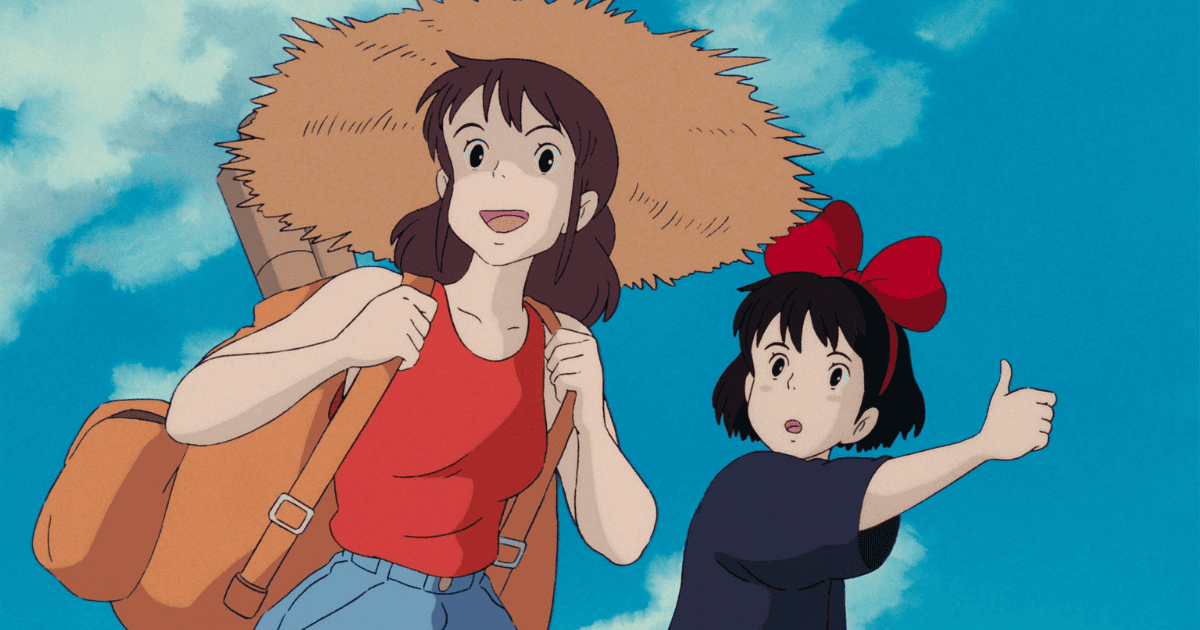
Ursula tells Kiki this story during the night Kiki spends at her cabin after her flying power has weakened and she can no longer understand Jiji’s words.
Ursula responds to Kiki’s crisis by describing a period when she herself lost the ability to create.
This is a film made by Hayao Miyazaki, a person who has spent his life drawing, and it contains a direct conversation about what it means to draw.
It is difficult not to hear the director’s own feelings in the scene.
The knowledge that even a master such as Miyazaki experienced—or perhaps continued to experience—this suffering may give courage to many people.
It may also fill others with despair.
Building a life around one’s talent is a remarkably cruel bargain.
The subtitle organizes Ursula’s account into a clear sequence: overwhelming love, sudden inability, repeated failure, recognition of imitation, and the decision to search for an individual voice.
The dub adds that she painted until she fell asleep at her easel and describes the imitations as “not very good copies either.” That version emphasizes her feeling that she had lost her ability, while the Japanese places slightly more weight on realizing that the earlier work had never truly been her own.
▼ Read more about Ursula’s background and character analysis
Madame’s Granddaughter’s Quote in Japanese and English
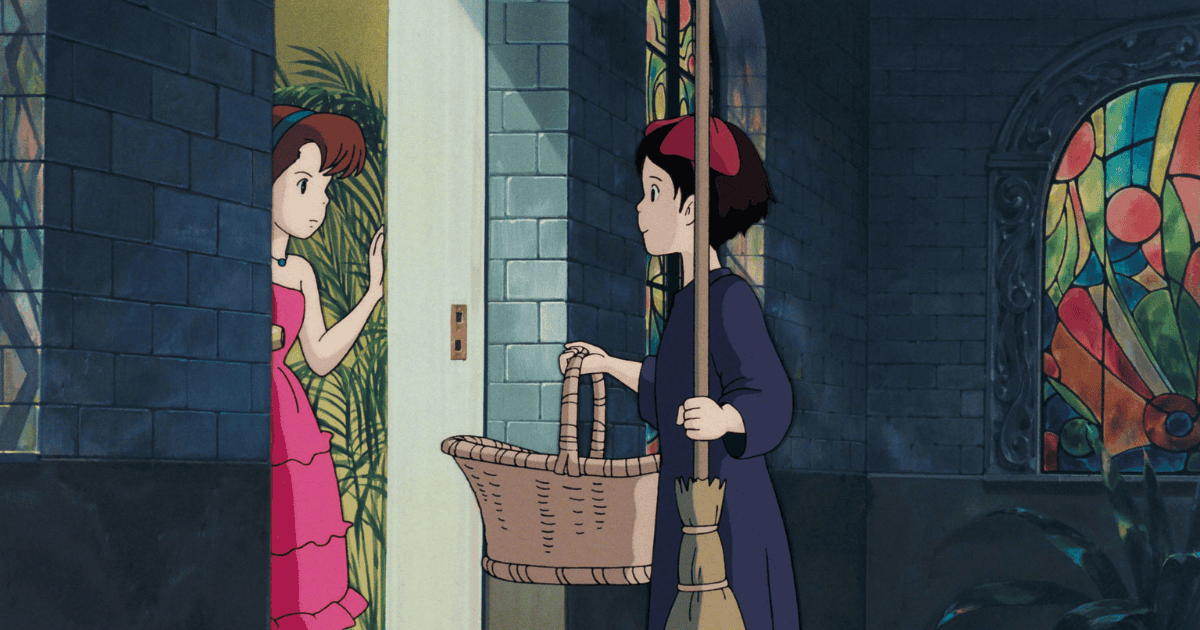
“I hate Grandma’s stupid pies.”
私、このパイ嫌いなのよね。
Watashi, kono pai kirai na no yo ne.
I hate Grandma’s stupid pies.
I don’t like this pie.
Read the Commentary and Analysis
Madame’s granddaughter says this while reluctantly accepting the homemade herring pie that Kiki has carried through heavy rain.
It is probably not something one should say within the hearing of a delivery worker who has struggled through a storm to bring the package.
At the same time, perhaps she had become so thoroughly sick of the herring pie that the words escaped before she could stop them.
Is there any way to tell a grandmother that you dislike her herring pie without hurting her?
Continuing to accept it despite disliking it may itself be one form of a granddaughter’s love.
The subtitle is strikingly harsh. The Japanese kirai means dislike or hate, but the English uses “hate” and even adds “stupid.”
Because “hate” expresses intense emotional rejection, non-native speakers are often safer using the milder “don’t like.”
Conversely, the subtitle suggests that the granddaughter’s dislike leaves absolutely no room for affection toward the pie itself.
Perhaps Madame should finally begin to notice.
The dub uses the same forceful expression.
▼ Read more about Madame’s granddaughter and the film’s other characters
My Three Favorite Kiki’s Delivery Service Quotes
Those are the 15 lines I personally selected from Kiki’s Delivery Service.
My own top three are:
- “He asked how a witch could catch a cold.”
- “I hate Grandma’s stupid pies.”
- “There are still times when I feel sad… but all in all, I sure love this town.”
The first is such an innocent and thoughtless Tombo question that it becomes strangely unforgettable.
The second gives the film one of its sharpest collisions between sincere kindness and another person’s complete indifference.
The third brings Kiki’s journey to a close by showing that loving the town and accepting the person she has become there are ultimately the same thing.
Which quote from Kiki’s Delivery Service has stayed with you?
The images used in this article are from the Studio Ghibli Works Still Image Collection.
Can you name the movie before the scene comes into focus?
Put your visual memory to the test with a blurred Studio Ghibli scene.

Reader Comments