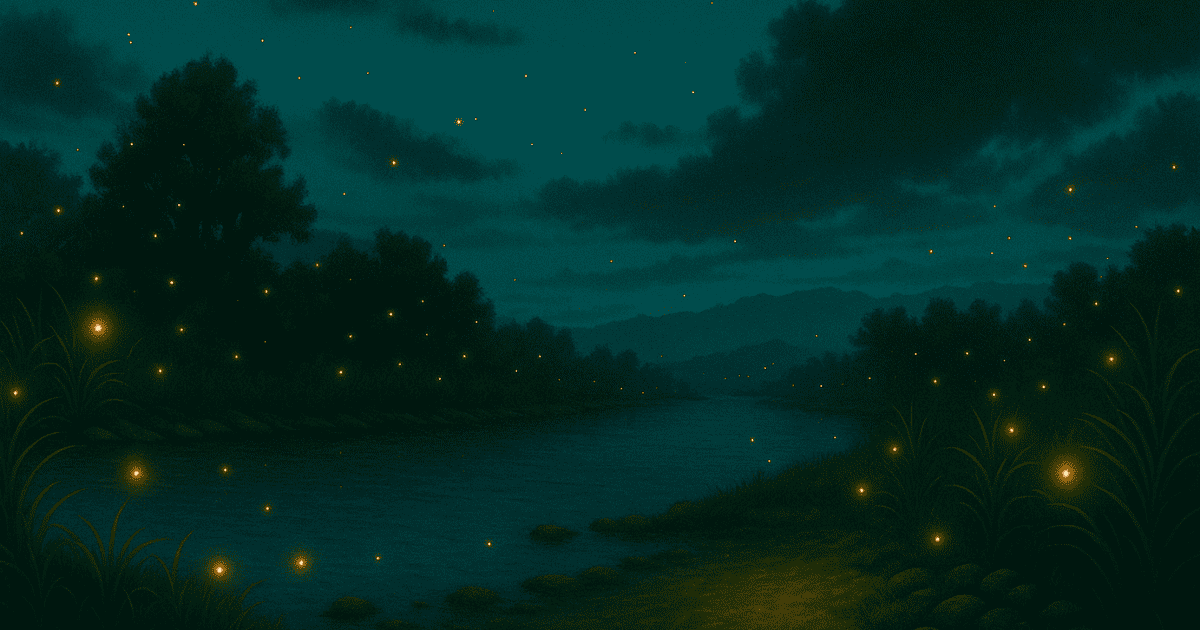
Grave of the Fireflies (Studio Ghibli Official) is a 1988 animated feature film written and directed by Isao Takahata. It was released in Japan on April 16, 1988.
In this article, I have selected seven of my favorite quotes from the film.
The dialogue in Grave of the Fireflies often becomes even more interesting when the original Japanese is compared with its English translation. For each quote, I will look at the Japanese line, its romanization, the English subtitle, a literal translation, and what the dialogue tells us about the characters and the story.
These are not necessarily the seven most objectively famous lines in the film. This is a personal selection, and several of them are included simply because they have remained painfully fixed in my memory.
The film’s official English title is:
Grave of the Fireflies
Translation note: The English subtitle wording in this article is based on the commercially released Blu-ray available to the author. Subtitle wording may vary between releases and territories.
▼ Read the full story and analysis behind these quotes
On this pageContents
Seita Quotes in Japanese and English

“September 21, 1945. That was the night I died.”
昭和20年9月21日夜。僕は死んだ。
Shōwa nijū-nen kugatsu nijūichi-nichi no yoru. Boku wa shinda.
September 21, 1945. That was the night I died.
On the night of September 21, 1945, I died.
Read the Commentary and Analysis
This is the line that opens Grave of the Fireflies.
Once a film begins with a statement like that, there is no choice but to keep watching and discover how the character reached his death. It is such an immediately compelling line that it could easily have opened the film’s trailer.
By the time the movie ends, however, that initially simple curiosity has transformed into something completely different.
We learn that Seita survived for more than a month after Japan’s surrender. We also learn that Setsuko survived beyond the end of the war, dying on August 22.
The chaos did not suddenly disappear when the war ended, so there may have been no easy way to save her. Even so, there is something almost unbearable about the fact that Setsuko died after the war was already over.
We also discover that Seita did not even know the war had ended.
Setsuko had begun showing signs of malnutrition much earlier, so the entire responsibility cannot simply be placed on Seita. Nevertheless, if he had understood the surrender and the destruction of the Combined Fleet sooner, his behavior might have changed.
Personally, I suspect that it probably would not have changed very much.
The fact that Seita survived for an entire month after Setsuko’s death is equally important.
Judging from the way he eventually dies, he must have continued to isolate himself even after losing his sister.
His death may have been a slow form of suicide. From another perspective, however, it also suggests that he was trapped in a state in which he could not simply choose to die.
Seita ultimately dies from physical weakness caused by malnutrition, but his body still keeps him alive for approximately one month.
I discuss what that final month may mean in a separate article:
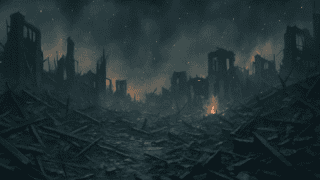
I do not mean to blame Seita for surviving after Setsuko’s death. I wish that he had survived for far longer.
Yet I cannot help feeling that something fundamental about human beings is revealed in that month.
When we become hungry, we search for something to eat. As long as we manage to eat, we continue living.
The date September 21, 1945, allows this extraordinarily short line to express that basic and relentless force of human survival.
“But where can I get that?!”
滋養なんて、どこにあるんですか!
Jiyō nante, doko ni aru n desu ka!
But where can I get that?!
Where am I supposed to find nourishment?!
Read the Commentary and Analysis
Near the end of the film, Seita takes the seriously ill Setsuko to a doctor.
The doctor diagnoses her condition as weakness caused by malnutrition and tells Seita that she needs nourishment. Seita responds with this furious question.
Because malnutrition is the diagnosis, the doctor can hardly offer any advice other than “give her nourishment.”
At the same time, Setsuko’s malnutrition has clearly been accelerated by Seita’s decisions. The line arrives at approximately the point when viewers begin wanting to shout back at him:
“This is your fault!”
The most obvious action available to Seita was to return to his aunt and apologize.
He could not do it.
More precisely, the possibility does not appear to enter his mind at all.
Seita also seems to believe that Setsuko shares his feelings completely. He does not want to return to the aunt’s house, and he genuinely believes that Setsuko would also be happier remaining away from her.
This line therefore reveals the extraordinary rigidity of Seita’s way of thinking.
Immediately before it, the doctor says:
- “She’s weak from malnutrition.”
- “All she needs is nutrition.”
The word “that” in the subtitle refers to “nutrition.”
The English wording avoids repeating the noun and makes Seita’s response sound immediate and desperate. The literal Japanese, however, places greater emphasis on the impossibility of obtaining nourishment anywhere.
▼ Read more about Seita’s background and character analysis
Setsuko Quotes in Japanese and English
“Seita!”
兄ちゃん!
Nīchan!
Seita.
Big brother!
Read the Commentary and Analysis
Setsuko says this throughout Grave of the Fireflies.
There is the version in which she is merely calling her brother, the version in which she is relying on him, and the version in which she is terribly worried about him.
Each variation is expressed through an extraordinarily subtle difference in her voice.
What makes this even more remarkable is that Ayano Shiraishi, Setsuko’s Japanese voice actress, was only five—or possibly six—years old at the time.
Setsuko’s voice is intensely memorable. After watching the film once, it can remain inside your ears for several days.
When Seita is caught stealing vegetables and taken away by the police, Setsuko repeatedly cries:
“Nīchan! Nīchan!”
At that point, the word almost begins to feel like an incantation.
Takahata had discovered an exceptional young performer.
In every instance I checked, the English subtitles replace nīchan with “Seita.”
This makes the intended person immediately clear to English-speaking viewers, but it removes the family relationship contained in the Japanese word.
Setsuko is not merely calling his name. She is calling for her big brother—the person on whom her entire world depends.
“Did our house burn down?”
お家、焼けてしもたん?
Ouchi, yakete shimotan?
Did our house burn down?
Did our home end up burning down?
Read the Commentary and Analysis
Setsuko says this while looking over the city after the devastating Kobe air raid.
The line was also used in the film’s trailer, so many viewers may remember it particularly well.
Setsuko shows considerable fear during the air raid itself. Yet when she sees the ruins afterward, she appears strangely calm and simply asks Seita whether their house burned down.
Seita answers just as casually:
“Looks that way.”
Perhaps both children are simply in shock.
The scene can also be understood as showing the difference between adults and children.
An adult standing before a destroyed city has too many things to consider. That overwhelming number of problems might itself produce a state of numbness, but there is also the immediate pressure of knowing that something must be done.
A child, by contrast, naturally follows the adults or assumes that an adult will somehow solve the situation.
That may explain Setsuko’s almost carefree tone.
Later in the story, the siblings move to the exact opposite extreme and attempt to do everything by themselves.
The irony is terrible.
The subtitle is close to the Japanese, although the original uses a soft, childlike Kansai-dialect construction that makes Setsuko’s question sound even more innocent.
“They’re Mama’s! They’re Mama’s!”
お母ちゃんのおべべあかん。お母ちゃんのおべべあかん!
Okāchan no obebe akan. Okāchan no obebe akan!
They’re Mama’s! They’re Mama’s!
No, not Mama’s clothes! Not Mama’s clothes!
Read the Commentary and Analysis
Setsuko says this when the aunt attempts to take away their mother’s clothing and exchange it for rice.
Seita already knows and has accepted that their mother is dead. When the aunt explains that the clothes could be exchanged for an entire to of rice—approximately one hundred traditional rice servings—he even appears willing to approve the trade.
Setsuko, on the other hand, has apparently not yet been told about her mother’s death and desperately resists.
By this point, we as viewers already know that their mother has died.
That allows us to understand both the aunt’s practical decision and Seita’s reaction.
Even so, Setsuko’s protest makes the scene almost unbearable.
Later, we discover that the aunt secretly told Setsuko about their mother’s death.
Perhaps she told her shortly after this confrontation.
The childlike word obebe means clothing or a pretty garment. The Kansai word akan means that something is no good, forbidden, or must not be done.
The subtitle naturally renders the emotional meaning as “They’re Mama’s!” but leaves out Setsuko’s direct plea not to take the clothes.
“Why do fireflies have to die so soon?”
何で蛍、すぐ死んでしまうん?
Nande hotaru, sugu shinde shimau n?
Why do fireflies have to die so soon?
Why do fireflies die so quickly?
Read the Commentary and Analysis
After moving into the abandoned shelter, Seita gathers fireflies for Setsuko and releases them inside the mosquito net at night.
The following morning, Setsuko buries the large number of dead fireflies in a small grave that she has dug herself.
She asks this question while burying them.
The line was also used in the film’s trailer and has become one of its most recognizable quotations.
Watching Setsuko bury the fireflies causes Seita to remember what happened to their mother.
Her body was placed in a pit with other corpses and cremated.
That image is also extremely difficult to forget.
Through this line and scene, the fireflies in Grave of the Fireflies acquire two related meanings.
They evoke the incendiary bombs that fell like a rain of fire, while also representing the fragile lives extinguished by that rain.
During that period, the whole of Japan had become a grave of fireflies.
The film is also a story created to communicate that reality.
The subtitle adds the expression “have to die,” giving the question a slight sense of protest against an apparently unavoidable rule.
The Japanese is simpler and more direct: Setsuko merely asks why they die so quickly.
▼ Read more about Setsuko’s background and character analysis
The Aunt’s Quote in Japanese and English
“Those brats are so annoying!”
勝手なことばっかりして、ほんまにあの子らには、可愛げゆうもんがないんやから。
Katte na koto bakkari shite, honma ni ano kora ni wa, kawaige yū mon ga nai n yakara.
Doing as they please. Those brats are so annoying!
They only do whatever they want. Those children truly have no endearing qualities.
Read the Commentary and Analysis
During the middle of the film, Seita and Setsuko begin living almost as though they are separated from the rest of the aunt’s household.
Seita leaves their dishes sitting in a tub beside the sink and goes to sleep. The aunt says this while washing them herself.
The word kawaige—the quality of being lovable, endearing, or worth caring for—begins to feel like an important keyword in Grave of the Fireflies.
Seita begins preparing separate meals after the aunt tells him:
“Let us prepare our meals separately from now on.”
He moves into the abandoned shelter shortly after she says:
“If you value your lives so much, why don’t you live in a dugout?”
What the aunt calls kawaige probably means the willingness to respond to such words by saying:
“I’m sorry, Aunt.”
Seita’s behavior is like an employee being told, “If you don’t want to work, go home,” and then actually going home.
In a modern context, people may reasonably argue that the person issuing such a command is responsible for what happens next.
During wartime, however, Seita’s reaction must also have been extraordinarily difficult for the aunt to endure.
If there is a practical lesson to be taken from this tragedy, perhaps it is the importance of giving specific instructions.
Hidden beneath the aunt’s bitter complaints is a demand that Seita contribute something to the household and the surrounding community.
In the past, it may have been customary not to express that demand directly. In a modern environment, however, the required contribution must be explained in concrete terms.
That is easier said than done.
Perhaps one reason modern workers have become less interested in promotion is that they have recognized how difficult it is to give such instructions responsibly.
The subtitle’s word “brats” refers to badly behaved or irritating children. “Annoying” communicates the aunt’s frustration clearly.
However, the translation loses the nuance of kawaige ga nai.
She is not merely saying that the children irritate her. She is saying that their behavior gives her no reason to feel affection for them.
That is considerably colder.
▼ Read more about the aunt’s background and character analysis
My Three Favorite Grave of the Fireflies Quotes
Those are the seven lines I personally selected from Grave of the Fireflies.
My own top three are:
- “September 21, 1945. That was the night I died.”
- “But where can I get that?!”
- “Seita!”
The first announces the ending before the story has even begun and forces us to watch how Seita reached it.
The second exposes the terrible point at which Seita’s desperation, pride, and distorted judgment can no longer be separated.
The third is only a single name in the English subtitle, but in Setsuko’s voice it can express trust, fear, dependence, and love.
Which quote from Grave of the Fireflies has stayed with you?
Can you name the movie before the scene comes into focus?
Put your visual memory to the test with a blurred Studio Ghibli scene.
Reader Comments