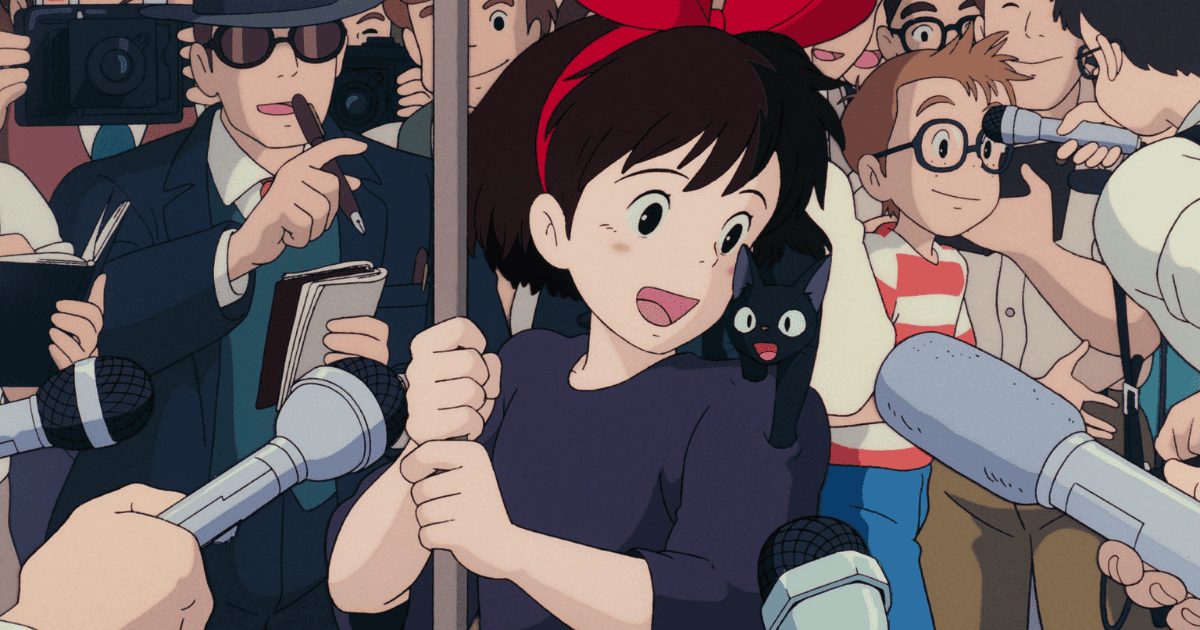
Growing up is a terrifying, magical, and often painfully lonely journey. Hayao Miyazaki’s 1989 coming-of-age masterpiece, Kiki’s Delivery Service(Studio Ghibli Official), captures this universal transition with devastating accuracy. While the soaring animation and catchy pop anthems by Yumi Matsutoya make it an endlessly rewatchable comfort movie, beneath the sunny skies of the coastal city lies a profound psychological exploration of burnout, imposter syndrome, and the sudden loss of childhood innocence.
Today, we are breaking down the complete narrative, mapping out the intricate character dynamics, and uncovering the deep thematic mysteries hiding in plain sight. What is this beloved film actually trying to tell us about raw talent and survival? Be warned: this comprehensive breakdown contains massive spoilers from start to finish. If you haven’t seen it recently, bookmark this page, go watch the movie, and come right back.
*This is a translated version. The original (Japanese) is available here.
- Detailed Plot Synopsis & Ending Explained
The narrative follows Kiki, an optimistic 13-year-old witch who arrives in a bustling seaside metropolis to claim her independence. She starts a flying delivery service but quickly collides with the harsh realities of city life. Crushed by setbacks, apathy, and crushing loneliness, she loses her magical abilities. Only through genuine human connection and sheer grit does she relearn how to fly, finally cementing her place in the adult world. This article provides a scene-by-scene breakdown and a character map. - Deep Plot Analysis & Unsolved Mysteries
Beyond the charming adventure, we will dissect the film’s hidden psychological layers. We explore “The Meaning Behind the Snooty Senior Witch,” “The Brutal Reason Kiki Lost Her Magic,” and the bittersweet reality of “Why Jiji Never Speaks Again.” (Each section links directly to our exclusive, deep-dive articles).
On this pageContents
Kiki’s Delivery Service (1989) Full Synopsis: The Path to Independence (Spoilers)
Quick Summary: The 9 Core Plot Points
To grasp the emotional arc of Kiki’s Delivery Service, here are the vital narrative milestones:
-
Leaving the Nest
Following an ancient tradition, 13-year-old Kiki leaves the safety of her parents’ rural home to begin her mandatory year of magical independence. -
The Freedom of Flight
Riding her mother’s oversized broomstick, she soars through the night sky and eventually discovers Koriko, a beautiful, bustling seaside metropolis. -
The Birth of a Business
Capitalizing on her only real skill—flying—Kiki opens an airborne delivery service out of a local bakery. -
The Familiar Bond
Her loyal partner, a sarcastic black cat named Jiji, acts as her psychological safety net, offering humor and cautious advice. -
The Kindness of Strangers
Despite initial hostility from the city, Kiki finds sanctuary through the maternal warmth of Osono, a pregnant bakery owner who offers her a free room. -
The Crushing Weight of Reality
Exhausted by a disastrous delivery in a thunderstorm and paralyzed by social anxiety around local teenagers, Kiki falls into a deep depression and suddenly loses her ability to fly. -
Finding Inspiration
Through profound conversations with Ursula, a fiercely independent young artist living in the woods, Kiki learns to process her creative burnout. -
The Ultimate Test
When her friend Tombo is left dangling from a runaway dirigible in a massive storm, Kiki must shatter her mental block and fly purely on adrenaline and grit to save him. -
A New Dawn
Having proven her worth and regained her magic on her own terms, Kiki writes home to her parents, confidently declaring that she has finally found her place in the world.
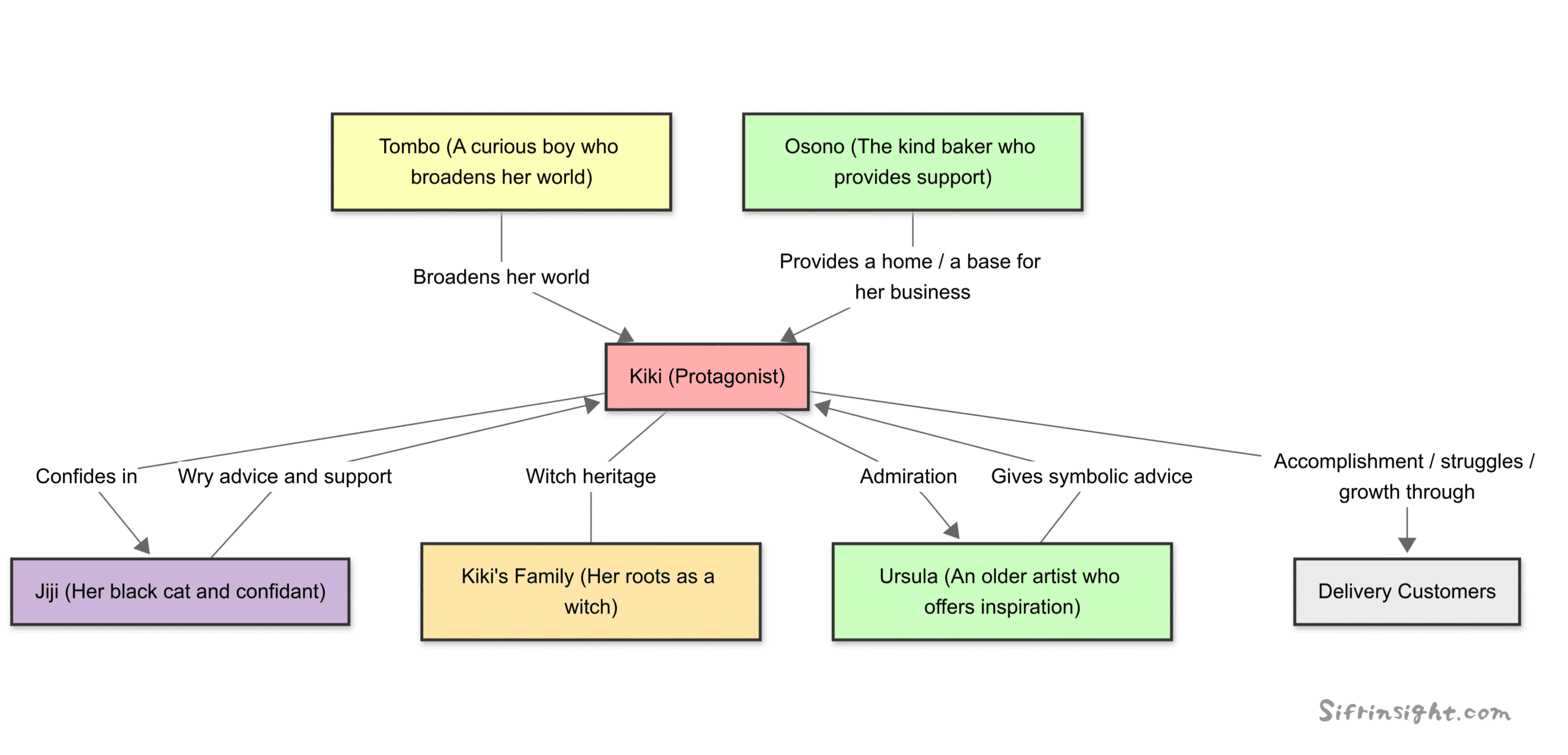
Complete Character Map
The Deeper Meaning of the Narrative
If you strip away the magic, Kiki’s Delivery Service is profoundly a story about the painful, necessary mechanics of personal growth. To truly mature, Kiki is violently forced out of her comfortable, protected childhood bubble. In confronting the apathy and complexity of the adult world, she inevitably hits a wall and loses her defining talent: her magic.
Before her crisis, everything she had was essentially a gift—her mother’s broom, her inherited magic, and Jiji’s protective inner voice. They shielded her from true hardship.
Losing those safety nets forces her to hit rock bottom. By confronting a terrifying crisis with absolutely no one to rely on but herself, Kiki ultimately forges her own, authentic strength.
In Miyazaki’s universe, “magic” is never a convenient superpower that fixes everything; rather, it is a demanding craft that requires maintenance, suffering, and intense self-reflection.
With that thematic context established, let’s dive into the detailed scene-by-scene breakdown.
Detailed Synopsis: A Scene-by-Scene Breakdown
Part 1: Leaving the Nest and Arriving in Koriko
Our protagonist is Kiki, an optimistic, slightly naive 13-year-old witch. Following an ancient tradition, she must leave home on a night with a full moon to spend a year alone in a new town, proving she can survive independently. Accompanied by her cynical black cat, Jiji, Kiki desperately wants to leave on a small, cute broom she wove herself. However, her mother gently intervenes, forcing her to take an old, sturdy, and reliable broom instead.
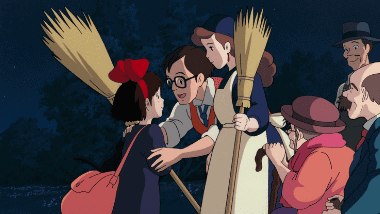
Kiki launches into the night, vibrating with excitement. Along her flight path, she encounters a senior witch who has already successfully completed her training. Seeking camaraderie, Kiki strikes up a conversation, but the older girl is incredibly snooty and dismissive. The senior witch brags about her fortune-telling skills, performs a flashy aerial maneuver, and leaves a stunned Kiki flying alone in the dark.
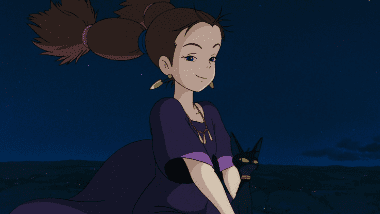
Things quickly go from bad to worse. The radio weather forecast proves completely wrong, and Kiki flies straight into a violent thunderstorm. Seeking emergency shelter, she dives into an open freight train car filled with hay. Exhausted, she and Jiji fall asleep alongside some cows.
When she wakes up the next morning, the train is chugging along a breathtaking coastline. Poking her head out, she spots Koriko—a massive, clock-towered metropolis seemingly pulled from a European postcard. It is the perfect “seaside town” she always dreamed of.
However, her grand entrance is a disaster. Expecting a warm welcome, Kiki flies through the bustling streets but only draws annoyed, judgmental stares from the busy city dwellers. Distracted by the chaotic traffic, she nearly collides with a double-decker bus, losing control of her broom and causing a massive scene.
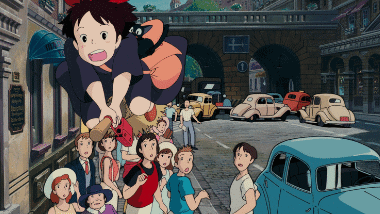
A strict police officer immediately stops her, angrily writing a ticket for public endangerment. Just as Kiki tries to explain her witch heritage, a boy yells, “Thief!” distracting the officer. The boy is Tombo, a local aviation nerd instantly obsessed with Kiki’s ability to fly.
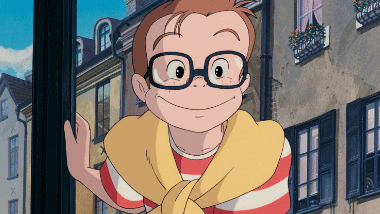
Realizing Tombo lied to the cop just to save her, Kiki feels humiliated and defensive. Viewing his aggressive fascination as mockery, she coldly brushes him off and flies away to hide.
Wandering the strange city, Kiki realizes no hotels will rent a room to an unaccompanied minor. Feeling utterly defeated, she sits outside a bakery. Suddenly, the pregnant owner rushes out, trying to return a pacifier a customer left behind. Eager to prove her worth, Kiki swoops down, grabs the pacifier, and delivers it via broomstick.
When she returns, the grateful owner insists on treating her to coffee.
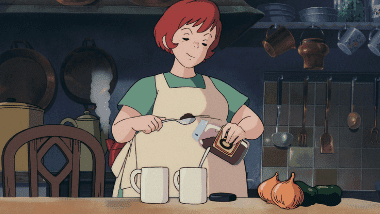
The owner is Osono, a fiercely kind, maternal woman. Upon hearing Kiki’s tragic situation, Osono immediately offers her a dusty but spacious spare room in the bakery’s attic. Kiki, overwhelmed by the first act of true kindness she’s experienced all day, gratefully accepts.
Part 2: The Bakery, the Deliveries, and the Burnout
With a roof over her head, Kiki realizes she can monetize her only talent. She proposes opening a flying delivery service. Osono generously lets her use the bakery as a storefront, offering her free rent and daily breakfast in exchange for occasionally manning the register.
Her very first client is a posh regular customer who hires Kiki to deliver a black stuffed cat as a birthday present to her nephew across the bay.

Kiki takes off, thrilled to be a working professional. But mid-flight, a freak gust of wind violently blows her off course into a dense forest. She avoids injury, but the precious stuffed cat plummets into a massive crow’s nest. When Kiki tries to retrieve it, the aggressive crows swarm her, forcing her into a panicked retreat.
Terrified of ruining her business on day one, Kiki formulates a desperate, hilarious plan: she forces Jiji to sit perfectly still in the birdcage and pretend to be the stuffed toy while she searches the woods for the real one.
Combing the forest, Kiki stumbles upon an isolated log cabin. The missing stuffed cat is sitting right on the windowsill. The cabin belongs to Ursula, a fiercely independent, bohemian painter who is currently sketching crows on the roof. Ursula happily returns the toy, but reveals the crows completely shredded its neck.

Seeing Kiki’s panic, Ursula strikes a bargain: if Kiki cleans the cabin floors, Ursula will expertly sew the toy back together. They complete the trade, forging a fast friendship.
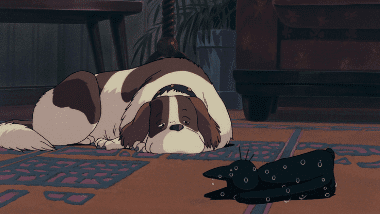
Kiki sprints back to the client’s house and executes a flawless stealth rescue, swapping the repaired toy for a hyperventilating Jiji just seconds before a giant guard dog catches them. Her first delivery is a chaotic, miraculous success.
Slowly, the business gains traction. One afternoon, Tombo visits the bakery. He enthusiastically invites Kiki to a formal “aviation club” party that evening, leaving a written invitation on the counter.
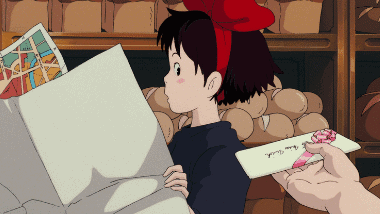
Kiki plays it cool, but internally, she is thrilled. However, she must complete two late-afternoon deliveries first. The second delivery is for Madame, a sweet elderly woman who wants to send her signature “herring and pumpkin pot pie” to her granddaughter’s birthday party.
When Kiki arrives, she learns Madame’s electric oven is broken. Refusing to let the old woman down, Kiki rolls up her sleeves and helps fire up the home’s massive, antique wood-burning oven, successfully baking the pie from scratch.
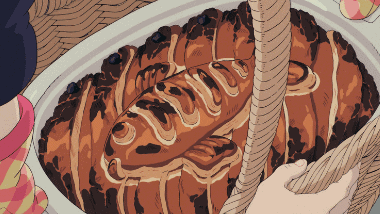
By the time it’s done, Kiki is incredibly late for Tombo’s party, and a torrential downpour has engulfed the city. She flies through the freezing, blinding rain, shielding the pie with her own body to keep it warm.
She arrives at the posh mansion soaked to the bone. However, when the granddaughter answers the door, she sneers at the pie, whining to her friends, “I hate Grandma’s stupid herring pie.” She aggressively slams the door in Kiki’s face without a shred of gratitude.
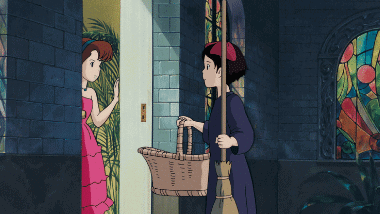
Kiki is emotionally devastated. She flies home in the freezing rain, deliberately flying past Tombo, who is standing under an umbrella waiting for her. Her spirit is completely broken.
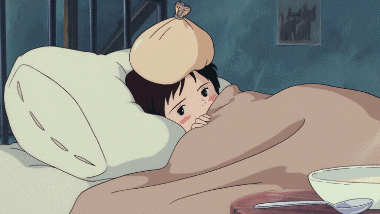
The next morning, Kiki falls severely ill with a fever. Osono plays nurse, feeding her milk porridge. When Tombo visits to check on her, Osono kindly but firmly tells him to let Kiki rest.
Once Kiki recovers, Osono plays a brilliant trick. She forces Kiki to deliver a heavy loaf of bread to a customer named “Kopori.” When Kiki arrives, she realizes Kopori is actually Tombo.
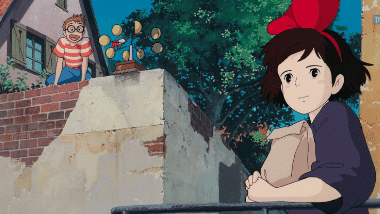
Tombo isn’t angry she missed the party. Instead, he proudly shows her his passion project: a bicycle retrofitted with a massive wooden airplane propeller. He convinces Kiki to hop on the back so they can ride out to the beach to see a massive dirigible (airship) that recently landed.
They pedal wildly down the coastal highway, catching air for brief, terrifying seconds before crashing onto a sandy beach. The near-death experience breaks the ice, and the two finally share a genuine, joyous laugh.

But the magic shatters when Tombo’s friends pull up in a convertible. They are flashy, stylish teenagers—the exact same crowd from the terrible pie delivery. Suddenly hyper-aware of her plain black dress and rural awkwardness, Kiki feels a crushing wave of inferiority. She coldly turns her back on a confused Tombo and walks all the way home alone.
Back in her room, Kiki is drowning in self-loathing. But the nightmare escalates: when she speaks to Jiji, he simply replies with a standard “Meow.” He has completely lost his human voice. Terrified, Kiki grabs her mother’s broom and sprints outside, only to realize her magic is completely gone. She cannot fly. While desperately trying to force it, she snaps her mother’s broom in half.
She is a witch without magic. As she sits paralyzed in the grass, the massive dirigible floats quietly overhead.
Part 3: The Dirigible Rescue and Finding Her Wings
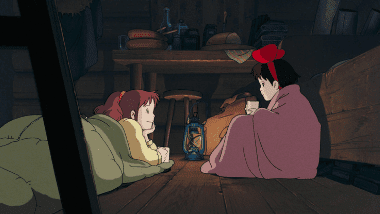
Trapped in an agonizing slump, Kiki is surprised by a visit from Ursula. Seeing Kiki’s deep depression, the artist invites her back to the forest cabin for a sleepover.
That night, illuminated by the warm glow of the fireplace, Ursula delivers the film’s profound thesis. She explains that magic and art are the same thing. Sometimes, the inspiration just vanishes. When that happens, you cannot force it. You simply have to rest, observe the world, and eventually, the power will return on its own terms.
Kiki returns to the city feeling a quiet sense of acceptance. But the next day, absolute chaos erupts. A freak gale-force wind rips the dirigible from its moorings. As the massive airship gets violently dragged across the city skyline, live television broadcasts reveal a horrifying detail: Tombo is clinging for his life to a dangling mooring rope.
Kiki sprints through the panicked crowds toward the clock tower. Pushing past the police lines, she grabs a stiff, bristly push-broom from an old street sweeper. Closing her eyes, she channels every ounce of adrenaline, grit, and desperate focus she possesses.
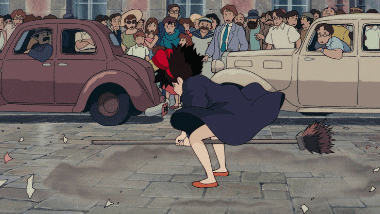
The push-broom violently jerks to life. Kiki rockets into the sky, fighting the wildly unpredictable aerodynamics of the brush. In a breathtaking sequence, she dives toward the falling Tombo, snatching his hand mere seconds before he plummets to his death.
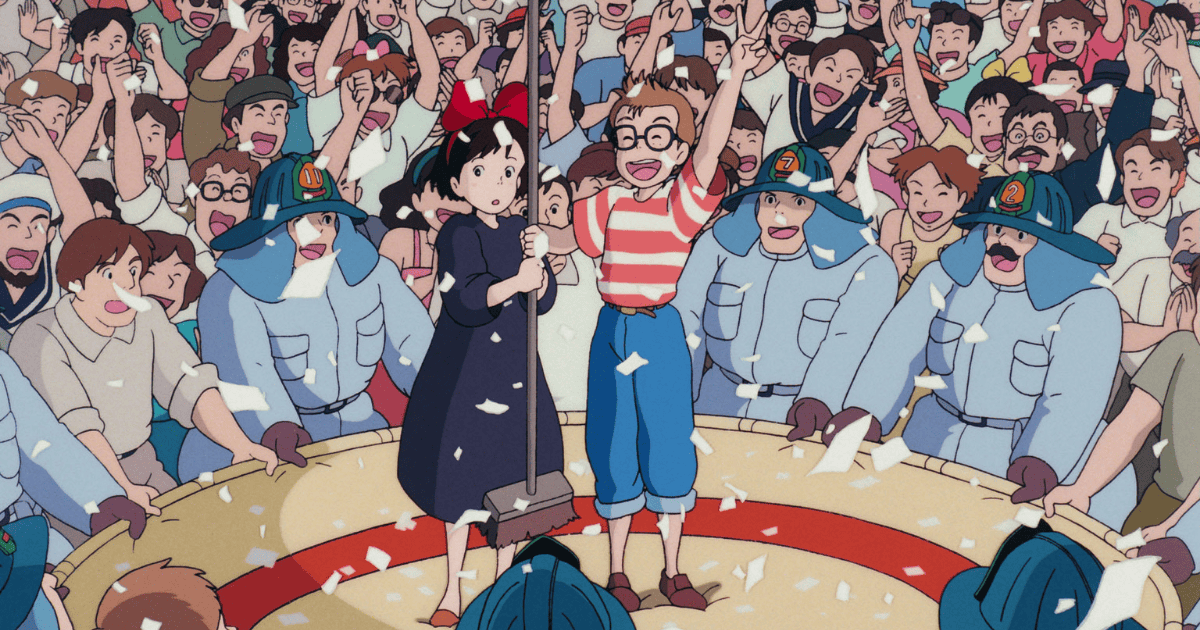
Kiki lands safely on the grass, instantly becoming a local hero. The entire city celebrates her bravery. In the crowd, Jiji hops onto her shoulder and nuzzles her. He doesn’t speak English, he just meows—but Kiki simply smiles, finally understanding that they have both grown up.
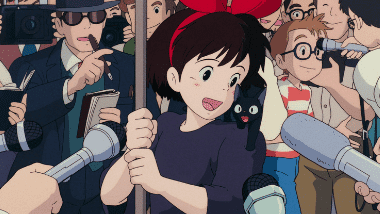
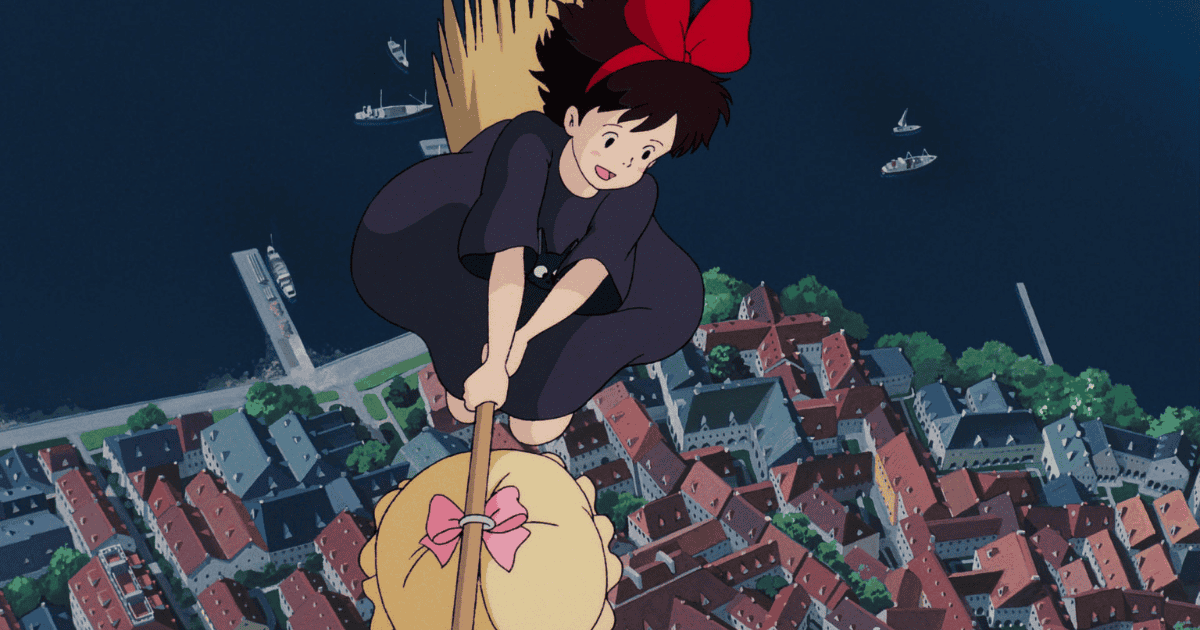
The film concludes with Kiki soaring happily over Koriko. She writes a letter to her parents, confidently stating that while the journey has been hard, she truly loves her new city.
That concludes the masterful, emotional plot of Kiki’s Delivery Service. But simply knowing the events isn’t enough; we must unpack the heavy psychological themes driving those events forward.
▼ Explore the film’s memorable dialogue in Japanese and English
Many of the film’s emotional turning points are expressed through memorable dialogue—from Kiki admitting that flying has become a job to Ursula describing the loss of her creative confidence and Kiki finally declaring her love for the town. Compare the original Japanese, romanization, English subtitles, literal translations, and detailed commentary in 15 Kiki’s Delivery Service Quotes in Japanese and English, Explained.
Kiki’s Delivery Service (1989) Deep Analysis: Unlocking the Film’s Mysteries
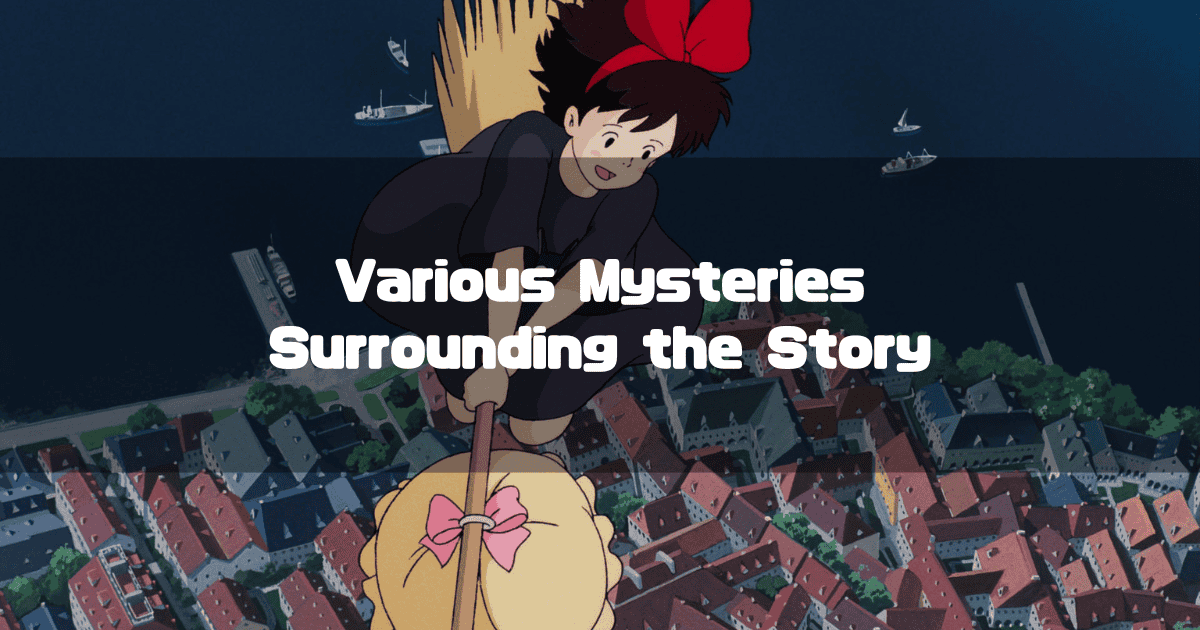
Why Was Kiki’s Encounter With the Senior Witch So Hostile?
The interaction Kiki has with the snooty senior witch early in the film is jarringly uncomfortable. The older girl’s condescending, arrogant attitude violently shatters Kiki’s bubbly optimism.
From a strict narrative perspective, this encounter is completely unnecessary; the plot would function perfectly without it. So, why did Miyazaki dedicate highly expensive animation resources to ensure Kiki was insulted right out of the gate?
I argue that this senior witch serves as a brilliant meta-narrative tool—a necessary dose of cruel reality that perfectly sets up the miraculous, almost unbelievable kindness Kiki receives later.
Read the full analysis: The Brutal Historical Reality Behind the Snooty Senior Witch
The Psychological Truth Behind Why Kiki Lost Her Magic
The absolute core of Kiki’s Delivery Service is the devastating moment Kiki loses her ability to fly. Miyazaki handles this supernatural slump with such grounded realism that we instinctively accept it as a metaphor for teenage depression.
But *why* did it happen at that exact moment? Was it just physical exhaustion, or was it a fatal collapse of her own identity? I believe the answer lies in understanding the metaphor of “inherited savings” vs. “earned strength.”
Read the full analysis: Why Kiki Lost Her Magic and Miyazaki’s Masterclass on Talent
The Heartbreaking (but Beautiful) Reason Jiji Stops Talking
This is arguably the most fiercely debated aspect of the entire film. Even after Kiki heroically regains her magic and saves Tombo, Jiji never regains his human voice. He simply meows like a normal house cat.
For decades, fans have grieved this loss, assuming Kiki’s magic was permanently fractured. However, I believe Jiji’s silence is not a tragedy at all. If you analyze what Jiji truly represents psychologically, his silence is actually the most triumphant, beautiful milestone in the entire movie.
Read the full analysis: The Profound Psychological Reason Jiji Never Speaks Again
The images used in this article are from Still Images of Studio Ghibli Works.
Can you name the movie before the scene comes into focus?
Put your visual memory to the test with a blurred Studio Ghibli scene.


Reader Comments