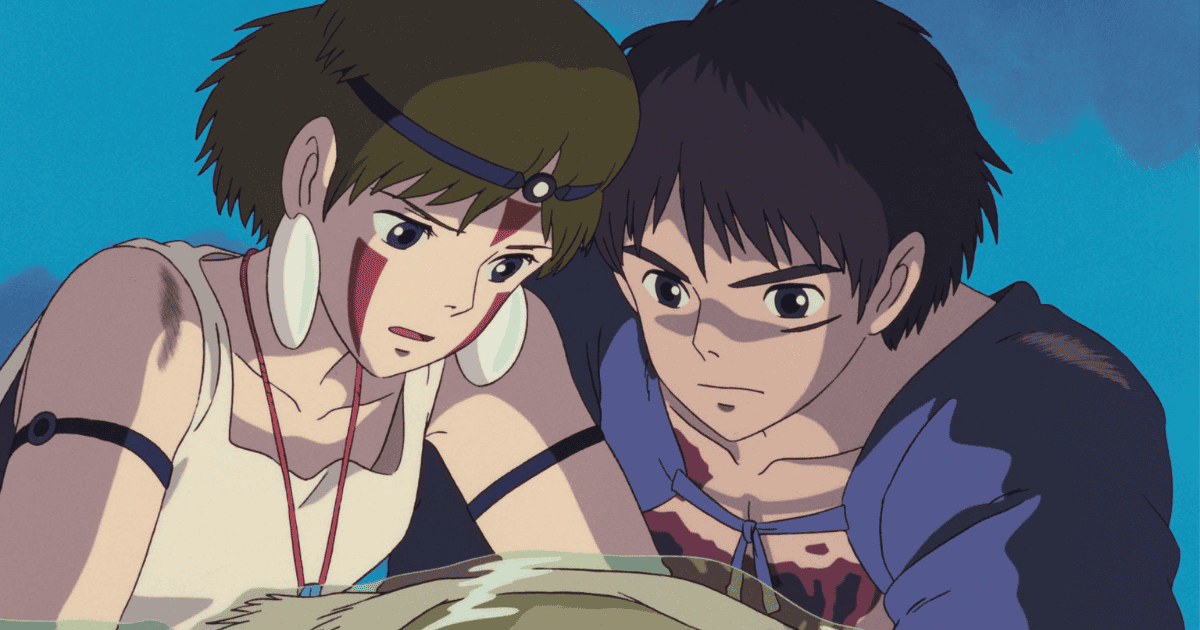
Princess Mononoke (Official Studio Ghibli Website) is Hayao Miyazaki’s animated feature released in 1997.
Here are some pieces of trivia and behind-the-scenes stories about Princess Mononoke. You do not need them to understand the film, but I think there are some intriguing details here.
*This is a translated version. The original (Japanese) is available here.
On this pageContents
Princess Mononoke: Trivia and Behind-the-Scenes Stories
The Phantom Concept: The Original Princess Mononoke
The Princess Mononoke we know today follows Ashitaka, who receives an unjust curse and is forced to leave his homeland. He meets San, the girl called Princess Mononoke, and finds a new place to live.
But the concept Miyazaki was considering after Porco Rosso (1992), the completion of the Nausicaä of the Valley of the Wind manga (1994), and Whisper of the Heart (1995), for which he drew the storyboards, was a different story. He was also considering Boro the Caterpillar (Ghibli Museum Official), which would later be shown at the Ghibli Museum.
The earliest iteration of Princess Mononoke has since been published as an illustrated picture book. It featured a story where a defeated samurai is captured by a giant, Totoro-esque cat monster (a mononoke). The beast spares his life on one condition: the samurai must offer his daughter in marriage. Ultimately, his third daughter (known as the “Third Princess” or San-no-hime) is sent to be the monster’s bride.
This early picture book was based on concept image boards drawn way back in 1980. Miyazaki initially tried to use this decade-old framework for the new film.
Making a concept from more than ten years earlier work for the present proved difficult. Story development progressed slowly, and Suzuki describes Miyazaki as being in a ‘slump.’
Then came a request to make the music video for CHAGE and ASKA’s On Your Mark. It seems to have given Miyazaki a change of pace. After finishing it, he decided to rethink the Princess Mononoke project from the ground up, leading to the film we know today. The ‘San’ from San-no-hime, the third princess, survived as a name.
Still, an old idea is not necessarily unusable. I think Miyazaki’s 1983 illustrated story Shuna’s Journey (シュナの旅) had a strong influence on the film. It follows Shuna, the prince of a small country, as he rides a Yakul to bring wheat back from the land of the god-folk. Shuna’s Journey is very good, and I recommend reading it.
- “Ghibli Textbook 10: Princess Mononoke(ジブリの教科書10 もののけ姫, in Japanese)”
- “How Princess Mononoke Was Born(「もののけ姫」はこうして生まれた, in Japanese)(DVD)”
The Title Was Announced Without Miyazaki’s Permission
In the picture-book story, the main characters are the third princess and the huge cat-like spirit she is forced to marry. The title Princess Mononoke therefore makes sense. But surely Ashitaka is the protagonist of the film we know today.
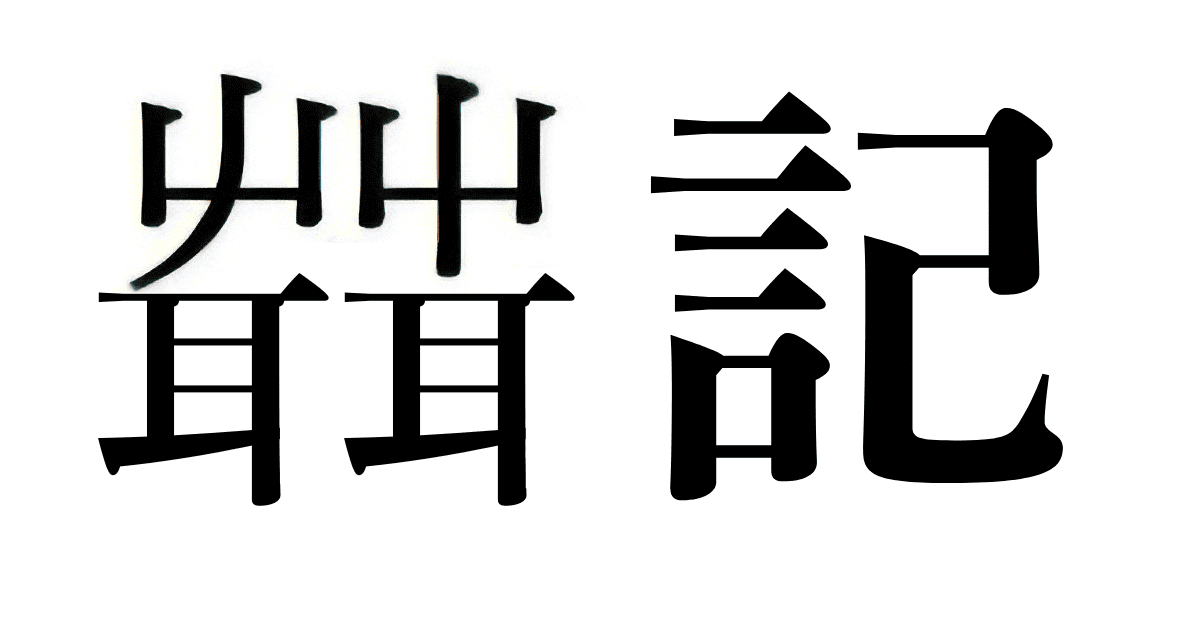
Miyazaki did consider another title: The Legend of Ashitaka (Ashitaka Sekki).
“Sekki” is a unique word and kanji character entirely invented by Miyazaki, meaning “a story passed down from ear to ear, hidden in the grass.” The custom kanji is written as follows (based on “Ghibli Textbook 10: Princess Mononoke,” using the old form of the “grass” radical for the character “setsu”):
Suzuki preferred the title Princess Mononoke. He announced the title Princess Mononoke without consulting Miyazaki in a teaser shown during the Friday Road Show broadcast of My Neighbor Totoro on December 22, 1995.
When Miyazaki found out later, he reportedly asked Suzuki loudly, ‘Oh, you’ve announced it?’ Suzuki answered, ‘I have,’ and Miyazaki went back to his room.
The film became Princess Mononoke, while The Legend of Ashitaka remained as the title of Joe Hisaishi’s piece heard just after Ashitaka leaves home.
- “Ghibli Textbook 10: Princess Mononoke(ジブリの教科書10 もののけ姫, in Japanese)”
- “How Princess Mononoke Was Born(「もののけ姫」はこうして生まれた, in Japanese)(DVD)”
The Setting Was Almost Moved Outside of Japan
As the storyboards for Princess Mononoke progressed, producer Toshio Suzuki grew deeply concerned about one of the story’s core themes: “killing the forest god.”
Suzuki wondered whether ‘killing a forest’ was even possible in a country with Japan’s plentiful rain and fertile soil. He discussed the doubt with Isao Takahata, who agreed. Put that way, it seems a perfectly reasonable question to me.
He put this concern to Miyazaki, along with the suggestion that a setting outside Japan might give the story greater universality. Miyazaki apparently offered no particular resistance and even casually suggested revisions.
Unfortunately, I do not know what happened next. In the end, though, Princess Mononoke was set in Japan during the Muromachi period, as we know.
- “Ghibli Textbook 10: Princess Mononoke(ジブリの教科書10 もののけ姫, in Japanese)”
The Failed Attempt to Kill Lady Eboshi
Suzuki found the ending in Miyazaki’s first completed storyboards too abrupt and unsatisfying. (Looking back now, I am very curious about that abrupt ending.) He suggested that Eboshi should die.
Miyazaki immediately lit up at the idea. He enthusiastically bounced back several creative proposals detailing “various ways to kill Lady Eboshi.”
This enthusiastic brainstorming session happened on a train ride to composer Joe Hisaishi’s studio. In the documentary How Princess Mononoke Was Born, you can actually see Miyazaki cheerfully declaring to Hisaishi, “It’s been decided that she will die.”
Yet Eboshi survives, losing her arm instead. When Miyazaki handed Suzuki the revised storyboards, he reportedly said, ‘Suzuki-san, I’m sorry, but I can’t kill Eboshi.’
- “Ghibli Textbook 10: Princess Mononoke(ジブリの教科書10 もののけ姫, in Japanese)”
- “How Princess Mononoke Was Born(「もののけ姫」はこうして生まれた, in Japanese)(DVD)”
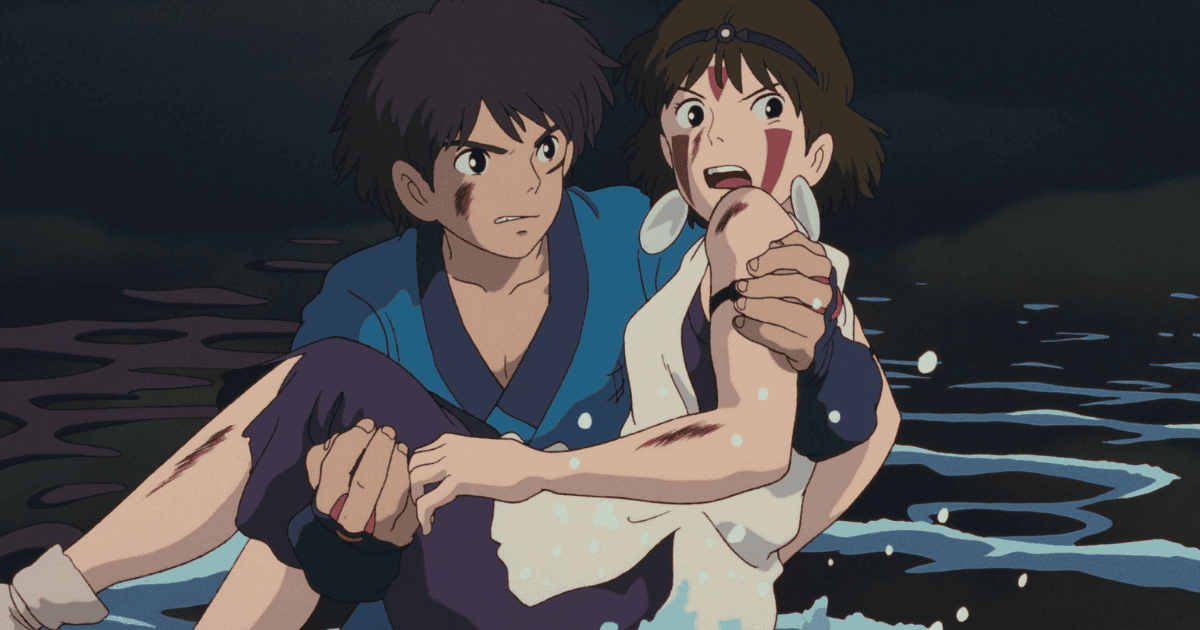
San’s Red Markings Are Actually Tattoos
The striking red markings on San’s face are tattoos, not painted markings.
The production documentary How Princess Mononoke Was Born identifies them during its discussion of cel painting and color design. The narration describes ‘crimson tattoos that express her fierce temperament.’
When San received those tattoos, however, is unknown.
- “How Princess Mononoke Was Born(「もののけ姫」はこうして生まれた, in Japanese)(DVD)”
The Subtle Cure at the End of the Film
Early in the film, Eboshi takes Ashitaka to a ‘secret garden’ in Irontown, where he sees people wrapped in bandages.
While the film never explicitly names their affliction, these individuals are suffering from Hansen’s disease (leprosy). Hayao Miyazaki confirmed this poignant detail in an interview. You can explore his thoughts on the matter in the Asahi Shimbun article, “Hayao Miyazaki talks about Princess Mononoke and Hansen’s disease: ‘A free-spirited period drama'”.
At the end, the Forest Spirit regains its head, collapses in the morning sun, and bursts apart. The forest and the people of Irontown are caught in the resulting blast.
The forest begins to recover a little. Meanwhile, the sick people’s bandages fall away, revealing signs that their illness has been healed. This is the scene in which Kouroku calls the Forest Spirit a ‘flower-blooming old man.’
- “Hayao Miyazaki talks about Princess Mononoke and Hansen’s disease: ‘A free-spirited period drama’,” Asahi Shimbun, in Japanese
Did the Kodama Evolve Into Totoro?
Miyazaki’s films almost always have some kind of adorable creature. In Princess Mononoke, I would say it is the Kodama, the tree spirits. There is a story that a Kodama later became Totoro, though whether to call it a hidden setting is debatable.
In the early character settings reproduced in ‘The Art of My Neighbor Totoro,’ the large Totoro is 1,302 years old. That would mean the Totoro we know was already alive in the period of Princess Mononoke, and that other Totoros should have been around too. Yet none appears in the film.
In How Princess Mononoke Was Born, Miyazaki also seems to have this on his mind. During a discussion with the staff about the film’s ending, he says:
“This was at the strong request of Futaki-san. She asked me to put just one small Kodama walking around at the very end. That’s what changed into Totoro.” “That makes everything consistent.”
(Original Text in Japanese)
「これはもう、二木さんたっての希望で、ちびで一匹でいいから、コダマが、ノコノコ歩いてるやつ、最後に入れてくれって。それがトトロに変化した。」「そうすると首尾一貫するんです。」
‘Futaki-san’ appears to mean animator Makiko Futaki (June 19, 1957 – May 13, 2016).
Personally, I would not call that a firm setting. But it does show that Miyazaki had the connection in mind.
- “The Art of My Neighbor Totoro, in Japanese”
- “How Princess Mononoke Was Born(「もののけ姫」はこうして生まれた, in Japanese)(DVD)”
Moro and Okkoto’s Secret Romantic Past
Akihiro Miwa voices Moro, San’s adoptive mother, in the Japanese version. Miwa’s understanding of the character was so accurate that the recording sessions went very smoothly.
In the documentary How Princess Mononoke Was Born, Miyazaki is visibly delighted while directing Miwa.
The documentary shows the recording of Moro and Okkoto’s reunion. To explain the nuance of Moro’s lines, Miyazaki tells the sound director that Moro and Okkoto used to be romantically involved and separated a hundred years ago.
When the sound director relayed this backstory to Akihiro Miwa in the booth, Miwa burst into surprised laughter, exclaiming, “What? That happened? The boar and the dog? Hahaha!”
- “How Princess Mononoke Was Born(「もののけ姫」はこうして生まれた, in Japanese)(DVD)”
The Grueling 20 Retakes for a Single Line
Sumi Shimamoto voices Toki, Kouroku’s wife and one of Irontown’s women, in the Japanese version. She also voices Clarisse in The Castle of Cagliostro and the title character in Nausicaä of the Valley of the Wind.
When Ashitaka visits the women working the huge bellows that pump air into the furnace, Toki tells them, ‘Let him take over for you while he’s here!’ This line went through twenty retakes.
Miyazaki’s feedback to Shimamoto was brutally specific: “You know, people don’t just feel overly grateful when someone comes to help them a little with their work.“
He also says, ‘You think you have to make the character kind,’ and ‘Shimamoto-san, the problem is that you think this is a job where you have to be kind to everyone. Brush him off.’ These comments help us understand the performance he wanted.
To put the scene in context, the women had looked in on the meal where the men were welcoming Ashitaka and invited him to visit them. I imagine they only meant that he should stop by; it would not have mattered if he had not come, and he might only get in the way. But Eboshi had brushed aside his situation, and he had seen the sick people struggling to live. I think this left him unsettled and in ‘I want to do something good’ mode, so he barged in and started helping when he did not need to.
Perhaps Toki immediately sensed that ‘I want to do something good’ mood and decided to let him help briefly, then send him on his way. That would explain her line: ‘Let him take over for you while he’s here!’
It may have been difficult for Shimamoto to convey that nuance, perhaps because of the quality of her voice or her own personality.
Toki’s cheerful smile may also have made the situation harder to read. It is difficult to find ‘Ashitaka is in the way’ in that expression. The people of Irontown carry inner suffering beneath their outward energy and lightness. Miyazaki puzzled over it and said, ‘I don’t think it’s that difficult,’ but personally, I think it is that difficult.
Yuriko Ishida, who voices San in Japanese, also struggled with the recording. At a stage appearance, she said:
“I really thought I was going to be fired at first.” “The director always gave me very detailed and delicate instructions, but there were so many of them that I got confused…”
(Original Text in Japanese)
「ほんとに、おろされるとおもいました、最初は。」「監督は、とてもきめこまかく、繊細な、指示をいつもしてくださったのですが、それが多すぎて、わけが分からなく・・・」
The recording sessions for Princess Mononoke seem to have involved plenty of difficulties.
- “How Princess Mononoke Was Born(「もののけ姫」はこうして生まれた, in Japanese)(DVD)”
- “20 Retakes for One Line… The ‘Voice Actress Loved by Ghibli’ Talks About ‘The Hardest Part of Princess Mononoke’,” Bunshun Online, in Japanese
The 23 Rejected Ideas for the Legendary “Live.” Tagline
Ghibli films have some memorable taglines. Shigesato Itoi wrote the shared tagline for My Neighbor Totoro and Grave of the Fireflies, ‘We’ve come to deliver something you’ve forgotten,’ and the line for Kiki’s Delivery Service, ‘I’ve had my down moments, but I’m doing fine.’
He was asked to write the tagline for Princess Mononoke too.
Historically, Itoi’s proposed taglines were generally accepted on the first try. But Princess Mononoke proved to be a completely different challenge.
‘Ghibli Textbook 10: Princess Mononoke’ says that twenty-three proposals preceded the final tagline: Live.
However, in the documentary How Princess Mononoke Was Born, Toshio Suzuki casually claims, “We had him write about 50.”
Personally, I am inclined to trust the figure of twenty-three. Perhaps Suzuki was remembering fifty rounds of exchanges rather than fifty distinct proposals. That is only my speculation, though.
Whatever the number, Itoi seems to have had a difficult time. Back then, I knew him as ‘the guy searching for Tokugawa’s buried treasure’ on television. It is moving to think that he was struggling with this behind the scenes.
- “Ghibli Textbook 10: Princess Mononoke(ジブリの教科書10 もののけ姫, in Japanese)”
- “How Princess Mononoke Was Born(「もののけ姫」はこうして生まれた, in Japanese)(DVD)”
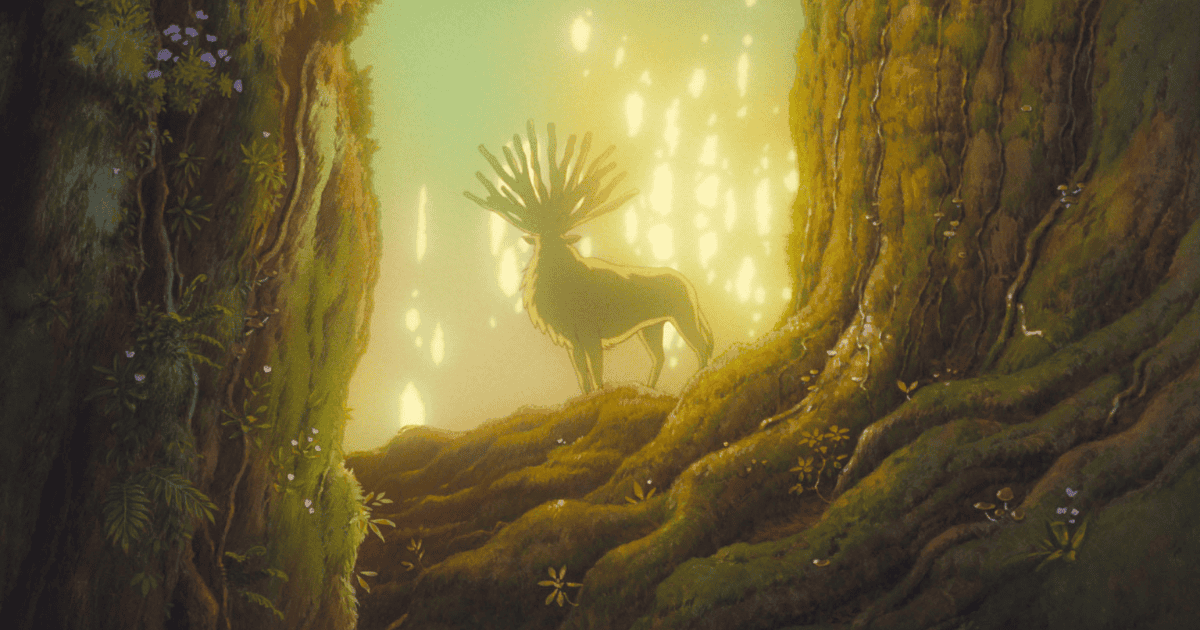
Can you name the movie before the scene comes into focus?
Put your visual memory to the test with a blurred Studio Ghibli scene.
Reader Comments