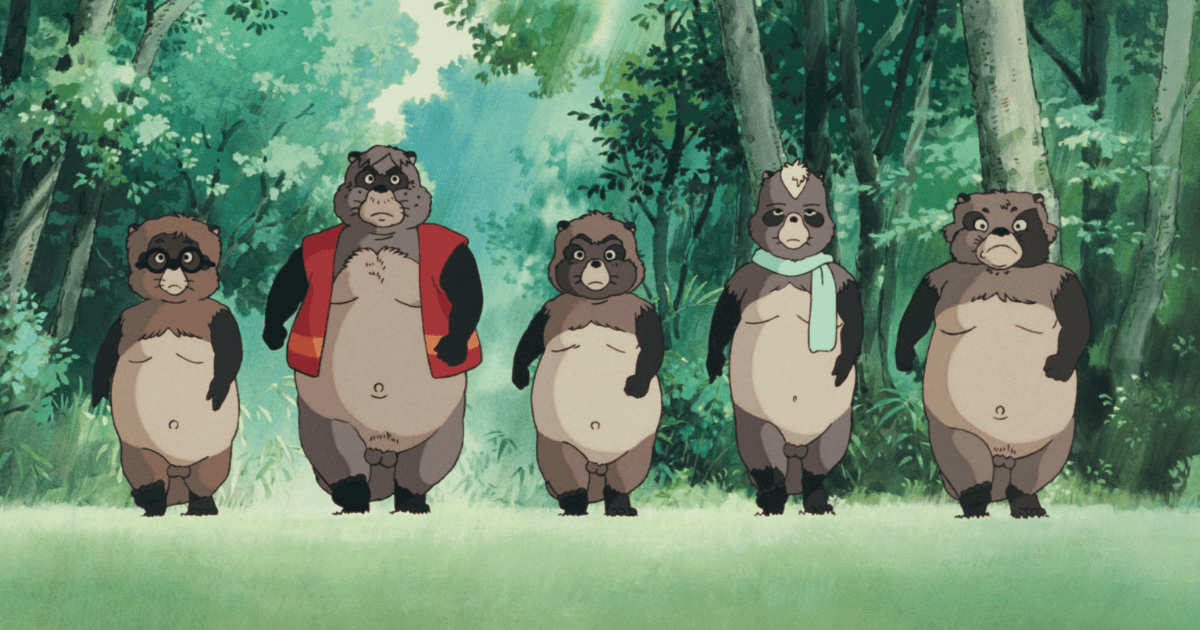
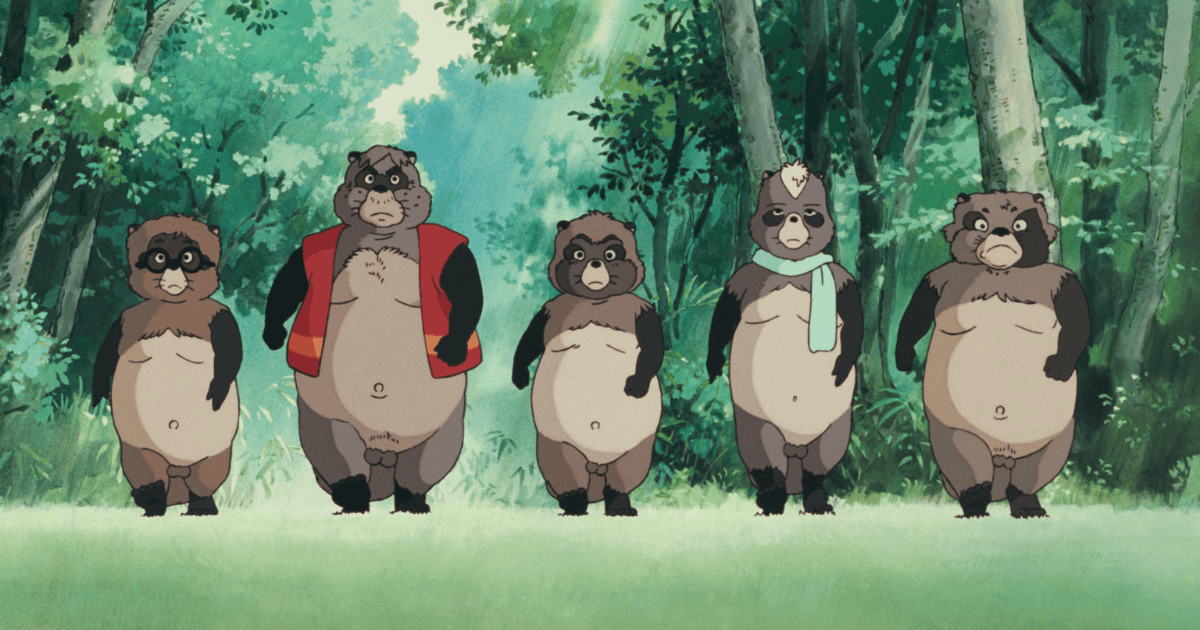
Isao Takahata’s 1994 masterpiece, Pom Poko(Official Studio Ghibli Website), features one of the largest, most chaotic, and fascinating ensemble casts in Studio Ghibli history. As shape-shifting raccoon dogs fighting an existential war against human urban development, the tanuki are a bizarre blend of cute forest creatures and deeply flawed, complex human archetypes.
Today, we are going to psychoanalyze the main characters and their voice actors, exploring the quiet tragedies and hilarious eccentricities that drive the narrative. What kind of fascinating figures actually populate the Tama Hills?
Please be warned: this deep-dive character guide contains major spoilers for the entire film.
*This is a translated version. The original (Japanese) is available here.
On this pageContents
Pom Poko (1994) Main Characters & Voice Actors List
| Name | Age | Voice Actor (English Dub) |
|---|---|---|
 Narrator | Unknown | Maurice LaMarche |
 Shokichi | Unknown | Jonathan Taylor Thomas |
 Okiyo | Unknown | Jillian Bowen |
 Tsurukame Oshō | 105 | Andre Stojka |
 Oroku | Unknown | Tress MacNeille |
 Gonta | Unknown | Clancy Brown |
 Seizaemon | Unknown | J. K. Simmons |
 Ponkichi | Unknown | David Oliver Cohen |
 Bunta | Unknown | Kevin Michael Richardson |
 Tamasaburo | Unknown | Wally Kurth |
 Kincho VI | Unknown | Brian George |
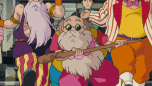 Yashimano Hage | 999 | Brian George |
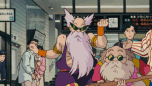 Inugami Gyobu | 603 | Jess Harnell |
 Ryutaro | Unknown | John DiMaggio |
Pom Poko (1994) Character Map
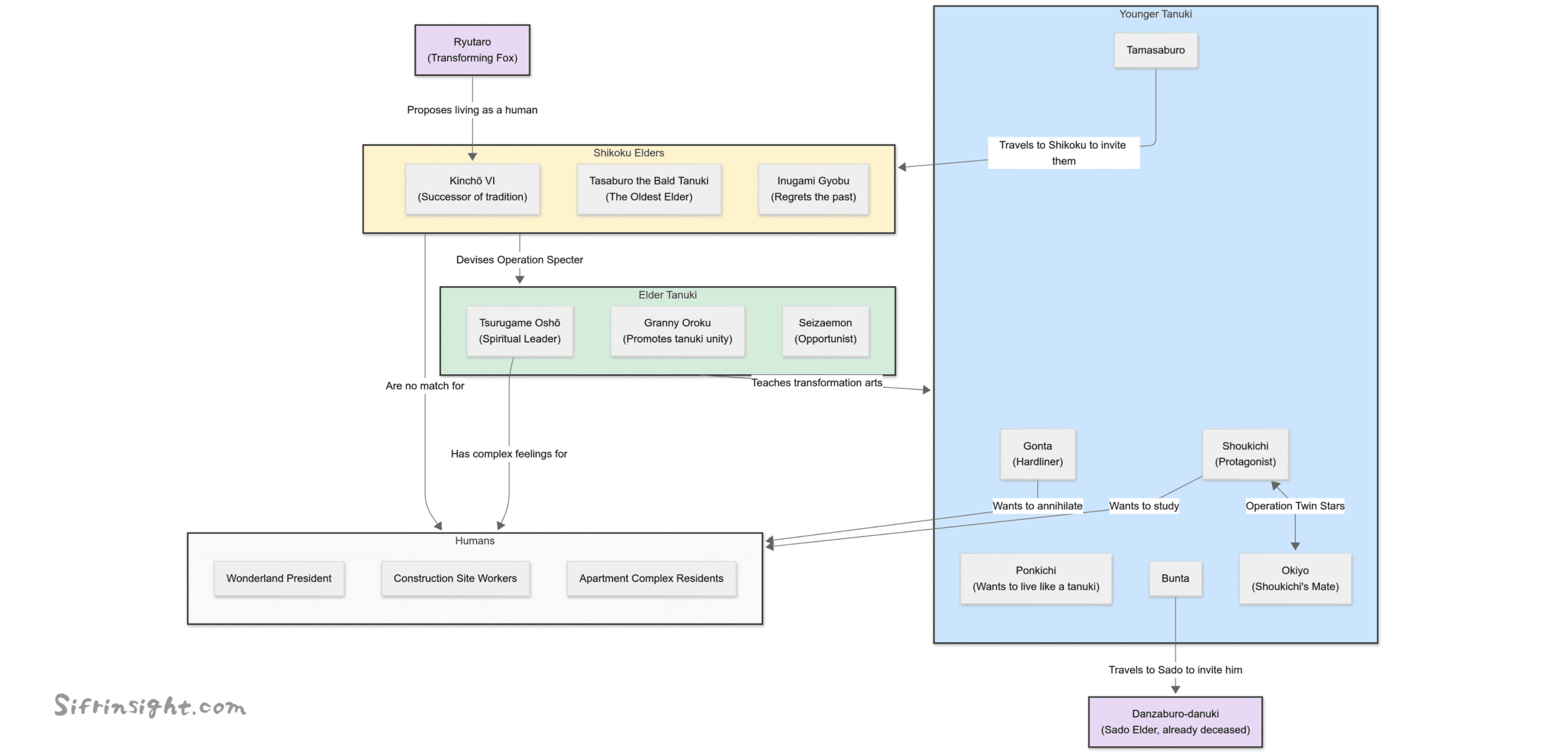
Initially, the tanuki tribes of Tama were locked in a bloody civil war over shrinking territory. Under the fierce guidance of the matriarch Oroku, they forged an emergency alliance to fight their true enemy: human developers. To win this war, the elders dispatched messengers (Tamasaburo and Bunta) to Shikoku and Sado—regions renowned as legendary hubs for advanced “transformation chemistry” (bakegaku)—to seek powerful reinforcements.
▼ Discover the lines that define these characters
Ponkichi, Tsurukame Oshō, Bunta, Yashimano Hage, and Ryutaro reveal their personalities and conflicting survival strategies through a handful of memorable lines. Compare their original Japanese dialogue with the English subtitles, literal translations, and dub wording in our guide to 8 memorable Pom Poko quotes.
Pom Poko (1994) Deep Character Profiles and Analysis
Narrator | Voiced by: Maurice LaMarche
The omniscient narrator serves as the rhythmic heartbeat of Pom Poko. Maurice LaMarche’s warm, slightly detached voice brilliantly sets the foundational “atmosphere” of the film.
The core narrative—watching an entire culture fight a futile war and slowly march toward extinction—is undeniably tragic. However, it is kept watchable entirely by the “foolishness” and “good nature” of the tanuki themselves. The narrator’s gentle, folksy delivery constantly acts as a psychological buffer, giving the audience permission to laugh at the unfolding disaster.
Crucially, the subtle narrative trick at the very end of the film—when the omniscient narrator’s voice seamlessly transitions into Shokichi’s inner monologue—reveals that Shokichi was the one telling us this tragic history all along.
Shokichi | Voiced by: Jonathan Taylor Thomas
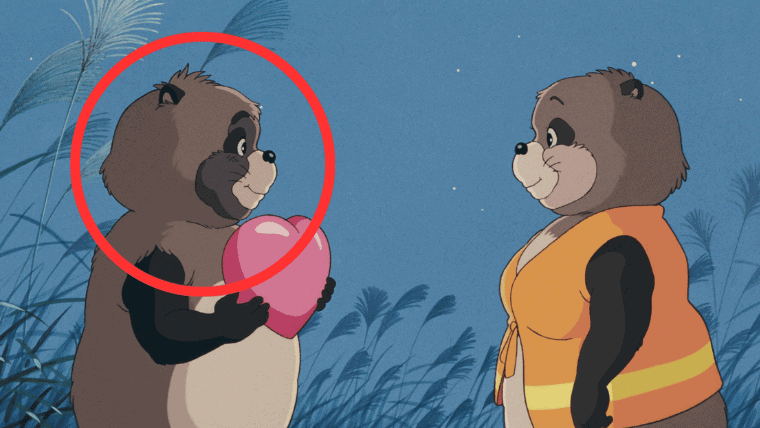
Shokichi’s Basic Information
The primary protagonist of the story, hailing from Kagemori in the Tama Hills.
From the very beginning, Shokichi operates as the voice of reason. During the war against the humans, he champions the necessity of “human studies” (a philosophy inherited from his late father), believing they must understand their enemy to defeat them. His pragmatic, logical approach is so consistent that Seizaemon mockingly calls him “a human-like guy.”
While Gonta is his absolute ideological opposite, the one tragic thing they share is the burning realization that “something radical must be done.”
The most fascinating structural irony in the story is that the violent, suicidal hardliner Gonta actually appears *more* rational to the audience than the level-headed Shokichi. Yet, despite this, we inherently empathize with Shokichi.
This is the brilliant psychological trick of Pom Poko. It relies entirely on the massive discrepancy between our “objective view” as the human audience and the tanukis’ “subjective view.”
That discrepancy is simple: we know historically that the tanuki are going to lose, but the tanuki sincerely believe they can win.
Because we know their war is mathematically hopeless, Gonta’s “kill them all before they kill us” strategy technically makes the most logical sense. Shokichi’s true role in the narrative is to act as the tragic bridge between rational despair and the “idealistic (dreamlike) victory” envisioned by the rest of the tribe.
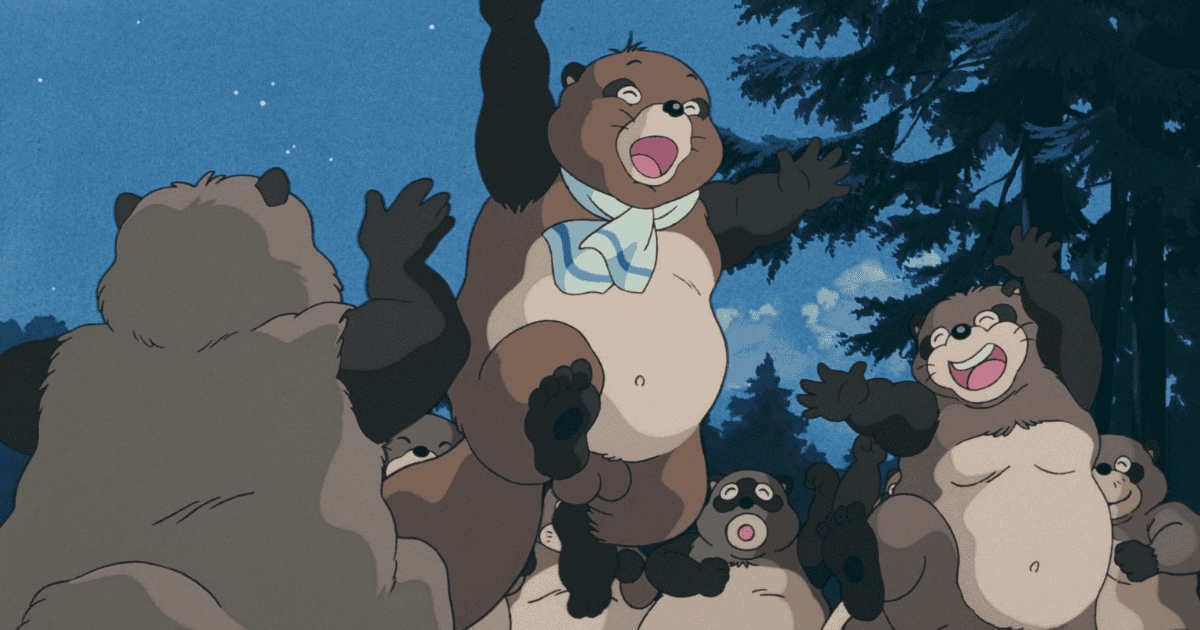
Yet, even the “human-like” Shokichi occasionally succumbs to his base tanuki instincts. Executing the spectacularly useless “Twin Star Operation” just to impress his crush, Okiyo, reveals his foolish, endearing core. And his desperate willingness to place all his hope in the doomed “Operation Specter” proves he is just as tragically naive as the rest of them.
Read the full analysis: Operation Specter as a Metaphor for the Anime Industry
Re-watching the film, the reason we easily empathize with the violent Gonta is because he wears his “true feelings” on his sleeve. Conversely, Shokichi’s extreme objectivity makes his true inner thoughts unreadable for most of the runtime.
However, the breathtaking twist ending shatters this dynamic. By revealing that Shokichi was the narrator all along, Takahata proves that Shokichi had been secretly bearing his true, heartbroken feelings to us for two solid hours.
We were completely fooled by his stoic facade. It is a masterful, classic Isao Takahata cinematic trick.
Okiyo | Voiced by: Jillian Bowen
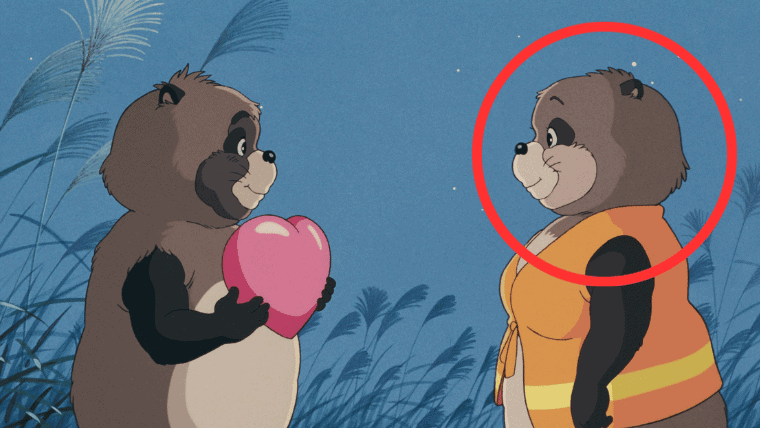
Okiyo’s Basic Information
Hailing from Mimikiri Mountain, Okiyo is Shokichi’s primary love interest. While her screen time is limited, she plays a pivotal role in executing the “Twin Star Operation” alongside Shokichi.
When Shokichi is paralyzed by doubt regarding his illusion strategy, it is Okiyo who confidently pushes him to act, remarking, “But it was such a wonderful idea!”
While Gonta’s hardline faction believed they had to “wake the humans up through death and terror,” Shokichi and Okiyo believed they could “wake the humans up by showing them a beautiful miracle.” The absolute lack of human casualties is exactly what made her deem the plan “wonderful.”
While all the Tama tanuki participate in the massive “Operation Specter,” Okiyo is highly unique: she is the only female tanuki in the entire film explicitly depicted planning and executing an individual combat operation.
Crucially, every single operation that involved female tanuki resulted in zero human fatalities. This highly specific detail is almost certainly a deliberate expression of the film’s deep irony and Takahata’s critique of toxic male aggression.
Tsurukame Oshō | Voiced by: Andre Stojka
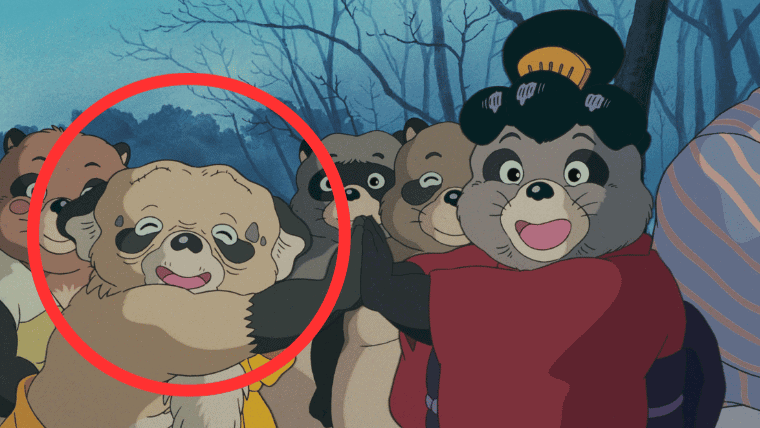
Tsurukame Oshō’s Basic Information
The 105-year-old resident priest of “Manpuku-ji Temple,” which serves as the central war room for the tanuki resistance.
Despite being a wild raccoon dog, Tsurukame constantly wears traditional Buddhist robes and is respectfully addressed as “Oshō” (High Priest) by his peers. Initially, it feels incredibly incongruous that a woodland creature holds a high-ranking human religious title. However, the tragic truth of his title is subtly revealed later in the story when the Shikoku elders arrive.
It becomes apparent that Tsurukame Oshō likely spent decades of his life flawlessly disguised as a human, serving as the actual, functioning priest of Manpuku-ji Temple.
Just like Kincho VI, who comfortably operates a Shinto shrine as a human in Shikoku, Tsurukame Oshō used to live deeply embedded in human society. In his youth, human villagers likely flocked to the temple specifically to hear his sermons.
The supreme irony is that he originally intended to squat in a deserted temple and trick foolish humans, but his disguise was so convincing that he accidentally became a genuine, dedicated priest for a massive chunk of his life.
This history gives devastating weight to his opening monologue:
“We tanuki are too nice. We get carried away. We provide too much service. That’s the root of our failure.”
Tsurukame Oshō considers himself a failure precisely because he provided “too much service” to the humans. His “failure” was losing his wild identity.
I strongly believe Tsurukame Oshō teaches this bitter lesson to the youth to prevent them from making the same mistake, while desperately searching for an “ideal conclusion” to their war.
When analyzing Tsurukame Oshō’s deeply complex, empathetic relationship with humanity, I am immediately reminded of a similar character: Lady Moro from Princess Mononoke.
It might seem bizarre to compare a dried-up raccoon priest to a terrifying, bloodthirsty wolf god, but the psychological overlap is undeniable. I explore this fascinating connection in the deep dive below:
Read the full analysis: Why Princess Mononoke is Actually Hayao Miyazaki’s Version of Pom Poko
Oroku | Voiced by: Tress MacNeille
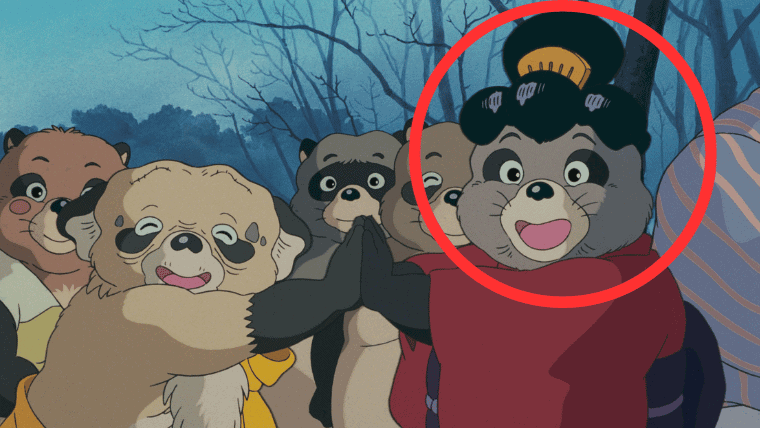
Oroku’s Basic Information
Famously known as “Oroku of the Fireballs.” While it is unclear if the nickname stems from her fiery temper or a literal mastery of fireball illusions, she is the undeniable catalyst of the entire film. By violently interrupting the civil war and forcing the tanuki to look at the human bulldozers, she single-handedly launches the resistance.
Though she is notoriously strict and quick to anger, she is fiercely maternal and deeply protective of the young generation.
However, Oroku delivers one of the most bizarre, illogical lines in the entire movie. When Gonta’s strike force prepares for their first lethal ambush, she teaches them a sacred “Secret Art.”
According to Oroku, if they use this technique: “Even if the operation fails and you are killed, your corpse will not look like a tanuki for five days. It will look exactly like a dead fox.“
This claim presents a massive canonical plot hole. Later in the film, when the radical tanuki are hit by a truck or beaten by police, their transformation magic instantly shatters upon death or unconsciousness.
So, the established lore confirms: magic breaks when you die.
Therefore, a technique that perfectly holds an illusion for five days post-mortem is either a god-tier miracle… or a complete lie.
I firmly believe this “Secret Art” isn’t magic at all. It is actually a brilliant, cunningly concealed, and highly inappropriate anatomical dirty joke. I unpack the hilarious truth behind this scene in the article below:
Read the full analysis: The Meta-Critique and the Hilarious Truth of Oroku’s Secret Art
Gonta | Voiced by: Clancy Brown
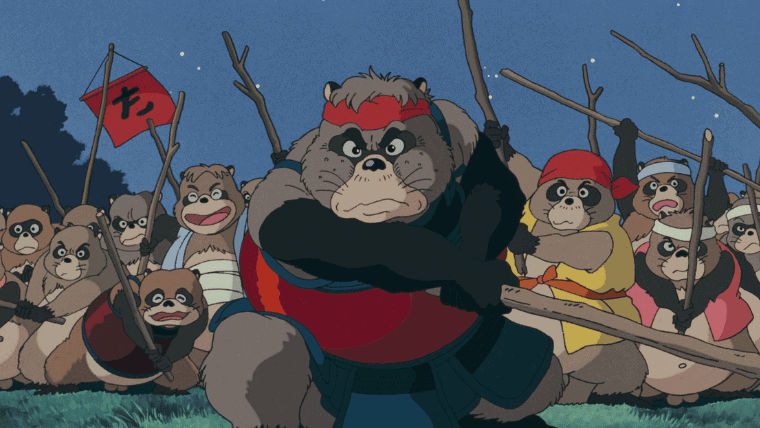
Gonta’s Basic Information
The aggressive, hot-blooded leader hailing from Takagamori. Throughout the film, he champions a fiercely militant, zero-tolerance policy against humans. Yet, in a brilliant comedic moment, even Gonta’s radical hatred crumbles when faced with the irresistible allure of human junk food (“hamburgers, donuts, and fried chicken”), leading him to hilariously amend his manifesto to “leave a few humans alive to cook.” Despite his rage, he is still a biological tanuki driven by his stomach.
The most devastating thematic element of Pom Poko is that the actions of Gonta—the violent extremist trying to slaughter humans—are actually the most tactically rational choices in the film.
Because the film operates as a pseudo-documentary of a historical event, we know it doesn’t end with a fairy-tale “happily ever after” where humans and raccoons hold hands in the forest. It is an unyielding, brutally realistic chronicle of “how the tanuki were driven to extinction.”
Because the audience knows with 100% certainty that the tanuki are doomed to lose no matter what magical tricks they pull, Gonta’s ruthless strategy of physically murdering the construction workers is technically their only mathematically viable option for survival. He understood that illusions don’t stop bulldozers; only fear and death do.
Ultimately, Pom Poko is a masterclass in the “anatomy of defeat.” I explore this crushing psychological reality in the analysis below:
Read the full analysis: The Structure of Defeat and the Spirit of ‘Somehow, We Go On Living’
If Takahata had told this exact same brutal story of desperate, doomed terrorism using human characters instead of raccoons, it would have been an unbearably traumatic film to watch.
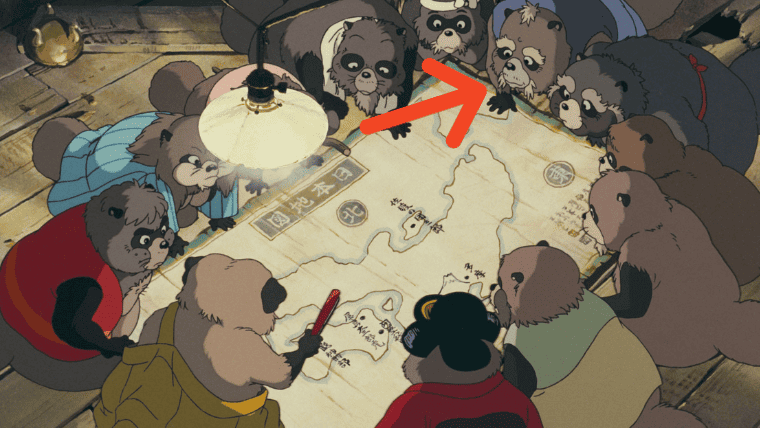
Seizaemon | Voiced by: J. K. Simmons
Seizaemon’s Basic Information
An elder from Suzugamori, and the former commander-in-chief of the “Blue Army” during the opening civil war.
Unlike his fiery rival Gonta (commander of the “Red Army”), Seizaemon is highly cautious and rarely advocates for extreme violence. He embodies the “wait-and-see” pragmatism shared by the majority of the tribe.
In the tragic epilogue, Seizaemon is among the elite group forced to permanently abandon their animal identity. Proving his adaptability, he excels in the human corporate world, ironically becoming a highly successful real estate developer—the exact profession that destroyed his home.
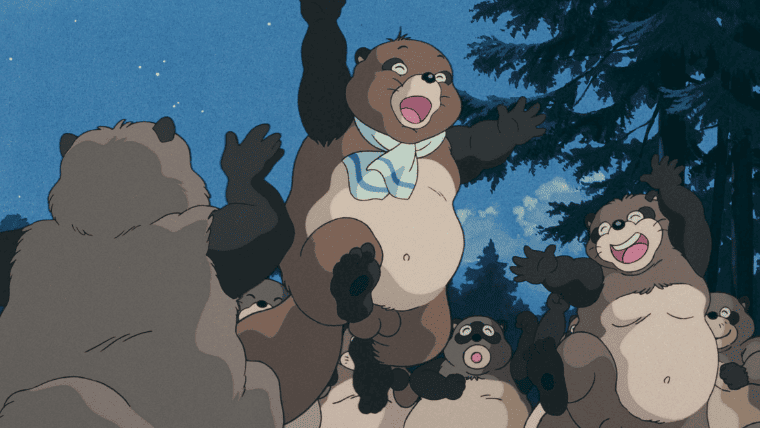
Ponkichi | Voiced by: David Oliver Cohen
Ponkichi’s Basic Information
Shokichi’s lazy, lovable childhood friend. In stark contrast to Shokichi’s intense dedication to mastering “transformation chemistry” and military strategy, Ponkichi’s only goal is to “live like a normal tanuki.”
He ultimately fails his training and remains an ordinary, non-transforming raccoon. However, when the resistance collapses, he doesn’t succumb to the crushing despair that destroys the other ordinary tanuki. He refuses to join the suicidal “Dancing Prayer” cult and smartly avoids the doomed treasure ship.
When he joyfully reunites with a battered, exhausted Shokichi at the end of the film, his unyielding, carefree existence serves as the ultimate moral victory. His stubborn refusal to let the horrors of the world alter his core identity is the truest manifestation of the film’s thesis: “Somehow, we go on living.”
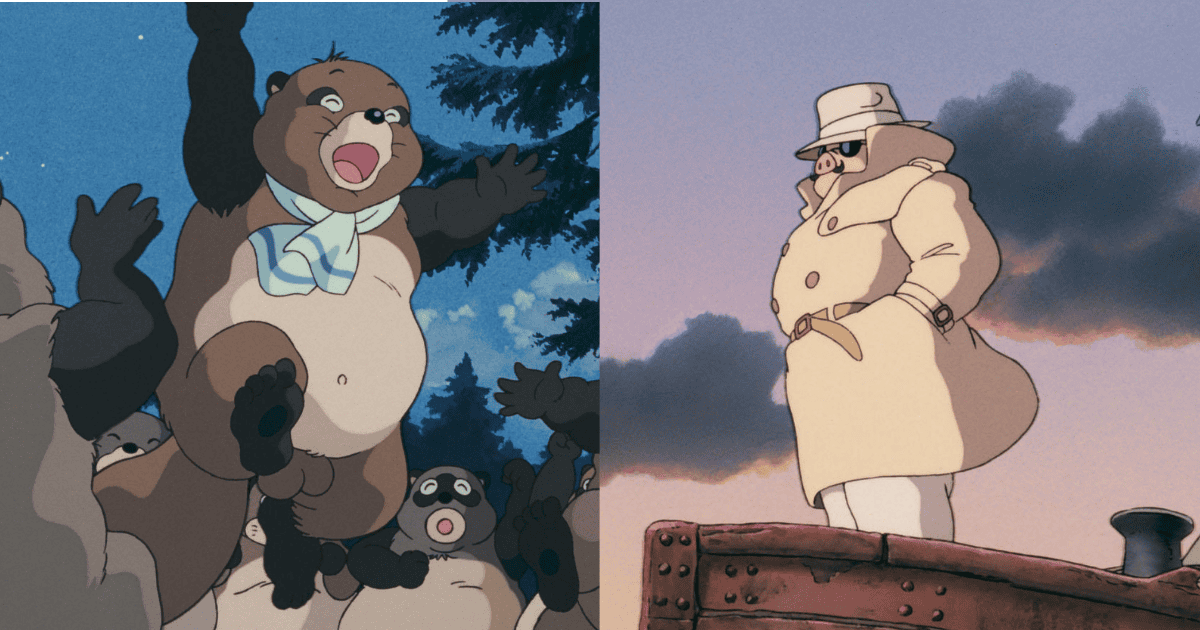
I argue that Ponkichi is actually the philosophical core of the entire movie, perfectly mirroring the cynical detachment of Miyazaki’s Porco Rosso. I explore this theory here:
Read the full analysis: Why the Lazy Ponkichi is the Hidden Protagonist (and His Connection to Porco Rosso)
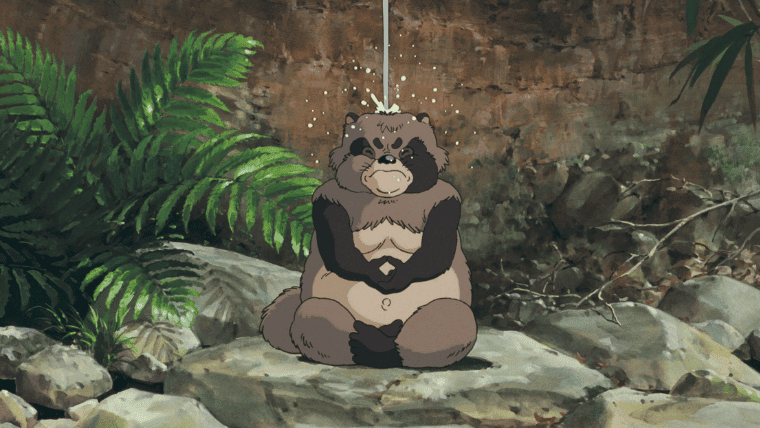
Bunta | Voiced by: Kevin Michael Richardson
Bunta’s Basic Information
A dedicated warrior from Mizunomi-sawa. He is dispatched incredibly early in the story as a lone messenger to Sado Island to recruit the legendary Master Danzaburo-danuki.
Because he is isolated on his quest, he entirely misses the tribe’s euphoric highs of “Operation Specter” and the crushing lows of its failure. He spends years diligently searching for a savior, only to tragically discover that Master Danzaburo was killed by human hunters long ago.
When an exhausted Bunta finally returns to the Tama Hills carrying this heavy grief, he doesn’t recognize his homeland. The terrifying, sprawling concrete jungle he encounters—the brutal result of years of unchecked development—is a massive shock not only to him, but to the audience as well.
Bunta’s ultimate narrative purpose is devastating: he acts as the harsh dose of reality that violently snaps the audience out of the magical illusion.
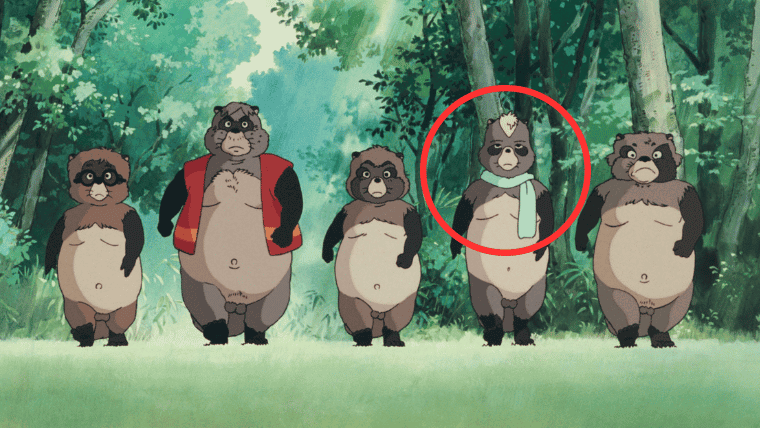
Tamasaburo | Voiced by: Wally Kurth
Tamasaburo’s Basic Information
A famously handsome, highly charismatic tanuki from Onigamori who is incredibly popular with the ladies. After winning a high-stakes rock-paper-scissors tournament, he is chosen as the vital messenger to Shikoku.
In a hilarious contrast to Bunta’s miserable, lonely quest, Tamasaburo barely survives his journey to Shikoku, only to instantly fall head-over-heels in love with Koharu (the daughter of the Great Deity Kincho) and comfortably settle down to have three kids.
Yet, despite his heroics in recruiting the three Shikoku elders, their “ultimate weapon” turns out to be the spectacularly useless “Operation Specter.” As an audience, we have to wonder: when Tamasaburo first met these eccentric, carefree geezers in Shikoku, did he secretly suspect they were frauds?
But choosing not to worry about impending doom is the ultimate, biological blessing of being a tanuki.
Kincho VI | Voiced by: Brian George
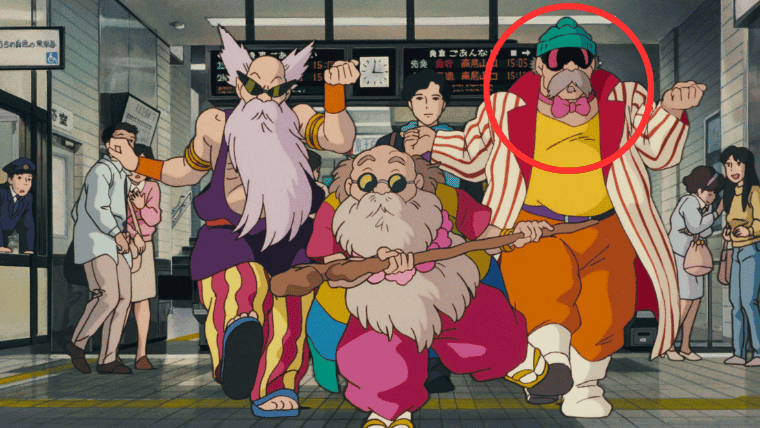
Kincho VI’s Basic Information
The highly respected Shinto priest of the Great Deity Kincho shrine in Tokushima. Despite being a magical tanuki, he spends his entire life permanently transformed into a human, performing genuine religious duties for the local populace. In essence, he had already perfected the tragic “assimilation” lifestyle that the Tama tanuki are forced into at the end of the film.
Yet, when Ryutaro the fox explicitly proposes that the tanuki “permanently live as humans” to survive, Kincho VI is deeply shocked and offended.
Why the hypocrisy?
The profound irony is that Kincho VI (and the other Shikoku elders) completely lacked self-awareness. They genuinely believed they were fiercely “tricking” the humans every single day, completely blind to the fact that they had fully assimilated into the system.
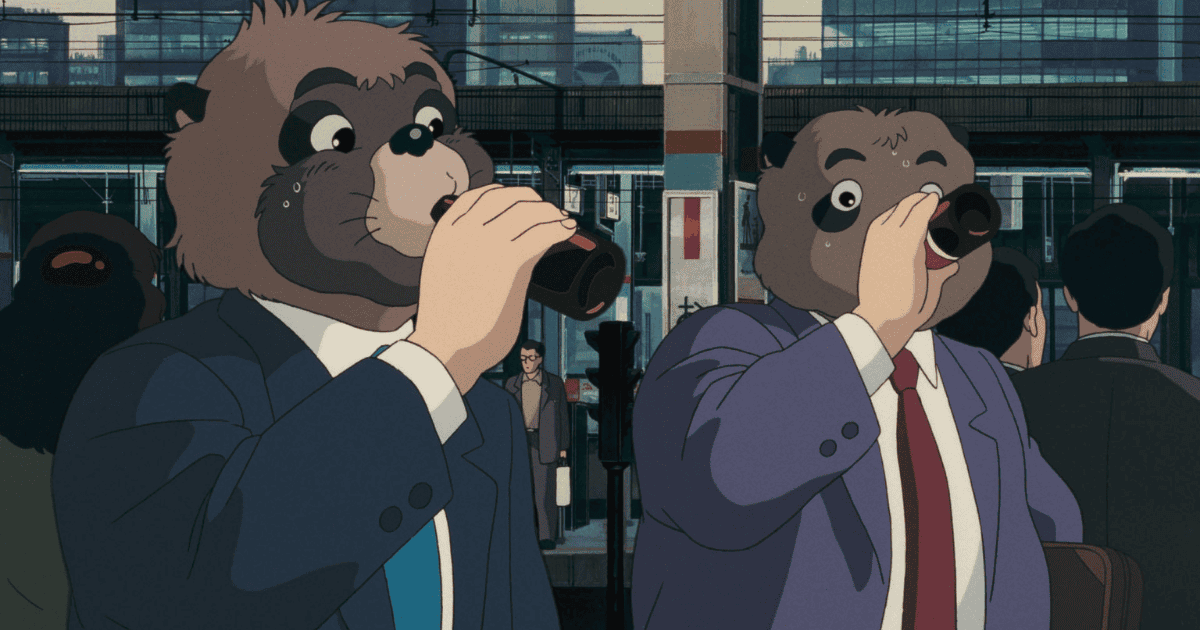
Granted, acting as a revered “Shinto priest” is a far more comfortable, luxurious existence than Ryutaro’s grim proposal of becoming an exhausted, train-riding corporate salaryman, but fundamentally, it is the exact same surrender.
This massive, arrogant blind spot perfectly encapsulates the foolish charm of the Shikoku elders.
Yashimano Hage | Voiced by: Brian George
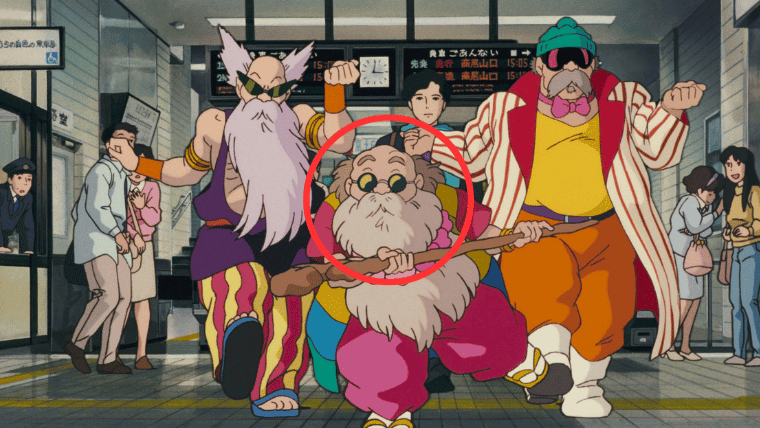
Yashimano Hage’s Basic Information
Real name: Joganji Tasaburo. He is a legendary, senile, 999-year-old bald tanuki who claims to have witnessed the historic Genpei War in his youth.
As one of the three Shikoku elders, he sincerely believed Operation Specter would save the forest. When the operation shatters, his ancient mind breaks with it.
Likely driven by dementia and extreme grief, he abandons reality and assumes the role of a messianic cult leader, founding the “Dancing Prayer” sect. He becomes the sole spiritual anchor for the weakest, non-transforming tanuki who are starving to death.
In a heartbreaking climax, instead of using his centuries of wisdom to help them survive, he leads his desperate flock onto an illusionary treasure ship and sails them directly into the path of an oncoming commuter train, executing a joyous mass suicide.
Yashimano Hage is undeniably the most devastatingly pessimistic character in the entire Ghibli canon. After 999 years, he simply ran out of the strength required to “keep on living.”
Inugami Gyobu | Voiced by: Jess Harnell
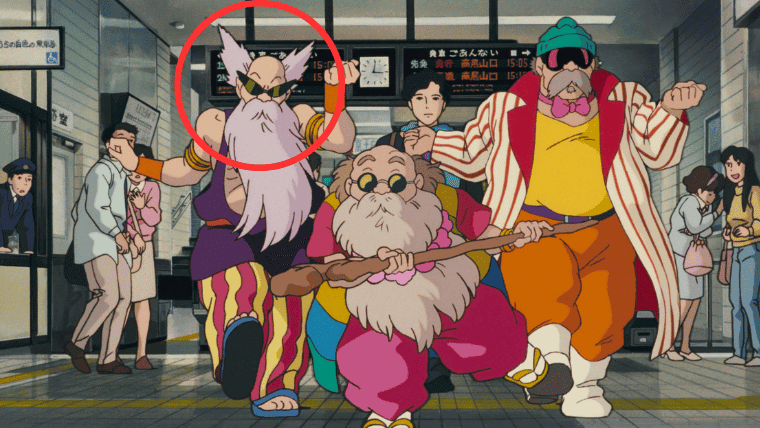
Inugami Gyobu’s Basic Information
The terrifying 603-year-old Supreme Commander of the 808 Tanuki of Matsuyama.
He is the most physically imposing and spiritually powerful of the three Shikoku elders. However, to understand his tragic motivation, you must analyze a specific line from his eulogy: “Gyobu, having been caught up in a human family feud in the Matsuyama domain long ago, deeply regretted siding with the villains, which ultimately led to the downfall of his entire clan…”
This references a real piece of Japanese folklore. Originally, “Gyobu” was an honorary title bestowed upon him by a human lord, and he was worshipped as a protective deity by the castle’s retainers. However, during a violent political rebellion, Gyobu chose the wrong side, resulting in the slaughter of his tanuki kin.
His defining character trait is a crushing, centuries-old guilt caused by interfering in human politics.
This is precisely why he traveled to Tama: he viewed Operation Specter as his ultimate shot at redemption. He burned every ounce of his life force to fuel the parade, dying of a massive heart attack mid-spell.
In a dark, merciful irony, dying during the parade was a profound blessing. He passed away believing he had finally achieved victory, entirely spared the agony of watching his final sacrifice be mocked as a theme park advertisement.
Ryutaro | Voiced by: John DiMaggio
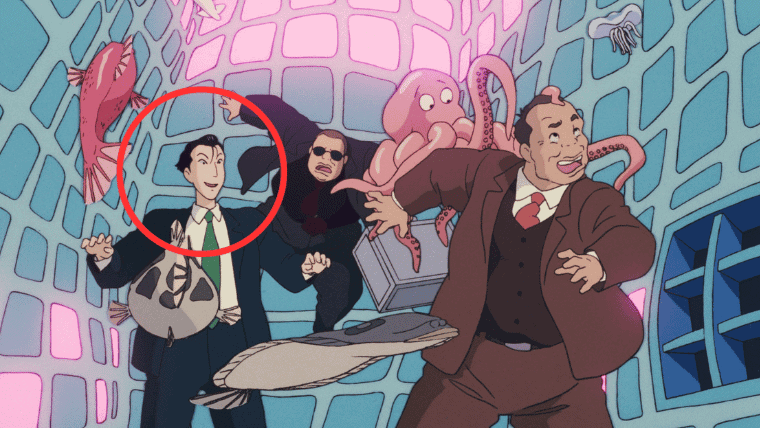
Ryutaro’s Basic Information
A highly sophisticated, shape-shifting fox operating as a wealthy nightclub owner in Tama. Immediately following the catastrophic failure of Operation Specter, he casually approaches Kincho VI and offers the surviving elite tanuki a grim ultimatum: permanently abandon your animal forms and “live as humans.”
Ryutaro is the ultimate harbinger of modern capitalism. He clearly recognizes that Kincho VI was already functioning as a human priest, completely oblivious to his own assimilation.
But the most chilling, unspoken mystery surrounding Ryutaro is: Why did a fox go out of his way to offer an escape route to the tanuki, a rival species?
When you connect the dots, a terrifying, tragic backstory emerges. It is highly, highly probable that the foxes of Tama previously executed their own “Operation Specter” years prior, and failed just as miserably.
Just as the human public (and the audience) completely ignored the tanuki’s magical parade, we likely ignored the foxes’ desperate, final stand. Because foxes and tanuki operate in completely different social spheres, the tanuki had no idea the foxes had already fought and lost the exact same war.
When Ryutaro cold-bloodedly proposes assimilation, is he offering genuine, empathetic advice from a fellow defeated soldier? Or, considering the soul-crushing misery of living as a human wage-slave, is it a vindictive curse? Is he essentially saying, “Welcome to Hell. This is your punishment for letting us fight alone.”
The fact that the foxes likely suffered the exact same, invisible tragedy adds a staggering layer of darkness to the film.
Other Characters
- Sasuke | Voiced by: Marc Donato
- Otama (Gonta’s wife) | Voiced by: Russi Taylor
- Koharu (Kincho VI’s daughter) | Voiced by: Olivia d’Abo
- Newscaster | Voiced by: Mark Moseley
- Reporter | Voiced by: Mark Moseley
The images used in this article are from the “Studio Ghibli Still Images” collection.
Can you name the movie before the scene comes into focus?
Put your visual memory to the test with a blurred Studio Ghibli scene.

Reader Comments