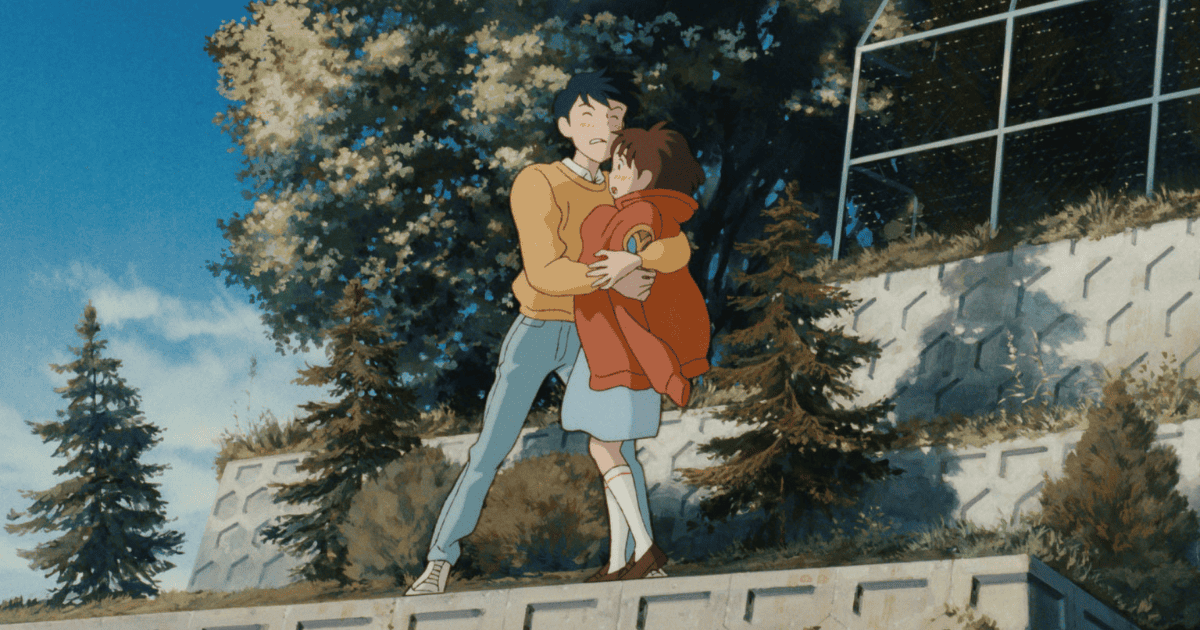
Whisper of the Heart (Studio Ghibli Official) is a 1995 animated feature film directed by Yoshifumi Kondō. It was released in Japan on July 15, 1995.
In this article, I have selected eight of my favorite quotes from the film.
The dialogue in Whisper of the Heart often becomes even more interesting when the original Japanese is compared with its English translation. For each quote, I will look at the Japanese line, its romanization, the English subtitle, a literal translation, and what the dialogue tells us about the characters and the story.
These are not necessarily the eight most objectively famous lines in the film. They are simply the lines that have remained with me personally.
The film’s official English title is:
Whisper of the Heart
Translation note: The English subtitle wording in this article is based on the commercially released Blu-ray available to the author. The English dub is also discussed where its wording creates a meaningful difference. Subtitle and dub wording may vary between releases and territories.
▼ Read the full story and analysis behind these quotes
On this pageContents
Shizuku Tsukishima Quotes in Japanese and English
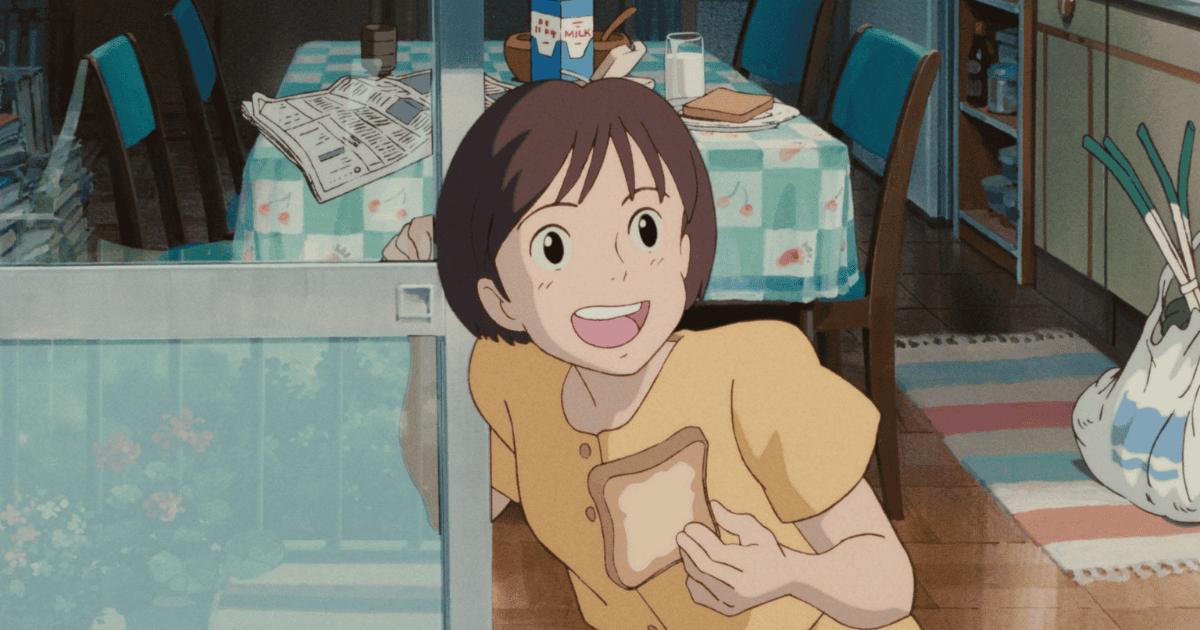
“You can’t say ‘go for it’ to someone more ambitious than you.”
自分よりずっとがんばってるやつにがんばれなんて言えないもん。
Jibun yori zutto ganbatteru yatsu ni ganbare nante ienai mon.
You can’t say ‘go for it’ to someone more ambitious than you.
I can’t tell someone who is working much harder than I am to “keep trying.”
Read the Commentary and Analysis
The older I get, the more painfully impressive Seiji Amasawa seems.
Perhaps one of his greatest qualities is that he never particularly looks as though he is working incredibly hard.
As Shizuku gradually grows closer to him, she begins to discover the scale of his ambition.
How many of their classmates actually knew what he was doing?
His grades also appear to have been excellent, so perhaps nobody suspected that he was devoting enormous amounts of time to learning how to make violins.
Shizuku becomes close enough to Seiji to see what lies beneath that apparently effortless surface.
Unfortunately, that privilege also gives her an inferiority complex.
Still, perhaps that feeling of inadequacy was itself a privilege that only someone close to him could experience.
Seen from that perspective, telling her friend that she cannot possibly say “Do your best” to someone who is already working far harder than she is may actually be one of the greatest acts of romantic bragging in the entire film.
The interesting point in the subtitle is the use of the generic “you.”
The Japanese is personal—Shizuku is explaining why she cannot say it—but the English turns the statement into a general principle:
“You can’t say…”
It carries a slight feeling of asking the listener, “Could you really say that in my position?”
There is also a subtle translation shift. The Japanese describes Seiji as someone who is already working much harder than Shizuku, while the subtitle summarizes that quality as being “more ambitious.”
The dub is more direct and stays closer to the idea of Seiji already working exceptionally hard.
“I’m glad I pushed myself. I understand myself better now.”
私、背伸びして良かった。自分のこと前より少し分かったから。
Watashi, senobi shite yokatta. Jibun no koto mae yori sukoshi wakatta kara.
I’m glad I pushed myself. I understand myself better now.
I’m glad I tried to reach beyond myself. I understand myself a little better than before.
Read the Commentary and Analysis
This may be one of the lines that expresses the essence of Whisper of the Heart most clearly.
For Shizuku, “stretching herself” means forcing herself to finish writing an entire story.
For Seiji, it means something considerably more extreme:
- Maintaining his school performance while learning violin making at his grandfather’s shop,
- Planning to leave Japan after junior high school to study his craft abroad,
- Arguing with his parents night after night in order to make that future possible, and
- Finally persuading them to allow him to go to Italy for a trial period.
To tell the truth, however, Seiji will only really start testing his limits after he reaches Italy.
Whatever comes from that attempt, it will probably make his life richer.
The key Japanese word is senobi.
Literally, it means standing on tiptoe to make yourself taller. Figuratively, it describes attempting something slightly beyond your present ability or pretending to be more mature than you really are.
“I pushed myself” is therefore a natural English solution because a literal reference to standing on tiptoe would make little sense.
The other useful expression is “I’m glad.”
For a long time, I had the impression that glad was somehow more formal or dramatic than a line like this required.
Apparently not.
The dub also uses essentially the same expression.
Perhaps the moment calls for that extra weight after all. At any rate, “I’m glad” feels more appropriate to me than “I’m happy.”
▼ Read more about Shizuku Tsukishima and her struggle to test herself
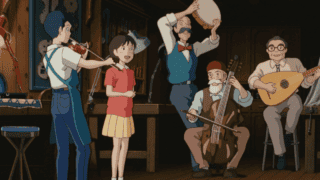
Seiji Amasawa Quotes in Japanese and English
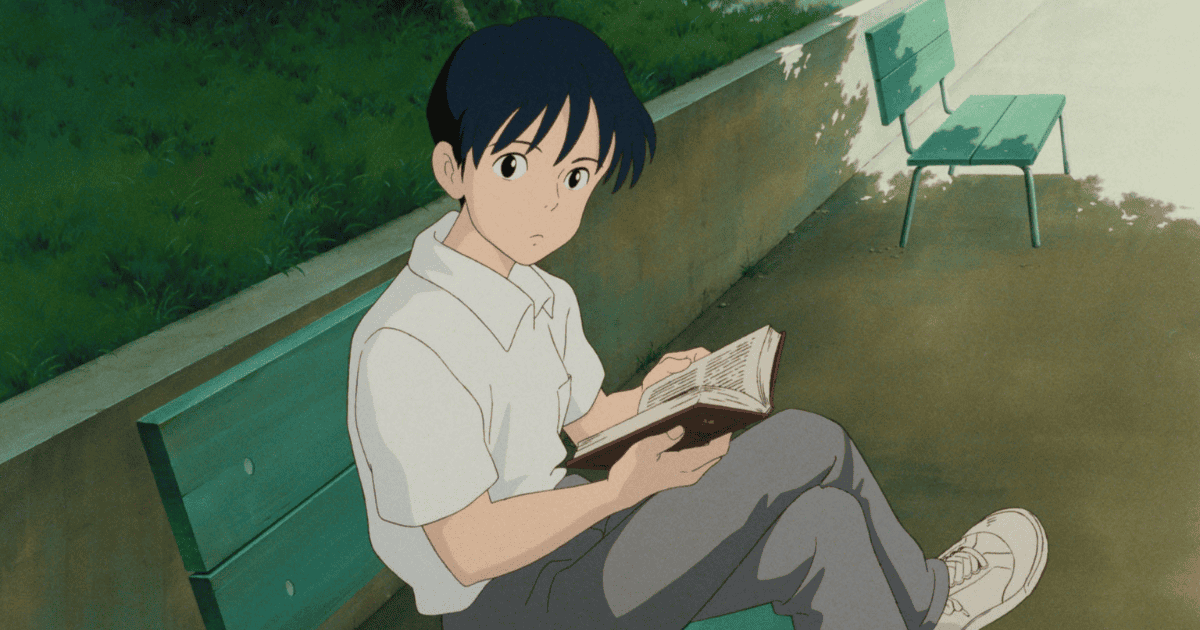
“I’d forget about ‘Concrete Road,’ though.”
お前さ、コンクリートロードはやめたほうが良いと思うよ。
Omae sa, Konkuriito Rōdo wa yameta hō ga ii to omou yo.
I’d forget about ‘Concrete Road’, though.
You know, I think you’d better give up on “Concrete Road.”
Read the Commentary and Analysis
This is the historic first conversation between Seiji Amasawa and Shizuku Tsukishima.
Seiji cannot resist making a snide remark.
But the line is fundamentally the same kind of behavior as Kanta shouting “You live in a haunted house!” at Satsuki in My Neighbor Totoro.
It is embarrassment disguised as hostility.
Seiji may be brave enough to argue with his parents about leaving Japan to train in Italy, but in this respect he is still a completely ordinary teenage boy.
Later in the film, Shizuku confronts him about this first encounter.
Seiji pretends not to remember saying it.
There is absolutely no chance that he forgot.
He remembers every word.
Of course he does. It was their first real conversation.
The subtitle takes the basic meaning and gives it a pleasingly sarcastic tone:
“I’d forget about ‘Concrete Road,’ though.”
It feels almost like:
“Do yourself a favor and forget that ever happened.”
I personally think it works very well.
The dub was harder for me to make out, but I think the line is something like:
“By the way, great lyrics. They’re cornier than the original version.”
The word “corny” means overly sentimental, clichéd, old-fashioned, or embarrassingly earnest.
What makes that choice particularly interesting is that the dub brings the same word back at the end of the story.
After Seiji’s exuberant marriage proposal, he asks:
“Does it sound corny?”
Shizuku answers:
“It’s a little corny.”
At the beginning, Seiji calls Shizuku corny.
At the end, he receives the same judgment in return.
A small but delightful touch.
“I even sat beside you there.”
隣の席に座ったこともあるんだぞ。
Tonari no seki ni suwatta koto mo aru n da zo.
I even sat beside you there.
I even sat in the seat next to you once.
Read the Commentary and Analysis
Ever since Whisper of the Heart was released, this line has helped earn Seiji Amasawa one of the strangest labels ever attached to a popular Studio Ghibli character:
“Stalker.”
Personally, however, I am less interested in whether Seiji technically qualifies as a stalker than in a more basic question:
Why did Seiji fall in love with Shizuku in the first place?
The more we learn about Seiji, the more extraordinary he appears.
He is ambitious, talented, disciplined, academically capable, and apparently good-looking as well.
By the end of the film, Shizuku also proves herself to be an admirable person.
But Seiji became fascinated by her long before he knew what she would later accomplish.
So what originally attracted him?
If we remember that the source material is a girls’ manga, there is one obvious structural answer.
The genre often asks the audience to accept that an apparently ordinary protagonist becomes the object of affection of an unusually attractive romantic lead.
The same structure exists in stories with the genders reversed.
But I suspect Sugimura is one of the devices that prevents Shizuku from appearing romantically implausible.
Because another boy who has known her for years is also in love with her, Seiji’s attraction feels immediately more natural to the audience.
If that reading is right, poor Sugimura’s romance was doomed by the story’s very structure.
Perhaps we should spare a little more sympathy for him.
I explore his remarkably tragic role in much greater detail here:
There is nothing particularly difficult about the English sentence itself.
The dub is also almost identical.
“Shizuku… I love you!”
雫、大好きだ!
Shizuku, daisuki da!
Shizuku…I love you!
Shizuku, I love you!
Read the Commentary and Analysis
This is Seiji’s wonderfully youthful declaration at the very end of the film, delivered with his right leg stretched out behind him in that unforgettable pose.
Whenever I watch this scene, I inevitably think about Ocean Waves.
Ocean Waves was broadcast on television in 1993 and produced largely by what was then described as Studio Ghibli’s younger generation of staff.
At its simplest, it is also a story about teenage romance.
Director Tomomi Mochizuki and animation director Katsuya Kondo attempted to create the film while reducing the influence of Hayao Miyazaki as much as possible.
That independence apparently produced something Miyazaki himself found unsatisfying.
In bonus material included with the Japanese Blu-ray, Miyazaki argues, in essence, that Ocean Waves depicts only “how things are,” whereas a story should also depict “how things ought to be.”
In Ocean Waves, there is no scene where one character makes a decisive declaration of love to another.
I still love the film, but apparently the old master was not entirely satisfied.
Whisper of the Heart was directed by Yoshifumi Kondō, but Hayao Miyazaki wrote the screenplay and created the storyboards.
For that reason, I think the film can partly be understood as Miyazaki’s answer to Ocean Waves.
Seen from that perspective, Seiji’s wonderfully awkward, leg-stretched declaration of love may be Miyazaki shouting:
“This is how it ought to be!”
For comparison, my analysis of Ocean Waves is here:
The English translation needs almost no explanation.
Daisuki literally expresses very strong liking or affection, but in this romantic climax, “I love you” is exactly what the line means.
▼ Read more about Seiji Amasawa, his ambition, and his relationship with Shizuku
Seiya Tsukishima’s Quote in Japanese and English
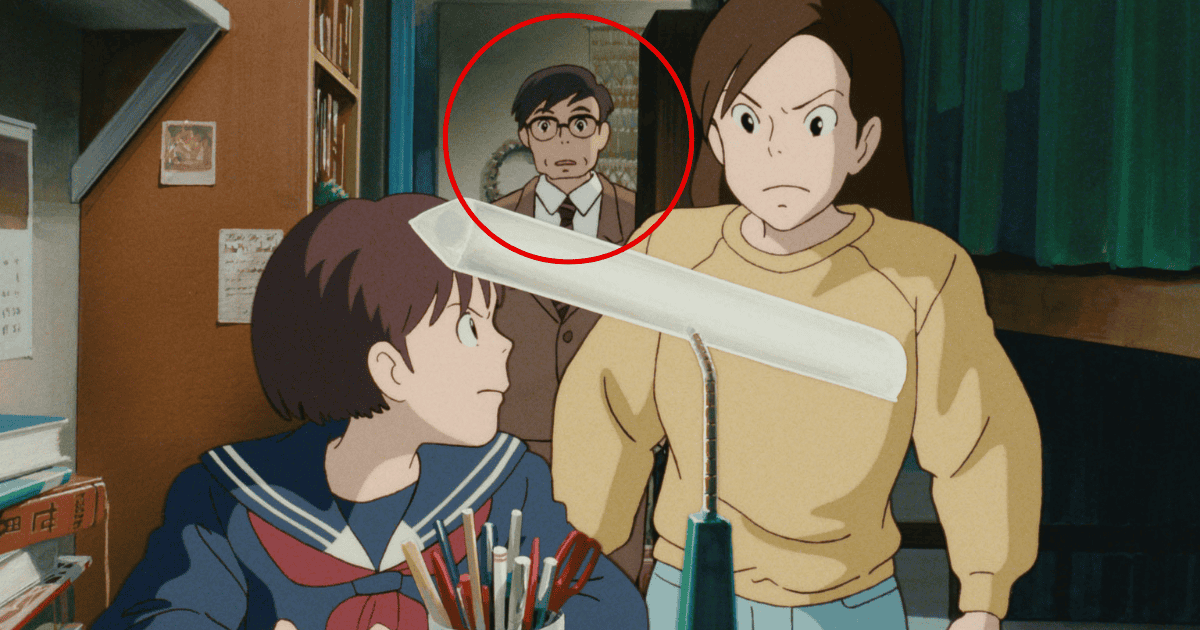
“But it’s not easy when you walk your own road.”
人と違う生き方は、それなりにしんどいぞ。何が起きても誰のせいにもできないからね。
Hito to chigau ikikata wa, sore nari ni shindoi zo. Nani ga okite mo dare no sei ni mo dekinai kara ne.
But it’s not easy when you walk your own road.
Living differently from everyone else is difficult in its own way, because whatever happens, you cannot blame anyone else.
Read the Commentary and Analysis
This line gives us an unusually clear glimpse into the personality of Seiya Tsukishima.
I imagine that he has spent his life choosing his words rather than simply saying whatever he feels.
Instead, he probably converted those feelings into carefully chosen, controlled language before speaking.
We might call that rationality.
From the outside, however, people may also have thought:
“I can never tell what he is thinking.”
or:
“He never opens up.”
For a man like that, meeting Asako Tsukishima may have felt like fate.
And perhaps Asako deserves considerable credit for recognizing the value of such a man.
At least, I find it extremely difficult to imagine a younger Seiya Tsukishima being wildly popular with women.
The most interesting translation choice is the transformation of “living differently from other people” into:
“walking your own road.”
This is exactly the kind of conceptual rewriting that is useful when composing English.
A literal translation may be accurate but unnatural. Instead of describing the difference from everyone else, the subtitle describes the same idea positively as following your own path.
The Japanese also contains an important second sentence:
“Whatever happens, you can’t blame anyone else.”
That second sentence is absent from the subtitle excerpt quoted here.
The dub is more direct, using wording closer to “you do things differently from everyone else.”
▼ Read more about Seiya Tsukishima and Shizuku’s family
Baron’s Quote in Japanese and English
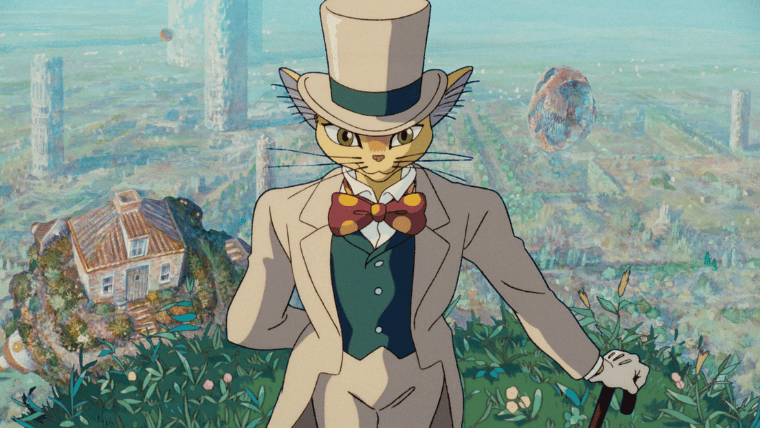
“Let us go forth together.”
いざ、おともつかまつらん。
Iza, otomo tsukamatsuran.
Let us go forth together.
Now then, allow me to accompany you.
Read the Commentary and Analysis
This is Baron’s first line inside the fantasy story Shizuku is writing.
The sentence itself does not contain any particularly profound meaning.
Nevertheless, it has remained strangely vivid in my memory.
The reason is that this scene was used very prominently in the television commercials and theatrical promotional material for Whisper of the Heart.
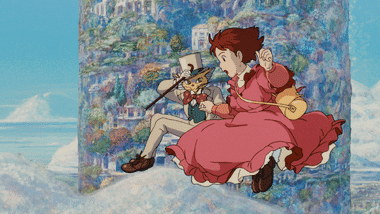
Anyone seeing images like this before release could easily have thought:
“Ah, yes. The usual Studio Ghibli fantasy.”
I wonder how people felt when they went to the theater and found a thoroughly grounded story instead. I didn’t see it in theaters myself.
I can almost feel the determination to market the film by making it look as much as possible like the “Ghibli fantasy” people expected. There is something oddly refreshing about that.
The Japanese line itself is deliberately archaic and theatrical.
Tsukamatsuru is an old-fashioned humble verb, and the entire sentence sounds like something spoken by an elegant hero in a classical adventure.
“Let us go forth together” is therefore much more appropriate than a plain “Let’s go together.”
There is nothing particularly difficult about the vocabulary, but the elevated register is the important part.
▼ Read more about Baron and the story Shizuku creates around him
Sugimura’s Quote in Japanese and English
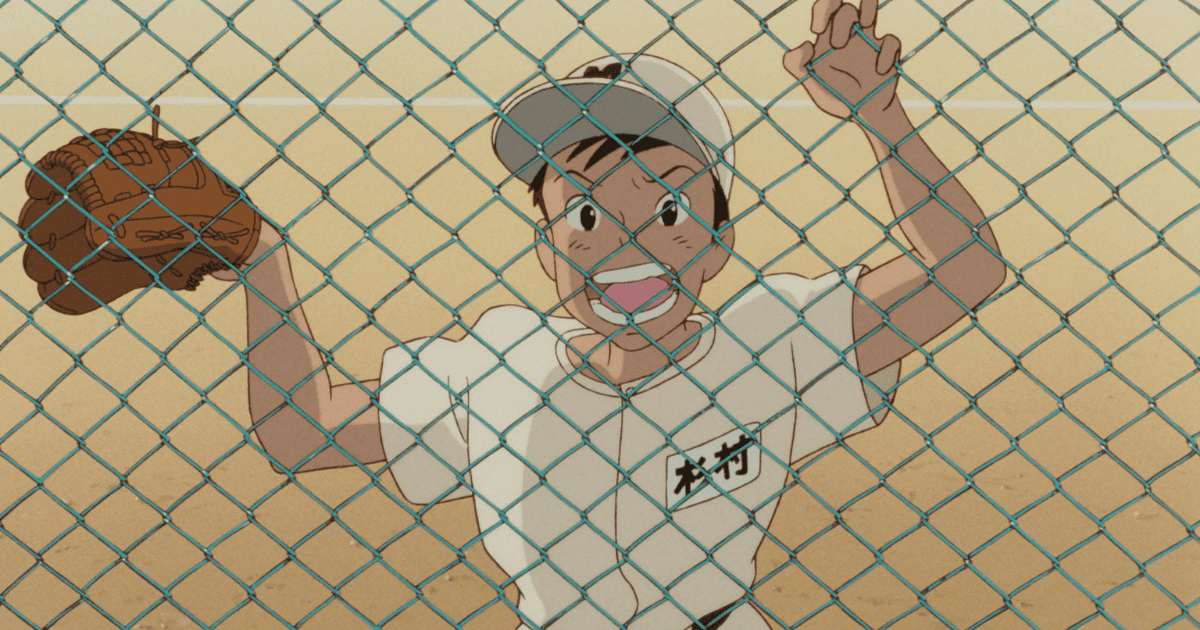
“Just friends?”
……ただの友達か。これからもか? そうか……。
…Tada no tomodachi ka. Kore kara mo ka? Sō ka…
‘Just friends’ ‘Forever’ ‘I see…’
…Just friends? From now on too? I see…
Read the Commentary and Analysis
When exactly did Sugimura fall in love with Shizuku Tsukishima?
We will never know.
The unseen days of his romance reach their end in this scene.
Yet this was also the only moment in which he could possibly have told Shizuku how he felt.
If he had allowed that moment to pass, Shizuku would simply have grown closer to Seiji Amasawa, and Sugimura would have carried an unresolved memory of his youth for years afterward.
His love was never going to succeed.
Even so, he took the step.
I think that was admirable.
It may not have brought him the future he wanted, but I think taking that step helped shape the future he would have.
The English subtitle is extraordinarily spare:
“Just friends.”
“Forever.”
“I see…”
The Japanese second line is literally a question:
“From now on too?”
In context, however, “Forever?” captures exactly what Sugimura wants to know.
The dub expands his final response considerably, using wording close to:
“I’m sorry. I’ll never mention it again.”
That sounds more explicitly like dramatic dialogue, but I prefer the subtitle.
The Japanese sō ka—“I see”—contains almost nothing, and that is precisely why it works.
Sugimura has already lost.
There is simply nothing left for him to say.
I explore the full tragedy of his role here:
▼ Read more about Sugimura and why his romance was doomed from the beginning
Those are the eight lines I personally selected from Whisper of the Heart.
Looking at them together, what stands out most is how strongly this film treats effort, ambition, and romance as parts of the same process.
Shizuku cannot simply admire Seiji. His determination forces her to examine herself. Seiji cannot simply pursue his dream in isolation. His feelings for Shizuku become part of what he imagines his future to be. Even Sugimura’s failed confession matters because he chooses, at least once, to step beyond the comfortable position of “just friends.”
Perhaps that is why Whisper of the Heart remains so powerful. It is not really a film about talented teenagers who already know what they are going to become.
It is about young people deliberately reaching a little beyond what they currently are—and discovering themselves through the attempt.
Which quote from Whisper of the Heart has stayed with you?
The images used in this article are from the Studio Ghibli Works Still Image Collection.
Can you name the movie before the scene comes into focus?
Put your visual memory to the test with a blurred Studio Ghibli scene.

Reader Comments