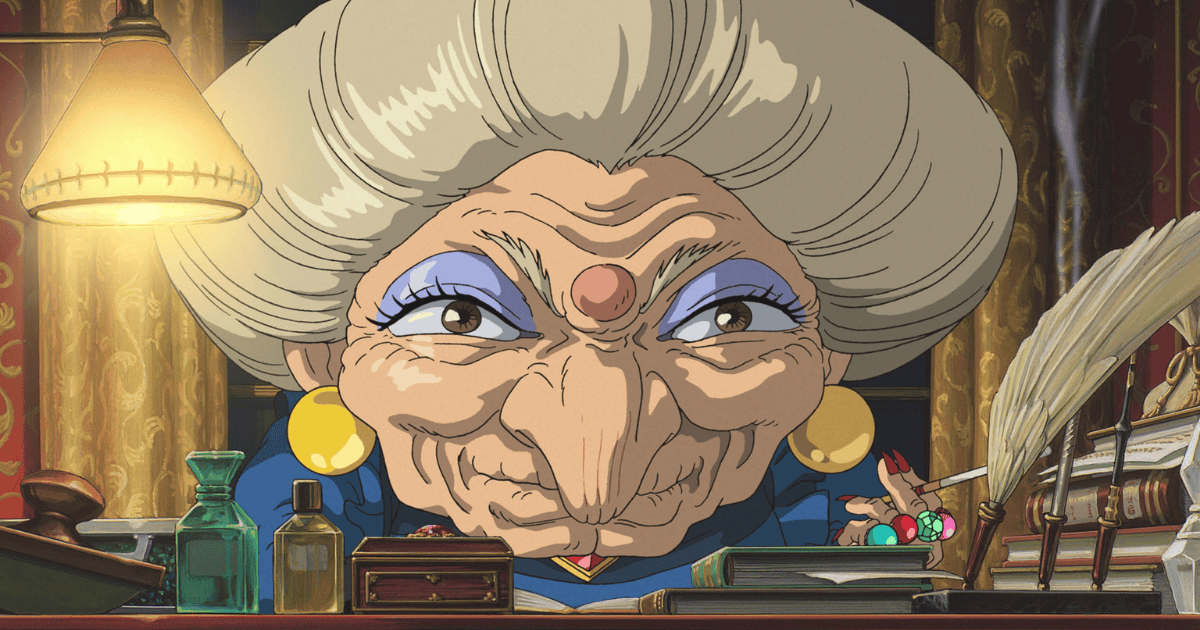
In my previous deep-dive, I explored the philosophical and psychological reasons behind how Chihiro knew her parents weren’t among the pigs at the climax of Spirited Away(Studio Ghibli Official).
Read the full analysis: How Did Chihiro Know Her Parents Weren’t Pigs?
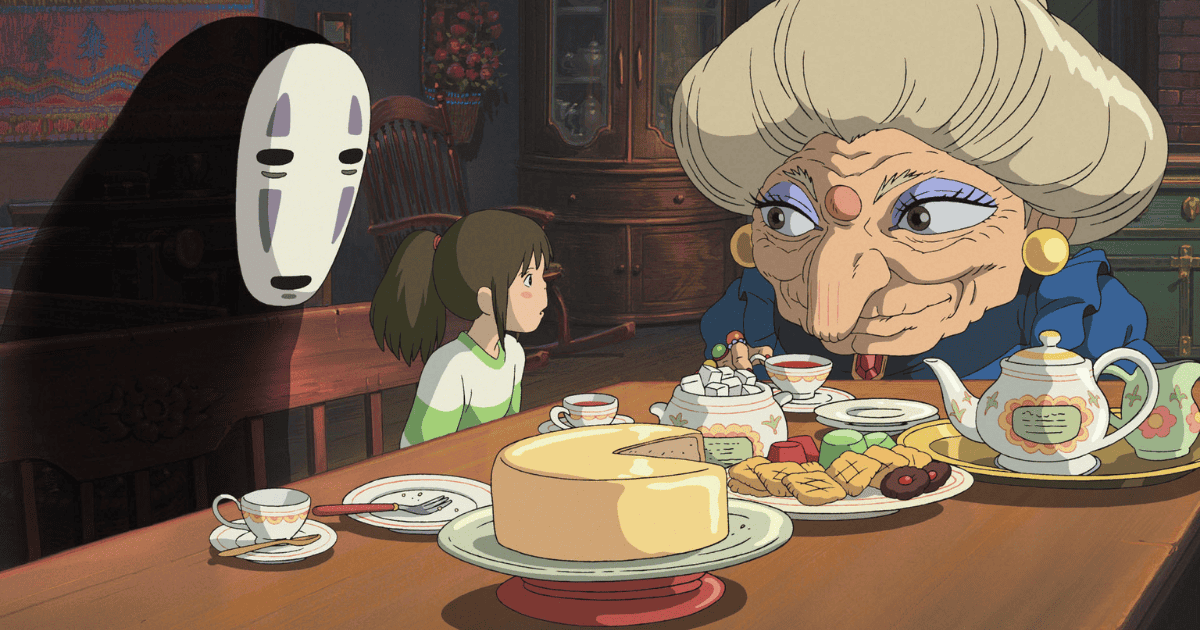
Today, I want to tackle another famous mystery surrounding the primary antagonist, the terrifying witch Yubaba: Why does she steal names? What is the actual thematic purpose of this magical contract?
*This is a translated version. The original (Japanese) is available here.
- Reframing the “Theft”: She is Assigning a Workplace Nickname
When Yubaba magically lifts the characters off Chihiro’s contract and declares, “From today, you are Sen,” it functions more like an initiation ritual into a corporate organization. Thematically, she isn’t purely “stealing” an identity; she is forcing a hierarchical “nickname” upon her new employee. - The Duality and Danger of Nicknames in the Workplace
A nickname given by an absolute authority figure (like Hayao Miyazaki assigning nicknames to his Ghibli animators) forcefully defines a person’s status within the group, regardless of whether the employee actually likes it. The line between “giving a nickname” and “stripping someone’s identity” is incredibly thin. - Chihiro’s Arc is Miyazaki’s Secret Message to His Animators
Chihiro’s struggle to survive under a demanding, tyrannical boss while secretly protecting her true name (her core essence) can be read as a direct meta-message from Miyazaki to his staff: “Survive my harsh studio, learn your craft, but never forget who you truly are so you can eventually leave and become independent.”
On this pageContents
Spirited Away (2001) Analysis: The Corporate Culture of Yubaba’s Bathhouse

Does Yubaba Actually “Steal” Names?
When analyzing Yubaba’s magical contract, we have to start with a surprisingly literal question: Is she actually “stealing” Chihiro’s name?
Visually, it certainly looks like theft. The intimidating witch waves her hand, and the ink characters physically float off the paper, leaving only the single kanji for “Sen” (千). However, if you view this interaction through the lens of Japanese corporate culture, the scene takes on a different tone: Yubaba is simply assigning Chihiro a workplace nickname.
So why are audiences universally convinced her name was “stolen”? Mostly because we were heavily primed by the film’s marketing. The theatrical trailers and TV spots hammered home the tagline: “A 10-year-old girl who had her name stolen and was forced to work in a mysterious town.”
Our perception of the scene was manipulated by meta-information outside the movie itself.
If we look purely at the text of the scene, Yubaba says, “From today, you are Sen.” Historically, a superior assigning a nickname or a “working name” to a subordinate is often framed as an expression of “affection” or bringing them into the fold. From a strictly corporate perspective, the contract scene is actually a surprisingly positive milestone: Chihiro has successfully navigated the interview process and is officially accepted as a member of the organization.
The Hidden Toxicity of Workplace Nicknames
However, just because giving a nickname signifies “acceptance into the group” does not mean it is a positive or healthy practice.
Let’s look at a real-world example from Studio Ghibli itself. Hiromasa Yonebayashi—the talented director behind Ghibli’s Arrietty and When Marnie Was There, and later Studio Ponoc’s Mary and the Witch’s Flower—was famously given the nickname “Maro” (麻呂) by Hayao Miyazaki.
Cultural Context: The Nuance of “Maro”
In Japanese, “Maro” (麻呂) evokes the image of a pampered, high-ranking male aristocrat from the ancient Heian period (794-1185). When used as a modern nickname, it implies the person is gentle, slow-paced, and perhaps a bit old-fashioned or soft.
While it is generally meant affectionately, it is absolutely not a “cool” or “respectful” nickname. It implies a high degree of familiarity and is slightly comical, subtly stripping away formal professional respect.
When you see interviews with Director Yonebayashi, the nickname “Maro” visually seems to fit his gentle demeanor. He doesn’t appear to be the type to resent the moniker. But that is entirely beside the point. The nickname “Maro” is not a title of professional respect.
It is a name that only Hayao Miyazaki—the absolute, unquestionable king of Studio Ghibli—possesses the authority to assign.
When an authority figure assigns a nickname, they are permanently defining that person’s status and identity within the group, completely bypassing the subordinate’s own will.
To use a more extreme example, imagine a boss telling an employee, “You’re loyal like a dog, so your new name is ‘Pochi’!”
Cultural Context: The Insult of “Pochi”
In Japan, “Pochi” (ポチ) is the most stereotypical name for a pet dog, similar to “Fido” or “Spot.”
If a boss calls a human employee “Pochi,” it is deeply demeaning. It implies the employee is a mindless “lapdog” or a “minion” who lacks independent thought and exists only to blindly follow orders. It is a nickname that actively dehumanizes the target.
If the boss started calling someone “Pochi,” the rest of the office would likely adopt it, framing it as “affectionate teasing.” But the employee would likely be deeply humiliated by the loss of their professional humanity.
This is where the paradox of the nickname exists. Giving a nickname is functionally identical to stealing a true name; it replaces a person’s complex humanity with a simplified label dictated by power.
So, returning to the film, why did Miyazaki include the specific mechanism of Yubaba forcing a nickname on Chihiro?
The Meta-Narrative: Miyazaki’s Secret Message to His Animators

I believe the answer is profound: Because stripping names and assigning roles is exactly what Hayao Miyazaki does in real life.
While I am not privy to the inner workings of Studio Ghibli, I cannot fathom a scenario where a junior animator could successfully refuse a nickname given to them by Hayao Miyazaki. And I am absolutely certain that Miyazaki, a highly perceptive director, is fully aware of his overwhelming, dictatorial presence within the studio.
If an animator complained about the strict hierarchy, Miyazaki’s internal response would likely be: “If you don’t like my rules, you should quit Ghibli and forge your own path! In fact, that is exactly what you should do!“
He believes an artist must survive on the strength of their own skills, not by comfortably hiding under his umbrella.
However, Miyazaki is also capable of profound self-reflection.
Early in the film, after Chihiro barely secures her job, Haku delivers a crucial warning: “Yubaba steals names to control people.”
Haku’s warning about names is closely connected to another of his most important lines: “Without your real name, you’ll never find your way home.” For the Japanese original, romanization, subtitle, and translation notes, see our Spirited Away quotes in Japanese and English.
It is incredibly easy to read this line as Miyazaki’s own cynical self-reflection. It is almost as if he is admitting: “I know exactly how dictatorial and controlling people think I am.”
When viewed through this meta-textual lens, Chihiro’s entire journey—being forced to work under a terrifying boss, being stripped of her name and called “Sen,” yet fiercely protecting her true identity until she is strong enough to break the contract and leave—functions as a massive, heartfelt message from Hayao Miyazaki to his own animation staff. It essentially translates to:
“To the animators of Studio Ghibli: Yes, I am the absolute authority here. I give you nicknames, I work you to the bone, and I demand perfection. I know you may resent this environment. But listen to me: no matter what I call you, or how grueling the labor gets, never forget your true name. Never lose your artistic essence. Learn everything you can, and one day, break free from the ‘curse’ of Hayao Miyazaki. Reclaim your name, leave this bathhouse, and fly on your own!”
I believe that is the true, hidden message of the film.
While I am just an outsider speculating on the animation industry, applying this corporate lens to Spirited Away makes Yubaba’s bathhouse feel incredibly, wonderfully real.
The images used in this article are from Studio Ghibli Works Still Images.
Can you name the movie before the scene comes into focus?
Put your visual memory to the test with a blurred Studio Ghibli scene.
Reader Comments