
Released on July 19, 2008, Ponyo (Studio Ghibli Official Website) marked Hayao Miyazaki’s triumphant return to a purely joyful, child-centric cinematic vision. Following the heavy, apocalyptic themes of Princess Mononoke and the complex war politics of Howl’s Moving Castle, Miyazaki explicitly crafted Ponyo to be accessible to a five-year-old.
I distinctly remember going to the theater out of a sense of “civic duty” as a Ghibli fan. While its brilliant animation blew me away, the narrative initially felt overwhelmingly simple. However, looking beneath the surface, the film is actually brimming with fascinating, slightly terrifying mythological lore.
Today, I am going to comprehensively break down the plot of Ponyo and unpack its most heavily debated, lingering mysteries. Please be warned: when I say I am doing a plot summary, I mean I am going to spoil the entire movie. If you wish to avoid spoilers, bookmark this page, go watch the film, and come back.
*This is a translated version. The original (Japanese) is available here.
- Detailed Synopsis & Character Map
A brief summary of the film: “A fiercely independent five-year-old boy named Sōsuke discovers a magical goldfish trapped in a jar on the shore. He names her Ponyo. Obsessed with Sōsuke, Ponyo uses ancient, dangerous magic to transform into a human girl, inadvertently triggering a massive, apocalyptic tsunami that sinks their town. To restore the balance of nature, Sōsuke must pass a terrifying test of unconditional love.” This article provides a comprehensive scene-by-scene breakdown and a visual character map. - Deep Thematic Analysis & Hidden Lore
Beyond the plot, we will dissect the film’s deepest narrative mysteries. We will explore the psychological theme of “A Woman’s Obsession,” the cultural shock of “Why Sōsuke Calls His Mother by Her First Name,” and the terrifying revelation of “The True Biological Form of Gran Mamare.”
On this pageContents
Ponyo (2008) Full Synopsis: A Tsunami of Love (Spoilers)
Quick Summary: The 10 Core Plot Points
To grasp the simple yet massive narrative scale of Ponyo, here are the vital milestones:
-
The Great Escape
Ponyo, a curious magical fish and daughter of a sea sorcerer, sneaks away from her underwater home to explore the human world. -
The Boy on the Cliff
Sōsuke, an independent five-year-old living on a high cliff, discovers Ponyo trapped in a glass jar on the beach and rescues her. -
The Taste of Blood
While breaking the jar, Sōsuke cuts his finger. Ponyo licks the blood, healing the wound and inadvertently absorbing human DNA, sparking her deep desire to become human. -
The Father’s Panic
Fujimoto, Ponyo’s eccentric, overprotective sorcerer father, panics and forcibly kidnaps her back to the ocean depths. -
The Magical Rebellion
Refusing to be contained, Ponyo breaks into her father’s magical well, absorbs its power, and aggressively transforms herself into a human girl to run back to Sōsuke. -
The Apocalyptic Tsunami
Ponyo’s reckless use of magic shatters the balance of nature, triggering a massive, magical typhoon and a tsunami that completely submerges Sōsuke’s town. -
The Night of Survival
Sōsuke and Ponyo seek refuge in his clifftop home alongside his incredibly capable mother, Lisa. -
The Mother of the Sea
Gran Mamare, a colossal sea goddess and Ponyo’s mother, arrives. She strikes a deal with Lisa to stop the apocalypse by allowing Ponyo to permanently become human, but only if Sōsuke passes a test. -
The Ultimate Trial
Sōsuke and Ponyo sail across the flooded, prehistoric ocean to find Lisa. Sōsuke is confronted by Gran Mamare, who demands to know if he can love Ponyo even if her true form is a fish. -
The Kiss of Humanity
Sōsuke fearlessly accepts Ponyo in all her forms. He kisses her magical bubble, permanently transforming her into a human girl and restoring the balance of the world.
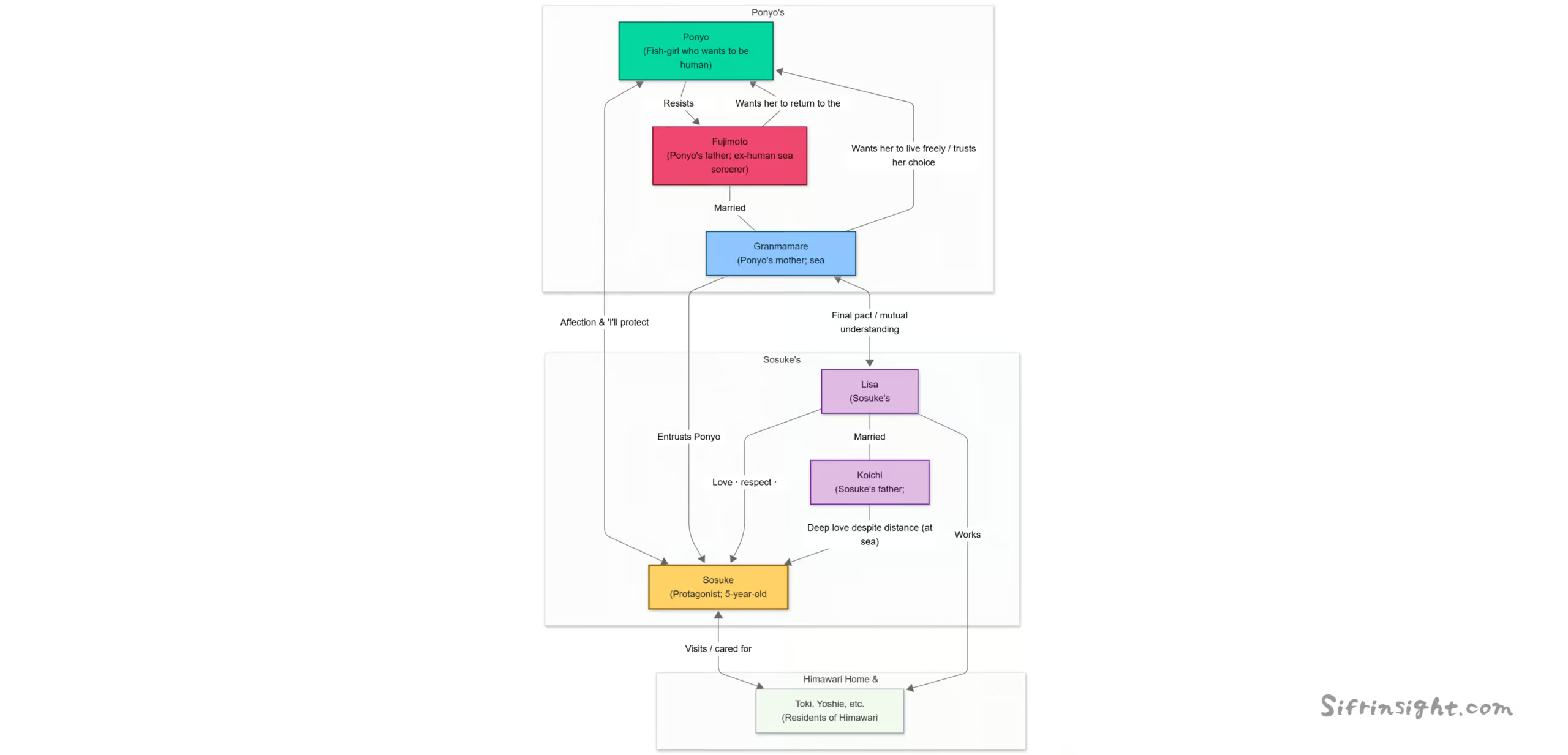
Complete Character Map
The Deeper Meaning of the Narrative
If you were to boil the plot of Ponyo down to a single sentence, it is fundamentally “a love story between a boy and a girl.” However, it is structurally obvious that the film is a direct retelling of Hans Christian Andersen’s classic fairy tale, The Little Mermaid.
In the official making-of documentary, How Ponyo Was Born, Director Miyazaki explicitly discusses The Little Mermaid, stating that he was deeply dissatisfied with its tragic, sacrificial ending. (In the original tale, the mermaid fails to win the prince’s love and dissolves into sea foam). The ending of Ponyo is Miyazaki’s personal critique and joyous rewrite of that tragedy.
Furthermore, the documentary reveals Miyazaki’s intense emotional struggle while storyboarding the film’s climax, specifically the scenes involving the elderly women at the Himawari House day-care center.
During Miyazaki’s own childhood, his mother was bedridden with spinal tuberculosis, meaning he was deprived of a highly active, physically affectionate mother. As a result, Miyazaki often projects his longing for a vibrant mother figure into his films (most famously with the mother in My Neighbor Totoro).
For Miyazaki, animating the elderly, wheelchair-bound women suddenly standing up and sprinting joyfully was a deeply personal, cathartic act.
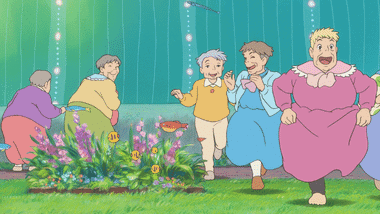
I know I wasn’t the only viewer who unexpectedly shed a tear watching the old women running around energetically inside the magical underwater dome. That scene is Miyazaki’s ultimate wish fulfillment: giving his own mother the ability to run freely once again.
With that emotional context established, let’s dive into the detailed scene-by-scene breakdown of the plot.
Detailed Synopsis: A Scene-by-Scene Breakdown
The Encounter of the Third Kind
The story begins deep underwater, where a curious, magical fish-child named Brunhilde sneaks away from her father’s submarine to explore the surface. She hitches a ride on a jellyfish, drifting toward a rocky, coastal Japanese town.
Meanwhile, an incredibly independent five-year-old boy named Sōsuke, who lives in a house perched high on a cliff, climbs down to the water’s edge to play. He discovers a glass jam jar wedged between the rocks, with the little red fish trapped inside.
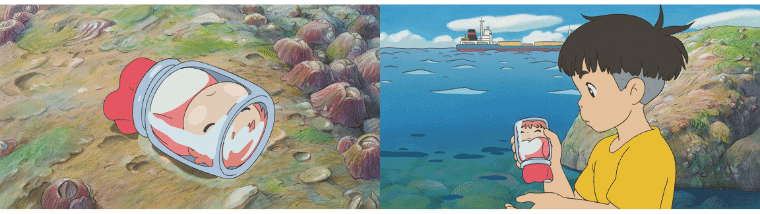
Sōsuke uses a rock to shatter the glass, rescuing the seemingly lifeless fish. In the process, he cuts his thumb. The little fish suddenly revives and licks the drop of blood from Sōsuke’s finger, instantly healing the cut.
Sōsuke drops the fish into a green plastic bucket filled with tap water, dubbing her “Ponyo.”
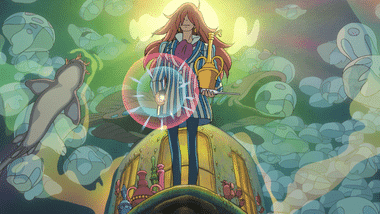
As Sōsuke and his mother, Lisa, prepare to drive to his nursery school, a bizarre, pale man wearing a striped suit approaches them, frantically spraying seawater on the pavement to keep himself hydrated. This is Fujimoto, Ponyo’s father, an eccentric sorcerer desperately searching for his runaway daughter.
Sensing danger, Lisa quickly drives away. Sōsuke successfully smuggles Ponyo into his nursery school, hiding her bucket in the bushes. However, another child spots her, forcing Sōsuke to grab the bucket and flee next door to the Himawari House, the senior care facility where his mother works.
Sōsuke proudly shows Ponyo to the elderly women. While most find her cute, a notoriously grumpy woman named Toki recoils in horror, loudly declaring Ponyo a “human-faced fish.”
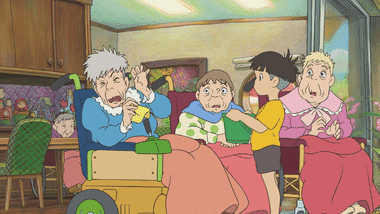
Toki vehemently warns everyone of an ancient superstition: “When a human-faced fish comes ashore, a tsunami will inevitably follow!” Annoyed by the insult, Ponyo spits a massive jet of water directly into Toki’s face.
Panicking, Sōsuke runs back down to the rocky shore to hide. However, Fujimoto is waiting in the surf. Using his magic to summon a wave of water-spirits, Fujimoto violently snatches Ponyo out of the bucket, dragging her back into the ocean.
Devastated, Sōsuke weeps on the shore, having broken his promise to protect her.
That promise is one of the lines that defines Sōsuke’s character. I discuss the original Japanese and English translation in my collection of memorable Ponyo quotes.
The Magical Rebellion
That evening, Sōsuke’s father, Kōichi (a ship captain), was scheduled to come home. However, as usual, he radios in to say his ship has been rerouted and he won’t make it.
Lisa, having prepared a massive, celebratory feast, throws a furious, localized temper tantrum. Sōsuke, acting far more mature than his five years, calmly comforts her. He then uses a signal lamp to flash Morse code to his father’s ship as it passes in the bay below.
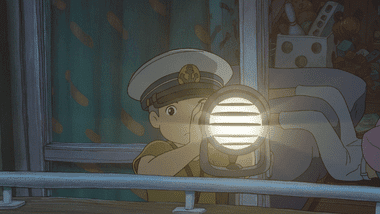
Kōichi flashes back apologies and “I love you, Lisa.” Still furious, Lisa grabs the lamp and rapidly flashes “BAKA BAKA BAKA” (Idiot) at the ship.
Meanwhile, deep underwater, Fujimoto is having a parenting crisis. Ponyo refuses to eat the nutritious plankton he offers, demanding the “ham” Sōsuke fed her. She angrily rejects her birth name, Brunhilde, screaming, “My name is Ponyo! And I want to be human!”
To Fujimoto’s absolute horror, the human DNA Ponyo absorbed by licking Sōsuke’s blood begins to mutate her body. She forcefully sprouts chicken-like arms and legs.
Fujimoto uses heavy magic to suppress the mutation and force her to sleep. Realizing his power isn’t enough, he leaves to summon his wife, “that person,” for help.
While he is gone, Ponyo awakens. Aided by her thousands of tiny sisters, she breaks into Fujimoto’s most dangerous, sacred room: the elixir well, where he stores the raw, concentrated magic of the ocean. Ponyo absorbs the magic, fully transforming herself into a human girl with fiery red hair.
Empowered by literal god-tier magic, Ponyo explodes out of the submarine, summoning a massive, violent typhoon to ride the waves back to the surface.
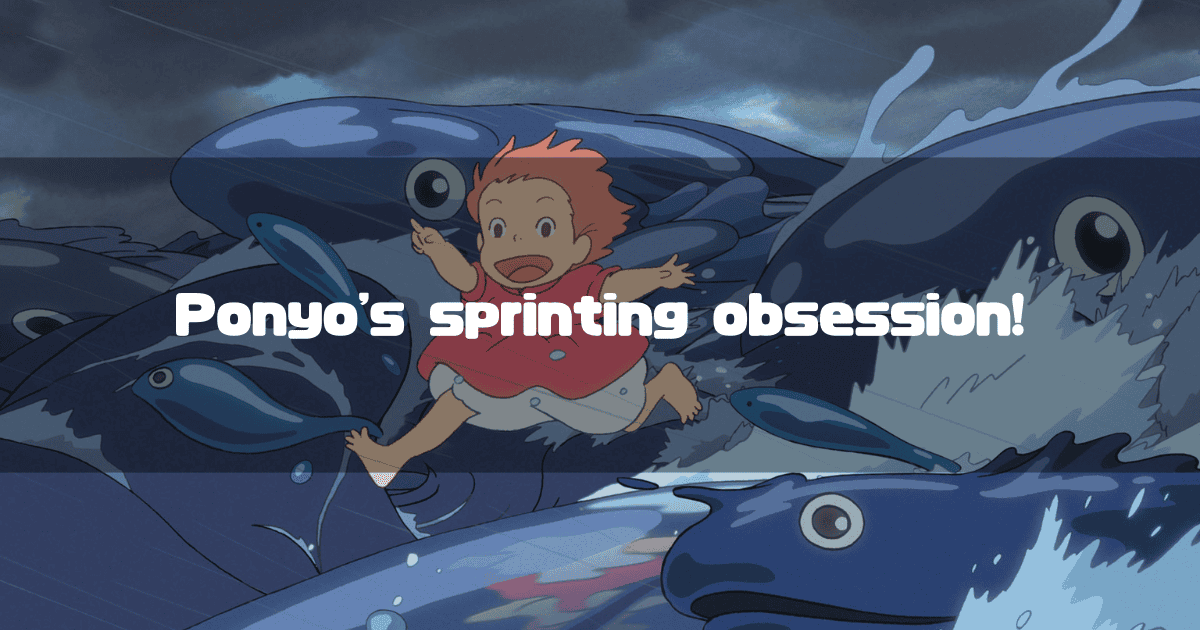
The visual of Ponyo sprinting across the tops of monstrous, fish-shaped tsunami waves, entirely consumed by her single-minded obsession to reach Sōsuke, is one of the most breathtaking, terrifying sequences in animation history.
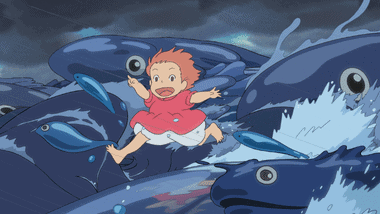
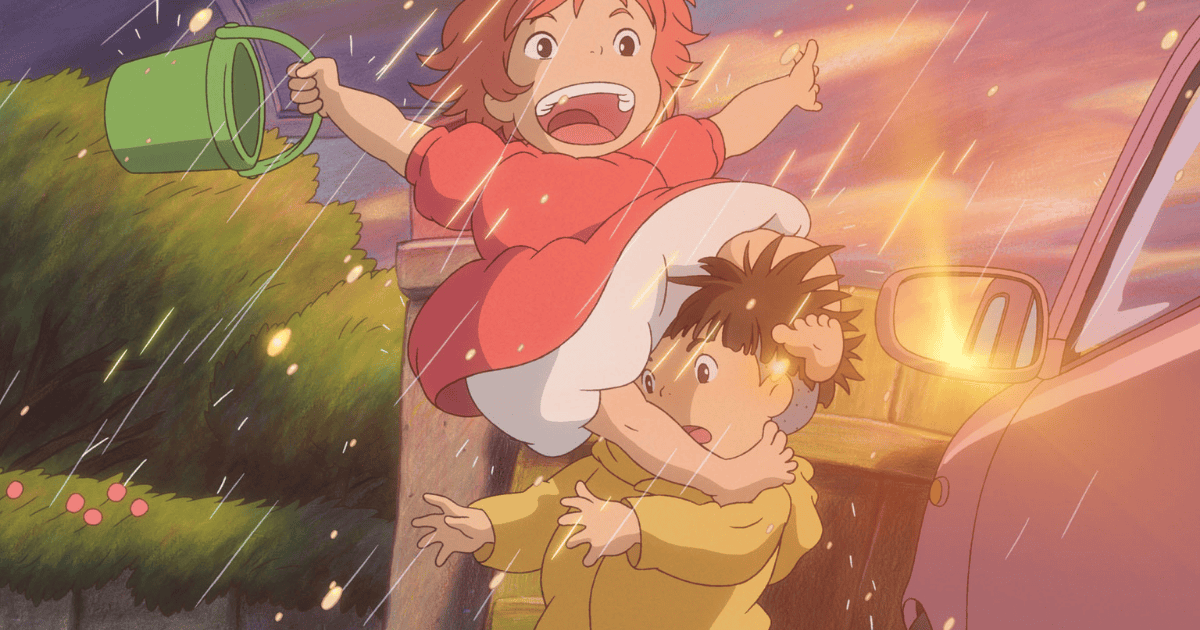
The unnatural storm hits the coastal town with devastating force. Lisa and Sōsuke are caught in the hurricane while trying to drive home. As they navigate the flooded, treacherous roads, Sōsuke spots a little girl running on top of the waves next to their car.
Once they safely reach their clifftop house, the little girl tackles Sōsuke in a massive hug.
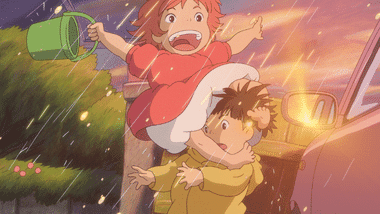
Sōsuke instantly recognizes the human girl as his lost goldfish. Lisa, completely unbothered by the magical absurdity of the situation, immediately dries her off, feeds them both a hot bowl of ham ramen, and makes them feel safe.
Content and exhausted, Ponyo immediately falls asleep. Curiously, the moment she loses consciousness, the violent storm instantly dies down, leaving the sea eerily calm but massively swollen.
With the kids safe, Lisa makes a heroic, agonizing decision. She must check on the elderly residents at the Himawari House down in the flooded town. She leaves Sōsuke in charge of protecting the house and Ponyo, promising to return soon.
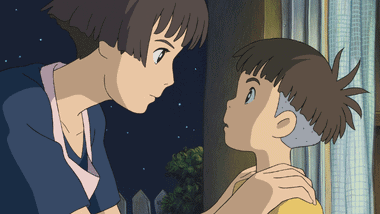
By morning, the sea level has risen catastrophically. The water reaches the very edge of their clifftop lawn; the entire world has been submerged.
The Voyage of the Pop-Pop Boat
Down in the deep ocean, Fujimoto is groveling before his wife, Gran Mamare, a colossal, beautiful sea goddess. He is terrified because Ponyo’s reckless use of the elixir has shattered the balance of nature. The moon is falling out of orbit, and the world is facing total annihilation.
Gran Mamare calmly offers a radical solution: “Then let’s just make her human permanently.”
If Ponyo successfully abandons her magic to become fully human, the magical imbalance will cease, and the world will be saved. However, this requires a test. Sōsuke must prove his love is unconditional.
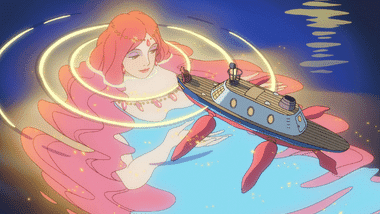
Up on the surface, Sōsuke wakes to a flooded world and realizes Lisa never returned. Determined to find her, he needs a boat. Ponyo uses her waning magic to blow on a small toy pop-pop boat, enlarging it into a functional vessel.
Armed with supplies, the two children set sail across the prehistoric, submerged landscape.
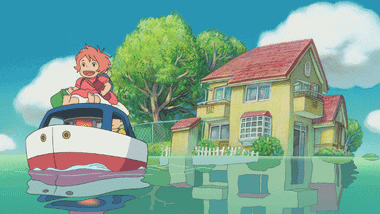
They encounter a convoy of townspeople cheerfully paddling toward a designated safe zone. They eventually find Lisa’s empty car abandoned on a submerged road, but Lisa is nowhere to be seen.
The Final Trial
Unbeknownst to Sōsuke, Lisa and all the elderly residents of the Himawari House are completely safe. Gran Mamare used her magic to envelop the building in a massive, breathable underwater air bubble. Freed from their physical ailments by the goddess’s magic, the old women are joyfully running and dancing in the underwater garden.
As Sōsuke and Ponyo trek toward the site, Ponyo begins falling asleep on her feet, exhausted from burning through her magical reserves. As they enter a dark tunnel, her magic completely fails. She physically devolves from a human girl into a bizarre half-fish, and finally back into a standard goldfish.
Distraught, Sōsuke puts her back in his green bucket. Fujimoto appears and gently guides them down into the underwater air bubble to reunite with Lisa.
The time for the final trial has arrived. Gran Mamare approaches Sōsuke and asks the ultimate question: “Sōsuke, Ponyo’s true form is a fish. Can you still love her, exactly as she is?”
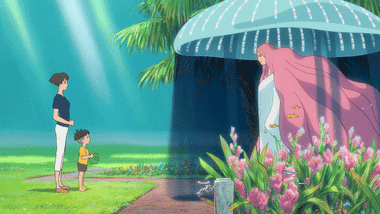
Without a single ounce of hesitation, the brave five-year-old declares: “I love all the Ponyos. The fish Ponyo, the half-mermaid Ponyo, and the human Ponyo.”
Gran Mamare smiles. The conditions are met. She envelops Ponyo in a glowing bubble, explaining that once Sōsuke kisses the bubble on the surface, Ponyo will permanently lose her magic and become a human girl.
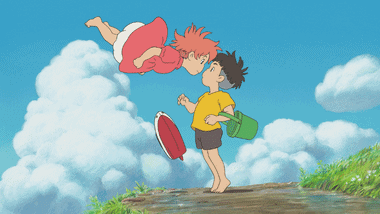
Back on dry land, the waters recede. In front of Lisa, Fujimoto, and the entire town, Sōsuke leans down and kisses the bubble.
The bubble bursts. A fully human Ponyo leaps into the air and kisses Sōsuke, sealing her humanity and saving the world.
That concludes the raw plot of Ponyo. However, to truly appreciate Miyazaki’s genius, we must unpack the hidden psychological elements that elevate this simple fairy tale.
Ponyo (2008) Deep Analysis: Unlocking the Film’s Mysteries
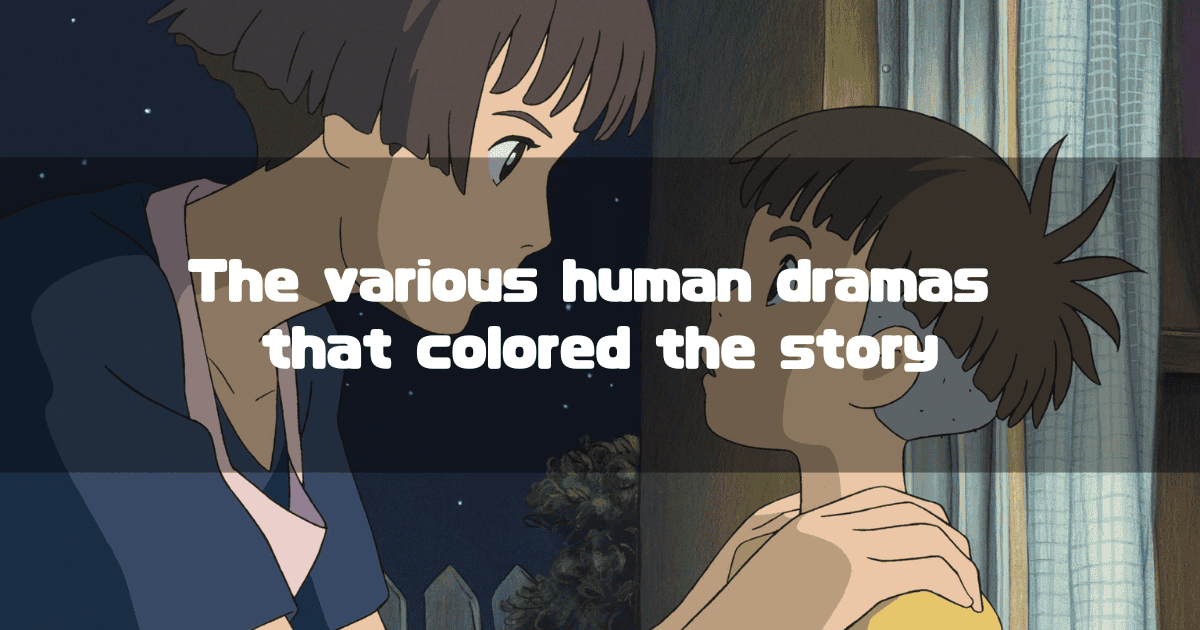
A Woman’s Capturing Obsession
Make no mistake: the entire driving force of this apocalyptic narrative is a woman’s (Ponyo’s) absolute, unyielding obsession with a man (Sōsuke).
While such blatant, aggressive romantic obsession might seem uncharacteristic for a Ghibli heroine, it is actually the culmination of a deeply ingrained thematic trilogy within Miyazaki’s filmography.
I strongly argue that there is a shared, melancholic theme of “The Sorrow of a Captured Man” running through three specific films: Porco Rosso, Howl’s Moving Castle, and Ponyo.
I have compiled a massive, multi-part analysis exploring how these three vastly different protagonists share the exact same psychological fate. If you are interested in deep-dive film theory, please read the series below:
Read the full analysis: Part 1: The Curse of Porco Rosso
Read the full analysis: Part 2: Sophie’s Obsession and the Capture of Howl
Read the full analysis: Part 3: The Truth of Gran Mamare and Sōsuke’s Bleak Future
The Cultural Shock: Calling Mom by Her First Name
Within the first five minutes of the film, Japanese audiences are hit with a massive dose of cultural whiplash: Sōsuke, a five-year-old child, casually refers to his mother as “Lisa” and his father as “Kōichi,” dropping all traditional parental titles and honorifics.
Miyazaki is famously meticulous. This character detail is not an accident; it is the absolute foundation of Sōsuke’s personality.
But why did Lisa and Kōichi choose to raise their son this way? Does it mean they are bad parents, or does it mean they are actually highly progressive, brilliant parents raising a fiercely independent survivor?
Read the full psychological breakdown: Why Does Sōsuke Call His Mother “Lisa”? The Meaning of First Names
The Terrifying Biological Truth About Gran Mamare
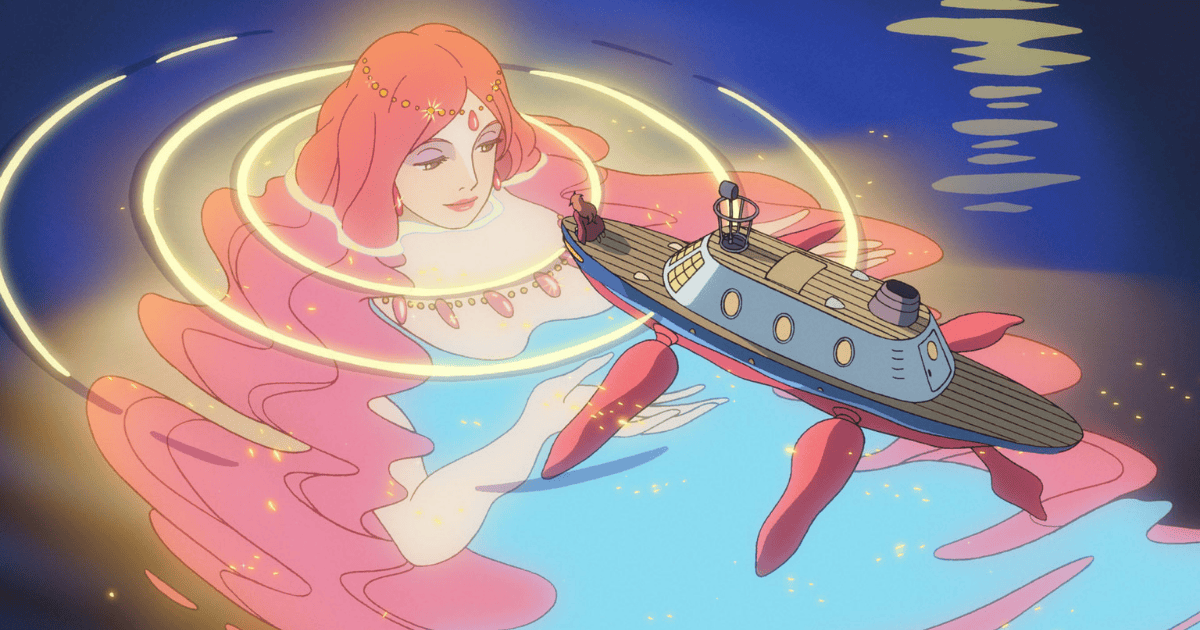
While the film portrays Ponyo’s mother, Gran Mamare, as a beautiful, glowing goddess of mercy, her character possesses a deeply terrifying biological secret.
During an interview, Director Hayao Miyazaki was asked about Gran Mamare’s true form in the ocean. He bluntly stated that her actual biological species is a massive, deep-sea Anglerfish.
If you know anything about the horrific mating habits of deep-sea anglerfish, that revelation changes the entire dynamic of her relationship with Fujimoto, and paints a terrifying picture of Sōsuke’s eventual future with Ponyo.
Read the horrifying biological analysis: The Truth About Gran Mamare: An Anglerfish Romance
Lore Appendix: Ponyo Trivia & Fun Facts
While researching these deep dives, I stumbled across a treasure trove of behind-the-scenes production secrets, including the fact that Ponyo was originally designed as a frog, and that Miyazaki blasted Richard Wagner’s Ride of the Valkyries on loop while animating the tsunami sequence.
If you love Ghibli lore, check out the trivia collection below!
Read the full trivia list: 8 Things You Didn’t Know About Ponyo: From Frogs to Deep-Sea Gods
The images used in this article are from the Studio Ghibli Works Still Images collection.
Can you name the movie before the scene comes into focus?
Put your visual memory to the test with a blurred Studio Ghibli scene.




Reader Comments