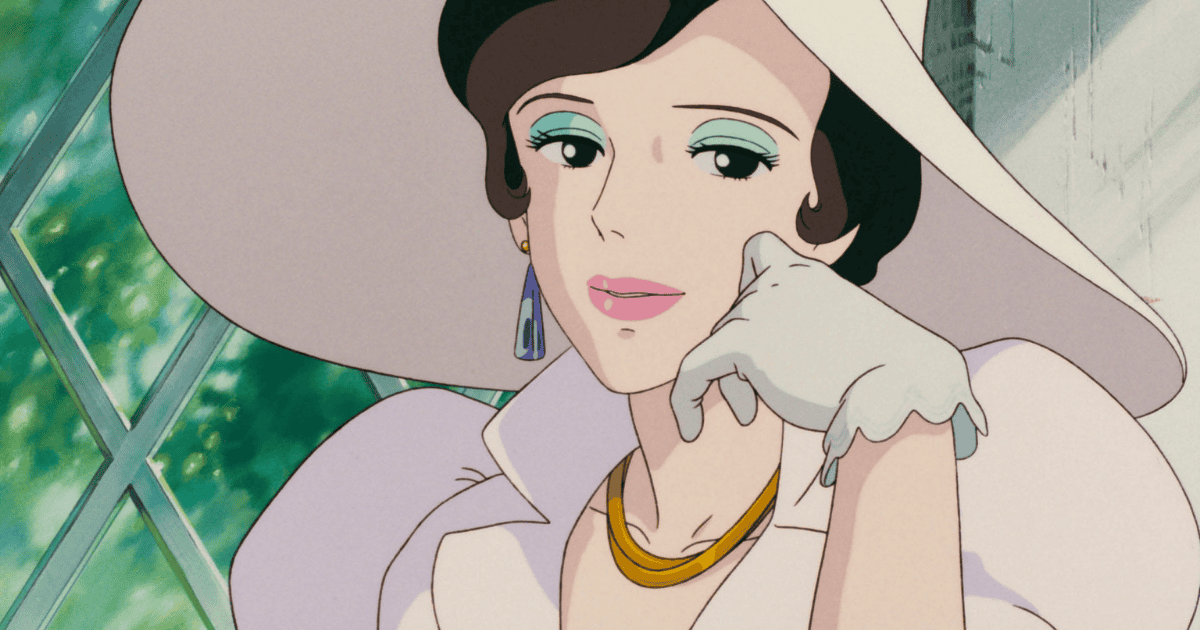
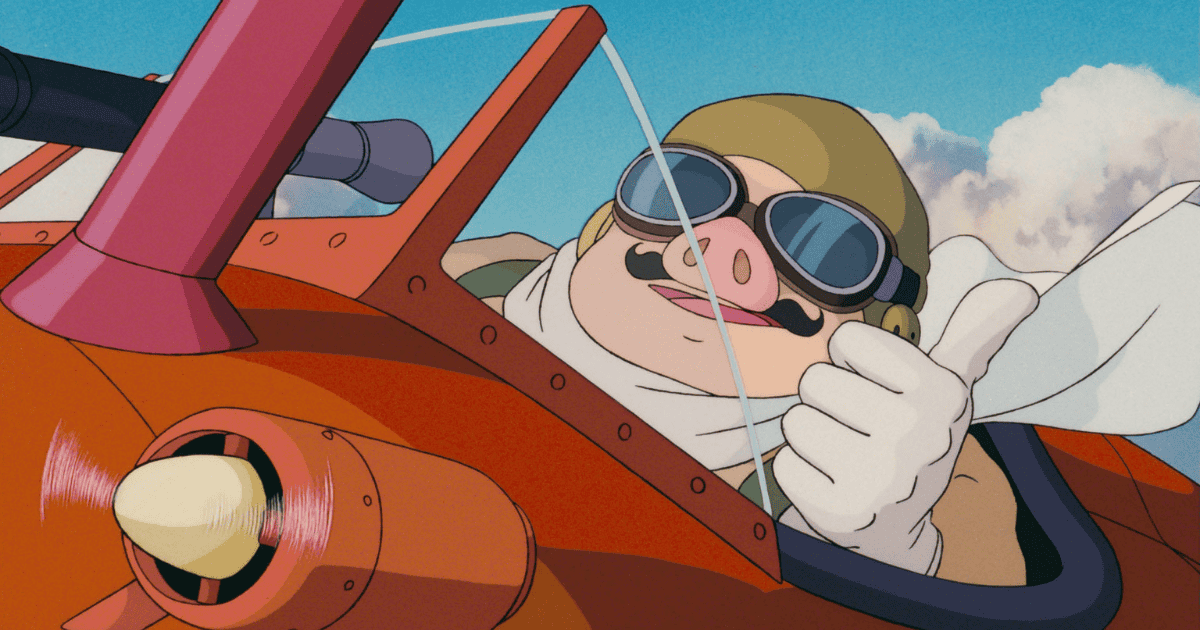
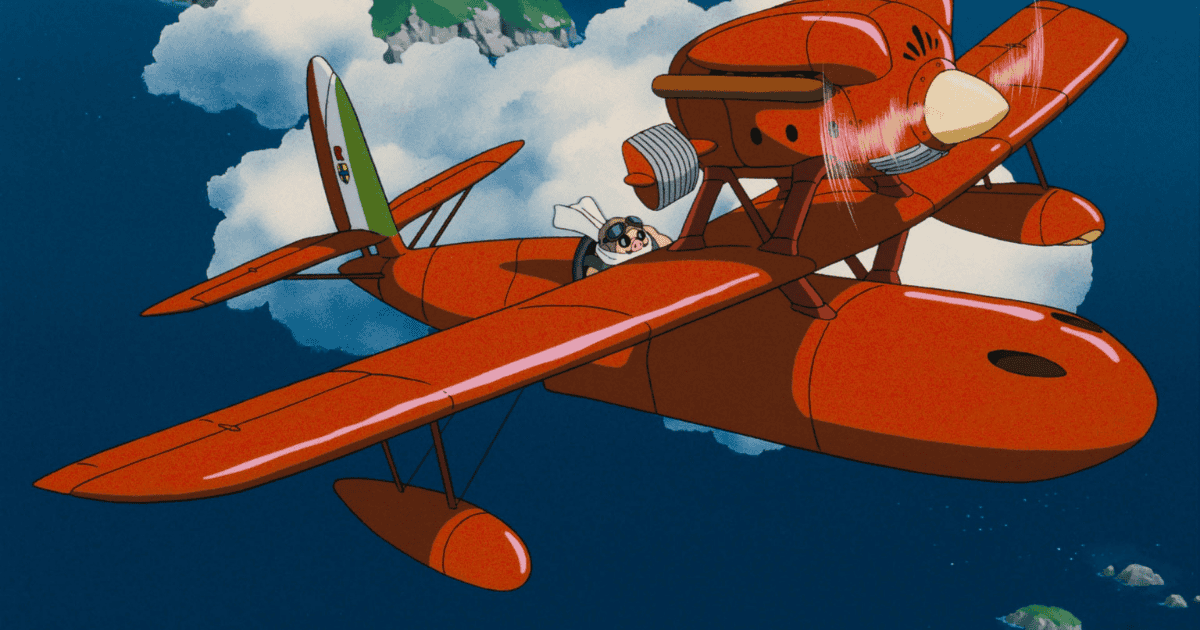
In Hayao Miyazaki’s 1992 aviation masterpiece, Porco Rosso(Studio Ghibli Official), Madame Gina reigns as the undisputed, glamorous queen of the Adriatic. Universally adored by bounty hunters, air pirates, and hotshot pilots alike, she is an elegant woman defined by a profound, quiet tragedy.
I have watched this film countless times since childhood, and it is the kind of cinematic triumph where new psychological layers reveal themselves with every viewing. Today, I want to focus entirely on the fascinating, hidden motivations of Madame Gina.
In one of the film’s most revealing moments, Gina casually drops a devastating piece of exposition:
“I’ve already lost three pilot husbands. One in the war, one in the Atlantic, and the last one died in Asia.”
(Original Text, in Japanese)
「私は三回飛行艇乗りと結婚したけど、一人は戦争で、一人は大西洋で、最後の一人はアジアで死んだって。」
The English subtitle reveals immediately that Gina has already lost all three husbands, while the Japanese delays the confirmation of the third man’s death until the end of the sentence. Compare the original Japanese, romanization, subtitle, literal translation, and dub in our detailed analysis of Gina’s devastating line.
Seeing how effortlessly she commands the rowdy air pirates and dazzles the hotshot American, Donald Curtis, it is obvious why pilots constantly throw themselves at her feet. It is no surprise she married aviators; they were the only men in her orbit.
However, the real psychological mystery is the order of her romantic choices. Why did she save the Great War hero Porco Rosso (Marco Pagot) for her fourth and final bet?
While Porco currently lives as a cynical, middle-aged pig, flashbacks reveal he was devastatingly handsome in his youth. There is no surface-level reason why he should have been pushed to the back of the line. Furthermore, if Gina viewed Porco as simply “husband number four,” she likely wouldn’t have so coldly rejected Curtis’s passionate, Hollywood-style marriage proposal.
If you watch the film casually, you might not question Gina’s judgment. But as a lifelong fan, I can’t help but psychoanalyze her romantic strategy.
Today, we are going to crack open the mystery of Gina’s heart. Why did she ruthlessly reject Curtis, and why did she wait so long to finally choose Marco? To find the answer, we must first analyze the ghosts of her past three marriages.
*This is a translated version. The original (Japanese) is available here.
- Gina’s Husbands: The “Order of Controllability”
The men who fly seaplanes are inherently wild, restless “mavericks.” Gina likely married them in the order of who was easiest to manage: childhood friends who already possessed a proven track record of absolute devotion to her. - The Crucial Difference Between Curtis and Porco
Curtis is a highly skilled, incredibly arrogant hotshot—an “uncontrollable rogue” who lacks decades of childhood loyalty to Gina, making him impossible to tame. Porco (Marco), on the other hand, is the most stubborn and free of them all, but his lifelong, unwavering adoration made him the ultimate “final bet” for her heart. - The Hidden Saint-Exupéry Homage (“Atlantic” and “Asia”)
Gina’s two post-war husbands were almost certainly daring airmail pilots flying incredibly perilous international routes. Drawing from real history (like Aéropostale), Miyazaki projected the dangerous, romantic career of his literary hero, Antoine de Saint-Exupéry, into the script, perfectly explaining why these pilots died in the “Atlantic” and “Asia.”
On this pageContents
Porco Rosso (1992) Analysis: Why Gina Rejected Curtis and Saved Porco for Last
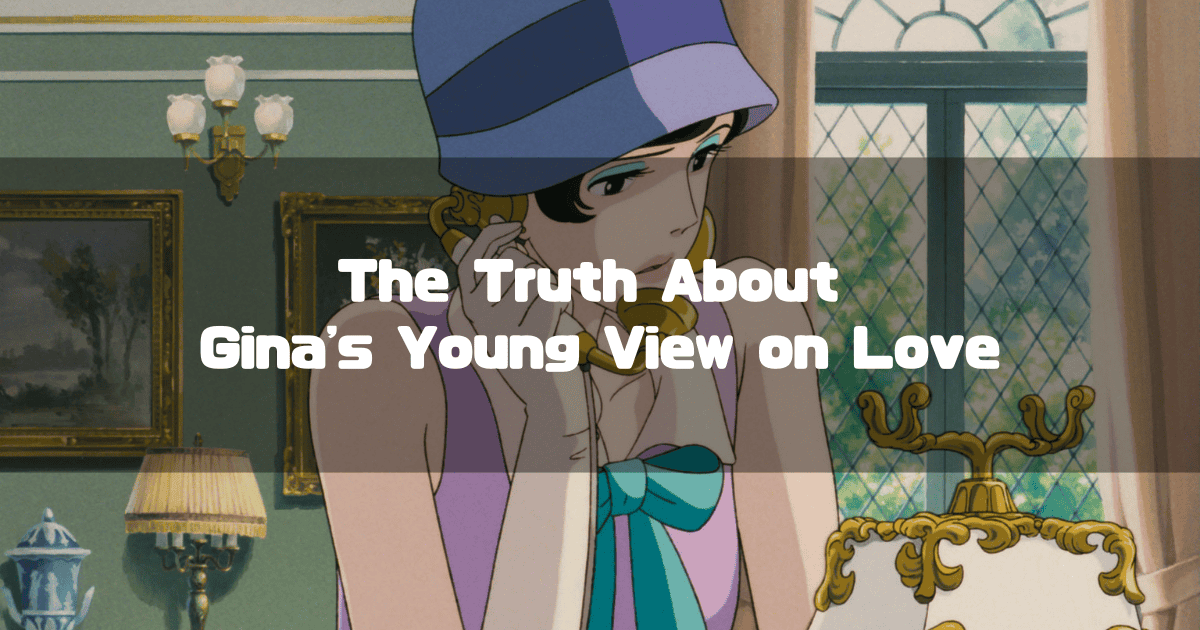
Who Were Her Three Husbands, and in What Order Did She Marry Them?
While the film never explicitly spells it out, the old photograph of the flying club—the one where Marco has famously scribbled out his own face—features exactly three other young men. It is highly probable that these three pilots are Gina’s deceased husbands.
Based on the context of the film, we can infer a few critical details about these men:
- Gina, Marco, and the three men were all tight-knit childhood friends.
- The men had all been completely in love with Gina since their youth.
- All of them became elite seaplane pilots, though Marco was undeniably the best among them.
- They were all fundamentally “good guys.”
The assertion that they were “good guys” is directly supported by Porco’s famous, melancholic line:
“The good guys always die.”
(Original Text, in Japanese)
「いいやつは皆しんだ。」
While he is broadly mourning the senseless slaughter of World War I, he utters this specific line immediately after Gina mentions the death of her third husband. It is obvious he is mourning his old flight club buddies. Right after this, he toasts, “To friends,” and raises a glass with her.
So, assuming she married her three childhood friends, the ultimate psychological question remains: “In what order did she marry them?”
Phase 1: Marrying the “Good Guys”
To understand Gina’s matrimonial timeline, we have to look at the other men in her life: Porco (the one she saved for last), the Mamma Aiuto air pirates (who she treats purely as paying customers), and Curtis (whose aggressive proposal she flatly rejects).
What do all these men have in common?
The story takes place in the agonizing gap between the end of WWI and the crushing grip of the Great Depression. The world is descending into fascist chaos, and normal citizens are desperately just trying to survive. But guys like Porco, the air pirates, and Curtis have actively opted out of normal society. To the outside world, they are reckless scoundrels and mavericks.
We must not forget the deep psychological scars of the First World War. The air pirates are essentially disillusioned veterans who looked at the broken, post-war world and said, “I refuse to participate in this.” They chose a life of piracy because returning to normal society was impossible.
For a beautiful woman like Gina, flirting and holding court with these wild, dangerous men is fun. But marriage is an entirely different beast. These men refuse to stay home, they constantly risk their lives, and their loyalty is always to the sky first.
Therefore, we can deduce that the men Gina initially deemed acceptable for marriage were “the men who actually seemed capable of maintaining a stable domestic life.” It makes logical sense that she worked her way through her suitors starting with the most “stable” and reliable ones first. But this theory makes the fate of her second and third husbands deeply fascinating.
The Paradox of the Flying Mavericks
According to Gina, her first husband died in combat, but the second and third survived the Great War.
This means the remaining two were skilled enough to survive the bloodiest aerial combat in history. (Since virtually every capable pilot was drafted, it is safe to assume they all saw action).
If Gina married them based on their “reliability,” what exactly were her second and third husbands doing that got them killed during peacetime? Why did they die in the “Atlantic” and “Asia”?
*I will explore the specific nature of their jobs in the Saint-Exupéry section below, but the short answer is: they were almost certainly long-haul airmail pilots.
Despite surviving the absolute hell of war, they simply refused to stop flying. That is the intoxicating, fatal allure of the sky for a true aviator.
But let’s look at this through the lens of a wife.
If your first husband dies in a plane, your absolute priority for your next marriage would naturally be: “Please stop flying.” Yet, husbands two and three kept flying incredibly dangerous international routes until they crashed. In that sense, despite being “good guys,” they were ultimately just as wild and uncontrollable as the air pirates.
If all her husbands kept choosing the sky over her, why didn’t Gina just stop marrying pilots altogether? Because Gina’s psychology is far more complex than simple self-preservation.
Phase 2: The Illusion of the Controllable Rogue
Countless men throughout history have lamented the frustrating, universal reality that “bad boys are popular.” Whatever the sociological reasons for this trope, it is an undeniable reality of human romance.
Gina is no exception. She is never depicted as a woman who could be satisfied settling down with a boring, predictable, land-bound accountant.
When it comes to marriage, Gina’s ultimate ideal is a paradox: “A wild, popular maverick who—for some inexplicable reason—is completely submissive and devoted only to her.” It is the classic romance novel fantasy: the dangerous beast who is gentle only to the heroine.
Why did her three childhood friends fit this impossible criteria?
- Because they were childhood friends, they had a proven, lifelong track record of adoring her.
- They were elite, masculine pilots.
- They possessed an inherent charisma that made them popular.
- They carried a romantic aura of danger, as if they might vanish into the clouds at any second.
That “aura of danger” is the intoxicating hook. But the crucial safety net for Gina was the belief that, despite their wild nature, their lifelong childhood devotion would keep them anchored to her.
Every night, Gina is surrounded by dozens of wealthy, rugged seaplane pilots. She had endless romantic options. Yet, she only ever married from her specific pool of childhood friends because she already had years of experience successfully commanding their absolute loyalty.
Ultimately, Gina married her friends in the “order of who was most likely to listen to her.” She married the most “controllable rogues” first. And understanding this psychological need for control perfectly explains why Donald Curtis never stood a chance.
Why Did Gina Ruthlessly Reject Curtis?
On paper, Donald Curtis is the ultimate catch. He is a phenomenal pilot whose skills rival Porco’s, he is highly ambitious, and he goes on to become a wildly successful, wealthy Hollywood actor. He is confident, handsome, and openly worships her.
However, the fundamental rule of the aviator is: the more skilled the pilot, the wilder the rogue. And crucially, Curtis is an outsider whom Gina cannot psychologically dominate.
During their interactions at the Hotel Adriano, Gina effortlessly deflects his advances, appearing vastly more mature and experienced. She handles him like a child. But if we accept the theory that Gina only commits to men who have demonstrated unwavering subservience since childhood, then Curtis’s brash, unpredictable American confidence is a massive red flag. He doesn’t have a decade of shared history binding him to her. She knows she cannot control him.
And that exact same logic finally explains why Marco was pushed to the very end of the line.
The Real Reason Porco (Marco) Was Husband Number Four
By now, the puzzle pieces snap perfectly into place. Think about the iconic ultimatum Gina delivers to Curtis in the garden:
“I’m making a bet. I’m betting that someone will visit me here during the day, and if he does, I’ll tell him I love him.”
(Original Text, in Japanese)
「私がこの庭にいるときにその人が訪ねて来たら、今度こそ愛そうってカケしているの」
It is a staggeringly bold, almost arrogant declaration of terms. Based on everything we have analyzed, the reason Porco was saved for last is incredibly simple: “Among all the childhood friends who adored her, Marco was the most wildly independent and the absolute hardest to control.“
She didn’t pass him over because he turned into a pig, and she certainly didn’t pass him over because he was unpopular.
He was the ultimate challenge. He was the wildest rogue. She married the easier ones first, and saved the most difficult, stubborn man for her final, desperate bet.
Because Miyazaki leaves so much of Gina’s internal monologue unsaid, there are countless ways to interpret her romantic history. But viewing her as a woman desperately trying to tame the untamable men of the sky adds a brilliant layer of tragedy to her character.
Porco Rosso (1992) Lore: Saint-Exupéry and the Tragic Fate of the Mail Pilots

You cannot fully comprehend the DNA of Porco Rosso without acknowledging Hayao Miyazaki’s profound reverence for the French aviator and author, Antoine de Saint-Exupéry.
Miyazaki’s deep emotional connection to the author of The Little Prince is beautifully documented in the 1998 NHK broadcast, “Journey of the Heart: Saint-Exupéry, a Dream of the Great Sky” (世界・わが心の旅 サンテグジュペリ 大空への夢, in Japanese).
The documentary follows Miyazaki as he physically retraces the flight paths and history of his literary hero. At the emotional climax of the program, a visibly moved, teary-eyed Miyazaki confesses:
“In the end, it was Saint-Exupéry who influenced me the most.”
(Original Text, in Japanese)
「サンテグジュペリに一番影響を受けたんですよ僕は。結局。」
For a legendary filmmaker to declare that a specific aviator was his ultimate creative influence speaks volumes about the subtext of his films.
Saint-Exupéry led an incredibly romantic, dangerous, and ultimately tragic life. Here is a brief timeline of his aviation career:
| June 29, 1900 | Born in Lyon, France, into an aristocratic family. He displayed an intense fascination with both poetry and mechanical engineering from a young age. |
|---|---|
| 1921 | Joined the French Air Force. He received his foundational flight training while stationed in Morocco, officially earning his pilot’s wings. |
| 1926 | Began his legendary career as a pioneer airmail pilot for Aéropostale. He flew the grueling, highly dangerous routes between France and North Africa, navigating open deserts and hostile territory. |
| 1929 | Appointed as the director of the Aeroposta Argentina airline in Buenos Aires. He began writing critically acclaimed literature heavily inspired by the life-and-death stakes of early aviation. |
| 1931 | Published the masterpiece Night Flight, cementing his status as a premier author. He would later publish global classics like Wind, Sand and Stars and The Little Prince. |
| 1939 | With the outbreak of WWII, he flew dangerous reconnaissance missions for the French Air Force. Following the fall of France, he lived in exile in North America, where he continued to write. |
| 1943 | Despite being well past the maximum age limit and suffering from numerous crash injuries, he relentlessly petitioned to rejoin the Free French Air Force and was granted special permission to fly reconnaissance missions in North Africa. |
| July 31, 1944 | Vanished without a trace during a reconnaissance flight over the Mediterranean. Decades later, the wreckage of his P-38 Lightning was discovered off the coast of Marseille, confirming he died in action. |
The absolute most critical takeaway from this biography is his time as a pioneer airmail pilot.
During the 1920s and 30s, transporting international mail by air was a terrifying, frequently fatal profession. The aircraft were fragile, navigation instruments were primitive, and pilots routinely flew through blinding storms and over unforgiving oceans to ensure the mail arrived on time. They were heroes who constantly risked their lives for the postal service.
Doesn’t this perfectly explain the bizarre deaths of Gina’s second and third husbands?
If the film is set entirely in the Mediterranean Sea (Italy/Croatia), hearing that a local pilot crashed in “the Atlantic” or “Asia” sounds incredibly strange. What were Italian seaplane pilots doing halfway across the globe during peacetime?
The mystery instantly resolves if we assume Gina’s husbands were elite international mail pilots.
During the interwar period, major European powers established massive, incredibly dangerous airmail networks. France’s Aéropostale (Latécoère) operated the perilous Atlantic route stretching from Dakar to Brazil. Britain’s Imperial Airways commanded the grueling Southeast Asia route spanning from London to Singapore and Australia. Germany’s Deutsche Luft Hansa established routes stretching all the way to Bangkok and Taipei.
In other words, if we deduce that Gina’s husbands were pioneering airmail pilots, the geographical timeline of her tragedies makes perfect historical sense.
Knowing this, it becomes undeniable that Hayao Miyazaki embedded his profound love and respect for Antoine de Saint-Exupéry directly into Gina’s backstory, using the deadly mail routes of the “Atlantic” and “Asia” as a beautiful, tragic homage to the golden age of aviation.
Historical Context Note: The real-world airmail routes referenced in this analysis were operated by pioneer aviation companies such as Aéropostale (Latécoère), Imperial Airways, and Deutsche Luft Hansa.
Can you name the movie before the scene comes into focus?
Put your visual memory to the test with a blurred Studio Ghibli scene.



Reader Comments