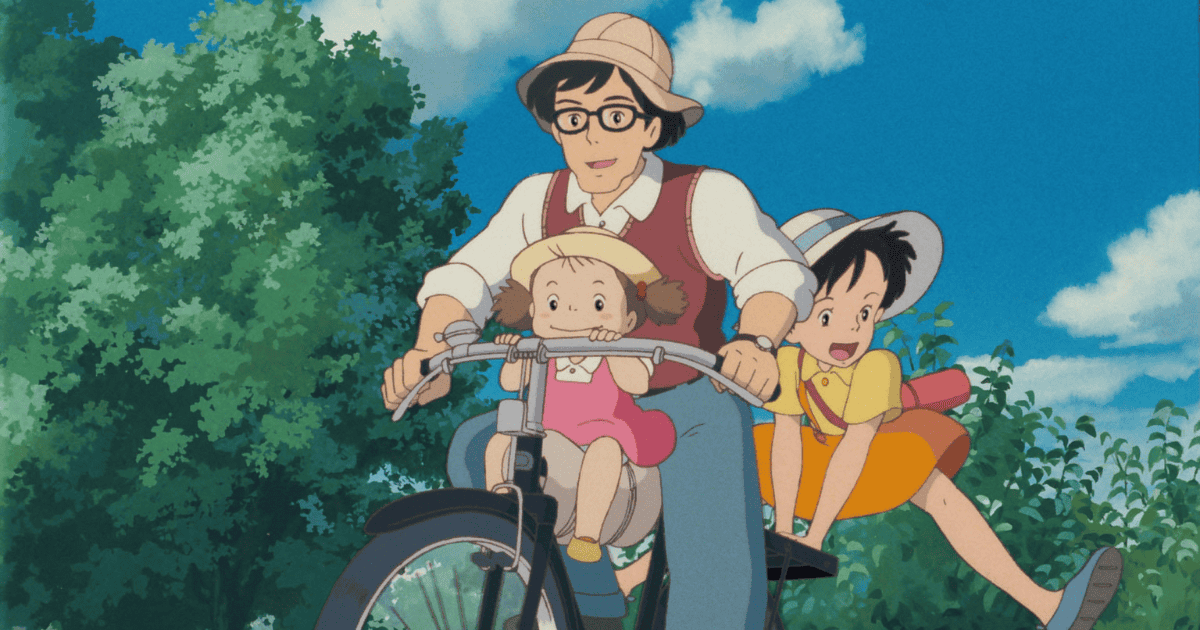
Behind the gentle magic and lush landscapes of Hayao Miyazaki’s 1988 masterpiece, My Neighbor Totoro(Official Studio Ghibli Website), lies a cast of characters carrying surprising psychological depth and ancient secrets. From a 1,300-year-old forest spirit born during Japan’s Asuka period to an exhausted father gambling his career on his daughters’ resilience, the inhabitants of this rural village are far more complex than they first appear.
Today, we are cracking open the Studio Ghibli archives to explore the complete character roster, their English dub voice actors, their psychological profiles, and the hidden lore you likely missed. Please be aware that this deep-dive character guide contains major spoilers for the entire film.
*This is a translated version. The original (Japanese) is available here.
On this pageContents
My Neighbor Totoro (1988) Main Characters & Voice Actors List
| Name | Age | Voice Actor (2005 Disney Dub) |
|---|---|---|
 Satsuki Kusakabe |
12 | Dakota Fanning |
 Mei Kusakabe |
4 | Elle Fanning |
 Tatsuo Kusakabe (Dad) |
32 | Tim Daly |
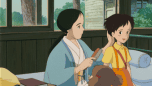 Yasuko Kusakabe (Mom) |
29 | Lea Salonga |
 Totoro |
1302 (initial concept) | Frank Welker |
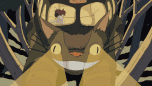 Catbus |
Unknown | Frank Welker |
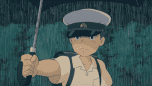 Kanta |
12 (Satsuki’s classmate) | Paul Butcher |
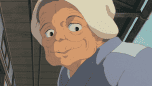 Granny |
Unknown | Pat Carroll |
My Neighbor Totoro (1988) Character Map
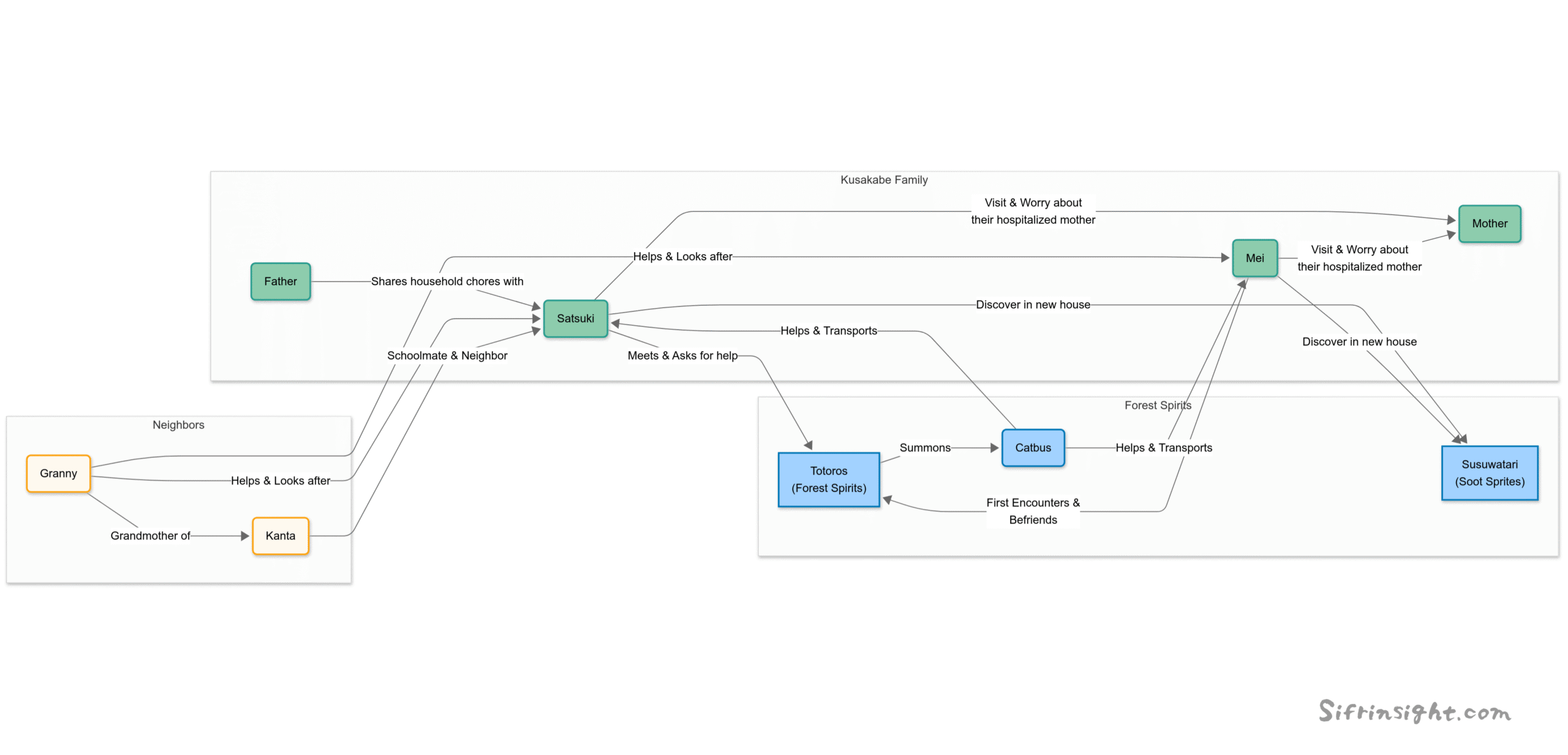
Notice the narrative pattern: Satsuki and Mei only ever encounter otherworldly beings—like the Soot Sprites, Totoro, and the Catbus—when there is a sudden deviation from their normal routine, usually triggered by moments of intense vulnerability, loneliness, or crisis.
▼ Discover the lines that define these characters
Satsuki, Mei, Kanta, Yasuko, and Tatsuo reveal much of their personalities through a handful of memorable lines. You can compare their original Japanese dialogue with the English subtitles and literal translations in our guide to 14 memorable My Neighbor Totoro quotes.
My Neighbor Totoro (1988) Deep Character Profiles and Analysis
Satsuki | Voiced by: Dakota Fanning
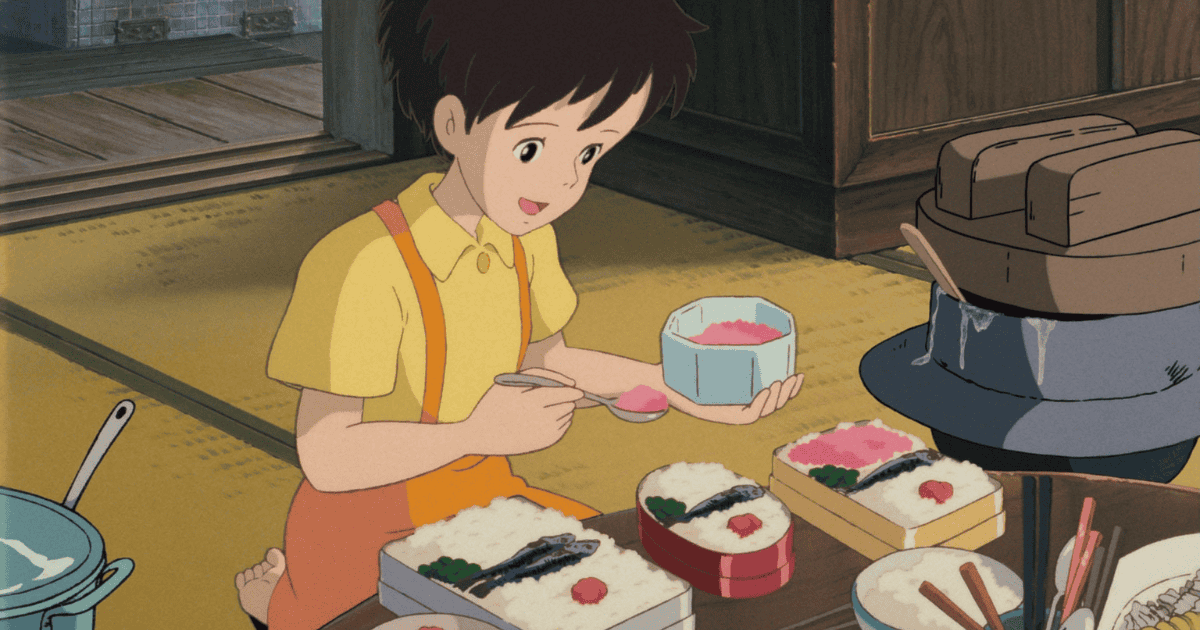
The Miracle Eldest Daughter
Her full name is Satsuki Kusakabe, and she is an incredibly resilient 12-year-old girl.
With her mother bedridden in the hospital and her academic father possessing zero domestic skills, Satsuki is the glue barely holding the Kusakabe household together. She expertly manages the cooking, cleaning, and acts as a surrogate mother to Mei. In Miyazaki’s initial concepts, she was originally designed to be just 10 years old.
If you think she seems unrealistically mature for her age, you aren’t alone. Producer Toshio Suzuki actually pointed this out during production. Director Hayao Miyazaki reportedly snapped back, “Kids like this exist. I was one of them” (documented in Suzuki’s book, The Studio Ghibli Workplace). Because Miyazaki’s own mother suffered from spinal tuberculosis, he spent his childhood handling household chores, making Satsuki a direct reflection of his own youth.
The Secret History: Originally, There Was Only One Girl
Historically, My Neighbor Totoro was produced as a double feature alongside Isao Takahata’s devastating Grave of the Fireflies. Initially, both films were slated for a 60-minute runtime. However, as Takahata’s film kept expanding, Miyazaki fiercely insisted on extending Totoro to compete. His solution to lengthen the script? He split his original, single female protagonist into two distinct sisters: Satsuki and Mei.
Miyazaki’s sheer competitive stubbornness pushed Totoro to 86 minutes—just two minutes shorter than Grave of the Fireflies. According to Ghibli Textbook 3, Miyazaki boasted to producer Suzuki, “If it’s even two minutes shorter, they have to praise it, right?”
While the behind-the-scenes rivalry is amusing, the resulting dynamic between the sisters gave the film its legendary emotional depth. I break down Satsuki’s psychological burden and the devastating meaning behind her eventual breakdown in another article.
Read the full analysis: The True Meaning Behind Satsuki’s Heartbreaking Tears
Mei | Voiced by: Elle Fanning
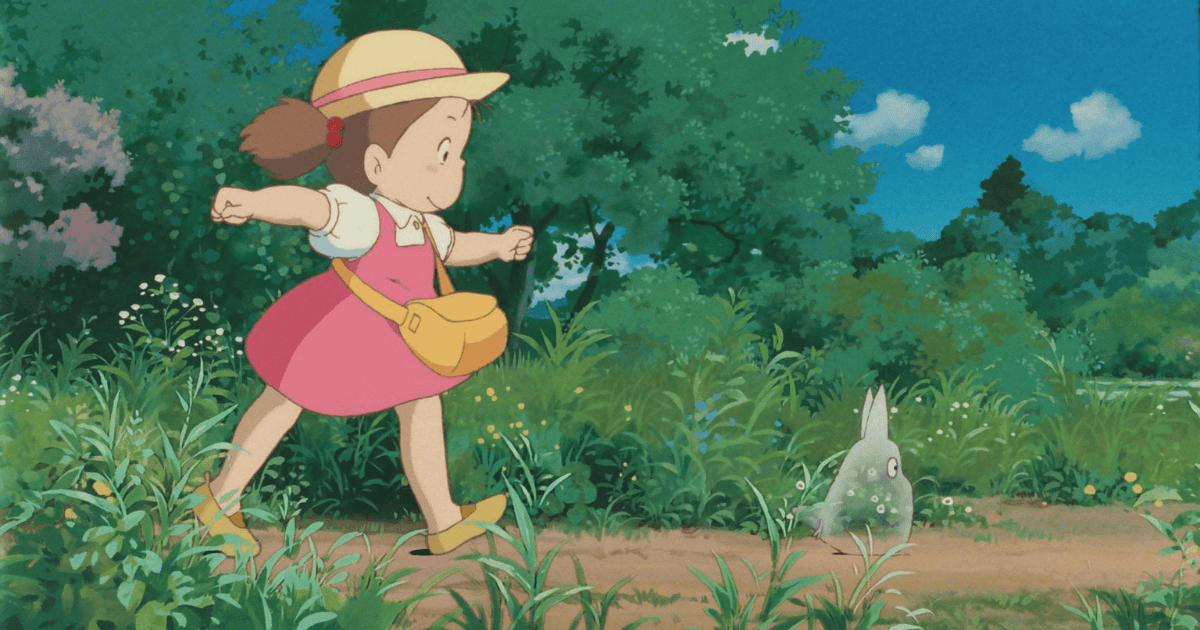
The Vulnerable Explorer
Her full name is Mei Kusakabe, and she is a fiercely stubborn, intensely curious 4-year-old.
She physically wanders off and goes missing twice during the film. The fact that she survives both instances unharmed proves she is an incredibly fortunate toddler.
While she is depicted as a boundless ball of energy, much like Satsuki, Mei spends the entire film suppressing a profound, agonizing loneliness stemming from her mother’s prolonged absence.
To put it bluntly, without her mother around, Mei is the most emotionally helpless member of the family. Her reckless decision to walk miles to the hospital to deliver a “magic” ear of corn was likely driven by a desperate, childish realization that she was entirely powerless to fix her broken home.
What if the Protagonist Was Never Split?
As mentioned above, Miyazaki originally envisioned a single girl for the story. What would the movie look like if Satsuki and Mei had remained one character?
She likely would have been around 10 years old, carrying the same domestic burdens as Satsuki. Without a little sister to look after, her isolation would have been entirely focused inward, relying heavily on her distracted father. The narrative dynamic simply wouldn’t have worked as well.
Most importantly, the core catalyst for meeting Totoro would change.
Mei meets Totoro strictly because of her loneliness. While her father is physically present in the house, he is mentally absent, buried in his research papers. Mei is forced to play alone in the yard. In that vulnerable vacuum, Totoro appears. The giant beast provides the massive, comforting embrace that Mei should be getting from her busy father.
Furthermore, the entire emotional climax shifts. In the actual film, Mei’s disappearance is triggered by a chain reaction: she cries over the bad news, Satsuki subsequently breaks down, and Mei, terrified by seeing her “invincible” older sister shatter, takes reckless action to save her.
If it were just one girl, she would have impulsively run off alone without that complex layer of sibling guilt. By splitting the protagonist into Satsuki and Mei, Miyazaki gave us a masterpiece about family interdependence. We truly have Isao Takahata’s competitive pressure to thank for the existence of these two sisters.
Dad | Voiced by: Tim Daly
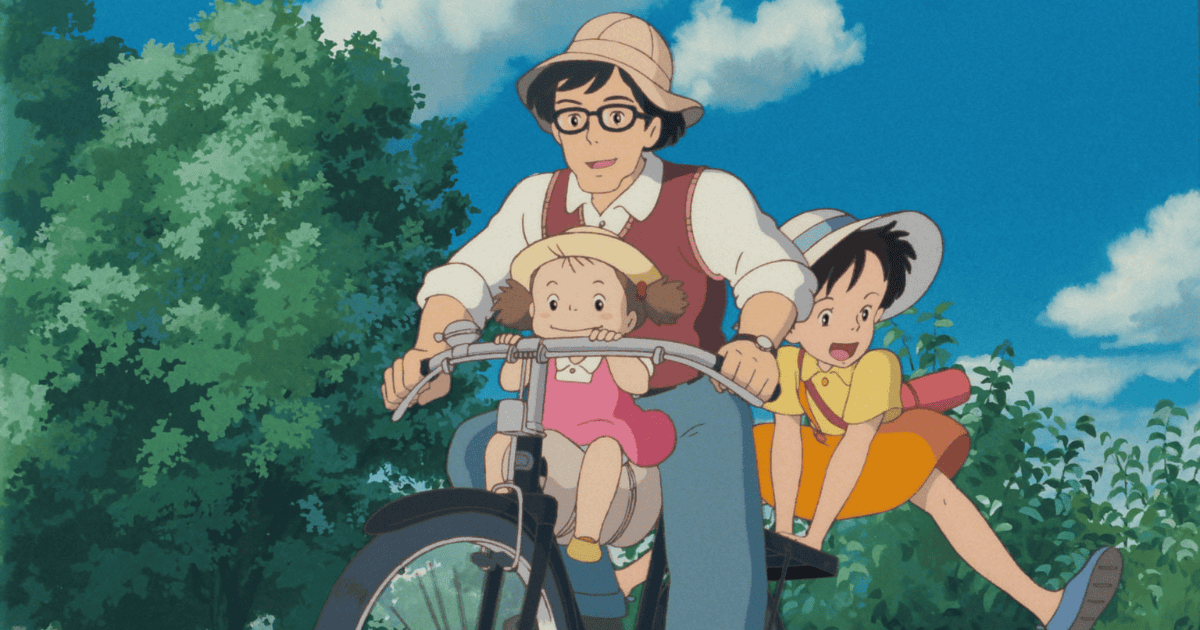
The Distracted Academic
His full name is Tatsuo Kusakabe. At just 32 years old, he is an archaeology researcher and a part-time university lecturer.
With a hospitalized wife and two young daughters, modern audiences often expect him to be a hyper-capable super-dad. The reality is quite the opposite. His absolute top priority is his academic career, to the point where he routinely offloads crucial household chores onto his 12-year-old daughter.
As a kid, I thought he was just a goofy, fun dad. But as an adult viewer, his domestic incompetence borders on infuriating. It is easy to see why some older fans view him as a highly irresponsible parent.
Room for Sympathy
However, dismissing Tatsuo as a bad father is an incredibly one-sided judgment.
First, Tatsuo is the sole breadwinner. Establishing his academic standing and publishing his research is the only thing keeping the Kusakabe family out of deep poverty. His intense focus is a matter of survival.
Research inherently requires an all-consuming level of concentration. When he disastrously oversleeps and forgets to make breakfast, it is highly likely he spent the entire night exhausted, grinding through crucial translation work.
While he bears undeniable responsibility for letting a four-year-old wander out of his sight, his distraction isn’t born of malice; it is the tragic byproduct of a young father stretched to his absolute breaking point by a family crisis.
Mom | Voiced by: Lea Salonga
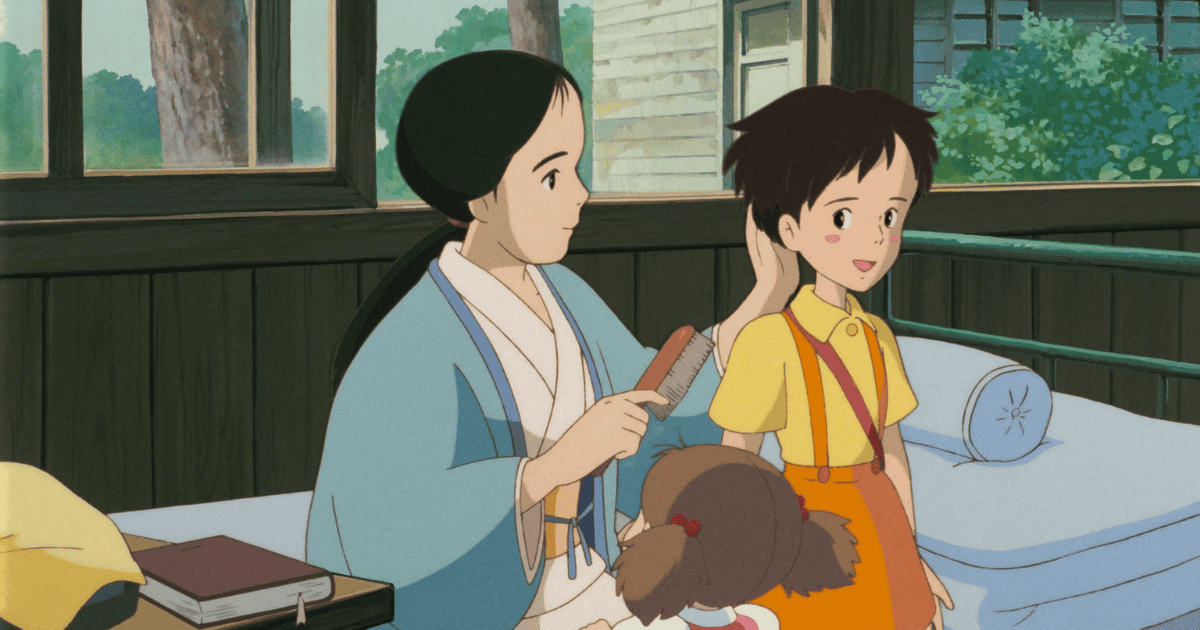
The Heart of the Family
Her full name is Yasuko Kusakabe. Though her exact age isn’t stated in the film (officially 29), she is confined to Shichikokuyama Hospital recovering from a severe, long-term illness.
Despite her limited screen time, her presence dictates the entire emotional flow of the movie. Her radiant kindness and deep love for her family are the emotional anchors keeping Satsuki and Mei moving forward.
While her sudden setback causes the terrifying climax of the film, the watercolor illustrations during the end credits confirm a happy ending: she fully recovers, returns home, and is shown peacefully sleeping in the same futon with her daughters.
Those end credits are vital. They show Mei maturing slightly into a “big sister” role for the local toddlers, while Satsuki is finally allowed to regress and just act like a child again, completely healed by her mother’s return.
The Dark Secret Behind the Hair Combing Scene
The sequence where Yasuko gently combs Satsuki’s hair in the hospital is universally praised as the most heartwarming moment in the film.
It is a beautiful display of a mother prioritizing her eldest daughter, who usually has to act like an adult. However… if you analyze the dialogue and the visual character designs, it becomes blatantly obvious that the mother tells a massive lie in this scene.
Whether this lie is a beautiful act of maternal grace or a cynical display of public vanity is up for debate. I break down this complex psychological theory in detail below.
Read the full analysis: The Heartbreaking (and Hypocritical?) Lie Satsuki’s Mother Told
Totoro (O-Totoro) | Voiced by: Frank Welker
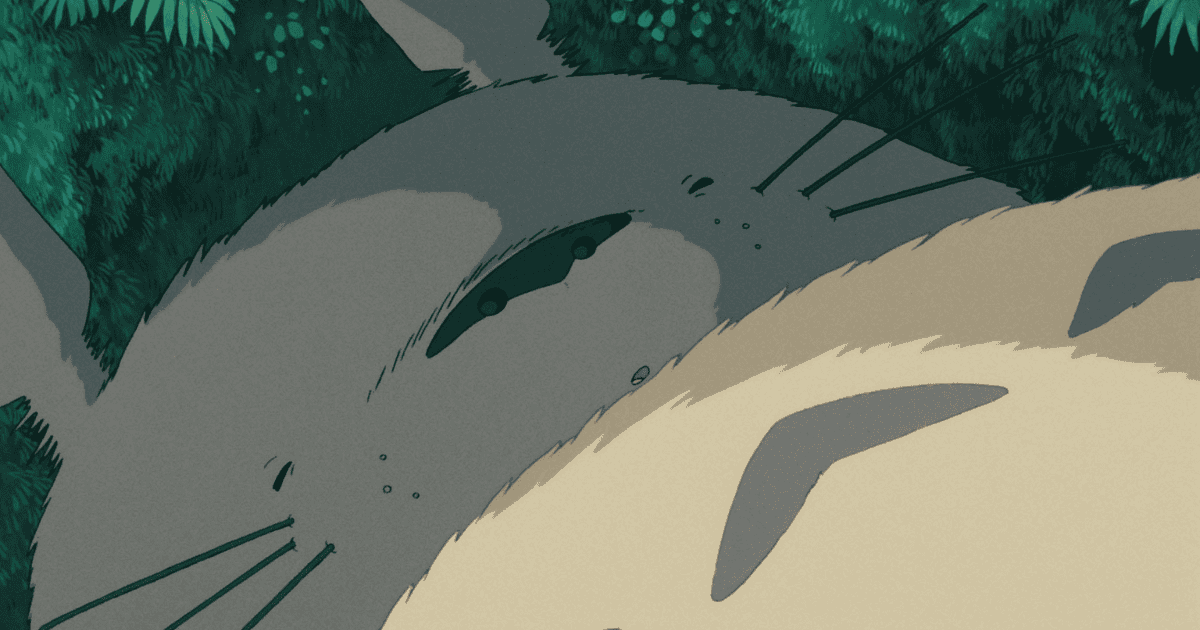
The Ancient King of the Forest
He is the undisputed master of the forest, a mystical creature that has quietly coexisted with the world since ancient times.
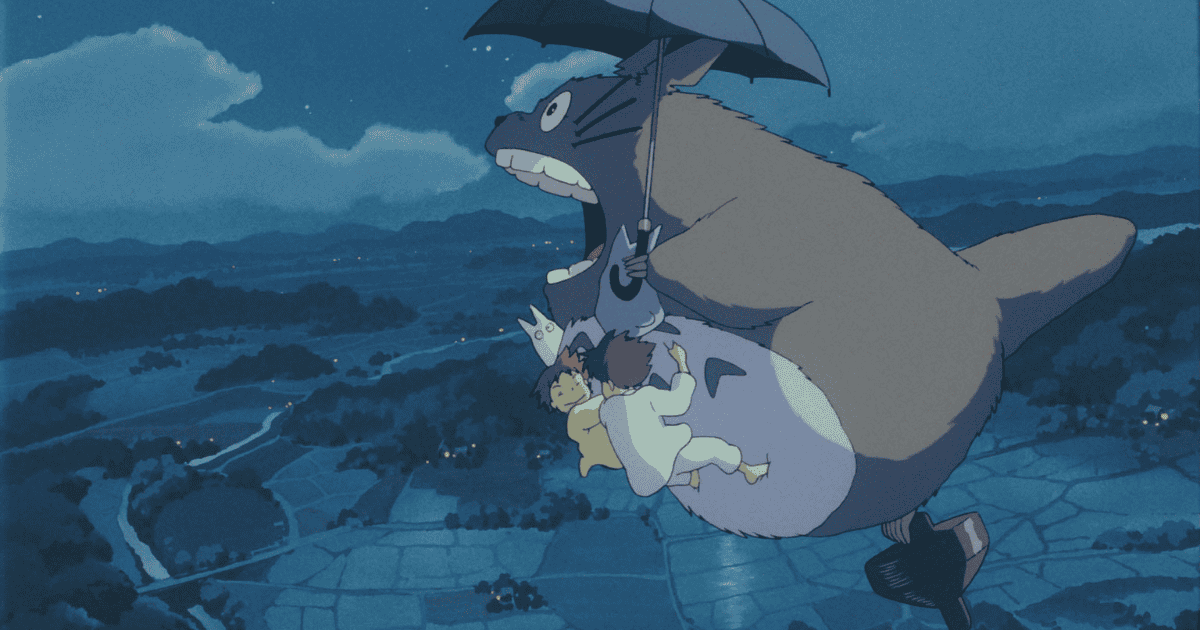
While he possesses god-like supernatural abilities—such as instantly sprouting giant trees and flying on a magical spinning top—he is fundamentally a biological creature, much like the shape-shifting tanuki in Pom Poko.
According to initial concept art and The Art of My Neighbor Totoro, his actual name is “Miminzuku,” and he is a staggering 1,302 years old. Since the film takes place in the 1950s (Showa 30s), this means Totoro was born during Japan’s Asuka period—an era defined by the Yamato court and major historical conflicts like the Battle of Baekgang.
When Mei goes missing the second time, Totoro acts as a literal superhero, roaring into the wind to summon the Catbus. However, considering his unfathomable 1,300-year lifespan, helping the children might have just been a fleeting, momentary whim for him.
The Secret Connection to Princess Mononoke
If Totoro is 1,302 years old, that means he was alive during the Muromachi period, the exact era in which Miyazaki’s dark fantasy epic Princess Mononoke takes place. Logically, the ancient forests of Mononoke should have been crawling with Totoros.
Director Miyazaki actually realized this plot hole during production. In the documentary How Princess Mononoke Was Born, the team brainstormed a brilliant solution.
An animator proposed that the single, surviving Kodama (tree spirit) seen in the final shot of Princess Mononoke eventually evolves into Totoro over centuries. Miyazaki loved the idea and officially approved it with a cheerful, “Let’s go with that!”
Catbus | Voiced by: Frank Welker
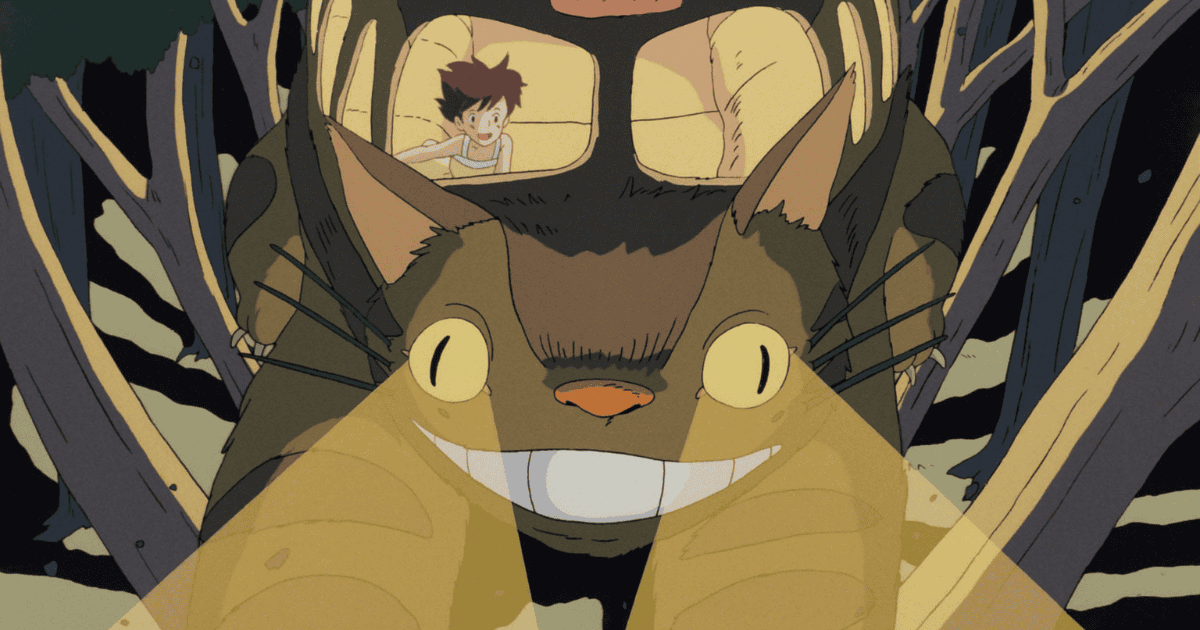
The Bakeneko Transport
In many ways, the Catbus steals the show with a screen presence that rivals even Totoro. As a child, I always felt bad for it, assuming it was just a mindless taxi cab for the forest spirits. But the truth is much wilder: the Catbus taking the shape of a bus is purely a modern coincidence. Fundamentally, it is an ancient Japanese Bakeneko (a shape-shifting monster cat Yokai) that simply thought a bus looked like a fun shape to mimic.
A fun piece of trivia: the Catbus in the film is anatomically male, proving that these creatures reproduce biologically.
Furthermore, in the exclusive short film Mei and the Kittenbus (which can only be viewed inside the Ghibli Museum in Tokyo), we learn that an entire society of Catbuses exists, ranging from tiny kittens to colossal, train-sized elders, proving they have their own rich family lives independent of Totoro.
Kanta | Voiced by: Paul Butcher
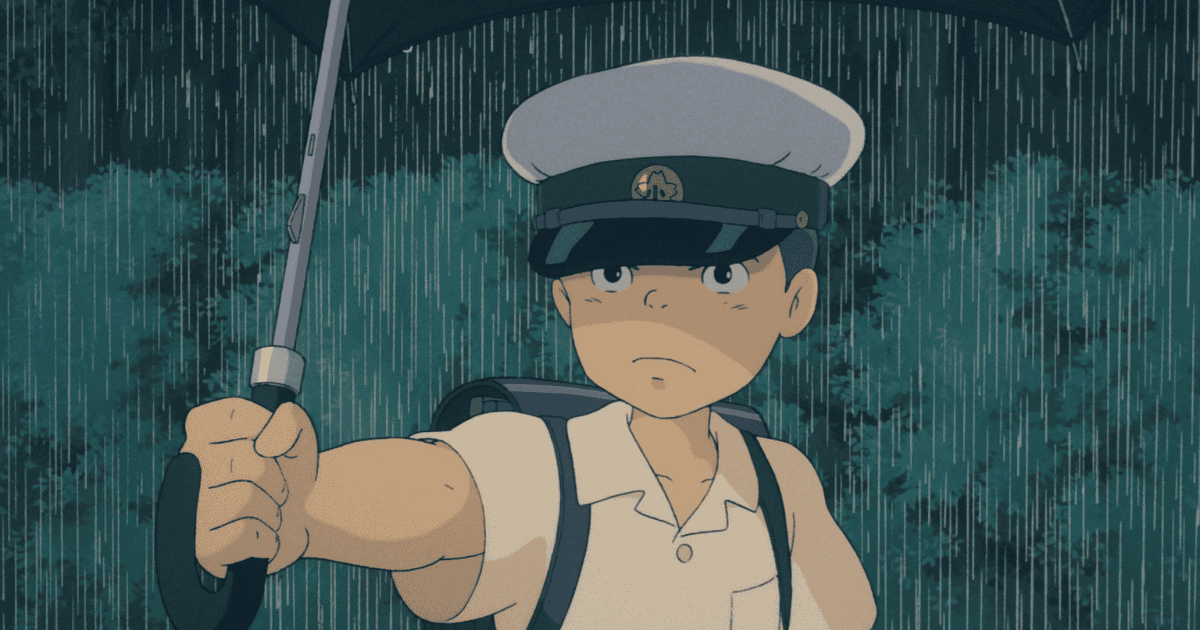
The Awkward First Love
His full name is Kanta Ōgaki, and he is Satsuki’s 12-year-old classmate.
He is forever immortalized by his defensive, teasing insult: “Your house is haaauuunted!” But psychologically, it is painfully obvious he fell in love with Satsuki at first sight. Every boy watching understands the sheer panic that drives Kanta to hide behind the house when Satsuki comes over to return his umbrella.
While lending her a busted umbrella is the peak of his usefulness early on, Kanta truly shines during the climax. As the village desperately searches for Mei, Kanta pushes past his limits, furiously pedaling an adult-sized bicycle to find her. He acts as the visual symbol of the entire rural community’s desperate, protective spirit.
Granny | Voiced by: Pat Carroll
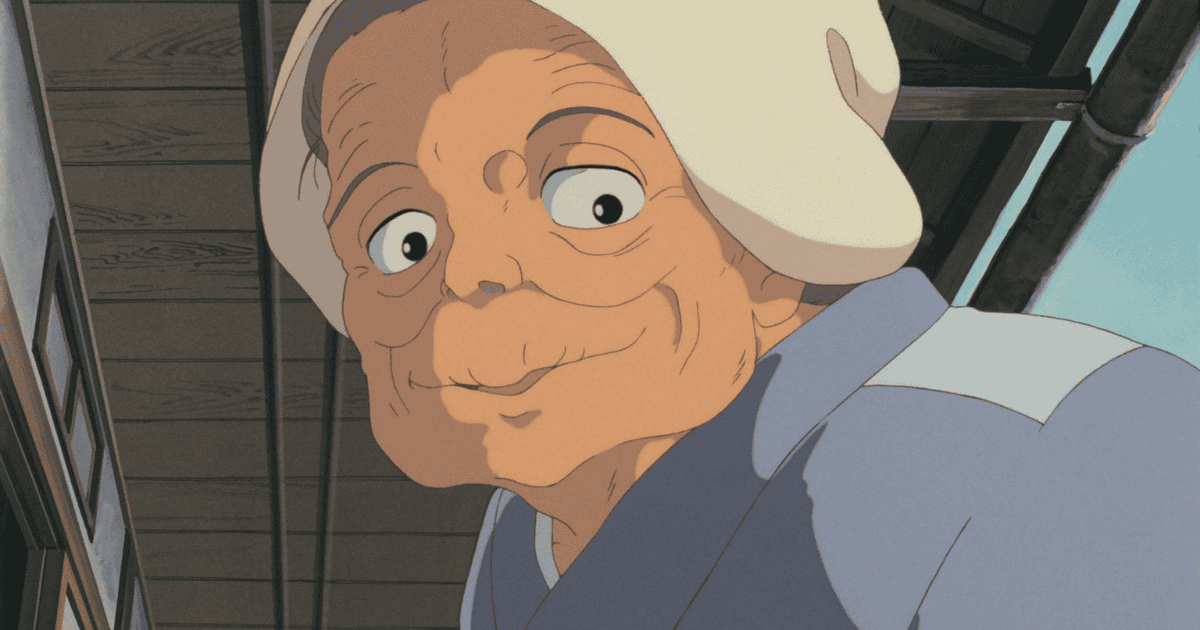
The Village Caretaker
She is Kanta’s grandmother and the incredibly warm caretaker of the property the Kusakabe family rents.
She is the quintessential, kind-hearted grandmother figure. However, the scene where she is tearfully screaming “Mei-chaaan!” at the pond is absolutely heart-wrenching. The reason her panic is so visceral is that she was the one babysitting Mei when she disappeared.
She must have been drowning in an unimaginable sea of guilt and responsibility, yet she stayed strong to comfort a sobbing Satsuki.
Honestly, Tatsuo has some serious nerve casually offloading his parenting duties onto his neighbor’s elderly grandmother. You have to wonder if Granny’s free childcare was his primary motivation for moving to that specific house.
Other Characters and Voice Actor Information
Kanta’s Mother | Voiced by: Kath Soucie
She makes a brief appearance when the girls visit Kanta’s house to return his umbrella, showcasing the warm, bustling nature of the local farming families.
School Teacher (Reiko Moriyama) | Voiced by: Tress MacNeille
Satsuki’s homeroom teacher. She secures her status as an absolute saint when she kindly allows a lonely, crying Mei to sit quietly in the back of Satsuki’s classroom. We need more teachers like her.
Michiko (Micchan) | Voiced by: Ashley Rose
Satsuki’s cheerful classmate. Her presence is a huge relief for the audience, proving that despite her heavy home life, Satsuki is popular and has a normal social life at school. Her classic, echoing call of “Sa~tsuki-cha~n!” is pure nostalgia.
Man Cutting Grass | Voiced by: Peter Renaday
A local villager Satsuki desperately questions during the manhunt for Mei. It is a tiny role, but beautifully establishes the vast, rural scale of the search.
Main House Granny | Voiced by: Russi Taylor
The wealthy owner of the property who lets a panicked Satsuki use her rotary phone. She is on screen for mere seconds, but radiates an incredibly elegant, poised, and intimidating aura.
Man on the Farm Vehicle | Voiced by: David Midthunder
The driver of the passing farm truck Satsuki flags down. Visually, he serves as a mature, romantic foil to Kanta, highlighting the young boy’s painful immaturity.
Woman on the Farm Vehicle | Voiced by: Lara Cody
The kind young woman riding shotgun on the farm truck. She seems genuinely concerned for Satsuki, cementing the couple as a symbol of mature, helpful adulthood.
Postman | Voiced by: Robert Clotworthy
The harbinger of doom who delivers the dreaded telegram. He was just doing his job, but that little piece of paper triggered a near-catastrophe for the entire village.
His casual delivery shout of “Kusakabe-sa~n, a telegram for you~” is a bizarrely sticky piece of nostalgic audio memory.
Bus Conductor | Voiced by: Tress MacNeille
The conductor of the real, mundane transit bus that passes the girls while they wait in the rain.
That brilliant “fake-out” scene perfectly captures the agonizing psychology of waiting; when you are desperate for someone to arrive, your mind jumps at every set of headlights.
Chu-Totoro & Chibi-Totoro
The medium (blue) and small (white) members of the Totoro clan. According to initial concepts, Chu-Totoro is 679 years old, and the tiny Chibi-Totoro is 109 years old.
They are technically the culprits who lure Mei into the deep forest, acting as mischievous spirits visible only to children. In a way, leading toddlers into uncharted wilderness makes them the most dangerous creatures in the film.
Soot Sprites (Makkuro Kurosuke)
The fuzzy, soot-like spirits (Susuwatari) occupying the shadows of the old Kusakabe house.
While Totoro and the Catbus are massive, distinct Yokai, the Soot Sprites are bizarre, almost insectoid anomalies. Drifting quietly into the darkness, they remain the most delightfully mysterious entities in the entire Ghibli universe.
The images used in this article are from Studio Ghibli Works Still Images.
Can you name the movie before the scene comes into focus?
Put your visual memory to the test with a blurred Studio Ghibli scene.

Reader Comments