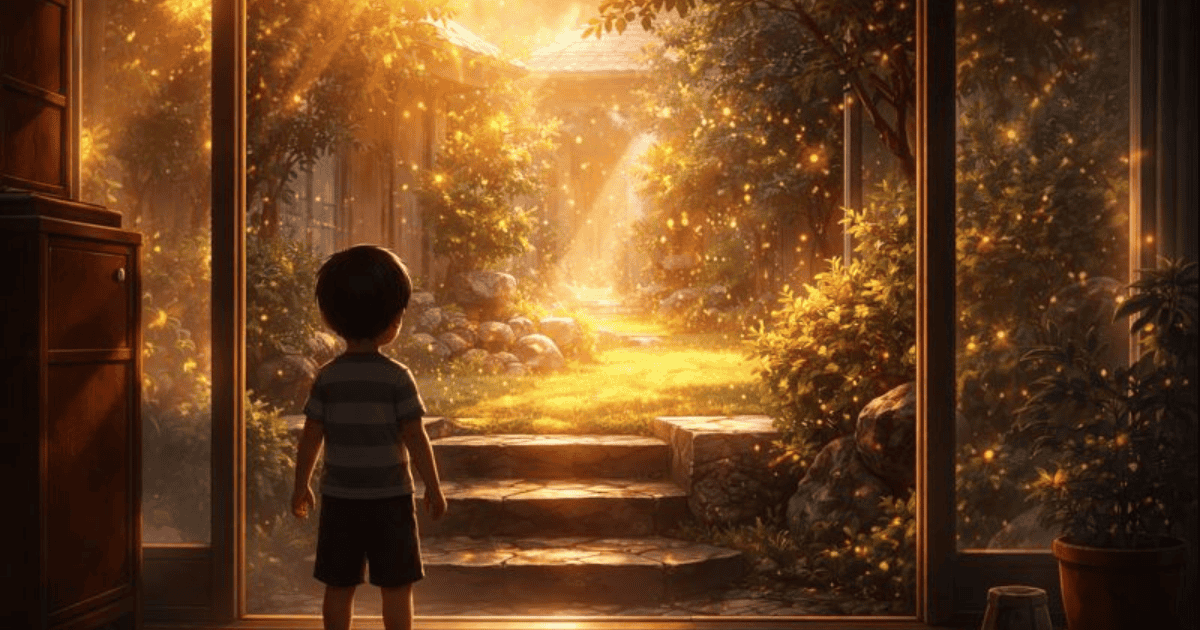
Mamoru Hosoda’s 2018 animated feature Mirai (Official Website) is, on the surface, a straightforward coming-of-age story about a four-year-old boy named Kun. However, themes like “an older sibling’s jealousy” or “parents struggling with a newborn” are well-tread territory in cinema. If the film relied solely on these domestic struggles, it might feel a bit conventional.
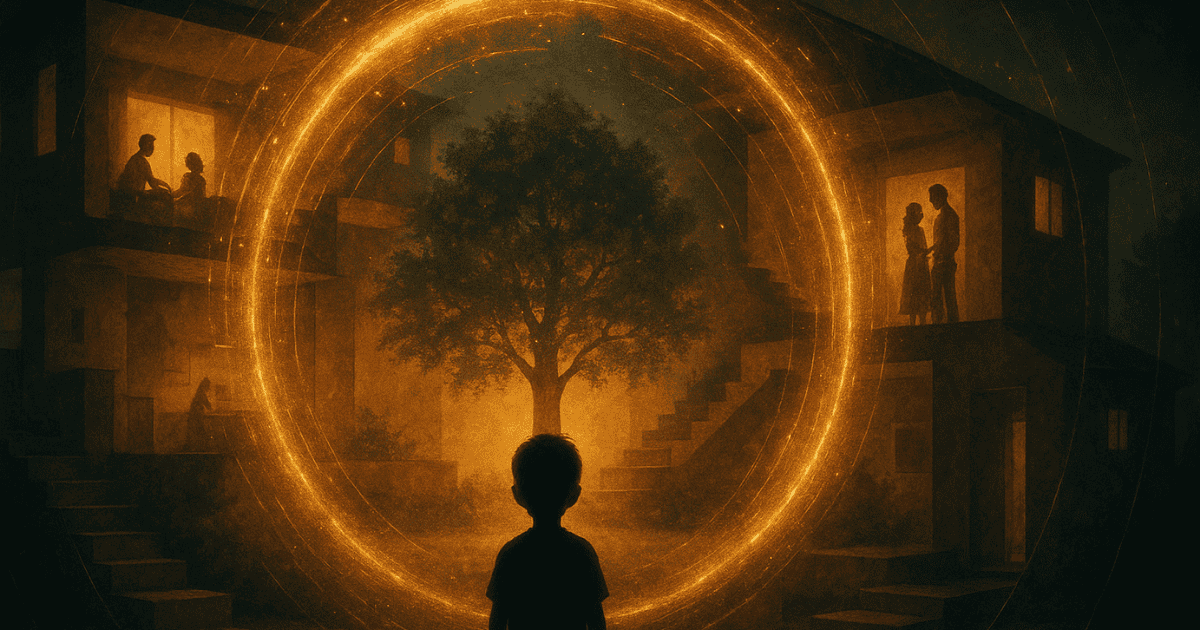
What truly elevates Mirai from a standard family drama into a psychological masterpiece are the “mysterious phenomena” Kun experiences in his courtyard.
When we decode these magical sequences by placing them side-by-side with Hayao Miyazaki’s legendary My Neighbor Totoro (Official Website), a startling number of thematic parallels emerge. Through this lens, we can uncover the profound “essence of childhood” that Director Hosoda aimed to capture.
In this article, we will cross-examine the exact moments when these “mysterious phenomena” trigger in both films, analyzing the deep psychological reasons why Kun absolutely needed to meet Mirai, and why Mei needed to meet Totoro.
*This article is an in-depth analysis intended for those who have already watched “Mirai” and know the general story. If you need a refresher on the synopsis or the ending, please refer to our full breakdown first:
Mirai (2018): Full Synopsis & In-Depth Ending Explanation
*This is a translated version. The original (Japanese) is available here.
- The Magic of the “Parental Blind Spot”
The supernatural encounters in both Mirai and My Neighbor Totoro are exclusively triggered during the momentary “blind spots” when exhausted or distracted parents take their eyes off their children. Rather than physical abandonment, these children slip into a mystical realm the exact second they experience profound “psychological isolation”—feeling completely invisible despite their parents being in the very same house. - Magic as an “Imaginary Friend” and Defense Mechanism
The magical entities in both narratives function as an emotional “defense system” (akin to imaginary friends) designed to help the children process overwhelming jealousy, fear, and anxiety. These are not merely whimsical hallucinations; they are necessary psychological constructs generated by the child’s subconscious to save them from crushing loneliness. - Divergent Roles: “Growth” vs. “Healing”
While they share a psychological origin, their functions differ. Future Mirai acts as a strict educator pushing Kun toward “growth and socialization,” whereas Totoro acts as a fluffy, protective “shelter” providing Mei and Satsuki with vital emotional healing. Yet, as the famous line goes, “It was a dream, but it wasn’t a dream”—the psychological salvation these creatures provide is an undeniable reality for the children.
On this pageContents
Common Conditions for “Magic” in “Mirai” and “My Neighbor Totoro”
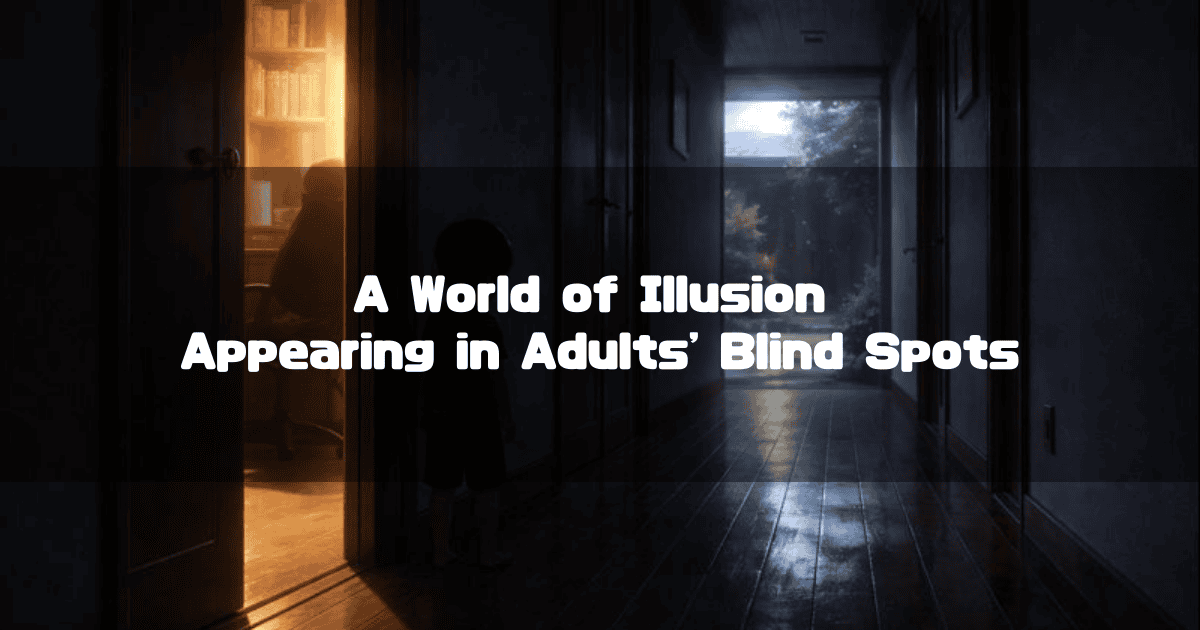
Both Mirai and My Neighbor Totoro are cinematic landmarks where children interact with fantastical entities entirely invisible to the adult world. However, these magical encounters do not just happen at random. If you meticulously track the narrative structure of both films, a distinct, psychological “rule” emerges.
5 Timings When Kun Wanders into the Mysterious World
In Mirai, the exact moments Kun crosses over into the mystical courtyard (traveling to the past or future) can be categorized as follows:
- Encountering the humanized dog, Yukko: Triggered when Kun is harshly scolded for making baby Mirai cry. His profound feelings of jealousy and isolation are entirely dismissed by his parents.
- Meeting middle school Mirai: Triggered when his mother is away on a business trip. Kun desperately wants to play with his father, but his dad is entirely consumed by remote work and ignores him, leaving Kun feeling rejected.
- Meeting his mother in the past: Triggered after his mother unjustly yells at him to clean up his toys, outright rejecting his desperate wish for a new bicycle.
- Meeting his great-grandfather: Triggered during bicycle practice in the park. Just as Kun needs his father’s support, baby Mirai begins to cry. The father immediately drops Kun’s practice to tend to the baby, severing his attention.
- Lost in the Phantom Tokyo Station: Triggered on the morning of a family camping trip. Kun throws a massive tantrum over his pants and subsequently feels that his parents don’t understand his obsession and are going to abandon him.
Timings When Mei and Satsuki Meet Totoro (and the Catbus)
On the other hand, in My Neighbor Totoro, the scenes where the sisters encounter mysterious entities operate on a strikingly similar timeline:
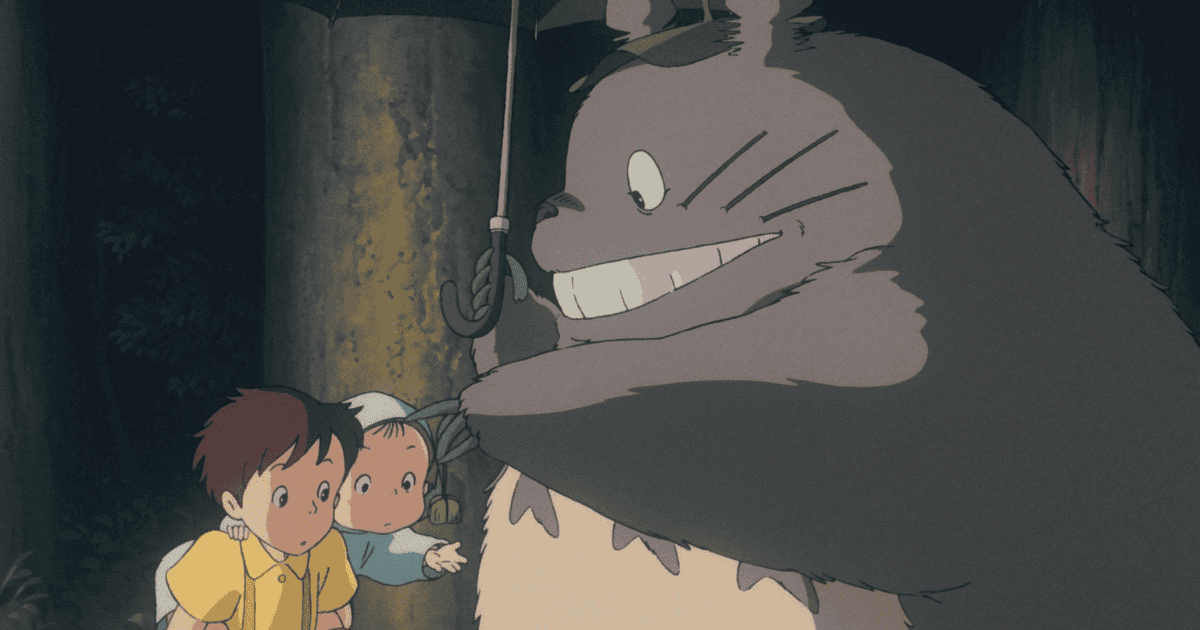
- Mei’s first encounter with Totoro: With Satsuki at school, Mei tries to play with her father. However, he is deeply immersed in his academic research at his desk, leaving Mei to wander the yard and play entirely alone.
- Meeting Totoro at the rainy bus stop: Triggered when Satsuki and Mei are waiting in the dark, pouring rain for their father. His bus is severely delayed, filling the young girls with a quiet, creeping dread and anxiety.
- Summoning the Catbus: Triggered when the hospital calls to say their mother’s return home is postponed. Mei runs away in despair, and a terrified Satsuki—completely alone and overwhelmed by the crisis—screams for help.
Magic Always Activates in a “Blind Spot Where Parents’ Eyes Don’t Reach”
Cross-referencing these lists exposes a brilliant narrative denominator: magical phenomena exclusively manifest the very second a “child experiences a profound loneliness that the adults around them fail to notice.”
Of particular note is the striking parallel between Kun’s second encounter in Mirai and Mei’s first encounter in My Neighbor Totoro. In both scenarios, the father is physically present in the house. However, because the fathers are entirely absorbed in their work, their psychological awareness of the child is severed. The child is subjected to a type of isolation that hurts far more than physical absence: “Dad is sitting right here, but he refuses to see me.”
Furthermore, comparing the visual framing of these scenes (as seen below) strongly suggests that Director Hosoda deliberately engineered this specific parallel.
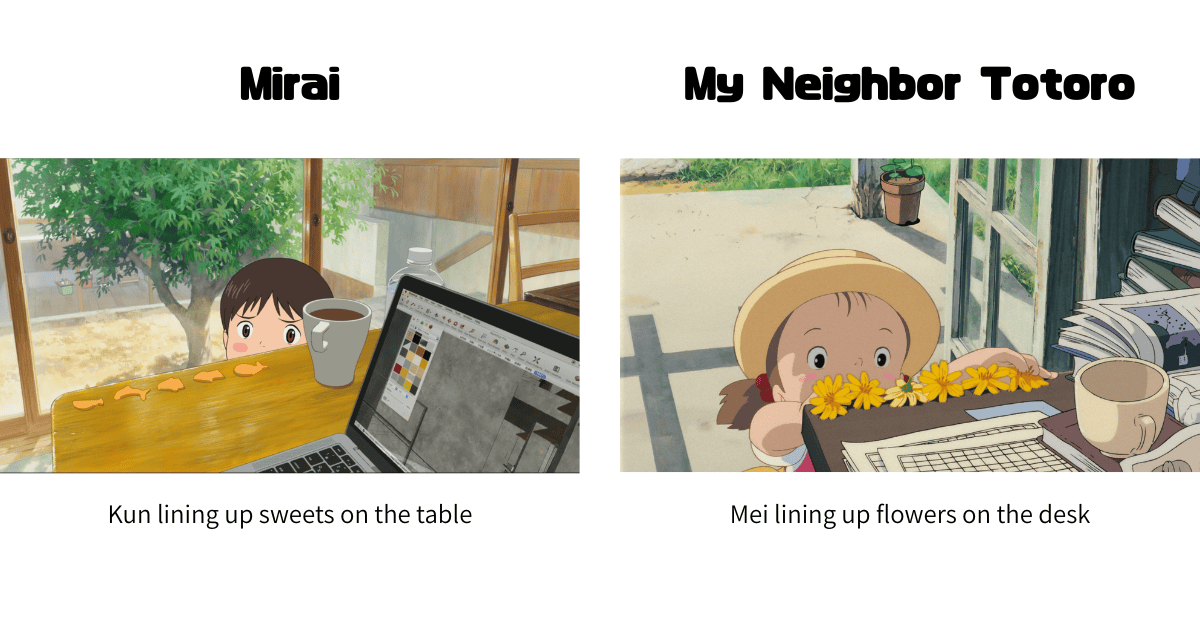
To avoid any misunderstanding, this is not an accusation of Hosoda “ripping off” Miyazaki’s scenario. Quite the opposite—this should be recognized and celebrated as a masterful, intentional cinematic homage. It reveals that the towering legacy of My Neighbor Totoro was at the forefront of Hosoda’s mind during production, effectively positioning Mirai as his direct, psychological response to Miyazaki’s classic.
Ultimately, the “magic” in both of these universes isn’t born from bad parenting. It sprouts in the cracks—slipping into those momentary “blind spots” where well-meaning parents are forced to take their eyes off their children due to the overwhelming, chaotic demands of adult life.
Are Totoro and Mirai “Imaginary Friends”?
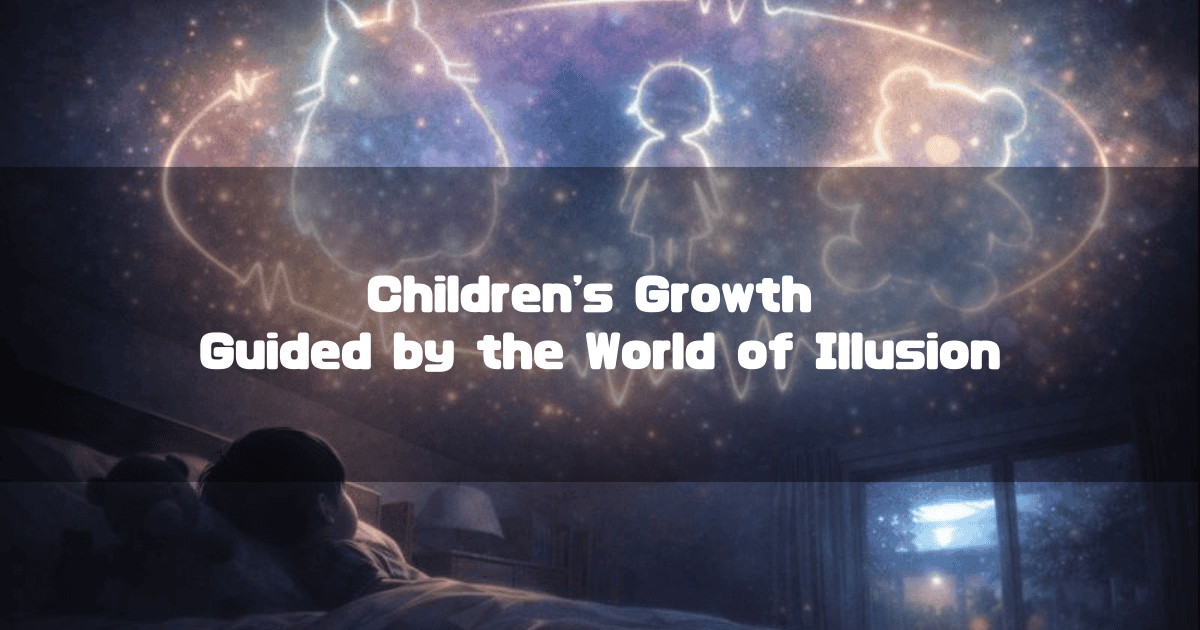
By categorizing the exact conditions that summon these creatures, their true psychological purpose comes sharply into focus.
A “Mental Defense System” to Rationalize Loneliness and Anxiety
In Mirai, the narrative architecture operates on a strict loop: “Kun experiences an emotional crisis ⇒ A magical phenomenon occurs ⇒ The crisis is processed and resolved through the supernatural experience.”
This perfectly mirrors the clinical function of an “Imaginary Friend.” When a child’s brain is overloaded with complex emotions they lack the vocabulary to process—such as jealousy, existential dread, or the perceived absurdity of adult rules—the subconscious mind attempts to digest the trauma by weaving it into a tangible fantasy. The mystical phenomena act as a psychological “rationalization device,” autonomously generated by the child to maintain their own mental balance and prevent a breakdown.
My Neighbor Totoro operates on the exact same frequency. Satsuki and Mei are drowning in a highly stressful environment: an absent, critically ill mother, a distracted father, and the jarring transition to a strange new house in the country. Totoro and the Catbus materialize as overwhelming forces of comfort, awe, and security, specifically conjured to counterbalance the bleak, terrifying reality of their situation.
In other words, the supernatural entities in both films are the physical manifestations of childhood fantasy, existing primarily as “a psychological necessity to rescue the child from the abyss of loneliness.”
Mirai Who Makes Him “Grow,” Totoro Who “Protects”
While both films share this brilliant psychological foundation, they diverge dramatically in their stance regarding “what the magical entity brings to the child.”
The phantoms that visit Kun in Mirai (teenage Mirai, his young mother, his great-grandfather) do not coddle him. They actively scold him, challenge his worldview, and occasionally push him away, forcing him to adapt. They operate as strict educators, aggressively pulling Kun toward “growth (socialization).”
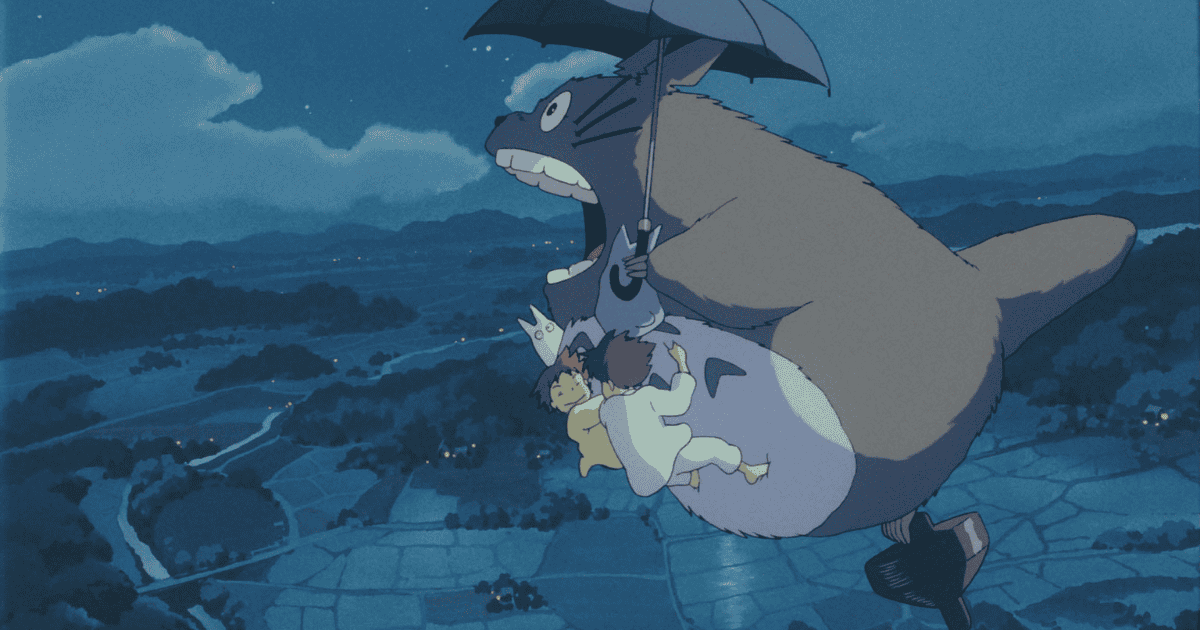
Conversely, Totoro never speaks. He simply exists as a massive, silent pillar of comfort. He allows Mei to sleep on his incredibly soft stomach, gifts the girls magic acorns, and takes them on exhilarating flights above the trees. Totoro functions as an emotional “shelter,” shielding the traumatized sisters from real-world fears (such as the creeping premonition of their mother’s death).
Though born from the exact same seed of “loneliness,” their cures differ. Four-year-old Kun, struggling with ego and sibling rivalry, required “growth.” Satsuki and Mei, carrying the terrifying burden of a fragmented family, desperately required “healing.”
Conclusion: A Story Depicting “It Was a Dream, But It Wasn’t a Dream”

Up to this point, we have analyzed teenage Mirai and Totoro primarily as psychological constructs—advanced “imaginary friends” born from distress.
However, viewing them strictly as hallucinations creates narrative friction. In Mirai, Kun witnesses details of his mother and great-grandfather’s past that a four-year-old could not possibly know. Similarly, completely denying the physical reality of Totoro fundamentally breaks the magic of Miyazaki’s world. Therefore, within the context of the films, we must accept that these entities are “real.”
Yet, when we fuse their literal existence with the psychological weight we’ve just uncovered, the true brilliance of both directors shines through.
Mei’s iconic, joyous shout in My Neighbor Totoro—”It was a dream, but it wasn’t a dream!”—is the perfect thesis statement for both masterpieces.
From a cynical, adult perspective, Kun’s time-traveling courtyard might just be a vivid temper tantrum, and Totoro might just be a trick of the forest shadows. But the results of those encounters are undeniable. Because of his journey, Kun conquers his fears and learns to ride a bicycle. Because of their forest guardian, Satsuki and Mei are pulled from the brink of despair and returned safely to their father’s arms.
Because these magical encounters forged genuine “growth” and “salvation” within the children’s hearts, they transcend mere dreams. To the children, they are an undeniable, life-altering “reality.”
Mirai and My Neighbor Totoro. Though their aesthetic styles and eras differ greatly, both stand as cinematic triumphs. They brilliantly honor the fierce resilience of children who use their imaginations to survive the “lonely hours when their parents aren’t looking,” validating that fragile, beautiful world where “it was a dream, but it wasn’t a dream.”
The original Japanese wording and English translations of this central My Neighbor Totoro line are compared in detail in our guide to “It was a dream. But it wasn’t a dream.” and other memorable quotes from the film.
Can you name the movie before the scene comes into focus?
Put your visual memory to the test with a blurred Studio Ghibli scene.

Reader Comments