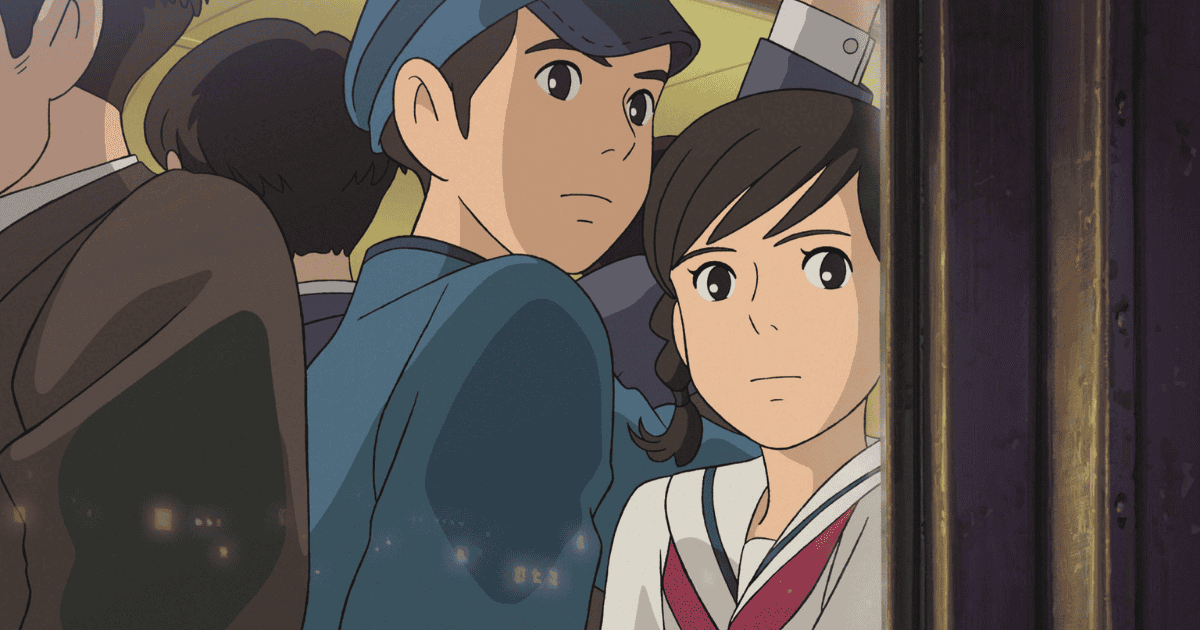
From Up on Poppy Hill(Studio Ghibli Official) is an animated feature film released in 2011. It holds a unique and incredibly tense position in Studio Ghibli’s history: it was directed by Gorō Miyazaki, but the screenplay was written by his famously demanding father, Hayao Miyazaki. This film is the ultimate “father-son collaboration.”
I personally adore this film, but to truly understand its depth, you must look behind the scenes. Today, I am going to analyze the film through the lens of its legendary making-of documentary: The Two of Them: The 300-Day War Between Father and Son on Poppy Hill (ふたり/コクリコ坂・父と子の300日戦争, in Japanese). If you love the movie, I promise you, the documentary is just as—if not more—fascinating than the film itself.
The sheer, suffocating tension that fills the room whenever Gorō and Hayao Miyazaki share the same frame is a cinematic masterpiece of its own. Before we break down the emotional core of From Up on Poppy Hill, we must first examine the brutal reality of its production.
*This is a translated version. The original (Japanese) is available here.
- A Father and Son Who Converse with Their Backs
The documentary captures the agonizing silence between Hayao and Gorō in the studio. They actively refuse to make eye contact, relying on a complex, unspoken “conversation felt through their backs.” - The Great Escape from Hayao Miyazaki
To save the production from collapsing under Hayao’s suffocating presence, Producer Toshio Suzuki executed a brilliant “quiet isolation,” secretly moving Gorō to a separate apartment to work in peace. - The Futon Problem: The Secret Maneuvers of the “Old Guys”
The opening scene of Umi folding her futon was actually born from a hilarious, strategic conspiracy orchestrated by Hayao Miyazaki and Toshio Suzuki behind Gorō’s back. - Passing the Baton: The Meta-Narrative of Ghibli
From Up on Poppy Hill is fundamentally a “story of passing the baton” from the post-war generation to the youth. In a profound meta-narrative, the film itself was Hayao Miyazaki’s attempt to pass the baton of Studio Ghibli to his son.
On this pageContents
The 300-Day War: Highlights from the Documentary
The Suffocating Presence in the Preparation Room
The documentary opens in the “production preparation room,” where Director Gorō Miyazaki and supervising animator Katsuya Kondō are desperately trying to finalize character designs. According to the narrator, Hayao Miyazaki visited this room almost every single day, seemingly without any specific reason.
The dynamic captured on film is agonizing. Hayao is clearly hyper-aware of Gorō’s presence, yet he stubbornly refuses to look in his son’s direction. Gorō mirrors this behavior, keeping his eyes glued to his desk. They communicate through an excruciatingly tense “feeling through their backs.”
In one incredibly awkward scene, Hayao, wearing a deep scowl, turns to leave the room but suddenly spots a jar of konpeitō (traditional sugar candy). For reasons known only to him, he begins silently handing out pieces of candy to the terrified, hardworking staff. Because he is the legendary Hayao Miyazaki, no one dares refuse, accepting the candy with strained smiles. Finally, he reaches his son. He drops a candy on the desk and gruffly mutters, “Here, Gorō.”
It is their only direct interaction, but Director Gorō does not say a single word in response.
In cinema, handing an object to someone is usually a powerful metaphor for connection or reconciliation. But what exactly did the documentary crew capture here? Was it a father’s clumsy attempt at affection? Or an alpha male marking his territory? I highly urge you to watch the footage and decide for yourself.
Gorō Miyazaki’s Great Escape
The first act of the documentary is practically a psychological thriller. The atmosphere in the preparation room is utterly toxic. Gorō is visibly struggling with his storyboards, and Hayao hovers over the production, casually tossing out devastating critiques.
In one infamous incident, Hayao points at a concept drawing pinned to the wall and bluntly states, “A picture with no soul like this is useless,” forcing the staff to take it down. The animators are paralyzed by anxiety. Gorō, feeling the pressure, begins projecting that same harshness onto his staff, demanding redraws from veterans like Kondō. The tension is radioactive.
Sensing an impending total collapse, Ghibli’s legendary producer, Toshio Suzuki, steps in. He reviews the animatics and bluntly tells Gorō, “Major changes are needed.” While initially crushed, Gorō accepts the reality. To fix the film, Suzuki orchestrates a brilliant tactical maneuver: he physically removes Gorō and Kondō from the main studio, renting them a separate apartment to redesign the characters from scratch.
When I first watched this, it seemed like a standard production pivot. But reading between the lines, the truth is glaringly obvious. Why did they have to leave the studio?
I am certain Hayao’s critiques were artistically correct. However, because he was trying to “guide” the film without officially taking the director’s chair, he created an impossible power dynamic. The staff were caught in the crossfire between two directors. To save the film, Suzuki had to physically quarantine Gorō away from his father’s gravity.
Toshio Suzuki is truly a master manipulator in the best possible way.
The Secret Maneuvers of the “Old Guys”
Once isolated in the apartment, Gorō struggles to find the visual tone. The breakthrough arrives when a single, newly drawn concept sketch by Hayao Miyazaki is delivered to the apartment. It is a breathtaking drawing, and according to the documentary, it instantly unlocked the creative block for Gorō’s team.
With production finally moving forward, Hayao apparently felt relieved. He begins casually plotting with Producer Suzuki behind his son’s back.
Hayao suggests to Suzuki: “The opening scene should feature Umi neatly folding her futon. You should ‘recommend’ this to Gorō.”
Suzuki agrees it’s a brilliant cinematic touch and takes the suggestion to Gorō. However, Gorō flatly rejects it. His logic is actually incredibly sound: “Her younger sister is still sleeping right next to her on the floor. In reality, you wouldn’t loudly fold and put away your futon while someone is sleeping inches away.“
Gorō’s pursuit of realistic human behavior is entirely valid. However, if you have seen the film, you know exactly how it opens: Umi meticulously folds her futon.
Despite Gorō’s logical protest, the “Old Guys” won. When Suzuki reports back to Hayao that he successfully pressured Gorō into changing the scene, Hayao smoothly replies, “I am grateful for your wonderful guidance.”
Watching these two animation titans secretly conspire to manipulate the young director is objectively hilarious. It reveals the terrifying, brilliant “secret maneuvers of the old guys” that ultimately shaped the final film.
Finding Respect for Gorō Miyazaki
While the documentary is filled with incredible drama, its greatest triumph is how it humanizes Gorō Miyazaki. To be the son of “The God of Anime” and choose to become an animation director is practically a suicidal career move.
When his debut film, Tales from Earthsea, was released, the criticism was brutal. But the documentary reveals a heartbreaking truth: Gorō actually harbored a deep, secret desire to work in animation his entire life.
Imagine his existence. Every conversation he ever had likely inevitably turned to his father. People probably casually asked, “Why don’t you make movies too?” If he admitted he wanted to, he’d be accused of riding his father’s coattails. If he denied it, he’d be lying to himself. He was damned if he did, and damned if he didn’t.
Ultimately, Gorō chose the thorny path. He stepped into the arena, knowing he would face hellish comparisons to a living legend. Regardless of how you rank his films, you have to respect his immense courage for diving into that fire.
The greatest achievement of this documentary is that it makes you genuinely root for Gorō Miyazaki.
From Up on Poppy Hill (2011): A Story of Passing the Baton
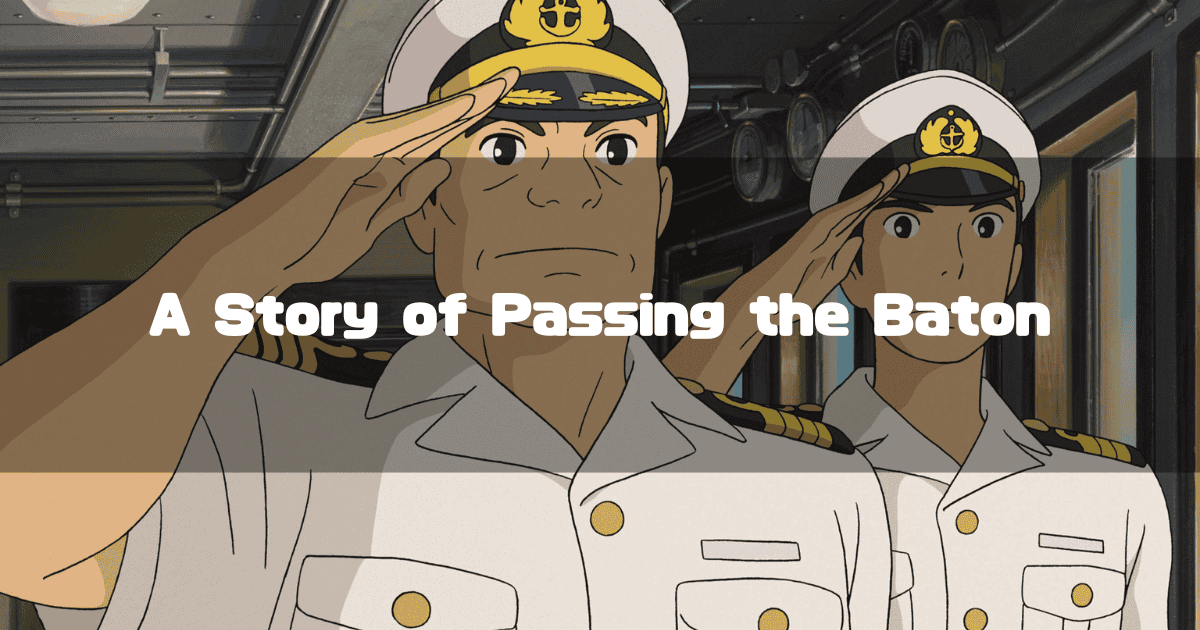
Now, let’s look at the masterpiece born from this grueling 300-day war.
Why Does This Film Make Us Cry?
I almost always cry when I watch From Up on Poppy Hill. As Aoi Teshima’s haunting ending theme, Summer of Farewells, plays over the credits, I find myself vowing to “live more earnestly” (a vow I usually forget by the next morning).
But what is the exact mechanism that triggers these tears?
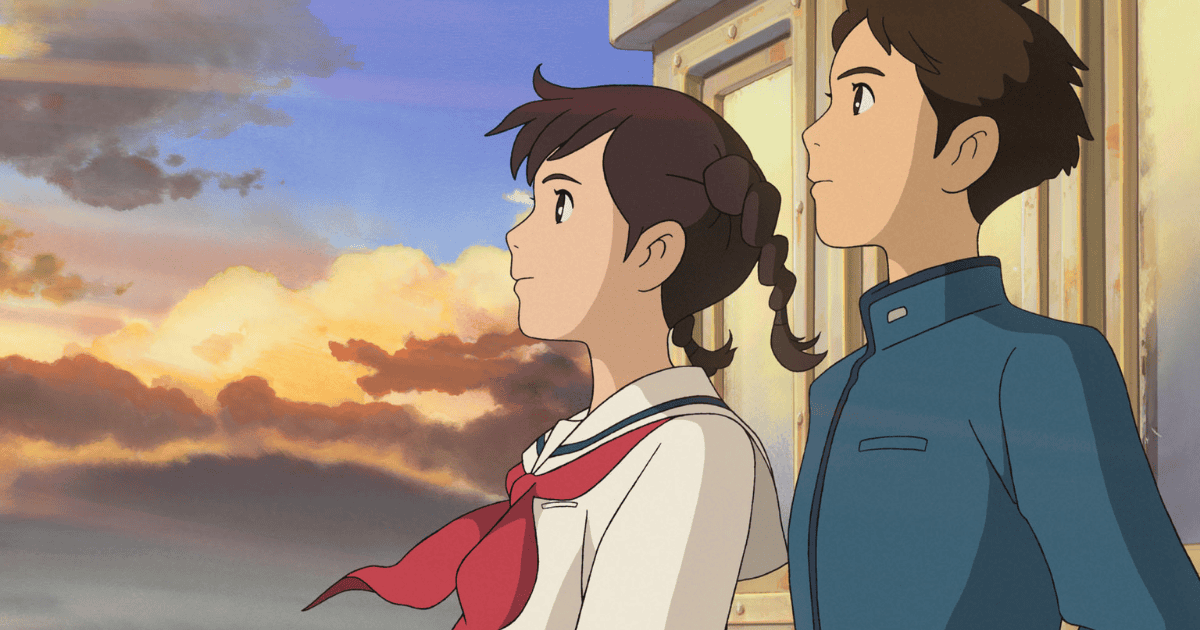
For most fans, the emotional dam breaks during the climax: from the moment Umi and Shun learn the heartbreaking truth of their parentage from Captain Onodera, to the final, triumphant scene where they stand on the tugboat, waving up at the signal flags.
The emotional core of the film is profound: “During the hellish, chaotic aftermath of war, there were people who desperately and earnestly protected the gift of life. And those protected lives grew up to be beautiful, strong individuals.”
The men who survived the Korean War and WWII didn’t succumb to cynical despair; they lived fiercely to protect the next generation. In return, Umi and Shun—despite having their hearts broken by the secret of their birth—refuse to become jaded. They choose to live positively and honor the sacrifices made for them.
Ultimately, From Up on Poppy Hill is a “story of passing the baton.” It is a tribute to the scarred generation who passed the baton of life, and the vibrant youth who received it.
Even the subplot of the students fighting desperately to save their dilapidated clubhouse, the “Quartier Latin,” is a metaphor for honoring the history passed down to them rather than simply bulldozing it for the “future.”
It is this overwhelming, unironic earnestness that brings us to tears.
That earnestness also comes through in the film’s dialogue. I have examined 9 memorable From Up on Poppy Hill quotes in Japanese and English to look more closely at how the characters express these ideas in words.
The Five-Year Plan, The Quartier Latin, and the Fate of Ghibli
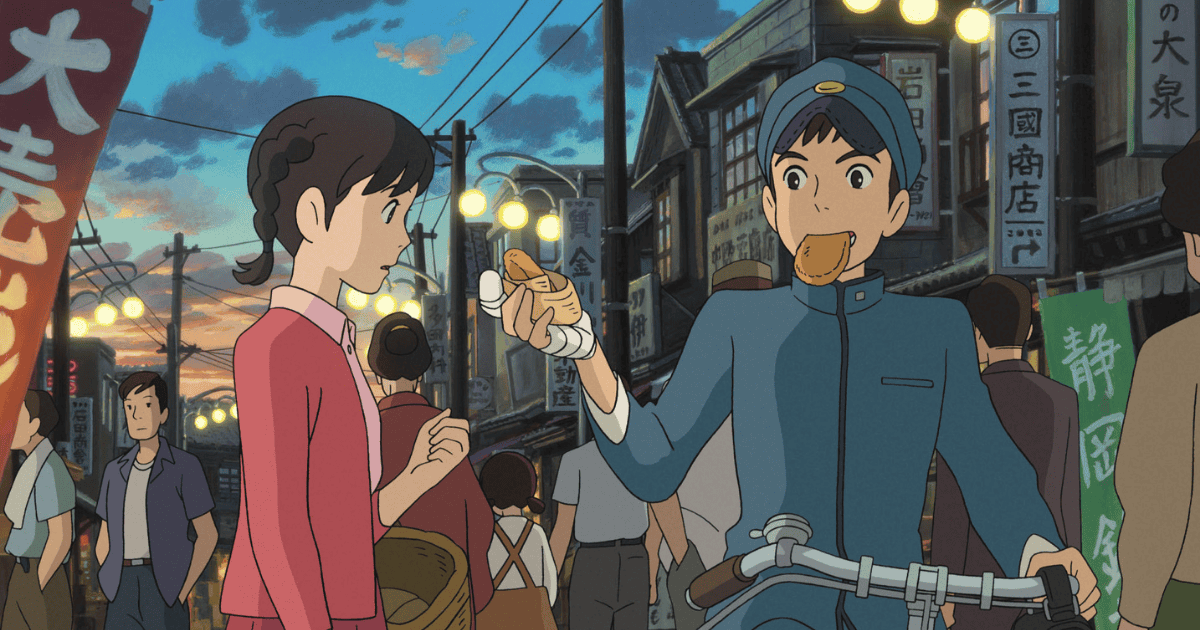
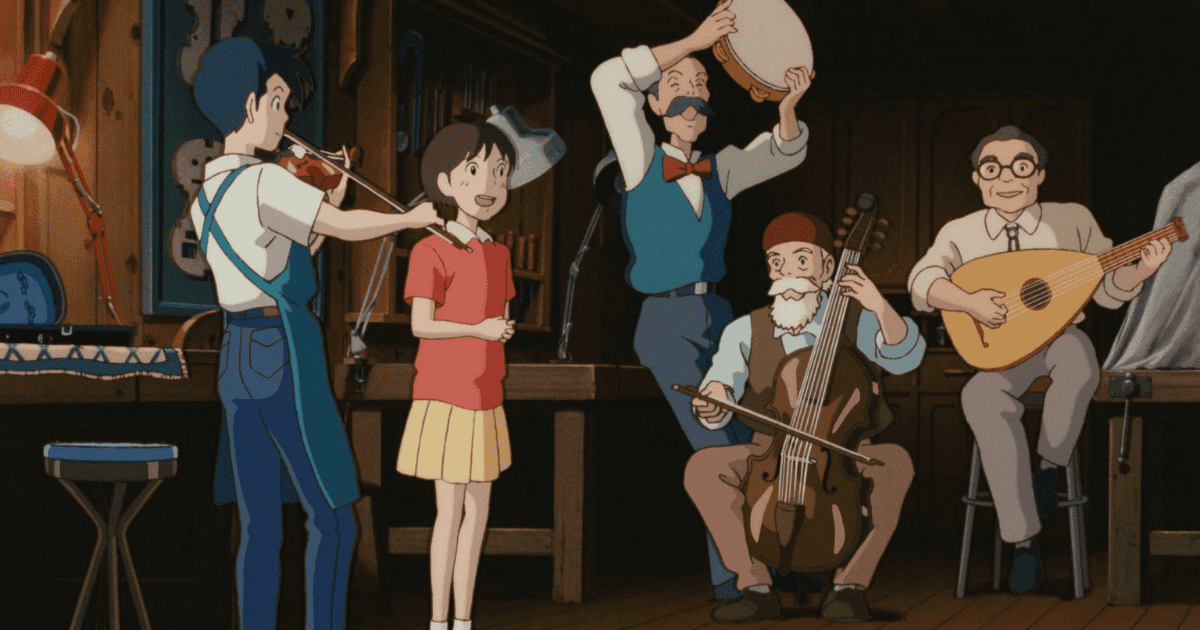
In the film, the “Quartier Latin” clubhouse is the beating heart of the students’ lives. It is a dusty, chaotic, magical building where it feels like “a cultural festival every day.”
But if we look at the meta-context of the film’s production, the Quartier Latin represents something much closer to home.
From Up on Poppy Hill was born out of a strategic “Five-Year Plan” initiated by Hayao Miyazaki in 2008. According to Ghibli Textbook 17, Miyazaki decreed that the studio would produce two films directed by young, upcoming talent over three years, followed by a massive epic directed by himself (which would become The Wind Rises). The first of these “young director” films was The Secret World of Arrietty (directed by Hiromasa Yonebayashi), and the second was Poppy Hill.
Why did Miyazaki force this plan? Officially, it was to “nurture the next generation.”
But cynically speaking, Hayao Miyazaki was likely terrified for the future of his studio. He needed to prove that the Ghibli brand could survive without him in the director’s chair. He was deeply concerned about his legacy and his impending retirement.
When you view the film through this lens, the chaotic, aging, beloved “Quartier Latin” perfectly symbolizes Studio Ghibli, and perhaps Hayao Miyazaki himself.
Miyazaki likely harbored a dark fear that traditional, hand-drawn animation—and his specific brand of storytelling—would soon be deemed obsolete and “demolished” by the modern, digital world.
Therefore, while the plot of the film is about “passing the baton of life,” the production of the film was a literal, desperate attempt to “pass the baton of Studio Ghibli” to the next generation.
The fact that Hayao Miyazaki chose to pass this specific baton to his own son—despite their agonizing, complicated relationship—makes From Up on Poppy Hill one of the most profoundly moving and important films in the entire Ghibli catalog.
The images used in this article are from Studio Ghibli Works Still Images.
Can you name the movie before the scene comes into focus?
Put your visual memory to the test with a blurred Studio Ghibli scene.

Reader Comments