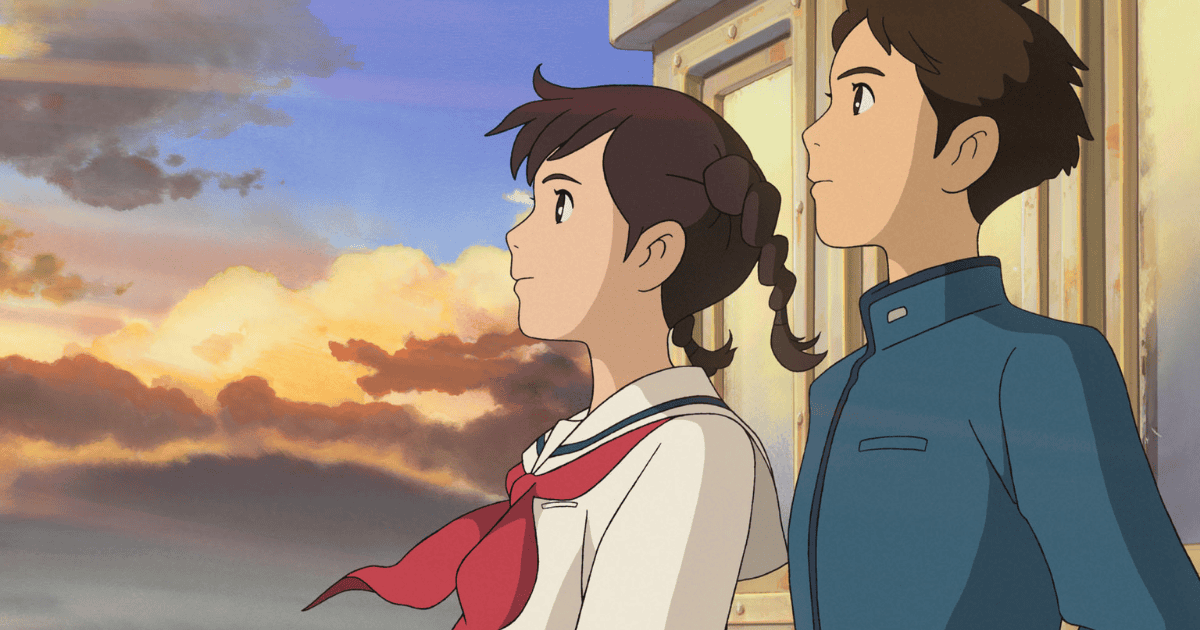
Studio Ghibli’s From Up on Poppy Hill (Official Studio Ghibli Website) isn’t just a nostalgic high school romance; it’s a profound exploration of a generation desperately trying to bridge the gap between a war-torn past and a rapidly modernizing future. Directed by Gorō Miyazaki and released on July 16, 2011, with a screenplay by his legendary father, Hayao Miyazaki, this film stands as the first true “Miyazaki father-son collaboration.”
I distinctly remember catching this film in theaters during its initial run. I went in with tempered expectations, but I walked out completely spellbound, carrying the profound realization that I had just witnessed a quiet, emotional masterpiece.
Today, we are going to unpack the rich narrative and thematic depths of From Up on Poppy Hill. Please consider this your official warning: this comprehensive breakdown holds nothing back. We will be discussing every major plot point, twist, and revelation. If you hate spoilers, bookmark this page, go watch the film, and come right back.
*This is a translated version. The original (Japanese) is available here.
- Detailed Narrative Breakdown
At its heart, the story revolves around Umi and Shun—two high schoolers drawn together by shared ideals, only to have their world shattered by the revelation that they might be biological siblings. It takes a dramatic reunion with a ghost from their parents’ past to finally uncover Shun’s true lineage. This article provides a meticulous scene-by-scene synopsis, an interactive character map, and an unvarnished thematic analysis. - The Behind-the-Scenes War: The Two of Them
The grueling production of From Up on Poppy Hill was famously documented in The Two of Them, a raw look at the agonizing creative friction between Hayao and Gorō Miyazaki. We explore how this intense father-son dynamic is inextricably woven into the movie’s ultimate message. - The Signal Flags: Anchored to the Past, Reaching for the Future
Umi’s daily ritual of raising maritime flags is the emotional anchor of the film. We break down the director’s brilliant, heartbreaking decision to leave a major piece of foreshadowing intentionally “unresolved,” giving the ending its breathtaking emotional resonance. - A Hidden Requiem for Yasuyoshi Tokuma
Did you know the charismatic Chairman Tokumaru was directly modeled after Studio Ghibli’s founding father, Yasuyoshi Tokuma? We examine how the film serves as a heartfelt requiem for him, and why the specific Kanagawa setting was no accident.
On this pageContents
From Up on Poppy Hill (2011) Synopsis: Love, Legacy, and the Latin Quarter
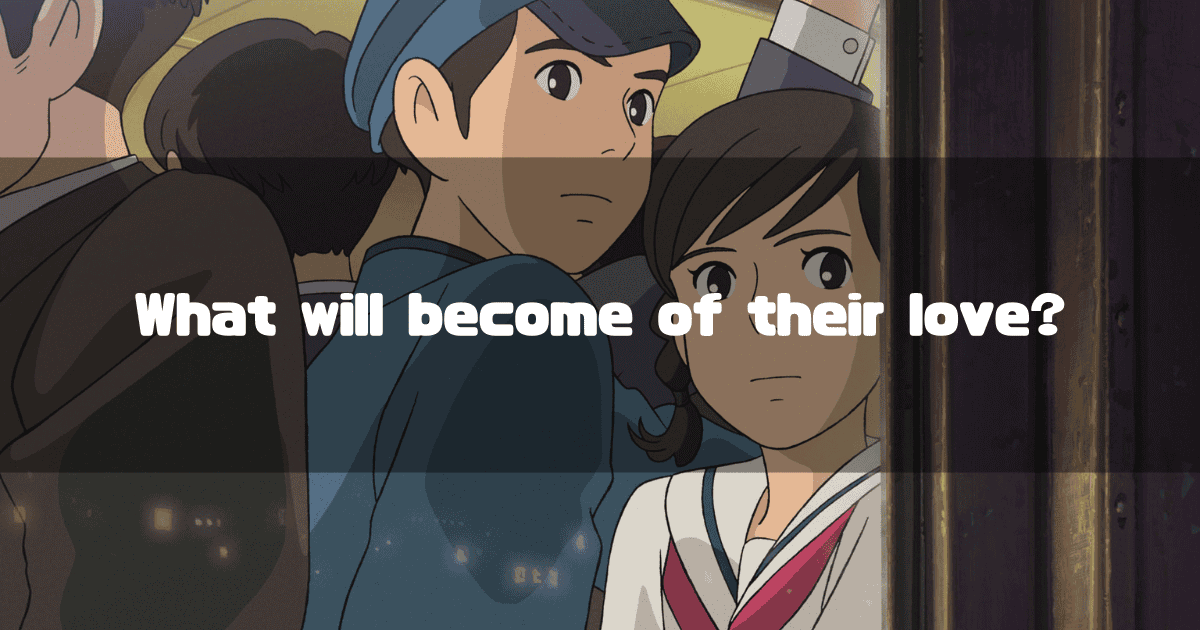
Quick Summary: The Core Conflict
If you need a rapid refresher, here are the crucial milestones that define the emotional journey of From Up on Poppy Hill:
-
The Anchor: Umi Matsuzaki
The narrative follows Umi Matsuzaki, a highly responsible high school sophomore who balances her studies with running a bustling boarding house called “Coquelicot Manor.” -
The Shadow of Loss
Umi carries the quiet, heavy grief of losing her father in the Korean War, while her mother is currently studying abroad in the United States. -
The Battle for the Latin Quarter
A fierce student movement ignites at Umi’s school to stop the demolition of the “Latin Quarter,” a chaotic, historically rich clubhouse. Amidst the protests, Umi crosses paths with Shun Kazama, a fearless student journalist. -
The Photograph’s Secret
Shun knows he is adopted. He has always believed his biological father was a man named Sawamura—a close comrade of his adoptive father from their days in the navy. -
A Heartbreaking Twist
Tragically, Sawamura is also Umi’s late father. Just as Umi and Shun are falling deeply in love, they are blindsided by the horrifying possibility that they share the same blood. -
The Truth Revealed
Though they bravely resolve to suppress their romance, an encounter with Yoshio Onodera—the third man in a cherished naval photograph—finally shatters the mystery. He reveals that Shun is actually the biological son of a different comrade named Tachibana, clearing the way for a deeply hopeful resolution.
Character Map: The Tangled Web of Coquelicot Manor

Thematic Breakdown: A Legacy Forged in War
If forced to distill the soul of From Up on Poppy Hill into a single sentence, I would call it “a poignant testament to a fragile, hard-won love.” But the true emotional gut-punch lies beneath the romance. It is the realization that these teenagers’ lives exist only because a previous generation made agonizing sacrifices amidst the devastation of war. Watching Umi and Shun navigate their trauma to become fine young adults feels like the ultimate fulfillment of the desperate prayers of the men who didn’t survive.
When you view the film through the lens of its creators—director Gorō Miyazaki and his legendary screenwriter father, Hayao Miyazaki—a fascinating meta-narrative emerges. It is entirely plausible that Hayao used this script as a vehicle to forcefully pass an ideological baton to his son. This turbulent, real-world inheritance perfectly mirrors the onscreen characters fighting to preserve the fragile threads of their own history.
With that thematic foundation laid, let us dive deep into the complete story of From Up on Poppy Hill.
Detailed Synopsis: A Scene-by-Scene Breakdown
The Fateful Encounter at the Latin Quarter
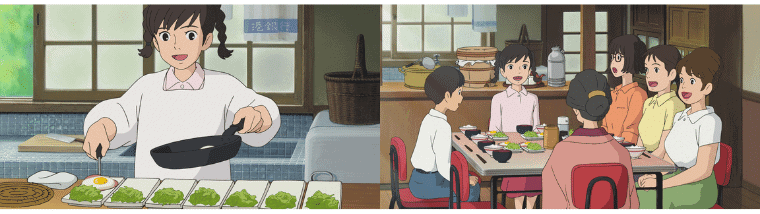
Every morning begins the exact same way for Umi Matsuzaki, a diligent second-year high school student. Acting as the de facto matriarch of “Coquelicot Manor,” she briskly navigates the kitchen, cooking a massive breakfast for her eccentric boarders. She serves the meal, raises her daily signal flags to the sea, and heads to school with a quiet, practiced smile.
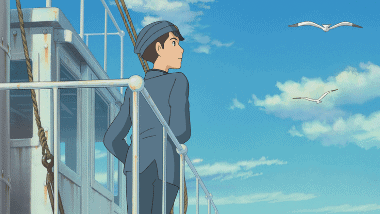
Miles away across the sunlit harbor, the boy she is destined to meet commutes to that same school aboard a rugged little tugboat.
The academic peace at Konan Academy is spectacularly shattered during the lunch hour. In a reckless, highly publicized stunt meant to protest the scheduled demolition of the beloved “Latin Quarter” clubhouse, a male student hurls himself from the school’s roof into a shallow water tank below.
Umi, watching the chaos unfold, instinctively rushes over to the dripping-wet daredevil.
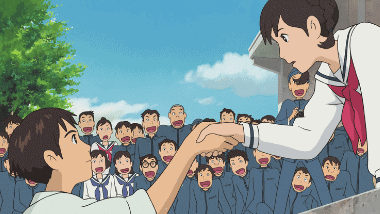
The boy emerges unharmed, but the striking image of Umi reaching down to pull him up instantly becomes a symbol of the student body’s struggle. The “Latin Quarter” itself is a sprawling, filthy, but culturally vibrant mansion housing the school’s club rooms. The administration wants it gone; the students are willing to bleed to keep it.
Later that afternoon, Umi’s younger sister drags her into the belly of the Latin Quarter to get an “autograph” from the rooftop jumper. They discover him in the cramped headquarters of the journalism club.
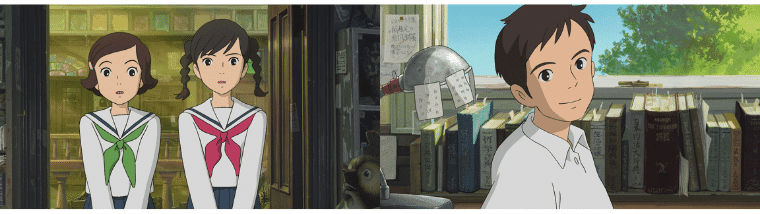
His name is Shun Kazama. He is struggling to cut a mimeograph stencil for the school paper, his hand bandaged from the stunt. While her sister gets her autograph and wanders off with the charismatic student council president, Shirō Mizunuma, Umi volunteers to stay behind and help Shun with the grueling printing process.
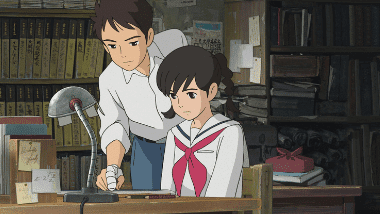
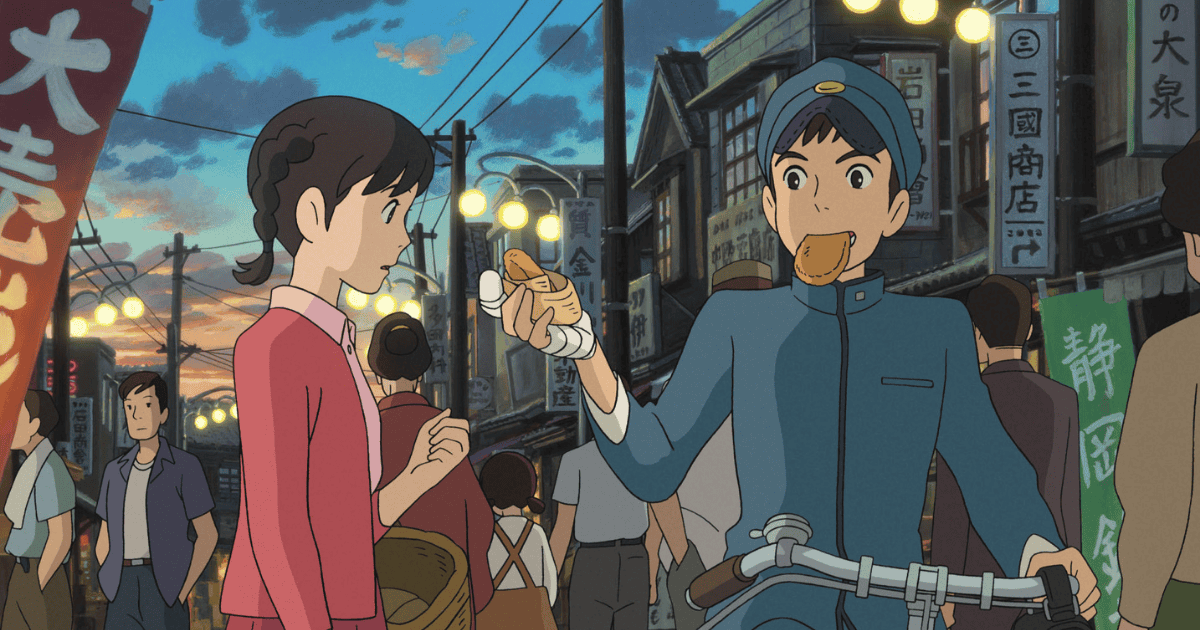
Proving to be fiercely capable, Umi flawlessly operates the press. As evening falls, she rushes down to the local market to buy dinner ingredients for the manor. By pure coincidence, Shun spots her and offers her a ride on the back of his bicycle.
They share freshly fried meat croquettes as they weave through the darkening streets. For a hungry boy facing a long boat ride home, it is a perfect snack.
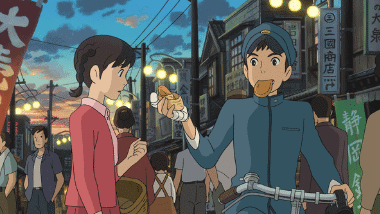
For Umi and Shun—two teenagers carrying the heavy responsibilities of their respective worlds—this quiet, shared bicycle ride marks the undeniable beginning of their romance.
The Devastating Sibling Crisis
Seeking to build alliances for the Latin Quarter, the residents of Coquelicot Manor host a lively dinner party and invite the student leaders. For Shun and Mizunuma, it is a crucial strategy session masquerading as a social event.
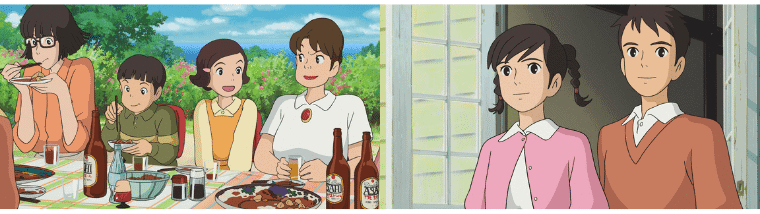
During the warm festivities, Umi proudly shows Shun her most prized possession: an old, faded photograph of her late father in his navy uniform, flanked by two best friends. Umi lovingly speaks of him, but the moment she utters his name—Yūichirō Sawamura—Shun freezes in pure terror.
Later that night, alone in his room, Shun pulls out a carbon copy of the exact same photograph. His adoptive father, Akio Kazama, is one of the men in the picture. Akio had previously confessed to Shun that on a stormy night years ago, Yūichirō Sawamura had arrived carrying an infant Shun. Akio and his wife took the child in and raised him as their own, never hiding the fact that Yūichirō was his biological father.
The crushing reality sets in: the girl Shun is rapidly falling in love with is his own sister.
The following week, the student body launches a massive “clean-up” operation to prove the Latin Quarter is a historical treasure worth saving. Umi throws herself into the grueling work, but she quickly realizes Shun is acting completely cold toward her.
Unable to bear his sudden cruelty, Umi corners him in an alleyway and demands the truth. Trapped, Shun bluntly delivers the devastating news.
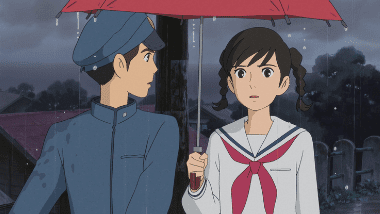
Umi is absolutely shattered. Faced with an insurmountable, tragic taboo, the two teenagers agree to bury their romantic feelings and pretend to be nothing more than friends.
The Final Revelation and a Race Against Time
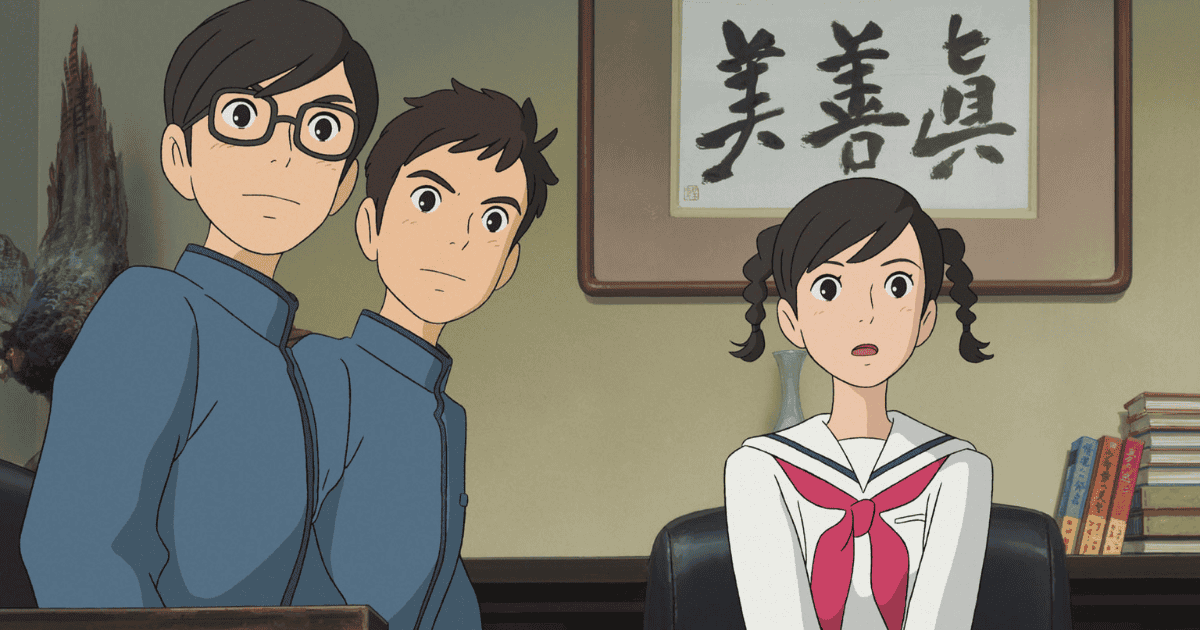
As the Latin Quarter miraculously transforms from a slum into a shining beacon of history, Umi, Shun, and Mizunuma travel to Tokyo to make a desperate, unannounced plea to the school board’s powerful chairman.
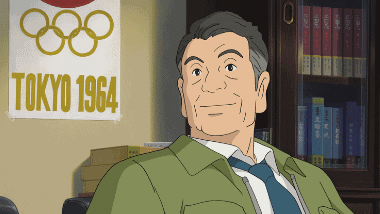
Moved by their relentless passion and eloquence, Chairman Tokumaru surprisingly agrees to visit the school and inspect the building himself.
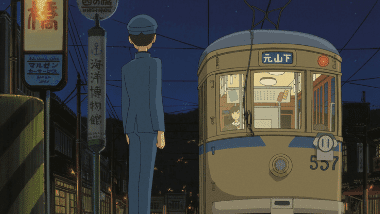
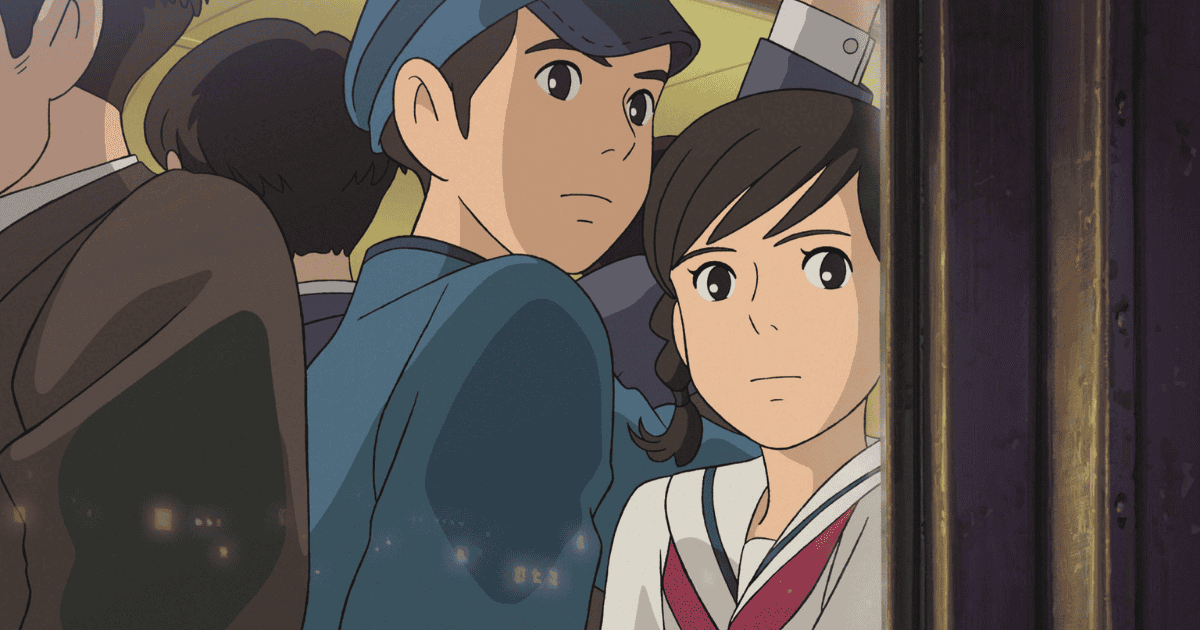
On the train ride back to Yokohama, Mizunuma tactfully excuses himself, leaving Umi and Shun alone to walk through the twilight.
As the sun sets, the emotional dam finally breaks. Unable to suppress her heart any longer, Umi stops and confesses, “Even if we are blood-related, I still love you, Shun.” Touched by her raw, desperate honesty, Shun replies softly, “I love you too, Umi.”
The film often expresses its characters’ feelings through deceptively simple lines like these. For a closer look at the original dialogue, see my collection of From Up on Poppy Hill quotes in Japanese and English, with translation notes and scene analysis.
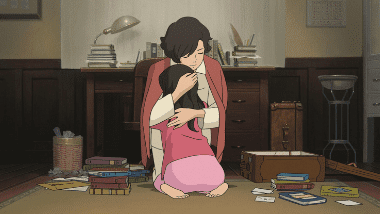
When Umi returns home, she is shocked to find her mother has unexpectedly returned from America. Desperate for answers, Umi pulls her aside and tearfully reveals the agonizing secret she has been carrying.
Her mother listens intently, smiles gently, and unravels a ghost story from the war. Before Umi was born, Yūichirō Sawamura brought a baby boy to their home. The child belonged to Hiroshi Tachibana, their dear friend who had died in a maritime accident, followed shortly by his wife passing in childbirth. To prevent the orphaned baby from being lost in the chaotic post-war system, Yūichirō legally registered the child as his own before entrusting him to the Kazamas.
Still terrified of a lie, Umi begs, “But what if he really is Father’s child?” Her mother smiles and says, “Then I would love to meet him. Does he look like your father?” Hearing this absolute, unshakeable reassurance, the terror finally leaves Umi’s body, and she collapses into her mother’s arms, sobbing.
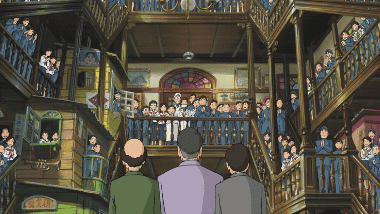
The next morning, Umi practically floats to school. The stakes are immense: Chairman Tokumaru has arrived to inspect the Latin Quarter.
The students’ backbreaking labor pays off. The chairman is deeply charmed by the immaculate, historic building.
Just as the victory seems secure, Shun receives an urgent phone call from his adoptive father. Umi’s mother had reached out. Shun’s father reveals that Yoshio Onodera—the third man in the photograph and the only living witness to the truth—is currently at the Yokohama port. However, his massive ship is preparing to disembark immediately.
Right at that exact second, Chairman Tokumaru officially declares that the Latin Quarter will be saved.
Without hesitating, Shun grabs Umi’s hand and they sprint out of the building. When Mizunuma announces to the confused crowd, “A serious life event has just occurred for those two!”, the chairman laughs heartily, praising the fiery urgency of youth.
Umi and Shun desperately race across town to the harbor.
They board the ship with seconds to spare and finally meet Captain Onodera. Looking at the two teenagers, Onodera bursts into tears. He joyfully confirms the absolute truth: Shun is Tachibana’s biological son, saved by the fierce loyalty of Sawamura and Kazama.
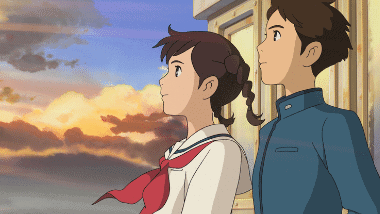
The ghosts of the past are finally laid to rest. Born from the ashes of a devastating war, these two young lives are now free to build a future together. We can only watch them gaze out at the horizon and pray for their everlasting happiness.
And that is the sweeping narrative of From Up on Poppy Hill. I will freely admit that I usually have a drink in hand when I watch this movie, and without fail, I am shedding tears by the final act. Am I the only one? It is a masterclass in emotional storytelling.
Now, let’s peel back the layers and analyze the profound hidden meanings embedded within From Up on Poppy Hill.
From Up on Poppy Hill (2011) Deep Analysis: Uncovering the Hidden Meanings
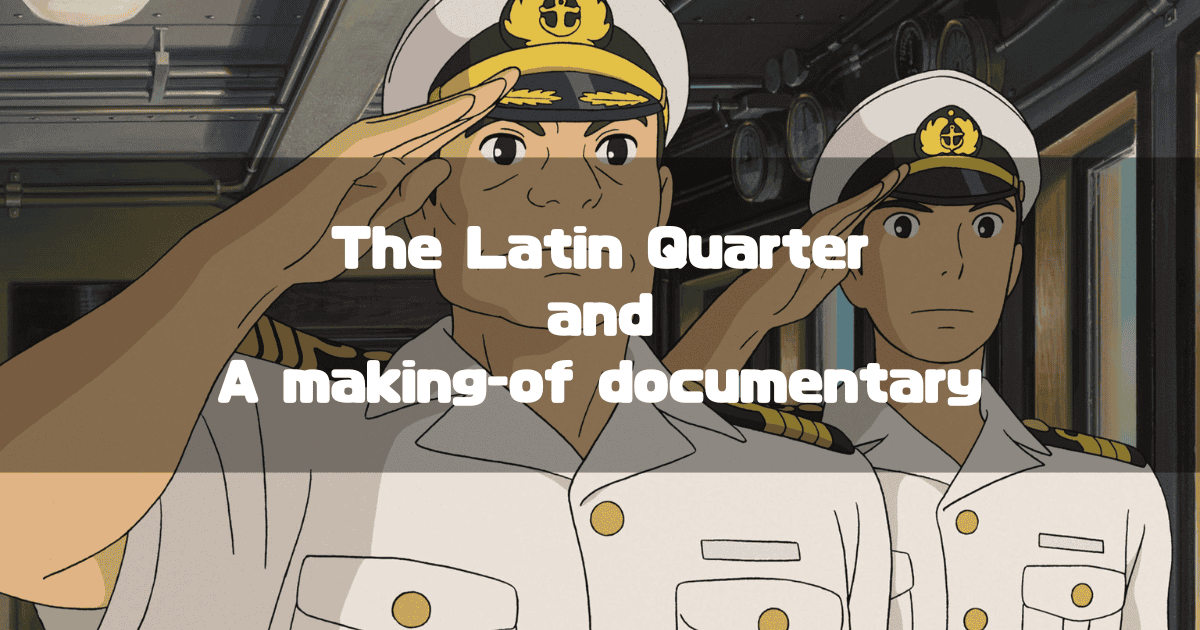
The Making-of Documentary: A Real-Life Father-Son War
If you truly want to understand this film, you must watch the grueling NHK documentary that chronicled its production: The Two of Them / Poppy Hill: A 300-Day War Between Father and Son (ふたり/コクリコ坂・父と子の300日戦争, in Japanese). It is an unvarnished look at the agonizing, deeply strained relationship between director Gorō Miyazaki and his legendary father, Hayao.
The tension is suffocating from day one. Gorō stubbornly refuses to show his storyboards to his father, while Hayao neurotically paces around the studio, furious and terrified over the film’s chaotic progress. It is thrilling, awkward, and surprisingly poetic.
By the end of the documentary, you cannot help but deeply respect Gorō. Watching him fight tooth and nail to protect his creative vision from his overbearing father adds an incredible layer of meaning to the themes of generational inheritance in the movie itself.
We’ve broken down exactly how this behind-the-scenes drama shaped the final movie. Check out our deep dive below.
Read more: The Message of From Up on Poppy Hill: Insights from the Production Documentary
The Latin Quarter: Why Did They Have to Clean It?
The “Latin Quarter” is the beating heart of From Up on Poppy Hill. We all secretly wish our high school years featured a chaotic, magnificent clubhouse like that.
But here is a fascinating detail: the Latin Quarter does not exist in the original manga. Hayao Miyazaki invented it entirely for the film. So why did he inject this massive architectural struggle into the story? What does the physical act of “scrubbing away the dirt” truly symbolize for this post-war generation?
If you want to understand the true psychological weight of this architectural struggle, dive into our dedicated analysis below.
Read more: The Symbolic Meaning Behind Cleaning the Latin Quarter
The Signal Flags: A Resolution Disguised as Unresolved
One of the most emotionally devastating elements of the film is Umi’s daily ritual of raising her signal flags.
For Umi, these flags are a desperate attempt to communicate with her deceased father. In a psychological sense, they are anchors dragging her back into a traumatic past. Recognizing this heavy burden, her grandmother tells her:
“I wish you’d find a wonderful person, so you wouldn’t have to raise the flags anymore.”
Cinematically, this is a massive piece of foreshadowing. We, the audience, are programmed to expect that by the end of the movie, Umi will fall in love and finally stop raising those flags. Yet, the film deliberately concludes with the exact opposite: Umi is still raising the flags.
The brilliance here is that while her physical action remains identical, the internal meaning has radically transformed.
At the beginning, Umi raises the flags to the dead. By the end, she is raising them for the living. She is raising them for Shun, for the present moment, and for the future.
The grandmother’s specific wish is technically left “unresolved,” but the emotional arc is complete. We are left weeping at the sheer beauty of a girl who has finally learned to live in the present.
The Kanagawa Setting: A Secret Requiem for Yasuyoshi Tokuma
Hayao Miyazaki fundamentally changed the setting of the story. The original manga was vague about its location, but Miyazaki intentionally anchored the cinematic world in Kanagawa (specifically, Yokohama).
Why Yokohama?
The most compelling theory points directly to Yasuyoshi Tokuma, the shrewd, legendary founder of Tokuma Shoten and the foundational godfather of Studio Ghibli, who passed away in 2000.
Tokuma was a larger-than-life figure. In the 1980s, he even served as the chairman of the board for Zushi Kaisei Junior and Senior High School in Kanagawa. The film’s formidable Chairman Tokumaru is an undeniable, loving caricature of Yasuyoshi Tokuma. The official Friday Roadshow broadcast account even confirmed this explicitly on Twitter.
#徳丸財団 の実業家・ #徳丸理事長 にはモデルがいます。それが、#徳間書店 を創業し、#スタジオジブリ の初代社長でもあった #徳間康快 さん。声を担当した #香川照之🗣さんは徳間社長の追悼映像🎞を見て徳丸理事長のしゃべり方を研究したそうです🧐#金曜ロードSHOW#コクリコ坂から pic.twitter.com/l5XDJb7eN8
— アンク@金曜ロードショー公式 (@kinro_ntv) August 21, 2020
The businessman Chairman Tokumaru of the Tokumaru Foundation (徳丸財団) is based on a real person: Mr. Yasuyoshi Tokuma (徳間康快), the founder of Tokuma Shoten (徳間書店) and the first president of Studio Ghibli. The voice actor, Teruyuki Kagawa (香川照之), reportedly studied Chairman Tokumaru’s unique way of speaking by carefully watching a memorial video of President Tokuma.
The towering, imposing figure that Umi, Shun, and Mizunuma confronted in Tokyo is exactly how Hayao Miyazaki viewed his old friend and boss. From Up on Poppy Hill is, in many ways, a deeply personal requiem for the man who helped build Ghibli. This desire to honor him is almost certainly why the film was set in Kanagawa (though shifting it to Yokohama cleverly disguised it just enough).
Regardless of the exact history, watching Chairman Tokumaru validate the passion of the youth simply makes you want to become the kind of reliable, towering adult he represents.
The images used in this article are from Studio Ghibli Works Still Images.
Can you name the movie before the scene comes into focus?
Put your visual memory to the test with a blurred Studio Ghibli scene.

Reader Comments