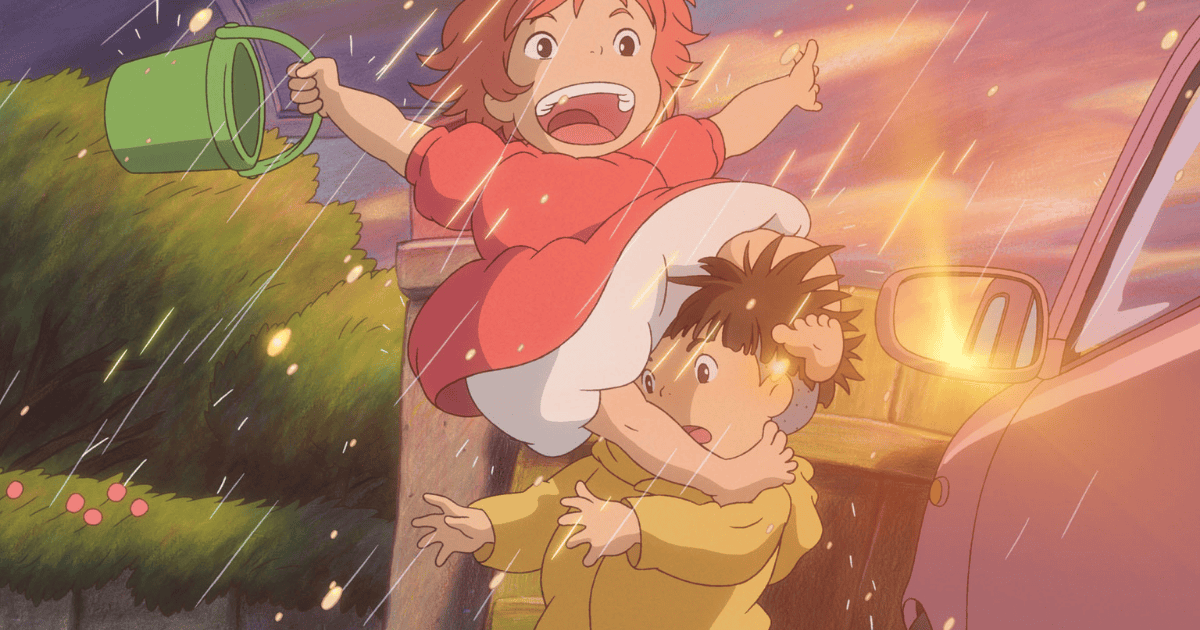
Released in 2008, Hayao Miyazaki’s Ponyo (Official Studio Ghibli Website) is a visually breathtaking, modern fairy tale that captured the hearts of audiences worldwide.
While the film is a joyous, straightforward adventure on the surface, its production history is filled with fascinating, bizarre, and surprising hidden details. Today, we are going to dive into the deep end and uncover a collection of incredible trivia and behind-the-scenes secrets about Ponyo.
While knowing these facts isn’t strictly necessary to enjoy the movie, they add a wonderful layer of depth to Miyazaki’s aquatic masterpiece!
*This is a translated version. The original (Japanese) is available here.
On this pageContents
Ponyo (2008): 8 Fascinating Trivia Facts and Production Secrets

1. Ponyo Was Originally Going to Be a Frog
In the final version of the film, Ponyo is famously a magical goldfish princess who longs to become human. However, during the earliest stages of development, Miyazaki initially conceptualized her as a frog.
This surprising fact has been openly discussed by Director Miyazaki himself, and you can actually spot the early “frog” concept art briefly showcased in the making-of documentary, How Ponyo Was Born.
Source: Ghibli Textbook 15: Ponyo (ジブリの教科書15:崖の上のポニョ, in Japanese)
2. Ponyo and Fujimoto Have Real-Life Ghibli Models
Ponyo’s adorable physical design and mannerisms were directly modeled after the young daughter of Katsuya Kondō, the film’s supervising animation director. But the inspiration didn’t stop there: Ponyo’s overprotective, eccentric father, Fujimoto, was modeled after Kondō himself!
Director Miyazaki had a very specific vision for this. During the voice recording sessions, he reportedly directed the actors by saying, “This is exactly how Kondō acts.” Fujimoto’s perpetually exhausted, slightly haggard appearance is apparently a direct reflection of Miyazaki’s fond, teasing impression of his hardworking animation director.
Sources: Ghibli Textbook 15: Ponyo, The Place Where the Wind Returns, Continued (続・風の帰る場所, in Japanese)
3. Fujimoto Was Once a Crew Member on the Nautilus
In the film, Fujimoto navigates the ocean in a bizarre, aquatic submarine called the “Basking Shark” (Ubazame-gō). However, Miyazaki crafted an incredibly cool, hidden sci-fi backstory for him: Fujimoto was originally the sole Asian crew member aboard Captain Nemo’s legendary submarine, the Nautilus, from Jules Verne’s classic novel Twenty Thousand Leagues Under the Sea.
This hidden lore perfectly explains Fujimoto’s intense love for the marine ecosystem and his cynical hatred of humanity’s destructive nature. It was likely during his voyages on the Nautilus that he first encountered Gran Mamare, falling in love with the true mystery of the sea.
Source: Ghibli Textbook 15: Ponyo
4. Sōsuke is Named After a Classic Japanese Novel
The name of our brave five-year-old protagonist, Sōsuke, was lifted directly from the main character of Natsume Sōseki’s classic 1910 novel, The Gate (Mon).
Following the grueling production of Howl’s Moving Castle, Director Miyazaki retreated to a vacant house in Tomonoura, a historic port town on the Seto Inland Sea, for a two-month break. During this seaside retreat, he avidly read Sōseki’s works.
Fascinatingly, an early working title for the film was Sōsuke Under the Cliff, a direct nod to the fact that the Sōsuke in Sōseki’s novel physically lives at the bottom of a cliff.
Source: Ghibli Textbook 15: Ponyo
5. The Secret Magic of the Dark Tunnel
During the film’s climax, Sōsuke and Ponyo must walk through a dark, eerie tunnel. As they progress, Ponyo begins to lose her magic, physically regressing from a human girl into a half-fish, and finally back into a full goldfish upon exiting.
While the movie never explicitly explains why this happens, it was actually the direct result of Gran Mamare’s magic. The tunnel acted as a magical barrier designed to strip away illusions. Sensing this trap, Ponyo was instinctively terrified and reluctant to enter.
Gran Mamare created this barrier as the ultimate test for Sōsuke: she forced Ponyo back into her original, fish-like form to see if Sōsuke could still love her unconditionally, regardless of her appearance.
Source: How Ponyo Was Born (ポニョはこうして生まれた, in Japanese)
6. The Unromantic Reality: Ponyo Smells Like Fish
There is a beautifully emotional scene where Ponyo escapes her father’s bubble, transforms into a human, and sprints to reunite with Sōsuke, tackling him in a massive, joyful hug.
However, while retouching the key animation for this exact sequence, Director Miyazaki broke the romantic tension by jokingly pointing out to his staff: “You know, she definitely smells like fish right now.”
While Sōsuke instantly recognizes the human girl as the goldfish he rescued, the animators shared a laugh behind the scenes over the pungent reality of a girl made of ocean magic wrapping her arms around you. While it’s more of an inside joke than strict canon, it adds a hilarious, grounded layer to a highly magical scene!
Source: How Ponyo Was Born
7. Gran Mamare’s Terrifying True Form
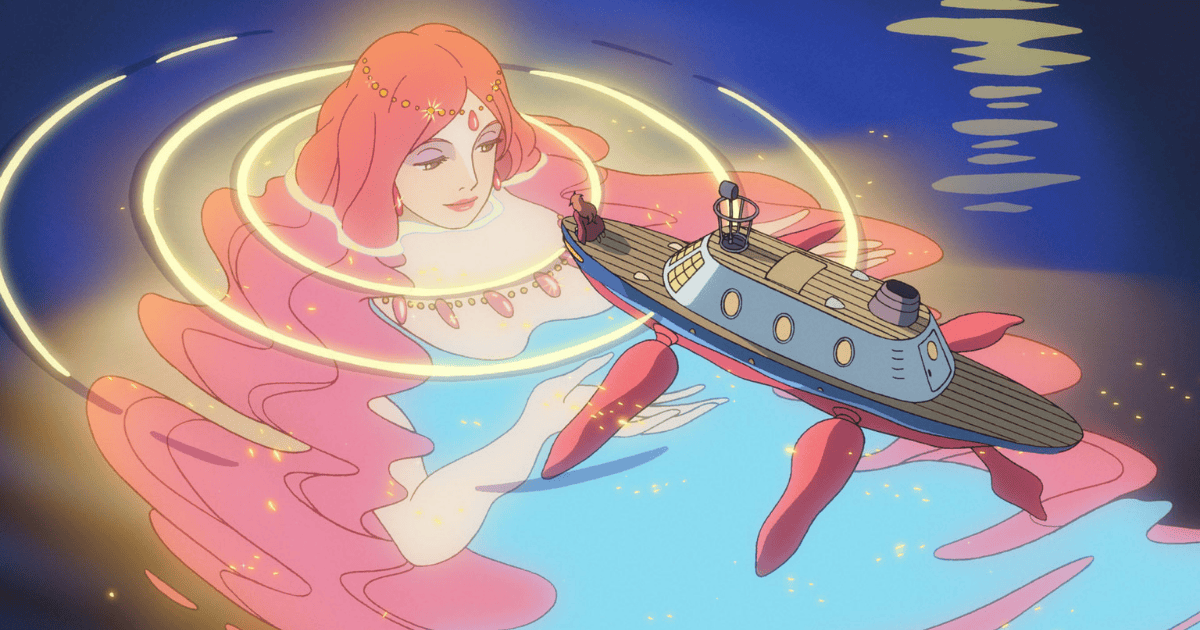
Perhaps the most shocking piece of Ponyo trivia is the true biological nature of Ponyo’s massive, beautiful, goddess-like mother, Gran Mamare. According to Director Miyazaki himself, her true form is actually a giant, deep-sea Anglerfish.
I have compiled a deep-dive analysis on the philosophical and terrifying implications of this revelation in the article below:
Read the full analysis: The Truth of Gran Mamare and Sōsuke’s Future
Source: The Place Where the Wind Returns, Continued
8. The Soundtrack of the Tsunami: “Ride of the Valkyries”
During the intense pre-production and storyboarding phase, Director Miyazaki famously blasted Richard Wagner’s epic, booming classical piece, Ride of the Valkyries, on loop in his studio.
He had been struggling to visualize the film’s climax. However, while Wagner’s aggressive music echoed through the room, Miyazaki finally drew the breakthrough storyboard titled “Ponyo is Coming” (Ponyokuru).
This drawing depicted Ponyo sprinting fiercely across the tops of massive, pitch-black tsunami waves. When you rewatch that iconic scene and imagine Ride of the Valkyries playing instead of Joe Hisaishi’s whimsical score, the sequence suddenly feels less like a magical adventure and more like an apocalyptic horror movie!
As a brilliant nod to this musical inspiration, Ponyo’s true birth name in the film is Brunnhilde—the most famous Valkyrie in Norse mythology.
Source: How Ponyo Was Born
The images used in this article are from the Studio Ghibli Still Images collection.
Can you name the movie before the scene comes into focus?
Put your visual memory to the test with a blurred Studio Ghibli scene.



Reader Comments