Summary
The film’s themes are sharp: it asks how we can recognize our own wickedness and still keep living. But I found its main narrative device and the explanation of what sustains the Wizard’s authority less convincing.
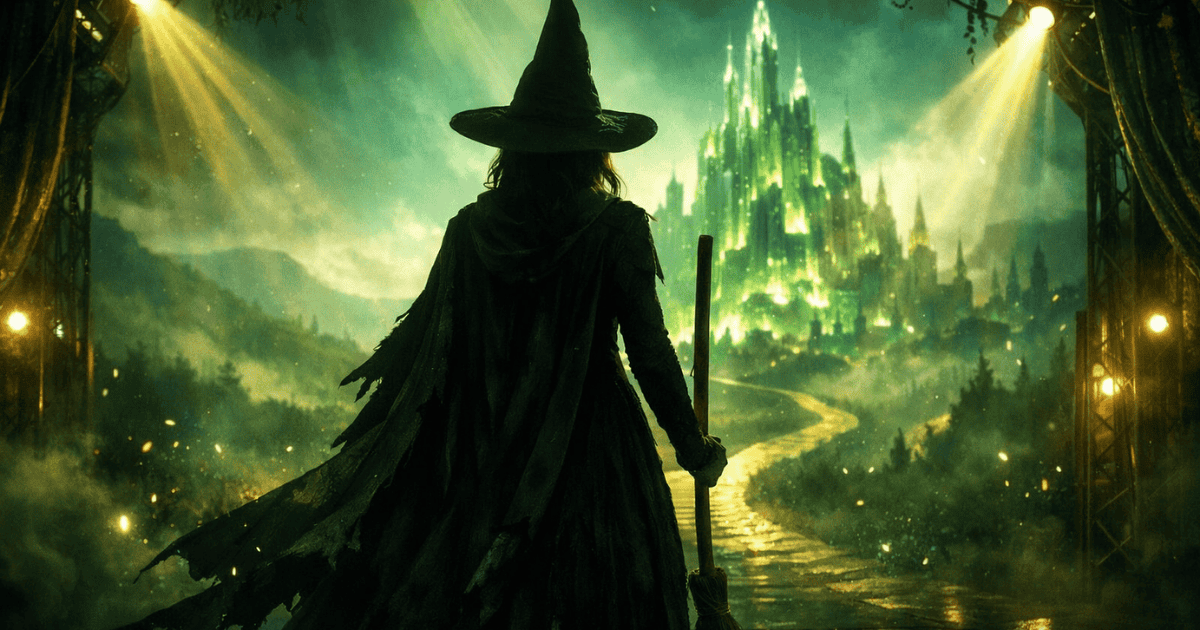
Wicked: For Good is more than a grand finale. It is an ambitious attempt to explore how we face the wickedness within ourselves from several angles.
My rating is 3 out of 5. Parts hit home, and some scenes made me admire the film’s ingenuity. Elsewhere, I wanted more from the devices driving the story and the foundations of its world. For me, it is a film for those who enjoy interpreting themes, rather than a masterpiece I can recommend unreservedly to everyone.
This is a spoiler-free review. If you have seen the film and want to explore its central ideas and connections to The Wizard of Oz, see the spoiler analysis below.
*This is a translated version. The original (Japanese) is available here.
On this pageContents
Is Wicked: For Good Worth Watching?
Here is my assessment at a glance.
Who I Would Recommend It To:
- Viewers who have seen the first film and want to know how the stories of Elphaba and the others unfold.
- Viewers who enjoy moral complexity and films about human weakness and wickedness.
- Musical fans who want to enjoy Cynthia Erivo’s singing and the appeal of a movie musical.
- Viewers interested in reinterpretation of the world of The Wizard of Oz.
Who May Feel Less Urgency to Watch:
- Viewers who want something other than romance to provide the main impetus for the story.
- Viewers who want convincing world-building and a clear sense of how the setting works.
- Viewers who prioritize exhilaration and straightforward catharsis over themes.
- Newcomers hoping to enjoy the finale without the first film’s groundwork in its relationships.
My answer to whether Wicked: For Good is interesting is: yes, if you enjoy exploring its themes. Your assessment may depend on how much you can accept the weaknesses in its structure and setting.
Three Things I Liked
The Many Forms of Wickedness
What I valued most was that the film does not reduce “wicked” to simple evil.
Wickedness takes various forms: anger, desire, self-justification, looking the other way, and taking one’s position for granted. It belongs not just to a particular villain but to many characters, in different ways.
What seems to distinguish the protagonists from the others is not whether they are good or bad, but whether they recognize that wickedness in themselves.
- Can we acknowledge our own selfishness?
- Can we move forward while knowing our weaknesses?
- Does society’s label of evil really match someone’s inner life?
The film presents these questions through choices and changing relationships, without turning preachy. That is why I saw it as more than a sequel: a film about accepting responsibility for our wickedness and living with it.
Cynthia Erivo’s Voice Gives the Film Conviction
Cynthia Erivo’s singing as Elphaba is one of the film’s great attractions.
Her voice carries not just force but the urgent need beneath the anger and sadness, giving the scenes greater conviction. Even when details of the story trouble me, she makes the character’s feelings seem real.
- Her songs bring emotional intensity naturally to the fore.
- The voice itself conveys the character’s pain and strength of will.
- The singing sustains the film’s emotional weight.
A large part of my wish to praise the film comes from that voice.
Giving The Wizard of Oz New Explanations
What impressed me was the effort to do more than add explanations: to make the reasons behind familiar events work as a story.
Elements of The Wizard of Oz that once seemed convenient acquire a possible logic within this world. I valued that attempt highly.
Rather than retracing the earlier work, the film casts another light on it, seeking new understanding and feeling. It does not leave a familiar story quite as we knew it. That is part of its appeal.
What Felt Less Convincing
Too Much Reliance on Romance
My biggest reservation was how much the story relies on romance as its fundamental driving force.
There is nothing wrong with romance itself. But Wicked: For Good has broader, deeper concerns: recognizing our wickedness, the roles society assigns us, and the difference between moral labels and private feelings. With those themes in play, leaning so heavily on romance to set events in motion feels like a missed opportunity.
- The driving force seems a little narrow beside the weight of the themes.
- Another device might have given the characters’ choices more depth.
- The emotional drama is strong, but the structure leaves something wanting.
Because the themes are so good, I wanted another layer of thought in the choice of what drives the story.
What Sustains the Wizard’s Authority?
Another point bothered me: the film scarcely shows what makes the technology and spectacle behind the Wizard’s enormous authority possible.
The film tries to give a rationale to convenient developments in The Wizard of Oz. For that reason, I wanted it to explore the foundations that allow the Wizard to inspire awe, rule people, and mount such elaborate spectacles.
For example, it is unclear whether the spectacle is magical, mechanical, or both. We also see little of who supports it or how far they can operate it. Technology and organization capable of such large-scale effects should matter considerably to this world. Yet although the story takes them as a premise, it gives too little explanation to convince me.
- The distinction between magic and machinery remains unclear.
- Who supports and operates the enormous spectacle is hard to see.
- If that technical foundation exists, why is it not used similarly in other situations?
My dissatisfaction is not with the premise itself. Rather, if the film is reinterpreting The Wizard of Oz and explaining familiar events, I wanted it to show the technical foundations of that authority too. Strengthening those would have made its world more convincing.
Should You Watch the First Film—and The Wizard of Oz?
The First Film Gives the Emotions More Weight
Wicked: For Good is not impossible to enjoy on its own, but I think it is best watched with the first film firmly in mind.
Its emotional weight depends on the relationships and clashes of values built up earlier. With that foundation, the pain of these choices comes across naturally.
I Recommend Starting with the First Film
If you have seen the first film, this one is well worth watching. Without it, some of the accumulated emotion and the distances between the characters may be harder to feel.
- If you enjoyed the first film: → This one is worth watching too.
- If relationships matter more to you than world-building: → Watching both is likely to be more satisfying.
- If you are starting here: → Watch the first film beforehand if you can.
How The Wizard of Oz Brings Out the Reinterpretation
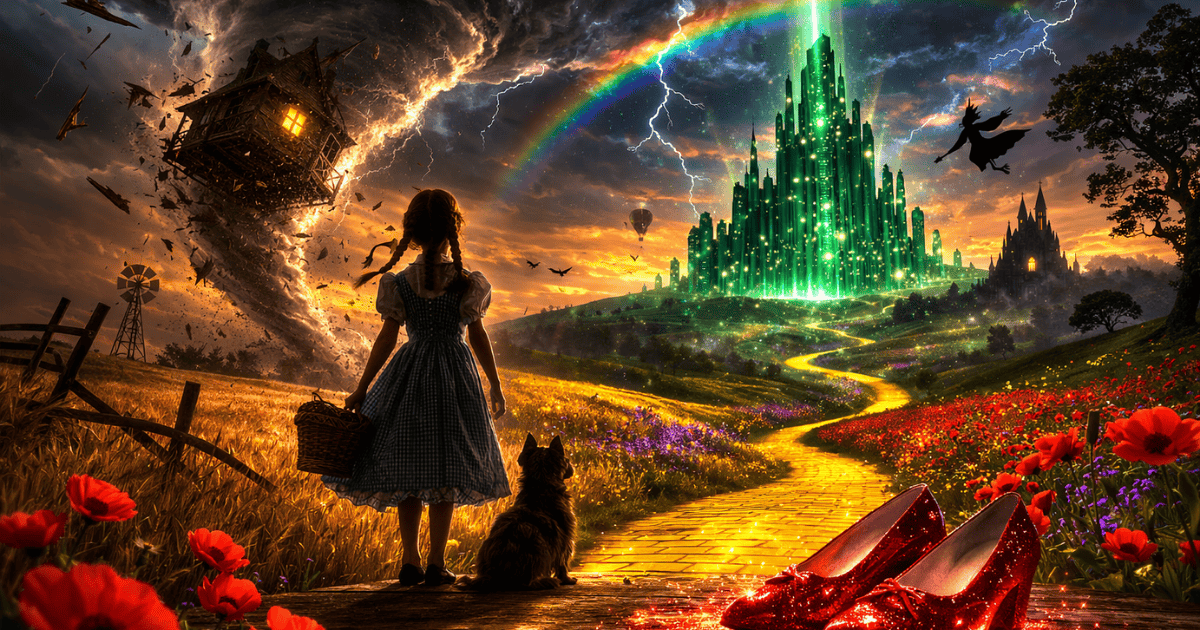
Watching the 1939 The Wizard of Oz also makes this film’s appeal easier to appreciate.
The ingenuity of Wicked: For Good lies not only in building on the first film’s emotions, but in giving new meanings and reasons to familiar elements of the earlier story.
- It becomes easier to see how familiar characters and settings are reinterpreted.
- You can see a rebuilding of meaning, rather than merely checking off familiar details.
- You can enjoy the attempt to explain elements that once seemed like convenient devices.
It is not essential, though parts seem to assume familiarity with the earlier film. If you want to savor how this story connects with The Wizard of Oz, seeing it first should make the experience richer.
Final Thoughts: An Ambitious Film with Strong Themes
Wicked: For Good is quite compelling when read as a film about recognizing our own wickedness and living on nevertheless.
The things that stayed with me were:
- Wickedness is presented as part of a complex inner life, rather than simple evil.
- Cynthia Erivo’s singing sustains the film’s core.
- It seeks meaningful connections to The Wizard of Oz.
I still had reservations about what drives the story and the technical foundations of the Wizard’s authority. That is why I did not give it full marks.
Even so, if you have seen the first film and want to approach the series as more than fantasy, as a story of human weakness and choice, it is well worth watching. Beyond its spectacle, it quietly asks us to look again at what is inside ourselves.
I explore Glinda’s poignant love story, the meaning of Elphaba’s actions, and the remaining questions about Oz in a separate spoiler analysis below. You may enjoy reading it while the film is still fresh in your mind.

Reader Comments