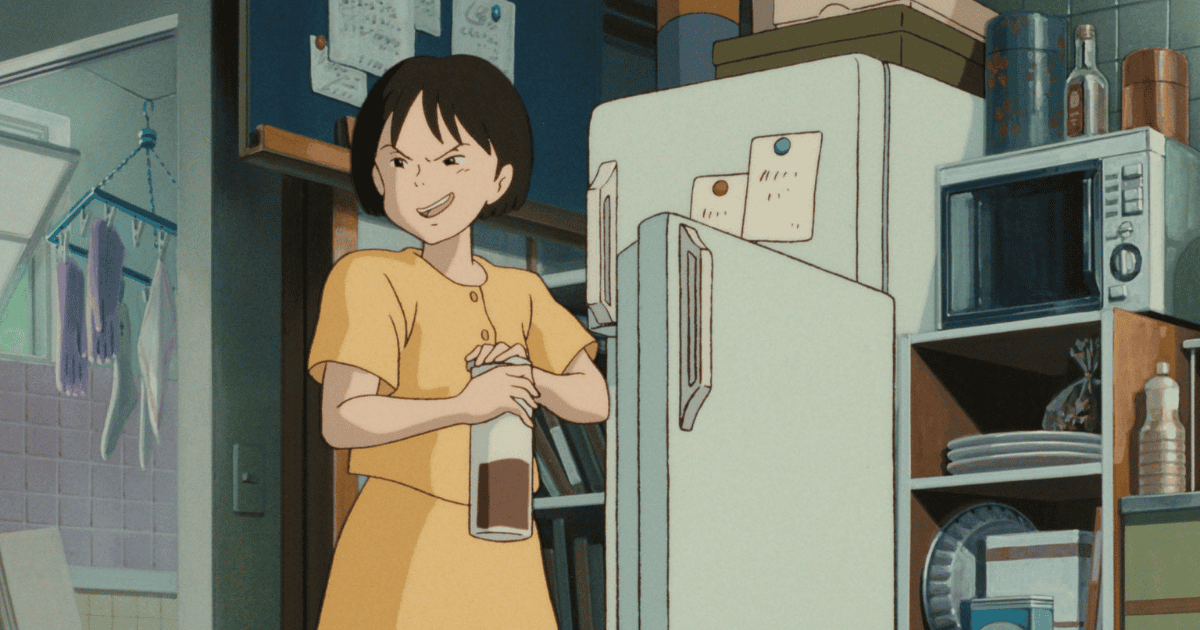
Released in 1995, Whisper of the Heart (Studio Ghibli Official) holds a deeply unique, somewhat tragic place in anime history. It was a film designed to pass the torch.
While Hayao Miyazaki wrote the screenplay and drew the storyboards, Whisper of the Heart was officially directed by Yoshifumi Kondō. This marked the very first time a Studio Ghibli theatrical release was directed by someone other than the founding titans, Miyazaki or Isao Takahata. (Note: Ocean Waves was directed by Tomomi Mochizuki in 1993, but it was strictly a TV special). Kondō was universally viewed as the heir apparent to the studio, and this film was meant to officially usher in a new era. Tragically, Director Kondō passed away suddenly in 1998 at the age of 47.
Today, we are going to honor his masterpiece by breaking down the complete narrative, mapping out the characters, and exploring the profound, often overlooked themes hiding within this grounded coming-of-age story.
Be warned: this comprehensive breakdown contains massive spoilers from start to finish. If you haven’t seen the film yet, bookmark this page, watch it, and come right back.
*This is a translated version. The original (Japanese) is available here.
- Detailed Synopsis & Character Map
A brief summary of the film: “Shizuku Tsukishima, a junior high student obsessed with reading, meets the ambitious Seiji Amasawa. Inspired by his relentless drive, she decides to aggressively pursue her own dream of becoming a writer. The two push each other to grow, ultimately making a grand promise for their future.” This article provides a comprehensive scene-by-scene breakdown and a visual character map. - Deep Thematic Analysis & Hidden Lore
Beyond the plot, we will dissect the film’s deeper layers. We explore the brilliant animation trick hiding “The Tragedy of Sugimura,” the psychological maturity of “Shizuku and Seiji’s Promises,” the meta-commentary of the commuter trains, and the explosive behind-the-scenes fight over the lyrics to Country Roads.
On this pageContents
Whisper of the Heart (1995) Full Synopsis: The Struggle to Grow Up (Spoilers)
Quick Summary: The 6 Core Plot Points
To grasp the narrative flow of Whisper of the Heart, here are the vital milestones:
- The Mystery on the Library Card
Shizuku Tsukishima, an avid reader in her final year of junior high, notices a strange anomaly: a boy named Seiji Amasawa has checked out every single library book before she has. She becomes deeply intrigued by this phantom reader. - Following the Cat to Chikyuya
While chasing a mysterious, fat cat riding a commuter train, Shizuku discovers an enchanting antique shop called “Chikyuya.” There, she shockingly realizes the phantom reader, Seiji Amasawa, is an annoying boy in her own grade. - The Spark of Ambition
Shizuku discovers Seiji is fiercely dedicated to his dream of becoming a master violin maker in Cremona, Italy. Watching him aggressively fight his parents for his future forces Shizuku to confront her own lack of direction. - The Novel as a Crucible
To prove her own worth and test her latent potential, Shizuku secretly begins writing a fantasy novel. The intense focus causes her grades to plummet, leading to a tense, surprisingly mature confrontation with her parents. - The First Reader
Shizuku completes her exhausting, unpolished manuscript and forces Seiji’s grandfather to read it. His gentle, honest critique breaks her down, but solidifies her resolve to formally study and improve her craft. - The Sunrise Proposal
Upon returning early from his grueling apprenticeship test in Italy, Seiji takes Shizuku to a hilltop at sunrise. In a rush of adolescent emotion, he proposes marriage, and she joyfully accepts, sealing their promise to support each other’s futures.
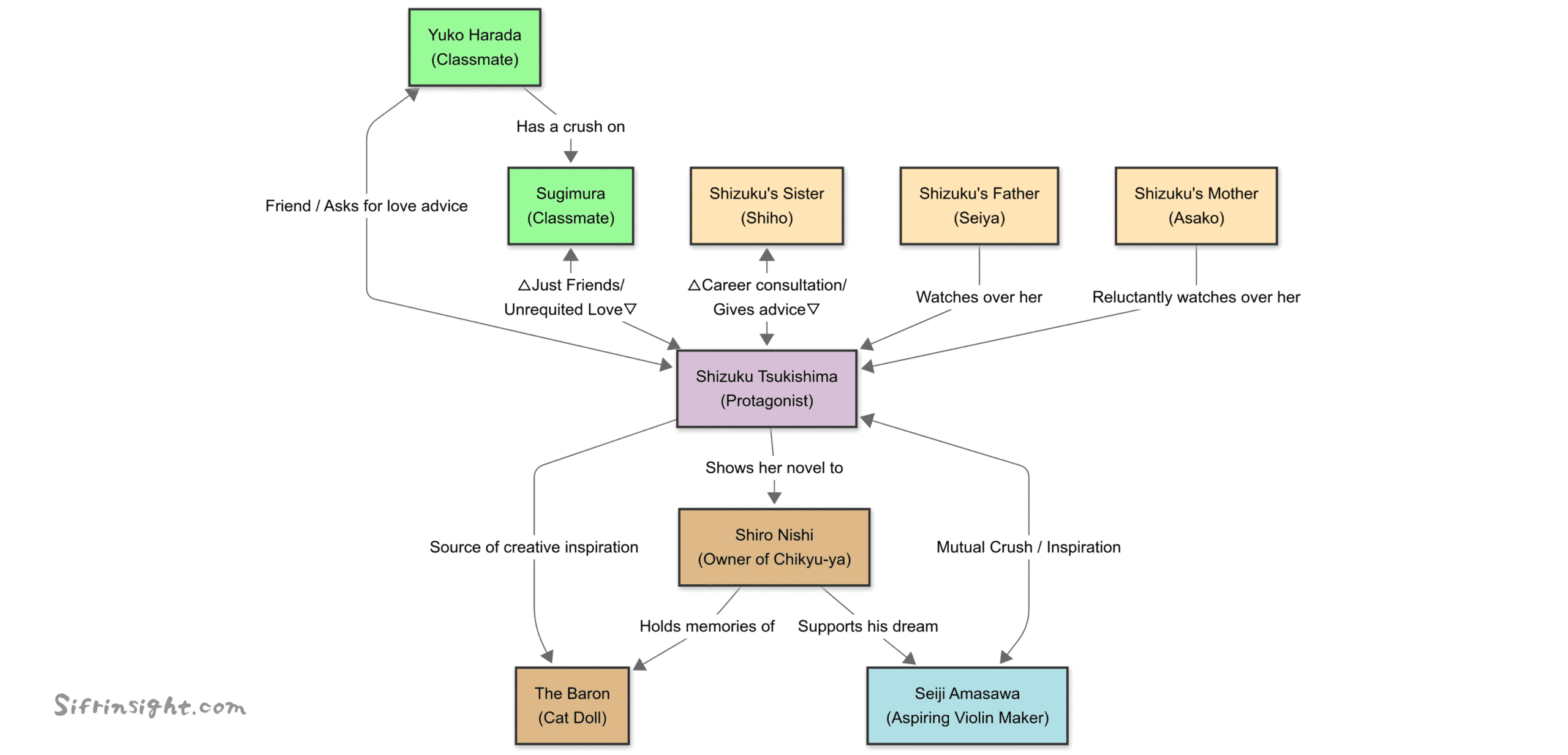
Complete Character Map
The Deeper Meaning of the Narrative
On the surface, Whisper of the Heart is widely perceived as a pure “sweet romance between junior high school students.” However, the true narrative engine is far more profound: it is a raw portrayal of the painful, desperate struggle of young people trying to violently tear themselves out of the “protected bubble” of childhood to forge their own independent identities.
Because they are only 14 years old, they physically and financially cannot break free entirely. The film masterfully highlights the crucial, quiet role that supportive adults—specifically Seiji’s grandfather and Shizuku’s parents—play in safely guiding that volatile teenage ambition.
With that thematic foundation established, let’s dive into the detailed scene-by-scene breakdown.
Detailed Synopsis: A Scene-by-Scene Breakdown
The Phantom Reader and the Annoying Boy
Our protagonist is Shizuku Tsukishima, a girl in her final year of junior high school facing the crushing pressure of impending high school entrance exams. Instead of studying, she devours books from the local library. One day, a strange detail on a checkout card catches her eye.
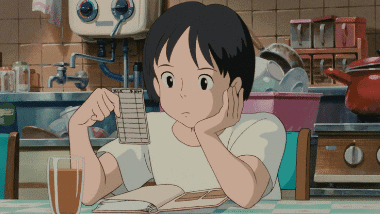
She scrambles to check the cards in her other books. Incredibly, the name “Seiji Amasawa” is written on every single one. Who is this phantom boy reading the exact same obscure books, always staying one step ahead of her?
The next day, during summer vacation, Shizuku visits her school library to borrow a book donated by the “Amasawa Collection.” Afterward, she meets her best friend, Yuko. Shizuku has been tasked with translating the classic American folk song Take Me Home, Country Roads into Japanese for their school choir. Shizuku isn’t satisfied with her serious translation, but Yuko loves it. Shizuku also jokingly shows off a cynical parody version she wrote called Concrete Roads, mocking their highly urbanized, paved-over hometown.
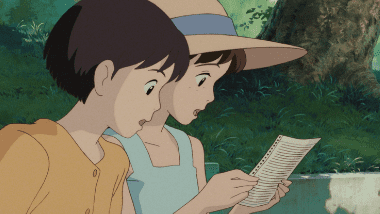
After the lyric discussion, Yuko nervously confesses her true reason for calling the meeting: she received a love letter from a random boy, but she is secretly in love with someone else. Before she can explain further, their mutual friend, the oblivious baseball player Sugimura, yells out from the sports field.
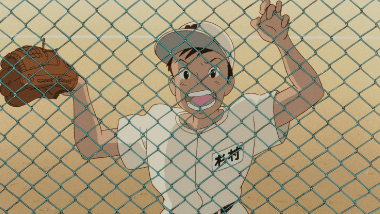
Sugimura simply asks Shizuku to toss his gym bag over the fence, but the mere sight of him causes Yuko to blush furiously and run away in a panic. It becomes instantly obvious to Shizuku that Sugimura is the boy Yuko loves.
While walking home, Shizuku realizes she accidentally left her library book—containing her secret lyric sheets—on the school bench. She sprints back, only to find a smug boy reading her private notebook.
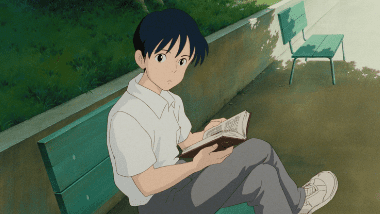
He hands the book back, shockingly addressing her by name. Before walking away, he drops a devastating, sarcastic parting shot: “Hey… I think you should probably drop the ‘Concrete Roads’ thing.” Furious and humiliated, Shizuku instantly despises him, branding him a complete “jerk.”
The following day, while riding the commuter train to deliver a bento box to her father at the main library, Shizuku spots a massive, strange cat casually riding the train like a human commuter.
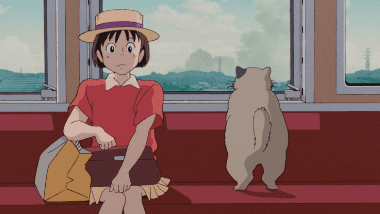
Intrigued, she follows the cat off the train and through a maze of winding residential alleys. The chase leads her to a beautiful, eccentric antique shop perched on a high hill: “Chikyuya.”
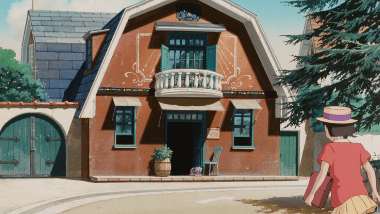
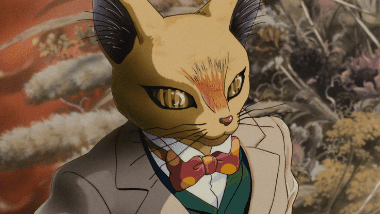
Inside, she is immediately captivated by a stunning, immaculately dressed cat statuette. The kindly shop owner introduces the figure as “The Baron” (full name: Humbert von Gikkingen). Shizuku is entranced, but suddenly realizes she is incredibly late to deliver her father’s lunch and sprints out the door.
As she rushes down the hill, someone calls her name. It’s the “jerk” boy on a bicycle. He pedaled all the way down to bring her the bento box she accidentally left at the antique shop. Instead of being gracious, he teases her again: “Your bento box is huge!” Shizuku storms off, furious.
When she finally reaches the library, she checks out another book and finds the name “Seiji Amasawa” on the card again. Frustratingly, as she wonders what the mysterious, well-read Seiji looks like, the smug face of the “jerk” pops into her mind.
The Messy Reality of Middle School
Summer ends, and school resumes with grueling mock exams. Seeking answers, Shizuku visits the faculty room to inquire about the “Amasawa” who donated the library books. A teacher confirms the donor is Koichi Amasawa, a local doctor, and casually mentions that his youngest son is currently a student in Shizuku’s exact grade. Shocked, Shizuku hurries out of the office.
In the hallway, she practically collides with the “jerk.” Recognizing her, he deliberately looks away and ignores her. Refusing to lose the petty standoff, Shizuku violently turns her head and marches past him.
That evening, the crushing drama of middle school romance takes center stage. A heartbroken Yuko calls Shizuku to a local park in tears. It turns out the oblivious Sugimura had acted as a wingman for his friend, casually asking Yuko to reply to the love letter she received. Devastated that the boy she loves is actively trying to set her up with someone else, Yuko refuses to go to school the next day.
Furious on her friend’s behalf, Shizuku drags Sugimura to a local shrine and violently scolds him for being so incredibly dense. A highly confused Sugimura demands to know why Yuko is crying over him. Backed into a corner, Shizuku blurts out the truth: Yuko is in love with him.
Sugimura is stunned. But the true bombshell drops when he stammers out his own truth: “But… I like you, Tsukishima!”
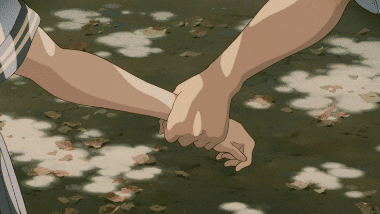
Shizuku is completely blindsided. When Sugimura grabs her arm to stop her from running away, she desperately pulls back, delivering the fatal, crushing rejection: “I only think of you as a friend!” Sugimura realizes his love is dead, and Shizuku realizes she is just as dense and oblivious as the boy she was just screaming at.
Depressed and overwhelmed by guilt, Shizuku unknowingly wanders back to the Chikyuya antique shop. It is closed, but as she sits sadly on the steps, the “jerk” suddenly appears. To her shock, he unlocks the door and invites her in to see the Baron.
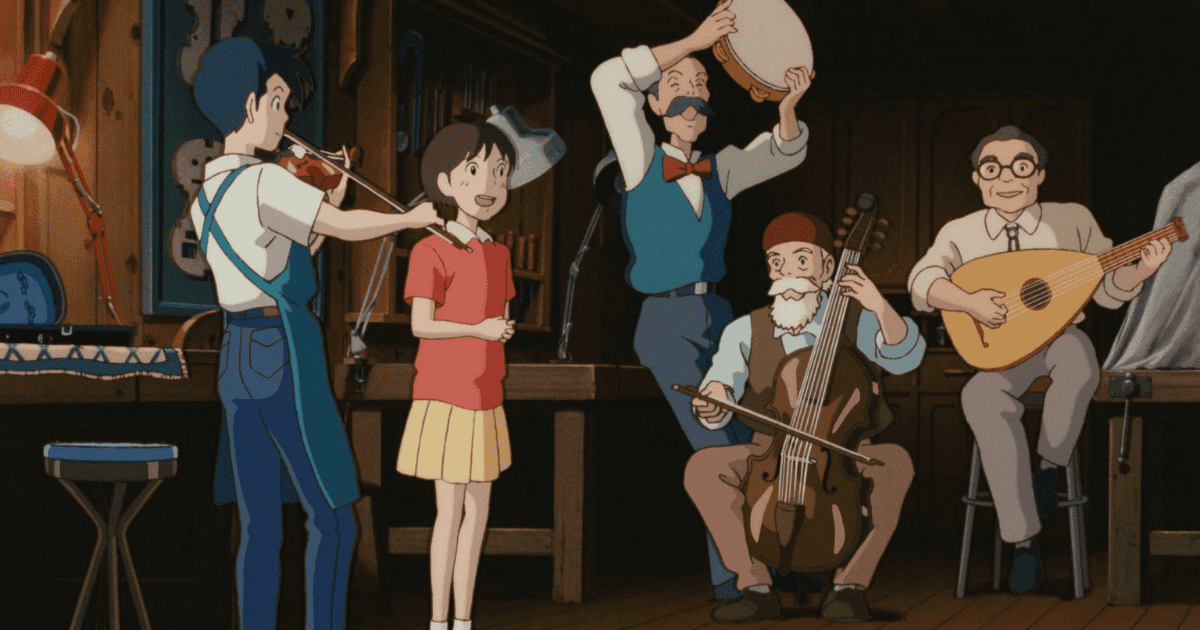
He leads her down into the basement, which is revealed to be a fully functional luthier workshop. Shizuku is stunned to discover the boy is an apprentice violin maker.
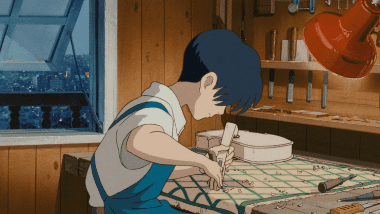
Noticing an unfinished violin, Shizuku begs him to play. He agrees, but only on the embarrassing condition that she sings the vocals. He begins playing Country Roads. Shizuku awkwardly begins to sing. Mid-song, the grandfather and his elderly musician friends return home. Instead of stopping them, the old men gleefully grab their acoustic instruments and join the jam session.
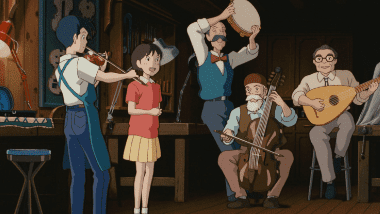
When the magical session ends, the grandfather officially introduces his grandson to Shizuku. The final puzzle piece clicks into place: the annoying “jerk” is none other than the phantom reader, Seiji Amasawa.
As Seiji walks her home, he reveals his massive, terrifying ambition. He doesn’t just want to build violins in Tokyo; he plans to move to Cremona, Italy, to study under a master luthier immediately after junior high. Shizuku, who has absolutely zero idea what she wants to do with her life, is completely crushed by the sheer weight and clarity of his ambition.
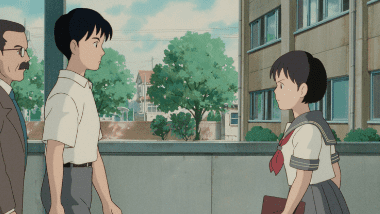
The next day, Seiji pulls Shizuku up to the rainy school rooftop to deliver massive news: his father has finally agreed to let him go to Italy, but only for a strict two-month trial period to see if he actually has talent. As he speaks, the heavy rain clouds miraculously part, bathing them in sunlight.
But Seiji isn’t done. He finally confesses the truth behind the library cards. He noticed Shizuku long ago. He intentionally checked out massive stacks of obscure books simply to ensure his name would be on the cards before she read them, desperately trying to get her attention. He tells her that he will survive the brutal training in Italy by thinking of her.
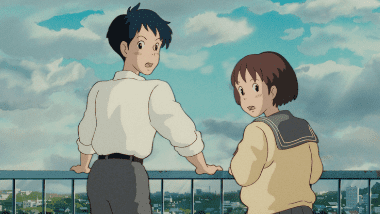
Shizuku is euphoric over the confession, but it is immediately swallowed by a massive wave of inadequacy. While he is flying across the world to build his future, she is doing absolutely nothing. Driven by a desperate need to prove she is worthy of standing beside him, Shizuku makes a radical decision.
The Crucible of the Novel
While Seiji is literally testing his worth in Italy, Shizuku decides to test her own latent potential: she is going to write a fantasy novel.
She visits the grandfather and asks for permission to use the Baron as her main character. The grandfather agrees, but institutes a terrifying condition: he must be the very first person to read the completed manuscript. Shizuku completely abandons her high school entrance exams and plunges into a manic, obsessive writing frenzy.
Inevitably, her grades plummet into the abyss. Her family, terrified for her future, stages an intervention at the kitchen table.
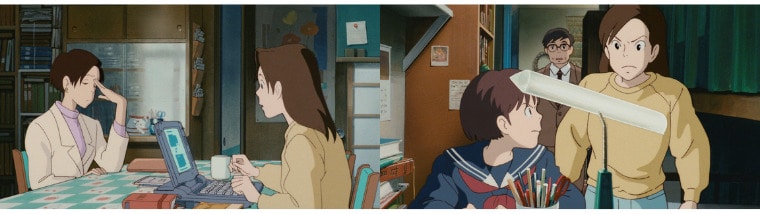
Her mother and sister demand answers, but her father calmly de-escalates the situation. He recognizes that Shizuku is violently wrestling with her own identity. He grants her permission to pursue her “challenge,” but strictly demands that she take full responsibility for the consequences. Shizuku promises that once the manuscript is finished, she will return to her studies.
Exhausted, sleep-deprived, and emotionally drained, Shizuku finally completes her novel. True to her word, she practically throws the manuscript at the grandfather and begs him to read it immediately.
When he finishes, he tells her the story is rough, unpolished, and jagged—exactly like a raw gemstone, and exactly like Seiji’s first violin. It is a deeply positive, validating review, but Shizuku bursts into tears. The manic writing process forced her to realize how vastly inadequate her skills actually are. The grandfather comforts her, assuring her that recognizing her own flaws is the first necessary step to becoming a true craftsman.
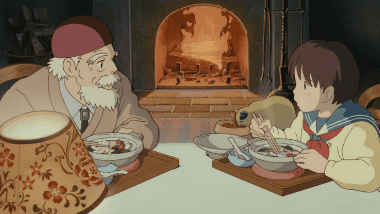
Having faced her crucible and survived, Shizuku honors the pact she made with her family and diligently returns to her high school exam prep.
One freezing, early winter morning, she opens her window and is shocked to see Seiji sitting on his bicycle in the street below. He returned from Italy a day early and immediately rode to her apartment.
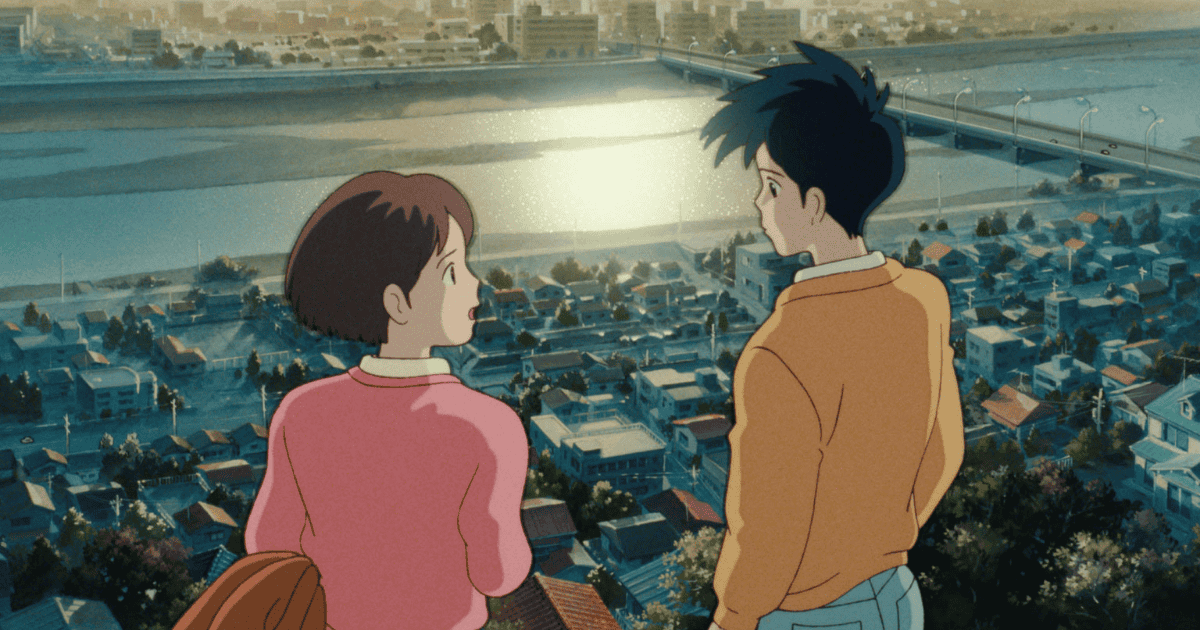
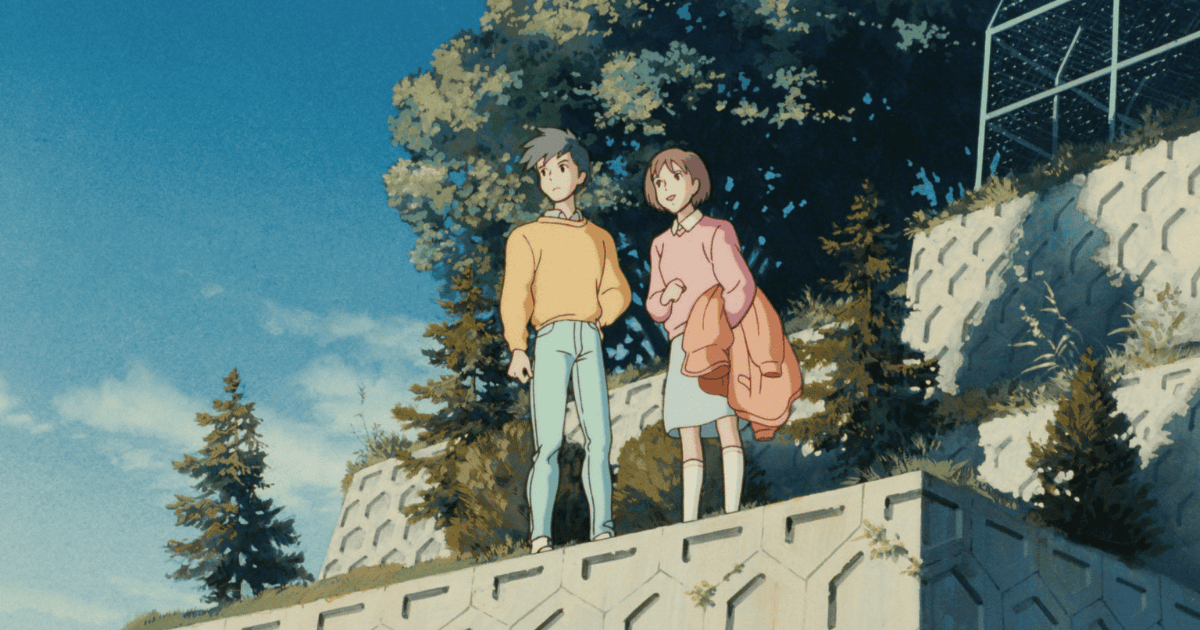
He tells her to get on the back of his bike. Sweating and straining, he pedals her up the steepest hill in the city to a “secret place” just as the dawn breaks over the Tokyo sprawl.
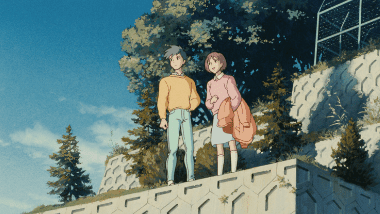
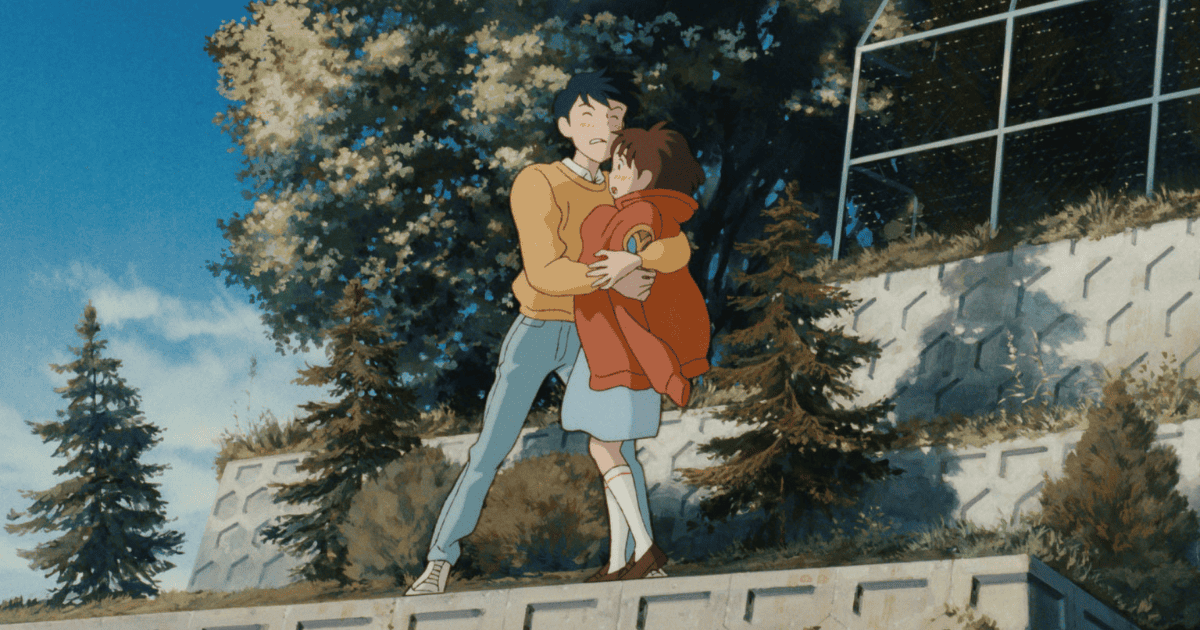
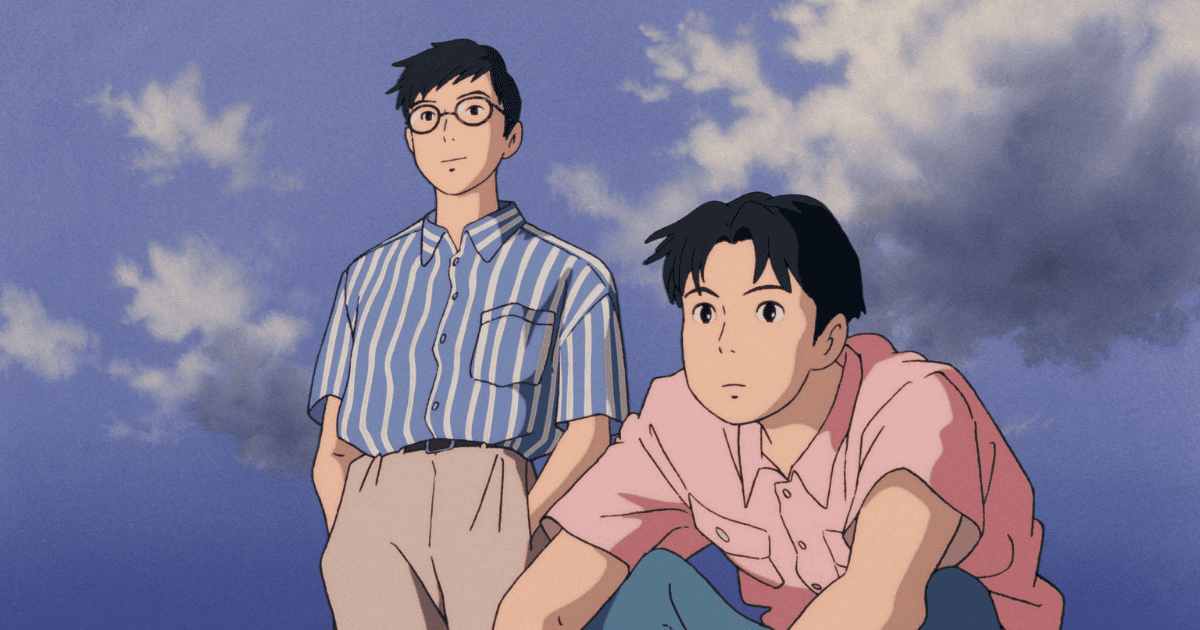
Standing before the breathtaking sunrise, Seiji blurts out a proposal: “Will you marry me?!” Overwhelmed with joy, Shizuku accepts. Seiji embraces her, shouting, “I love you!”
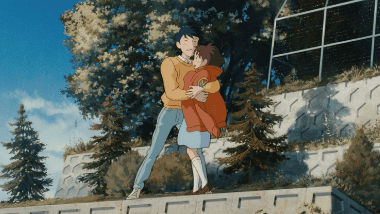
As the camera pans down, the end credits roll, showing the mundane, everyday crowds of Tokyo walking to work, entirely oblivious to the monumental promise the two teenagers just made on the hill above.
That concludes the raw plot of Whisper of the Heart. However, to truly appreciate the genius of this film, we have to look past the romance and analyze the complex, hidden mechanics holding the narrative together.
▼ Explore the film’s memorable dialogue in Japanese and English
Many of the film’s most important moments are carried by deceptively simple lines—from Shizuku admitting that she is glad she pushed herself to Seiji’s awkward first remark about “Concrete Road” and his final declaration of love. Compare the original Japanese, romanization, English subtitles, literal translations, and detailed commentary in 8 Whisper of the Heart Quotes in Japanese and English, Explained.
Whisper of the Heart (1995) Deep Analysis: Unlocking the Film’s Mysteries
The Hidden Tragedy of Sugimura
While the audience swoons over Seiji Amasawa, the film quietly executes a brutal, brilliantly animated tragedy in the background through the character of Sugimura. He is a pivotal character, serving as the ultimate “unimportant” contrast to Seiji.
If you pay close attention to the animation, the film literally draws Sugimura incorrectly to prove how little Shizuku cares about him. In his first appearance, Sugimura (who plays third base and is canonically right-handed) is drawn wearing his baseball glove on his right hand. Why? Because the entire film is filtered through Shizuku’s subjective lens. She doesn’t care about baseball, so her brain distorts the physical reality of his existence.
I wrote a massive deep dive into this brilliant visual manipulation. If you want to see how Studio Ghibli tricked you, read the article below:
Read the full analysis: The Hidden Visual Manipulation and the Tragedy of Sugimura
The Power of Shizuku and Seiji’s Promise
A major reason Whisper of the Heart endures is the incredible psychological maturity of its two leads. When modern audiences watch the film, the ending “marriage proposal” often elicits cringes. But if you analyze the structural foundation of the script, the proposal makes perfect, unbreakable sense.
Unlike typical rebellious teenagers, both Seiji and Shizuku engaged in grueling, adult negotiations with their parents. They didn’t just run away; they made formal, binding pacts to secure their futures, and they proved they had the iron will to honor those pacts. The proposal at the end isn’t just childish hyperbole; it is the ultimate extension of their proven ability to keep promises.
Read the full analysis: Why the Cringe Ending Actually Works: A Story of Promises
In that same article, I also explore a highly cynical but fascinating fan theory: Did the grandfather completely fabricate his tragic romantic backstory just to encourage Shizuku?
The Commuter Trains and the Secret Sequel to Pom Poko
One of the most striking visual motifs in Whisper of the Heart is the relentless depiction of commuter trains and random, anonymous pedestrians. The film is obsessed with the mundane infrastructure of Tokyo. Why?
Because Hayao Miyazaki wrote Whisper of the Heart as a direct, spiritual sequel to Isao Takahata’s depressing 1994 film, Pom Poko. While Pom Poko chronicled the tragic destruction of the forest to build Tama New Town, Whisper of the Heart is set directly inside those newly built concrete apartments.
Miyazaki was essentially arguing that while the destruction of nature was a tragedy, the human lives that are currently occupying that stolen land are still beautiful and profoundly worthy of love. The trains are the heartbeat of that new reality.
Read the full analysis: The Hidden Meaning of Trains and the Connection to Pom Poko
Lore Appendix: The Explosive Fight Over “Country Roads”
The lifeblood of Whisper of the Heart is the Japanese rendition of John Denver’s 1971 classic, Take Me Home, Country Roads. The Japanese lyrics, sung beautifully by Yoko Honna, were actually written by Mamiko Suzuki, the young daughter of Ghibli Producer Toshio Suzuki. (According to Ghibli lore, she wrote the brilliant lyrics in about five minutes on the night of the deadline!).
However, Hayao Miyazaki slightly altered her final draft, which sparked a massive, screaming fight between him and Director Yoshifumi Kondō.
The final, approved Japanese lyrics include the line:
ひとりぼっちおそれずに生きようと夢見てた
(Literal translation)
I dreamed of living without fear of being alone
However, Mamiko’s original, unedited lyric was much harsher:
ひとりで生きると何も持たずに町を飛び出した
(Literal translation)
I left town with nothing, determined to live alone
Director Kondō, originally from the rural prefecture of Niigata, had packed up and left his hometown with absolutely nothing to gamble on a career as an animator in Tokyo. Mamiko’s original lyric perfectly encapsulated his deeply personal, painful resolve: he felt he could never return home until he had accomplished something massive.
Miyazaki, however, argued the line was “too blunt” and insisted on softening it. Kondō fiercely defended the original, raw lyric, and the disagreement escalated into a full-blown shouting match in the studio.
Ultimately, Kondō conceded to his mentor’s edit.
Despite the fight, Kondō was eternally grateful to Miyazaki and Suzuki for entrusting him with the director’s chair. Whisper of the Heart was a massive critical and commercial success. By directing it, Kondō finally achieved the impossible dream: he could finally return to his rural hometown holding the banner of absolute success.
When the ending theme plays over the credits, I always think of Director Kondō—a man who left home with nothing, terrified of failure, who poured his soul into this film. Knowing his history, it is impossible to listen to that song without tearing up.
As fans who know the lore, perhaps we should honor his memory by mentally replacing the lyrics with the ones he fought so hard to keep: “I left town with nothing, determined to live alone.”
The images used in this article are from the “Studio Ghibli Still Images” collection.
Can you name the movie before the scene comes into focus?
Put your visual memory to the test with a blurred Studio Ghibli scene.


Reader Comments