
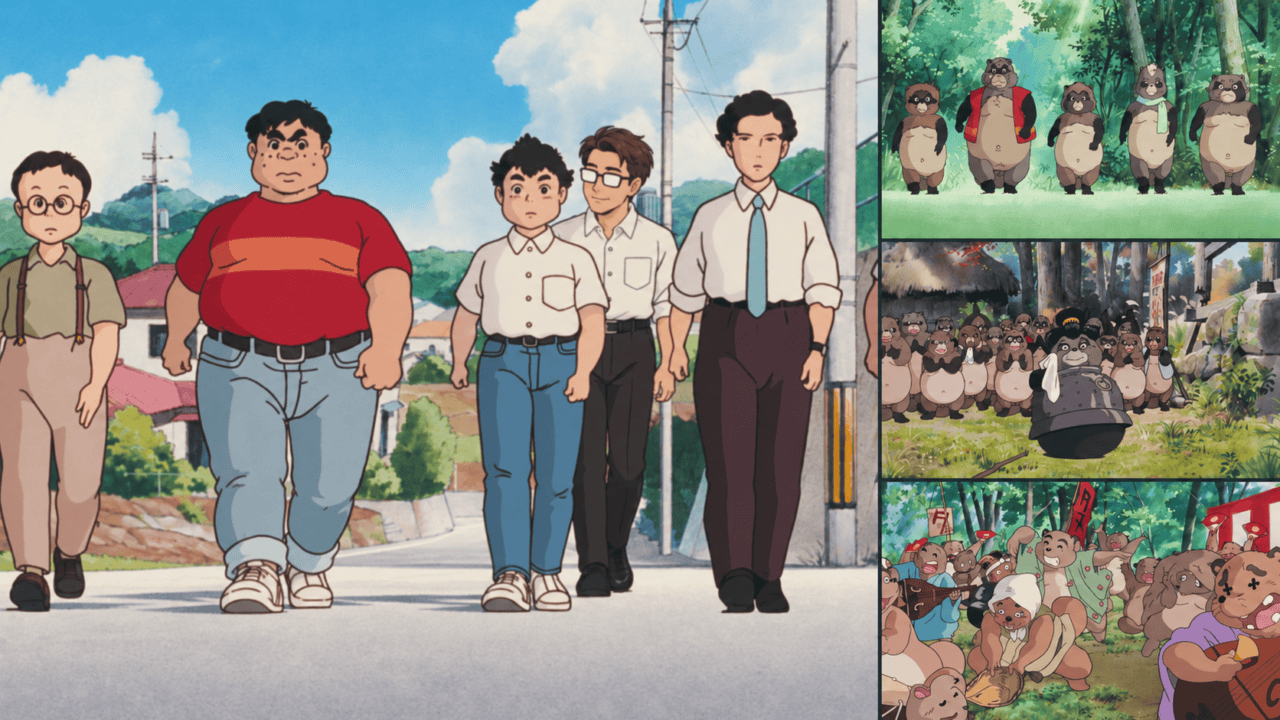
Isao Takahata’s Pom Poko(Official Studio Ghibli Website) was released in 1994. Its tanuki characters are full of quirks, and there is plenty to consider in the roles they play.
Here, I want to look back at the characters and voice cast, and consider what makes each character interesting. Who are the tanuki of the Tama Hills?
Please note that the discussion below contains spoilers.
*This is a translated version. The original (Japanese) is available here.
On this pageContents
Pom Poko (1994) Main Characters & Voice Actors List
The table below brings together the main characters and the voice performances covered in this guide.
| Name | Age | Voice Actor (English Dub) |
|---|---|---|
 Narrator | Unknown | Maurice LaMarche |
 Shokichi | Unknown | Jonathan Taylor Thomas |
 Okiyo | Unknown | Jillian Bowen |
 Tsurukame Oshō | 105 | Andre Stojka |
 Oroku | Unknown | Tress MacNeille |
 Gonta | Unknown | Clancy Brown |
 Seizaemon | Unknown | J. K. Simmons |
 Ponkichi | Unknown | David Oliver Cohen |
 Bunta | Unknown | Kevin Michael Richardson |
 Tamasaburo | Unknown | Wally Kurth |
 Kincho VI | Unknown | Brian George |
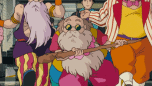 Yashimano Hage | 999 | Brian George |
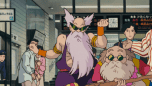 Inugami Gyobu | 603 | Jess Harnell |
 Ryutaro | Unknown | John DiMaggio |
Pom Poko (1994) Character Map
The map outlines the relationships discussed in this guide and provides a reference for the character profiles below.
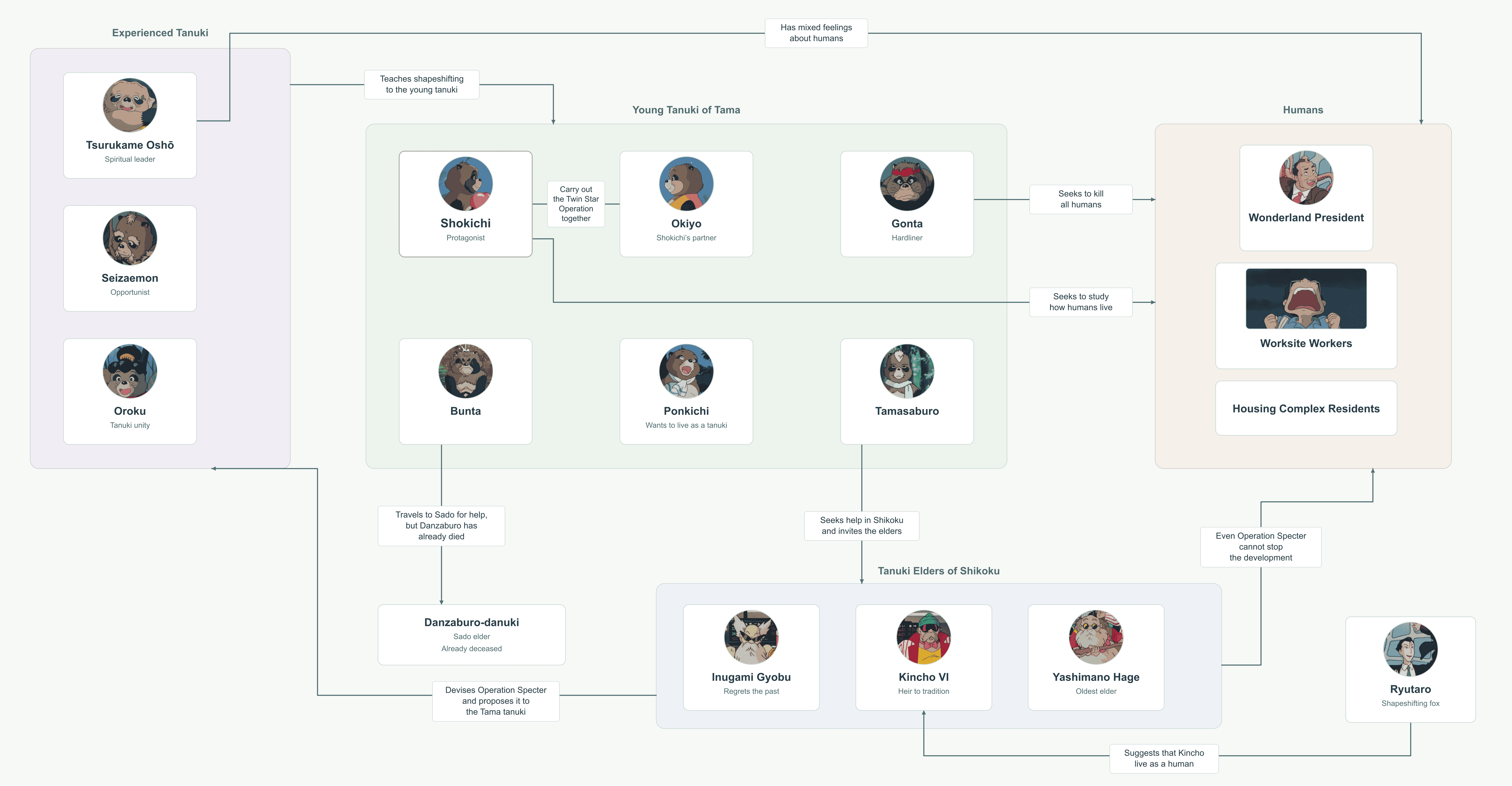
The tanuki initially fight one another over territory, but Oroku helps them unite against the humans. The elders send Tamasaburo and Bunta to Shikoku and Sado, centers of advanced transformation studies, to ask for help.
▼ Discover the lines that define these characters
Ponkichi, Tsurukame Oshō, Bunta, Yashimano Hage, and Ryutaro reveal their personalities and conflicting survival strategies through a handful of memorable lines. Compare their original Japanese dialogue with the English subtitles, literal translations, and dub wording in our guide to 8 memorable Pom Poko quotes.
Pom Poko (1994): Character Profiles and Analysis
The following profiles consider the characters’ motives, relationships, and roles in the story.
Narrator | Voiced by: Maurice LaMarche
The narration helps establish the atmosphere of Pom Poko. In the original Japanese version, Kokontei Shinchō’s engaging voice is central to that effect; Maurice LaMarche narrates the English dub.
A story in which the tanuki challenge humans and ultimately lose could be difficult to watch. Their foolishness and good nature just about keep it bearable, and I feel that the Japanese narrator’s voice gently cushions the harshness of their situation.
In the original Japanese version, the narrator’s voice gradually gives way to Shokichi’s, revealing that it is Shokichi who has been telling the story.
Shokichi | Voiced by: Jonathan Taylor Thomas
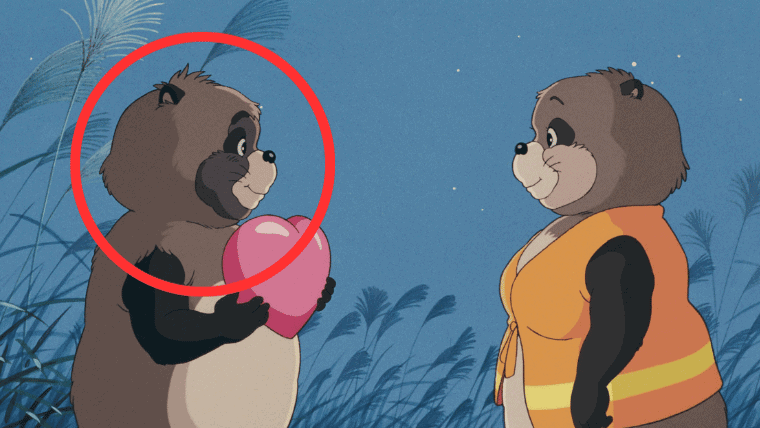
Shokichi’s Basic Information
The primary protagonist of the story, hailing from Kagemori in the Tama Hills.
From the beginning, Shokichi is remarkably rational. Following his father’s teaching, he places particular importance on “human studies” in the conflict. He is so consistent about it that Seizaemon calls him “a human-like guy.”
Gonta stands at the opposite end of the spectrum, but I think the two share one awareness: something has to be done.
One of the story’s most important features is that the hard-line Gonta seems more rational than the apparently reasonable Shokichi. Watching the film, I find it difficult to identify with Shokichi.
This is one of the awkward aspects of Pom Poko: the subtle mismatch between our “objective” perspective as viewers and the tanuki’s “subjective” one plays an essential role.
The mismatch is, of course, that we know the tanuki will lose, but they do not know they will lose to us.
Because we know they are fighting a war they cannot win, Gonta’s stance can seem right. Shokichi’s role, however, is to stand between that apparently rational position and the “ideal”—or dreamed-of—victory imagined by the others, and assess them objectively.
Even Shokichi cannot resist carrying out the Twin Star Operation when Okiyo is involved. That feels very tanuki-like, and is perhaps his one endearing quality. His slender hope in Operation Specter may be another.
Read the full analysis: Operation Specter as a Metaphor for the Anime Industry
Looking back at the film in terms of that endearing quality, I think we can identify with Gonta because his hard-line stance reflects his genuine feelings. With Shokichi, we cannot tell where those feelings lie.
Yet the ending turns this around. The revelation that Shokichi has been narrating means that he has been sharing his innermost thoughts and feelings with us all along.
We have been fooled by his insistently objective manner, which makes him seem unreadable. Could we call that a piece of Takahata’s distinctive magic?
Okiyo | Voiced by: Jillian Bowen
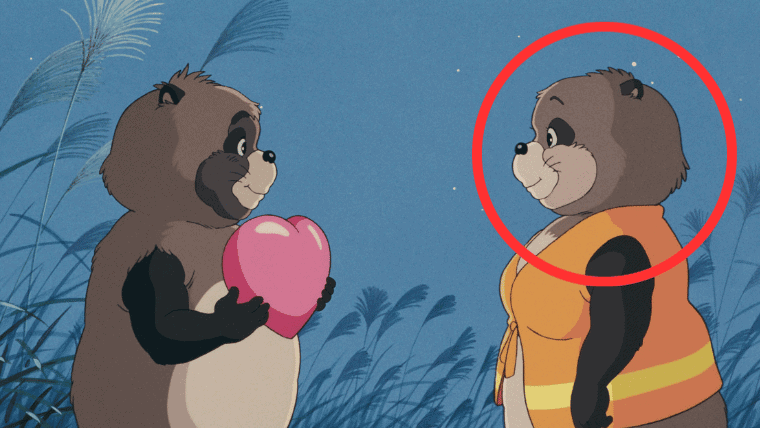
Okiyo’s Basic Information
Okiyo comes from Mimikiri Mountain. She does not have many scenes, but she carries out the Twin Star Operation alongside Shokichi, with some success.
Shokichi has doubts about his own plan, but Okiyo’s remark, “But it was such a wonderful idea!” persuades him to go ahead.
Gonta’s hardliners want to make humans recognize the situation through death; Shokichi’s plan is to do so through a miracle. Perhaps the absence of human deaths is what makes the idea “wonderful” to Okiyo.
All the Tama tanuki take part in Operation Specter. Okiyo is distinctive, though, as the only female tanuki clearly shown taking part in an individual operation.
Including Operation Specter, none of the operations involving female tanuki causes human deaths. I take this, too, as an expression of the film’s irony, or its critical spirit.
Tsurukame Oshō | Voiced by: Andre Stojka
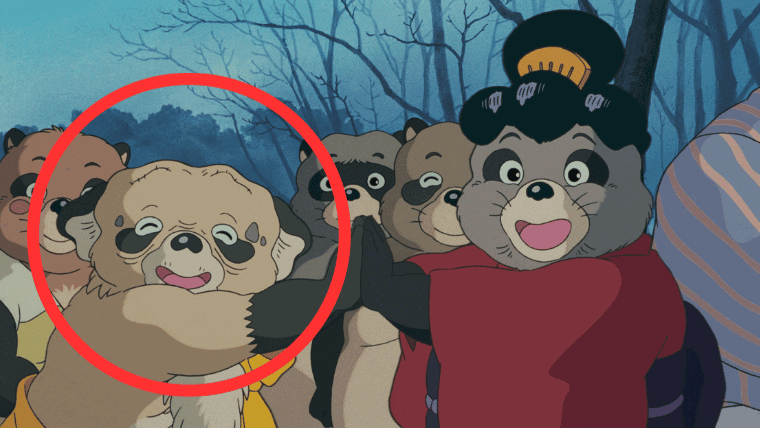
Tsurukame Oshō’s Basic Information
The 105-year-old priest lives at Manpuku-ji Temple, which becomes the tanuki’s base.
Despite being a tanuki, Tsurukame wears Buddhist robes and is addressed as “Oshō,” or priest. There is something odd about giving a nonhuman that title, but the arrival of the Shikoku elders helps explain it.
Tsurukame seems to have spent years serving as the priest of Manpuku-ji in human form.
Kincho VI lives quite matter-of-factly as a shrine priest in Shikoku; Tsurukame, in this reading, once did much the same. People would have come to Manpuku-ji to hear his sermons.
Perhaps he set out to trick humans by posing as the priest of an abandoned temple, only to end up doing the priest’s job year after year.
That possibility gives a particular resonance to his early remark:
“We tanuki are too nice. We get carried away. We provide too much service. That’s the root of our failure.”
He says that offering too much service leads to failure. What might “failure” mean to him? Perhaps he intended to trick humans as the priest of Manpuku-ji, but ended up actually living as one.
I imagine him passing that lesson on to younger tanuki while still searching for some ideal conclusion to their struggle.
Thinking about Tsurukame in this way brings another character to mind: Moro in Princess Mononoke.
It may sound odd to look at this dried-up tanuki priest and think of that ominous wolf god. But the connection makes sense to me. I have explored it in the article below:
Read the full analysis: Princess Mononoke as Miyazaki’s Pom Poko: A Personal Reading
Oroku | Voiced by: Tress MacNeille
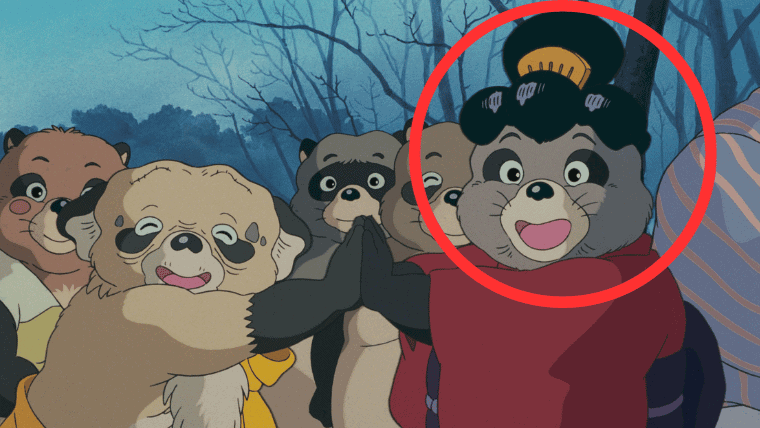
Oroku’s Basic Information
Known as “Oroku of the Fireballs,” she seems to live up to the name in temperament, though I do not know whether it comes from a talent for transforming into fireballs. By making the squabbling tanuki recognize the human threat, she gets the story moving.
She can be stern, but she is generally caring and keeps an eye on the younger tanuki.
Oroku also says something strange. When Gonta and the others have learned the basics of transformation and are about to carry out their first operation, she teaches them a “secret art.”
She explains that “even if the operation fails, your bodies will look not like dead tanuki, but like dead foxes, for five days.”
Remember what happens near the end: when the form Gonta and the others have taken is hit by a truck, the transformation breaks and they return to their tanuki bodies.
Their transformation, after all, wears off when they die.
An art that persists after death really would be a “secret art”: extraordinary even by the already extraordinary standards of transformation.
Personally, I think this “secret art” has a secret of its own: a cleverly concealed dirty joke. I have set out my reading in the article below:
Read the full analysis: Oroku’s Secret Art: A Dirty Joke and a Critique of Filmmaking
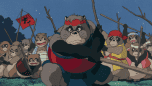
Gonta | Voiced by: Clancy Brown
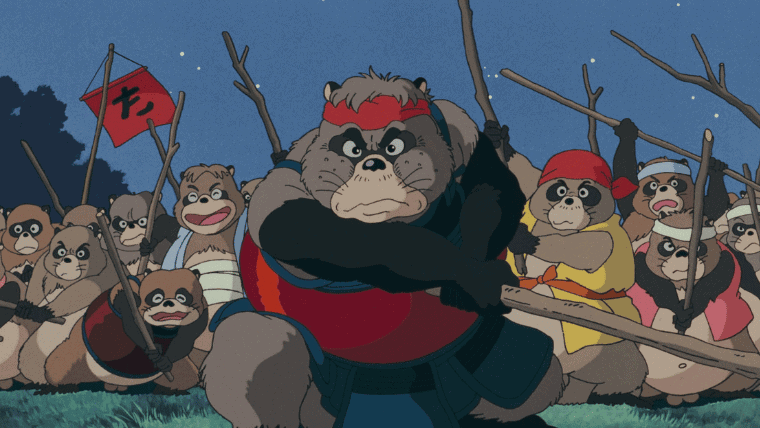
Gonta’s Basic Information
Gonta comes from Takagamori and maintains a hard line against humans throughout the film. Even he cannot resist hamburgers, donuts, and fried chicken, though, and decides to “leave a few humans alive.” He, too, is a carefree tanuki at heart.
An important feature of Pom Poko is that Gonta, the hardliner intent on driving us humans out, appears to act the most rationally.
I think that impression comes from the film’s documentary-like quality. This is not a sweet story that ends with the tanuki winning, or with humans and tanuki deciding to live hand in hand. It is a serious account of “and so the tanuki lost.”
We watch them lose, knowing that whatever they do, they will lose. That makes Gonta’s approach—reducing the number of humans by killing them—seem the most rational. They will lose whatever they do, after all.
Ultimately, Pom Poko is a story of defeat. After losing, we tend to think, “We lost because we did this,” or “We could have won if we had done that.” Often, though, the answer is simply that the situation was unwinnable. I have explored that thought below:
Read the full analysis: The Structure of Defeat and the Spirit of ‘Somehow, We Go On Living’
If this story had been told without tanuki, it would have been a truly difficult film to watch.
Seizaemon | Voiced by: J. K. Simmons
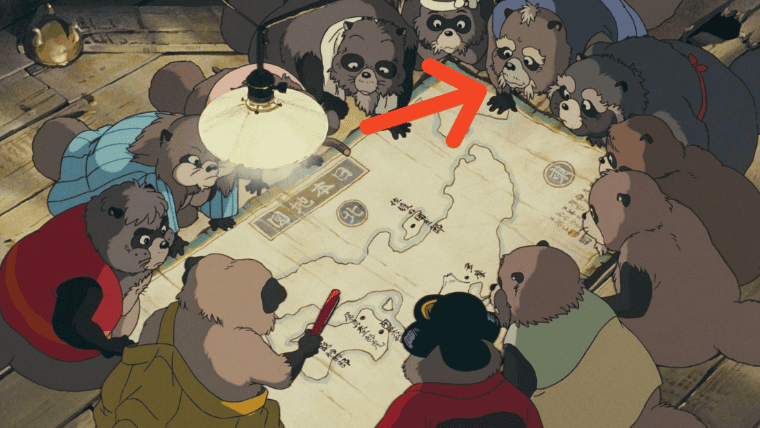
Seizaemon’s Basic Information
An elder from Suzugamori, Seizaemon commands the Blue Army in the opening territorial conflict.
Unlike his rival Gonta, leader of the Red Army, he takes no particularly hard line during the story. Like most of the tanuki, he is cautious—or opportunistic, depending on how you look at it.
He is among those who choose to live in human form at the end. He goes on to succeed in real estate, quite untroubled about developing the land himself.
Ponkichi | Voiced by: David Oliver Cohen
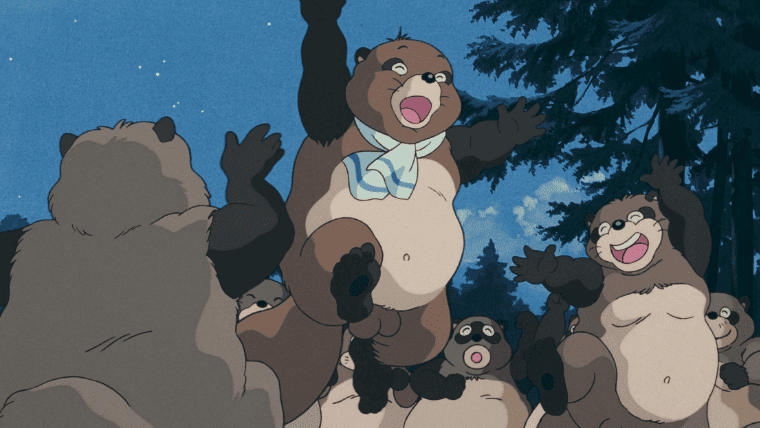
Ponkichi’s Basic Information
Shokichi’s childhood friend. While Shokichi diligently learns transformation, Ponkichi simply wants to live like a tanuki.
He remains an ordinary tanuki unable to transform. Apparently, he is not even diligent enough to join Yashimano Hage’s Dancing Prayer followers, so he does not sail away with them on the treasure ship in their collective suicide.
He reunites with Shokichi at the end. Perhaps his ability to remain himself, however much the world changes, is what “Somehow, we go on living” really means.
What place does Ponkichi have in the story? I have explored that question further through a comparison with Porco Rosso:
Read the full analysis: Ponkichi as the Hidden Protagonist, Seen Through Porco Rosso
Bunta | Voiced by: Kevin Michael Richardson
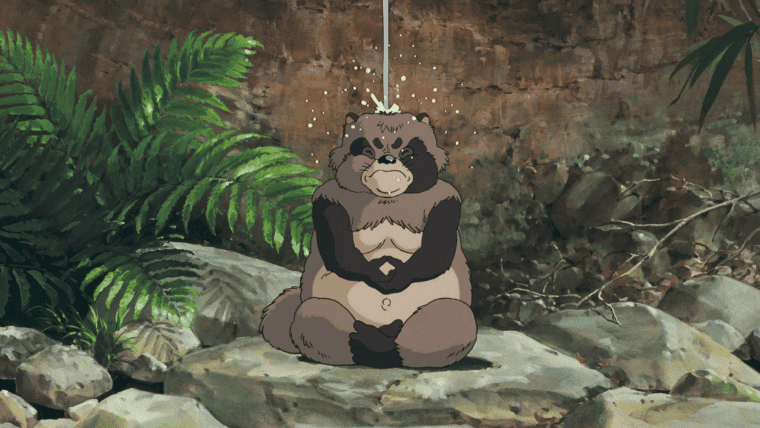
Bunta’s Basic Information
Bunta comes from Mizunomi-sawa. Early in the story, he leaves for Sado to ask Danzaburo-danuki to come to Tama.
He keeps searching diligently, unaware of the excitement over Operation Specter, the despair of its failure, or the confusion that follows. Given how utterly useless the Shikoku elders turn out to be, I would have liked him to meet Master Danzaburo. But he learns that Danzaburo died soon after the war.
Bunta returns to Tama carrying that news. Although the landscape he sees is the result of development we have watched throughout the film, it still brings us up short.
Far from his companions, he has worked so hard to fulfill his mission. I think his final task is to bring us viewers back to reality.
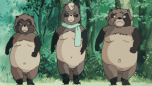
Tamasaburo | Voiced by: Wally Kurth
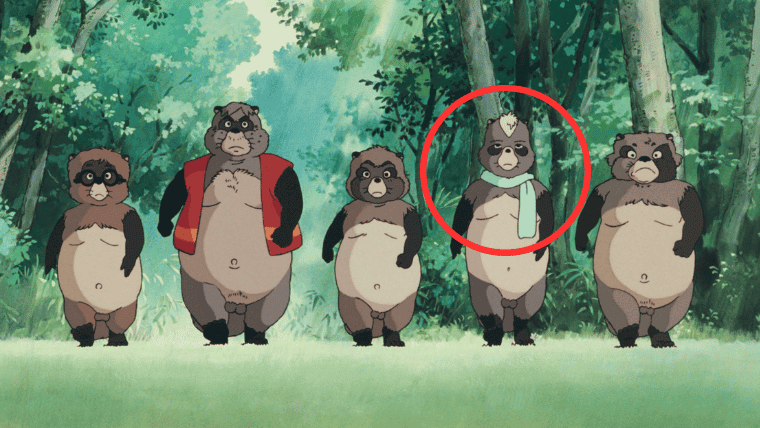
Tamasaburo’s Basic Information
A handsome tanuki from Onigamori, popular with the females. He wins a fiercely contested rock-paper-scissors tournament and is sent to recruit the Shikoku elders.
While Bunta searches for Danzaburo without even starting a family, Tamasaburo barely makes it to Shikoku, falls in love with Kincho’s daughter Koharu, and fathers three little tanuki.
Yet the three elders he risks his life to recruit bring only Operation Specter, a plan that proves utterly useless. Seeing those carefree old fellows in Shikoku, did Tamasaburo never worry whether they would be any help?
Perhaps not thinking that way is one of the nice things about tanuki. Even Tama’s handsome ladies’ man is, after all, a tanuki.
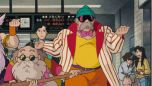
Kincho VI | Voiced by: Brian George
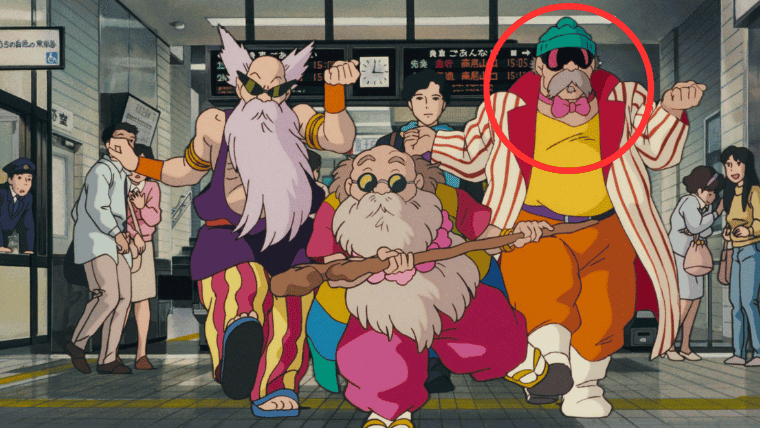
Kincho VI’s Basic Information
Kincho VI is the priest of the Kincho Daimyōjin shrine in Tokushima. Though a tanuki, he performs his duties in human form. In effect, he is already living the way the Tama tanuki eventually choose to live.
And yet, when the fox proposes “living as humans,” he is astonished.
What are we to make of that?
Perhaps Kincho VI—and the other Shikoku elders—does not think of himself as living as a human at all. He may think he has simply been fooling humans all this time.
The fox probably has a different life in mind: not the somewhat grand position of a shrine priest, but that of a salaryman on the morning train. The circumstances differ, but in substance they amount to the same thing.
That lack of self-awareness, that indifference, may be what makes Kincho VI so tanuki-like.
Yashimano Hage | Voiced by: Brian George
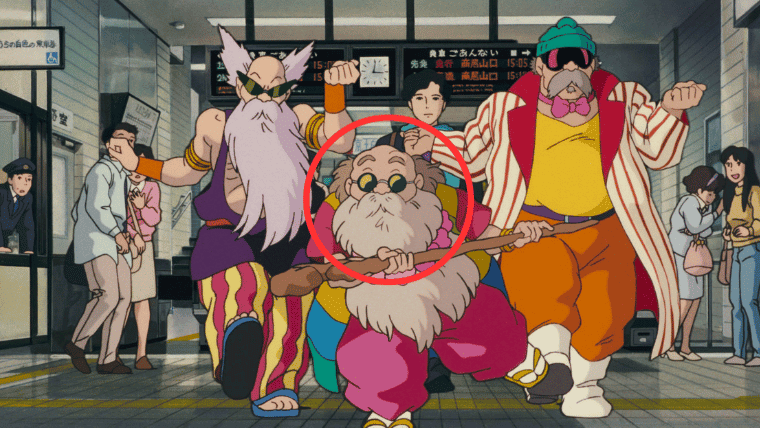
Yashimano Hage’s Basic Information
His real name is Joganji Tasaburo. He is said to have seen Nasu no Yoichi in his youth, and turns 999 during the story.
One of the three elders Tamasaburo risks his life to recruit, he sincerely believes Operation Specter will succeed.
Perhaps because of his age, or as a final service, he becomes the leader of a Dancing Prayer movement of the kind he may have seen in his youth. He offers spiritual support to the weakest tanuki, those unable to transform.
I wish he had used his cunning to guide them toward another course. Instead, they choose collective suicide: a final voyage on the treasure ship.
In a sense, he may be the most pessimistic tanuki in the film. Perhaps he no longer has the strength to embody “Somehow, we go on living.”
Inugami Gyobu | Voiced by: Jess Harnell
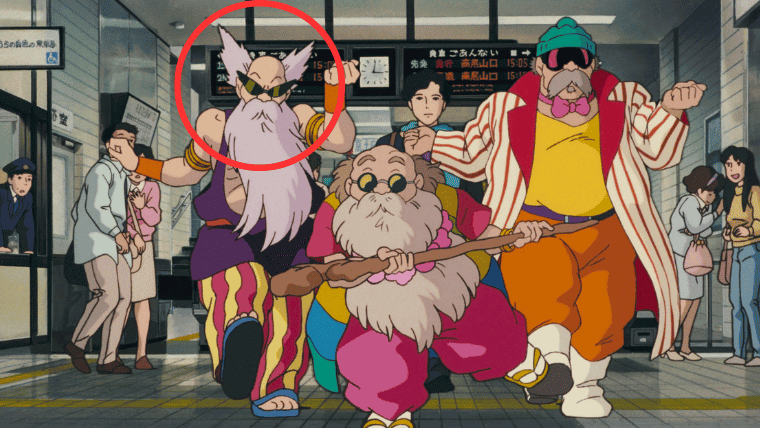
Inugami Gyobu’s Basic Information
The leader of Matsuyama’s 808 tanuki, aged 603.
Of the three Shikoku elders, he looks by far the most intimidating. An important clue to his character comes from Kincho’s eulogy: “Gyobu, having been caught up in a family dispute in the Matsuyama domain, regretted siding with the villains and bringing about his clan’s downfall…”
The dispute is the one recounted in the Matsuyama tale of the 808 tanuki. “Gyobu” was a name bestowed on him by the lord of Matsuyama Castle, whose retainers revered him. He regrets siding with the rebels when that household dispute broke out.
His regret, then, comes from his involvement with humans.
I think he comes to Tama this time wanting to act solely for the tanuki. The outcome, however, is disastrous.
In a sense, perhaps it is fortunate that he dies without seeing that outcome. He must have been thinking, “This time, surely!”
Ryutaro | Voiced by: John DiMaggio
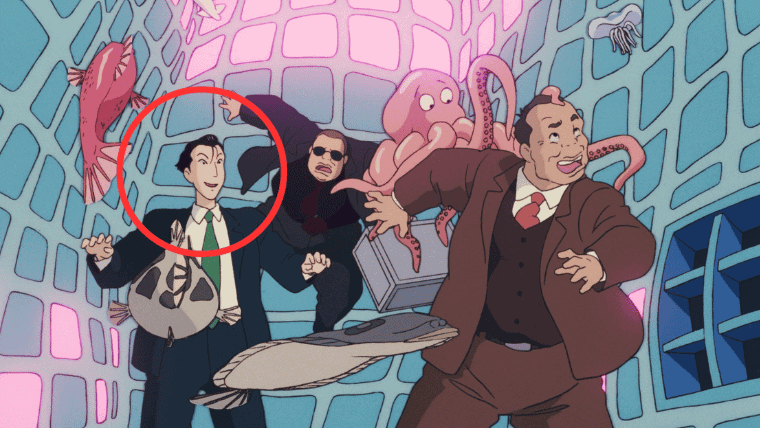
Ryutaro’s Basic Information
Ryutaro is a shape-shifting fox from Horinouchi in Tama. Just after Operation Specter fails, he approaches Kincho VI and offers the tanuki the option of living as humans.
He performs an essential role in the story, and I think the crucial detail is whom he approaches. Perhaps he recognizes that Kincho VI is already living the same way as the foxes, without realizing it.
The real question, though, is why he offers this option to tanuki, who are not his own kind.
Thinking about that opens up all sorts of painful possibilities. The one that seems most compelling to me is that the foxes of Tama staged an Operation Specter of their own.
Just as we failed to recognize the tanuki’s Operation Specter for what it was, perhaps we missed the foxes’ version, too. The tanuki themselves may not have noticed it either: the two groups were simply too different.
What might Ryutaro feel as he makes his offer? Perhaps it is advice to creatures who, though not his own species, share his predicament. But given the difficulty of living as a human, perhaps it is also a way of saying, “Pay the price for not joining our fight!”
At the end, Ponkichi speaks for those who could never have staged an Operation Specter. I still cannot help thinking that the foxes tried one, too. What do you think?
Other Characters
- Sasuke | Voiced by: Marc Donato
- Otama (Gonta’s wife) | Voiced by: Russi Taylor
- Koharu (Kincho VI’s daughter) | Voiced by: Olivia d’Abo
- Newscaster | Voiced by: Mark Moseley
- Reporter | Voiced by: Mark Moseley
Your Take
What is your view? Choose the answer that comes closest to your own response.
Reader poll
The images used in this article are from the “Studio Ghibli Still Images” collection.
Can you name the movie before the scene comes into focus?
Put your visual memory to the test with a blurred Studio Ghibli scene.


Reader Comments
Have a thought or interpretation? Leave a comment