When the original Godzilla stomped into theaters in 1954, it was far more than a simple monster movie; it was a cinematic primal scream that struck a deeply traumatic chord in post-war Japanese society.
Godzilla, an ancient beast whose peaceful slumber was shattered by hydrogen bomb testing, made landfall in Tokyo as a towering, radioactive metaphor for the Daigo Fukuryū Maru (Lucky Dragon No. 5) tragedy. He was the literal embodiment of the “sins of humanity”—a walking, fire-breathing manifestation of the horrors of war and the paralyzing fear of nuclear annihilation.
While I hold an absolute reverence for the dread and gravitas of this first Godzilla film, looking at the overarching history of the franchise reveals a fascinating, almost bizarre evolution. As the series progressed, this apocalyptic king of terror gradually metamorphosed into a “champion of justice,” a superhero cheered on by children in packed movie theaters.
Today, we are going to map out the exact trajectory of this staggering transformation. How exactly did the god of destruction become a hero? Let’s dive into all 15 films of the classic “Shōwa Godzilla Series,” from the grim 1954 Godzilla to the bittersweet 1975 Terror of Mechagodzilla. (Note: The dark 1984 reboot, The Return of Godzilla, effectively resets the timeline and is not typically classified within the Shōwa era narrative).
*This is a translated version. The original (Japanese) is available here.
-
From Nuclear Nightmare to Kaiju Wrestler
The 1954 original established Godzilla as the ultimate symbol of humanity’s sins, born from nuclear tests and acting as an entity of absolute terror. However, the introduction of a rival monster, Anguirus, in the direct sequel, Godzilla Raids Again, irreversibly shifted the franchise toward an entertainment-focused “monster vs. monster” format, marking the crucial first step toward heroism. -
The Defender of Earth: A Common Enemy Emerges
Initially an existential threat to mankind, Godzilla’s role began to soften when he confronted Mothra, a creature capable of communication and empathy. The subsequent arrival of an apocalyptic “common enemy”—the space dragon King Ghidorah—forced Godzilla to join forces with other Earth monsters, firmly establishing his archetype as a planetary defender. -
The “Children’s Hero” and the Decline of the Shōwa Era
Godzilla officially cemented his superhero status in Godzilla vs. Hedorah by saving humanity from a toxic pollution monster. By Godzilla vs. Gigan, the film’s theme song proudly hailed him as “our Godzilla.” However, once he was fully sanitized as a hero, his narrative role became increasingly flat, reducing him to a mere plot device in the later films.
On this pageContents
Phase 1: The Symbol of Fear and Destruction
Godzilla (1954): The Absolute Terror Born from the Sins of Humanity
In the groundbreaking film that started it all, Godzilla is portrayed as an object of pure, unadulterated terror. The foundational premise—an ancient, dormant creature grotesquely mutated by hydrogen bomb testing—was directly tethered to the trauma of the Daigo Fukuryū Maru incident, a horrifying reality that was still fresh in the minds of the 1954 audience.
The imagery of radioactive black rain falling from the sky, and the harrowing sight of Tokyo being systematically incinerated, vividly resurrected the nightmares of the Pacific War firebombings. Godzilla was the personification of uncontrollable, apocalyptic violence that humanity had arrogantly unleashed upon itself. He showed absolutely no hesitation, malice, or sentimentality in his destruction; he was simply existing as a force of nature. His rampage was as merciless as a typhoon, yet it registered deeply as a divine “punishment” for humanity’s nuclear hubris.
The thematic depth of this masterpiece lies in the devastating irony that the only means to defeat Godzilla also relies entirely on the “sins of humanity.”
The “Oxygen Destroyer,” engineered by the brilliant Dr. Serizawa, is the only weapon capable of vanquishing the beast. Yet, it is a demonic chemical device that could potentially rival or surpass the horrors of the hydrogen bomb. Terrified that his invention will spark a new global arms race, the tragic doctor chooses to sever his own lifeline, taking the secrets of the weapon to a watery grave alongside the monster.
The film paints a grim portrait of the light and shadow of scientific progress, suggesting that mankind must often commit further atrocities to atone for past sins. The original Godzilla operates as a heavy, mournful social drama, sharply indicting the fundamental contradictions and guilt borne by humanity.
Of course, in this grim 1954 masterpiece, there is not a single, microscopic trace of “Godzilla as a hero.”
Read our full analysis of the 1954 masterpiece:
Godzilla (1954): The “Sin” and “Destruction” Symbolized by Dr. Yamane and Dr. Serizawa
Discover the psychological tragedy of the film’s true hero:
Dr. Serizawa’s Tragic Love and His Double Suicide with the Monster
Godzilla Raids Again (1955): The First Opponent and a Shift in Narrative Structure
Rushed into theaters just six months after the staggering box office success of its predecessor, this direct sequel arguably set the inescapable course for the entire franchise’s future direction.
The most monumental change was the introduction of a second monster: “Anguirus.” This singular creative decision violently shifted the narrative structure from a somber “Godzilla vs. Humanity” survival horror to an action-centric “Godzilla vs. Anguirus” brawl. In fact, until the franchise was rebooted in 1984 with The Return of Godzilla, no other film would ever feature Godzilla flying solo again.
By giving Godzilla a peer to fight, the destruction of human cities evolved. It was no longer a “one-sided, apocalyptic rampage by Godzilla”; rather, the collapsing buildings became the collateral damage and “aftermath of a fierce, spectacular battle between giant monsters.” This was the dawn of the “kaiju wrestling” subgenre that would later heavily influence massive pop-culture staples like Ultraman. Because humanity could do nothing but flee while the titans clashed, the sheer, existential threat of Godzilla was heavily diluted and relativized.
However, at this specific point in the timeline, there was still no hint of Godzilla becoming a hero. Both Godzilla and Anguirus were framed as “children of the atomic bomb,” ancient horrors violently awakened by nuclear testing, and they remained equal, terrifying threats to mankind. The story’s conclusion offered no permanent salvation, merely a temporary, desperate solution: burying Godzilla alive beneath an avalanche of Arctic ice.
Nevertheless, establishing the format of “another monster opposing Godzilla” was the crucial first wedge that would eventually allow Godzilla to transition into a heroic figure.
Phase 2: The Path to Heroism
King Kong vs. Godzilla (1962): A Symbol of the Shift to Pop Entertainment
Released after a massive seven-year hiatus, this was the franchise’s first foray into vibrant color. The very concept of pitting the American king of monsters against Japan’s radioactive titan clearly signaled a permanent pivot away from heavy social commentary—like the “scars of war” and the “threat of nuclear weapons”—toward pure, unadulterated mass entertainment.
The King Kong featured in this film is a giant ape worshipped on a South Seas island, completely disconnected from nuclear anxiety. By introducing a “monster not born of atomic power,” the film relativized the strict association between “kaiju” and the “nuclear threat.” It established that giant monsters could simply exist for the sake of spectacle, independent of geopolitical horror. In that sense, 1962 marks a massive, irreversible turning point for the Shōwa Godzilla series.
While the imagery of “Godzilla and the nucleus” is visually maintained—evident in the eerie blue Cherenkov radiation glowing as he bursts from an Arctic iceberg—the narrative’s main focus is firmly fixed on the professional wrestling-style brawl between the two titans. The suffocating dread of 1954 is entirely absent.
Furthermore, the human cast, led by Tadao Takashima’s highly comical performance, injects a lighthearted, satirical tone into the film. Godzilla is no longer a walking indictment of humanity’s sins; he is being molded into a marquee character designed to drive high-energy entertainment.
Crucially, from this film onward, Godzilla is rarely explicitly killed. Instead, the films conclude in an ambiguous draw, usually with him tumbling into the ocean and “returning to the sea.” While this was undeniably a commercial tactic to keep the cash cow alive for sequels, it subtly transformed Godzilla from an “absolute evil that must be destroyed” into an unstoppable, “perpetual natural phenomenon” that humanity simply learns to coexist with.
Mothra vs. Godzilla (1964) & Ghidorah, the Three-Headed Monster (1964): The Emergence of Empathy and a Common Enemy
These two 1964 films are the most critical chapters in the history of Godzilla’s heroization, driven by two massive narrative shifts:
- The Budding of Personality: In Mothra vs. Godzilla, Godzilla faces off against a “monster capable of communicating with humans” for the very first time. Although it is mediated through the twin Shobijin fairies of Infant Island, Mothra possesses a clear, empathetic “will.” Mothra’s motivation—sacrificing herself to protect her unhatched egg—stands in stark, beautiful contrast to Godzilla, who up to this point acted solely on blind, destructive instinct. Injecting a monster with “personality” and maternal instinct laid the psychological groundwork for Godzilla himself to eventually display complex emotions.
- The Arrival of the Ultimate Common Enemy: In the direct follow-up, Ghidorah, the Three-Headed Monster, a literal planet-killer descends from the cosmos: “King Ghidorah.” This concept of an “extraterrestrial invader” was entirely groundbreaking for the franchise. King Ghidorah represents an apocalyptic threat not just to humanity, but to the Earth’s native monsters as well. In a truly astonishing (and highly comical) scene, Mothra attempts to negotiate a truce between Godzilla and Rodan. Ultimately, the Earth monsters—who had spent the previous films trying to kill each other—forge an alliance to repel the space dragon. This marked a staggering 180-degree shift in Godzilla’s positioning.
Godzilla, once the ultimate menace to humanity, effectively sides with the defenders of Earth to repel a superior “external threat.” Here, the definitive prototype of Godzilla the Superhero is cast.
While he hadn’t yet become a cuddly ally to mankind at this stage, it was an undeniable, massive leap toward transforming him into a multifaceted anti-hero rather than a simple god of destruction.
Phase 3: The Search for and Establishment of Heroism
Invasion of Astro-Monster (1965): A Cosmic Drama and a Manipulated Godzilla
This entry is wildly unique in how it positions the King of the Monsters. The scope expands into the cosmos, introducing Planet X, a mysterious satellite hidden behind Jupiter. Humanity has suddenly achieved a level of retro-futuristic technology that permits casual space travel.
At the desperate request of the alien Xiliens, who claim to be terrorized by King Ghidorah, humanity agrees to “loan out” Godzilla and Rodan to fight on their behalf. However, it is a massive bait-and-switch; the Xiliens take mind-control of the monsters to launch a devastating invasion of Earth.
In this film, Godzilla is completely stripped of his agency. He is reduced to a “weapon of mass destruction” or a “victim” conveniently manipulated by alien overlords. The human (and alien) espionage drama takes absolute center stage, leaving Godzilla with surprisingly minimal screen time.
However, this narrative detour was vital. It successfully re-contextualized Godzilla’s existence from a terrestrial menace to a cosmic heavyweight. It served as the foundational blueprint for his future role as the “guardian of Earth fighting against alien invaders,” a trope the franchise would recycle endlessly.
Furthermore, the infamous moment where Godzilla performs the comical “Shē” pose (a popular Japanese pop-culture gag of the 1960s) after achieving victory on Planet X is highly symbolic. It cemented his rapid transition into an anthropomorphized, humanized character. Personally, I absolutely love the sheer absurdity of the scene, even if it completely betrays the terrifying nature of the 1954 original.
If we exclude the untouchable 1954 original, Invasion of Astro-Monster is arguably my favorite entry in the entire Shōwa series.
By modern standards, the retro-campy design of the “Xiliens” (with their visors and antenna) is hilarious, bordering on avant-garde cinema. You have to mentally prepare yourself for the camp before hitting play.
Yet, the script is surprisingly sharp. The Xiliens’ strategy to weaponize Earth’s own monsters to conquer the planet while minimizing alien casualties is brilliant. It naturally forces sci-fi espionage and giant monsters to coexist in the same plot.
I also appreciate how the tragic romance between the human astronaut Glenn and the Xilien spy Namikawa perfectly highlights the fatal flaw of the invaders: they rely entirely on electronic calculators (essentially AI) to dictate their lives, meaning they are ultimately defeated by the unpredictable power of human emotion. (In short, love conquers all!).
Ebirah, Horror of the Deep (1966): Striking Down Evil
This film, along with its successor Son of Godzilla, employs a clever trick: they completely separate Godzilla from human civilization by confining the destructive action to remote, unpopulated islands. This choice—likely driven by budget cuts—unintentionally fast-tracked Godzilla’s heroization because he was no longer seen trampling innocent civilians.
In Ebirah, Horror of the Deep, Godzilla’s primary foe isn’t just the giant crustacean Ebirah. The true antagonist is “Red Bamboo,” a heavily armed, fascist secret organization secretly manufacturing nuclear weapons on the island. It is a stunning thematic inversion: “nuclear power,” the very atrocity that birthed Godzilla in 1954, is now depicted as a “symbol of evil” that Godzilla actively seeks to crush.
By punishing the “humans who recklessly misuse nuclear power,” Godzilla inadvertently becomes a savior for the enslaved islanders and the human protagonists. He is no longer a radioactive curse upon mankind, but a natural enemy to specific evil-doers and a reliable ally to the innocent. The vigilante dynamic was officially locked in.
Son of Godzilla (1967): Fatherhood and a New Human Sin
Set against the backdrop of a “global food crisis,” humanity attempts a dangerous “weather control experiment,” establishing a brand new “human sin” for the narrative. The catastrophic failure of this experiment mutates the island’s wildlife, unleashing giant, predatory mantises (Kamacuras) and a massive spider (Kumonga). The franchise’s thematic target shifts slightly away from the specific dread of nuclear fallout toward a broader, environmental critique of human arrogance.
However, the defining feature of this film is the introduction of Godzilla’s adoptive son, “Minilla.” Suddenly, the god of destruction exhibits a deeply relatable, paternal side, fiercely protecting the clumsy infant and teaching him how to harness his atomic breath.
Through this parental dynamic, Godzilla is no longer just a territorial combat beast; he is a sentient being capable of profound human emotions like love, patience, and protectiveness. This instantly made him a highly empathetic character, cementing his status as an idol for the children in the audience.
As he fights to protect his child amidst a chaotic, human-made ecological disaster, Godzilla’s actions inevitably end up saving the human scientists as well, drastically reinforcing his image as a noble guardian.
Destroy All Monsters (1968): The Avengers of Kaiju
Designed to be the grand finale of the Shōwa series, this epic is set in the “distant future” of the late 20th century. Human science has triumphed, and the world’s monsters—including Godzilla—are peacefully contained and studied on the Ogasawara Islands, dubbed “Monsterland.” Godzilla is explicitly framed as an entity that is no longer a threat to a highly advanced human civilization.
The plot erupts when the Kilaaks, a race of alien conquerors, seize mind-control of the monsters and unleash them upon the capitals of the world. Humanity eventually severs the mind-control, and in a glorious climax, the united Earth monsters launch a massive counter-offensive against the Kilaaks’ ultimate weapon: King Ghidorah.
By the time the credits roll, Godzilla is officially cemented as the heavy-hitting leader of the “league of heroes protecting the Earth.” The cinematic structure—humans and monsters fighting side-by-side in perfect harmony to repel space invaders—is so entirely divorced from the bleak, radioactive horror of 1954 that finding the connective tissue is nearly impossible.
Phase 4: The Completion and Decline of the Superhero Era
A Key Psychological Transition: All Monsters Attack (1969)
While there is a massive tonal leap between Destroy All Monsters and the trippy Godzilla vs. Hedorah, this highly unconventional, stock-footage-heavy film bridges the gap. Set in a “real-world” Japan where Godzilla only exists as a movie character, the film takes place entirely within the dreams of Ichirō, a latchkey kid suffering from severe bullying.
In his vivid dreams, Godzilla is the ultimate, idealized superhero, acting as a surrogate father figure who teaches Ichirō how to stand up for himself. Minilla even appears as a talking, sympathetic “friend” who shares Ichirō’s anxieties. By isolating Godzilla within the pure fantasy of a child’s imagination, the terrifying, negative stigma of “urban destruction” is completely scrubbed clean.
By officially framing Godzilla as an unblemished “object of admiration” and a “champion of justice” in the mind of a child, Toho laid the psychological groundwork to portray him as a flawless, real-world superhero in the ensuing decade.
Godzilla vs. Hedorah (1971): The Ultimate Superhero Moment
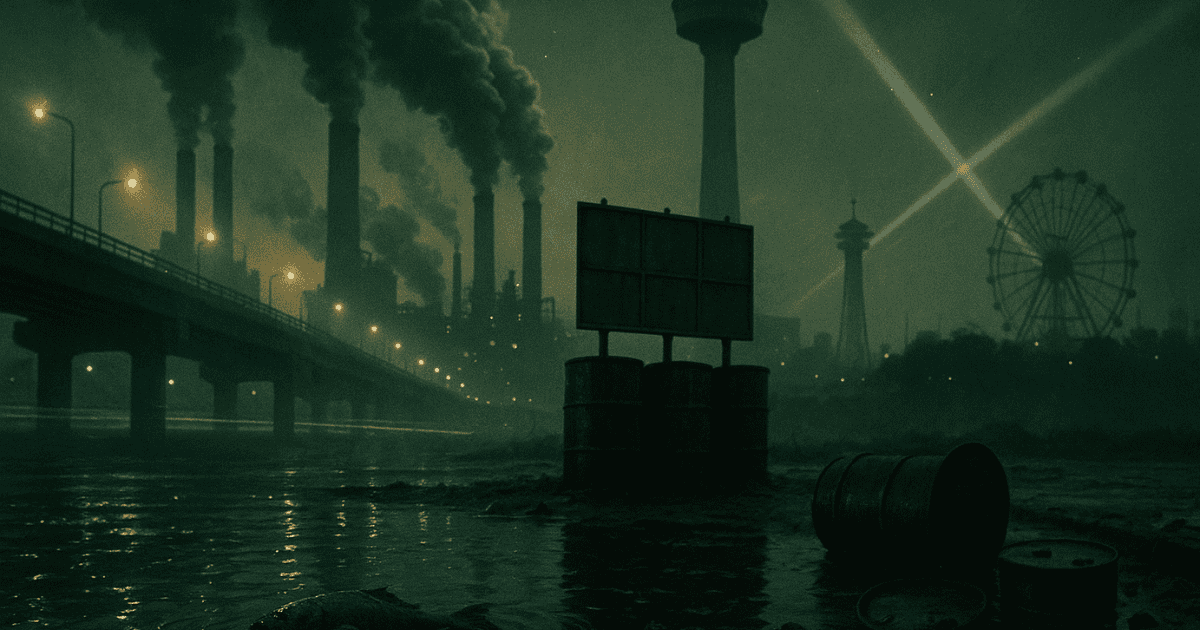
This is the film where Godzilla officially operates as a full-blown superhero with a moral compass. The antagonist, Hedorah (the Smog Monster), is a grotesque, toxic abomination born from microscopic alien spores that fed on Earth’s rampant industrial pollution. Hedorah is the literal, suffocating byproduct of Japan’s rapid economic miracle—a massive, sludgy monument to “human sin.”
Logically, Godzilla has absolutely no obligation to clean up humanity’s toxic mess. Yet, he dramatically rises from the ocean to engage in a brutal, life-or-death crusade against Hedorah on behalf of mankind. His entrance is framed with almost religious reverence; he appears as a wrathful “guardian deity,” summoned to answer the desperate prayers of a poisoned populace.
Despite taking place on the Japanese mainland, Godzilla inflicts virtually zero collateral damage on the cities. Instead, his relentless, bloody pursuit of Hedorah paints him as a flawless enforcer of ecological justice. By violently purging humanity’s toxic follies, Godzilla’s transition into a heroic savior was definitively complete.
Godzilla vs. Gigan (1972): A Hero in Name and Substance
If the previous film made him a de facto hero, Godzilla vs. Gigan etched it in stone. The plot sees Godzilla and his trusty sidekick Anguirus teaming up to combat the cyborg assassin Gigan and King Ghidorah, who are deployed by alien cockroaches planning to conquer Earth under the guise of a children’s theme park.
Two wildly campy elements solidify his new status. First, the film features a sequence where Godzilla and Anguirus literally converse with each other using comic-book “speech bubbles.” This is the absolute zenith of anthropomorphization, proving Godzilla was now written entirely to cater to the imagination of a seven-year-old.
Second, the film concludes with the upbeat, incredibly catchy “Godzilla March.” The lyrics proudly demand, “Go, go, our Godzilla,” acting as an official, studio-sanctioned declaration that the King of the Monsters was now a beloved “hero for children.” In both name and substance, the terrifying beast of 1954 was dead and buried.
The Decline: From Godzilla vs. Megalon (1973) to Terror of Mechagodzilla (1975)
Having reached the absolute peak of superhero sanitization, Godzilla entered a period of creative stagnation where his very cinematic purpose felt hollow.
- Godzilla vs. Megalon (1973): Godzilla is paired with the colorful, Ultraman-esque robot “Jet Jaguar.” Tragically, Godzilla is relegated to the role of a secondary sidekick who simply shows up in the third act to bail the robot out, severely diminishing his terrifying majesty.
- Godzilla vs. Mechagodzilla (1974): An alien-built, titanium doppelganger—Mechagodzilla—arrives to frame the true king. The real Godzilla must team up with the ancient Okinawan guardian deity, King Caesar, to defeat the machine. However, Godzilla is brutally outmatched in their first encounter, and the aura of his absolute invincibility shatters. The narrative focuses heavily on King Caesar, leaving Godzilla as just another soldier in a joint task force.
- Terror of Mechagodzilla (1975): A darker, more melancholic revenge match. The emotional core of the film revolves entirely around the tragic, Shakespearean drama of the mad scientist Dr. Mafune and his cyborg daughter, Katsura. Godzilla’s presence feels obligatory; he is reduced to a blunt instrument required to smash the aliens’ shiny new toys. While Katsura’s tragic cyborg fate briefly resurrects the franchise’s original themes of “the sins of science,” it fails to connect to Godzilla himself, leaving the monster feeling entirely disconnected from the emotional weight of his own movie.
Because he was so thoroughly perfected as a stainless hero, Godzilla devolved into a convenient “plot device” required to punch the bad guy in the final reel, completely losing the overwhelming, awe-inspiring charisma of the 1954 original. The quiet, box-office whimper that ended the Shōwa series was perhaps the inevitable fate of a monster forced to wear a superhero cape.
Conclusion: The Eternal Cycle of the King
Born in the radioactive ashes of 1954 as the ultimate symbol of “human sin,” Godzilla underwent an unprecedented cinematic transformation. It began the moment he gained a “rival” in Godzilla Raids Again. Over the decades, his targets shifted from mankind’s cities to alien invaders and toxic sludge monsters. Throughout this journey, he gained a complex “personality” and willingly threw himself into the meat grinder to protect planet Earth.
His empathetic interactions with Mothra and his alliances against the apocalyptic King Ghidorah proved he was more than a mindless god of destruction. By the time Godzilla vs. Hedorah rolled around, he had cemented his identity as an ecological superhero. Finally, the blaring trumpets of the “Godzilla March” in Godzilla vs. Gigan officially crowned him “our Godzilla,” completing the heroic transformation.
The Shōwa Godzilla Series is a fascinating time capsule of a monster desperately rewriting its own mythology from “nuclear terror” to “planetary justice,” sensitively reflecting the shifting anxieties and commercial demands of mid-century Japan. This heroic trajectory crashed with Terror of Mechagodzilla in 1975.
Yet, like a true force of nature, Godzilla resurrected as the terrifying “king of terror” in the 1984 reboot, The Return of Godzilla. Fascinatingly, he would follow an almost identical trajectory throughout the acclaimed “Heisei Godzilla Series” (starting as a villain and slowly morphing into a tragic anti-hero, though never reaching the absurd camp of the 1970s).
This cyclical evolution has even infected Hollywood. While Gareth Edwards’ incredible 2014 GODZILLA perfectly captured the awe-inspiring, “destructive god” aesthetic, by the time we reach the neon-drenched 2024 blockbuster Godzilla x Kong: The New Empire, Godzilla is teaming up with a giant ape to suplex common enemies, actively leaning into a defined personality and highly comical, heroic action sequences.
When you look at this recurring historical pattern, the “Millennium Series” (1999-2004) stands out as a fascinating, chaotic outlier in the franchise—but we will save that deep dive for another day.
For purists seeking the suffocating dread of the 1954 original, modern masterpieces like Shin Godzilla and the Academy Award-winning Godzilla Minus One stand as the true, terrifying successors to the original legacy.
Personally, the 1954 Godzilla remains my undisputed favorite. In many ways, I don’t feel the need for any other Godzilla film to exist. And yet, I have eagerly consumed (and genuinely loved) every single entry in the franchise, and a part of my heart still races with excitement whenever a new film is announced.
Perhaps the true value of these constant sequels and shifting tones is simply keeping the icon alive. By continually reinventing him—even as a colorful superhero—the franchise ensures that the world will never, ever forget the chilling, monochrome masterpiece that is the original 1954 Godzilla.
This has been my personal journey mapping out the chaotic, glorious “transformation of the Shōwa Godzilla.” Opinions on these classic films are as varied as the kaiju themselves, but I firmly believe this traces the definitive psychological path the monster took to become a hero.
While I will always champion the terrifying brilliance of the 1954 original, I genuinely hold a deep affection for every campy, rubber-suited brawl in the Shōwa era (there isn’t a single film I actively dislike).
If you’re a fellow G-Fan, please let me know your “favorite Shōwa Godzilla film” in the comments or polls below!
Appendix: The Complete Shōwa Godzilla Series (Release Dates, Leads, and Directors)
*All links direct to comprehensive Wikipedia articles
| Film Title | Release Date | Lead Actor | Director |
|---|---|---|---|
| Godzilla | November 3, 1954 | Akira Takarada | Ishirō Honda |
| Godzilla Raids Again | April 24, 1955 | Hiroshi Koizumi | Motoyoshi Oda |
| King Kong vs. Godzilla | August 11, 1962 | Tadao Takashima | Ishirō Honda |
| Mothra vs. Godzilla | April 29, 1964 | Akira Takarada | Ishirō Honda |
| Ghidorah, the Three-Headed Monster | December 20, 1964 | Yosuke Natsuki | Ishirō Honda |
| Invasion of Astro-Monster | December 19, 1965 | Akira Takarada | Ishirō Honda |
| Ebirah, Horror of the Deep | December 17, 1966 | Akira Takarada | Jun Fukuda |
| Son of Godzilla | December 16, 1967 | Tadao Takashima | Jun Fukuda |
| Destroy All Monsters | August 1, 1968 | Akira Kubo | Ishirō Honda |
| All Monsters Attack | December 20, 1969 | Kenji Sahara[1] | Ishirō Honda |
| Godzilla vs. Hedorah | July 24, 1971 | Akira Yamauchi, in Japanese | Yoshimitsu Banno |
| Godzilla vs. Gigan | March 12, 1972 | Hiroshi Ishikawa, in Japanese | Jun Fukuda |
| Godzilla vs. Megalon | March 17, 1973 | Katsuhiko Sasaki | Jun Fukuda |
| Godzilla vs. Mechagodzilla | March 21, 1974 | Masaaki Daimon | Jun Fukuda |
| Terror of Mechagodzilla | March 15, 1975 | Katsuhiko Sasaki | Ishirō Honda |
- [1]
- Kenji Sahara is listed based on the order in the opening credits, but he played the father of the bullied boy, Ichirō Miki. Ichirō was played by Tomonori Yazaki.


Reader Comments