Godzilla, directed by Ishirō Honda and released in Japan on November 3, 1954, is the first film in the Godzilla series. Here, I will call it the 1954 original.
It was already an old film when I was a child, and I remember avoiding it simply because it was in black and white. It also omits details that a modern film might not get away with—for instance, how Godzilla’s location is established at the end. Unless we allow for its age, we could spend the whole film picking at those gaps.
Even so, the original Godzilla retains a special brilliance among its many successors. I have no hesitation in calling it a masterpiece.
Here, I will revisit the story and consider what makes it so compelling.
My analysis centers on Dr. Yamane and Dr. Serizawa. I think these two doctors bring the original Godzilla to a level its later films have never reached.
First, let’s revisit the story of the original Godzilla.
*This is a translated version. The original (Japanese) is available here.
- The Two Doctors and the Film’s Layers
I read Yamane as representing humanity’s guilt over Godzilla’s existence, and Serizawa, with his eyepatch, as representing the wounds of war and the anger and destruction they can produce. Together, they give the story depth. - Monster and Human as Parallel Figures
Godzilla and Serizawa can both be seen as tragic products of human actions: nuclear testing and war. The two figures express the suffering people carry within them. - Serizawa’s Sacrifice and His Anger
Serizawa dies with Godzilla, taking the Oxygen Destroyer’s secret—and, in my reading, his own anger—into the sea. That act suggests a call to quiet anger, yet also makes us remember the wounds and anger we must not forget. - More Than a Monster Film
For me, the original’s power lies in how Godzilla and the two doctors bring humanity’s guilt and the wounds of war into view beneath the monster story.
On this pageContents
Godzilla (1954) Full Synopsis (Spoilers Ahead)
A Quick Summary, Character Map, and Explanation
-
A Mysterious Monster Appears
Ships disappear in unexplained disasters. The investigation points to Godzilla, an ancient creature disturbed by hydrogen bomb tests. -
Tokyo Burns
Godzilla breaks through the defenses and reaches Tokyo. Its radioactive breath burns the city, throwing Japan into terror. -
A Terrible Invention
Serizawa has secretly developed the Oxygen Destroyer, which destroys oxygen in water and kills living creatures. -
The Doctor’s Conflict and Decision
Fearful that the invention will become a weapon, Serizawa refuses to use it. The suffering around him moves him to agree to use it once against Godzilla. -
Sacrifice and a Warning
Serizawa takes his own life with Godzilla so that the invention’s secret will not survive him. The monster is defeated, but the film warns that another may appear if nuclear testing continues.
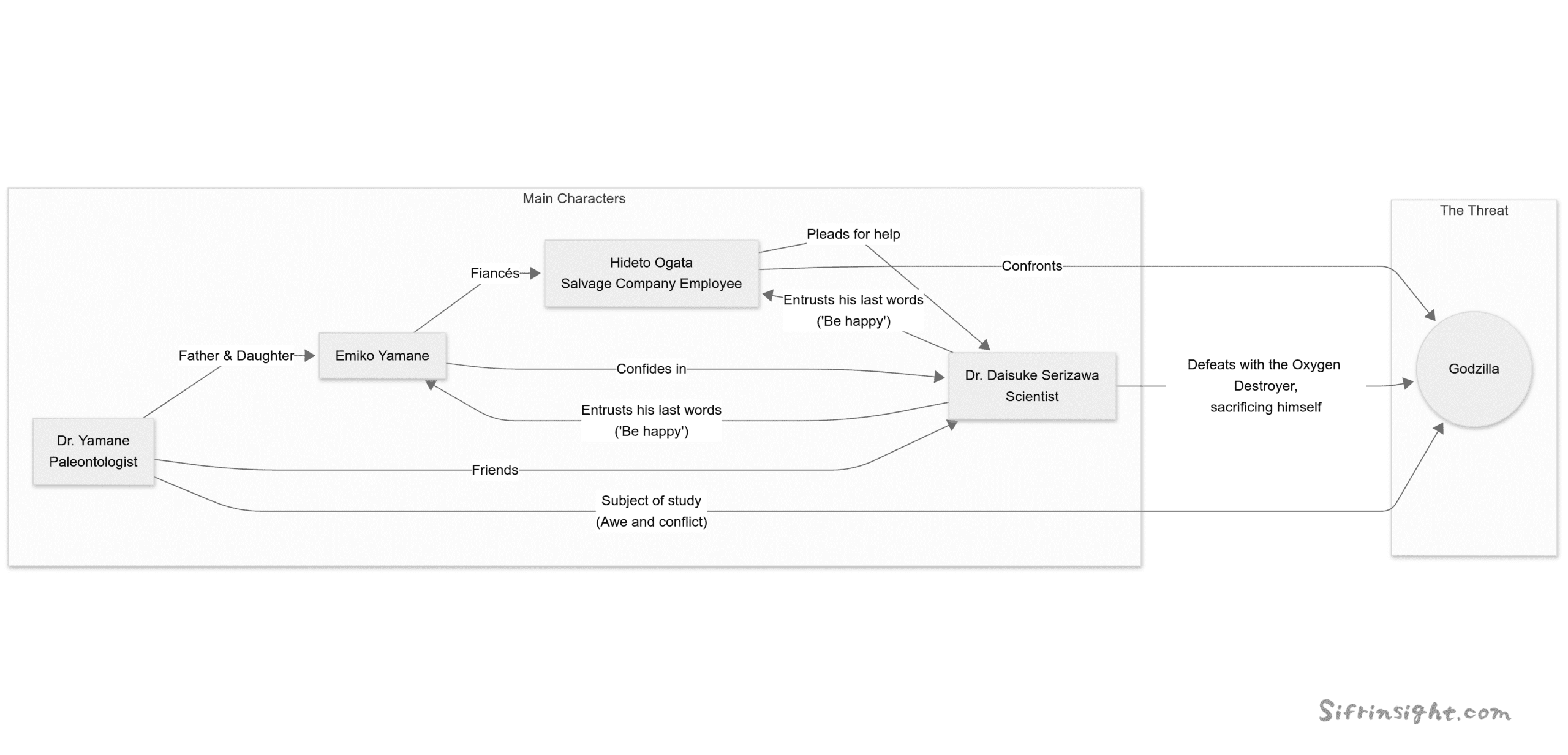
Character Map
Story Explanation: The Scars of 1954
In the original Godzilla, the monster is a creature altered by hydrogen bomb tests—a tragic life born from human wrongdoing.
The film appeared less than ten years after the Pacific War ended. That timing alone is remarkable. Yet the Tokyo on screen seems far removed from war damage, and people are enjoying new lives.
Serizawa, meanwhile, conducts his research in a basement and invents the Oxygen Destroyer. The wound of war remains clearly visible in his eyepatch.
The film gains layers by allowing two apparently opposing figures—Godzilla, a monster, and Serizawa, a human—to embody both war’s wounds and humanity’s guilt.
Godzilla threatens people’s lives, so they must stop it, even if humans caused its plight. Yet when the Oxygen Destroyer removes that threat, a sense of guilt remains. Yamane, the paleontologist who strongly defends the creature, gives voice to a challenge to humanity’s wrongdoing.
Ogata and Emiko’s romance can be read as a sign of a new age. Serizawa, meanwhile, loses his love—perhaps because he also carries something of the old world.
It is wonderful that people could enjoy life again after the war, and I feel deep respect for those who lived through that time. With that understood, I also read a message in the film: we must not forget the older foundations of our lives, which changing times can make easy to overlook.
I will explore those ideas further after the detailed synopsis.
Detailed Synopsis
Maritime Accidents and Odo Island
Ships, including a rescue vessel, disappear in the Pacific near Odo Island, where a legend tells of a sea monster called Godzilla. One night, the creature attacks the island during a storm. Yamane later investigates, finding radiation and a trilobite in a huge footprint. He and the villagers then see the monster for themselves.
Godzilla, the Offspring of the Nuclear Age
In Tokyo, Yamane reports that hydrogen bomb tests have driven an ancient creature from its undersea habitat. Debate follows over making the danger public. Meanwhile, his daughter Emiko, who loves Ogata, visits Serizawa to end their engagement. Instead, he shows her a frightening invention. Later, an electrified barrier is built to keep Godzilla out of Tokyo.
Godzilla’s Attack: Tokyo in Flames
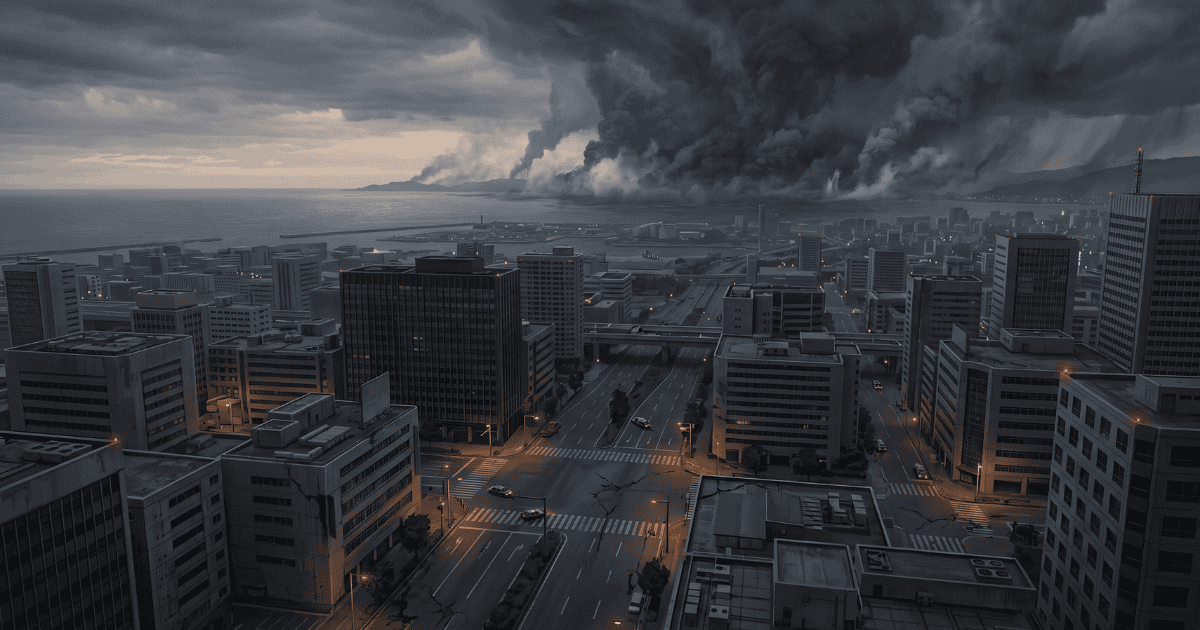
The defenses fail. Godzilla crosses the electrified barrier and burns Tokyo with radioactive breath. Buildings collapse and towers fall. After causing terrible destruction and loss of life, it returns to the sea.
The Secret Invention—The Oxygen Destroyer
Distressed by the devastation, Emiko tells Ogata about the Oxygen Destroyer. They ask Serizawa to help, but he fears that its use as a weapon would bring disaster. After their appeals and a televised prayer for peace, he agrees to use it once and destroys his research notes.
The Final Mission, Sacrifice, and a Prayer for Peace
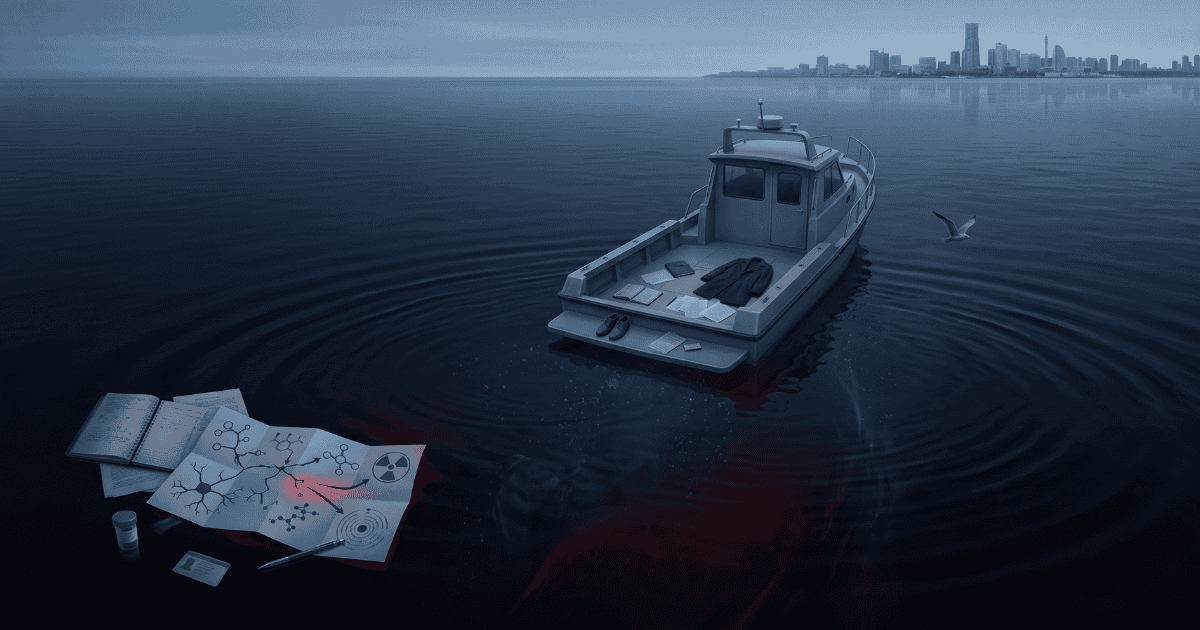
Ogata and Serizawa dive into Tokyo Bay and find Godzilla asleep. Serizawa activates the Oxygen Destroyer, sends Ogata to the surface, and cuts his own lifeline. With a wish for Ogata and Emiko’s happiness, he dies with Godzilla and the secret of his invention.
Godzilla disappears, and the people on the ship rejoice, only to fall into sorrow when they realize what Serizawa has done. Looking at the sea, Yamane warns that Godzilla may not be the last of its kind: if hydrogen bomb tests continue, another may appear. The words warn of the threats science can create.
Godzilla: What Yamane and Serizawa Represent — An Interpretation
Let’s now consider the film’s appeal, beginning with Yamane’s unusual position.
Dr. Yamane’s Anguish: Giving a Voice to Humanity’s “Guilt”
Like many later films in the series, the original portrays Godzilla as a creature that causes enormous harm to people. More precisely, the later films follow its example.
Three ships are sunk at the start, Odo Island is devastated, and Tokyo is attacked twice. Many lives are lost. People have to remove the threat.
Yamane’s response is quite different. He wants to study Godzilla—and therefore keep it alive—and is deeply saddened by attempts to attack it.
I think expressing that sadness through a scholar is important.
Godzilla became so dangerous because of hydrogen bomb tests. From humanity’s perspective, its attack is something we have brought on ourselves—though from Japan’s perspective, it is an unwelcome burden.
A sense of guilt about destroying Godzilla is therefore natural, and something the film should convey. The question is how.
It could show a citizens’ group demonstrating, “Don’t kill Godzilla!” But we might dismiss them as fools, given how many people have died. Their protest might even make us forget that humanity caused the situation.
Yamane’s sympathy, by contrast, brings out a negative stereotype: “Academics do say irresponsible things like that.” We can see him as someone apart from us, expressing sympathy without taking responsibility.
Might that distance allow us to accept the guilt Yamane expresses on our behalf—as humanity’s guilt?
Whether intended or not, I think it is an excellent piece of direction.
What Dr. Serizawa Symbolized: Scars, Destructive Impulses, and Silent Anger
Now, let’s turn to Serizawa.
If Yamane represents guilt about Godzilla, what does Serizawa represent?
He destroys Godzilla with the Oxygen Destroyer, so destruction is certainly part of what he represents.
But his eyepatch is another important element.
Ogata says:
“I know I shouldn’t hesitate, but when I think of Serizawa, I lose my nerve. If it weren’t for the war, he never would have suffered such a terrible wound.”
(Original Text in Japanese)
誰にも遠慮することはないと思いながら、芹沢さんのことを考えると、どうも弱気になる。戦争さえなかったら、あんなひどい傷を受けずに済んだはずなんだ。
The eyepatch is not merely a feature to make the character distinctive. It represents the wound inflicted by war.
The film appeared in 1954, less than ten years after the war. Its rebuilt Tokyo can make us forget that it is a postwar city. Yet the damage endured: people suffering from the atomic bombs, former soldiers, and civilians wounded physically and emotionally in air raids were still living with those injuries.
The film seems to show surprisingly little of that damage. I read Serizawa’s eyepatch as gathering those wounds into a single image.
From that perspective, his invention takes on another meaning.
Serizawa’s injury was not his fault. It was inflicted by the injustice of war. I therefore see the Oxygen Destroyer as a symbol of anger too.
Serizawa’s Anger and His Death with Godzilla
If Serizawa represents destruction, war’s wounds, and anger, what does his decision to die with Godzilla mean?
One purpose is clearly to erase the Oxygen Destroyer’s secret along with its inventor.
But I think there is another aspect.
The key is that the successful use of the Oxygen Destroyer against Godzilla has become known to the world.
That knowledge might prompt a race to develop the same weapon. Serizawa’s device seems only to destroy oxygen in water, but other researchers might try to extend it to the atmosphere. A weapon that destroys oxygen, the basis of life, could offer a supposedly “clean” means of mass killing. It seems natural to expect governments to pursue it.
In that situation, might Japan’s loss of Serizawa be the greater problem? He might develop a way to neutralize the weapon, or help limit the harm caused by other powers.
As an explanation within Godzilla, then, dying solely to conceal the formula feels somewhat incomplete.
What else might his death with Godzilla mean?
Perhaps he sinks his own anger into the sea with Godzilla. I read the film as saying, “Quiet your anger.”
Frankly, I think we should speak out against injustice. Nor do I think it is good to pretend that anger at suffering imposed by society does not exist.
Perhaps that is why the film ends with a salute. It shows respect for someone who quieted an anger he might rightly have expressed. We are made to remember that anger, not forget it.
I also read that salute as an act of atonement toward Godzilla: transformed by human nuclear power, then destroyed again for human needs.
Yamane’s feelings about Godzilla return in the final scene.
Summary: The Timeless Allure of Godzilla (1954)
Here is how I would bring these ideas together:
On the surface, the original Godzilla is a success story: attacked by a mysterious being, humans combine their knowledge to overcome it.
Beneath that story lie humanity’s guilt—or perhaps karma—in creating Godzilla and then destroying it, and the hidden anger and destructive impulse of Serizawa, who has been wounded by war.
Anger and destruction appear through both Serizawa and Godzilla. By portraying war’s tragedy through a human and a monster at the same time, the film expresses the scale of suffering people carry within them.
Serizawa removes both an attack humanity has brought on itself and his own anger. His heroic act makes us remember, rather than erase, the anger and wounds that must not be forgotten.
If asked what makes the original Godzilla so compelling, I would say:
By placing Godzilla, a life created by nuclear power, alongside Yamane and Serizawa, the film powerfully portrays wounds humanity must not forget.
What sort of film was the original Godzilla for you?
One More Question: What Decided Serizawa’s Fate?
That concludes most of my discussion, but there is one more question about Serizawa worth considering.
What finally made him decide to die with Godzilla?
This article has explored what his death means, not fully explained his motive. I have even argued that it might have been more natural for him to survive.
I think his decision can be explained by a very human motive, which I discussed in an earlier article:
A related interpretation: Dr. Serizawa’s Love and His Decision to Die with Godzilla
Why did he choose to end his own life?

Reader Comments