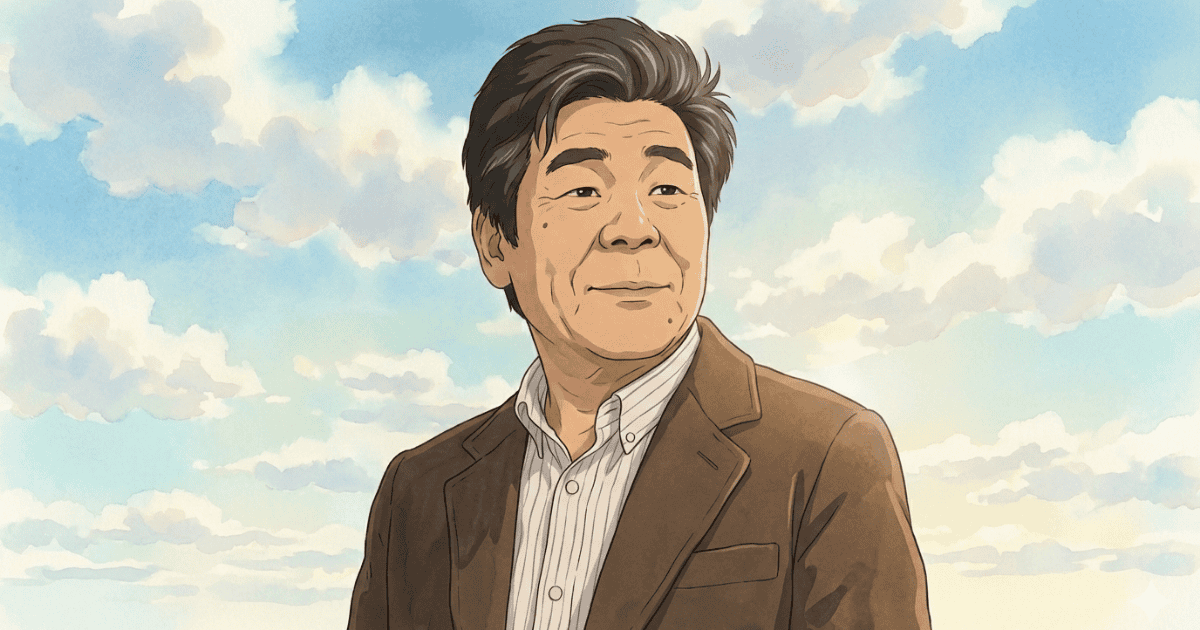
Isao Takahata’s The Tale of the Princess Kaguya (Studio Ghibli Official) is a breathtaking cinematic masterpiece, but let’s be brutally honest for a second.
As the story barrels toward its devastating emotional climax, 99% of audiences are completely derailed by one inescapable, glaring detail.
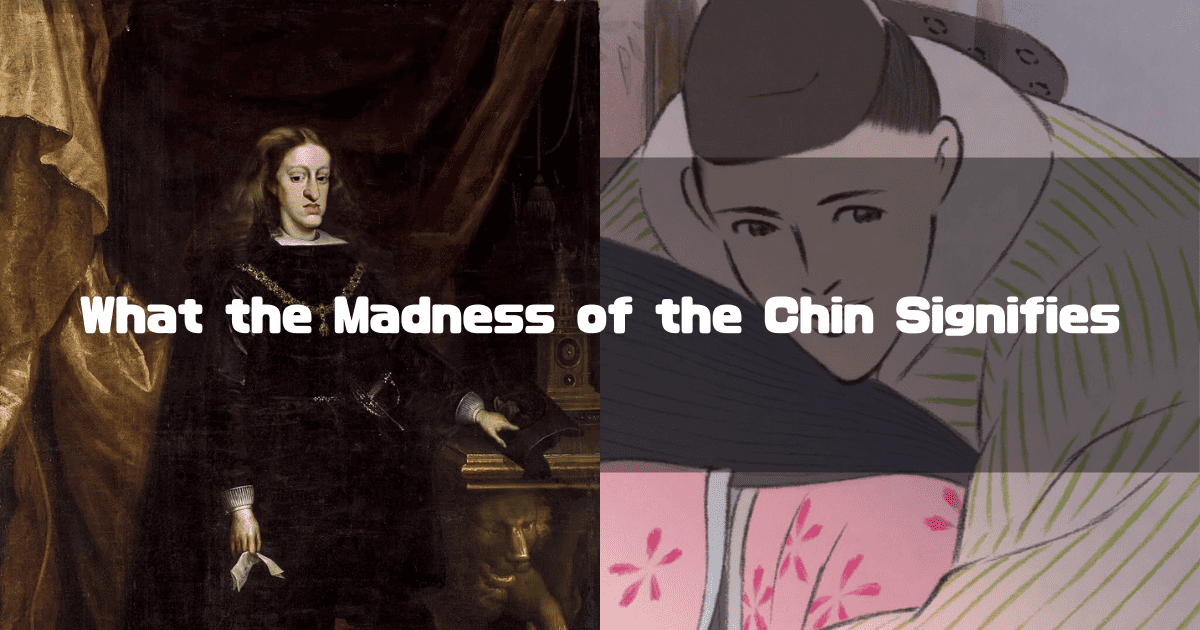
“Why is the Mikado’s chin so violently sharp?”
You thought it too, didn’t you? He is supposedly the most majestic, noble figure in the land, yet his facial design is so absurdly overpowering that it almost rips you right out of the narrative.
While the internet loves to meme this royal appendage—dubbing it a “lethal weapon” or a literal “murder chin”—viewing it through the lens of world history reveals a much darker inspiration. It immediately brings to mind a certain real-world dynasty that once held absolute power over medieval Europe.
Enter the “House of Habsburg.”
Today, we are going to dive deep into the real reason behind the Mikado’s jarring design. By examining the historical curse of the “Habsburg Jaw” alongside official Studio Ghibli character notes, we’ll expose Director Isao Takahata’s brilliantly cruel intentions.
*This is a translated version. The original (Japanese) is available here.
On this pageContents
The Tale of the Princess Kaguya (2013): The Historical Truth Behind the “Noble Chin”
The Medical Reality of the Habsburg Jaw
It is incredibly easy to point at the Mikado’s profile and laugh it off as a bizarre animation choice. However, history tells us a different story: a razor-sharp “chin born of noble blood” actually existed.
Look no further than the House of Habsburg, the immensely powerful aristocratic dynasty that dominated European royal courts from the Middle Ages through the Renaissance. (You likely recognize them from history class as the extended family of Marie Antoinette.)
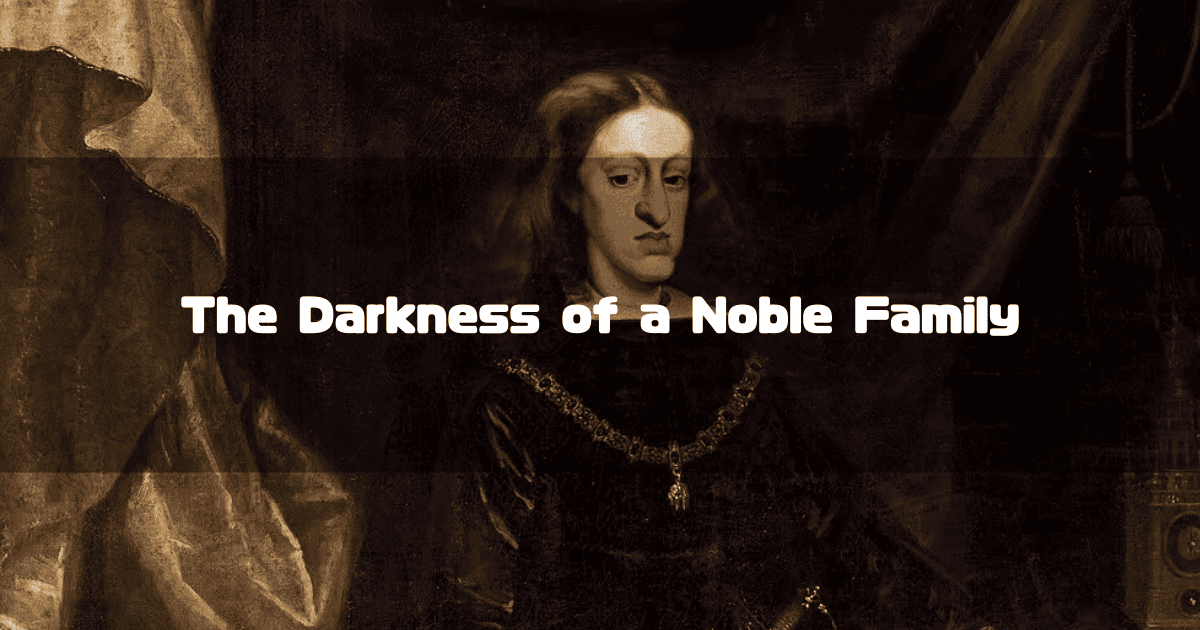
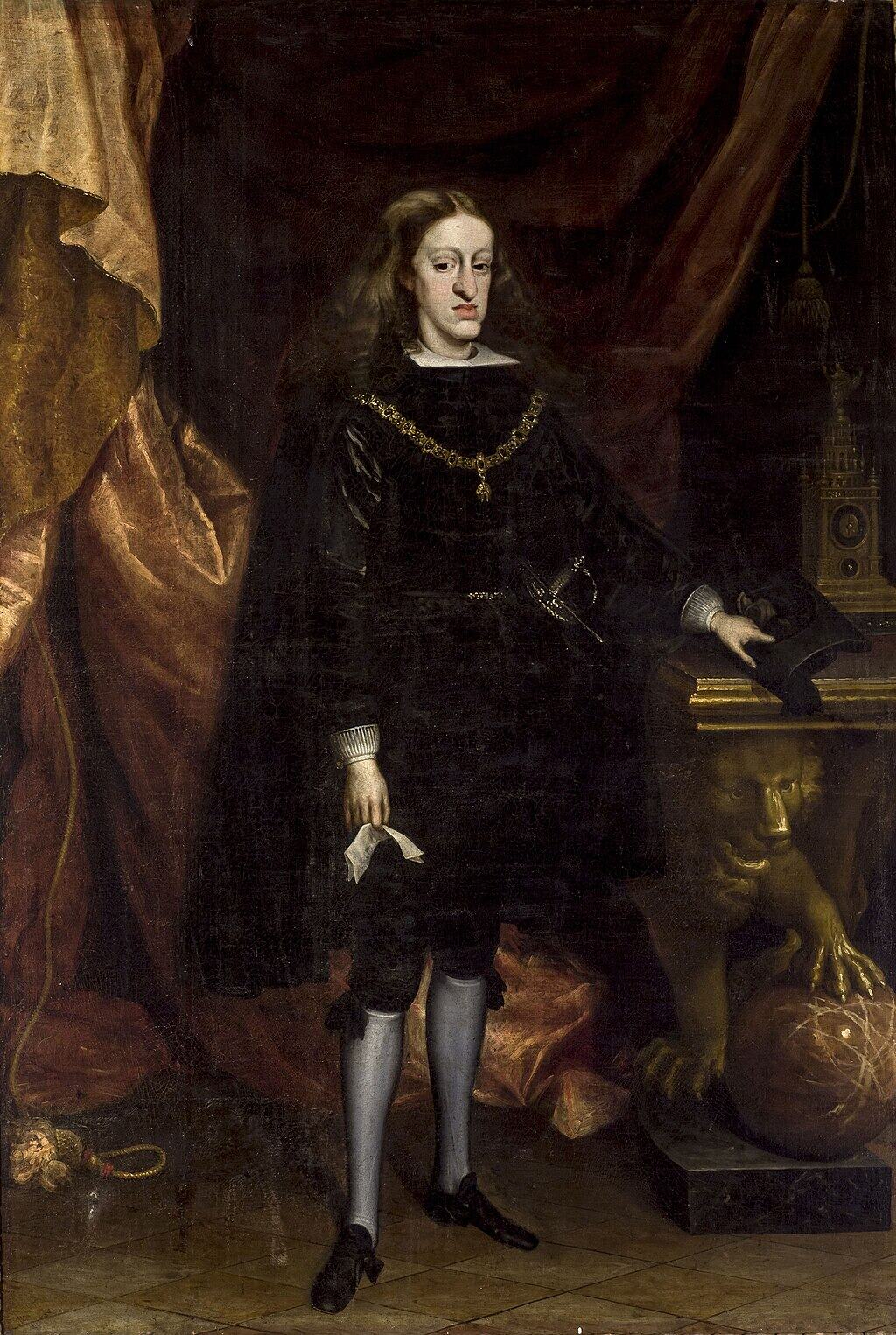
When you line up their royal portraits, a startling physical trait emerges. Generation after generation, these rulers possessed severely elongated lower jaws. Medically, this condition is known as mandibular prognathism. Historically? It is famously dubbed the “Habsburg Jaw.”
The most notorious example is the portrait of Charles II, the final monarch of the Spanish Habsburgs. His lower jaw protruded so aggressively that his teeth could not meet, leaving him physically unable to chew his own food.
The Price of Pure Blood
But why did the Habsburgs develop this extreme facial deformity?
The answer lies in their desperate obsession with protecting their “noble blood.” Terrified of letting their vast wealth and political power slip into the hands of outsiders, the family heavily relied on consanguineous marriages (inbreeding) for centuries.
By continuously marrying within their own immediate family—uncles wedding nieces, first cousins marrying first cousins—the royal bloodline became dangerously narrow. This allowed recessive genetic traits to dominate, ultimately branding their faces permanently with that signature, exaggerated jawline.
Modern genetic studies have definitively proven the direct correlation between this specific jaw deformity and generations of royal inbreeding.
Ultimately, that chin wasn’t just a physical trait; it was undeniable proof of a “closed bloodline.” It was the physical toll exacted for maintaining absolute purity.
References
The Tale of the Princess Kaguya (2013): The Shocking Official Reason for the Mikado’s Design
Sabotaging the “Perfect Face”
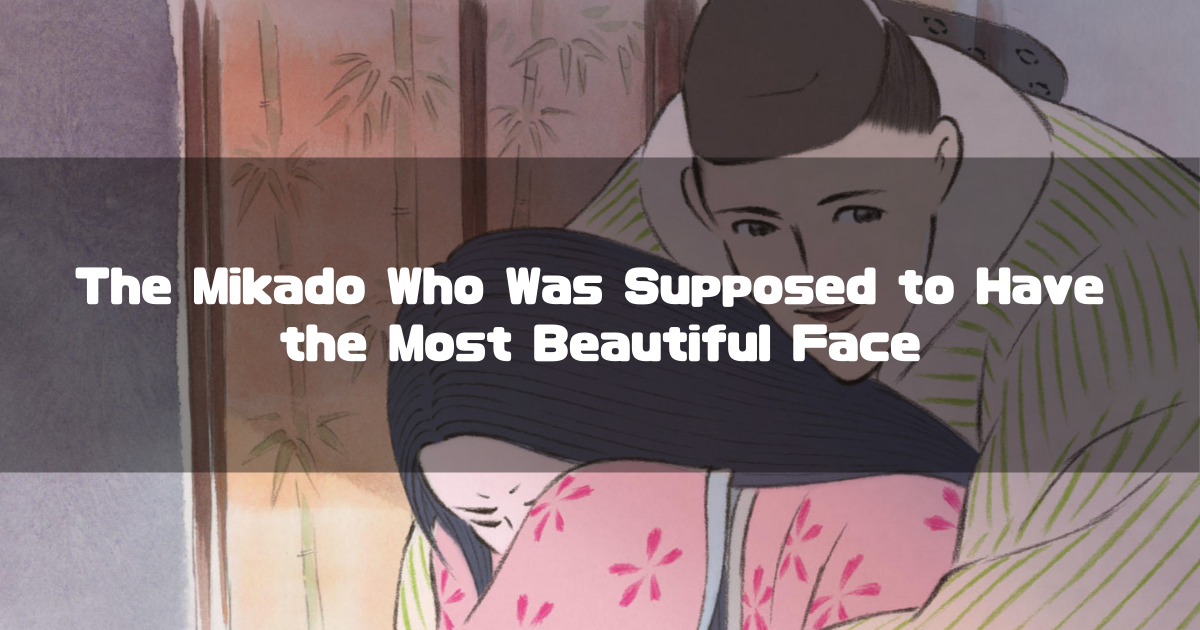
Once you understand the tragic history of the Habsburg dynasty, the Mikado’s exaggerated profile instantly feels like a deliberate historical nod. But how did Studio Ghibli actually land on this specific character design?
In The Art of The Tale of the Princess Kaguya, Osamu Tanabe, the lead character designer, corroborated this story (which likely served as the source for the Friday Road Show post):
[I desperately wanted to give him the most beautiful face possible. At one point, I even considered recycling an early, highly attractive design meant for Prince Ishitsukuri and using it for the Mikado. But while I was agonizing over the design, Mr. Takahata casually remarked, “He’s a handsome man, but what if we break the facial balance in just one place—for example, the chin?” And just like that, his fate was sealed.]
(Original Text, in Japanese)
最もきれいな顔にしたくて、一時は石作皇子として描いたキャラを御門にしようかとも考えたのですが、悩んでいたところ、高畑さんが「美男だけど一ヶ所バランスを崩してみたらどうか、たとえばアゴとか」と言われ、このように決まりました。
Let that sink in. The animation team painstakingly crafted the “ultimate handsome man,” only for Director Takahata to deliberately inject the ugly “noise” of an overgrown chin.
Based on these production notes, it appears the “House of Habsburg” wasn’t explicitly referenced in the animation studio during the design process.
However, the fact that Takahata specifically targeted the “chin” to corrupt a perfectly noble face feels deeply intentional. It practically reeks of Isao Takahata’s signature cinematic malice.
The Tale of the Princess Kaguya (2013): Isao Takahata’s “Cruel” Direction and the Curse of Royal Blood
The Delusion of Absolute Perfection
Within the narrative, the Mikado genuinely believes he is flawlessly beautiful every time he looks in the mirror. And technically, he isn’t wrong—his base design is the “most beautiful face.”
But because of Takahata’s deliberate sabotage, only the proportion of his jaw is violently skewed. Consequently, to the audience (and to a horrified Princess Kaguya), he registers as a deeply unnatural, uncanny entity.
“I am beautiful. It is the ultimate joy of any woman to become mine.”
Look at the terrifying disconnect between the Mikado’s unshakable narcissism and the literal sharpness of the jawline we see on screen. Isn’t this the perfect visual metaphor for the “delusion of those who live entirely isolated within their own closed circles of power”?
That same sense of entitlement is also expressed directly in the Mikado’s dialogue. His astonishment that a woman could reject him is one of the lines I examine in The Tale of the Princess Kaguya quotes in Japanese and English.
This critique doesn’t just apply to the Mikado; the Bamboo Cutter (Okina) is guilty of it too. Aside from Princess Kaguya, every character in this film is simply acting in accordance with the rigid common sense of their era. The Mikado holds no personal malice; in the context of his time, his arrogant behavior was entirely normalized (in the original folklore of The Tale of the Bamboo Cutter, they actually end up on relatively “good terms”).
However, this film forces us into the perspective of Princess Kaguya—an outsider violently dropped into an alien world. Through her modern eyes, the Mikado’s normalized entitlement transforms into pure psychological horror.
A Chin Forged as a Lethal Weapon
When you view the film through this socio-political lens, the visual parallel to the “Habsburg Jaw” transcends mere coincidence.
An intellectual heavyweight like Isao Takahata was undoubtedly aware of the Habsburg dynasty, their infamous jawline, and what it symbolized regarding royal bloodlines. While he never explicitly cited them in interviews, by specifically weaponizing the keyword “chin” against a supreme royal figure, Takahata was likely broadcasting a silent message to those who knew their history. (Though, admittedly, this is purely my own analytical theory).
He took the conceptual horror of a “closed, incestuous world of absolute power” and physically manifested it into an animation choice.
During the deeply uncomfortable climax where he forcefully embraces Princess Kaguya from behind, that jaw stops being a mere facial feature. It becomes a literal cage—a lethal weapon designed to trap her.
The horrifying sharpness of that chin is the physical embodiment of a violent, unquestionable authority that screams: “You do not have the right to reject me.”
The Tale of the Princess Kaguya (2013) Conclusion: The Punchline That Isn’t Actually Funny
Our immediate, knee-jerk reaction to the Mikado’s chin is to point and laugh at the sheer absurdity of it.
But by grafting such an extreme, jarring physical trait onto the “perfect” face of a ruler, Director Isao Takahata masterfully visualized the “suffocating toxicity of supreme nobility.”
When viewed in this light, that chin is far from an animation error. In fact, it just might be the most brilliantly calculated visual representation of “abusive power” in the history of anime.
Although, I have to admit—the longer I stare at it, the more it still just looks like a giant chin.
That wraps up my deep-dive analysis into Director Isao Takahata’s hidden intentions behind the Mikado’s infamous jawline. While this borders on an urban legend built on historical circumstantial evidence, whether you choose to believe it or not is entirely up to your own chin.
The images used in this article are provided courtesy of the “Studio Ghibli Work Stills” archive.
Can you name the movie before the scene comes into focus?
Put your visual memory to the test with a blurred Studio Ghibli scene.

Reader Comments