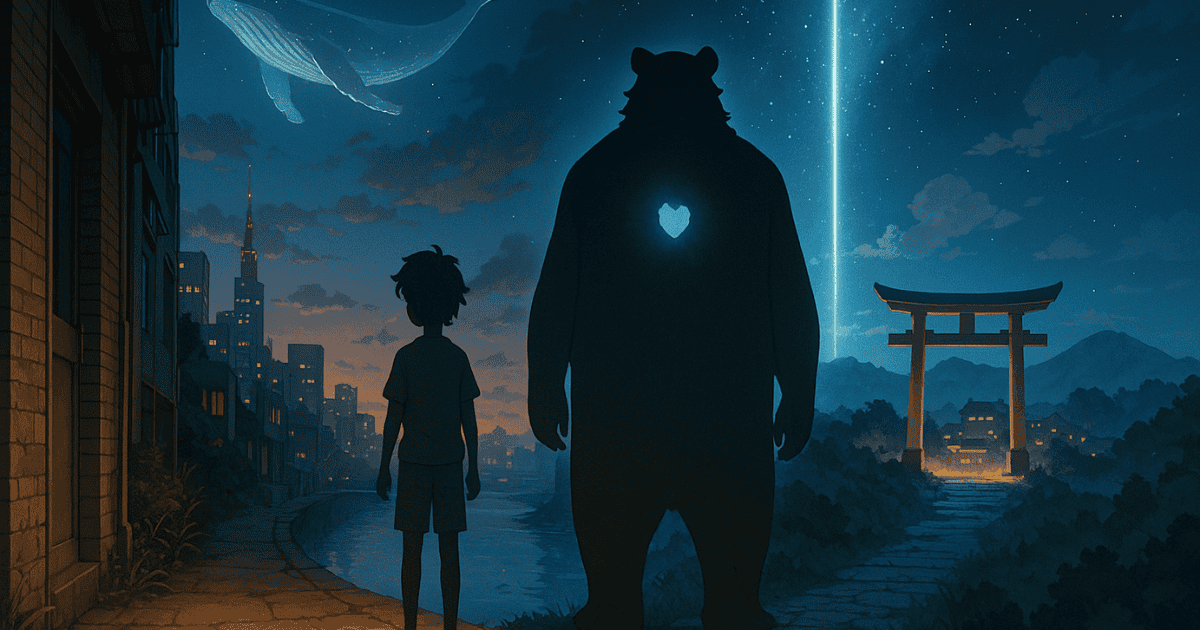
Mamoru Hosoda’s animated masterpiece, The Boy and the Beast (Official Website), is a profoundly moving exploration of family, told through the complex dynamics of “father and son” and “parent and child.” When Ren (Kyuta), a runaway boy, wanders from the dark back alleys of Shibuya into the vibrant beast realm of Jutengai, he collides with the rough-and-tumble warrior Kumatetsu. Through constant, explosive clashing, the two outcasts slowly forge an unbreakable bond that rivals any true bloodline.
Yet, within this emotionally rich narrative, there are several lingering, cryptic mysteries that leave audiences scratching their heads.
For example:
- What exactly is “Chico,” the mysterious, tiny fluff-ball that refuses to leave Kyuta’s side?
- Why does the wise “Grandmaster,” the supreme leader of Jutengai, so aggressively favor the ill-mannered Kumatetsu as his successor?
These are highly compelling narrative gaps. In this in-depth analysis, we will plunge into these two massive mysteries, using the concept of “reincarnation” as our analytical skeleton key.
*Note: This deep-dive analysis assumes you have already seen the film and contains major spoilers. If you need a refresher on the plot or the emotional climax, please read our full story breakdown first.*
Read the full story breakdown here: The Boy and the Beast (2015): Full Synopsis and Ending Explained
*This is a translated version. The original (Japanese) is available here.
-
Chico’s True Identity and the “Reincarnated Mother” Theory
Chico, the tiny companion who clings to Kyuta, provides cinematic comic relief. However, a deeper reading suggests Chico is the literal reincarnation of Ren’s deceased mother. This hypothesis perfectly explains why the creature found him in his darkest hour and actively guided him away from consuming darkness. -
The Grandmaster’s Hidden Bias Toward Kumatetsu
While the surface explanation is that Kumatetsu “harbored no dark secrets” compared to his rival Iozen, we propose a staggering alternate theory: the Grandmaster and Kumatetsu are reincarnated human souls who were originally father and son. This subconscious, eternal bond explains the Grandmaster’s seemingly irrational patience and paternal affection. -
The Ascension to the “God of Decision”
We theorize that the Grandmaster chose to reincarnate as the god of “decision” because, in his previous human life, he agonizingly failed to make a crucial choice regarding his son (Kumatetsu). By empowering Kumatetsu to succeed, he achieves spiritual redemption, creating a brilliant thematic contrast with the choices made by Ren’s biological father.
On this pageContents
Chico’s True Identity: A Simple Mascot, or a Reincarnated Mother?
First, let’s address the adorable elephant in the room: What exactly is the mysterious creature “Chico”? Although Chico doesn’t heavily alter the main plot mechanics, the creature constantly stays by Kyuta’s side, soothing the audience with its presence. But what was its actual purpose?
Chico’s Role as a Cinematic “Breather”
The family drama and psychological trauma explored in this film can become incredibly heavy. In cinematic terms, Chico functions as a necessary “breather.” The character serves a very similar narrative purpose to the iconic fox-squirrel “Teto” in Studio Ghibli’s Nausicaä of the Valley of the Wind—providing a cute, calming breath of fresh air amidst a highly serious, high-stakes plot.
On a surface level, treating Chico as a simple mascot is perfectly fine. But when you closely analyze Chico’s specific, hyper-intelligent interventions, it feels like there is a much deeper mythology at play.
Hypothesis 1: The “Reincarnated Mother” Theory
To rationalize Chico’s inexplicable behavior, I want to propose a radical hypothesis: Chico is the direct reincarnation of Ren’s (Kyuta’s) tragically deceased mother. While this might sound like a massive analytical leap, it provides flawless, emotionally devastating answers to the film’s biggest narrative gaps:
- Why did Chico appear to Ren in the human world?
Sensing her son’s crushing loneliness and despair after her sudden death, the mother’s spirit manifested in a new form to physically watch over him in the back alleys of Shibuya. - Why did Kyuta see a vivid “illusion” of his mother right before mastering Kumatetsu’s “sword in the heart”?
Because Chico (his mother) was physically resting against him, her proximity awakened his deepest subconscious memories, triggering the emotional breakthrough he desperately needed. - Why did Chico bite Kyuta to snap him out of his murderous rage?
When Kyuta was about to be swallowed by the darkness in the arena, Chico’s bite wasn’t a random animal reflex; it was the desperate, protective intervention of a mother refusing to let her son destroy his own soul.
If we accept this “Reincarnated Mother” theory, it fundamentally shifts how we view the entire beast realm. Why do the beasts of Jutengai possess complex, human-like emotions and societies despite their animalistic forms? It is highly probable that the beasts themselves are reincarnated human souls who have been completely purged of their “darkness.”
Beasts inherently lack the “darkness of the heart” (the literal black void) that plagues humans; they exist in a state of spiritual purity. I believe their beastly forms are simply a visual manifestation of that uncorrupted state.
During the apocalyptic climax, the psychic shockwaves of Ichirohiko and Kyuta’s battle in Shibuya physically damage the architecture of Jutengai. While this establishes that the two dimensions are spatially linked, it also hints at a deeper “cause and effect” relationship. The human world is the flawed “cause,” and the beast world is the purified “effect.” This environmental feedback loop strongly reinforces the theory that Jutengai is a purgatory or afterlife for reincarnated human souls.
The Grandmaster’s Hidden Intentions: Why Favor Kumatetsu?
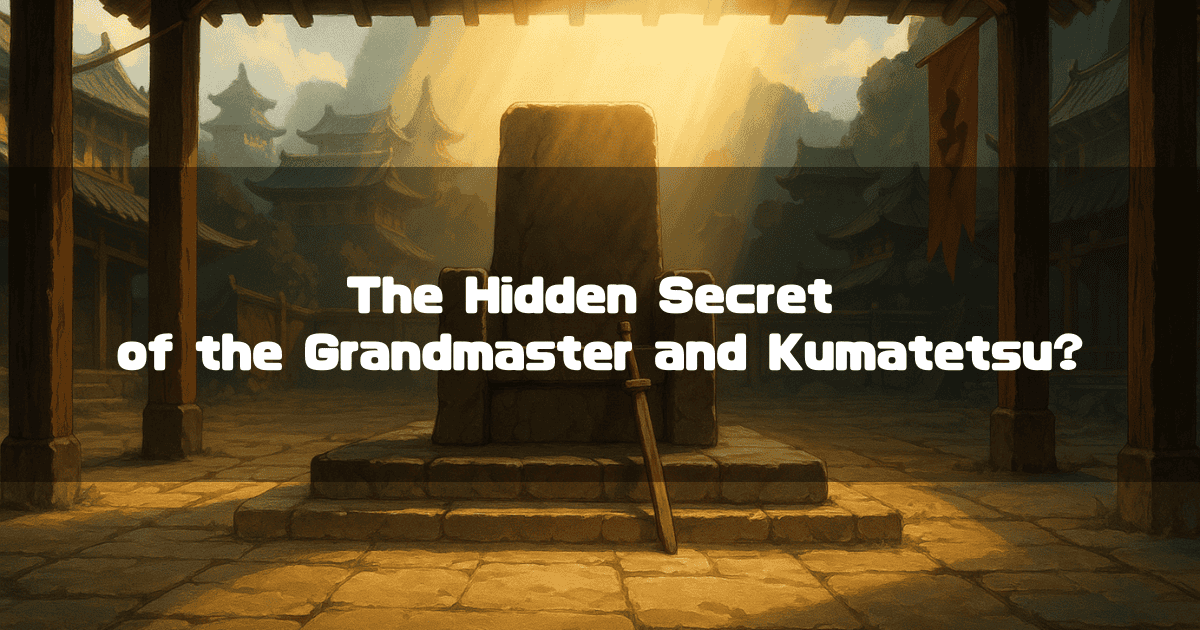
Next, we must tackle the political mystery of The Boy and the Beast: the true motives of the Grandmaster. Why was the wise, revered leader of Jutengai so hell-bent on passing his throne to Kumatetsu, a wildly unpopular, undignified brawler?
The Surface Interpretation: “He Harbored No Secrets”
The most logical, text-based explanation is simple: “Iozen had a dark secret, while Kumatetsu had none.”
Iozen is universally worshipped as a paragon of virtue and the ultimate father figure. Kumatetsu is a crude, isolated mess with zero disciples (until Kyuta). However, the omniscient Grandmaster saw through the facade. He knew Iozen was harboring a highly dangerous, explosive secret: he had illegally adopted and lied to a human child (Ichirohiko).
Conversely, Kumatetsu may lack manners, but he is fiercely authentic. He harbors zero lies and zero secrets. The Grandmaster likely deduced, “Kumatetsu’s lack of dignity is a flaw that can be fixed; Iozen’s foundational deception is a flaw that will cause catastrophe.” Valuing blunt honesty over polished lies is the most natural interpretation.
Hypothesis 2: The Grandmaster and Kumatetsu Were Father and Son
However, if we apply our established “Reincarnation Theory,” a fascinating new layer of psychological depth emerges.
I propose the following hypothesis: The Grandmaster and Kumatetsu are reincarnated human souls who, in their previous lives on Earth, were actually father and son.
This theory perfectly explains the Grandmaster’s inexplicably vast patience and undeniable soft spot for the unruly beast. Even if their specific human memories were wiped clean upon reincarnation, the visceral, unconditional love and the unbreakable soul-bond of a father yearning for his child remained perfectly intact. This subconscious affection quietly dictated the Grandmaster’s political favoritism.
But acknowledging this past-life connection doesn’t entirely explain why the Grandmaster forced Kumatetsu into the succession tournament. To fully decode his actions, we must examine the specific divine title the Grandmaster chose to assume.
The Ascension: Why Become the “God of Decision”?
The Unmade Decision of a Past Life
Midway through the film, Kumatetsu and Kyuta embark on a pilgrimage, asking various regional grandmasters, “What is true strength?” The abstract, diverse answers they receive are likely reflections of what each grandmaster personally “sought” to achieve in their own spiritual journey.
When the Grandmaster of Jutengai officially abdicates, he proudly declares he will reincarnate as the “God of Decision.” This implies that the ability to make a “decision” was the ultimate spiritual power he spent his life seeking, and hosting this tournament was the culmination of that quest.
But why was he so obsessed with “decisions”?
We can deduce that in his previous existence as a human, he failed to make a critical, life-altering decision. And tragically, that paralyzing indecision almost certainly revolved around his “son” (the soul that became Kumatetsu).
The Thematic Foil: Ren’s Biological Father
To support this, look at the narrative foil operating in the human world: Ren’s biological father. After years of separation and misunderstanding, Ren’s father makes an incredibly difficult, definitive “decision”—he chooses to fight to live with his son again.
It is highly probable that the Grandmaster, in his past human life, was paralyzed by cowardice and failed to make that exact same choice. Because he failed to “decide” to be a father, he lost his son (Kumatetsu’s soul). That lingering, agonizing regret carried over into his beast life, transforming into an absolute obsession with the power of “Decision.”
Therefore, the Grandmaster’s relentless mentorship, his frustrating riddles, and his aggressive push for Kumatetsu to succeed were all driven by a singular, subconscious desire: to provide the guidance and fatherly protection to the beast that he cowardly failed to provide to his son in a past life.
Conclusion: Decoding the Lore on the Wings of Imagination
In this deep dive, we have attempted to decode the unspoken lore of The Boy and the Beast, specifically the true nature of Chico and the hidden grief of the Grandmaster.
Admittedly, this analysis relies heavily on subtle “circumstantial evidence” and narrative symmetry. I cannot deny that it requires stretching the wings of cinematic imagination quite wide.
However, by viewing the film through the twin lenses of “Chico as the Reincarnated Mother” and “The Grandmaster as the Reincarnated Father,” the scattered, mystical elements of the script suddenly lock together into a flawless, emotionally devastating puzzle.
When viewed in this light, Mamoru Hosoda’s masterpiece transcends a simple action-adventure. It reveals itself as a staggeringly complex, multilayered exploration of family—simultaneously depicting the “present” father-son bond (Ren and Kumatetsu), the tragic “past” bond (the Grandmaster and Kumatetsu), and the hopeful “future” bond (Ren and his biological father).

Reader Comments