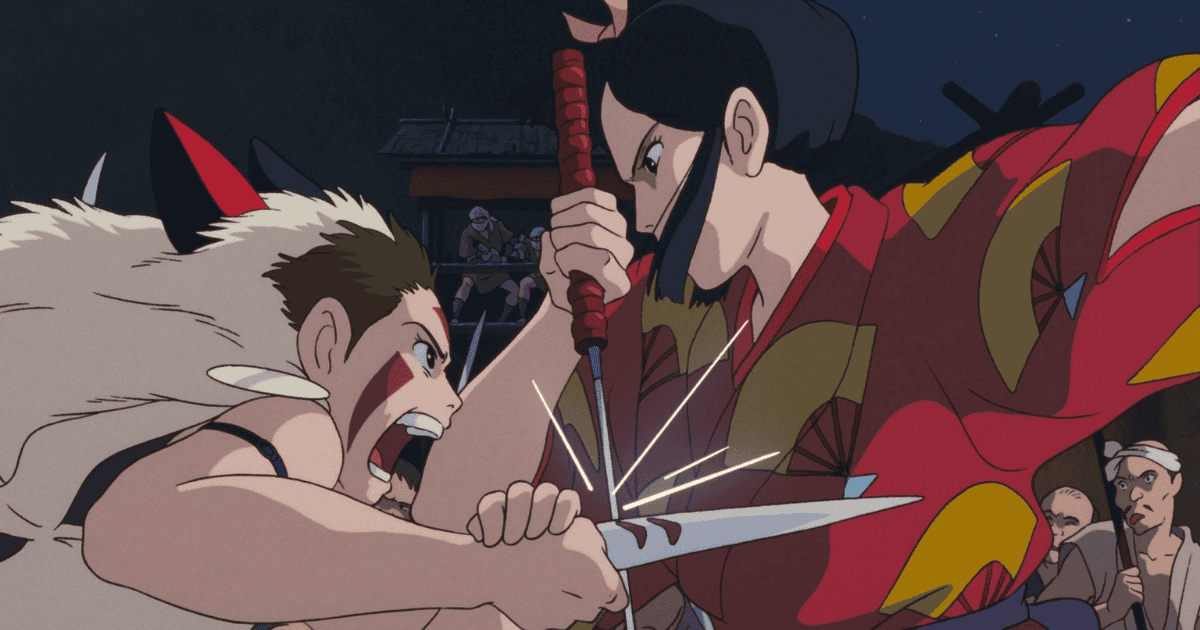
Hayao Miyazaki’s Princess Mononoke(Studio Ghibli Official) was released in 1997. His previous theatrical film was Porco Rosso; perhaps by then he had begun making films for himself rather than catering entirely to the audience. But that is beside the point. Many people love Mononoke, myself included. This time, I want to consider the distinctive appeal of Lady Eboshi.
The crucial scene comes when Ashitaka tells her Irontown is in danger, yet she does not return. Why does Eboshi put killing the Forest Spirit ahead of protecting Irontown? What is she trying to achieve?
To consider that decision, I will begin with her harsh past, then turn to the dream she is trying to realize in Irontown.
*This is a translated version. The original (Japanese) is available here.
- An Exceptional Leader with a Harsh Past
Eboshi has survived being sold to a pirate chief. She welcomes women and people with leprosy into Irontown, yet can make brutally cold decisions. - A Possible Bargain with the Imperial Court
I suspect killing the Forest Spirit is a means of obtaining protection for Irontown. On that reading, she chooses a longer-term strategy over returning to the town’s immediate crisis. - Irontown’s Precarious Future
I imagine outside pressures continuing after the film ends. Yet Eboshi promises to start again with her people, holding on to hope and dignity even when her dream seems doomed.
On this pageContents
Eboshi in Princess Mononoke
Ask what kind of person Eboshi is, and “an exceptional leader” seems a fair answer. Yet she can be very cold. On her first appearance, she immediately abandons the people who fall down the cliff during the wolf attack. Later, even when Ashitaka tells her that jizamurai—local samurai—are attacking Irontown, she does not go back.
To understand those actions, we need to consider her difficult past.
Eboshi employs women who have been sold into prostitution; her own past is not so different. She was sold to the chief of a band of wakō, or pirates, and lived as his wife. Even in that unwanted situation, she found ways to survive. Eventually, she killed him, took his valuables, and regained her freedom. Gonza has been with her since those days.
I imagine she killed the chief by assassination, waiting through those unwanted days for a moment when she could not afford to fail. It seems unlikely that she destroyed the whole pirate organization, so her escape must have been harsh. Or perhaps she and followers such as Gonza did destroy it; only Gonza remains with her. However I consider the possibilities, I cannot picture an easy life for her.
Then Ashitaka appears, cursing his fate. To Eboshi, his complaints may have seemed laughable. As a child, I thought she was unkind when she rebuked him for flaunting his small misfortune. But thinking about the life she had endured, I can begin to understand her reaction.
What did Irontown mean to someone who had lived through all that? And why did she refuse to return, even when Ashitaka urged her to?
The Dream Eboshi Saw in Irontown
Revenge Against the World That Hurt Her
As the film explains, the firearm-wielding hunters accompanying Eboshi are not her own troops. They have been supplied by the Shishoren organization. She is prepared to use the imperial order to kill the Forest Spirit as a way of acquiring their weapons. She is also developing firearms of her own so she can continue to protect Irontown after the mission.
I read what Eboshi is building not as a mere ironworks, but as her own kingdom.
Why build a kingdom? Here we can only let our imaginations fly. Perhaps she wants revenge against the world.
Her terrible past was not simply the result of her own fault or one person’s wrongdoing. She suffered because that was how the world worked. I imagine she resolved to spend the rest of her life changing that world—turning it upside down.
Irontown would be the base for that struggle.
A Possible Bargain with the Imperial Court
As the base for a struggle against the world, Irontown is in a difficult position, with more trouble likely ahead. We see fierce fighting with the local samurai, and the town is under considerable pressure. Eboshi, who could have commanded its defense, is absent, as are the men who would have fought at the front. But it does not look as though their presence alone would solve the problem.
If Irontown is her kingdom, producing iron is not enough. Iron must be its core industry, supported by enough military strength to face the surrounding rulers as an equal and survive the fighting until the kingdom becomes secure.
Perhaps she thinks, “If the town falls just because I’m not there, let it fall,” or, “I can gather people and take it back.” That would mean she has something more important in mind than Irontown’s immediate situation.
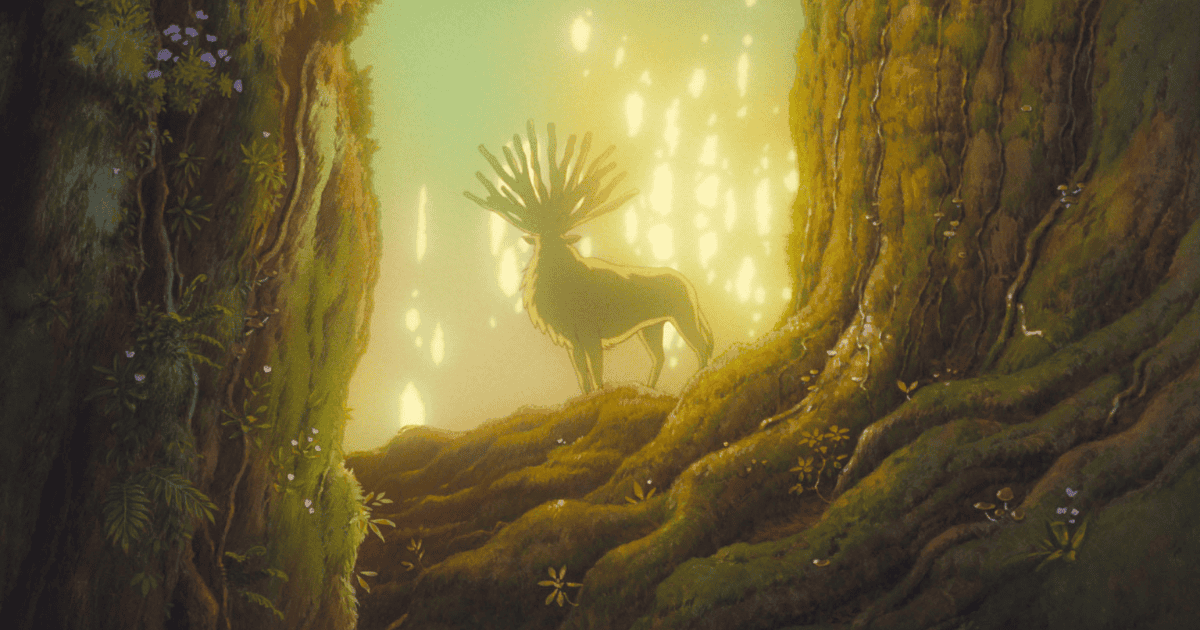
Her immediate priority is killing the Forest Spirit. Yet she has no obvious reason of her own to kill it. She has already driven off Nago; with the wolves gone, the forest would be little more than a forest with the Forest Spirit in it. The more practical obstacle to her kingdom is the wolves, large and strong as they are, rather than the god with its strange powers.
If killing the god is a means rather than the real goal, a bargain with the imperial side seems plausible. I suspect the prize is a guarantee that she can hold Irontown in peace.
The land on which Irontown stands presumably belongs to some daimyo, yet Eboshi is carrying on economic activity there on her own terms. In the film, she is asked to hand over half the iron produced. Her refusal leads to war. Perhaps she has made a deal with the imperial side to prevent such fighting in the first place.
That might explain why she does not return when Ashitaka asks: delivering the Forest Spirit’s head could secure a promise of peace for Irontown, at least for a while.
My reading combines two ideas: that she can retake the town if necessary, and that she has a bargain to secure it through the imperial court. Of course, that is only my own speculation. With her decision considered, let us imagine what comes after the film.
Irontown’s Sad Fate
The fighting and the Forest Spirit’s rampage badly damage Irontown, but Eboshi survives. As the ending suggests, she and her people will rebuild it.
Yet I find it hard to imagine a bright future for the town.
The local daimyo is likely to keep seeking control of it, and imperial support seems unlikely: Eboshi killed the Forest Spirit but failed to obtain its head. The rampage has destroyed many trees, yet the ironworks and what was once the Forest Spirit’s forest will remain attractive to those in power.
I imagine the people of Irontown continuing their struggle against exploitation, without imperial backing. I cannot see a future for the town. Even so, Eboshi smiles gently at her people and tells them they will start again.
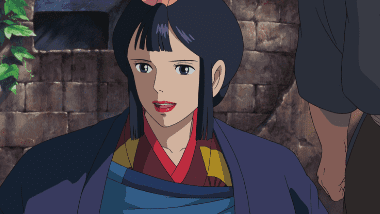
Facing that bleak future, she urges them to keep living with all their strength. Her fragile yet tenacious dream of a kingdom now seems beyond reach. The spirit behind her smile reminds me of the smile Ashitaka gives Kaya as he leaves his village.
Irontown will fall. In the historical perspective I am taking, that fate cannot be changed.
But until then, its people would have lived as hard as they could. Perhaps their battles with the local samurai even gave rise to a heroic tale about Ashitaka. Still, the town would fall: there is no nation founded on tatara ironmaking at the eastern edge of Asia today.
Eboshi’s attempt to build a kingdom and overturn the world that made her suffer does not succeed. But, having watched her struggle, perhaps the least we can do is live with all our strength. We enjoy lives in which we are neither sold to someone nor fighting local samurai.
Let us live with all our might. Simply, with all our might.
The images used in this article are from Studio Ghibli Still Images.
Can you name the movie before the scene comes into focus?
Put your visual memory to the test with a blurred Studio Ghibli scene.


Reader Comments