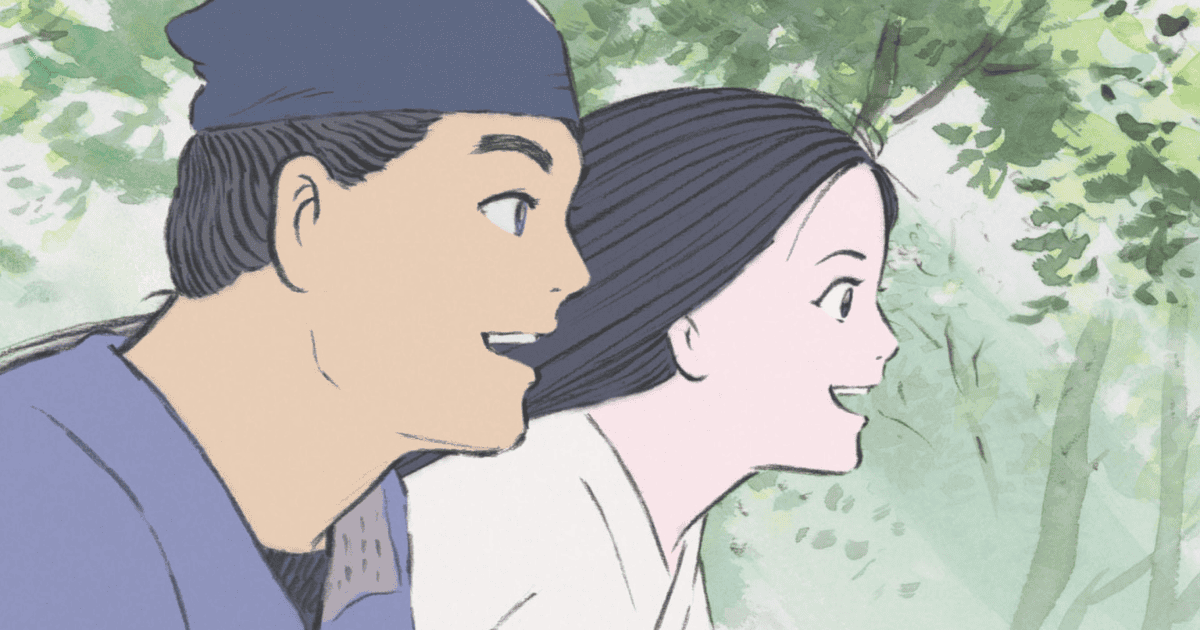
Director Isao Takahata’s The Tale of the Princess Kaguya (Official) is far more than a simple retelling of a classic folktale—it is a devastating exploration of human desire, societal pressure, and the heavy price of ephemeral beauty. Released by Studio Ghibli in 2013, the film leaves a lasting emotional impact on anyone who watches it.
In this comprehensive guide, we will break down the complex characters and the English voice cast behind them, diving deep into their individual motivations and tragic flaws. What kind of people truly populate the world of The Tale of the Princess Kaguya?
Please note that the following analysis contains major unexpected spoilers.
*This is a translated version. The original (Japanese) is available here.
On this pageContents
The Tale of the Princess Kaguya (2013) Main Characters & English Voice Cast List
*Clicking on a character’s name will jump you straight to their deep-dive analysis and voice actor information. The voice actor links will take you to external profiles like Wikipedia.
| Name | Age | Voice Actor (English Dub) |
|---|---|---|
 | 0–20 years old?[1] | Chloë Grace Moretz |
 | 50–70 years old?[2] | James Caan |
 | ? | Mary Steenburgen |
 | 13 years old–[3] | Darren Criss |
 | ? | Hynden Walch |
 | ? | Lucy Liu |
 | ? | Dean Cain |
- [1]
- The film never explicitly states her age. In the original folklore, The Tale of the Bamboo Cutter, Okina remarks, “It has been over twenty years since I humbly began raising Princess Kaguya.” Furthermore, halfway through the film, an old charcoal burner mentions that Sutemaru’s group won’t return for ten years. Since we see them return near the story’s climax, it implies a significant chunk of time has passed on Earth. However, judging purely by the pacing of the film, Kaguya’s time on Earth feels much shorter and more fleeting than a full decade.
- [2]
- Okina’s age is similarly ambiguous in the film. Even the original tale contains contradictory descriptions, stating both that “Okina is over seventy years old” and “Okina is about fifty this year.” Visually, the film depicts him as a man in his late 50s at most.
- [3]
- According to the official production storyboards, Sutemaru is exactly 13 years old when he makes his first appearance.
The Tale of the Princess Kaguya (2013) Character Map
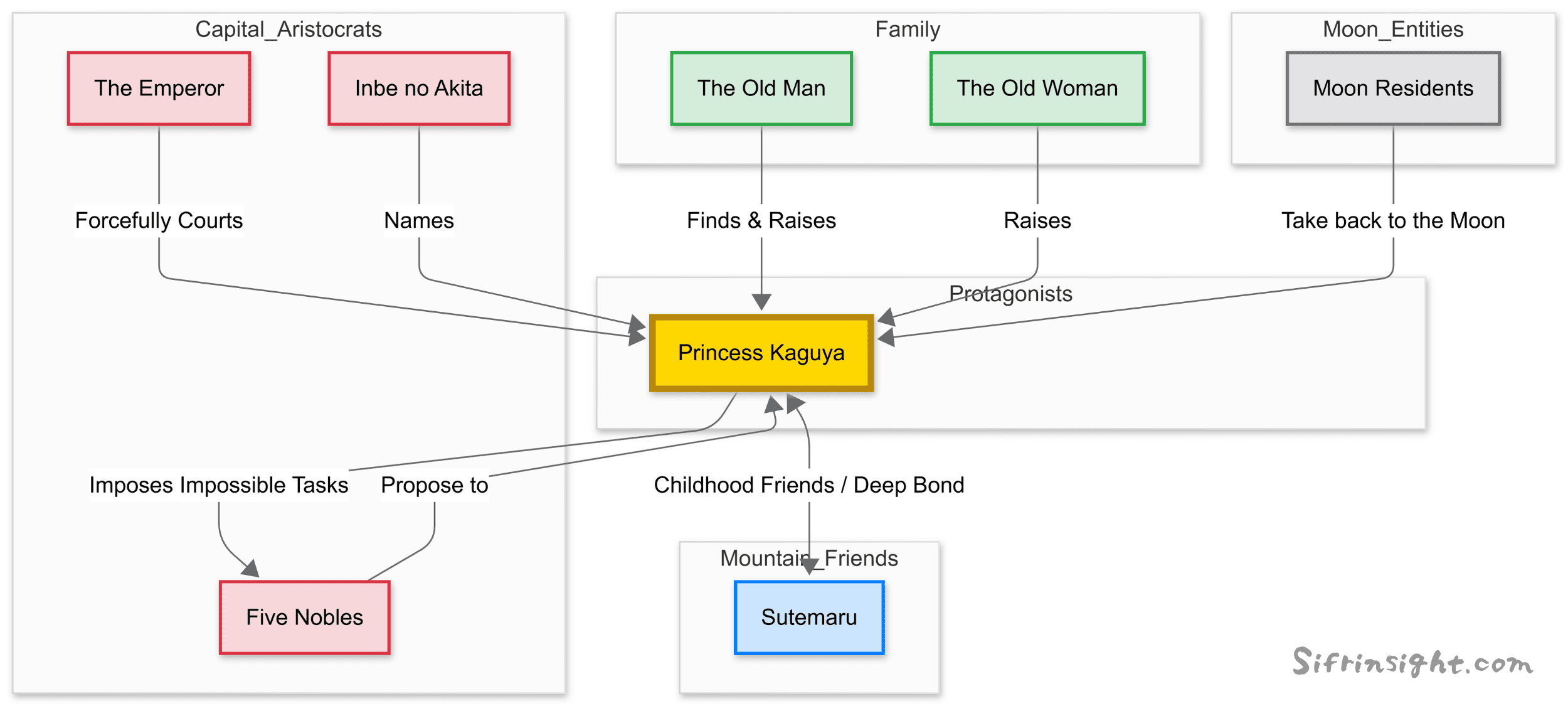
In the original The Tale of the Bamboo Cutter, Princess Kaguya and the Emperor actually develop a mutual correspondence and deepen their relationship over time. However, Studio Ghibli flips this narrative. Director Takahata frames the Emperor’s forceful, non-consensual courtship as the breaking point that causes Kaguya so much trauma that she desperately wishes “not to be on Earth,” triggering the celestial messengers to descend and take her away.
▼ Dive into our full story breakdown and synopsis based on this character map here:
The Tale of the Princess Kaguya (2013) Deep Dive: Character Profiles & Cast Analysis
Princess Kaguya | Voice Actor: Chloë Grace Moretz
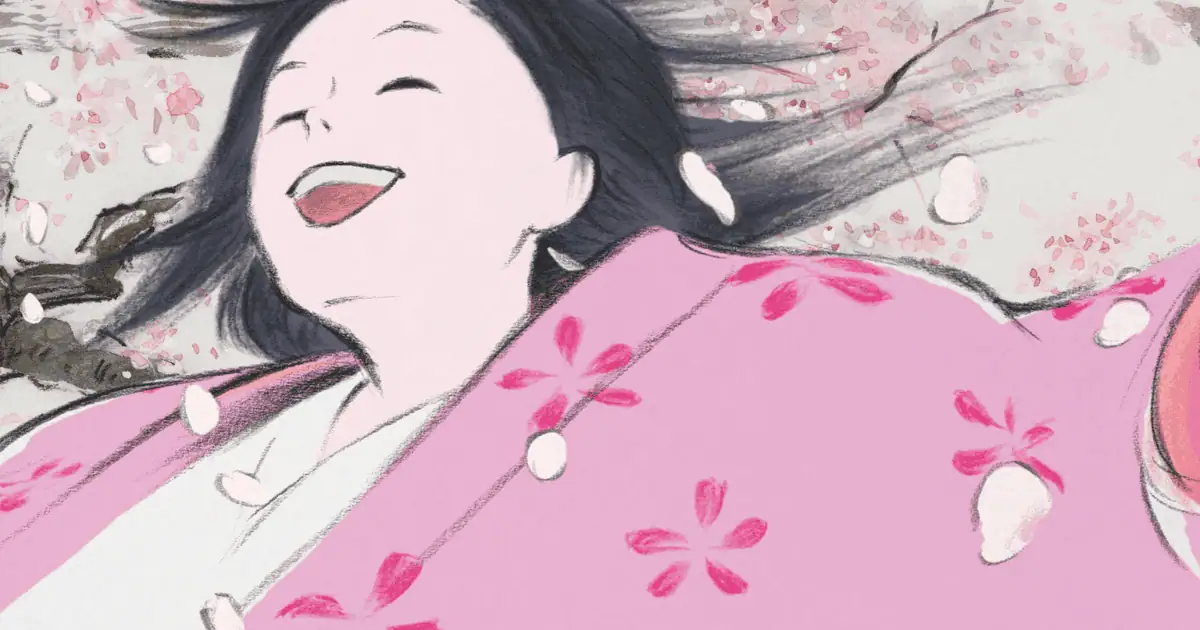
View Princess Kaguya’s [Basic Info, Analysis, and Voice Actor Info]
Analysis: The Tragedy of a Princess Tossed by Fate
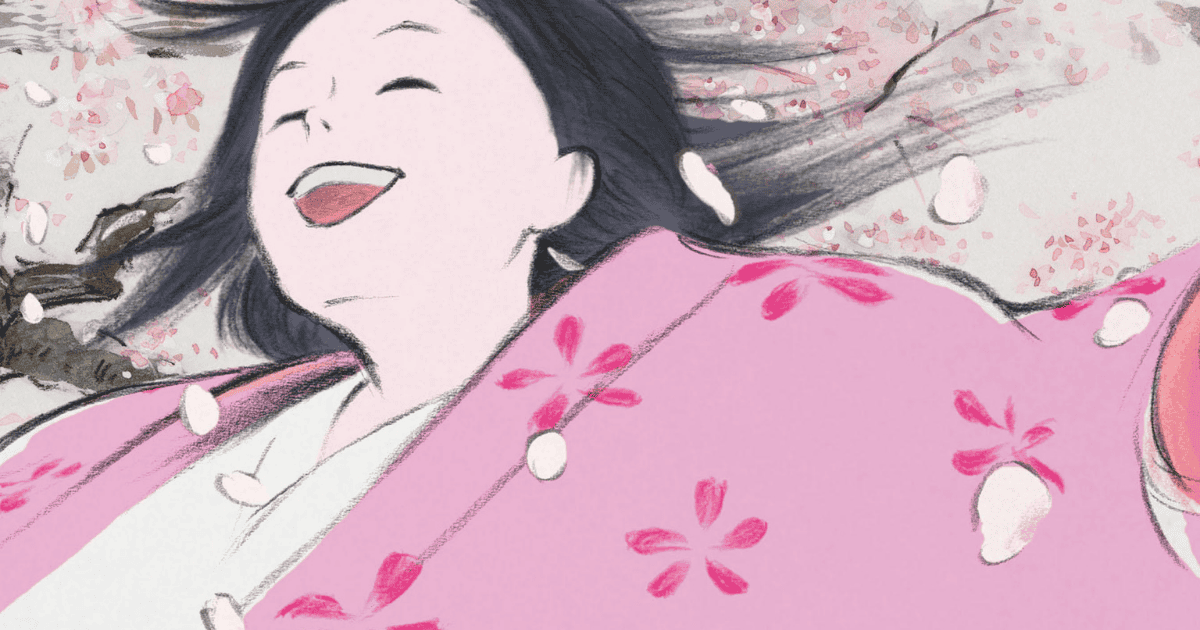
As the protagonist of the story, Princess Kaguya experiences a tragically accelerated life. Because she grew so rapidly as an infant, the local children affectionately dubbed her “Takenoko” (Little Bamboo). Okina, however, harbored grander ambitions and stubbornly insisted everyone call her “Princess.”
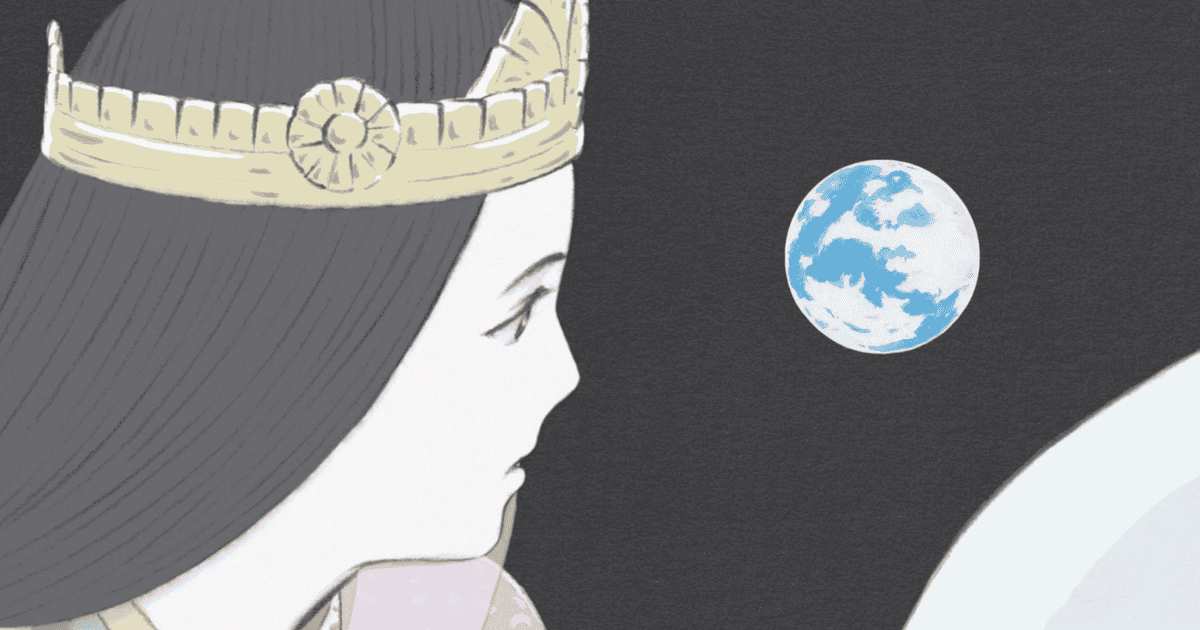
Following the ancient lore, Kaguya originally descends from the moon. The film implies she committed a “sin” in her celestial home and was exiled to Earth as “punishment.” If you want to explore the fascinating theories behind Kaguya’s true “crime and punishment,” I highly recommend checking out our detailed two-part analysis below.
Studio Ghibli heavily leaned on the catchphrase “A princess’s crime and punishment” during the film’s promotional campaign. Producer Toshio Suzuki reportedly loved this angle, but Director Isao Takahata openly resisted it, stating, “It stopped being that kind of story halfway through production.”
When you watch the final cut, Takahata’s vision is undeniable. The movie doesn’t focus on cosmic justice; instead, it paints a heartbreaking portrait of a woman tossed mercilessly by circumstances and patriarchal expectations she never asked for.
Princess Kaguya deeply loved the raw beauty, complexity, and natural cycles of the Earth. But Okina, driven by a misguided desire to give her “human happiness” (wealth and status), dragged her into the suffocating cage of aristocratic society. Kaguya sacrificed her freedom to please her adoptive father, but her spirit ultimately shattered when the Emperor forced his affections on her. This trauma acted as the catalyst for her tragic return to the moon—a stark contrast to her feelings in the original folktale.
It is an emotionally grueling journey when you put yourself in Kaguya’s shoes. Yet, Kazumi Nikaido’s hauntingly beautiful ending theme, “Inochi no Kioku” (Memory of Life), washes over the audience, offering a profound sense of salvation. It elevates the film into an absolute masterpiece.
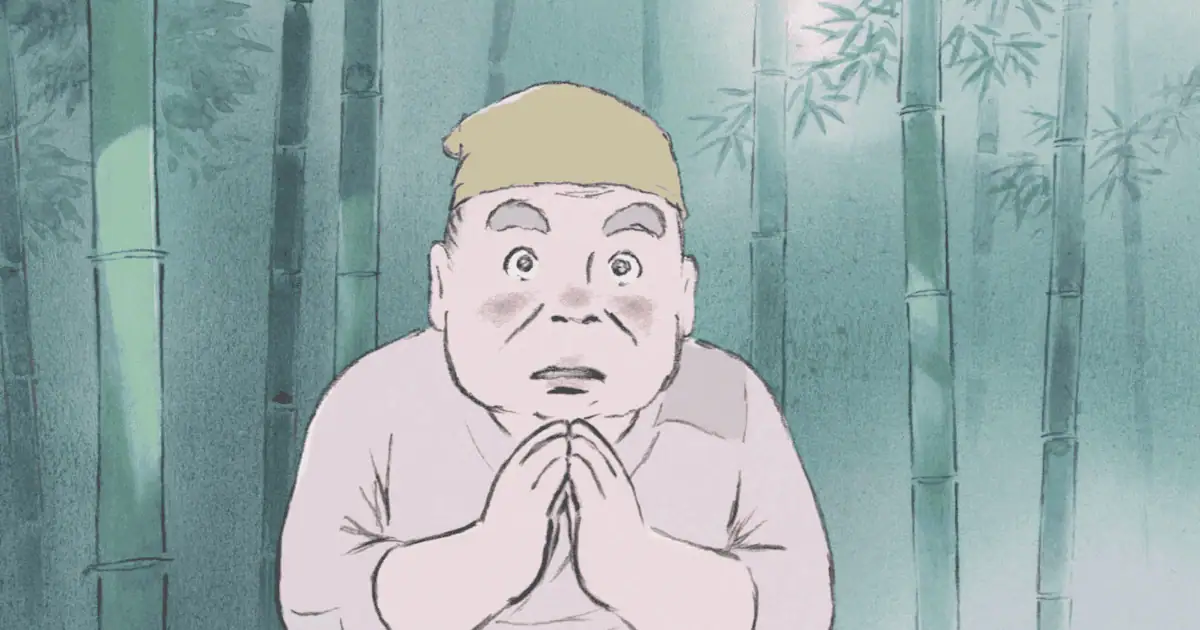
Okina | Voice Actor: James Caan
View Okina’s [Basic Info, Analysis, and Voice Actor Info]
Analysis: The Tragedy of a Well-Intentioned Father
Okina serves as the pivotal figure who discovers the radiant infant Kaguya in the bamboo grove and takes on the role of her adoptive father.
In the classic text, Okina acts as the bridge that connects Princess Kaguya to the Emperor, someone she genuinely values. However, Takahata’s film paints a far more tragic portrait: Okina becomes the misguided architect of Kaguya’s misery, piling terrible decisions on top of one another until she is completely trapped.
It is easy for the audience to judge him harshly, but viewing his actions within the context of his era changes the perspective. From a historical standpoint, Okina’s judgment to elevate his daughter to high society was considered the ultimate act of paternal love.
Ultimately, Okina reflects the universal, often helpless nature of parenthood. Parents frequently suffocate their children with well-intentioned but entirely misguided efforts. He embodies the classic trope of a father who fumbles blindly trying to do what he thinks is best for his daughter, completely ignoring what she actually wants.
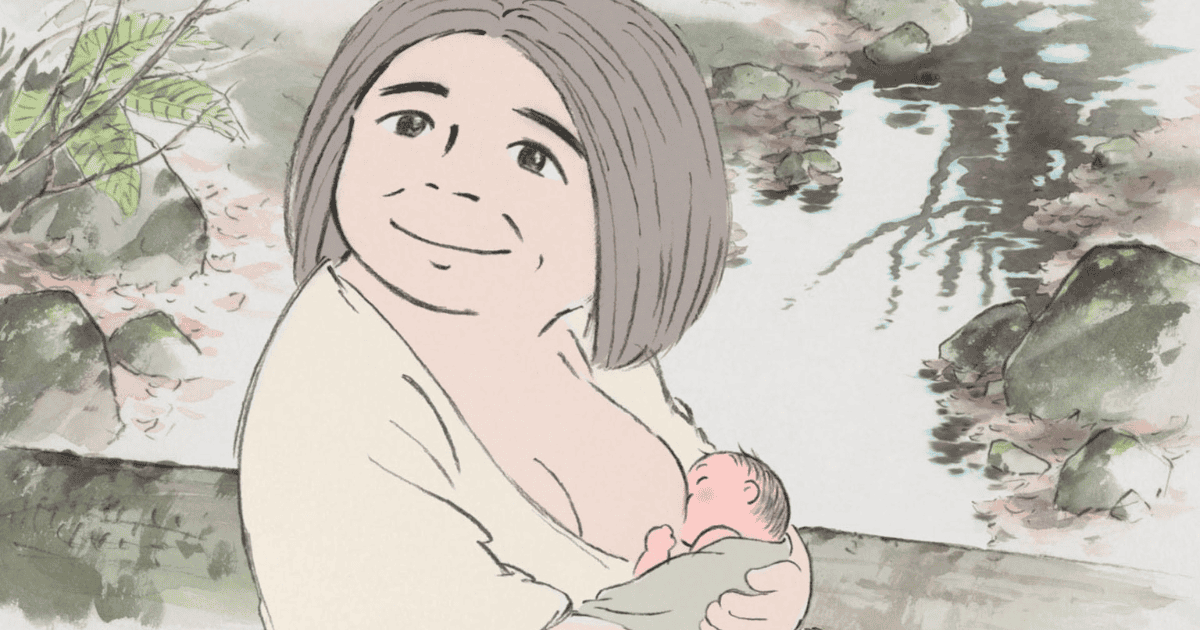
Ouna | Voice Actor: Mary Steenburgen
View Ouna’s [Basic Info, Analysis, and Voice Actor Info]
Analysis: The Silent Pillar of Love
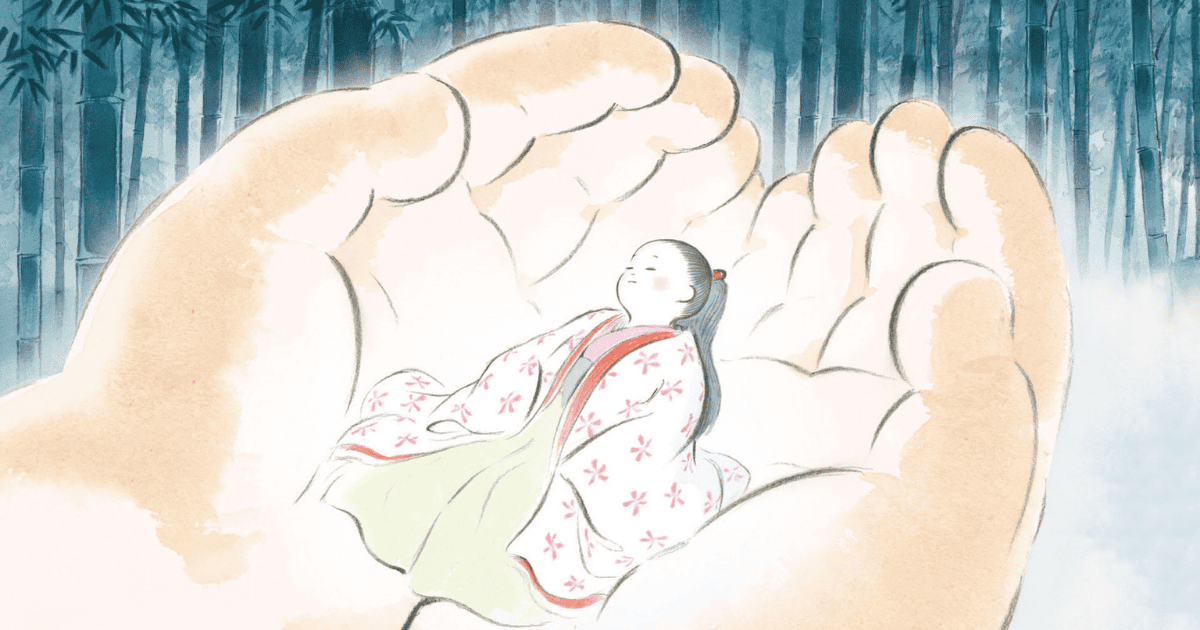
Ouna, Okina’s wife, embraced the miracle of Princess Kaguya and raised her with boundless maternal warmth.
Unlike Okina, who constantly forces his ambitions onto Kaguya, Ouna remains a quiet, supportive presence. She deeply understands Kaguya’s pain and stays close to her spirit until the very end. She rarely speaks her mind against Okina’s grand plans, but her silent love for Kaguya is the true emotional anchor of the household.
In the film’s devastating climax, Ouna finally shatters her quiet facade. Her suppressed grief violently erupts as she wails, “Don’t go, Princess!” It is a raw, heartbreaking scene that completely shatters the audience.
The dynamic between the parents is fascinating. In this story, the father stumbles blindly while the mother silently supports. One has to wonder: if Isao Takahata had directed The Tale of Momotaro (The Peach Boy), would he have inverted this dynamic? A Takahata-directed Momotaro is certainly a cinematic “what-if” worth dreaming about.
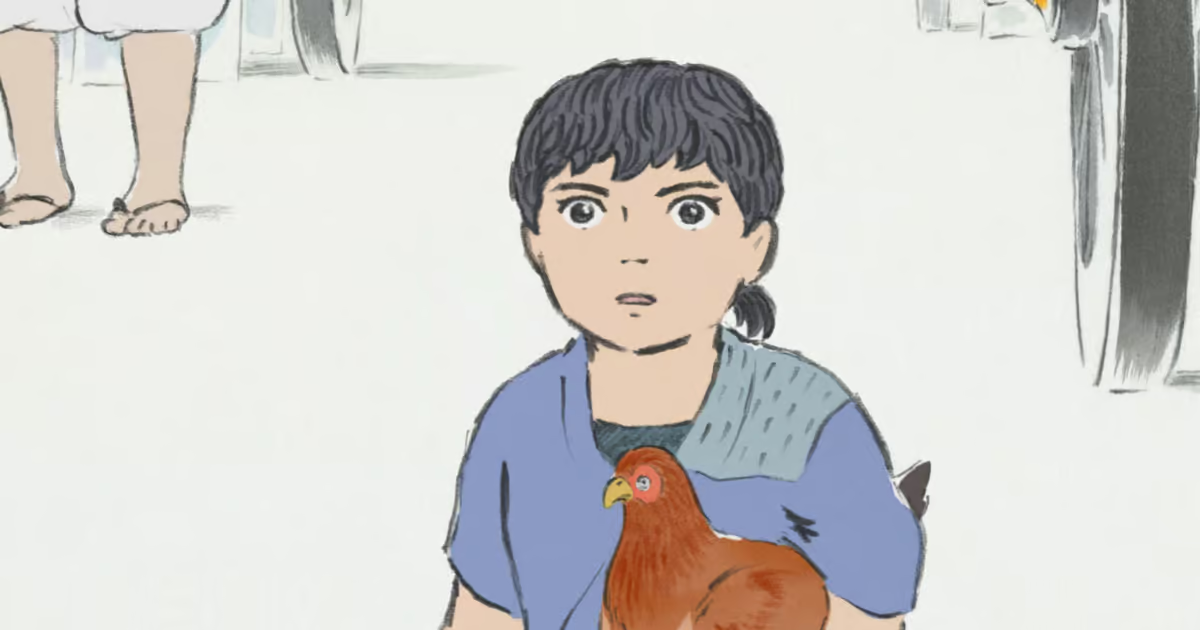
Sutemaru | Voice Actor: Darren Criss
View Sutemaru’s [Basic Info, Analysis, and Voice Actor Info]
Analysis: The Boy Left Behind
Sutemaru is an entirely original character created by Takahata; he does not exist in the classical text. Introduced as a 13-year-old boy, he belongs to a nomadic group of woodworkers (Kijiya) who travel the mountains crafting and selling wooden bowls to survive.
He acts as the leader of the local village children and quickly becomes Kaguya’s closest childhood friend during her idyllic days in the mountains.
Sutemaru clearly harbored romantic feelings for Kaguya as they grew older, but the social gap widens dramatically. He is dealt a bittersweet blow when a young Kaguya innocently declares, “I’ll always be your underling, Brother Sutemaru!”—cementing their unequal dynamic.
This line becomes even more interesting when the original Japanese is compared with the English subtitle. I examine it together with other memorable dialogue in The Tale of the Princess Kaguya quotes in Japanese and English.
The “Family-Abandoning Sutemaru” Controversy and the Swan Maiden
Sutemaru becomes the center of major controversy near the end of the film. When Kaguya desperately tries to defy her fate and escape the celestial messengers, Sutemaru embraces her and attempts to run away with her.
If the story ended there, it would be a tragic, romantic climax. However, the film explicitly reveals that Sutemaru has already married and fathered a child. Because he was willing to throw his wife and baby away the moment Kaguya reappeared, Japanese audiences heavily criticized him, dubbing him “Kazoku Sutemaru” (Family-Abandoning Sutemaru). Yet, there is a deep, thematic reason for his shocking choice.
This scene directly ties The Tale of the Princess Kaguya to another famous Japanese folktale: the “Legend of the Swan Maiden” (Hagoromo Legend).
The film implies that Kaguya originally became fascinated with Earth because of a celestial maiden from the moon who had previously visited the mortal realm. That maiden is the very same figure from the Swan Maiden legend.
While the dialogue doesn’t explicitly spell it out, the visual storytelling connects the dots: the celestial maiden from the past fell in love with a human man on Earth… and that human man also had a child.
Therefore, Sutemaru serves as a thematic mirror. He symbolizes the intoxicating, destructive allure that moon dwellers have over Earthlings. It suggests that whenever a mortal man encounters a celestial woman, he is hopelessly compelled to abandon his earthly life and family for her.
Of course, understanding the folklore connection doesn’t exactly clear Sutemaru’s name from being a “Family-Abandoner” in the eyes of the audience.
Menowarawa | Voice Actor: Hynden Walch
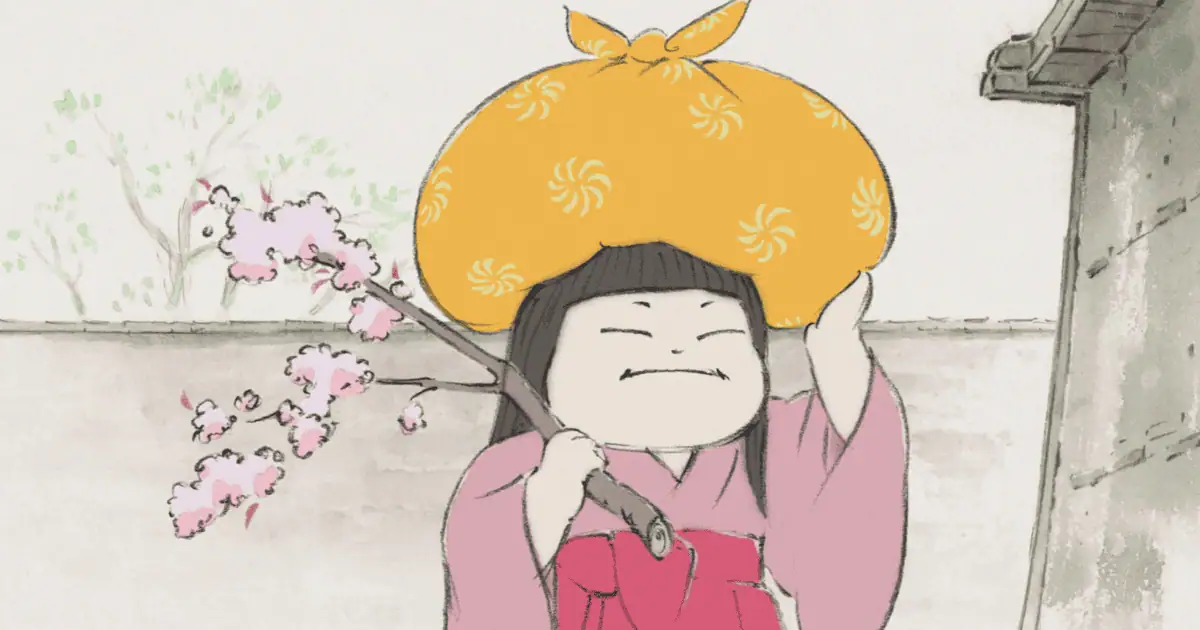
View Menowarawa’s [Basic Info, Analysis, and Voice Actor Info]
Analysis: Kaguya’s Secret Shadow
Menowarawa serves as Kaguya’s quirky, fiercely loyal personal attendant once the family relocates to the sprawling mansion in the capital.
On the surface, she plays a vital role as comic relief. As Kaguya drowns in the rigid, depressing rules of the aristocracy, Menowarawa’s blunt innocence injects much-needed warmth and humor into the suffocating environment. The voice acting is brilliant, making Menowarawa’s scenes the only true moments of “salvation” for the audience.
However, keen viewers will notice that Menowarawa carries far more narrative weight than a simple comedy sidekick. Thematically speaking, she functions as Kaguya’s alter ego.
We explore the fascinating theory of how Menowarawa represents Kaguya’s suppressed desires in our dedicated deep dive below:
When you realize Menowarawa acts out the freedom Kaguya secretly craves, her role in the film completely transforms.
Lady Sagami | Voice Actor: Lucy Liu
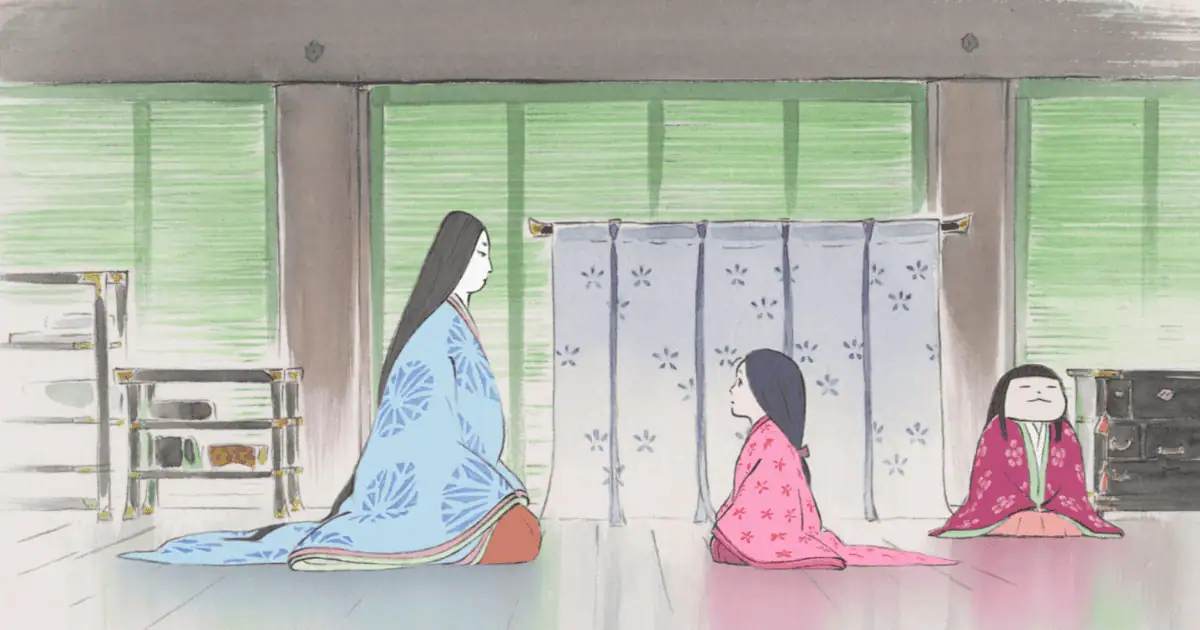
View Lady Sagami’s [Basic Info, Analysis, and Voice Actor Info]
Analysis: The Enforcer of Society’s Cage
Hired by Okina, Lady Sagami is the strict tutor tasked with breaking Kaguya’s wild spirit. Her mission is to mold Kaguya into a “first-class lady” fit for the aristocracy, drilling her endlessly on microscopic etiquette rules and teaching her to play the koto (specifically, a guzheng).
Because Kaguya cherishes the untamed, natural beauty of the Earth, she fundamentally rejects the meaningless, artificial manners constructed by the “human world.” She actively rebels against Lady Sagami, causing her tutor endless headaches. Yet, bizarrely, whenever Okina enters the room, Kaguya instantly performs flawlessly, displaying breathtaking grace and musical mastery.
How does Kaguya suddenly possess such refined skills? The implication is that she already mastered these elegant arts during her previous life on the moon.
This raises a crucial thematic question: Why doesn’t Princess Kaguya consider human society to be part of the beautiful “Earth” she loves?
The film suggests a grim answer: “Because human society is where people actively create suffering for one another.” The Tale of the Princess Kaguya exposes the absurdity of human social constructs. It paints a harrowing picture of women trapped by societal expectations. The sharpest irony is that Lady Sagami—a woman herself—acts as the aggressive enforcer, chaining Kaguya to a miserable future she doesn’t want.
But we shouldn’t purely vilify Lady Sagami. She is simply a product of her environment, a woman who had to survive an “unavoidable system,” and now pushes that same system onto the next generation.
The Five Princes
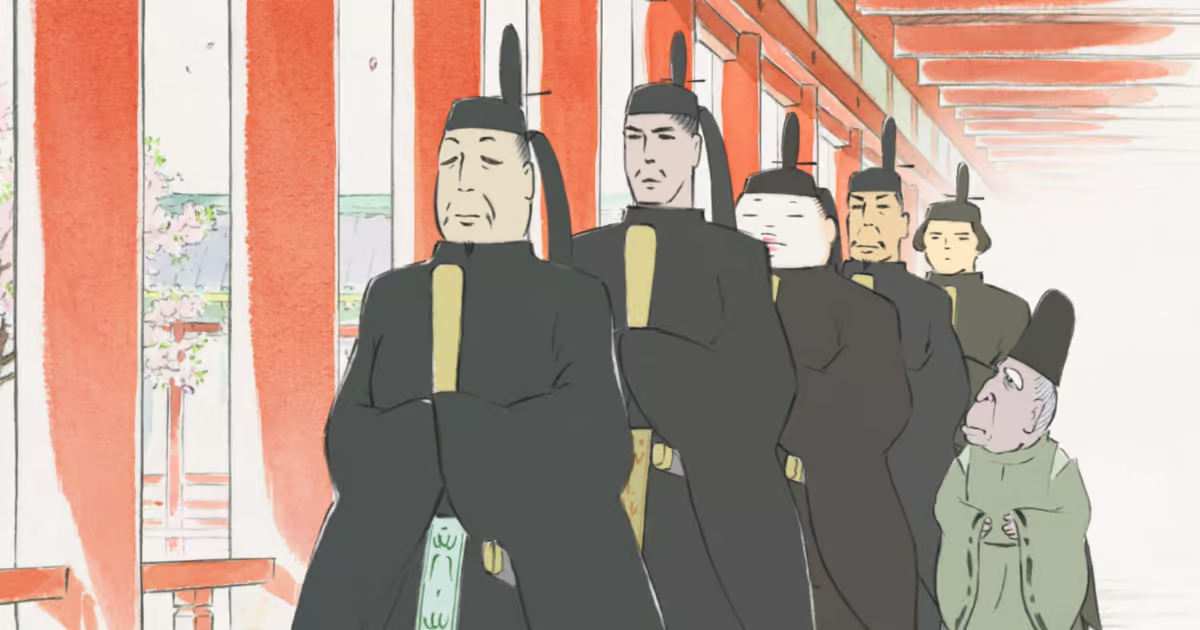
You cannot discuss The Tale of the Bamboo Cutter without mentioning the legendary Five Princes. While they appear in Takahata’s film, the dynamic is brilliantly inverted. In the original text, Kaguya actively assigns them impossible tasks to get rid of them. In the movie, however, the arrogant princes boast about mythical treasures unprompted, forcing Kaguya to simply hold them to their own absurd promises. Though the setup changes, their miserable, self-inflicted downfalls remain entirely intact.
Prince 1: Prince Kuramochi | Voice Actor: Beau Bridges
View Prince Kuramochi’s [Basic Info, Analysis, and Voice Actor Info]
Analysis: The Architect of Lies
Prince Kuramochi (far left in the image) is the primary instigator of the impossible tasks. The other suitors are certainly toxic, but if Kuramochi hadn’t aggressively flexed his ego by bringing up mythical treasures, the entire ordeal might have played out differently. He proudly declared:
If I could make you my wife, it would be a happiness like obtaining the jeweled branch with silver roots, a golden stem, and white jade fruit from Mount Penglai.
(Original Text, in Japanese)
もし あなた様を我が妻とすることができたならば それは かの蓬莱(ほうらい)の山にあるという 銀の根 黄金の茎 白き玉の実をつける宝の枝をうるがごとき幸せ
Kaguya simply uses his own hubris against him, demanding he bring her this very “Jeweled Branch of Horai” (Penglai). For context, Horai is a mythical Chinese paradise where immortals dwell, alongside other legendary islands like Hojo (Fangzhang) and Eishu (Yingzhou).
Three years later, Kuramochi returns with a dazzling forgery and a fabricated tale of heroism. However, the furious craftsmen who built the fake branch storm the mansion, screaming for their unpaid wages. His grand lie completely exposed, Kuramochi flees in humiliation. Kaguya, deeply relieved to be rid of him, happily pays the craftsmen herself.
The film spares us the brutal reality of the original folklore, where Kuramochi intercepts the craftsmen on their way home, savagely beats them until they vomit blood, and steals their reward money back. Even though the movie omits this scene, we can assume the pathetic prince remained just as vicious off-screen.
Prince 2: Prince Ishitsukuri | Voice Actor: James Marsden
View Prince Ishitsukuri’s [Basic Info, Analysis, and Voice Actor Info]
Analysis: The Master Manipulator
Stepping up next is the dangerously charming Prince Ishitsukuri. With his handsome features and smooth voice, the film immediately flags him as a “player.” He makes his grand pitch:
If Princess Kaguya becomes my wife, I will consider you the stone begging bowl of the Buddha passed down in India, bowing before you morning and evening, worshiping you as a treasure.
(Original Text, in Japanese)
かぐや姫様が私の妻になってくださるならば 私はあなたを天竺に伝わる仏の御石の鉢と思い 朝夕御前にぬかずき 宝のように崇め奉るつもりです
Ishitsukuri proves to be far more cunning than the others. Instead of forging a fake “Stone Begging Bowl of the Buddha,” he returns empty-handed save for a single, delicate flower. He launches into an eloquent, deeply emotional speech, turning the situation into a “battle of sincerity.”
Unlike the other princes who treated her like a trophy to be bought, Ishitsukuri appeals to her humanity. For a fleeting moment, Kaguya’s guarded heart actually wavers. However, the tension breaks when Ishitsukuri’s furious legal wife suddenly appears, shattering his romantic illusion and allowing Kaguya a narrow escape.
Takahata greatly elevated Ishitsukuri’s threat level. In the original tale, Ishitsukuri is the laziest suitor; he simply grabs a dirty bowl from a local mountain temple and hands it to Kaguya with a cheesy poem, getting instantly rejected. In the film, his psychological manipulation almost works, making him the most dangerous suitor of all.
Prince 3: Minister of the Right Abe | Voice Actor: Oliver Platt
View Minister of the Right Abe’s [Basic Info, Analysis, and Voice Actor Info]
Analysis: The Wealthy Buffoon
The third suitor, Minister of the Right Abe, is animated as a grotesquely wealthy giant caked in white face powder. Thanks to brilliant vocal casting, he is reduced to an utterly ridiculous, comical figure. He boldly claimed:
Princess Kaguya, to me, you are the robe of fire-rat fur, which never burns even when cast into the fire, where only the dirt is burned away, making it shine even brighter in the flames. A flawless princess is truly a rare treasure said to exist in Tang China.
(Original Text, in Japanese)
かぐや姫様 私にとってあなたこそは 火にくべても決して燃えず 汚れだけが焼け落ちて 炎の中で一層輝きを増す 火鼠の皮衣 汚れなき姫は 唐土にあると伝え聞く まさにそのような得難き宝です
Abe believes his immense wealth can buy anything. He imports a staggeringly expensive “Robe of Fire-Rat Fur” from China and presents it to Kaguya. However, when Kaguya logically requests, “Throw it in the fire to prove it,” the fake robe instantly incinerates, and Abe’s pride goes up in flames along with it.
Prince 4: Great Counselor Otomo | Voice Actor: Daniel Dae Kim
View Great Counselor Otomo’s [Basic Info, Analysis, and Voice Actor Info]
Analysis: The Defeated Warrior
The fourth suitor, Great Counselor Otomo, is a hardened military man with an intimidating glare. Relying on raw machismo to win Kaguya, he bellowed:
To me, Princess Kaguya is a treasure that shines even more brilliantly than the five-colored jewel said to hang from the dragon’s neck!
(Original Text, in Japanese)
私にとってのかぐや姫様は 龍の首にかかるという五色に輝く玉よりもさらにさらに燦然と光り輝く宝物よ!
Unlike the deceitful princes, the warrior Otomo actually attempts his quest. He takes a fleet to sea to slay a dragon, but his ship is completely decimated by a violent storm. Terrified and deeply humbled by the wrath of nature, the mighty warlord abandons his pride and completely gives up on Kaguya.
Takahata keeps this plotline faithful to the original lore. In the classic text, Otomo initially orders his men to fetch the jewel, but when they fail, he arrogantly sails out himself, only to suffer severe illness and terror from the storm, forcing him to cancel the doomed operation.
Prince 5: Middle Counselor Isonokami | Voice Actor: John Cho
View Middle Counselor Isonokami’s [Basic Info, Analysis, and Voice Actor Info]
Analysis: The Fatal Romantic
The final suitor, Middle Counselor Isonokami, is depicted as a timid, fragile intellectual. Desperately trying to sound poetic, he stammers out:
T-to me, Princess Kaguya is the cowry shell of a swallow, an even warmer treasure that serves as a charm for safe childbirth, to be held and warmed with the utmost care.
(Original Text, in Japanese)
ぼ 僕にとってのかぐや姫様は もっともっと温かい 安産の守りともなる燕の子安貝 抱かれて大切に大切に温められた宝物なのです
The “cowry shell of a swallow” is a legendary myth. While birds obviously do not lay shells, Japanese folklore states that swallows occasionally pick up shells and carry them back to their nests. Ironically, despite the myth, Isonokami was technically the closest to hunting a real object.
Sadly, Isonokami meets the most gruesome fate in both the original tale and the film. In his desperate attempt to snatch a shell from a swallow’s nest, he falls from a great height, shatters his spine, and eventually dies in agony.
The emotional fallout, however, drastically differs between the two versions. In the original text, Kaguya’s reaction is chillingly apathetic:
Hearing this, Princess Kaguya felt a little pity.
(Original Text, in Japanese)
これを聞きて、かぐや姫、少しあはれと思しけり
She brushes off his death. But in Takahata’s film, Isonokami’s gruesome demise completely shatters Kaguya. The guilt of being the indirect cause of a man’s death casts a massive, inescapable shadow over her conscience, further pushing her toward her tragic fate.
Rather than a professional actor, the original Japanese voice of Middle Counselor Isonokami was provided by Tamaki Kojo, a member of Studio Ghibli’s Post-Production Department. Director Takahata personally requested that Kojo audition for the doomed role, resulting in a uniquely authentic performance.
The Emperor | Voice Actor: Dean Cain
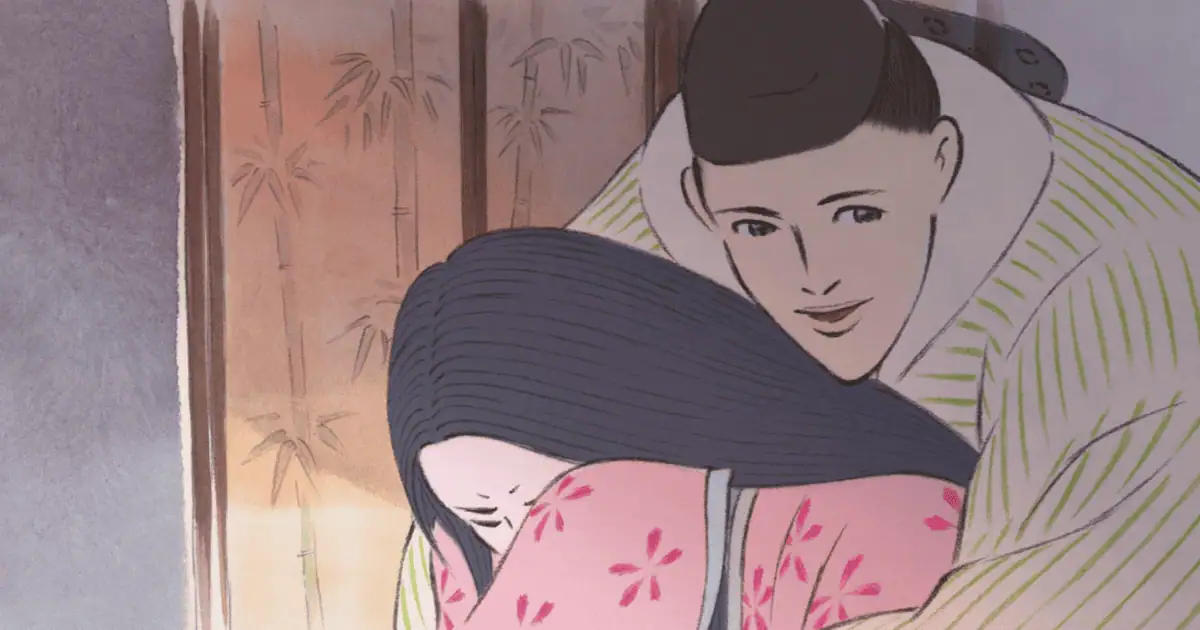
View The Emperor’s [Basic Info, Analysis, and Voice Actor Info]
Analysis: The Ultimate Catalyst of Despair
Appearing late in the story, the Emperor is the absolute authority figure of the land, famously designed with an absurdly sharp chin. Within the context of Takahata’s film, the Emperor acts as the decisive trigger that ruins Kaguya’s life, forcefully grabbing her from behind and violating her autonomy. This terrifying assault is what forces Kaguya to instinctively summon the moon.
This is a massive departure from the original text. In The Tale of the Bamboo Cutter, the Emperor is the only noble Kaguya actually respects. They correspond via letters for three years, and he essentially fills the romantic role that Sutemaru occupies in the film.
Why did Director Takahata completely rewrite this dynamic? The logical progression looks something like this:
- Kaguya is an otherworldly being who loves the untamed Earth, not the artificial society of men.
- Because of this, she rightfully despises the materialistic vanity of the five princes.
- Therefore, the idea in the original text that she suddenly became “intimate” with the Emperor just because of his royal status was likely political pandering (sontaku) added by the original ancient author to avoid offending the real-life royal court.
- Takahata strips away this political pandering: the real Kaguya would never submit to the Emperor’s ego.
This explains why Takahata invented Sutemaru. Kaguya’s truest moments of bliss were spent running wild in the mountains. Giving her a meaningful connection with Sutemaru was Takahata’s “generosity”—a way to ensure that amidst all her suffering, Kaguya experienced at least one genuine, beautiful connection born from the raw Earth she so deeply loved.
Yet, the film prevents us from entirely villainizing the Emperor. He was born into a bloodline that conditioned him to believe he owned the world. He suffers from the delusion that “no one can refuse me.” When Kaguya brutally rejects him, it completely shatters his reality. In a way, Kaguya frees him from the curse of his own absolute power.
Meanwhile, Kaguya remains cursed to return to the moon. As a viewer, it begs the question: What kind of nostalgic, beautiful memories of his own youth was Isao Takahata reflecting on while crafting Kaguya’s fleeting days of happiness?
Inbe no Akita | Voice Actor: George Segal
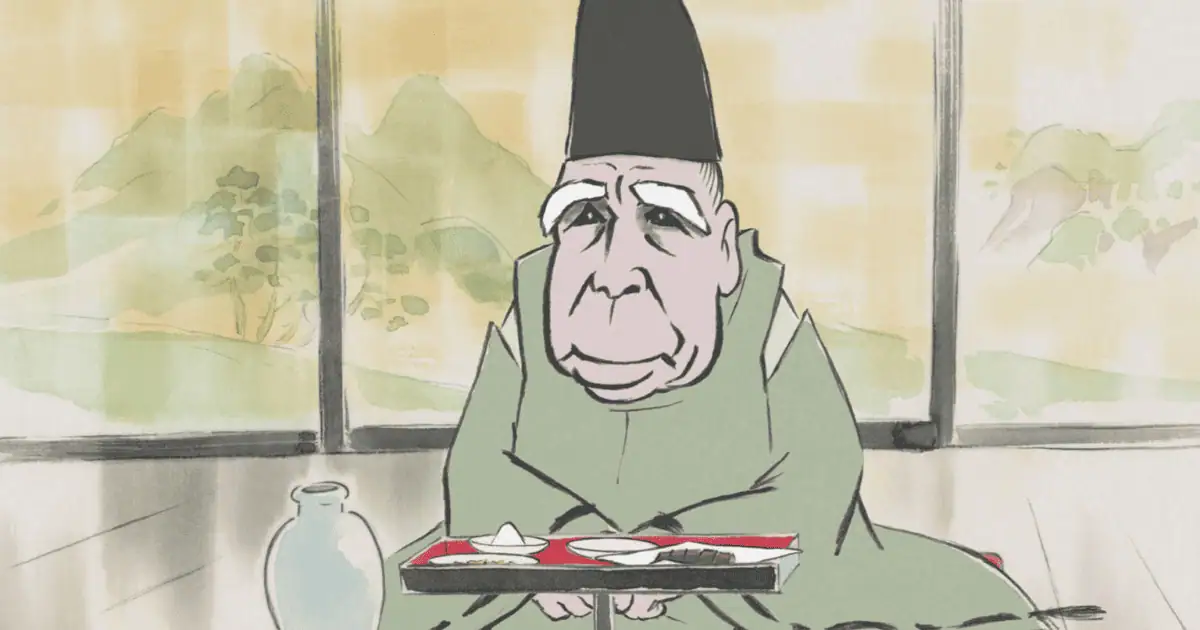
View Inbe no Akita’s [Basic Info, Analysis, and Voice Actor Info]
Analysis: The First Victim of Her Allure
Inbe no Akita is the high-ranking official who officially blesses the protagonist with the name “Princess Kaguya.” He serves as the spark that ignites the frenzy among the capital’s noblemen, leading to the disastrous competition of the five princes.
Initially, Akita looks down on the lowly Okina and expects the girl to be entirely unremarkable. However, the moment he lays eyes on Kaguya, he is struck by an overwhelming, almost supernatural allure that awakens a long-dead, predatory “manhood” within his aging body. Considering Kaguya’s young age, it is an incredibly unsettling and creepy sequence.
This disturbing reaction establishes the core threat: Kaguya inherently possesses a divine, intoxicating aura as a resident of the moon. She doesn’t want this power, but she cannot turn it off. The film makes it clear—if a rational, dying old man like Akita loses his mind upon seeing her, the younger, egotistical men of the capital never stood a chance.
The Moon King and Female Attendant | Voice Actor: Chloë Grace Moretz (Female Attendant)
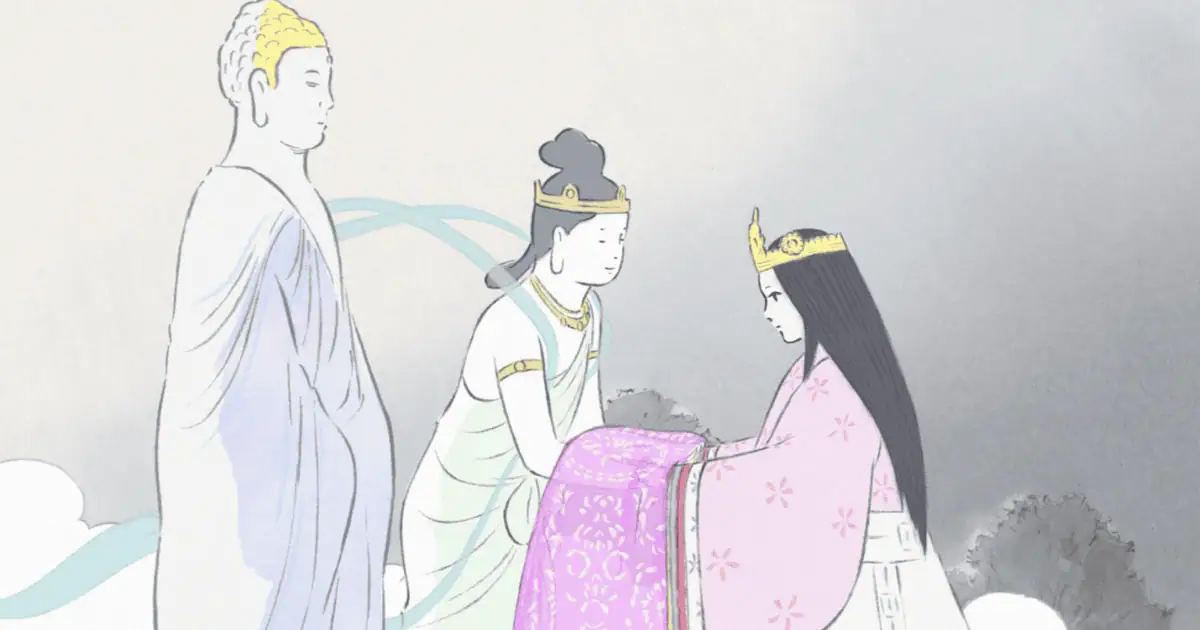
View The Moon King and Female Attendant’s [Basic Info, Analysis, and Voice Actor Info]
Analysis: The Chilling Emptiness of Eternity
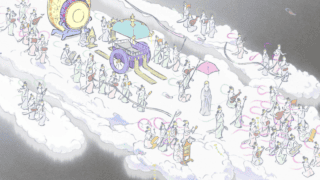
In the film’s climax, the Moon King leads the celestial procession to retrieve Kaguya, accompanied by his unfeeling female attendant who steps forward to drape Kaguya in the memory-erasing Celestial Robe of Feathers.
The Moon King’s eyes are utterly blank. He exhibits zero empathy or malice—he simply exists as an absolute, unstoppable force. The moment this lunar procession descends from the clouds, the entire tone of the movie shatters. The audience is dragged into a deeply unsettling, alien atmosphere. This terrifyingly calm invasion is accompanied by the legendary “Music of the Celestials.”
To truly understand how this eerie, upbeat track was conceived, you must read about the fascinating clash between Director Takahata and composer Joe Hisaishi in our analysis below:
Hisaishi initially struggled with Takahata’s abstract directions, resulting in one of the most jarringly cheerful and horrifying pieces of music ever placed in an animated film.
Interestingly, the Japanese voice of the cold, robotic female attendant was provided by Aki Asakura—the exact same actress who voiced Princess Kaguya, hinting that Kaguya is doomed to become just like her.
The images used in this article are officially provided by the “Studio Ghibli Works Stills” gallery.
Can you name the movie before the scene comes into focus?
Put your visual memory to the test with a blurred Studio Ghibli scene.


Reader Comments