What if the heartbreaking tragedy of Studio Ghibli’s The Tale of the Princess Kaguya is based on a massive misunderstanding? In my previous deep dive, “The Sin and Punishment of the Princess”, I operated on a widely accepted premise: Princess Kaguya committed a grave sin and suffered a brutal exile to Earth. By intertwining her fate with the harsh realities of the ancient “Legend of the Celestial Robe” (Hagoromo Densetsu), I painted a rather bleak and agonizing picture of her journey.
But what if we flip the script completely?
Today, I want to explore a radical, opposing theory: Princess Kaguya never committed a crime, and she was never being punished in the first place. The core of this theory lies in the nature of the “Inhabitants of the Moon.” Simply put, they have absolutely zero reason to inflict “punishment” on anyone. As I pondered my previous analysis, a glaring contradiction emerged—the Moon is fundamentally incapable of punitive concepts.
So, if we look at the events of The Tale of the Princess Kaguya exclusively through the eyes of the Moon dwellers, what was actually happening?
*This is a translated version. The original (Japanese) is available here.
- The Moon World: A Realm of Absolute Apathy
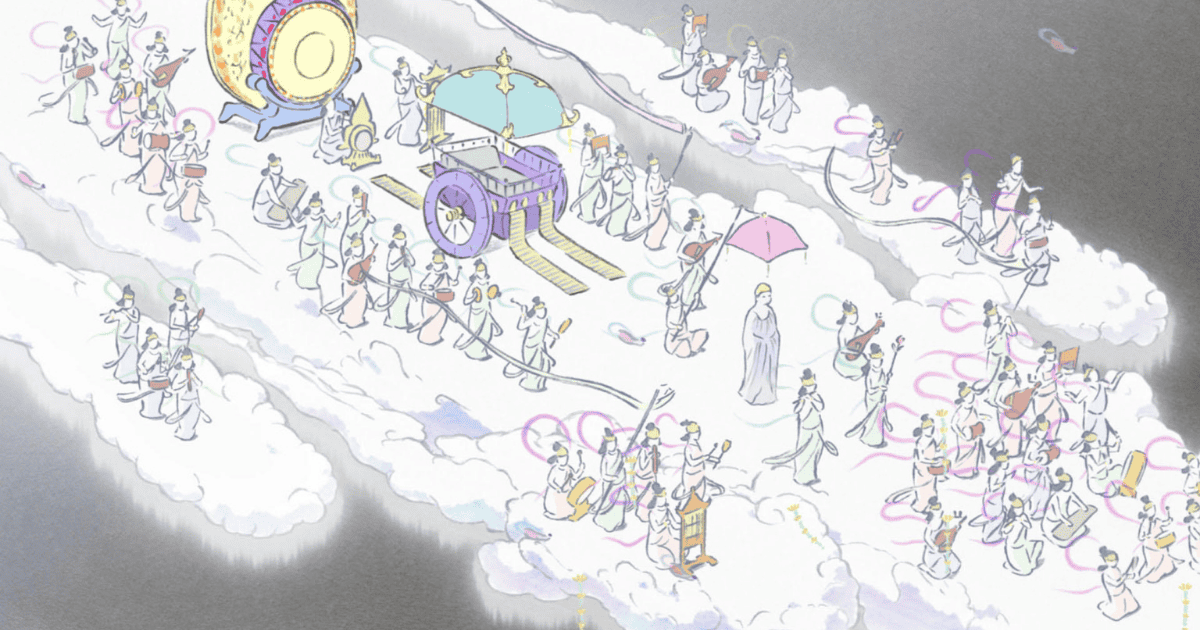
In The Tale of the Princess Kaguya, Director Isao Takahata explicitly instructed the composer to create “carefree” and “idiotic” music for the Moon dwellers. These celestial beings are depicted as innocent yet completely insensitive—transcendent entities utterly indifferent to the complex emotional suffering of humans. - Earthly Life: A Vacation, Not a Sentence
The only person who actually labels this Earthly existence a “punishment” is Princess Kaguya herself. The Moon dwellers show zero awareness of this supposed penal sentence. Based on how quickly they arrive the moment she wishes to “go home,” we can argue that Earth was never a prison; it was merely a temporary tourist destination she requested. - The Final Speech: An Incomprehensible Melodrama
Princess Kaguya’s tearful, emotional appeal in the film’s climax shatters the hearts of the audience. However, to the Moon dwellers, her outburst is nothing more than a bizarre, overwrought theatrical performance. Director Takahata masterfully crafts this scene to highlight the unbridgeable emotional void between Earth and the Moon.
On this pageContents
The Tale of the Princess Kaguya (2013) Deep Analysis: Viewing Earth Through the Eyes of the Moon
The Moon World: Decoding The Tale of the Bamboo Cutter
As I highlighted in our previous lore exploration, the original folktale, The Tale of the Bamboo Cutter, offers a brief but vital glimpse into the nature of the Moon. This revelation occurs in the crushing final act when the celestial escorts arrive to reclaim Kaguya:
…When [the celestial beings] quickly placed the heavenly robe on Princess Kaguya, her feelings of “pity and affection” for the old man vanished. Having lost all her worries by wearing this robe, Princess Kaguya got into the carriage and returned to the Moon world with about a hundred celestial beings.
(Original Text, in classical Japanese)
・・・・・・ふと天の羽衣うち着せ奉りつれば、翁を「いとほし、愛し」と思しつることも失せぬ。この衣着つる人は、物思ひなくなりにければ、車に乗りて、百人ばかり天人具して、昇りぬ。
訳:・・・・・・(天人が)かぐや姫にさっと天の羽衣を着せると、翁に対して「気の毒だ、愛おしい」と思っていたかぐや姫の思いもなくなってしまった。羽衣を着ることによって思い悩むことがなくなってしまったかぐや姫は、車に乗って百人ほどの天人を連れて月の世界に帰ってしまった。
In short, the Moon is explicitly defined as “a world without worries.” To live without worries means to exist without emotional fluctuations or moral judgments. It is a utopia entirely devoid of what humans call “earthly desires” (bonno).
And here lies the massive plot hole: the very desire to punish someone stems from anger, justice, or disappointment—emotions deeply rooted in earthly attachment. Why would the enlightened inhabitants of the Moon, who supposedly lack all human desires, bother to punish Princess Kaguya?
Logically, they wouldn’t.
While this logic stems from the original literature, Director Isao Takahata scattered brilliant breadcrumbs throughout the production of The Tale of the Princess Kaguya that confirm these beings lack emotional depth. The ultimate proof doesn’t hide in the movie itself, but rather in a fascinating sequence from the making-of documentary for The Tale of the Princess Kaguya(高畑勲、『かぐや姫の物語』をつくる, in Japanese).
The Bizarre Truth Behind Joe Hisaishi’s “Celestial Music”
About 90 minutes into the documentary, the production team begins fiercely debating the film’s musical score. After bringing the legendary composer Joe Hisaishi on board, they screen some early footage for him. Naturally, Hisaishi is blown away by the iconic, desperate running sequence. But immediately afterward, he asks a crucial question: “What happens in the scene where she returns to the moon?”
Director Takahata’s response is nothing short of mind-blowing:
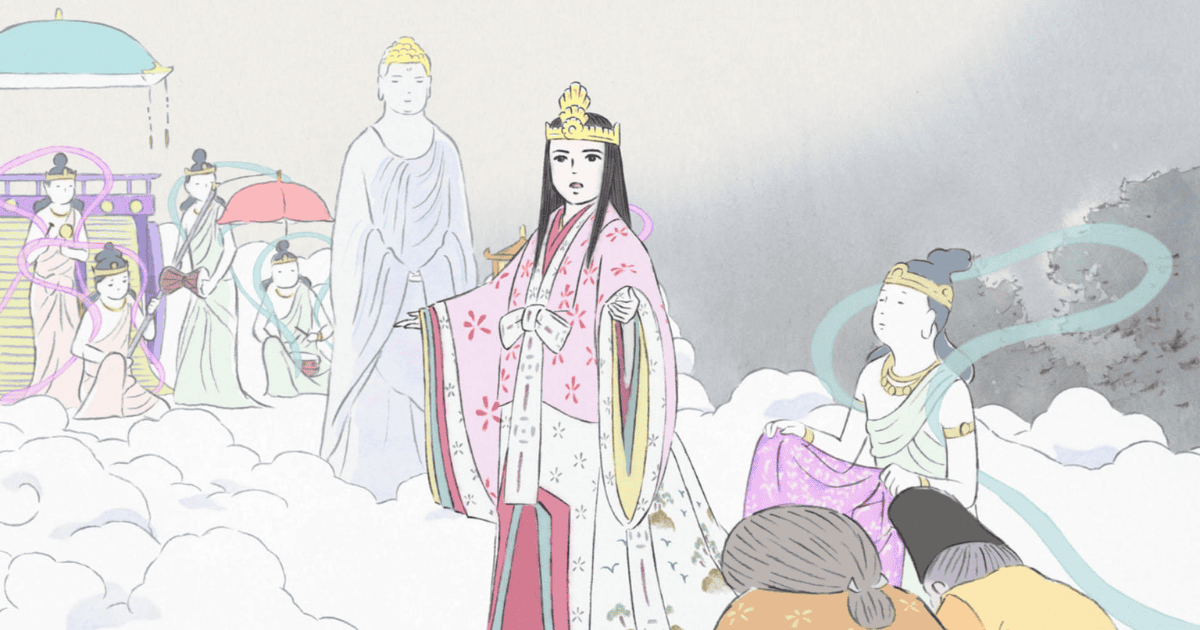
For the music, one thing I definitely want you to keep in the back of your mind is… [omitted: reference to Director Kon Ichikawa’s The Tale of the Bamboo Cutter]… On the other hand, for our version, when doing this, I thought… you know the ‘Amida Raigo-zu’ (Descent of Amida Buddha)? Amida is in the center riding on a cloud, leading a band of musicians. (To this, Joe Hisaishi asked, “Is it heavenly music?”) It’s not heavenly music. Should I just say it? I’ll say it. It’s a band. It’s extremely carefree, with a rhythm. They come down swaying their bodies, chaka-chaka. Pure music, how should I put it, is pure and free of worries, and somehow weird, isn’t it? I think the word ‘carefree’ (noutenki) fits perfectly. If I had to describe the musical image, it’s like a botched Indian musical, kind of idiotic music. (Joe Hisaishi replied, “Oh, there is one. What was that movie called again?”) Muthu (Odoru Maharaja). Stuff like that. And also, um, samba. Brazilian samba. There’s a bit of that in there too, right? Their heads are just completely blown clear, playing chaka-chaka, but if they want to bring out pathos (sorrow) occasionally, they can. That kind of… yeah, riding on a cloud going chaka-chaka, fading in. Nobody is expecting them.
(Original Text, in Japanese)
音楽も 頭の隅にぜひ置いて頂きたいのは ・・・中略(市川崑監督の「竹取物語」についての言及)・・・ それに対してこっちは これをやる場合 思ったんだけど 「阿弥陀来迎図」って 雲に乗って阿弥陀さんが真ん中にいて みんな楽隊を引き連れているんですよ (これに対して久石譲さんが「天の音楽ですか」と聞くと) 天の音楽じゃないです 言っちゃおうかな 言います 楽隊なんです 極めて能天気で リズムがある チャカチャカ体を揺すって 降りてくる感じで 清浄な音楽ってね なんていうかな 悩みがなくて清らかで なんか変じゃないですか 能天気っていう言葉がぴったりだと思うけど 音楽的なイメージで言うと インドのミュージカルの出来損ないみたいな なんかアホみたいな音楽ですね (久石譲が「ありますね 何だっけあの映画」と返して) 「踊るマハラジャ」 ああいうやつとか それからあの えっとサンバですね ブラジルの ああいうのも そういう所あるんじゃないですか 頭がパーッとすっ飛んじゃってね チャカチャカなってるんだけど 時々ペーソス(哀愁)を出そうと思えば出せる そういう ああいう チャカチャカ雲に乗ってね フェードインしてくる 誰も期待してないですから
Setting aside my main theory for a moment, we must appreciate Takahata’s crystalline vision for the climax. The fact that Joe Hisaishi took this chaotic prompt—”a botched Indian musical mixed with Brazilian samba”—and delivered a gut-wrenching, transcendent masterpiece is a testament to his genius.
Coupled with Kazumi Nikaido’s haunting theme song, the musical landscape of this film is genuinely unparalleled.
Returning to Takahata’s bizarre instructions, pay close attention to the specific words he uses: “carefree,” “idiotic music,” and “their heads are completely blown clear.” He doesn’t describe strict, authoritative jailers coming to collect a prisoner. He describes the Moon dwellers as empty-headed, cheerful partiers.
How does this reshape the entire narrative of The Tale of the Princess Kaguya?
The Earthly “Punishment” Was Actually a Requested Vacation
If the celestial beings are fundamentally easygoing, thoughtless entities, our perception of the Moon drastically changes. While it is hard for us to imagine a “world without worries,” we can safely assume it isn’t a grim, silent purgatory. It’s likely a place of passive, unending bliss.
Based on this foundation, we can conclude that the true narrative of The Tale of the Princess Kaguya is simply this:
Princess Kaguya was sent to Earth because she requested a trip there, and she was brought back to the Moon the exact moment she asked to return.
Isn’t that the most logical reading of the events?
Yes, in the original literature of The Tale of the Bamboo Cutter, the celestial envoy explicitly states that Kaguya committed a crime and was banished as a penalty. But notice the crucial difference in Takahata’s film: that line does not exist. The only character violently insisting that she is being “punished” is Kaguya herself.
Viewing the story through this lens suddenly makes the seemingly random actions of the Moon dwellers make perfect sense.
They magically sent clothes and gold through the bamboo stalks simply because they assumed she needed pocket money for her earthly vacation. They revived her from her desperate flight in the snow simply because they didn’t want her to die prematurely. And when they finally descended from the sky to collect her, it wasn’t because her “sentence” was served—it was entirely because she sent out a distress signal saying, “I want to go home.”
They are just a bunch of carefree tourists who fundamentally lack the capacity to comprehend human sorrow. This explains their visible bewilderment when Kaguya furiously rejects the heavenly robe.
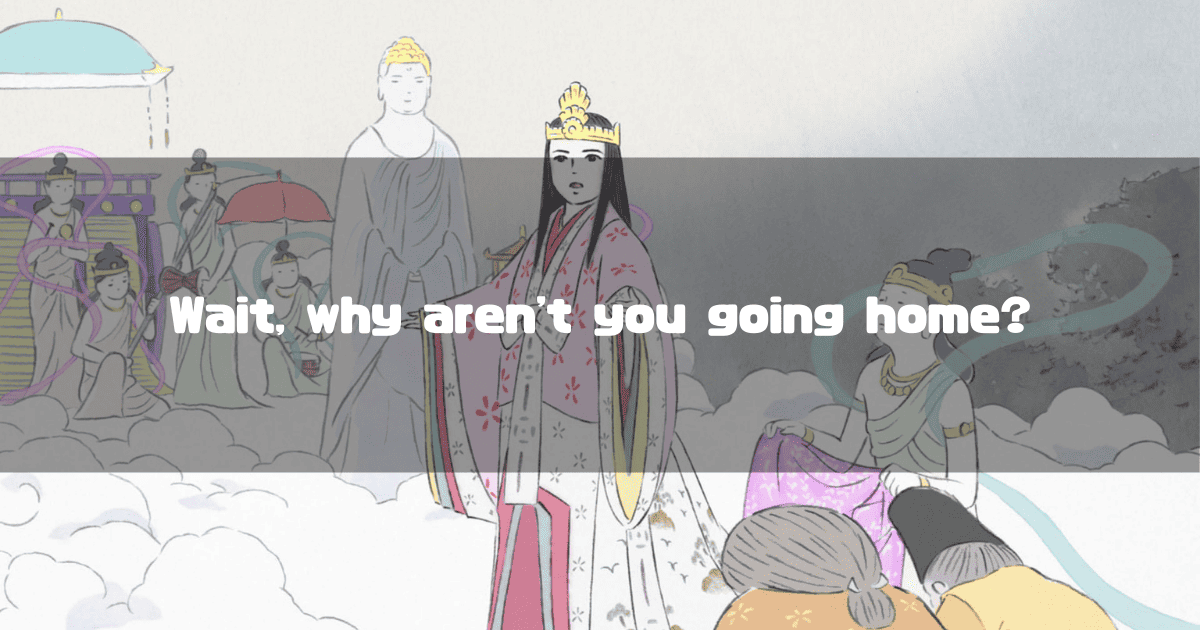
Imagine their confusion: They happily traveled all the way to Earth because she called for them, only for her to scream and fight back upon their arrival. They were likely thinking, “Wait, didn’t you literally just page us to pick you up?”
When I originally wrote my deep dive into “The Sin and Punishment of the Princess”, I kept hitting a logical wall. Why would beings devoid of earthly attachments care enough to punish anyone? And if her sin was so unforgivable, why was she instantly pardoned the second she got homesick?
However, once you accept that there was never a crime and never a punishment, the entire puzzle clicks into place seamlessly.
As for why Kaguya wanted to visit Earth in the first place? I stand by my previous theory. In a twist of tragic irony, hearing the sorrowful “Legend of the Celestial Robe” sparked an irresistible, fatal curiosity about human emotion in Kaguya’s heart.
Meanwhile, her fellow Moon dwellers probably didn’t give her Earthly excursion a second thought. They really are that detached.
The Tale of the Princess Kaguya (2013) Bonus Analysis: The Absurdity of Kaguya’s Final Speech
As the film reaches its devastating conclusion, Princess Kaguya delivers a monologue that borders on the theatrically absurd. You know the exact scene:
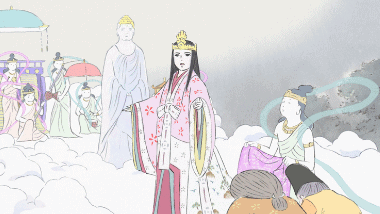
Standing before the silent celestial horde, Kaguya wildly gesticulates, passionately quoting the village children’s song: “Birds, bugs, beasts, grass, trees, flowers!” She treats the grim encounter like the grand finale of a Shakespearean tragedy.
For us—the audience who has wept alongside Kaguya, the bamboo cutter, and his wife—her impassioned defense of Earth feels completely justified. But if you strip away your empathy and view the scene objectively, her behavior is incredibly jarring. While Kaguya had a flair for the dramatic throughout the film, this scene takes her overacting to an astronomical level.
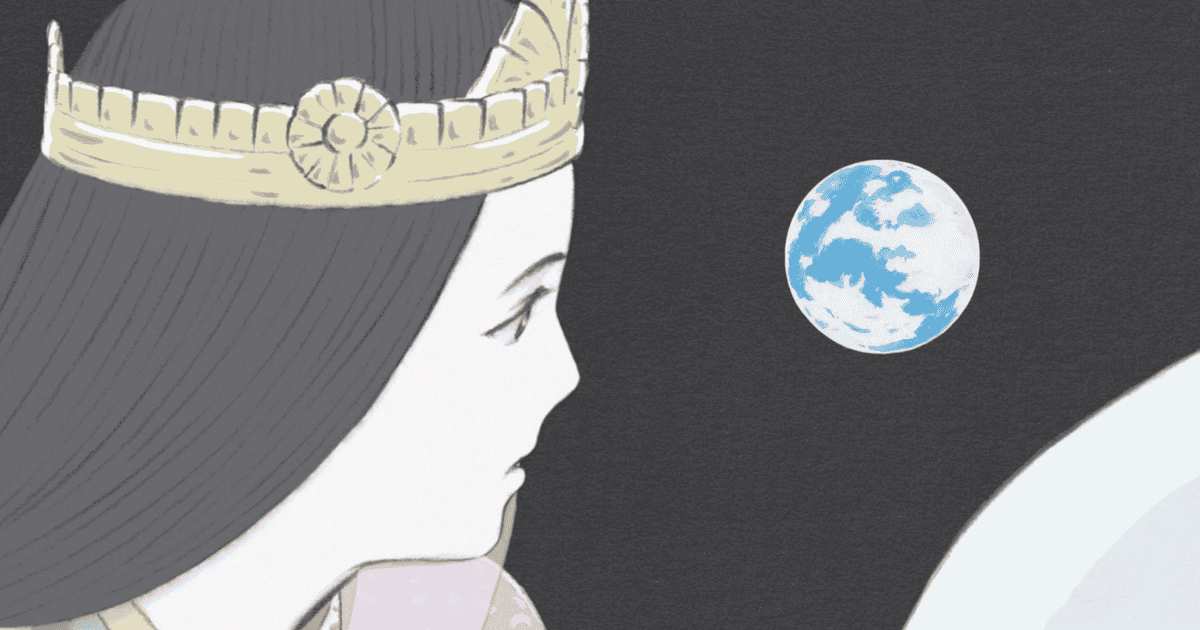
Why does Takahata direct her to be so fiercely “theatrical” here? Because that is exactly how ridiculous she looks to the Inhabitants of the Moon. Just look at their painfully blank expressions:
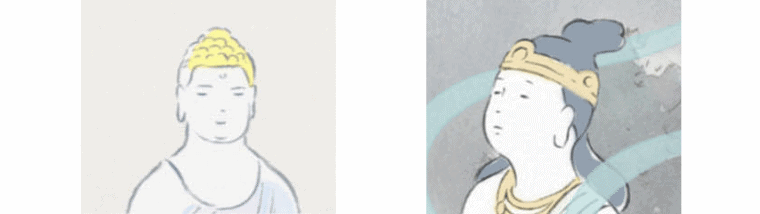
They are entirely baffled. They organized a cheerful, musical parade to bring her home, only to be met with a hysterical, tear-soaked soliloquy about bugs and trees. As humans, we feel the agonizing weight behind Kaguya’s words. But the Moon dwellers exist in a vacuum devoid of context, sorrow, or attachment. They do not understand Kaguya’s grief. They are literally incapable of understanding it. That is the true, terrifying nature of the Moon.
The images used in this article are provided by the “Studio Ghibli Works Still Images” repository.
Can you name the movie before the scene comes into focus?
Put your visual memory to the test with a blurred Studio Ghibli scene.

Reader Comments